August 12, 2025
Hardwick Hall is a rather awe-inspiring and overwhelming place. It begins with Bess of Hardwick. Four highly profitable marriages, Bess of Hardwick rose to the highest levels of English nobility and became enormously wealthy. The woman was a shrewd businesswoman in her own right, increasing her assets with business interests including mines and glass-making workshops.
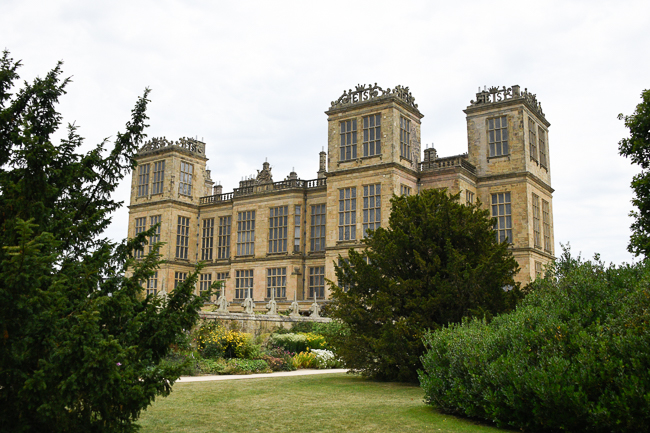
Hardwick Hall is a prime example of the Elizabethan prodigy house. The Renaissance-style home was built between 1590 and 1597 for Bess of Hardwick. It was designed by architect Robert Smythson. Hardwick Hall stands as one of the earliest examples of the English interpretation of this style, which emerged gradually from the Italian Renaissance.
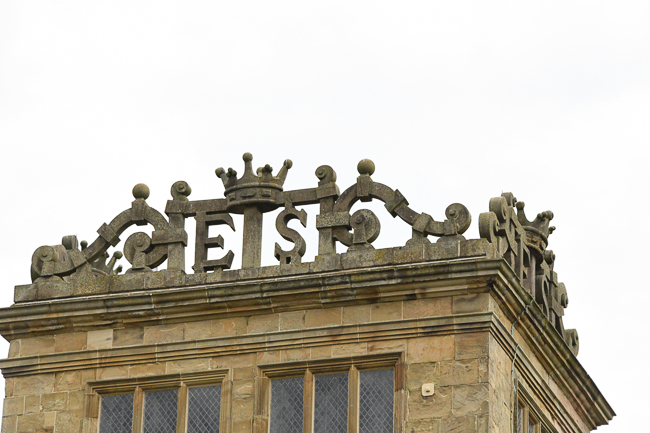
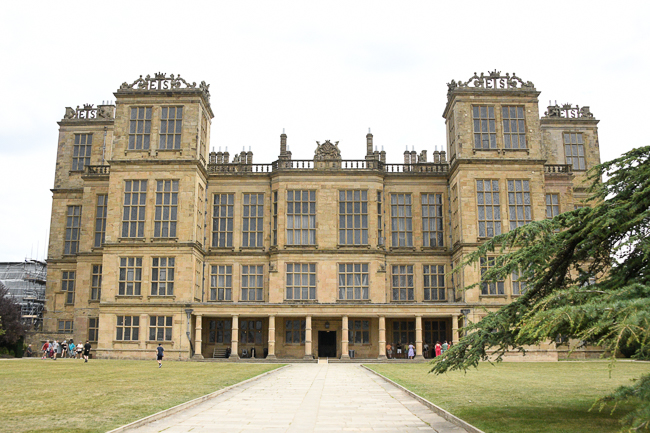
Bess of Hardwick was the wealthiest woman in England after Queen Elizabeth I, and her house was conceived to be a conspicuous statement of her wealth and power. The windows are large and numerous at a time when glass was a luxury, leading to the saying, “Hardwick Hall, more glass than wall.
*
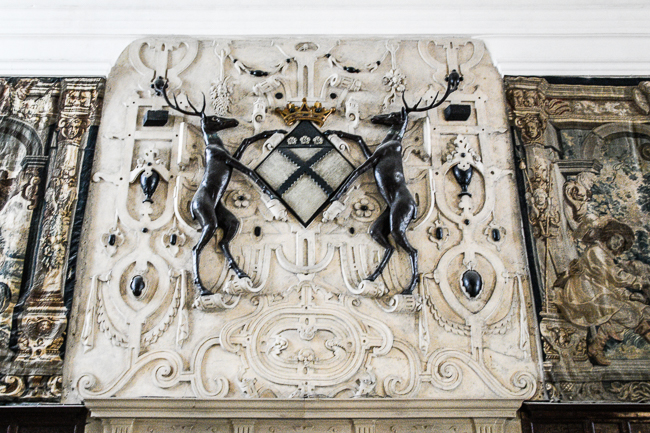
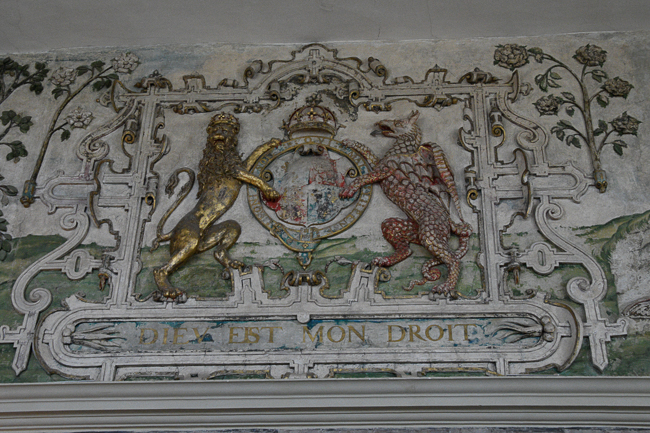
The house is spectacular, and pictures do not do it justice, simply due to the scale of the rooms. However, there were a handful of things that truly stood out.
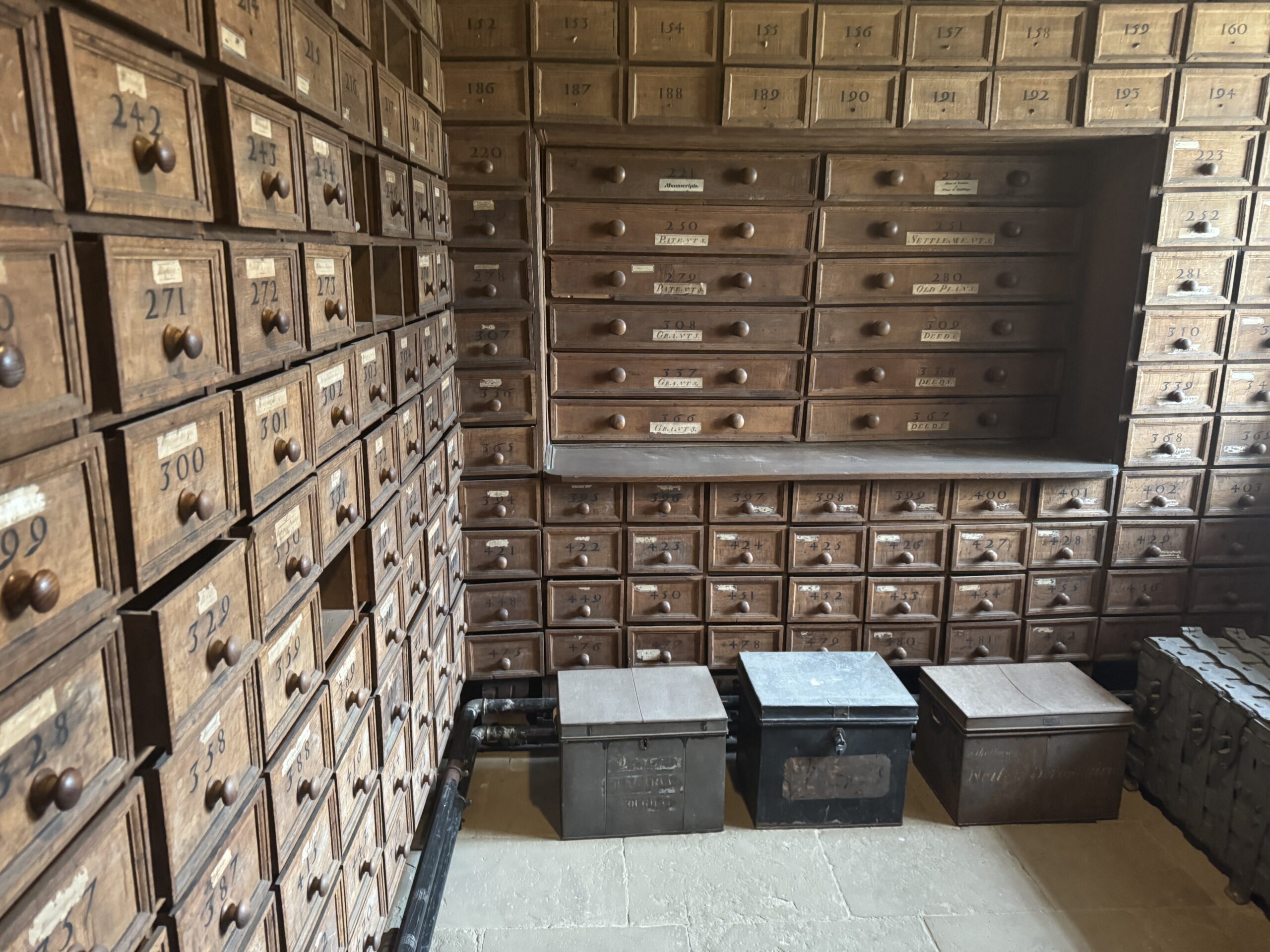
Important documents and deeds for the estate were kept in the Muniment room. The room features barrel-vaulted ceilings to provide additional fire protection and security. It was Bess’s son William who added the muniment drawers.
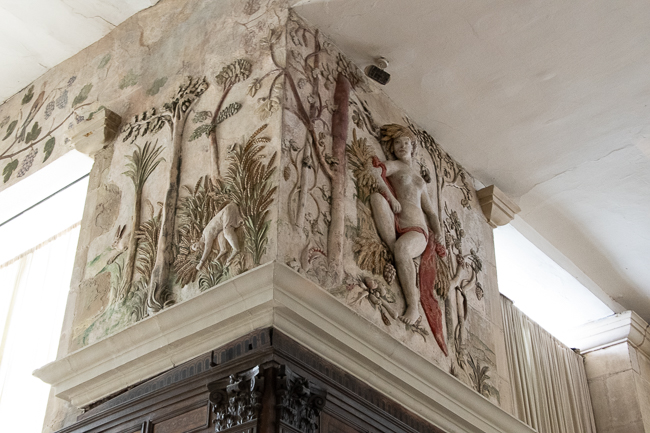
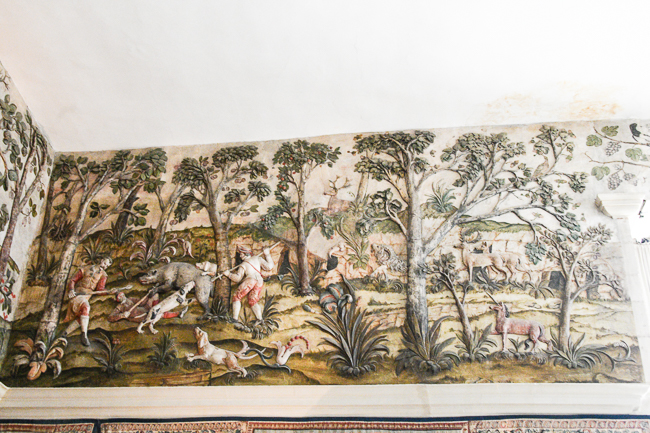
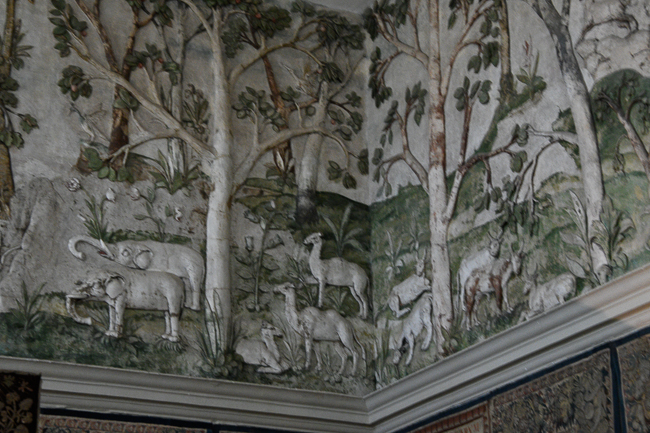
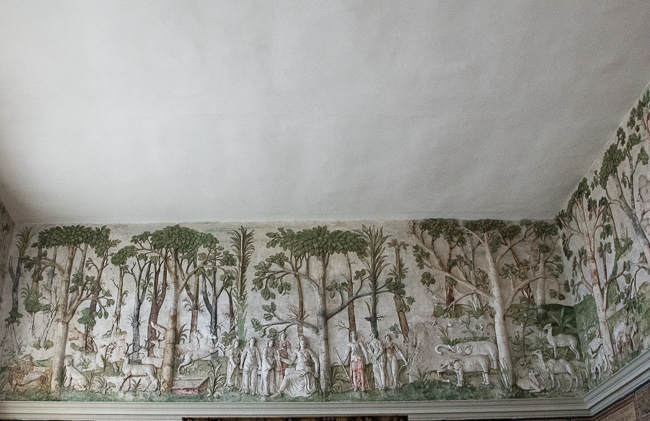
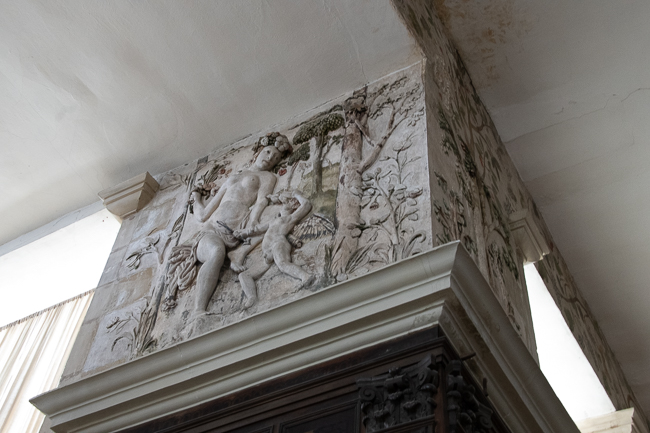
These plaster friezes, depicting hunting scenes, took my breath away.
The centrepiece of the frieze is a representation of the Goddess Diana surrounded by her court, with three stags protecting her from wild animals.
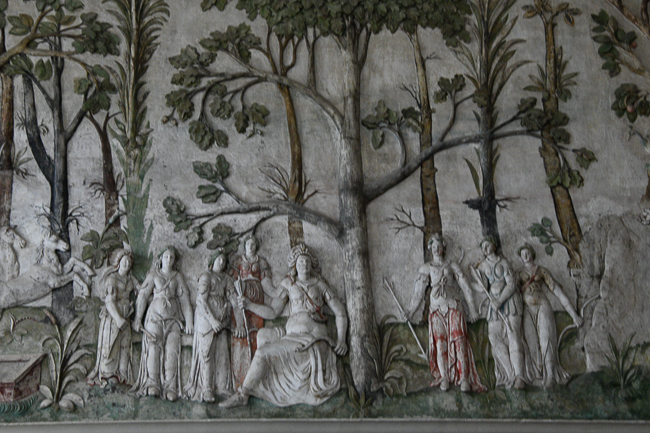
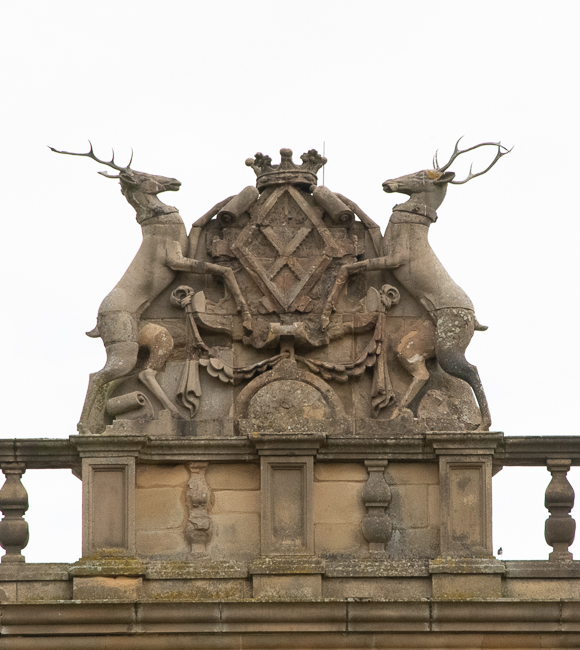
Most experts believe that the panel is a homage to Queen Elizabeth I, and that the stags, copied from the Cavendish coat of arms, express allegiance to the monarch shown by Bess, who would have loved the Queen to visit Hardwick. Elizabeth never came.
 *
* *
* *
*
*
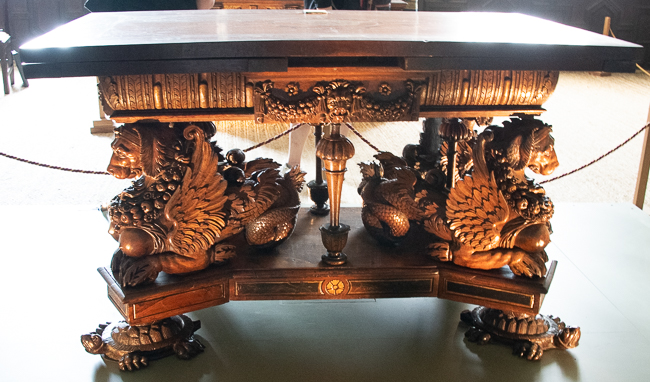
The Sea Dog Table dates from around 1570 or 1575 and was made in Paris, following a design by Jacques Androuet du Cerceau. It is regarded as one of the most important examples of 16th-century furniture in Britain and one of the most important pieces in the house.
The table is mainly made of inlaid walnut, with “gilding, fruitwood, tulipwood, and marble” also used. The creatures have dog’s heads, human breasts, front legs with paws, but the lower body of a fish. The base rests on tortoises or turtles.
The Gideon Tapestries
In the winter of 1592, Bess went on a shopping spree in London. Among her purchases was the Gideon set of tapestries purchased from the estate of Sir Christopher Hatton for the sum of £326 15s 9d. Five pounds was deducted because Bess had to change the Hatton coat of arms to her own.
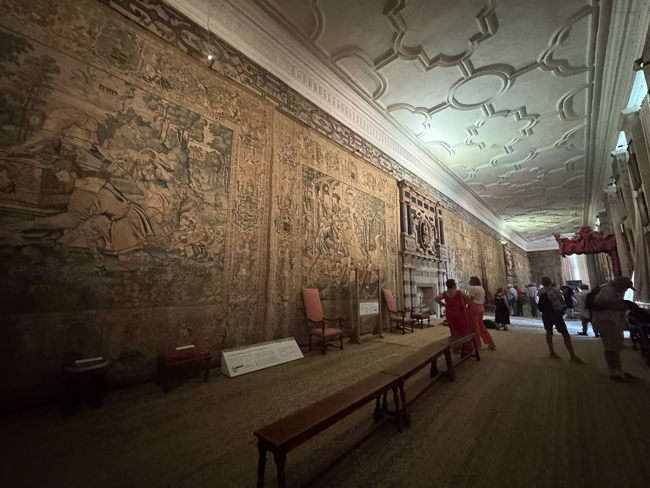 There are thirteen tapestries, which form one of the more significant collections of textiles in the world. They have hung in the Long Gallery since the end of the 16th century.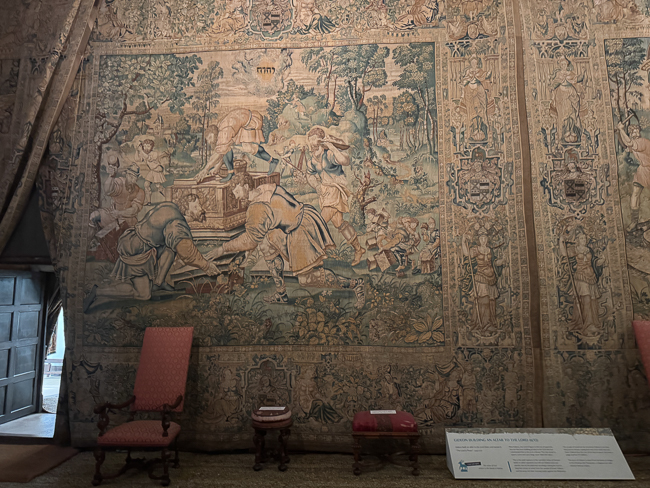
They recently underwent a 24-year-long conservation project, using traditional sewing and stitching techniques tapestries portray the Old Testament story of Gideon
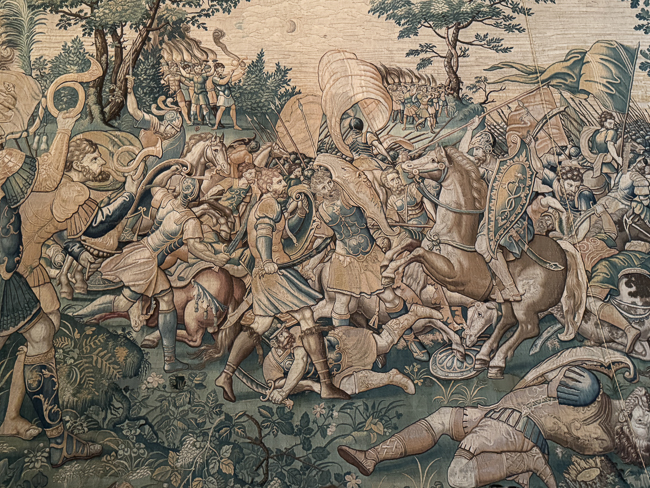
Called by God to deliver Israel from the Midianites, Gideon led an elite army of 300 of the finest Israelite warriors against them and was victorious. He was offered a crown but declined the kingship, declaring that only God could rule the people of Israel. 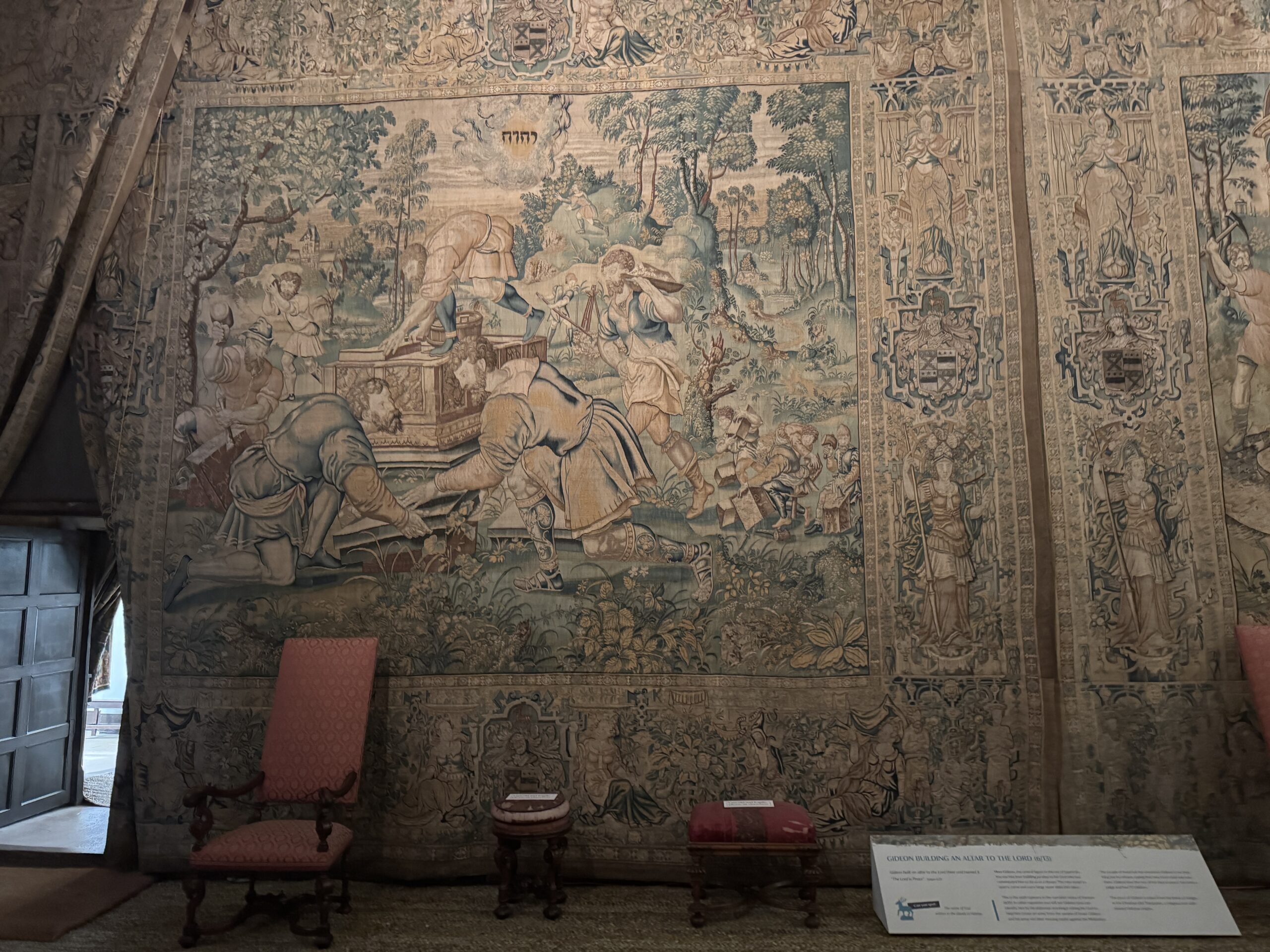
The tapestries were made at Oudenaarde in Belgium by an unknown weaver.
Noble Women
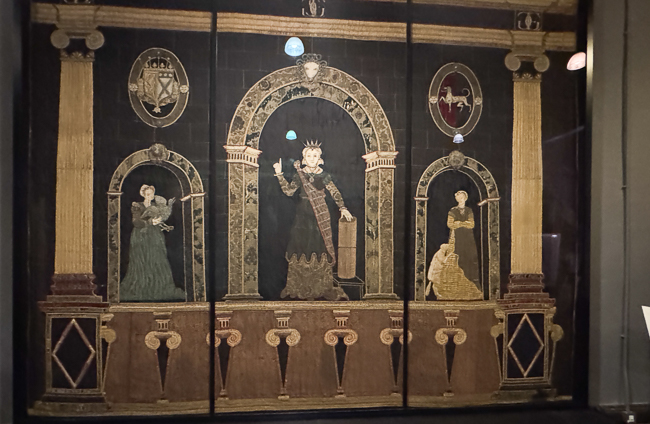
In another room are two large appliqué wall hangings depicting the ‘Noble Women of the Ancient World’.
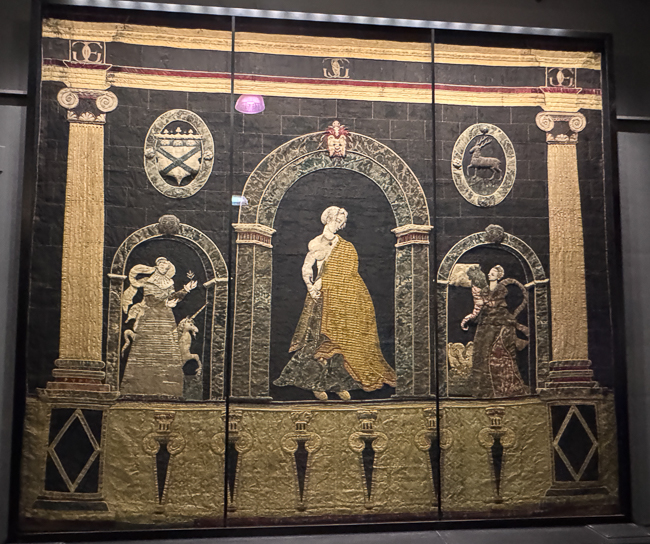
Bess commissioned a set of five large wall hangings featuring noble women from history, myth, and legend. Four survive, and two are on display in this room. These two panels depict Penelope and Lucretia.
They were made from repurposed church vestments acquired during the English Reformation. Two of Bes’s husbands were involved in the dissolution of the monasteries, so they would have had access to these expensive materials
 Hardwick Old Hall
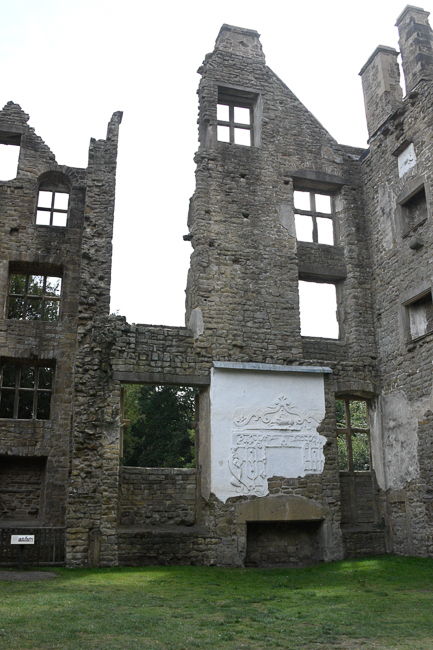
Hardwick Old Hall dates from the 16th century.
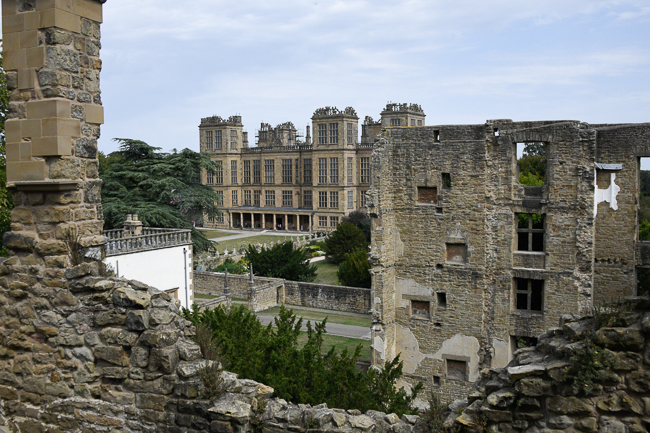
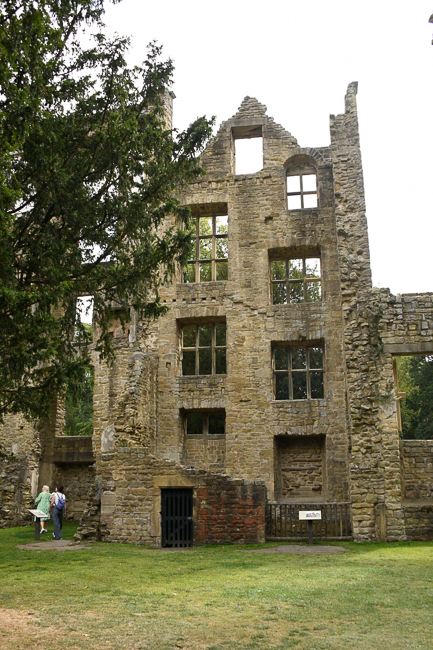 Bess of Hardwick was born in the Old Hall, and when she separated from her third husband, the Earl of Shrewsbury, in 1584, she returned to her childhood home. She began to expand the house, at the same time as she was planning to build the much grander ‘new’ Hall a short distance away.
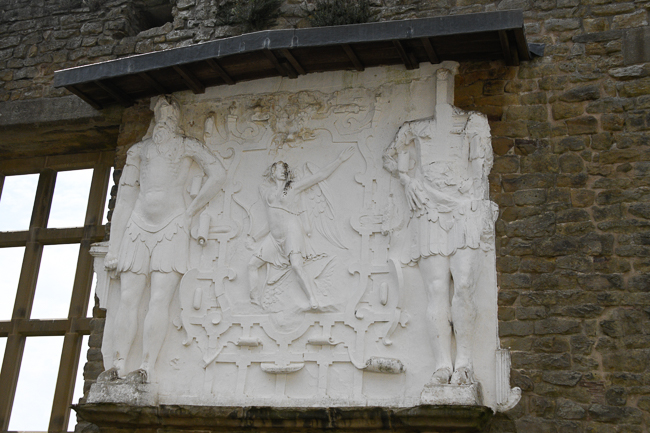 The end for Hardwick Old Hall came when the Cavendish family built Chatsworth House. Chatsworth became the family seat, so the hall was no longer needed. Stone was removed for building supplies, and the hall was left to decay.
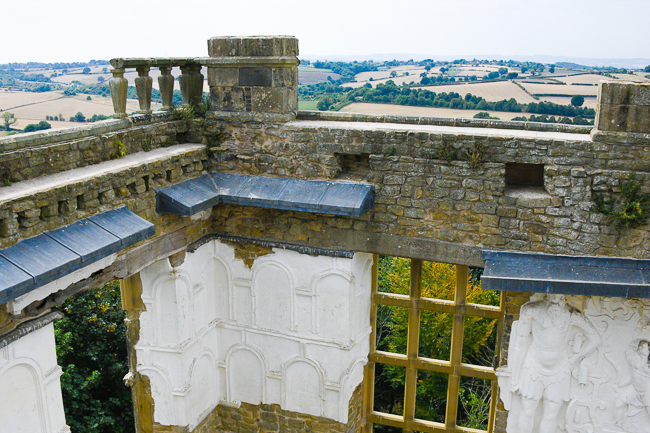
The friezes in Old Hardwick Hall are over 400 years old. Innovative for their time, the panels provided prototypes for features later incorporated into Hardwick New Hall. They were restored in 2022.
 *Hardwick Hall stands as one of my more favorite historic houses in this area.