August 16, 2025
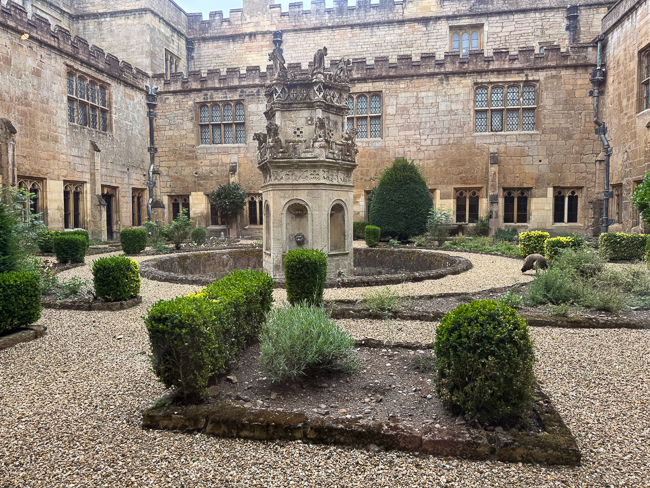
Newstead Abbey was formerly an Augustinian priory. Converted to a domestic home following the Dissolution of the Monasteries, it is now best known as the ancestral home of Lord Byron.
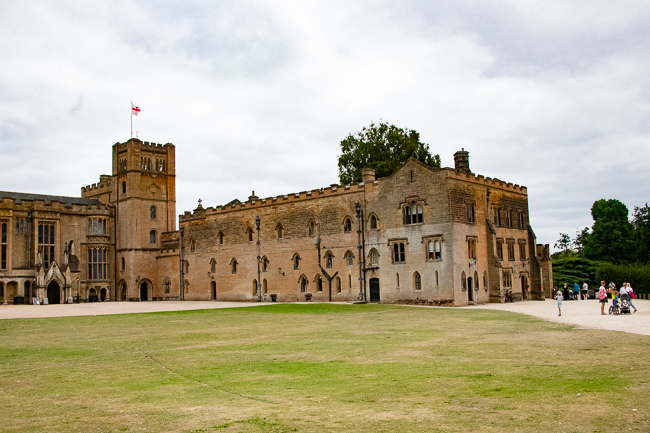
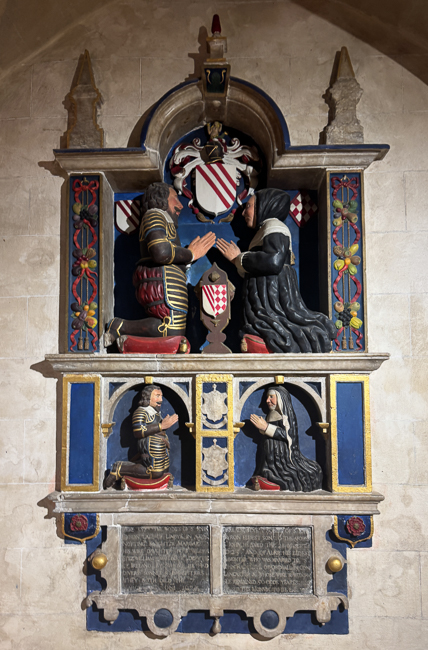
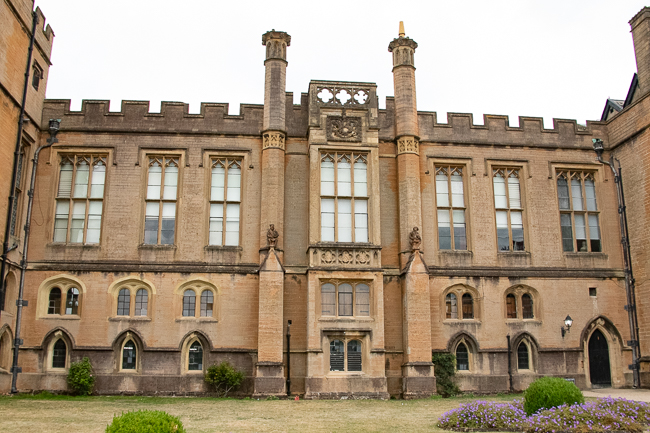
As with all historic houses in the UK, one needs to attempt to grasp the lineage of the family. Sir John Byron of Colwick in Nottinghamshire was granted Newstead Abbey by Henry VIII of England in 1540 and started its conversion into a country house. He was succeeded by his son Sir John Byron of Clayton Hall. Many additions were made to the original building.
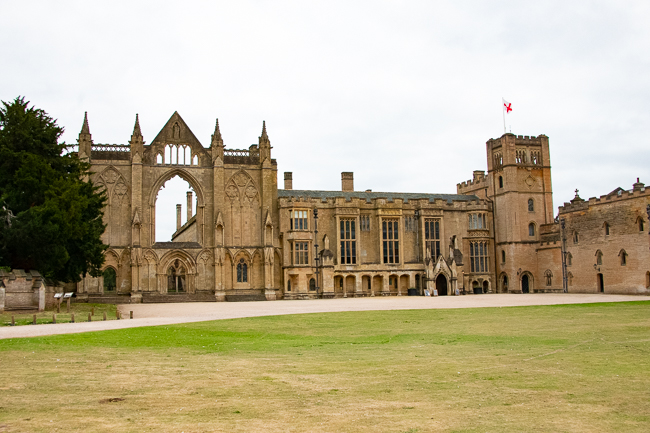 The 13th-century ecclesiastical buildings were largely ruined during the dissolution of the monasteries. It then passed to John Byron, an MP and Royalist commander, who was created a baron in 1643. He died childless in France, and ownership transferred to his brother Richard Byron. Richard’s son William was a minor poet and was succeeded in 1695 by his son William Byron, 4th Baron Byron. Early in the 18th century, the 4th Lord Byron landscaped the gardens extensively and amassed a hugely admired collection of artistic masterpieces.
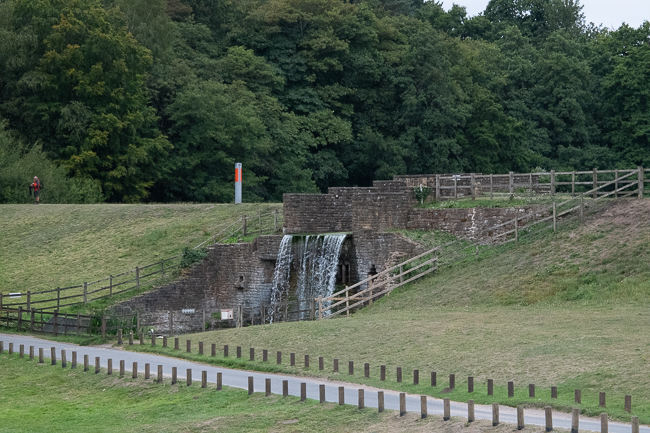
Sadly, during the ownership of William, 5th Baron Byron, the Abbey suffered a downturn in fortunes. He stripped the Abbey and estate of its artistic treasures, furniture, and even its trees, to quickly raise cash, but it did not help.
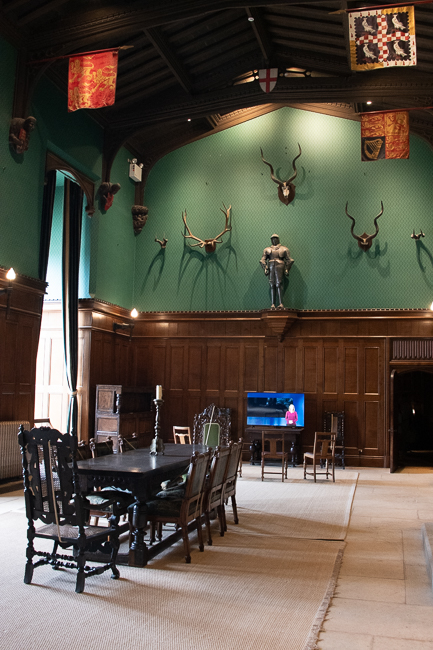
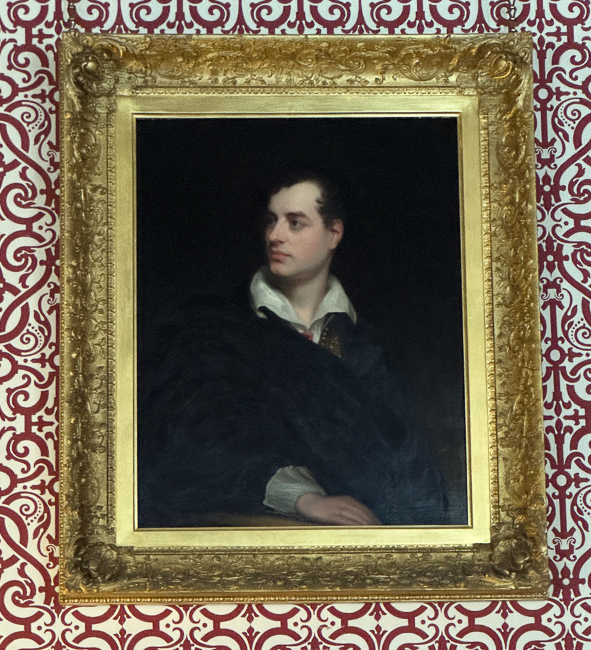
Eventually, the title fell to George Gordon Byron, then aged 10, who became the 6th Baron Byron and later the famous and notorious poet.
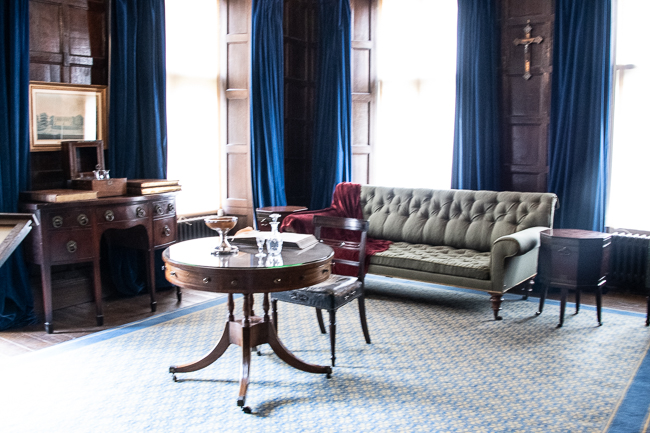
However, the title did not come with any money, so Byron and his mother moved to the nearby town of Southwell and neither lived permanently at Newstead for any extended period. Byron’s view of the decayed Newstead became one of the romantic ruins, a metaphor for his family’s fall:
Thro’ thy battlements, Newstead, the hollow winds whistle;
Thou, the hall of my fathers, art gone to decay.
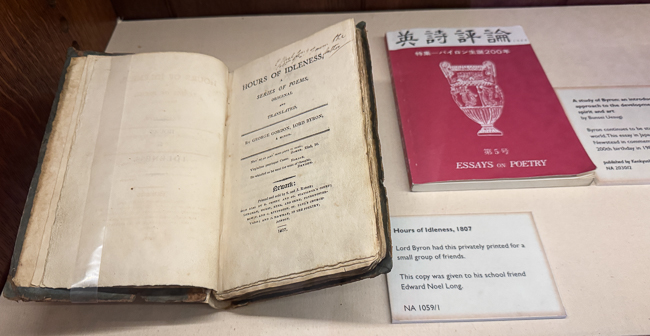
Eventually, Thomas Wildman, who had been at Harrow School with Byron and was heir to Jamaican plantations, purchased the estate. It is due to Wildman that the home stands as it is, restored and a museum to Lord Byron.
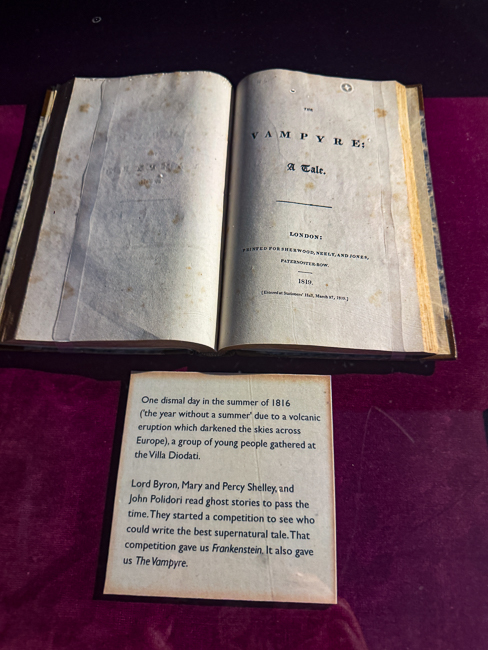
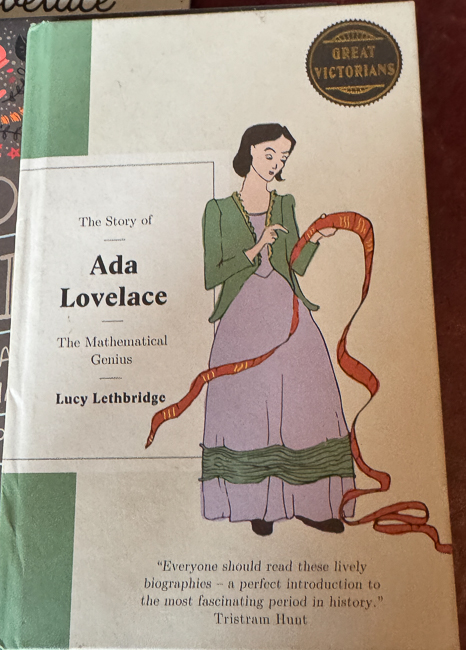
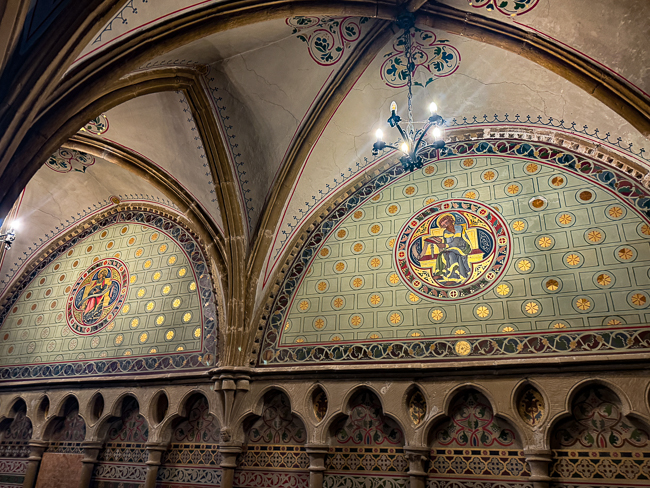
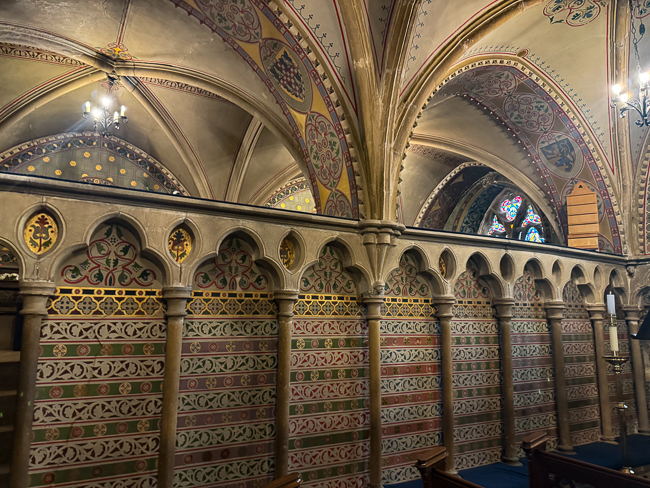
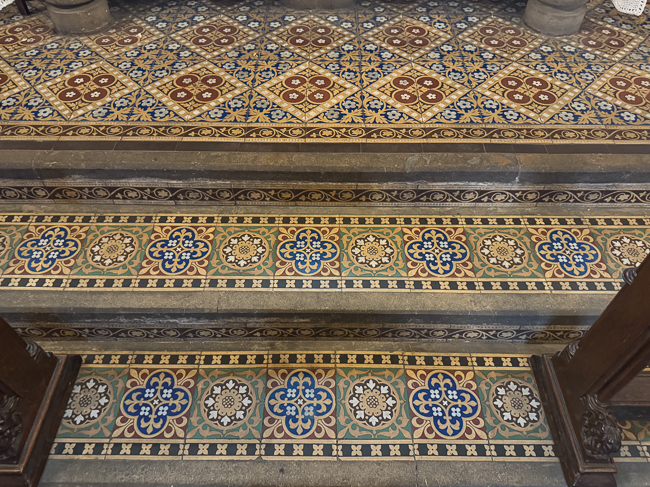
Thomas Wildman, owner of Newstead from 1817 to 1860, restored the chapel in the mid-19th century. In about 1864, William Webb commissioned Charles Buckler to redecorate it. The Gothic revival stencilled wall painting in the style of William Butterfield dates from this period. These designs are said to be taken from illuminated manuscripts of Henry II’s reign and decorations discovered beneath the ceiling plaster.
*
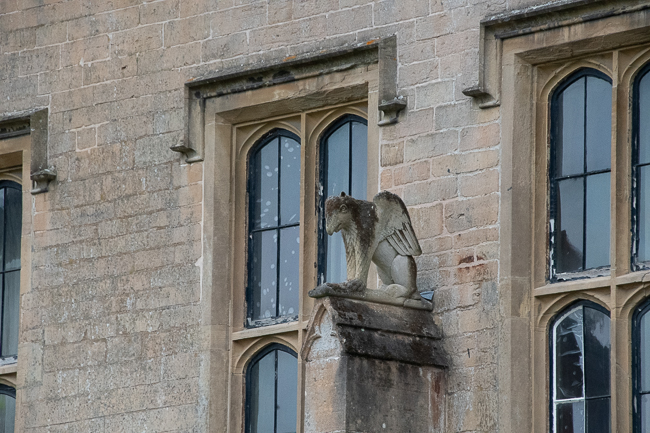
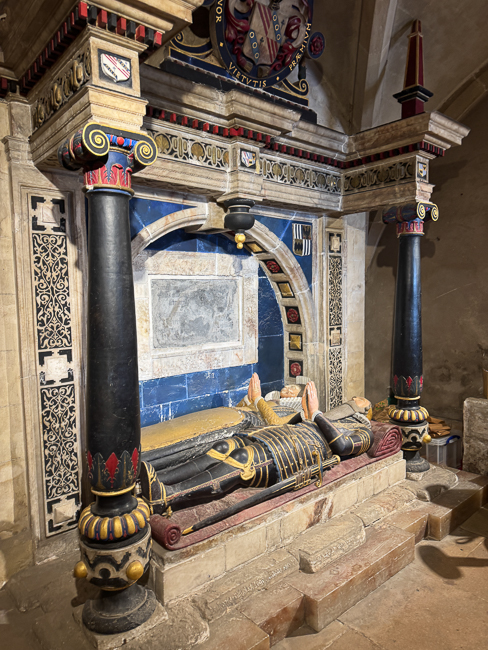
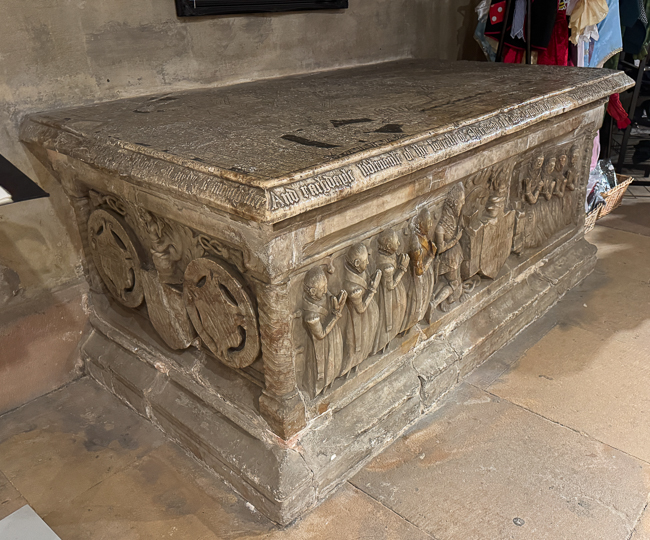
The crypt is now the Gift Shop:
*
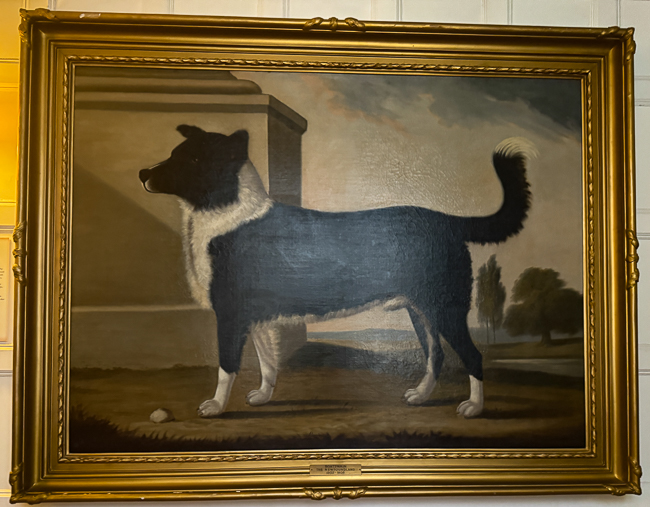
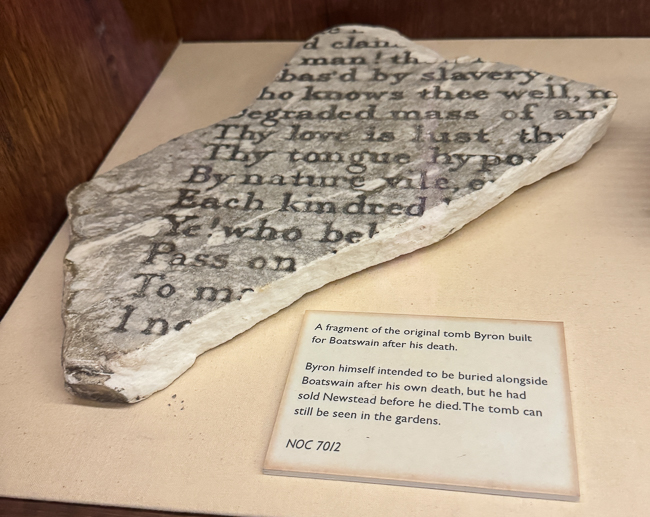
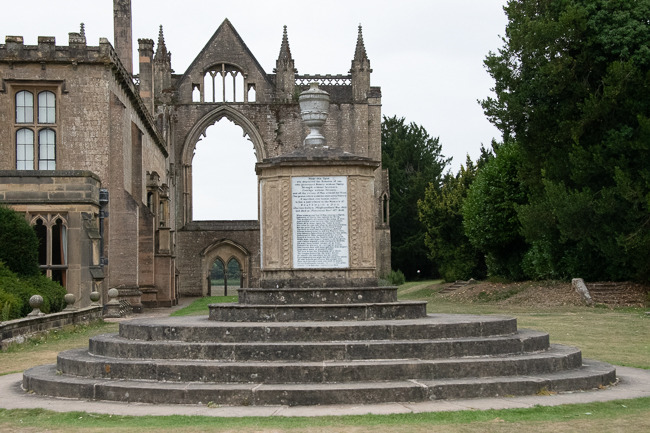
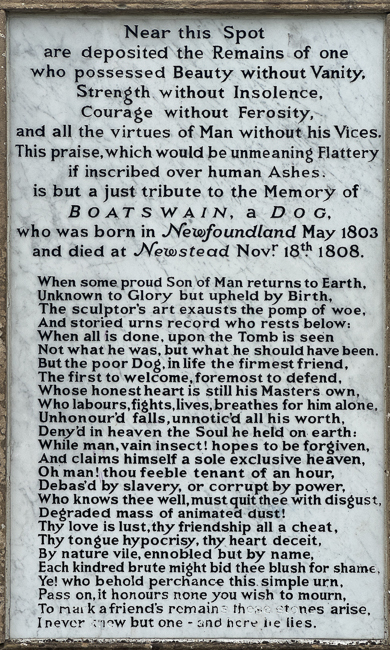
Botswain
Byron was dedicated to his Landseer dog, Boatswain.
We visited Welbeck today, but they will not allow cameras on the property.