August 15, 2025
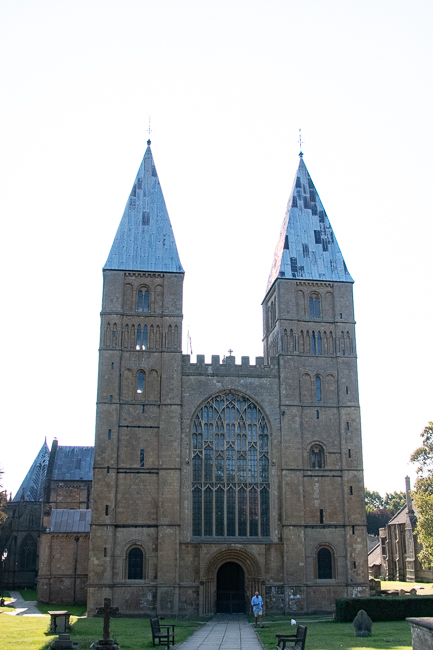
The current church is the successor to one built in 956 by Oscytel, archbishop of York. Some late eleventh-century fabric survives from this church, but the majority of the building dates from between 1108 and c. 1150, when it was reconstructed in the Romanesque style.
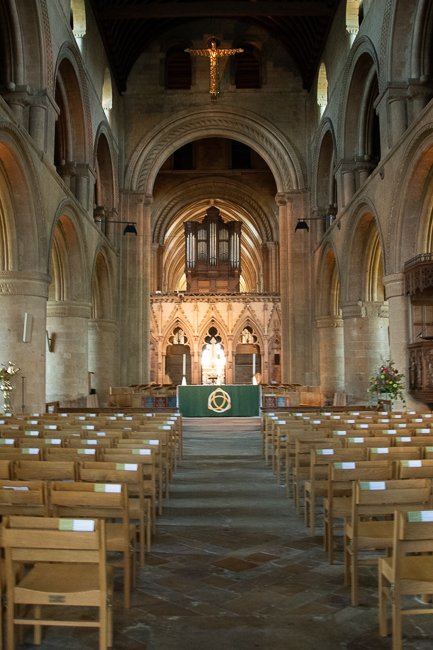
The Norman reconstruction of the church began in 1108, probably as a rebuilding of the Anglo-Saxon church.
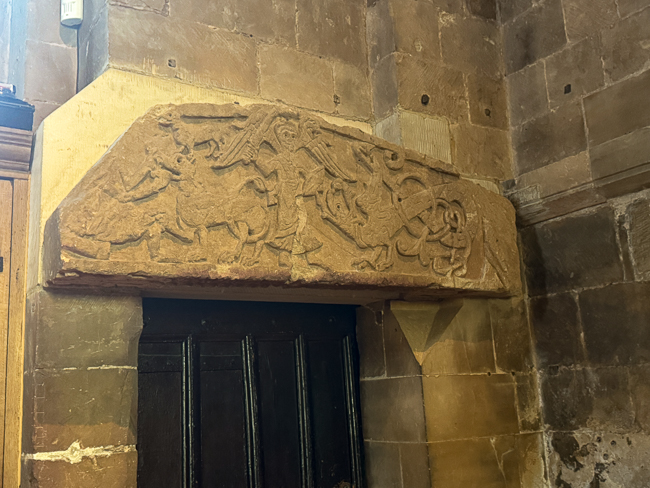
The ‘Southwell Tympanum’ is variously dated from the 9th to the 11th century by experts. This massive stone is set in a 12th-century wall, indicating that it was likely brought here from elsewhere.
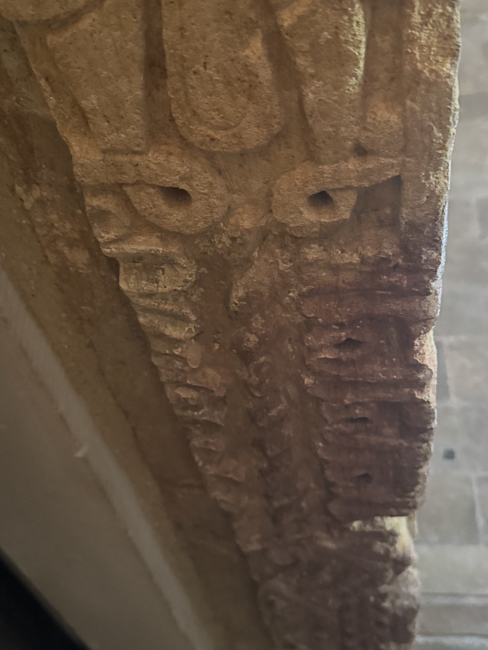
The carving shows the Archangel Michael wielding a sword, in combat with a serpent, or dragon. To one side is a damaged figure, presumably King David, pulling at the gaping jaws of a lion. Interestingly, the underside of the stone is carved in a Celtic interlace pattern, which stylistically seems much earlier than the main carvings.
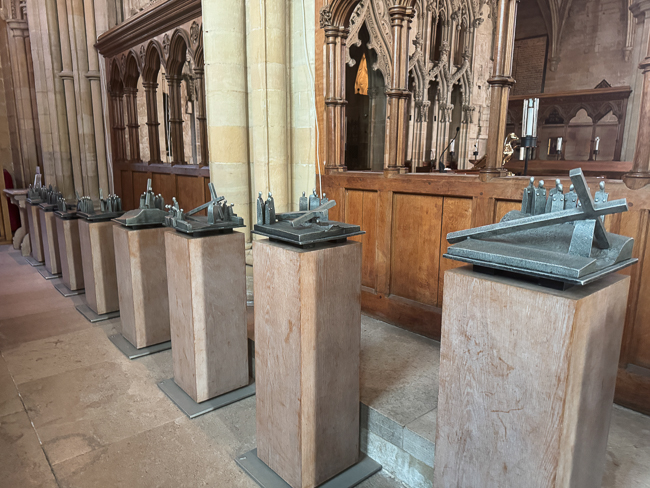
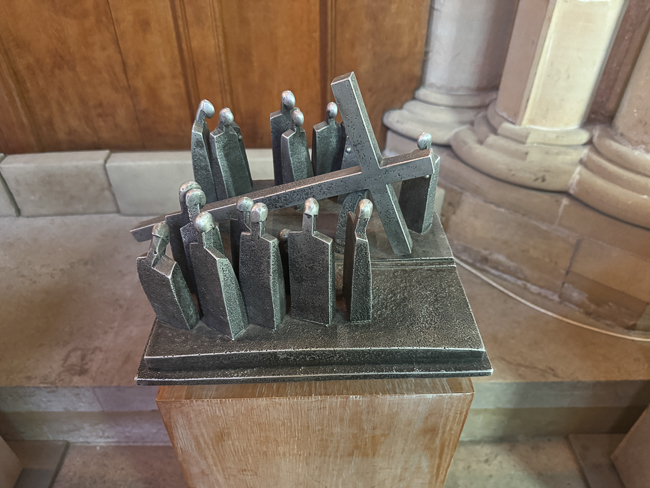
I was enamored with these very modern Stations of the Cross by Jonathan Clark, done in 1999.
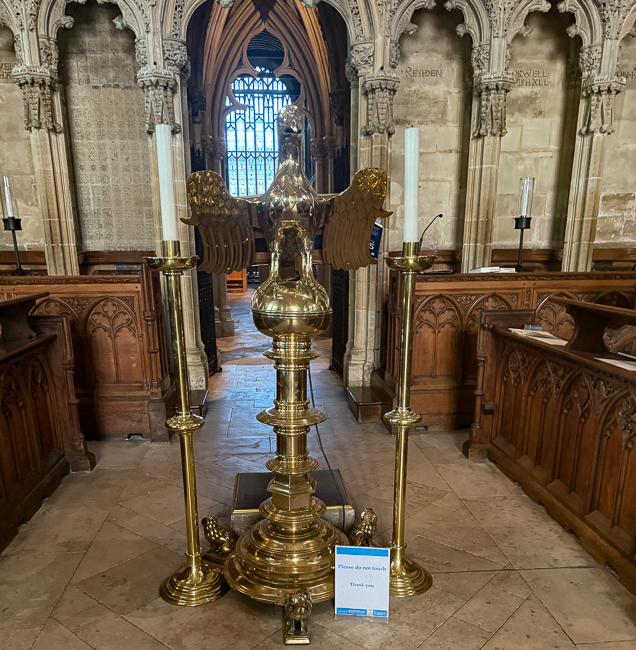
It is said that this late medieval eagle lectern was discovered at the bottom of a lake in the grounds of Newstead Abbey, the former home of the poet Lord Byron.
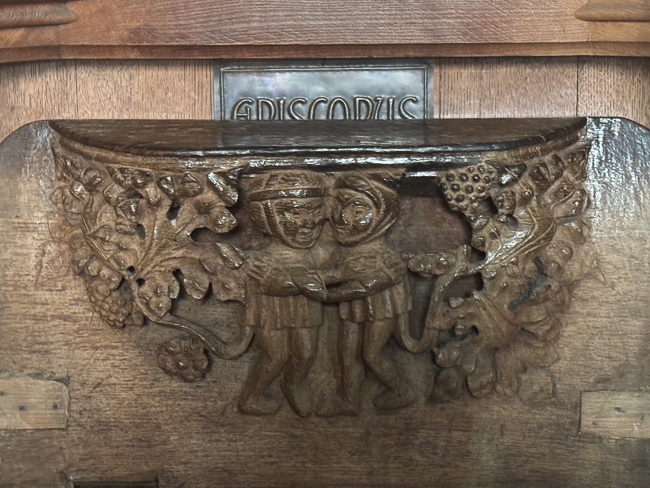
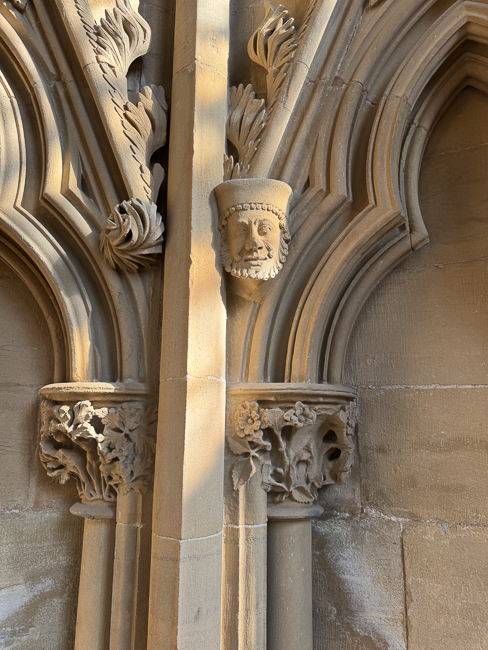
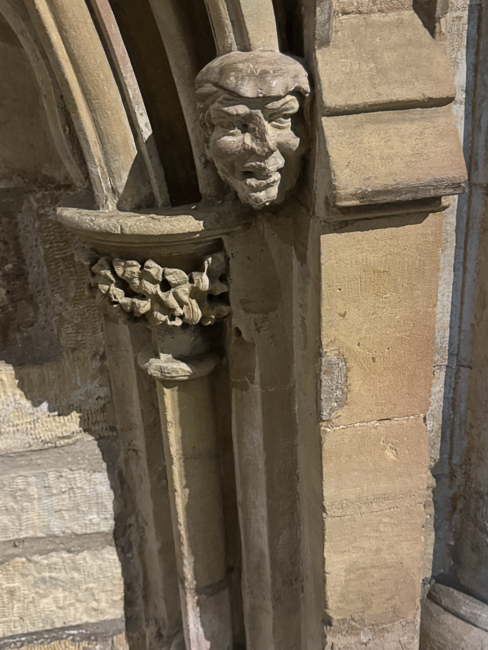
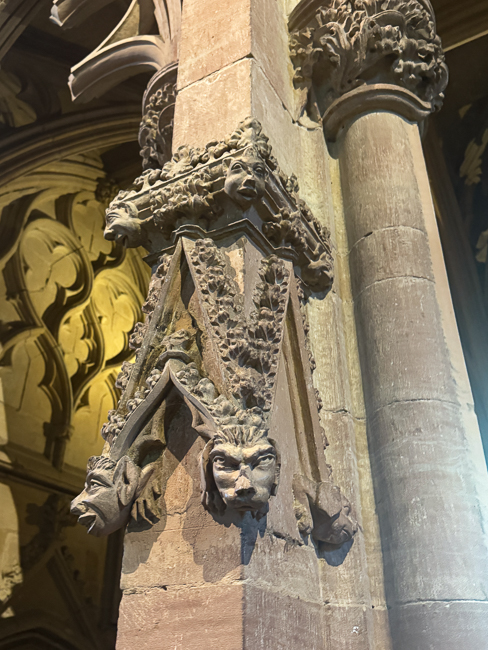
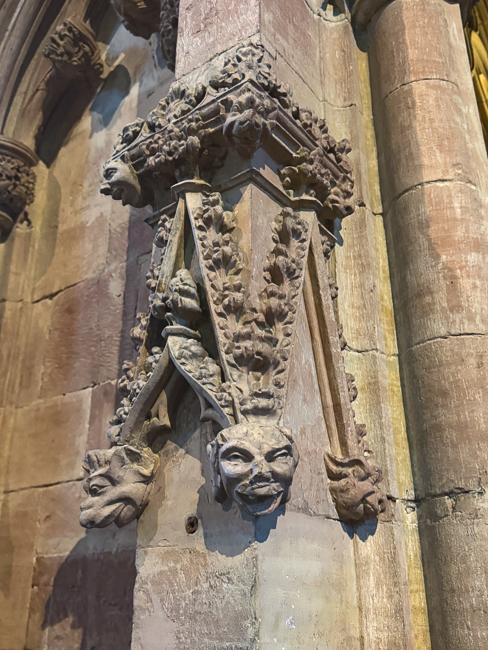
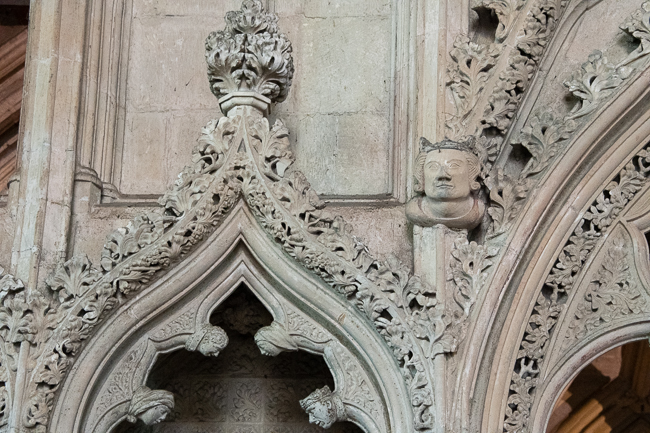
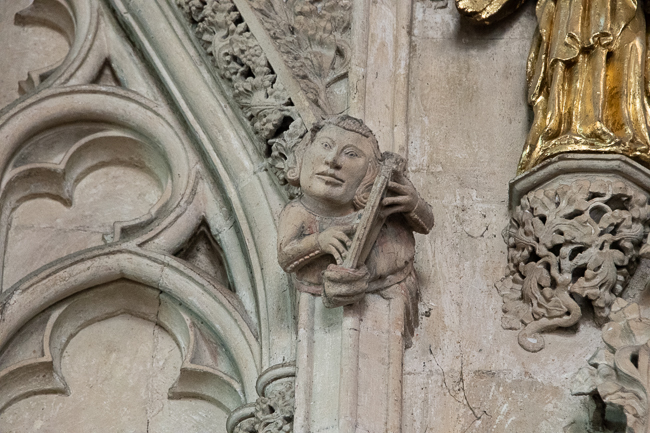
There were so many wonderful stone faces in the minster that I could not resist.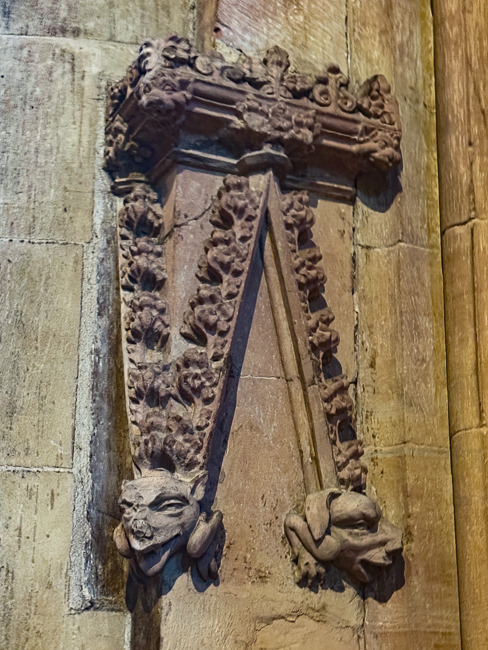 *
* *
*
* *
*
The Chapter House
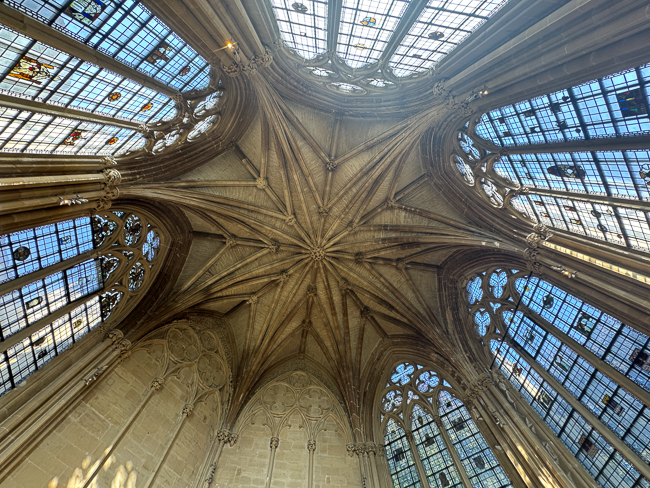
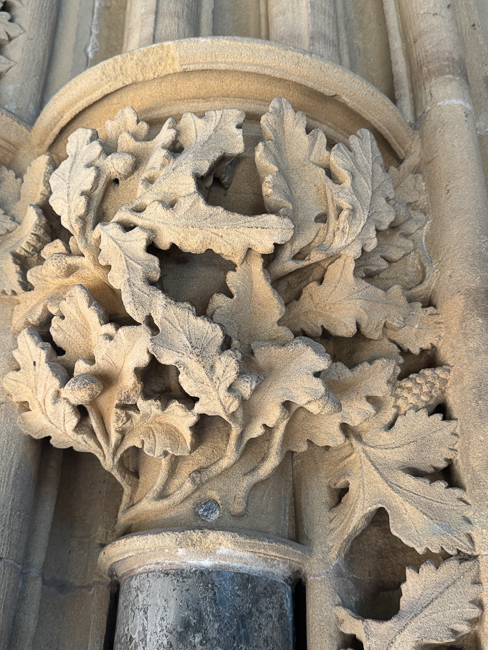
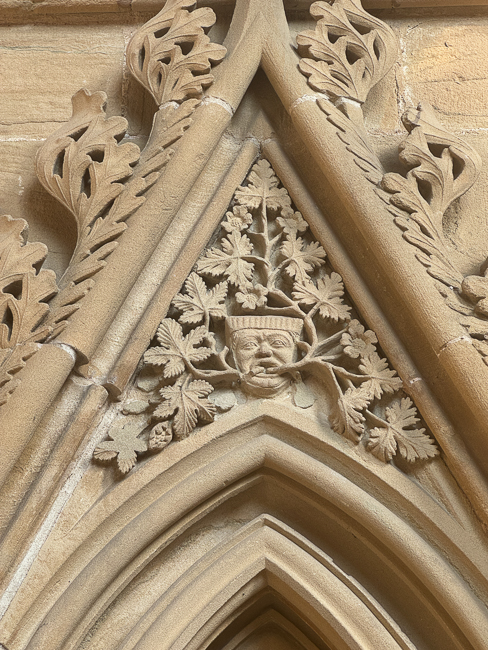
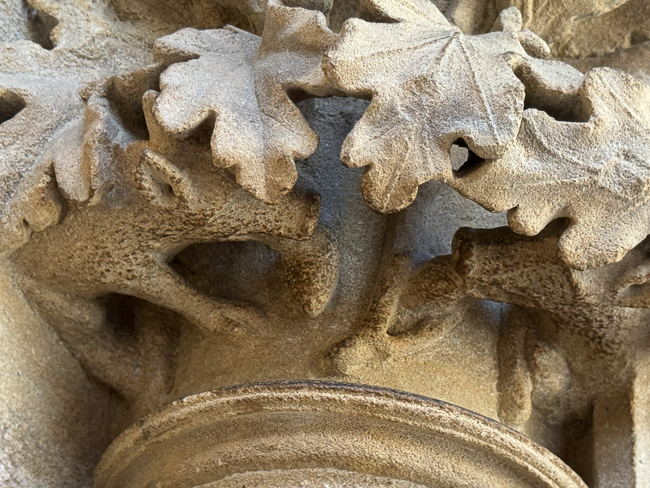
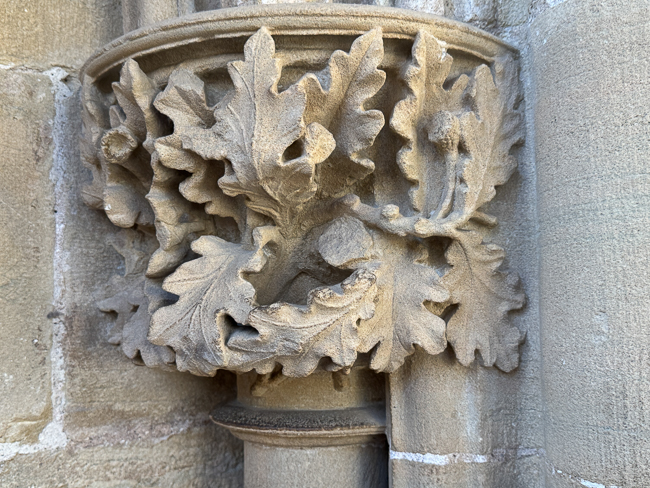
The carvings of plants, animals, and green men found within the Chapter House are known collectively as ‘The Leaves of Southwell’. They are regarded as the best example of 13th-century naturalistic carving in the United Kingdom
*