May 2026
Dubrovnik was founded about 614 by Roman refugees fleeing the Slav and Avar sack of Epidaurus, just to the southeast. After the fall of Rome, Dubrovnik was under the Byzantine Empire. From 1205 to 1358, it acknowledged Venetian sovereignty while retaining much of its independence. The liberal city-republic gave asylum to refugees of all nations—one of them, according to legend, was King Richard I (the Lionheart), who landed on the offshore island of Lokrum in 1192 on his return from the Crusades.
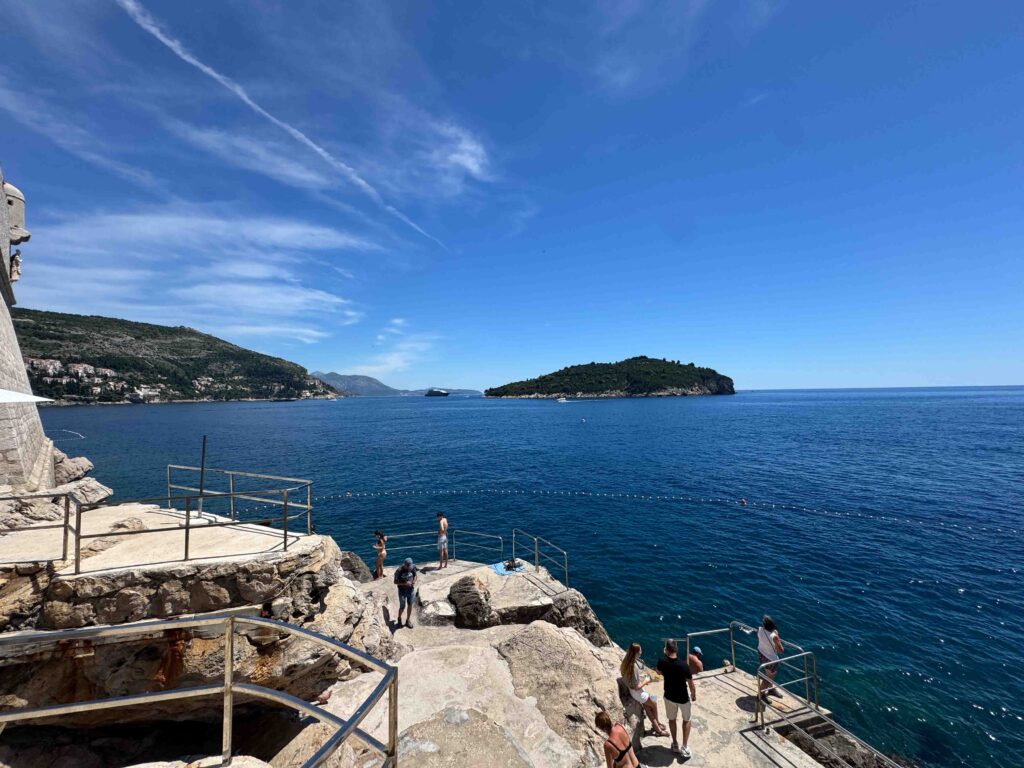
In 1420, when Dalmatia was sold to Venice, Dubrovnik remained a free city in all but name.
In 1667, an earthquake destroyed parts of the city, including the cathedral and many monasteries and palaces, and killed as many as 5,000 residents. The republic did not regain its prosperity until the Napoleonic Wars. Napoleon subjugated Dubrovnik in 1808 and gave it to Austria. In 1918, it was incorporated into Yugoslavia.
The Walls
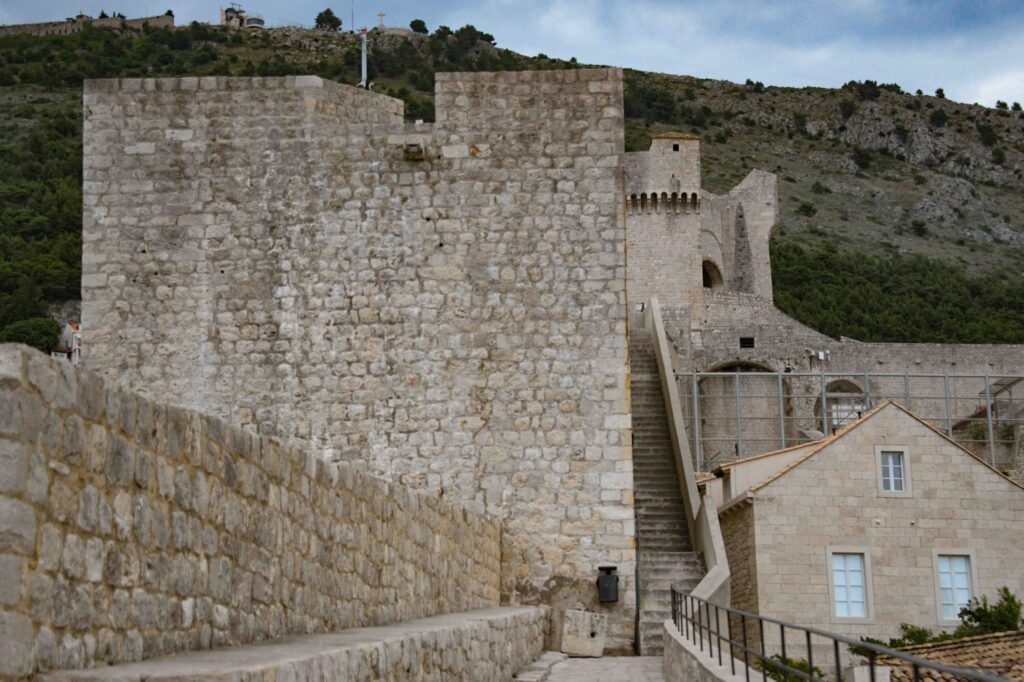
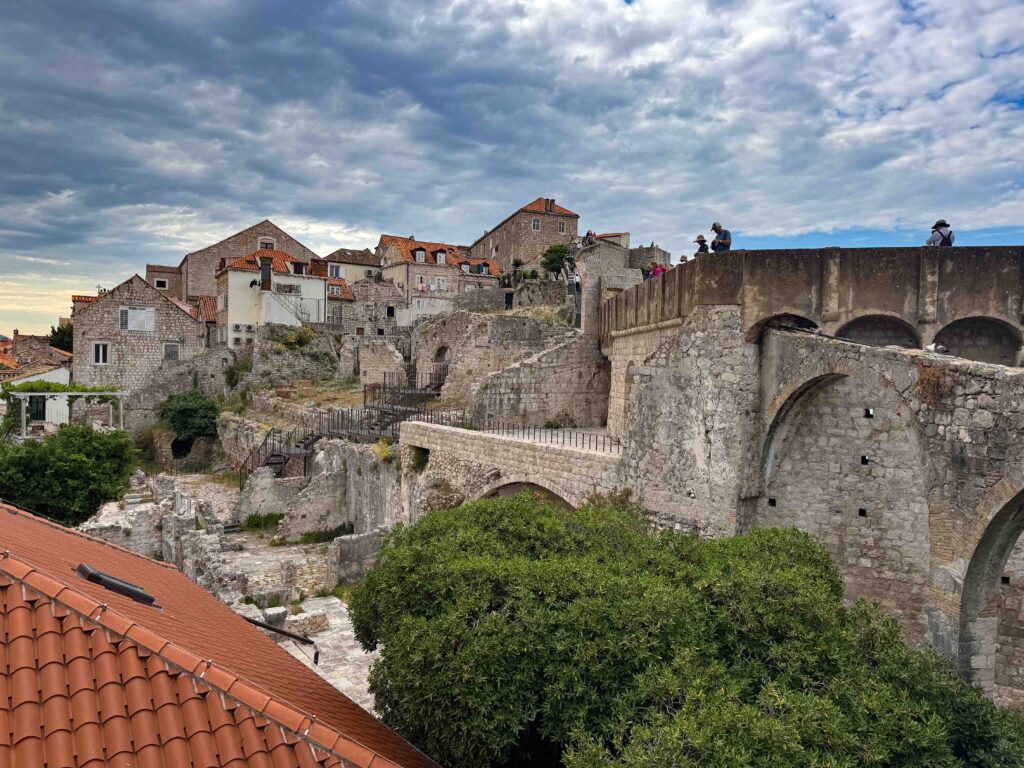
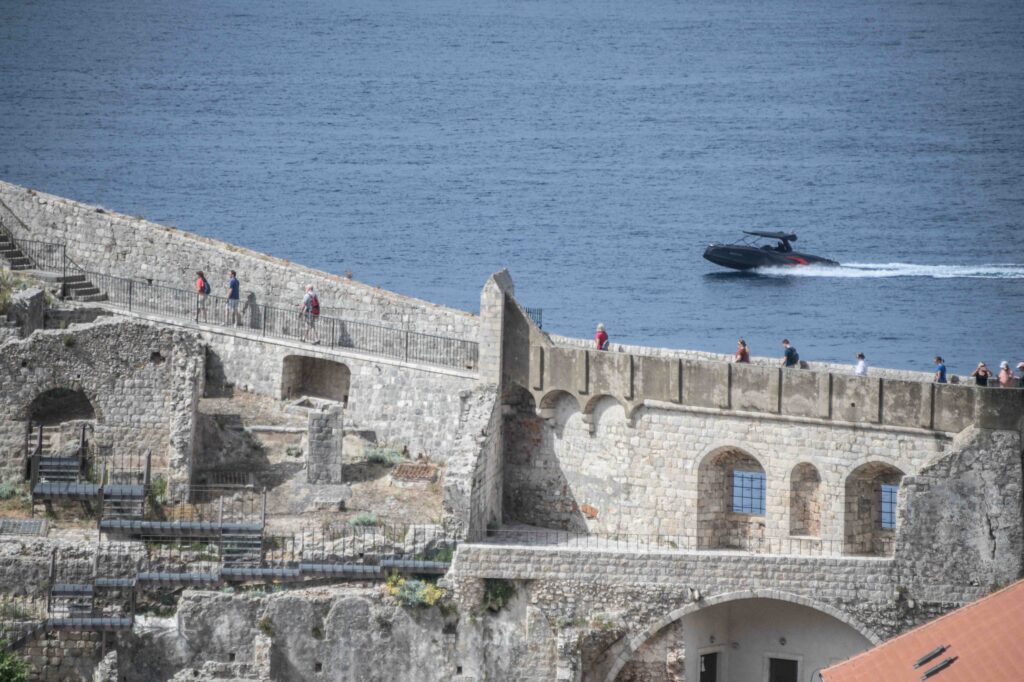
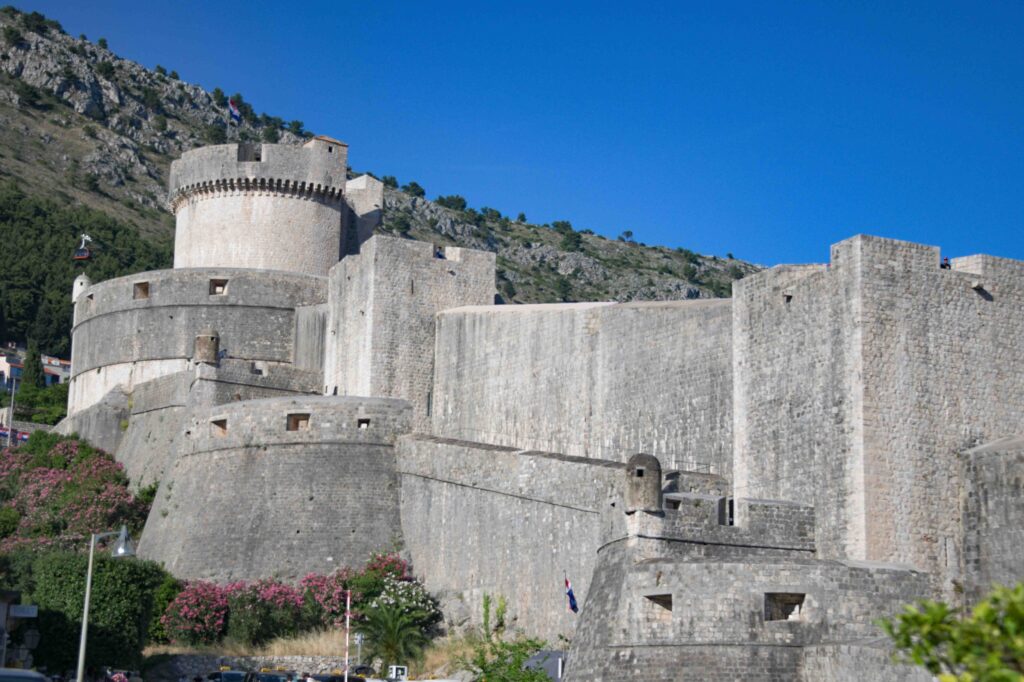
The best way to get a sense of the city is to walk the walls. The city walls, mostly double-walled, were erected by the 16th century and run for about 6,365 feet, encircling most of the old city, with a maximum height of about 80 feet, and LOTS of stairs.
*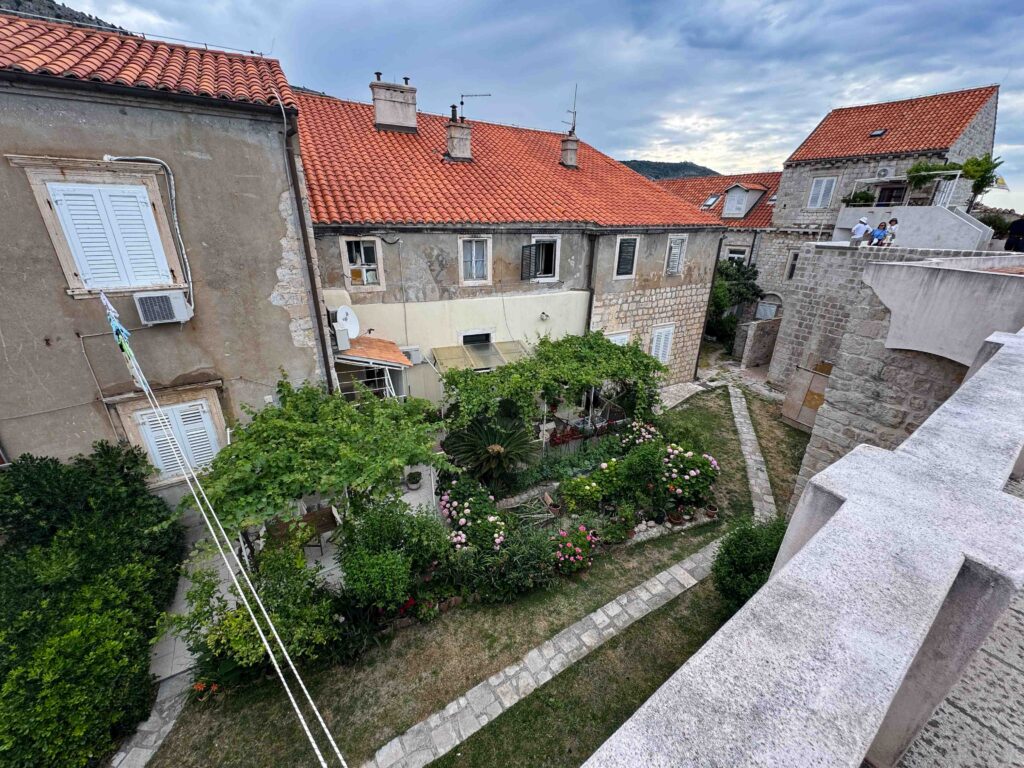
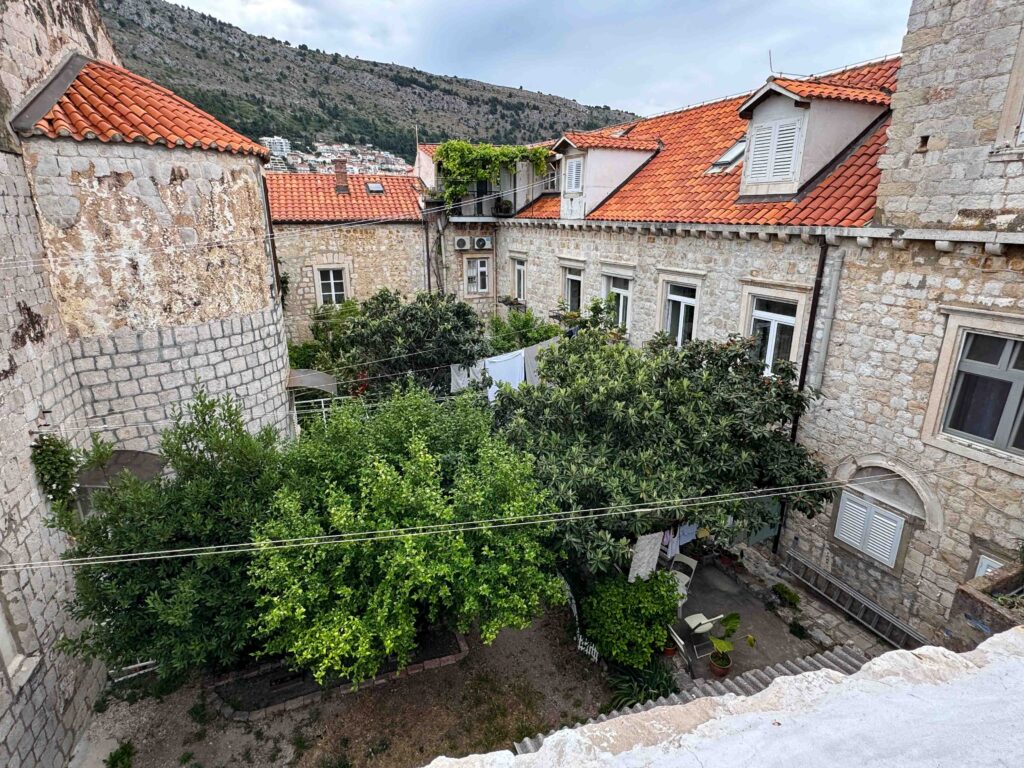
Peering down into the very few private gardens in the city
*
*
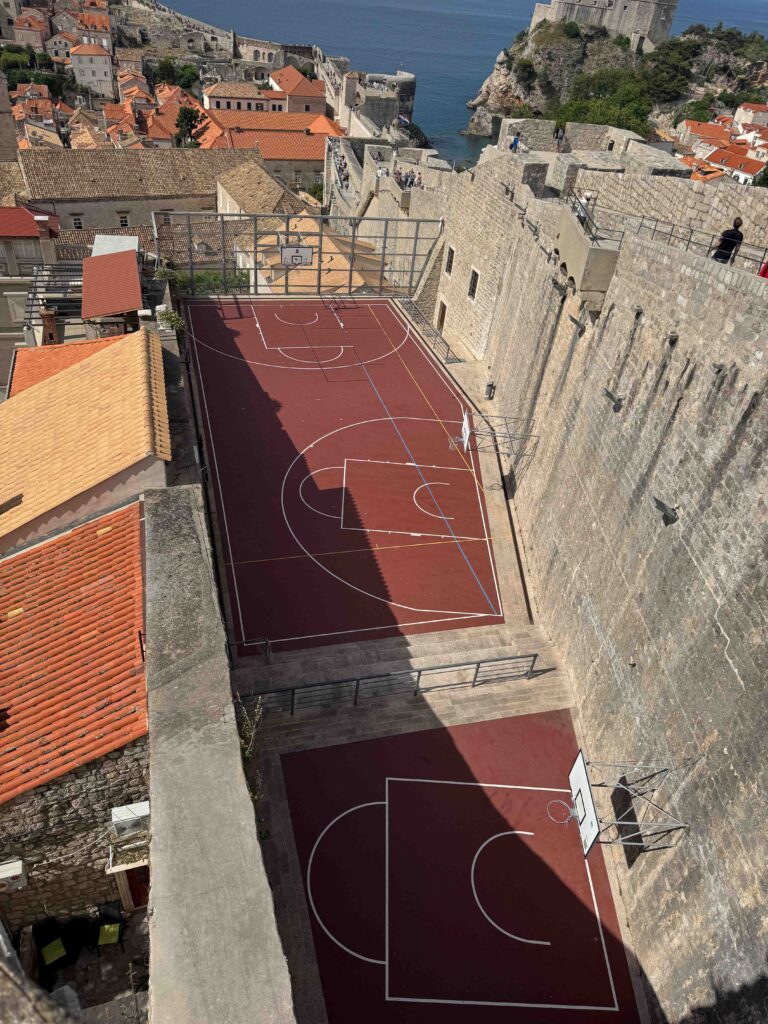
The growing popularity of the 3×3 basketball format, an Olympic sport since 2020, gives these courts on the wall a special meaning. The limited space and shape of the grounds made a full-court rectangular court infeasible, so instead, it is set up as 3×3 courts.
In 2022, Architectural Digest ranked the Old City 3×3 courts among the world’s “best designed.”