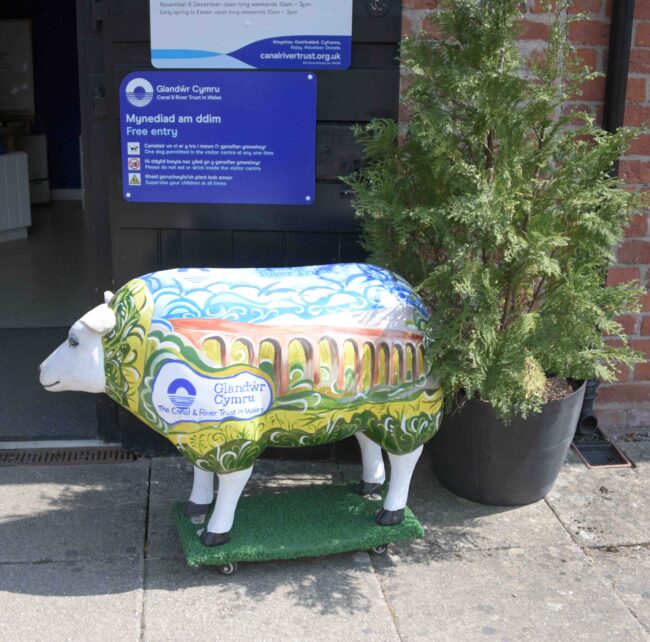
July 2026
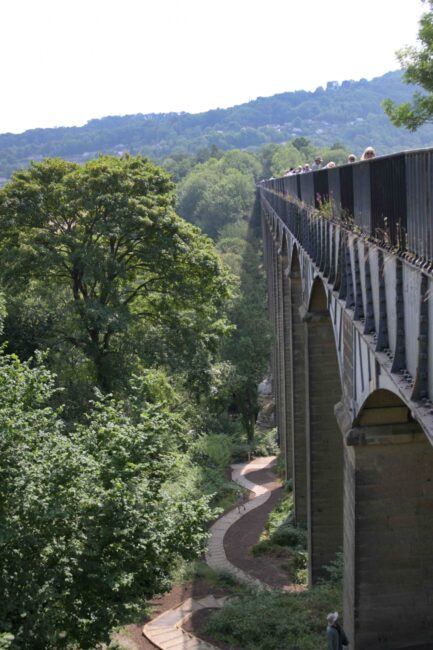
The Pontcysyllte Aqueduct carries the Llangollen Canal across the River Dee in the Vale of Llangollen in northeast Wales.
The 19-arched stone and cast iron structure is for use by narrowboats and was completed in 1805, having taken ten years to design and build. It is the longest aqueduct in Great Britain as well as the highest canal aqueduct in the world. A towpath runs alongside the watercourse on one side.
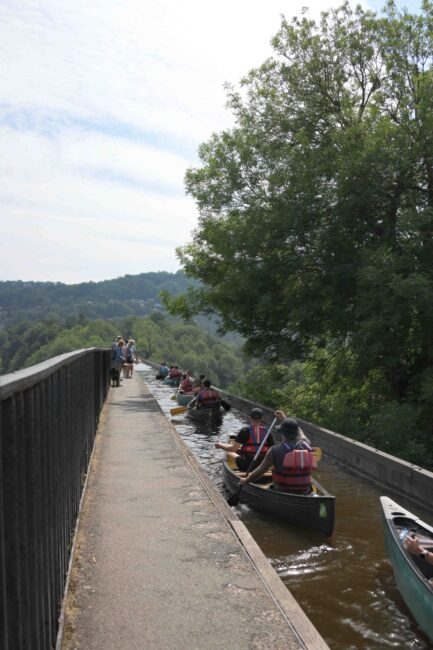 The aqueduct was designed by civil engineers Thomas Telford and William Jessop.
The name Pontcysyllte is Welsh for “Cysyllte Bridge” or “Bridge of Cysyllte”; Cysyllte is the township where the southern end of the bridge sits.
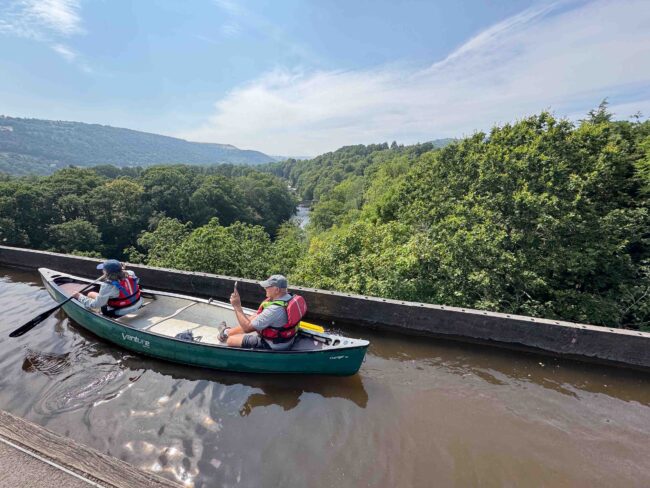
By 1939, boats had stopped using the canal, and it was formally closed to navigation under the London Midland and Scottish Railway (Canals) Act 1944.
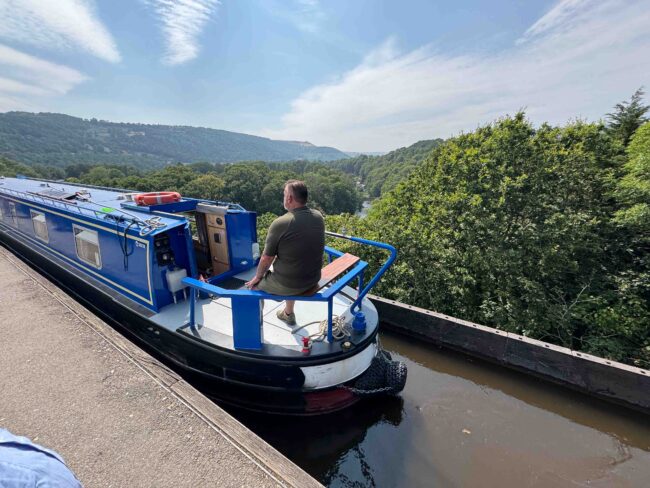 In the latter half of the 20th century, leisure boating traffic began to rise. It has since become one of the most popular canals for holiday boats and tourists because of its aqueducts and scenery. The Pontcysyllte Aqueduct is now maintained and managed by the Canal & River Trust.
The structure is part of a UNESCO World Heritage Site.