I read about this site without conducting enough research. When we arrived, I was surprised to find it was a modern site of sculptures of Saints. After just a short time, I went from being disappointed at being lured into what felt like a tourist trap to having a fascinating and fun visit.
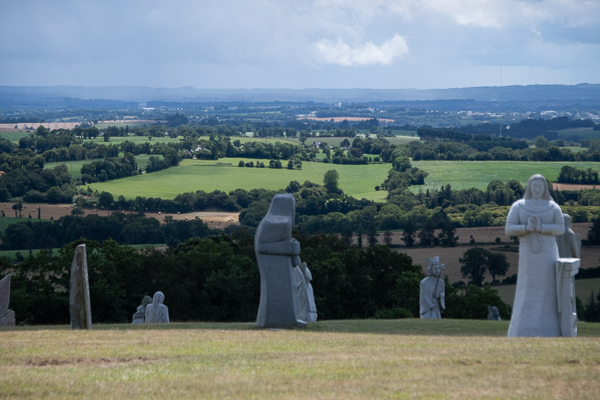
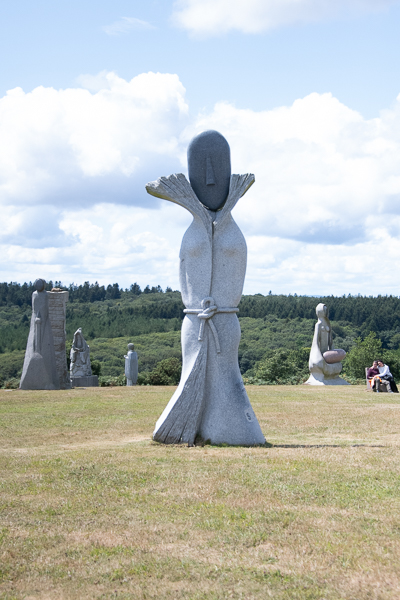
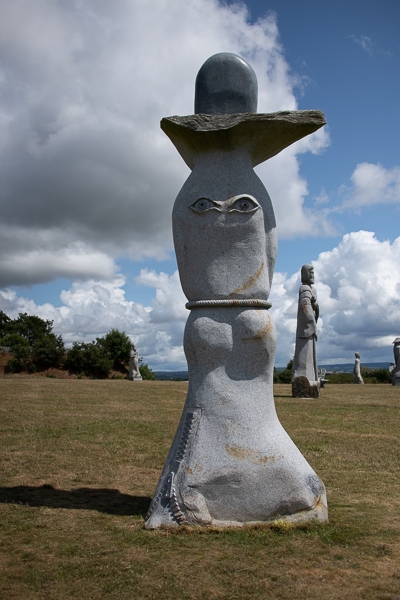
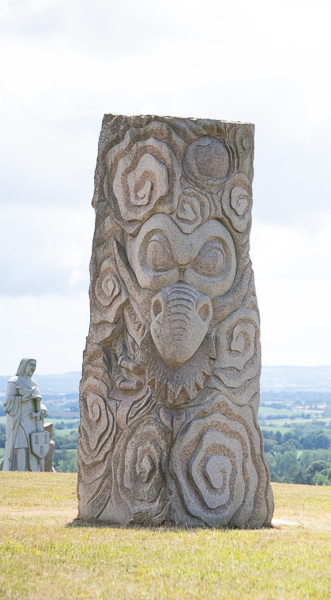
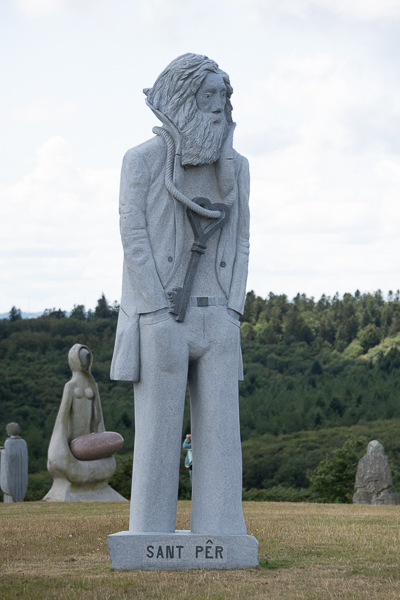
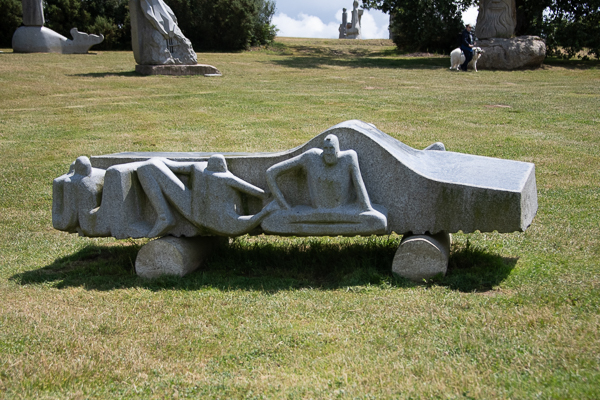
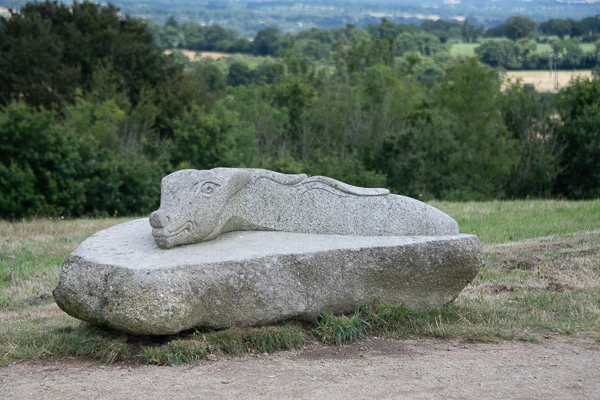
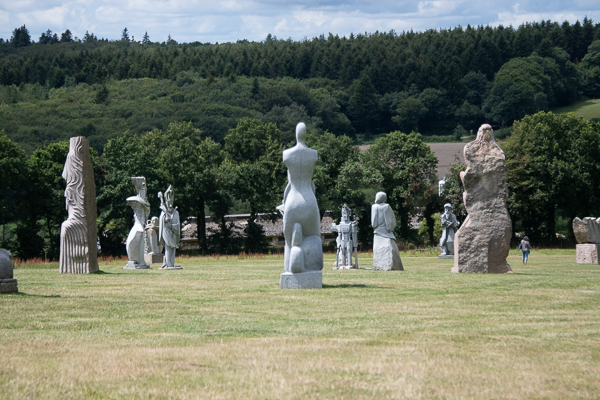
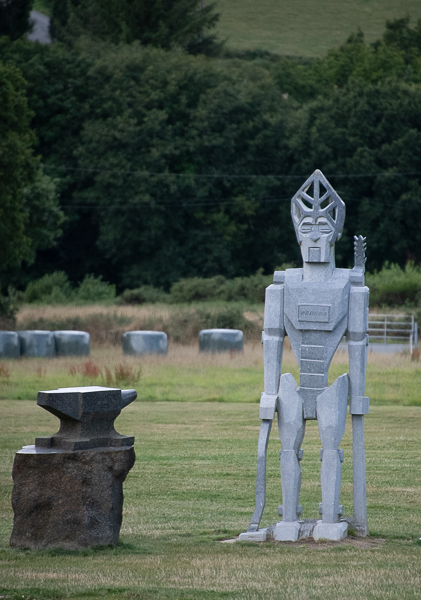
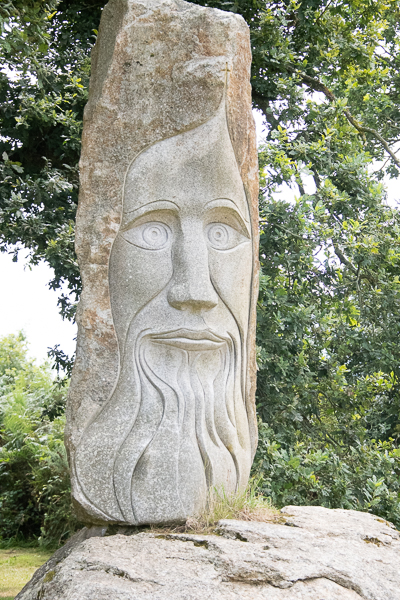
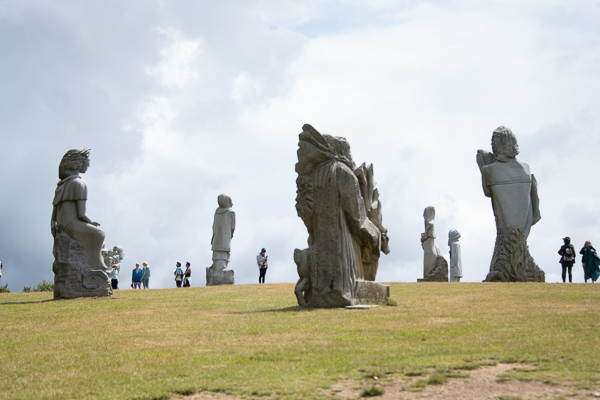
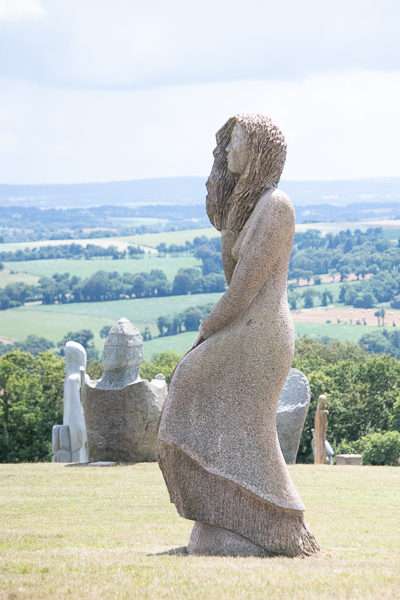
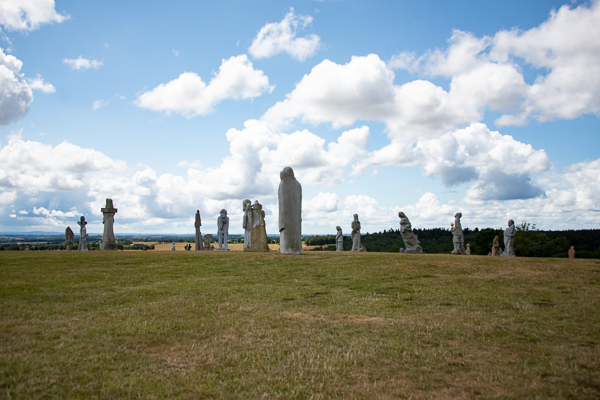
This vast project consists of 200 (and growing) statues of Breton Saints. They overlook the Monts d’Aree and Central Brittany. Some are whimsical, some are stunning interpretations in modernist angles, some sappy, and some childish. I couldn’t stop snapping pictures. However, I did not see them all, and I did not photograph all that I saw. So…..here goes.
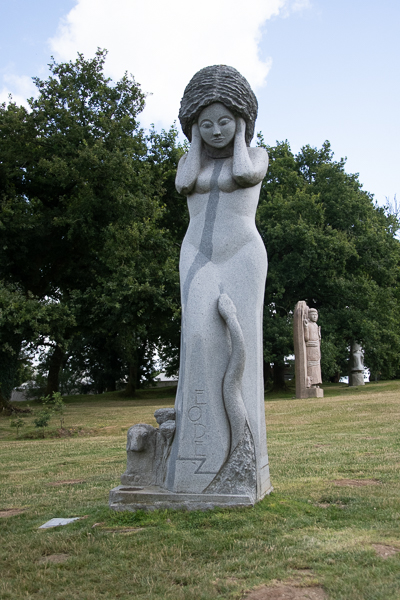
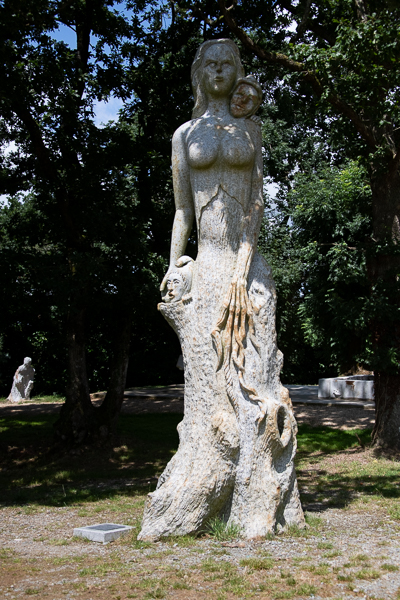
Eodez and Gurguy live with their father in the 6th century. When he comes of age, Gurguy leaves home, but Eodez has to stay with her wicked stepmother, who is wildly jealous of Eodez’s many suitors and banishes her to the countryside.Saint Tangi (formerly Gurguy) decapitated his sister after falling for a trick by their stepmother. He has been told his sister was sent away due to immodest behaviour. A 40-day fast was imposed upon him as a form of penance, and after he was named Tangi. He went on to become an abbot.
The amount of statuary is overwhelming.
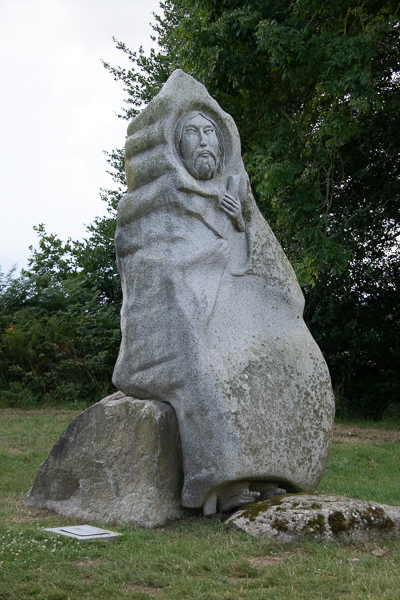
This was my favorite.And this was the description of the above “Saint.” (It is blank.)Saint Goneri lands with his mother Eiboubane in the 5th Century. One day, lost in prayer, he fails to hear the local landowner greet him. The landlord orders his servants to beat him, but god punishes them instead. Then a prayer from Goneri brings everything to order. Tradition tells that he saved a wedding party from being crushed beneath rocks split by the devil by holding them aloft with a simple wave of the hand
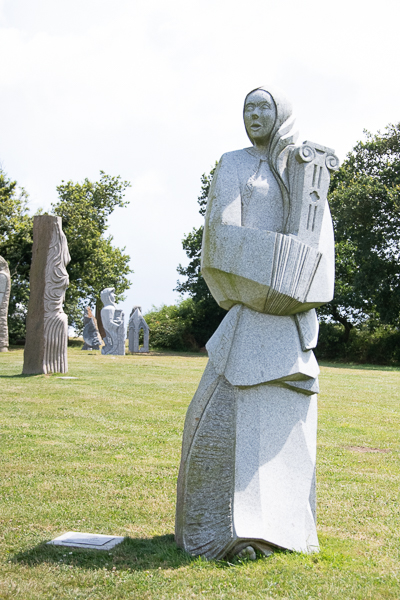
Saint Ke was born in the 5th century in Great Britain. He was a priest, then a bishop, and then a hermit. Ki is called upon to cure toothaches, to protect cattle, and for fair weather to ensure a good harvest. The Saint-Ke fountain in Cleder is said to offer help to pregnant women.Saint Aziliz (Cecilia) was a Roman martyr from the 2nd and 3rd centuries. She took a vow of chastity despite being forced to marry. During a period of Christian persectution she turned her home into a place of worship. Condemned to death by her husband Valerian, she survived an attempt to drown her before being beheaded. She is depicted playing the harp and accordion as a tribute to the centenary of the Festival de Cornouaille.
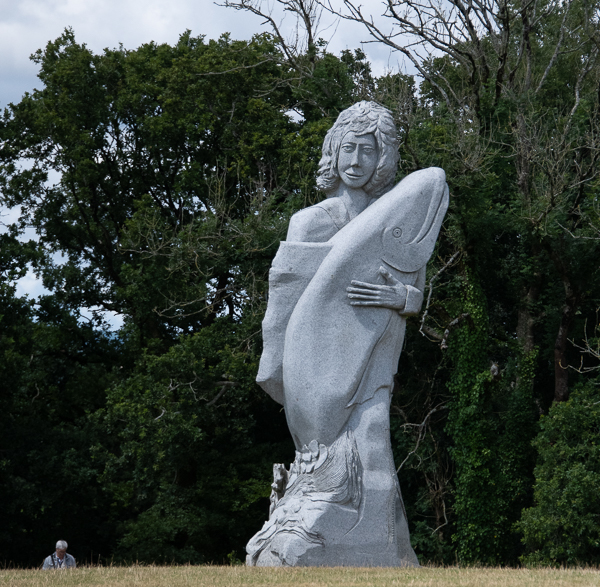
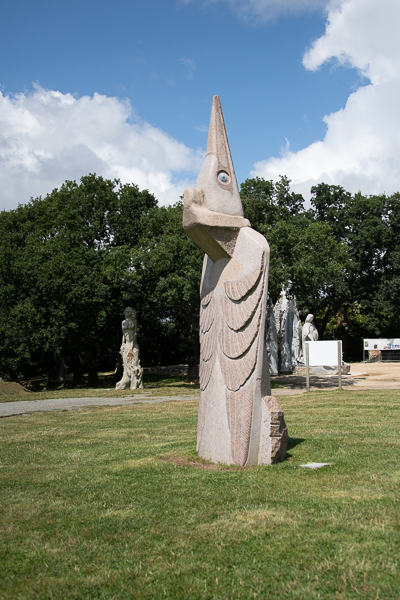
Saint Jean-Marioe de la Mennais was born in the 18th century into a family of shipowners. He dedicated his life to the development of schools in Brittany. The statue represents a gannet, capable of traveling long distances, just like his ideas. He is represented as a child with his arms around the bird.Sainte Riwanon was born in the fifth century and was raised by her two older brothers. God ordered her to marry the bard-Hoarvian. An angel told her that their son would become a great servant of God. Saint Riwanon prayed that her child would never see the lies and deceits of the world. Thus Saint Herve was born blind. Riwanon raised her son alone until he was seven, then she left seeking isolation. She died on the 19th of June in 535.
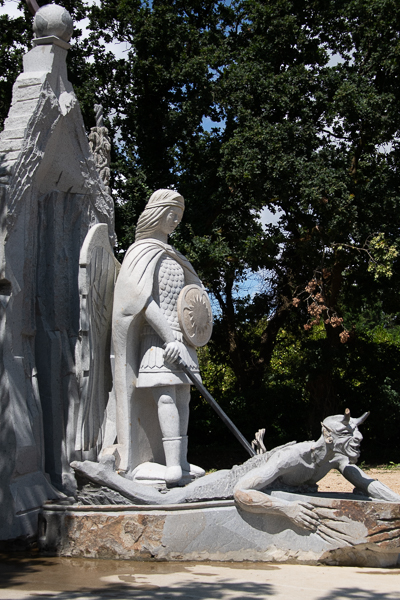
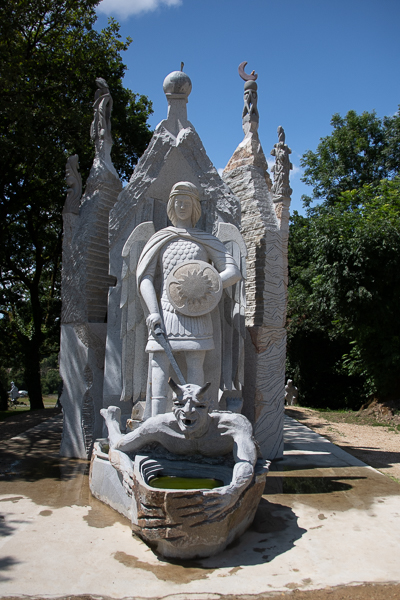
According to a sign at the statue, the Fountain of the People in Breton is a grandiose sculpture of Saint Michael the Archangel slaying the dragon.
Saint Marie Martin, named St. Pataude, was murdered in 1795 because of her republican commitment. Raped and tortured, she was tied up to, or hanged from, a tree. Numerous miracles are attributed to her, in particular the cure of paralysis in children.
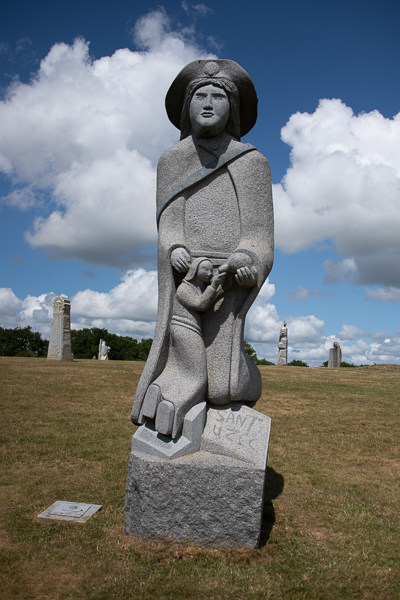
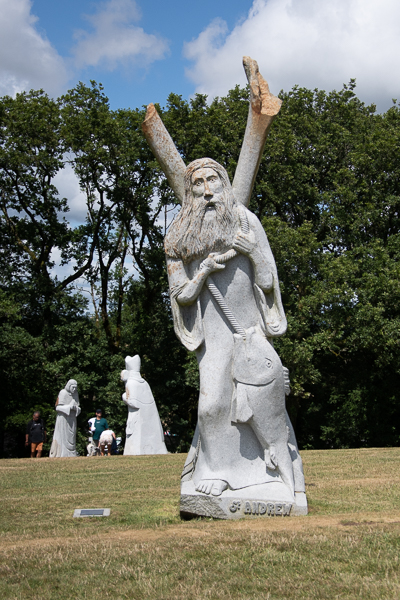
Saint Uzec was born in the 7th Century. His cult spread to Brittany. He set up his hermitage on the banks of the Canche river. He is the patron saint of pilgrims. He carries a bag and wears a pilgrim’s hat adorned with scallop shells, a reference to the pilgrims of Santiago de Compostela. Here he is giving milk to a child for strength.Known as the Nantes Children or the Nantes Martyrs. Saint Donasian and Rogasian are regarded as the first Breton martyrs and patron saints of Nantes. They were arrested, refused to recant their faith, and were imprisoned. They were beheaded and their bodies are buried in a tomb beneath the basilica of Saint-Donaties in Nantes.Twina ar Mor was unable to marry her beloved. She prayed to god, and during her sleep, an angel revealed a potion to her. Unfortunately, the drink turned her loved one to ice. As compensation, she was granted three wishes. That her lover would be freed, that all true lovers would find joy, and that she would never marry. She is the patron saint of lovers.Saint Andrev was born between 5 and 10 CE in Bethsaida. Both he and his brother Simon Peter were fishermen called by Jesus to spread the gospel, making them “fishers of men”. He deemed himself unworthy of crucifixion in the same way as Jesus, so he was crucified bound with ropes to an X-shaped cross. He is the patron saint of fishermen and rope makers.
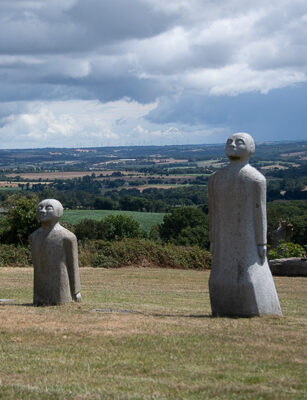
The views are stunning.
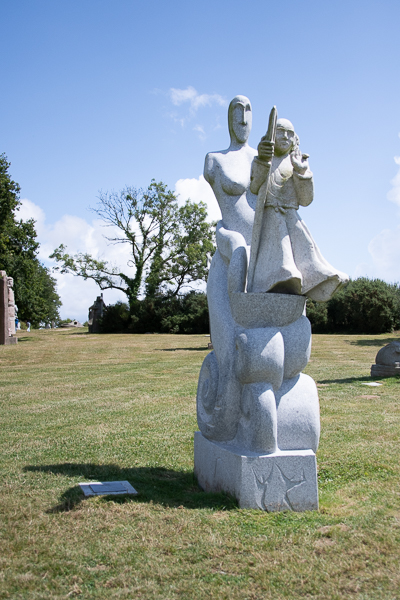
Saint Klervi was born into a holy family. A goose tore Klervi’s eye out; her father, forewarned by an angel, came to her rescue. He disemblowed the animal to retrieve the eye and placed it back, and her sight was restored.Budoc’s mother, Princess Azenor, was falsely accused of infidelity by her jealous stepmother, which enraged her husband, the King, who ordered that the pregnant Azenor be thrown into the sea in a cask. The cask washed ashore on the coast of Ireland. A villager who found the mother and newborn child summoned the abbot, and the child was christened the next day. Azenor became the washerwoman of the monastery, and Budoc was raised thereSaint Goustan was born in 974. At the age of 18, she was captured by pirates and then abandoned on an island. Every day she ate a slice from a fish, which miraculously reappeared whole each morning.Saint Odile. As the patroness of ocular afflictions and ear diseases, St. Odile is often depicted with a pair of eyes on a bookThe back of Saint Odile
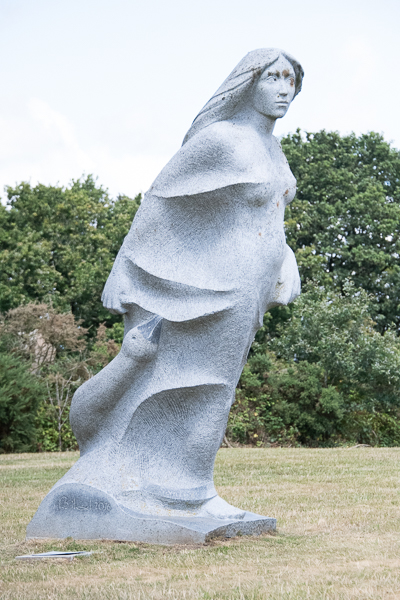
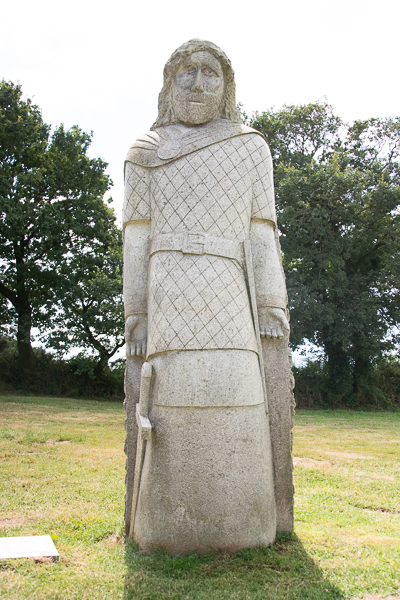
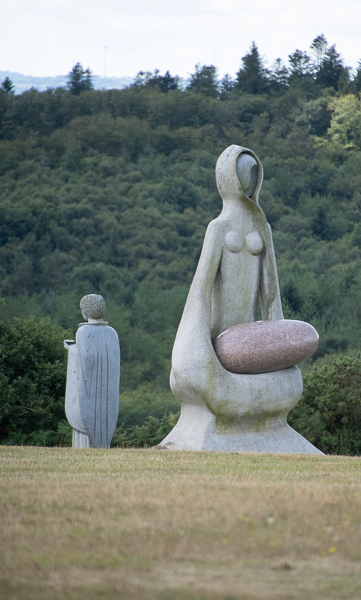
There were many statues I could find no explanation of.
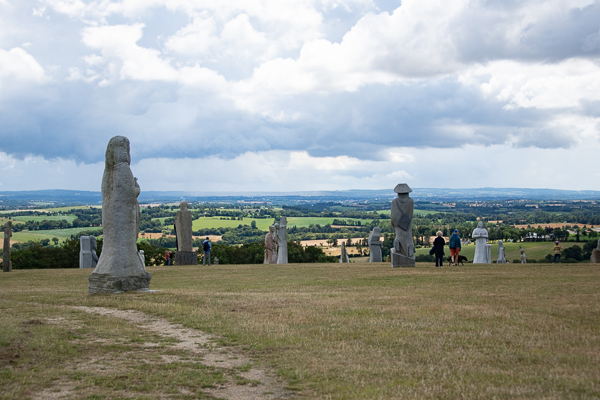 The views are stunning.