July 25, 2025
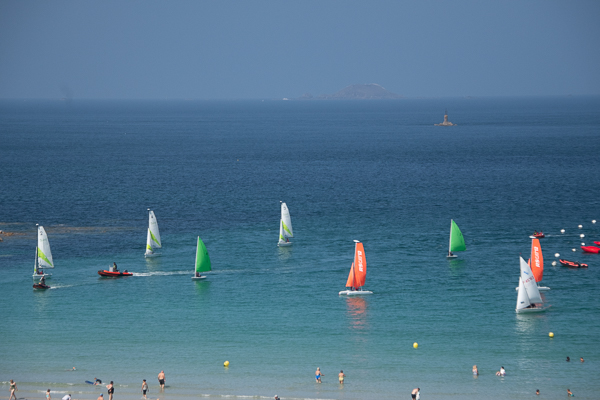
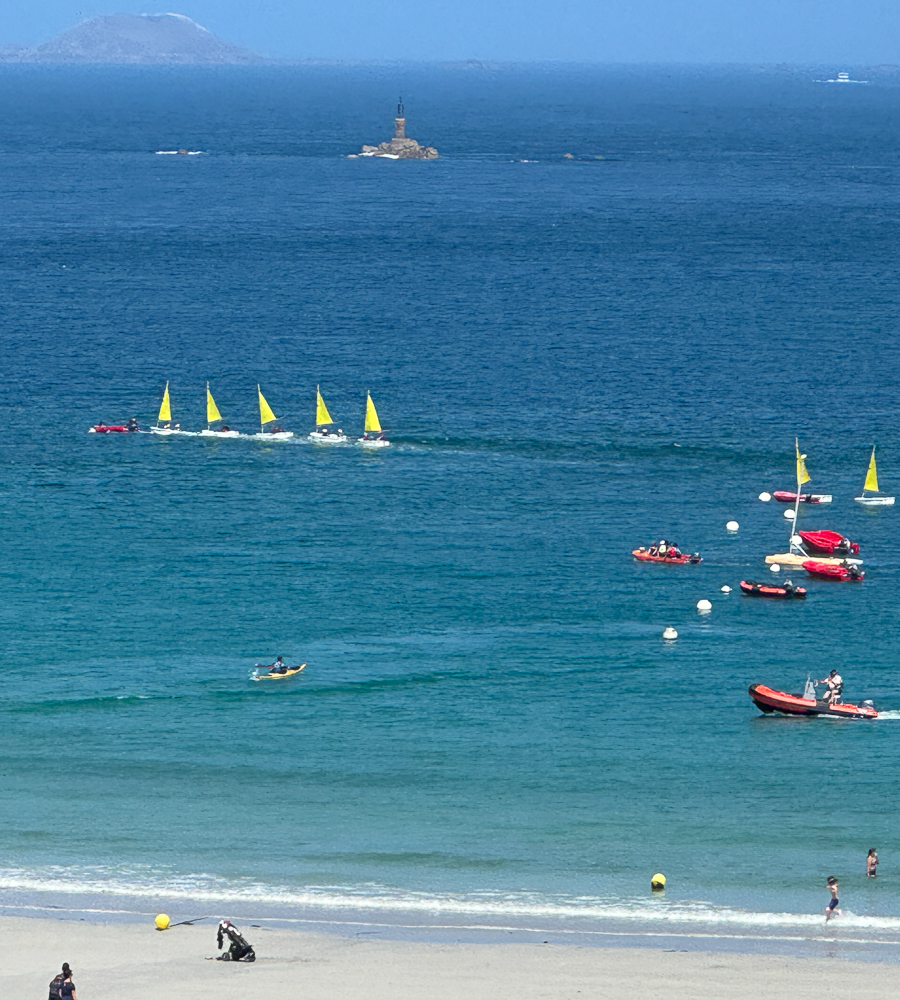
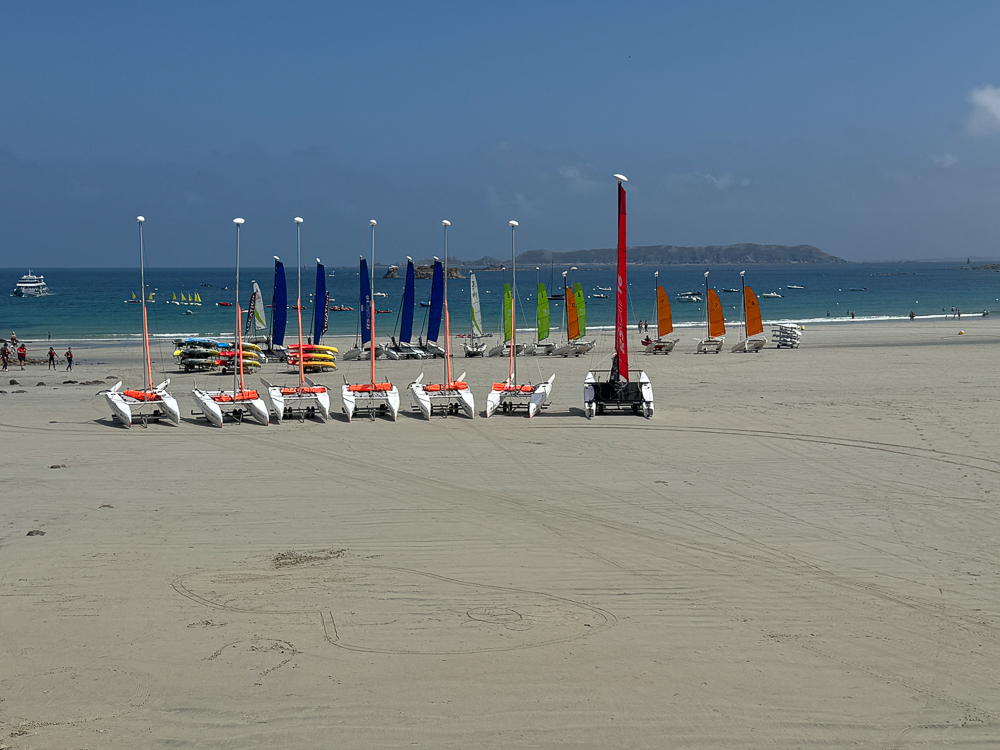
This stop was probably more about relaxing than visiting and sightseeing. We are staying at the Grand Hotel Perros-Guirec with rooms right on the sea.
* *
* *
*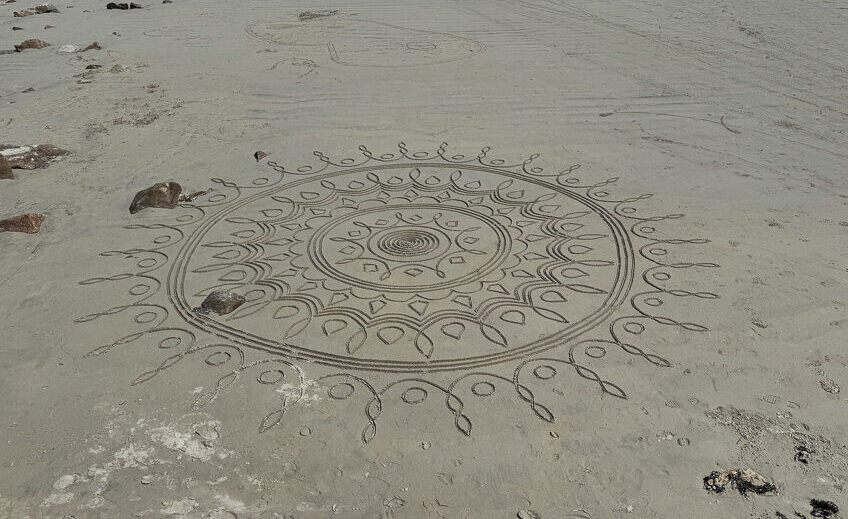
The Pink Granite Coast spans approximately 18 miles and is aptly named due to the immense pinkish-gold granite boulders.
The Men Ruz Lighthouse sits on a promenade in Ploumanac’h (monk’s pool in Breton) and is a fabulous example of the stone.
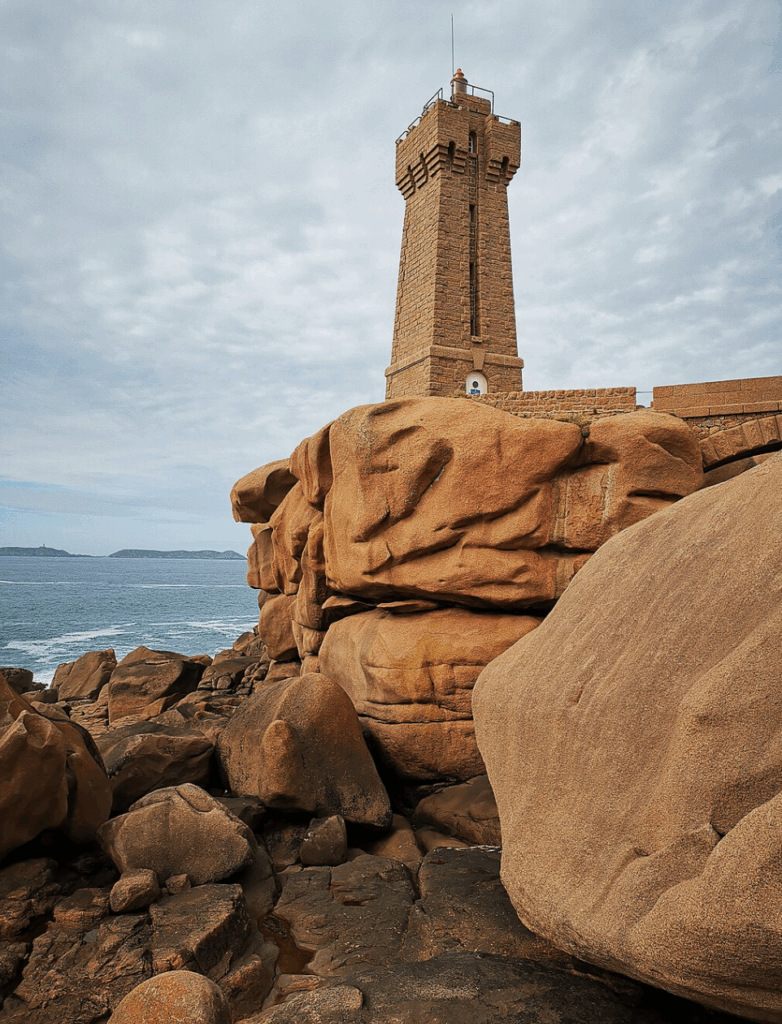
The first Ploumanac’h Lighthouse dates from 1860. It was destroyed by German troops and replaced by the current lighthouse in 1946. The present-day version was designed by architect Henry Auffret.
Chapelle Notre-Dame-de-la-Clarté
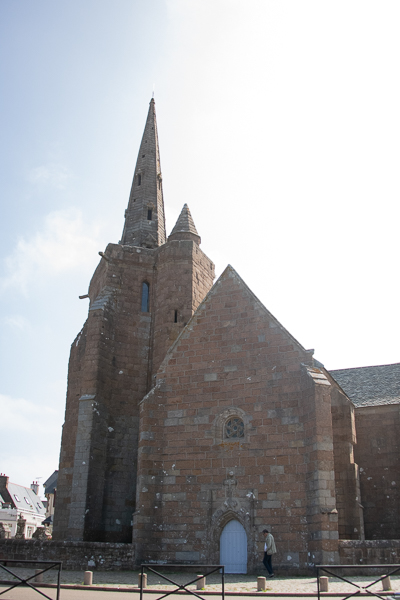
Another spectacular pink building is the Chapelle Notre-Dame-de-la-Clarté de Perros-Guirec. Sadly, it is under restoration and closed for safety reasons.
Notre-Dame-de-la-Clarté is a Chapel dedicated to the Virgin Mary. Built in the 15th Century, the story goes that a certain lord of Barac’h, in Louannec, was at sea with his squadron near the Sept-Îles. The mist was so thick that the sailors felt death was inevitable. They made a vow to Notre-Dame: The commander would build her a chapel if she created a saving hole in the fog. Of course, the fog broke, and thus the chapel.
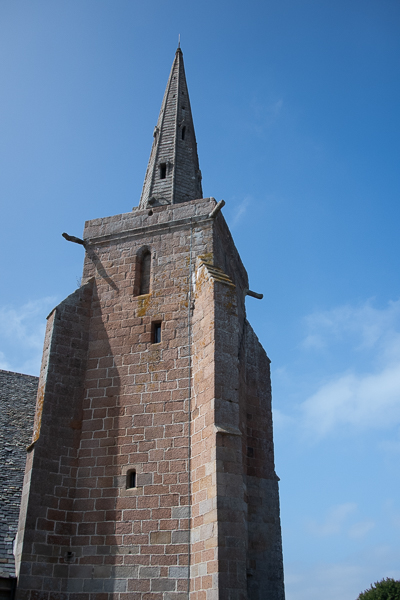
The mist changes history again. In August 1944, American troops threatened to bomb the city to dispose of the 600 Nazis who were pointing their guns at Perros. Mist covered Perros-Guirec, preventing the bombing, and thus the destruction of the church.. On August 10th, the Nazis surrendered without resistance.
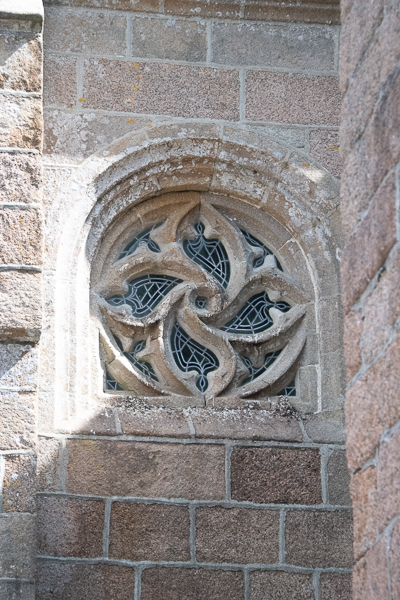
The architecture of the church is in the flamboyant Breton style.
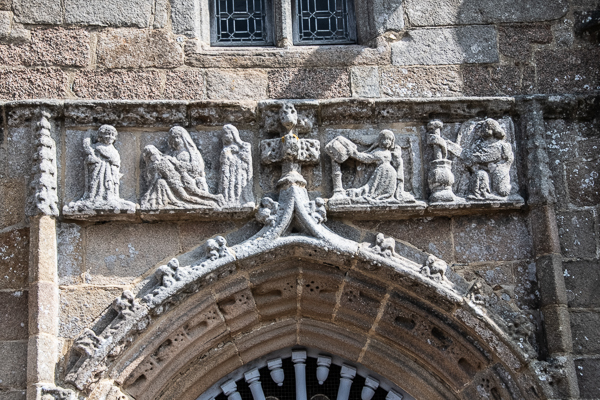 The lintel of the porch is stunning, with a representation of the Annunciation facing a Pietà.
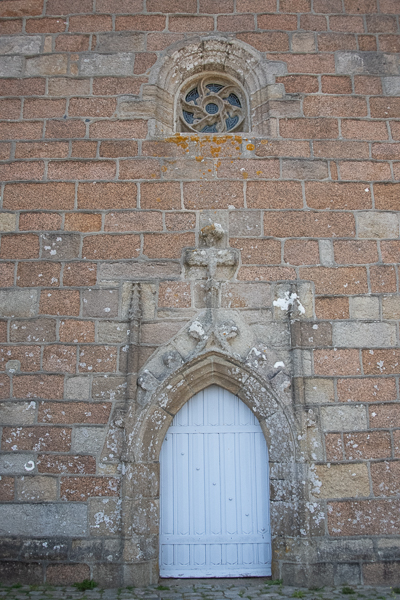
I must admit that I had no idea what Flamboyant Breton style architecture is. Flamboyant style is a phase of late Gothic architecture in 15th-century France and Spain. Its most conspicuous feature is the dominance of stone window tracery of a flamelike S-shaped curve.
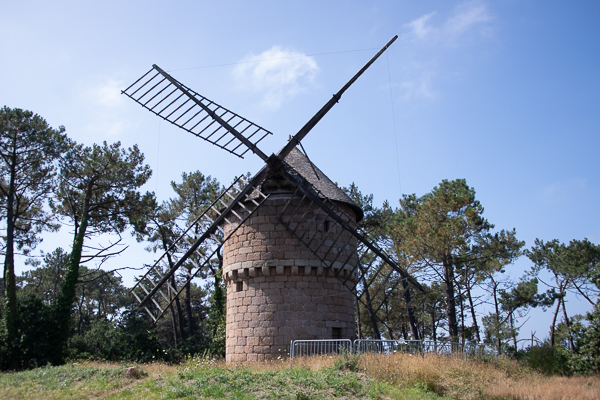
It is believed that this windmill dates back to the 1700s. It is an egg cup type windmill, made of rubble with lively joints. Its tower is representative of a rather rare category of old mills in this part of Brittany. It was just a funky thing to go search for on a lazy afternoon.
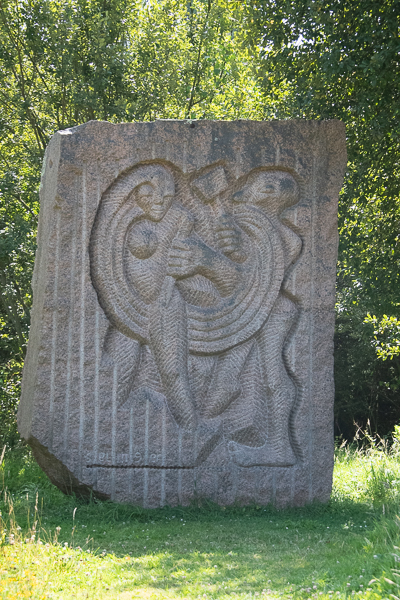
Also in Perros-Guirec is a sweet park dedicated to the art of sculptors Christian Gad and Daniel Chhé.
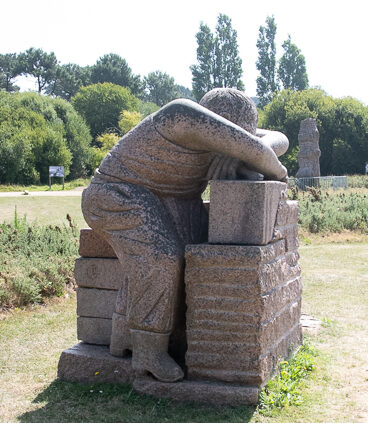
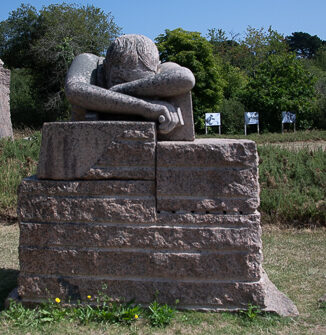
The sculptures show off the pink granite of the area.
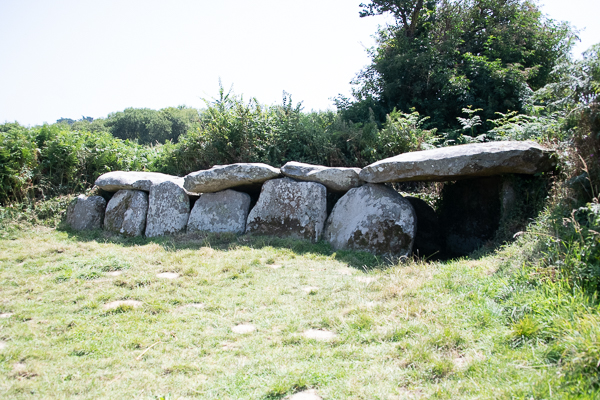
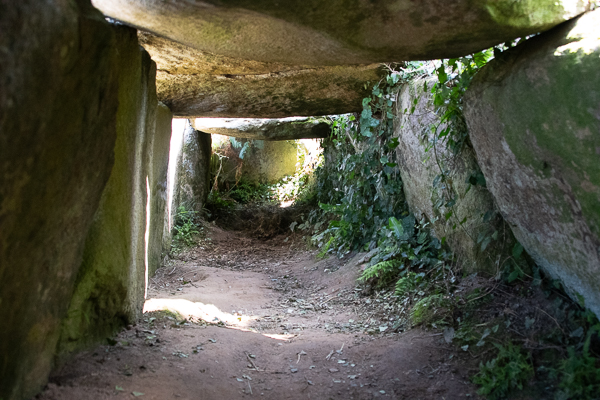
Kerguntuil megalithic site
And then, we found more megalithic burial sites.
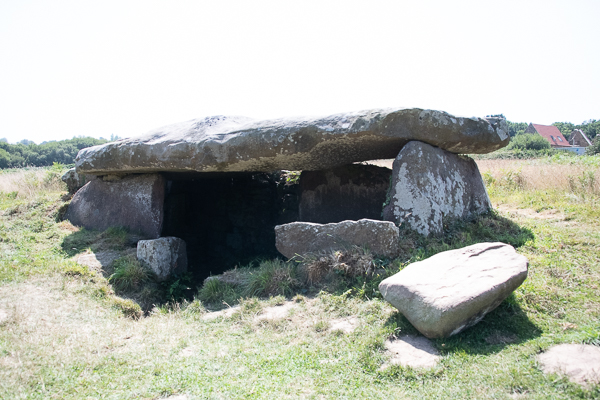
From the Neolithic period, Kerguntuil became a source of interest in the early 1930s, when the Dutch acquired a vase found there. In 1939, the tourist office decided to excavate and rehabilitate the passage grave before the foreign archaeologists returned. They did so with the help of local volunteers and local granite quarry workers or simple volunteers; the slabs were raised and replaced in what is assumed to be their proper location.
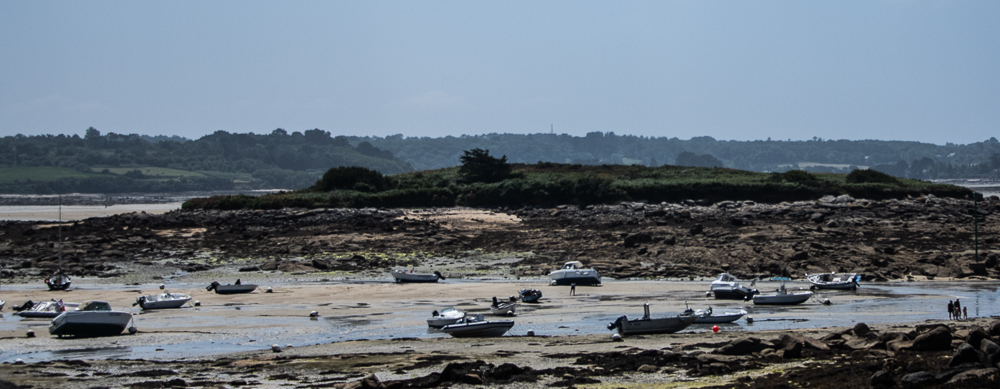
The Tides of the Area are immense. While searching for a spot for lunch, we stopped at this inlet, where you can truly see the difference between high and low tides. You can not even see the sea from here.
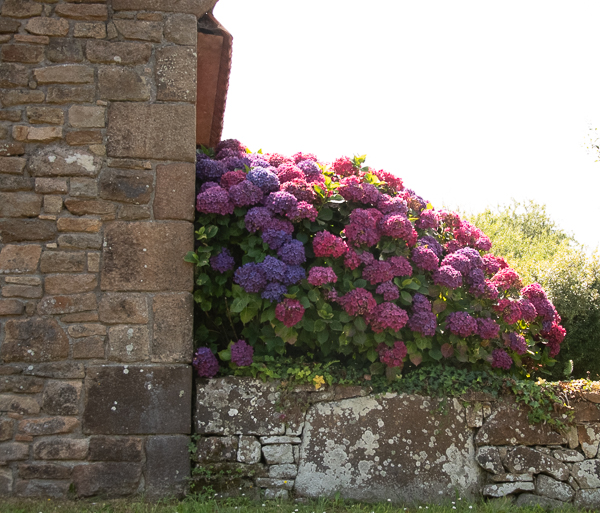
The one thing that just pops up everywhere in Brittany are hydrangeas. They are in every color but these purple almost red are just stunning.
*