September 2025
The 2nd – The Bourse
The Bourse refers to the Palais Brongniart, the seat of the Paris stock exchange, dating from 1826. This arrondissement is also the smallest in the city, with only 99 hectares.
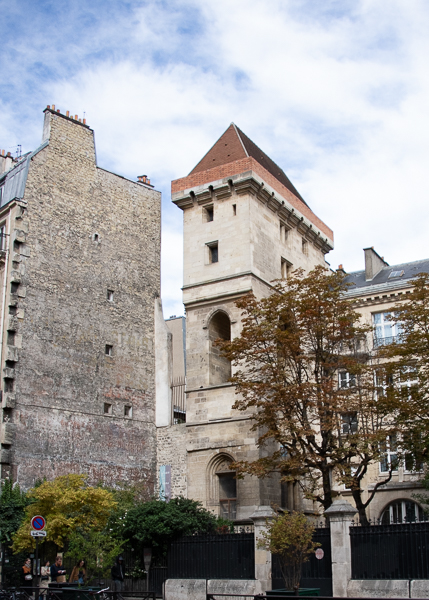
The Tour Jean-sans-Peur or Tour de Jean sans Peur is the last vestige of the Hôtel de Bourgogne, the residence first of the Counts of Artois and then the Dukes of Burgundy. The tower was completed between 1409–1411 by Jean sans Peur. Now located in the courtyard of an elementary school. It is one of the best surviving examples of medieval residential architecture in Paris.
Marché de Montorgueil
There are so many great streets to stroll in Paris. Montorgueil is one of the highlights.
Rue Montorgueil dates back to the 13th Century.
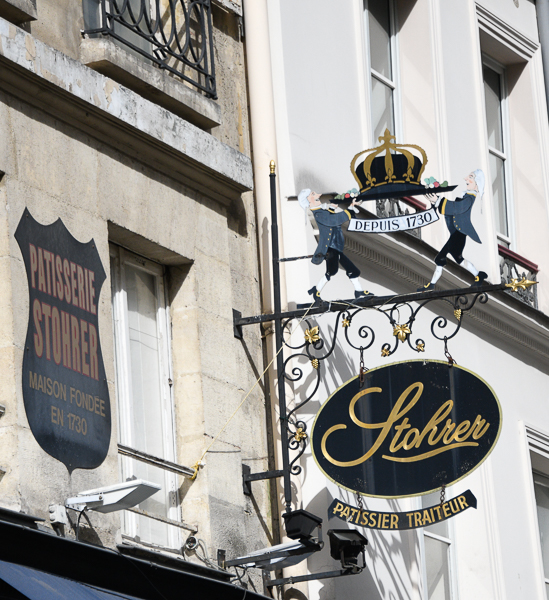 Throughout the years, Rue Montorgueil has become a hub for food and culture. One notable establishment is La Maison Stohrer, one of the oldest bakeries in Paris, which opened its doors in 1730. It is said that baba au rhum was invented here.
The street was an inspiration and subject for Claude Monet. In 1878, Monet painted “The Rue Montorgueil in Paris (Celebration of 30 June 1878)”.
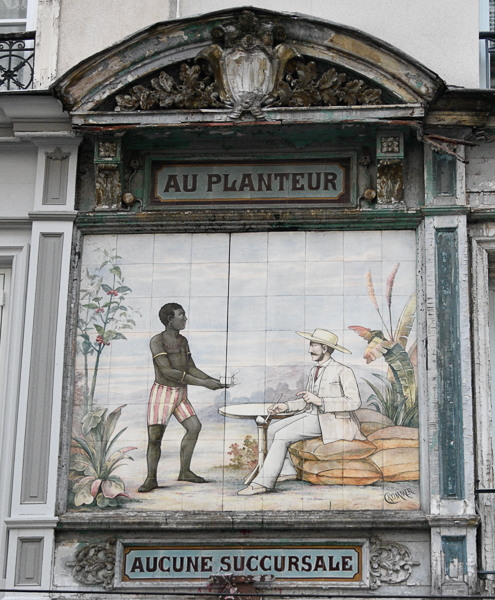
It should be of no surprise that the façade of Au Planteur, at 10 rue des Petits-Carreaux, remains a controversial subject. Installed on the facade of a 19th-century building to advertise a store selling “exotic products,” of which coffee was the main commodity offered. Classified as a historical monument on May 23, 1984, the painting on ceramic dates from 1890 and represents a black man in the service of a colonialist white man. It is one of the rare testimonies of the French colonial period in the capital.
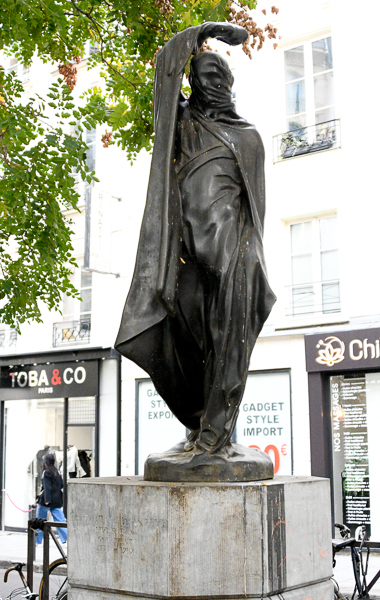
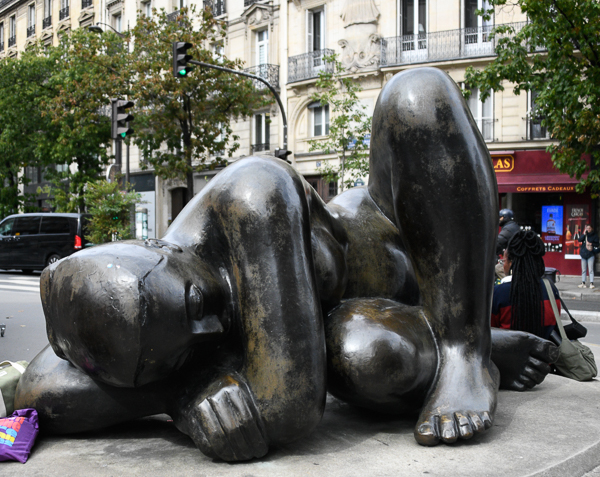
This intriguing statue stands on Square Caire very close to the Passage du Caire.
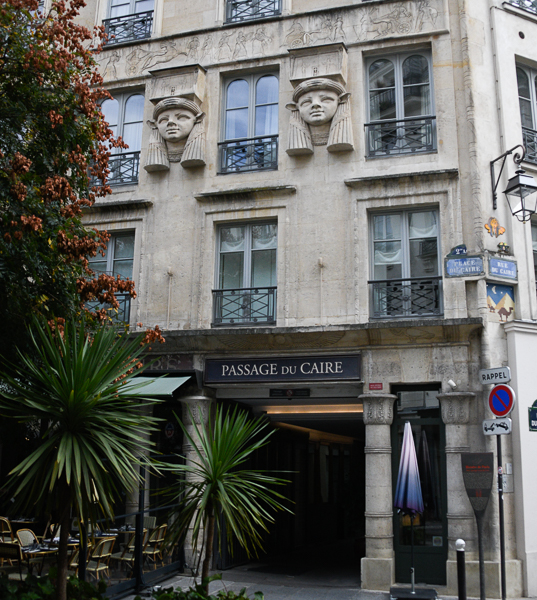
Most people have explored the many delightful passageways of Paris. Passage du Caire is the oldest in Paris, and the interior is not very inviting. It was never meant to be a showpiece; it was covered for the convenience of the neighbors in the community. Built in 1798 it is the longest passageway in Paris.
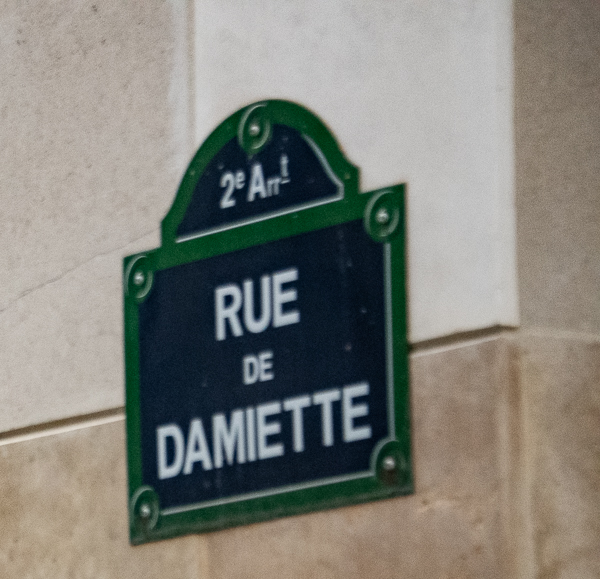
Rue Damiette is not a street one goes searching for; there is little of interest on the street. But the area has a very dark history. The street was once part of the Court of Miracles. The Court of Miracles under the Ancien Régime was a set of lawless areas of Paris. The beggars that made their home amongst these streets would go out to beg with the most horrible of infirmities, only to return home and watch their (fake) infirmities miraculously disappear.
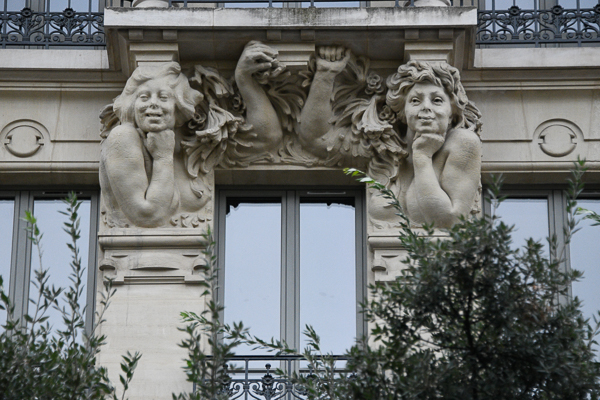
The Bibliothèque nationale de France – Richelieu
The BnF, or National Library of France, underwent a ten-year renovation. The restoration of the 300-year-old site included facade restorations, installation of an interior garden, and facilities maintenance.
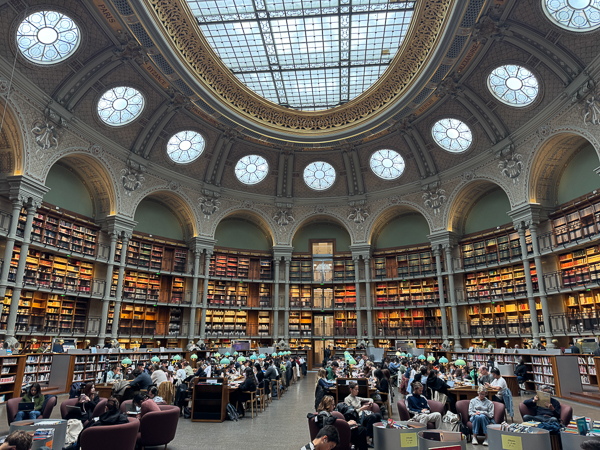
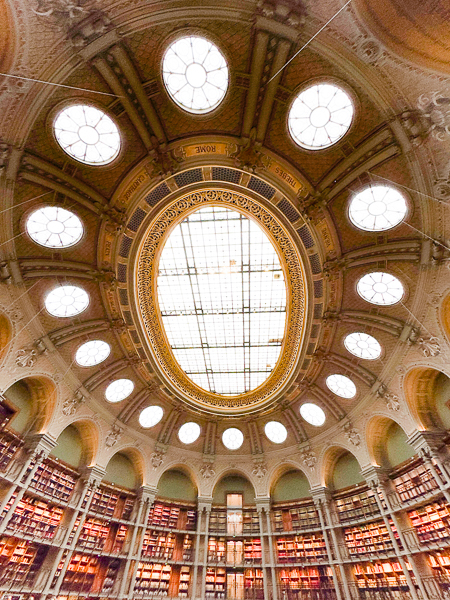
The reading room is jaw-dropping in its beauty. Designed by Pierre-François-Henri Labrouste, it is a stunning domed room with sixteen iron pillars. The light filters from a series of skylights, and the five-story room seems much larger because of it.
*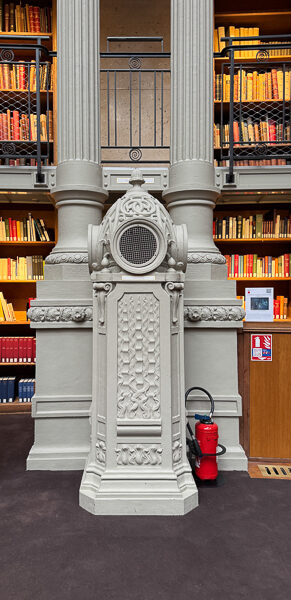
The ventilation system of the library has an interesting nautical look.The National Library is also an amazing museum. I went because I wanted to see two very specific things, but walked out in awe of their collection.
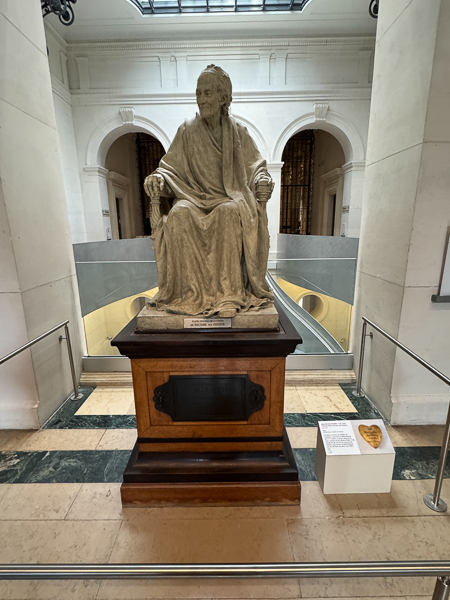
I had very much wanted to see the reading room, but also this statue of Voltaire. If you look closely, you will see a gold heart on the white box to the right of Voltaire. Voltaire’s heart is said to be in his statue. According to the New York Times of February 21, 1929:
In the presence of the Minister of Fine Arts, a bronze plate bearing the inscription “The Heart of Voltaire,” found on a pedestal designed for a plaster statue of the great French thinker in the National Library, was removed this afternoon, and disclosed a hollowed space containing a small wooden box. This was opened, and a large gilded wooden heart was found inscribed, “Heart of Voltaire—Died Paris—30 May, 1778.” When the receptacle was shaken, a liquid was heard in its cavity, undoubtedly that in which the heart is preserved. The Minister refrained, however, from opening the wooden heart. The bronze plate bore an inscription indicating that the pedestal in which the heart was found was donated to the National Library by the heirs of the Marquis de Villette in 1864.
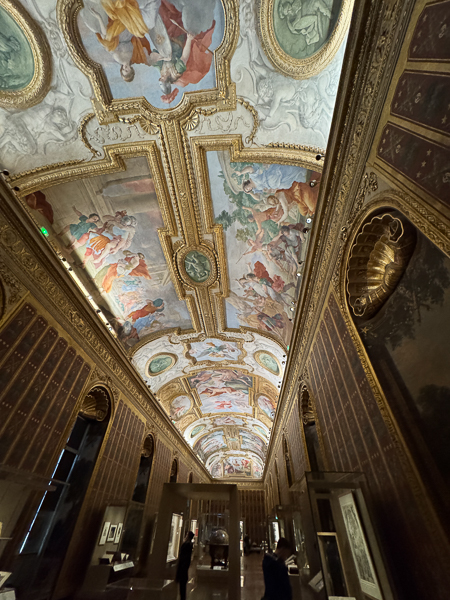
The Mazarin Gallery underwent a complete restoration in 2018 and 2019. The Gallery was designed by François Mansart between 1644 and 1646 at the request of Cardinal Mazarin to host his rich collections of paintings and sculptures.
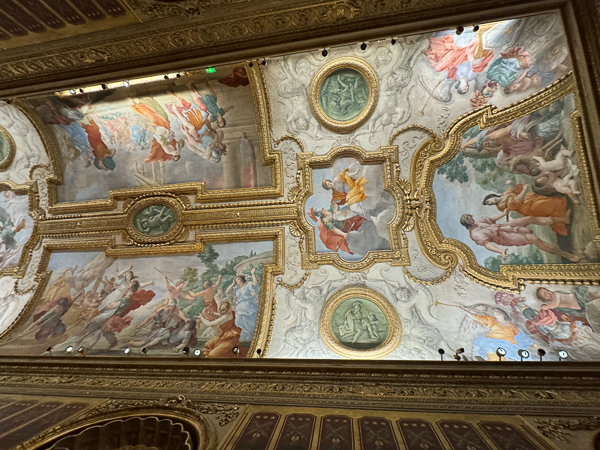
The ceiling was frescoed in 1646-1647 in the Baroque style by Giovanni Francesco Romanelli and Paolo Gismondi. The ceiling’s iconography was inspired by Greco-Roman mythology, particularly Ovid’s Metamorphoses. The center of the ceiling features Jupiter striking down the Giants. The other iconography is Apollo and Daphne, the Judgment of Paris, the Abduction of Helen, and the Fall of Troy.
I will return to the National Library, it was the end of the day, and I was exhausted, and I did not give it enough time.
Near the BnF is the Galerie Vivienne.
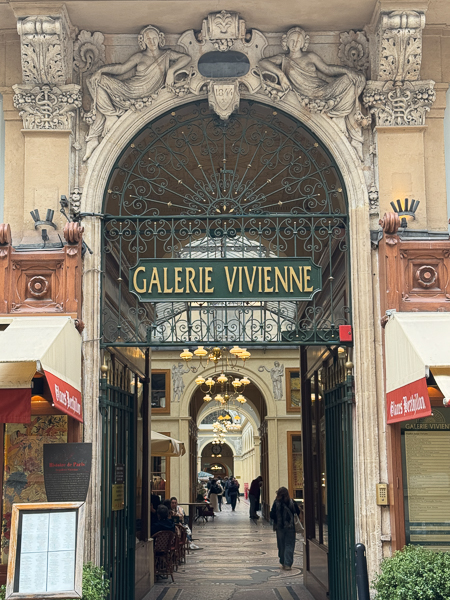
The gallery was built in 1823 by Marchoux, President of the Chamber of Notaries, at the location of the Hôtel Vanel de Serrant and the Passage des Petits-Pères. It was based on plans drawn up by the architect Francois Jean Delannoy. Opened in 1826 under the name Marchoux, but it was soon renamed Vivienne
The 3rd – The Temple
The 3rd, called the Temple, takes its name from the vast Templar compound that once stood there. This was the headquarters of the Knights Templar in France, a fortified district with its own laws and treasuries.
Saint-Paul-Saint-Louis
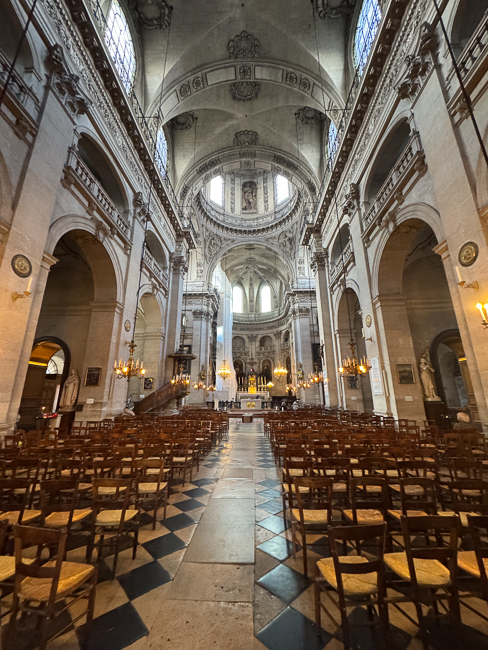
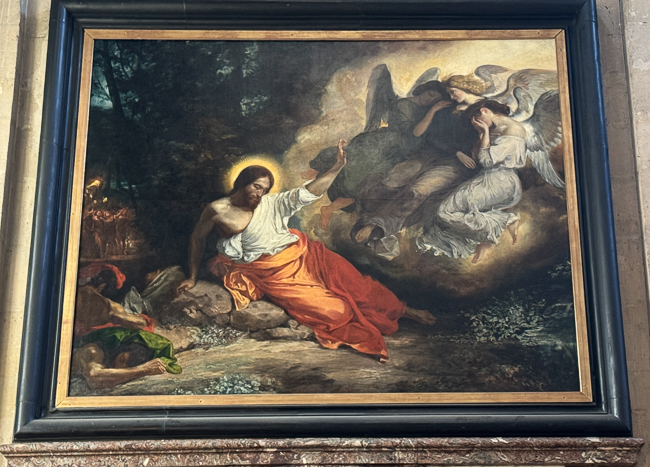
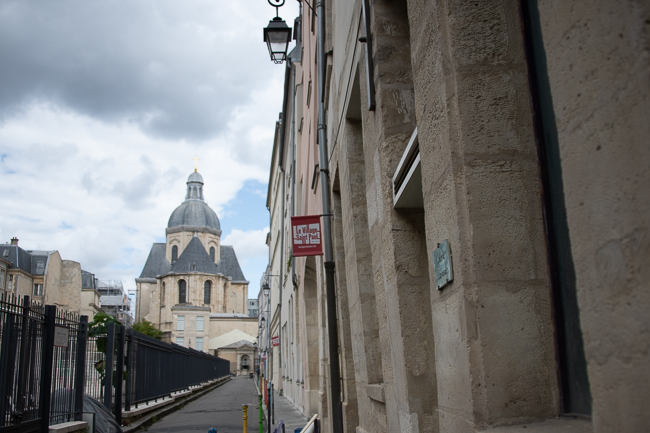
I have walked past this church time after time without appreciating its history. The present building was constructed from 1627 to 1641 by the Jesuit architects Étienne and François Derand, on the orders of Louis XIII. It was the first church in Paris to break away entirely from the Gothic style and to use the new Baroque style of the Jesuits
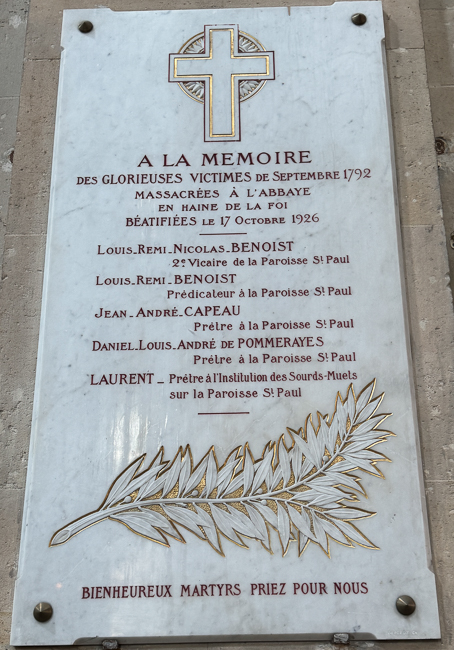
In September of 1792, during the French Revolution, five priests were killed in the church during the September Massacres. The church was closed and turned into a storehouse and a temple of the Cult of Reason and the Supreme Being, before being restored to Catholicism in 1802 under the Concordat of 1801
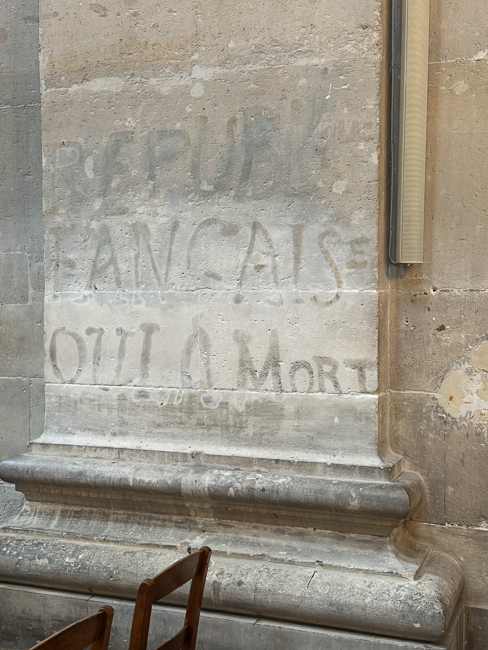
Not much is known about this graffiti on one of the pillars of the church, except that it was written during the Paris Commune, probably the first days of the “bloody week” (May 21-28, 1871). When the Versailles troops entered Paris to put an end to the insurrection of the communards, one of them would have written this message. It was the attempted cleaning that made this graffiti more visible.
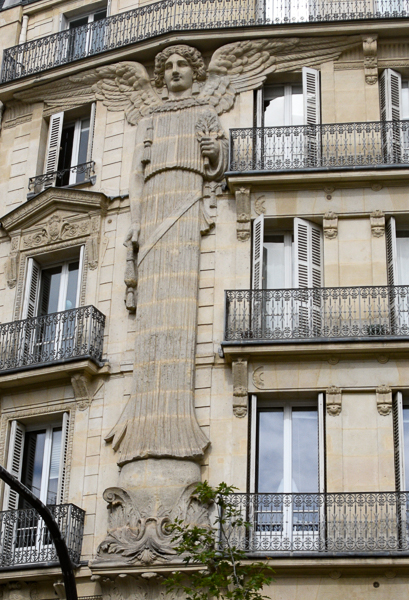
Near the Arts and Métiers is this giant angel, purported to be the largest caryatid in Paris.
At Theodor-Herzl Square, in front of the angel, is this truly lovely modern sculpture.