September 2025
The 7th
The 7th is an interesting Arrondissement. It is called Palais-Bourbon in reference to the seat of the National Assembly. It is also one of the most affluent and prestigious arrondissements of Paris.
It includes some of the more well-known tourist attractions, the Eiffel Tower, the Hôtel des Invalides, the Chapel of Our Lady of the Miraculous Medal, as well as a concentration of museums such as the Musée d’Orsay, Musée Rodin, and the Musée du Quai Branly – Jacques Chirac.
So this means I have seen and written about a goodly portion of the 7th. Here are some highlights from my stroll in the 7th this year.
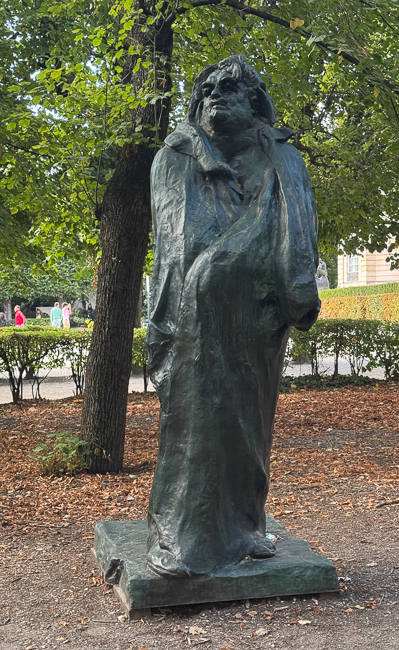
The Rodin Museum is a must-visit stop for me whenever I am in Paris. Here is one (of many) of my favorite sculptures in the garden.
The Eiffel Tower
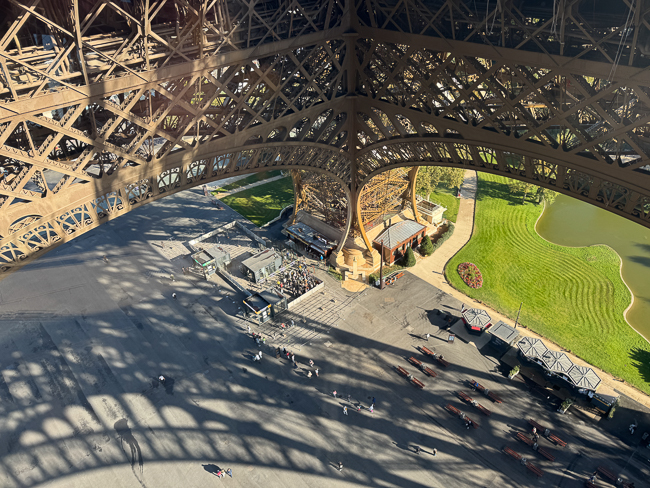
This will have been my 5th visit to the Eiffel Tower. What is different? Since my last visit, they have installed glass floors in the corners of the 2nd floor, where I took this shot. This trip, I walked up to the 2nd floor, 1655 steps. Sensibly, I took an elevator to the third floor.
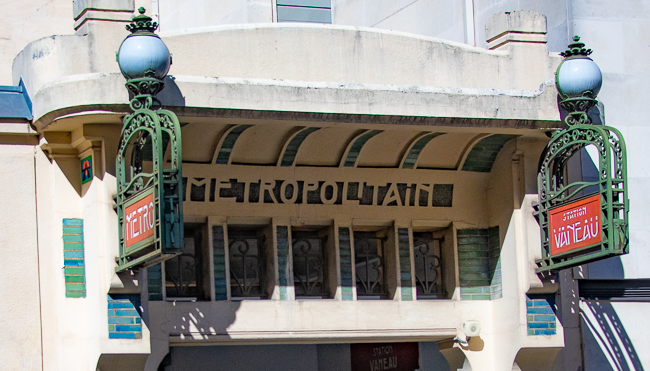
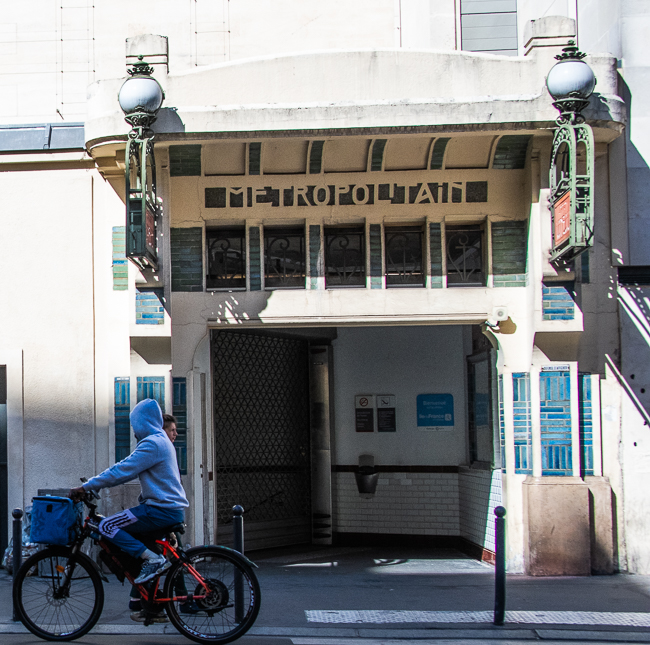
Paris is known for its stunning Art Deco metro stations. That is why this one caught my eye. While still carrying the architecture of the 1920s, in particular Art Deco, it is so different.
The 8th
The 8th is called Élysée. Its name comes from the Élysée Palace, finished in 1722 and turned into the official presidential residence in 1848.
Over the years, I have wandered the 8th and seen its most well-known sites. The Flame Of The Statue of Liberty, Madeleine Church, Place De La Concorde, and, of course, the Arc de Triomphe.
This trip I visited two famous places on the 8th: the Petit Palais for a special exhibit on the clothes of the House of Worth and the Grand Palais for the exhibition Euphoria.
The Grand Palais
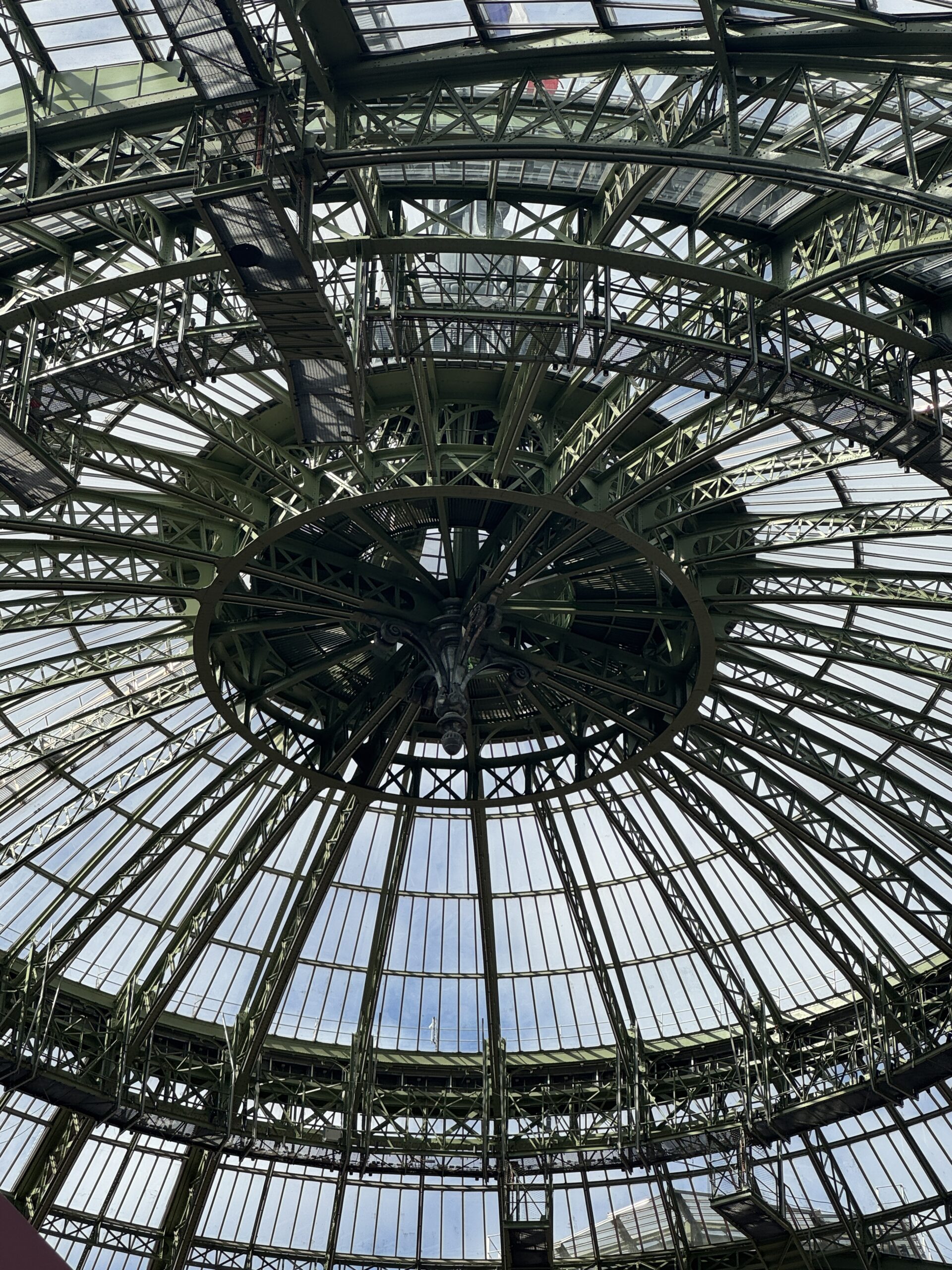
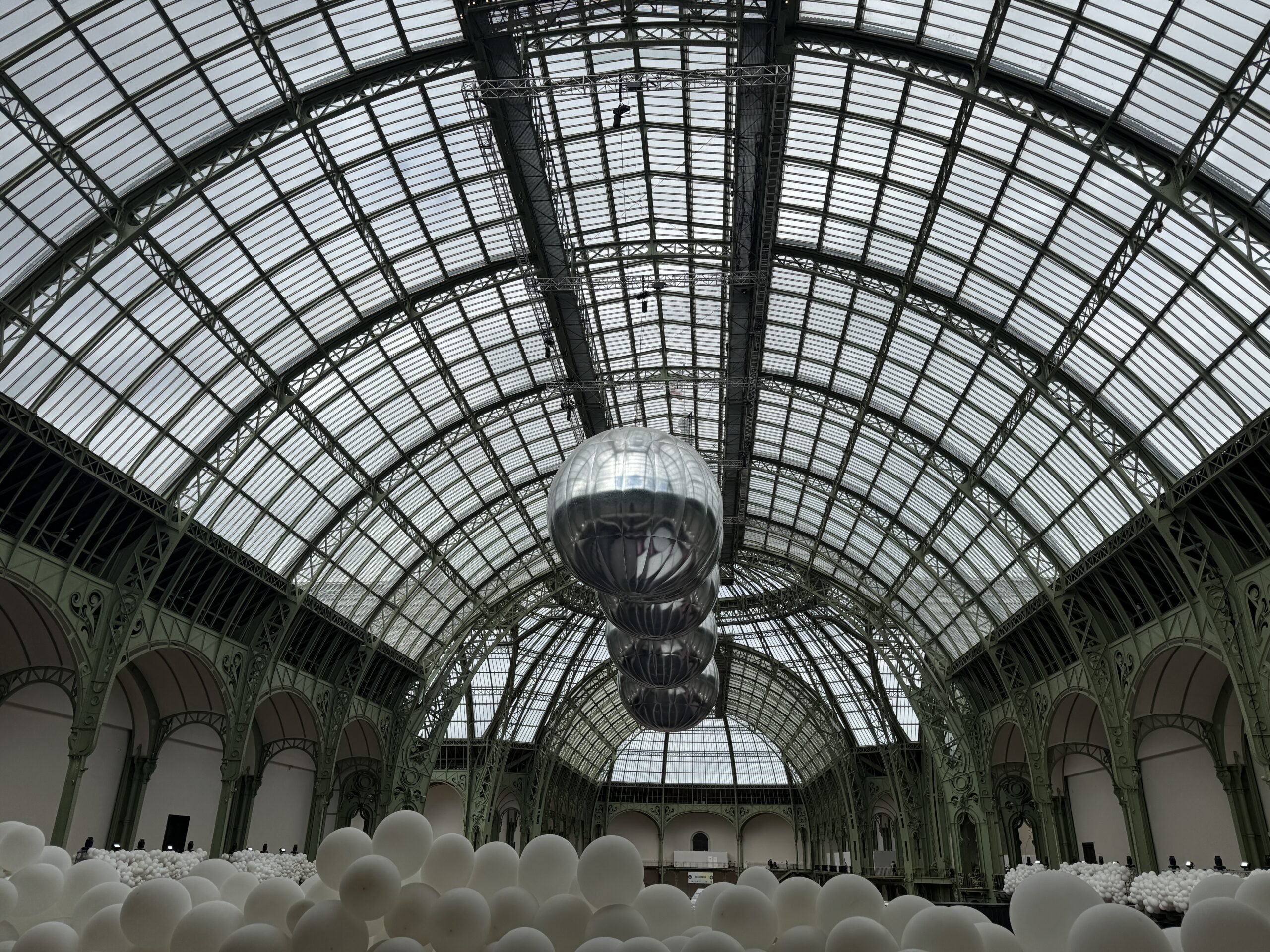
The Grand Palais is specifically an exhibit space, so it is not a place you wander into. The exhibit was fun, but seeing the inside of the Grand Palais was an even bigger thrill for me.
 *
* *
*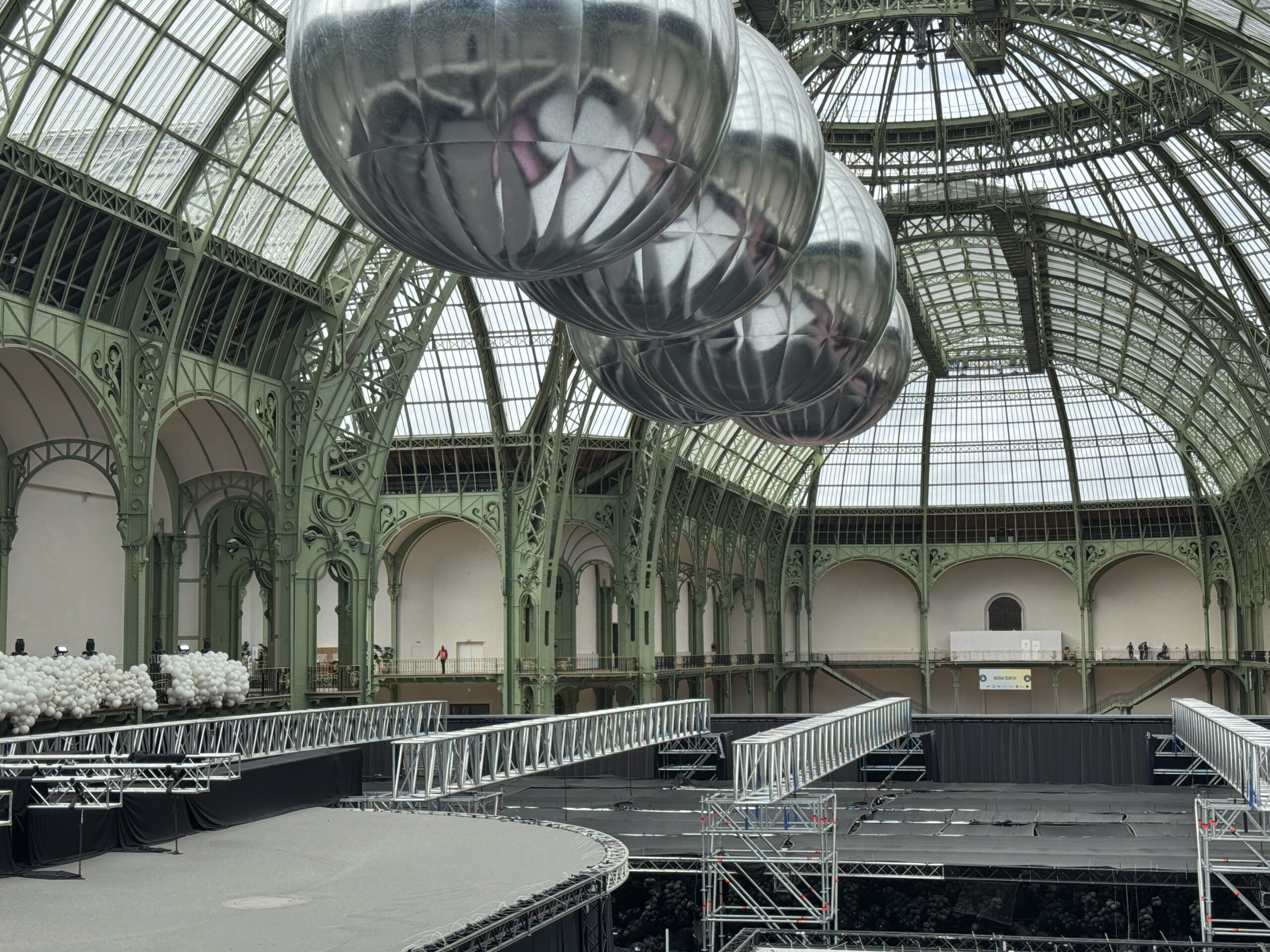
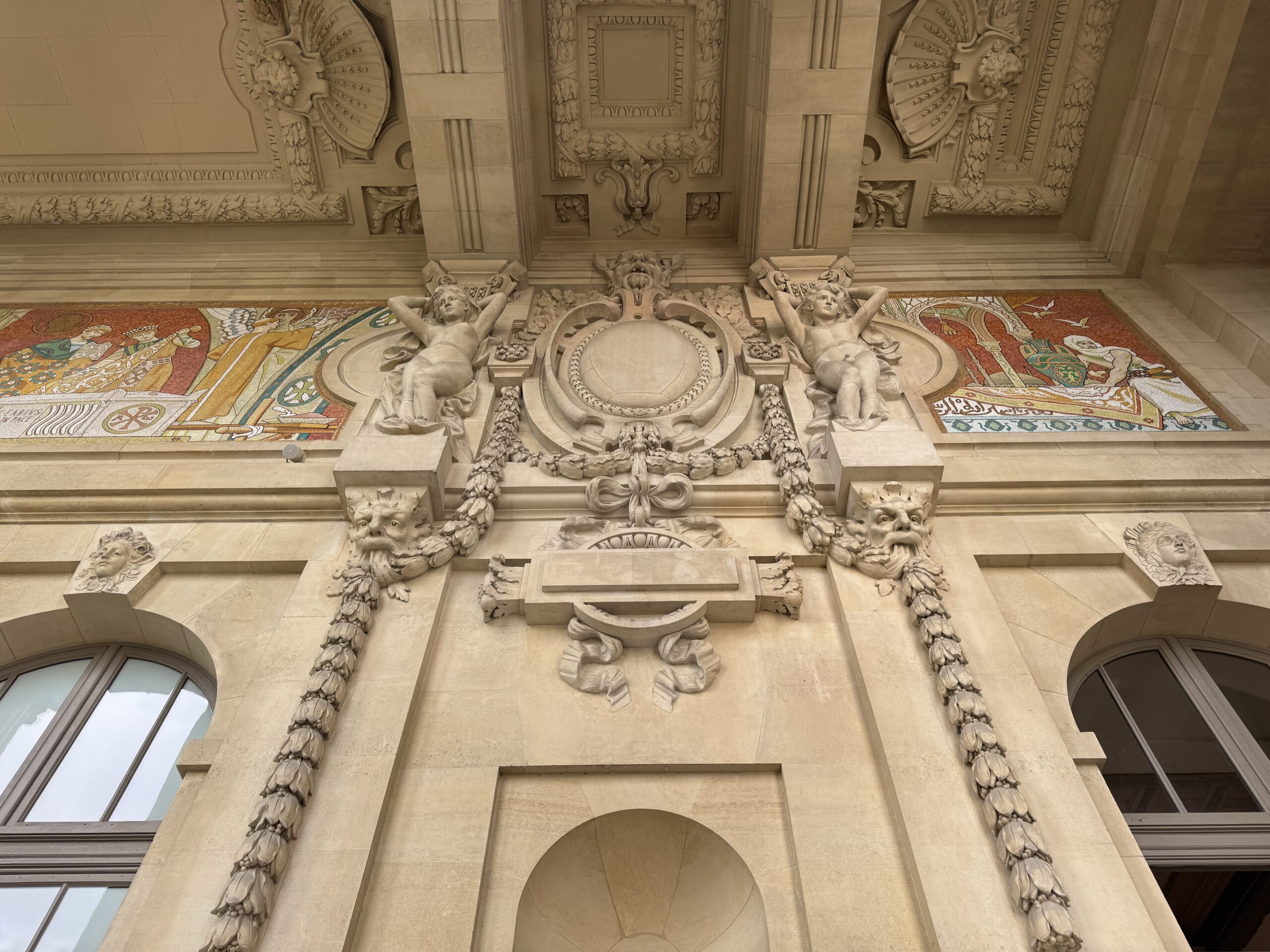
If you have the opportunity have lunch on the terrace at the Grand Palais, it is a chance to stare at the stunning art work that surrounds you.
Maison de Loo
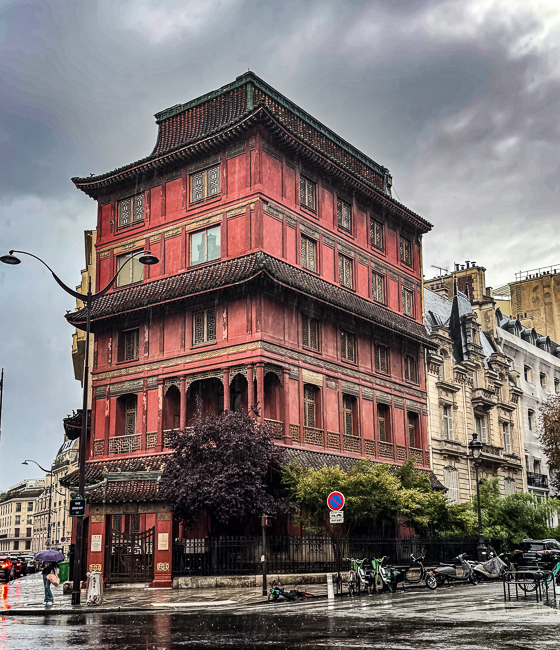
Sometimes you are brought up short in a rainstorm, and this building did that. It is a private Asian art museum called Maison de Loo. It is the creation of an Asian art Merchant and collector, Ching Tsai Loo, transformed into a pagoda by the architect Francois Moch in 1925- 26. The collection houses “1,300 books, 3,000 exhibition catalogs, 3,000 original photos and many rare objects”. The building was placed on the historical monument list in 2002.
The 9th
The 9th is called Opéra. But not because of the Palais Garnier. It was named after the Opéra Le Peletier, the city’s main opera house from 1821 until it burned down in 1873.
Coming out of the Saint Georges Metro I was greeted with this charming building and the statue in the roundabout in front of it.
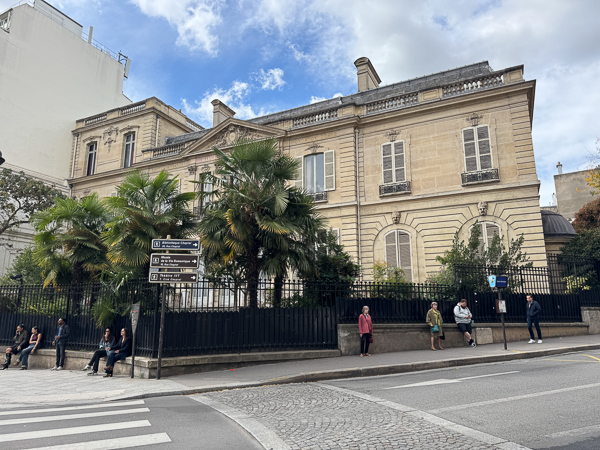
The Fondation Dosne-Thiers is a history museum open to members of the Institute of France.
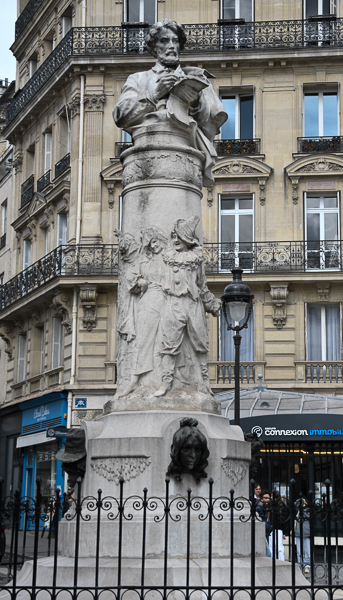
Paul Gavarni was the pen name of Sulpice Guillaume Chevalier, a French illustrator born in Paris.
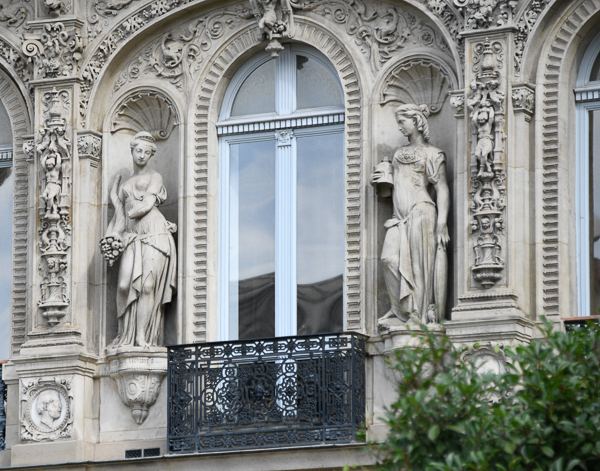
Also on Place St Georges were these lovely ladies looking down from the Hôtel de la Païva
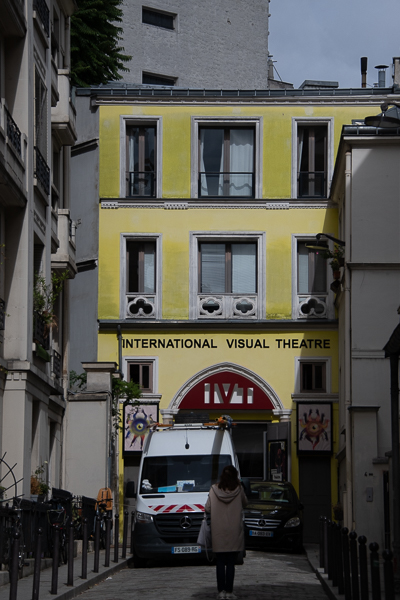
This 347-seat theater was built in 1890. It began as a chapel store selling religious items, and then it became the studio of painter Georges Rochegrosse. From 1898, it was the home of Theater du Grand Guigno under the direction of Max Maurey, known for “a little humor, a lot of horror.” Apparently, his shows with their bloody tricks were a real threat. The Grand Guigno closed in 1962, and it was refurbished into the theater of today.