September 27, 2025
The 6th is called Luxembourg. It takes its name from the palace built by Marie de Médicis in the early 1600s, which today serves as the seat of the Senate.
The 6th Arrondissement is probably my favorite. I lived in the 6th for a while in the 70s and always find myself gravitating to it when I visit. For that reason, I decided to end my exploration of the arrondissements in the 6th.
I have popped in and out of the 6th throughout my stay, for example, when my niece, friends, and I had dinner at Le Deux Magots.
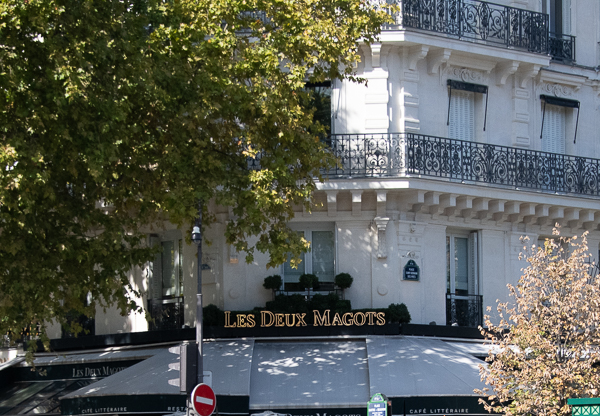
The patrons of this bar over the years support the fact that this is a very arty area. People such as Simone de Beauvoir and Jean-Paul Sartre, Ernest Hemingway, Albert Camus, Pablo Picasso, James Joyce, Bertolt Brecht, Julia Child, James Baldwin, Chester Himes, and Richard Wright. It is now pretty much filled with tourists, but the food and champagne are still very good.
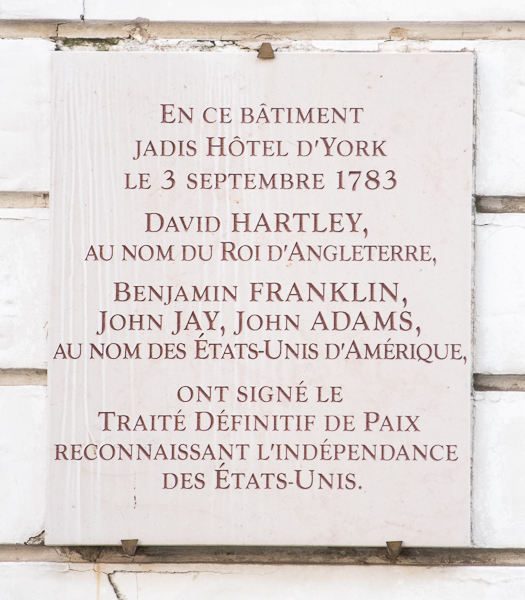
I began with a few things I wanted to find, the first was this peace plaque. This place marks the spot where, on September 3, 1783, the Treaty of Paris was signed by representatives of King George III of Great Britain and John Adams, John Jay, and Benjamin Franklin of the US. The signing officially ended the War of American Independence and recognized the Thirteen Colonies.
I also wanted to walk along the Seine one last time before I left.
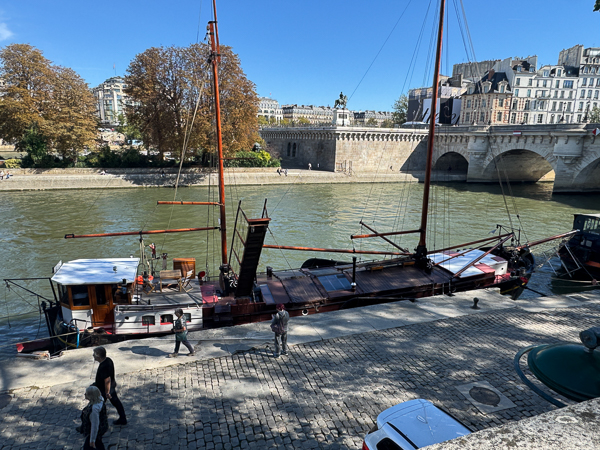
This gave me a chance to walk past the Paris Mint.
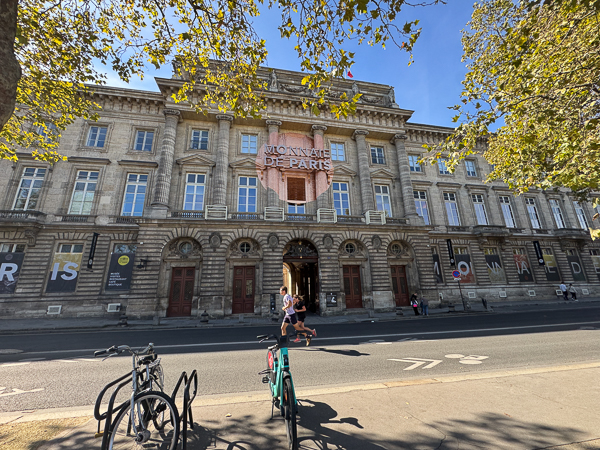
The Monnaie de Paris (Paris Mint) was established on June 25, 864, by Charles the Bald, Carolingian king of France. At more than 1,150 years old, it is not only the oldest official institution in France but also the world’s oldest continuously-operating mint. The building was designed by architect Jacques Denis Antoine and completed in 1775. Today, the Monnaie de Paris is responsible for producing coins and medals that are used in France, including the famous 2-euro and 1-euro coins. It is also now the home to the Conti Museum.
That was going to be all I did today. I had all the intention in the world of making my way to Luxembourg Gardens and sitting and enjoying the glorious weather.
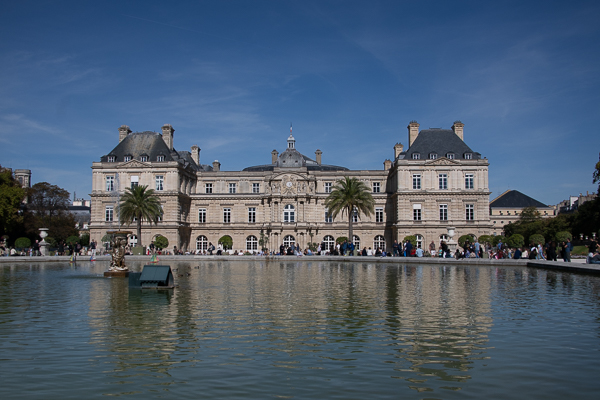
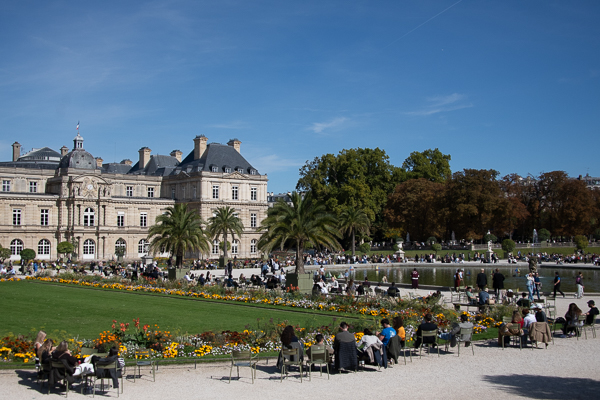
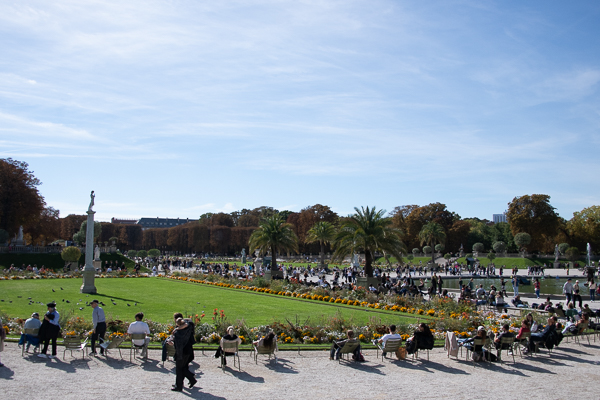
Alas, so had everyone in Paris.
*
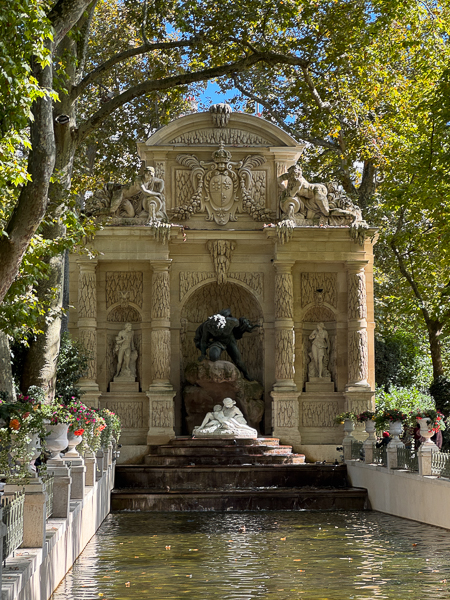
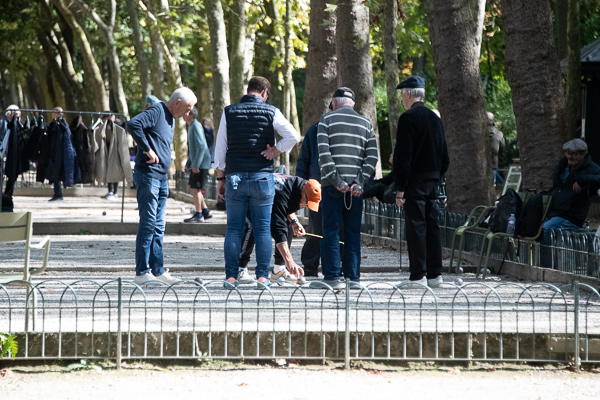
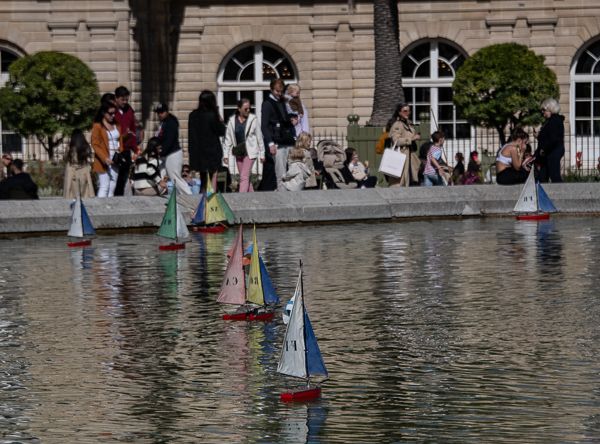
The lovely thing about this garden is that I am certain there is a chair or bench for every citizen in Paris, so I did sit for a while and soak up the crowd.
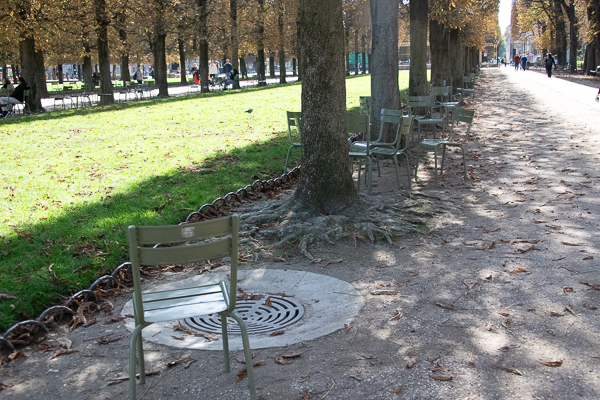
I decided to make my way to the Zadkine museum instead, with hopes of sitting in their sculpture garden.
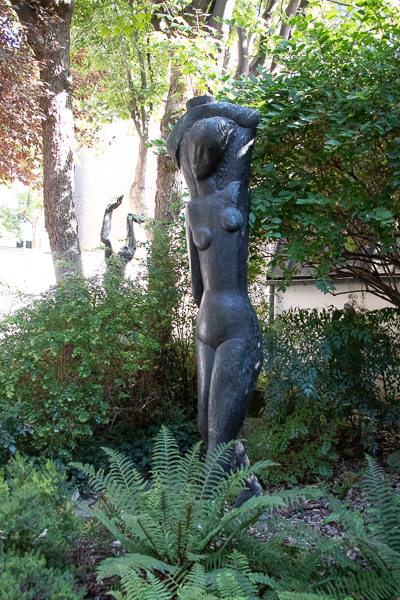
While the museum was filled with sculpture, it was also entirely too small to sit for long.
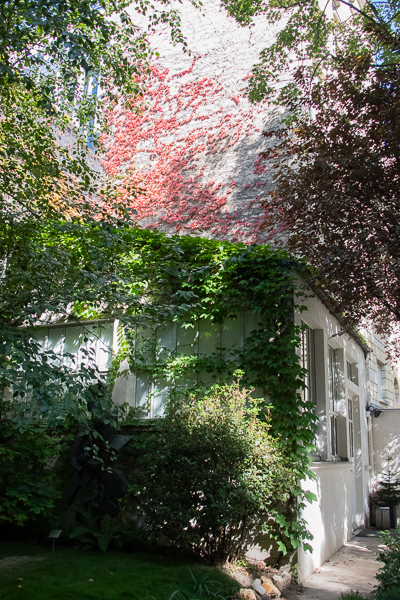
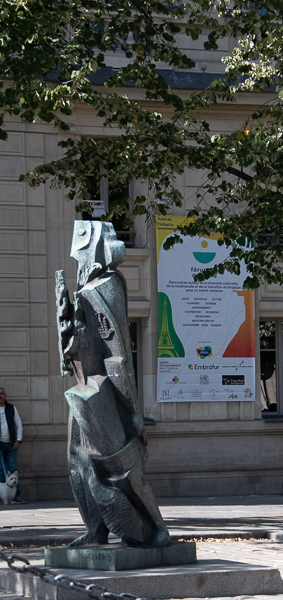
Ossip Alexeevich Zadkine (January 1888 – November 1967) was a Russian and French artist of the School of Paris. Zadkine served as a stretcher bearer in the French Army during World War I and was wounded in action. He spent World War II in the US. His best-known work is probably the sculpture The Destroyed City (1951–1953), representing a man without a heart, a memorial to the destruction of the center of the Dutch city of Rotterdam in 1940 by Nazi Germany.
My journey continues:
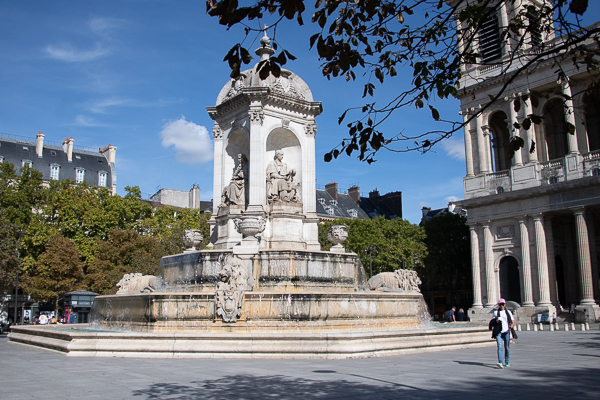
The Fontaine Saint-Sulpice, located in front of the church of the same name, was constructed between 1843 and 1848 by the architect Louis Visconti, who also designed the tomb of Napoleon. I had visited St. Sulpice on a prior visit, as it has a fascinating astrological measuring device called a gnomon.
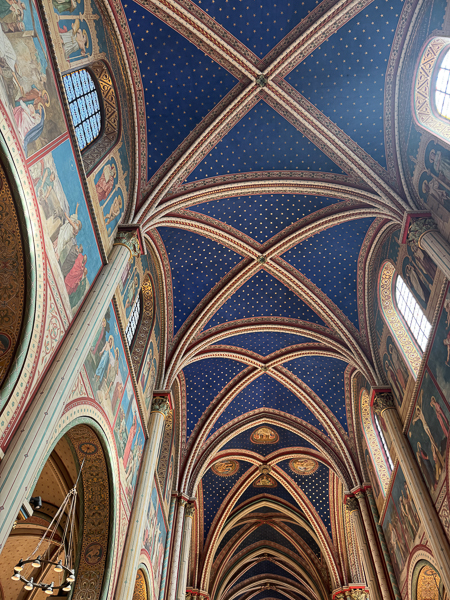
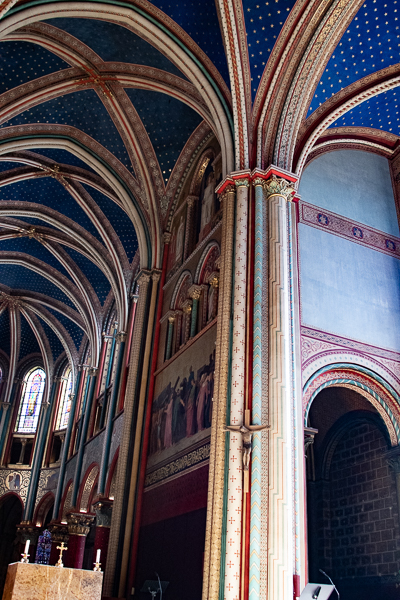
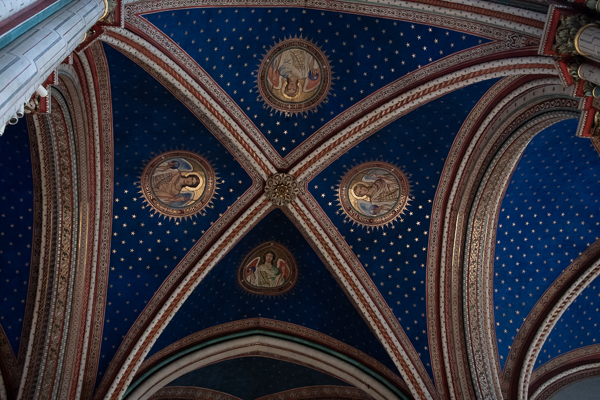
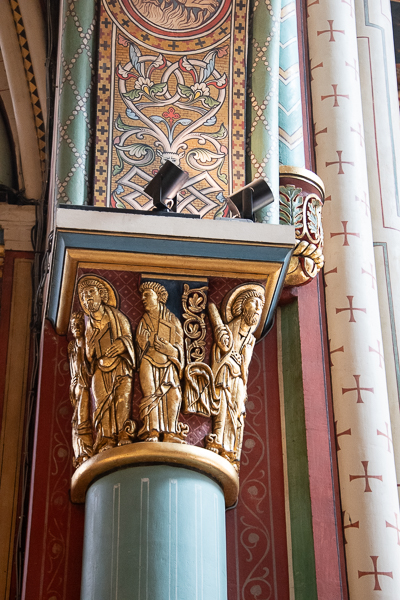
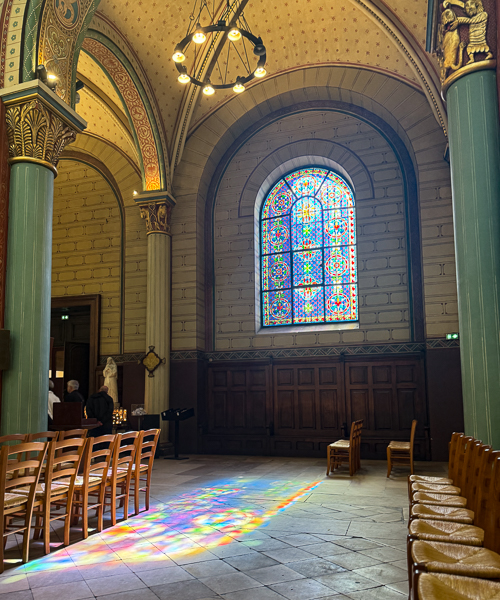
Not far from Saint-Sulpice is the Church of Saint-Germain-des-Prés, the oldest church in Paris. The church underwent a restoration that took many years and was completed in 2023. I wanted to see the results.
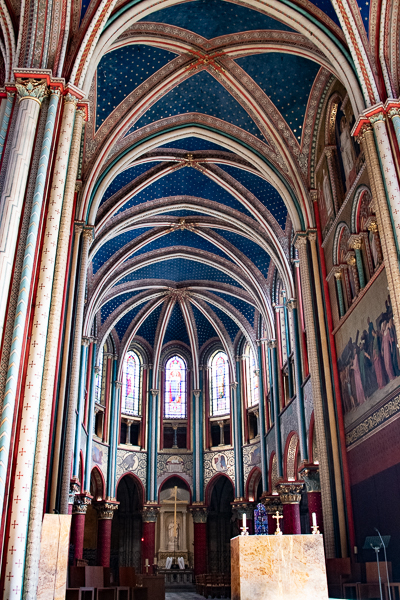
They were amazing. The blue ceiling, with its stars, columns, and murals, all restored and gorgeous.
 *
*
*
*
*
Strolling through the 6th
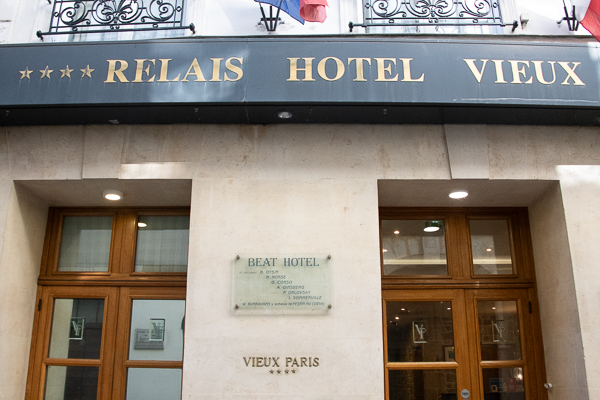
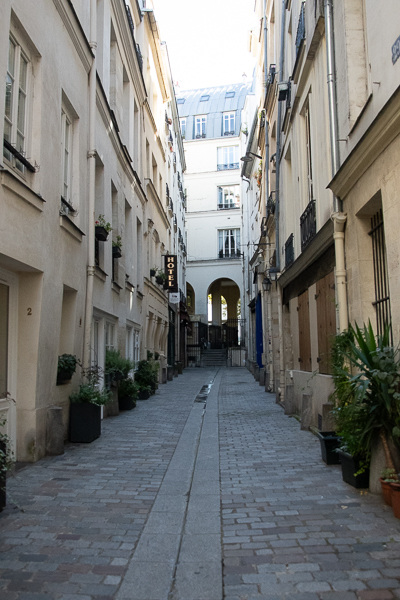
From 1957 to 1963, at this site, one of the cheapest and filthiest hotels in Paris, key members of the Beats —Allen Ginsberg, William Burroughs, Gregory Corso, and Brion Gysin — produced some of their finest work. The history of the hotel, the Beat Poets, and Paris is worthy of a book.
*
*
*
*
*
*