August 2025
La Campagne à Paris means “The Countryside in Paris” in English. This little neighborhood was founded as a cooperative intended for working-class families by pastor Sully Lombard in 1907, and consists of 92 charming garden houses built of bricks or millstones.
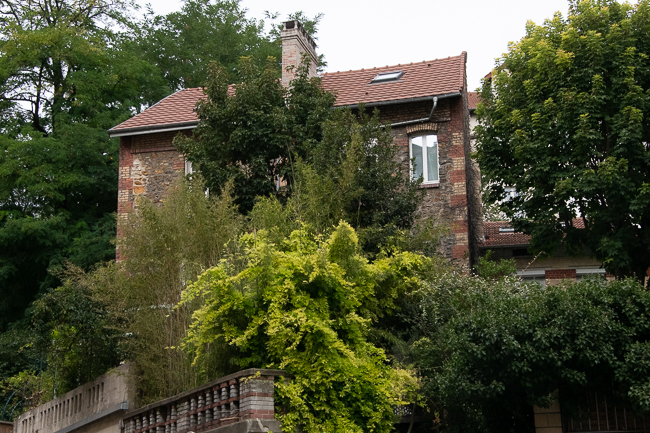
The site chosen for this venture was once a gypsum quarry, abandoned for decades, and eventually, Mother Nature took over, and it transformed into a small, wooded hill.
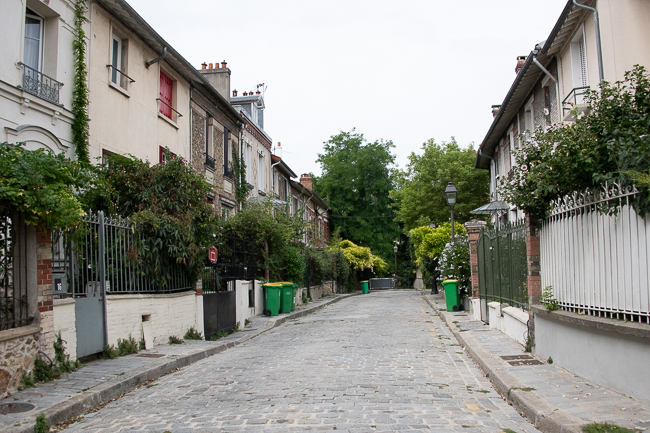
Construction began in 1911, with designs by the architect Pierre Botrel, who was inspired by the Garden City movement in England.
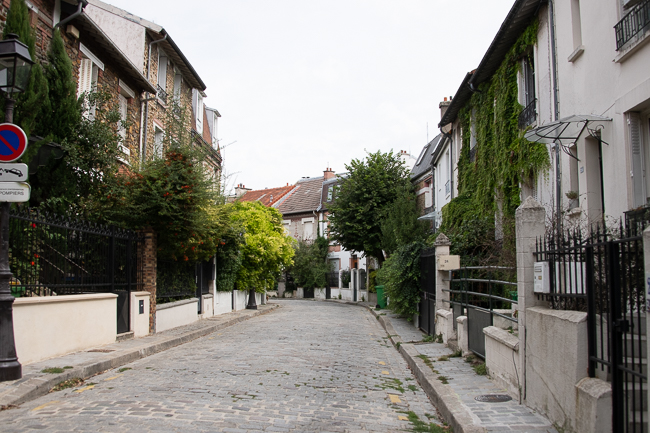
The first residents moved in in 1926.
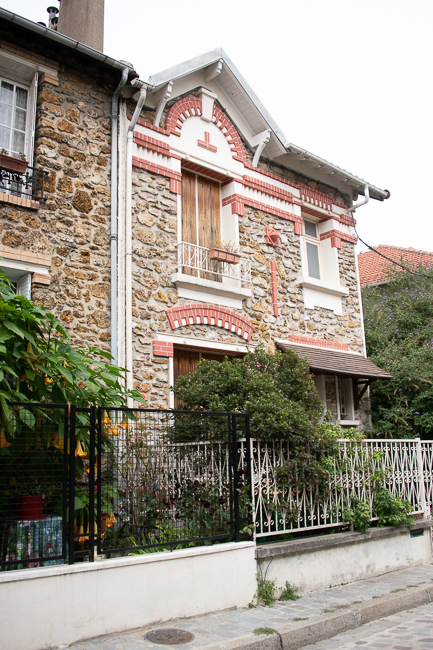
Strict rules were put in place: no extensions, no noisy or smelly businesses, and gardens were to be kept free from unsightly constructions. This wasn’t to be just a neighborhood; it was a community bound by a shared commitment to preserving its character.
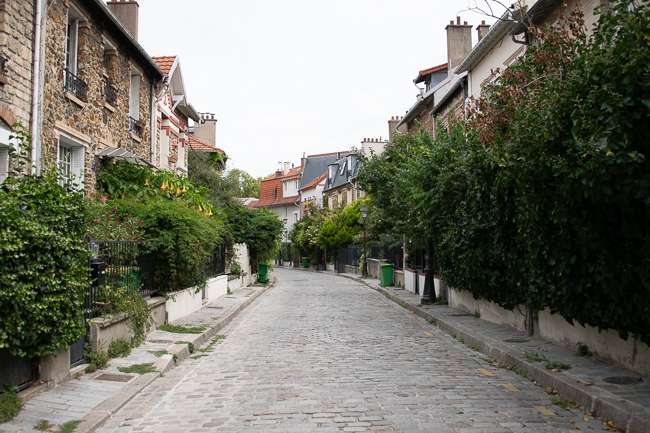
The First World War halted construction, and costs skyrocketed from 16,000 francs per house to 37,000 francs by 1923. They run in the multi-million Euro range today.
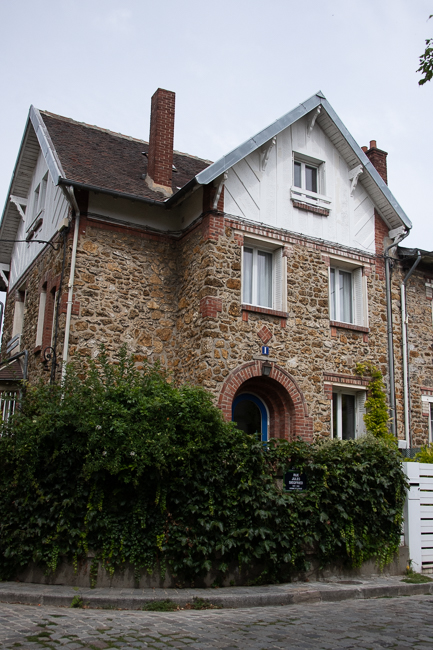
All the houses were completed by 1928.
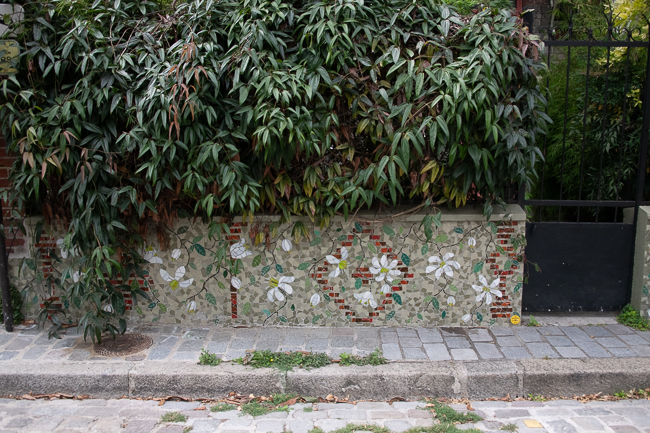 The streets, once privately managed by a syndicate of homeowners, became part of the public domain in the 1990s.
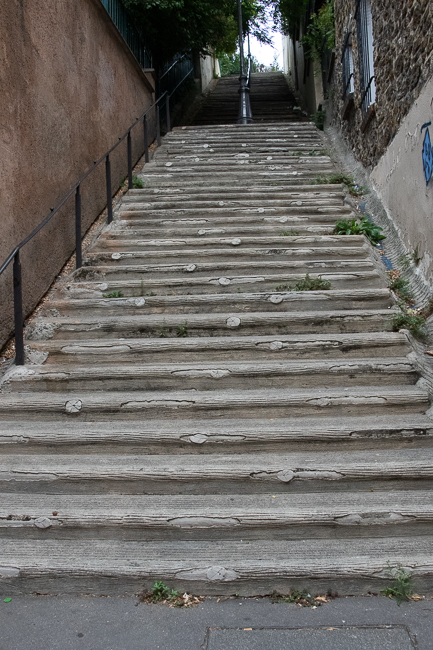
The most convenient way to get to the neighborhood is up two staircases. I entered by climbing this one off Rue Geo Chavez just past Place Sully Lombard, and left by the set that returns to Rue Geo Chavez near Rue Martin Garat.