August 2025
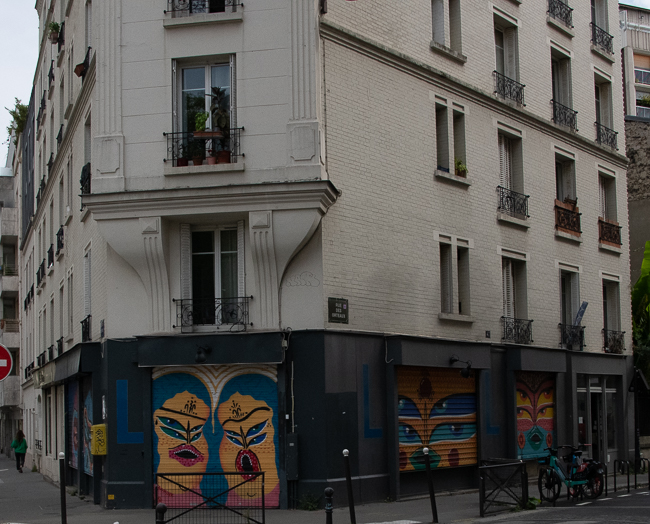
The 20th is called Ménilmontant. A hillside hamlet named for its rising slope (“montant”). It was once known for vineyards and windmills.
I spent the day walking the 20th. As I said, it was in the 80s, a temperature I do not fare will in. I have written about the parks I took refuge in; here is a bit more of what I saw.
Edith Piaf
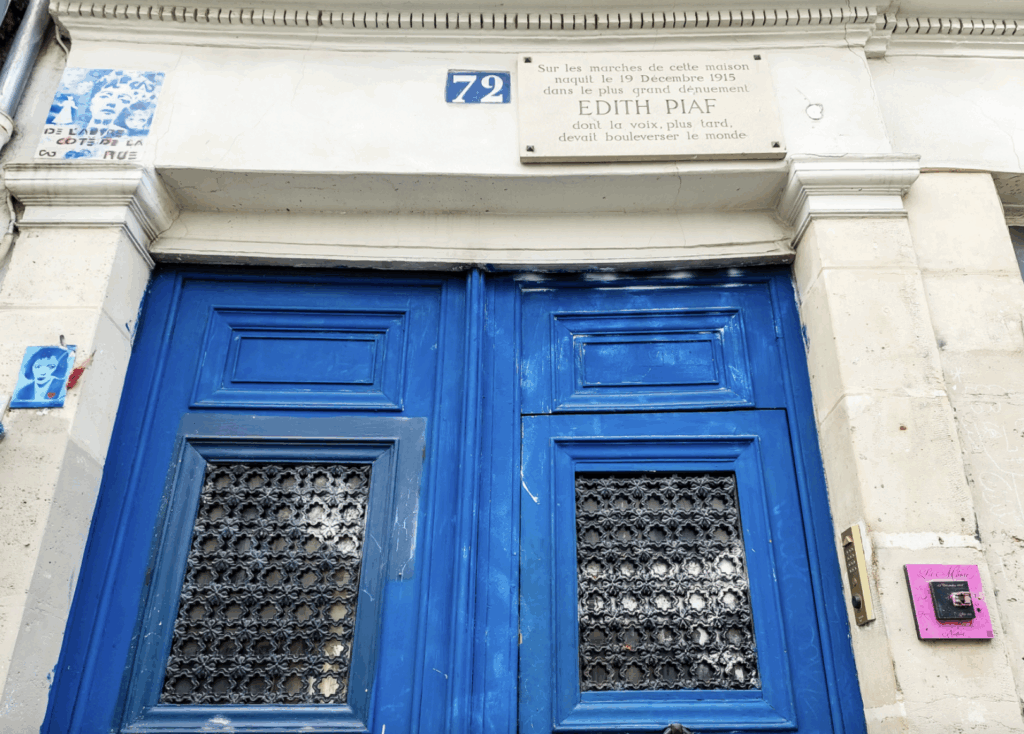
Edith Piaf was born Édith Giovanna Gassion. Her family home was in the 20th at 72 Rue de Belleville.
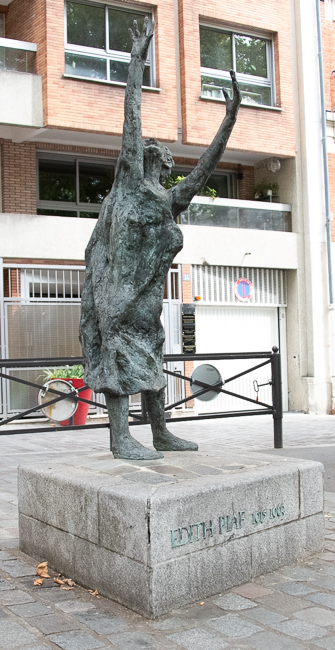
The statue of Edith Piaf is in Place Edith Piaf. It was dedicated on the 40th anniversary of her death.
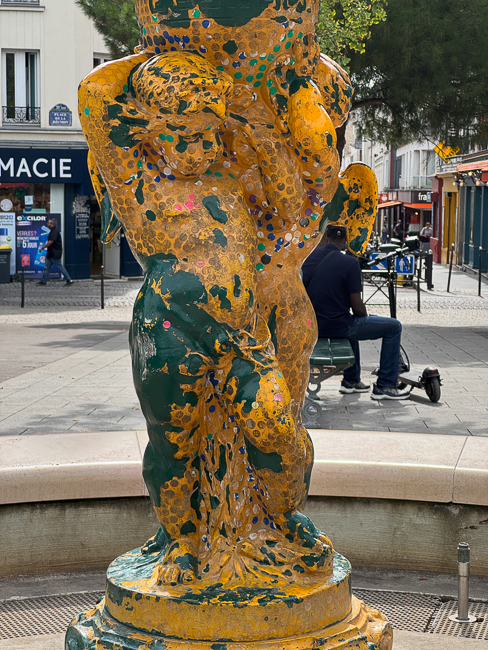
Place de la Reunion Fountain
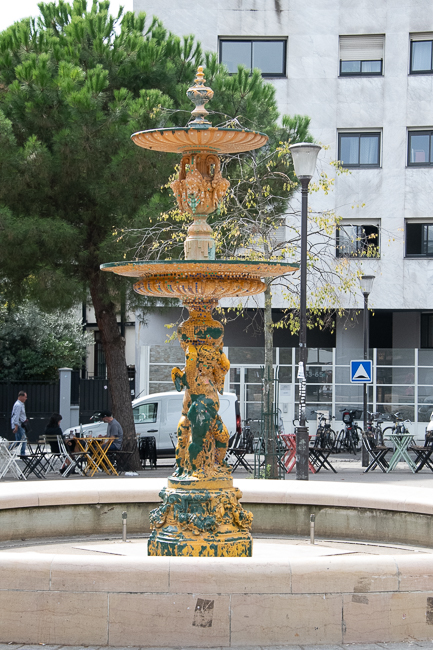
In 2010, the town hall had the fountain painted bright yellow, then gave schoolchildren in the neighborhood carte blanche to cover the newly painted bronze with multicolored “dot” stickers. The statue was repainted, and the process was repeated in 2013 to refresh the paint and stickers. Before being uniquely decorated, this fountain was one of the many fountains of the same type and style built by the prolific Albert-Ernest Carrier-Belleuse, under Napoleon III. Carrier-Belleuse produced a substantial number of statues, fountains, and decorative bronze pieces throughout the city in the late 19th century. The square holds a farmers’ market 2 days a week.
Random Architecture in the 20th
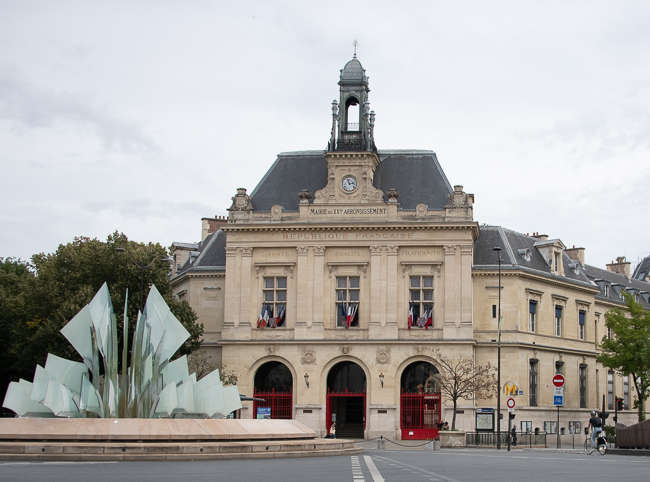
Matters relating to daily life in each arrondissement (administration, culture, sport, local life …) are managed by the local town halls or Mairies d’arrondissement. Jacques Hittorf undertook the construction of the Mairie du 1er Arrondissement in the 1850s. It is a mix of neo-Renaissance, French Renaissance, and Flamboyant Gothic.
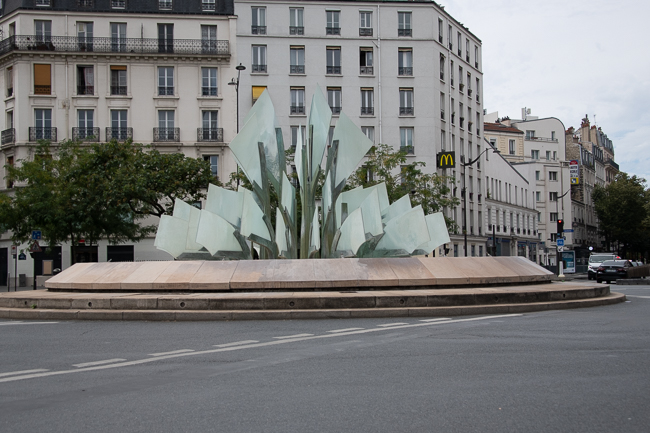
The fountain in front of the mairie is made of glass and steel. The fountain was created in 1992 by architect Alfred Gindre in cooperation with sculptor Jean Dixmier and Jean-Louis Rousselet, a master glassmaker.
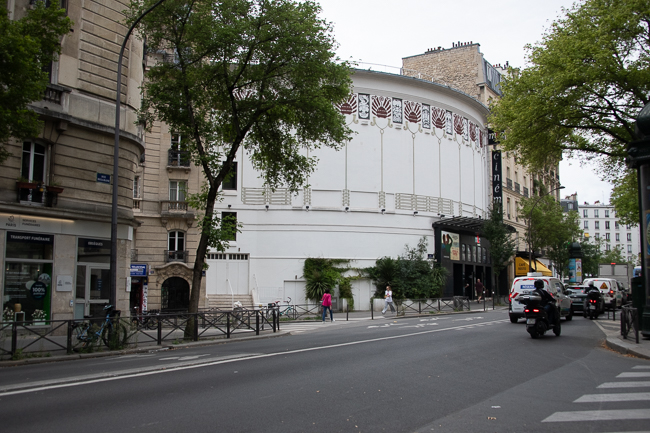
Near the Mairie is this theater that caught my eye for its deco touches. The Gambetta Palace was designed by Henri Sauvage, a French architect and designer in the early 20th century. His major works include the La Samaritaine department store in Paris.
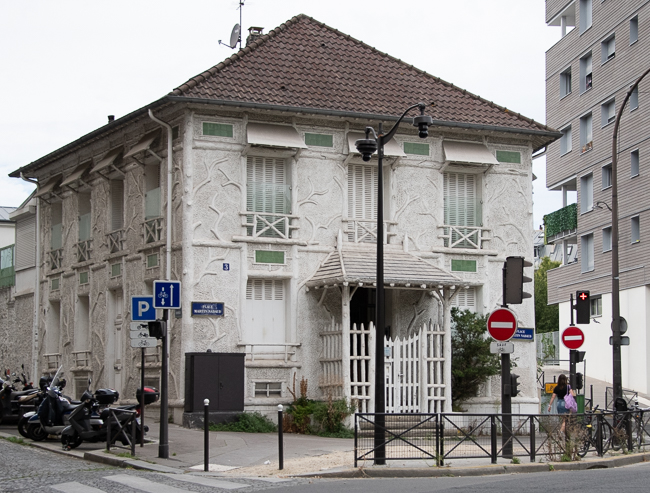
I have a passion for faux bois, so when I spotted this on Place Martin Nadaud, I had to go see it. There is little information about it. It has housed the secular crib of Pere Lachaise from the beginning, with a purpose to: “welcome in a secular and republican spirit the children of working-class families, generally very poor, whose mothers work in the factories of the neighborhood. And thwart the strong presence of the Catholic Church in education and early childhood at the beginning of the 20th century.”
The architect was Charles-Jean Delacroix (1854-1907),
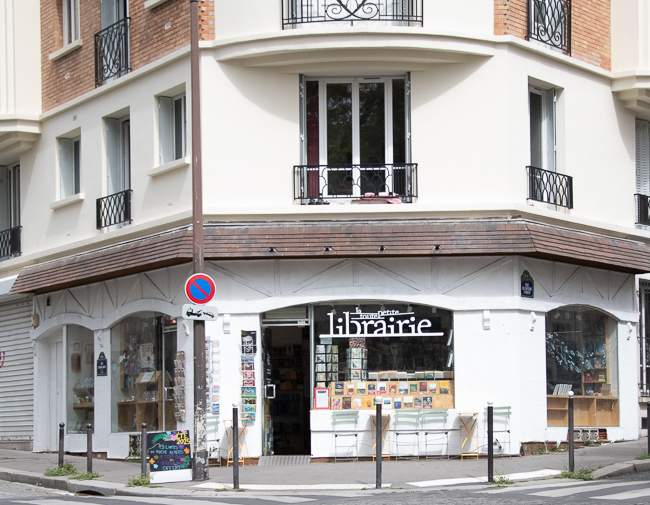
I include this not for its architecture, but for the store, Le Petite Librairie. It is a fabulous little bookstore and one of those that serve the neighborhood with readings, plays, and other things that hold neighborhoods together.
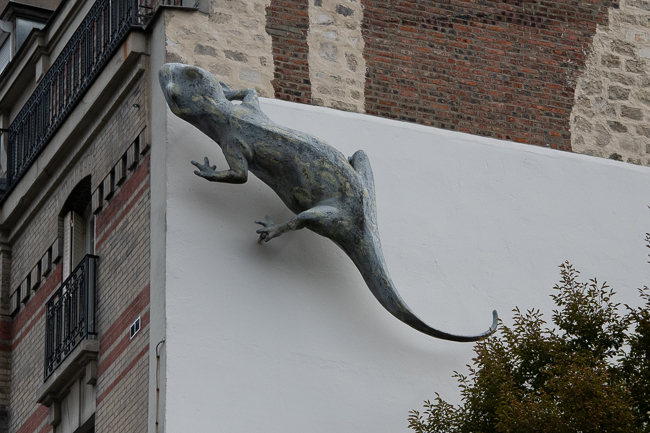
Nearby, you will find this: It is told in the legend that a salamander… after passing through the square where it would have left a long trace, would have headed towards Albert Marquet Street and stopped to rest in a corner of Vitruve Street. However, I can find nothing more about this adorable guy.
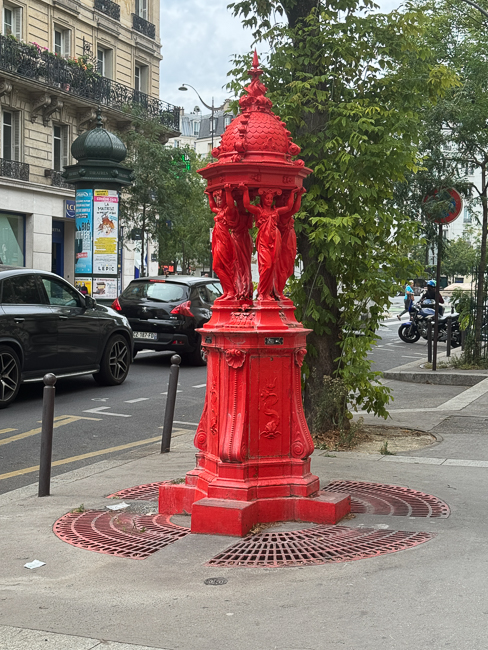
The Wallace fountains are all over Paris. They are usually blue, but some neighborhoods have begun to paint them. This is near the mairie in the 20th. The original fountains were a gift to the people of Paris in 1872 to provide clean drinking water courtesy of Sir Richard Wallace, an Englishman.
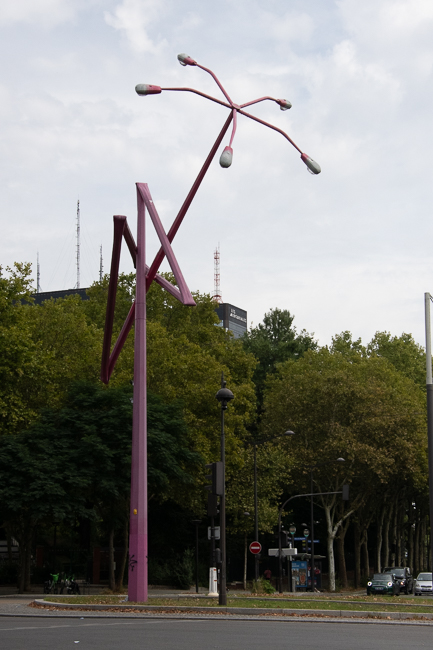
This lamppost, which sits at Porte de Bagnolet, is called the Twisted Lampost Star. It was created by American sculptor Mark Handforth.
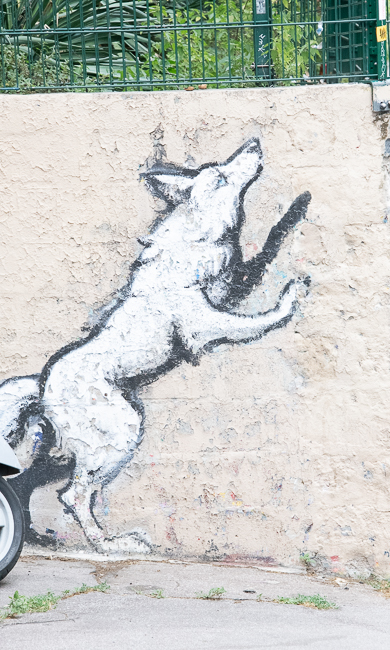
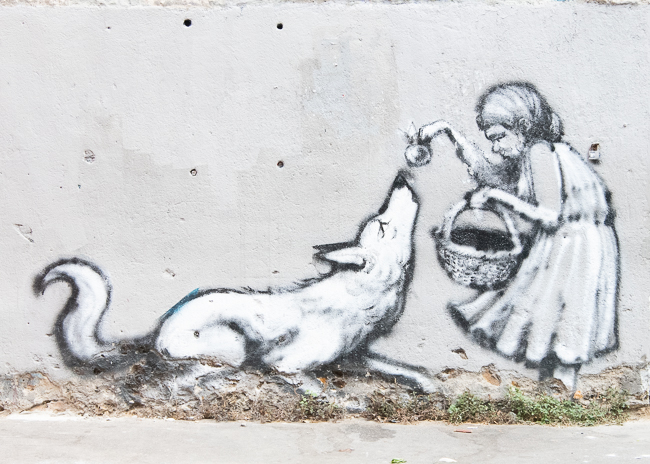
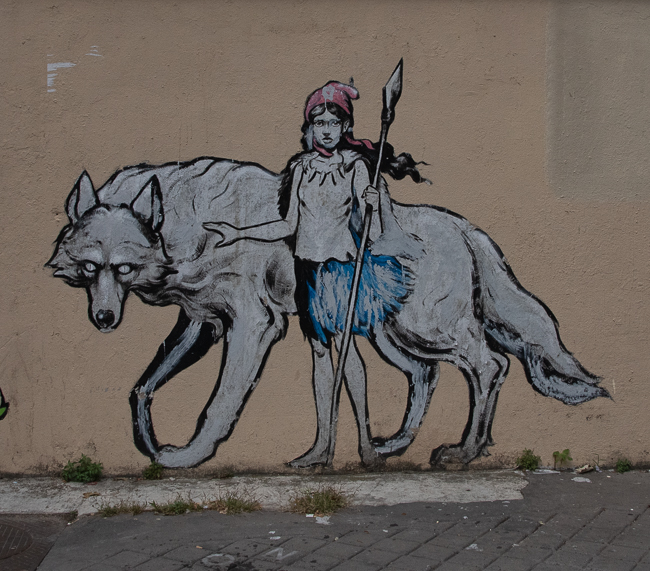
Some street art that caught my eye:
 *
* *
* *
*