July 31, 2025
The town of Rueon is absolutely magical, and I wish I had many more days to explore.
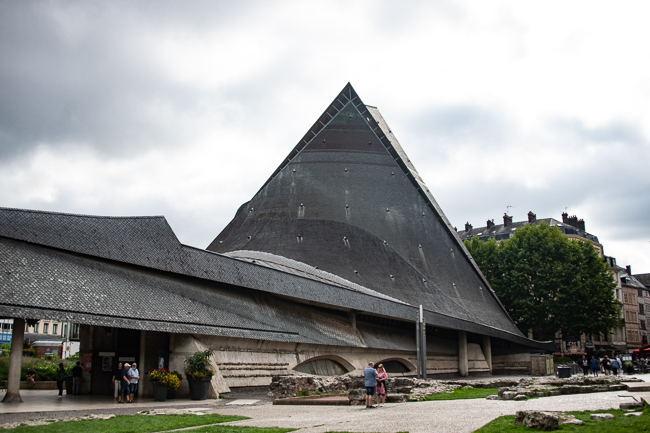
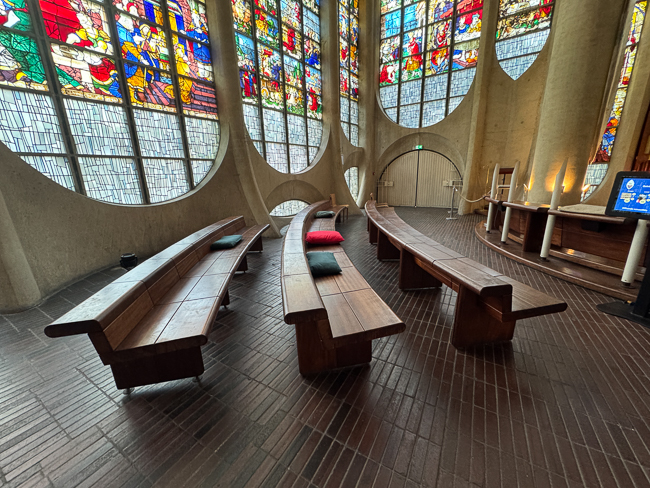
The Church of Saint Joan of Arc was completed in 1979 in the centre of the ancient market square, known as the Place du Vieux-Marché, where Joan of Arc was burned at the stake for heresy in 1431.
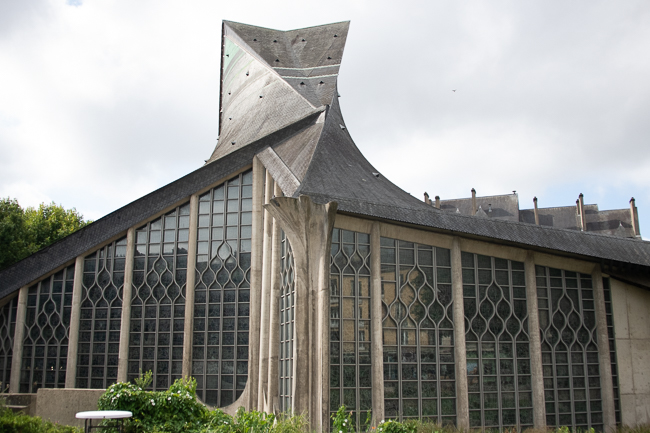
A small garden outside these windows, Le Bouchet, marks the exact spot where Joan of Arc was put to death.
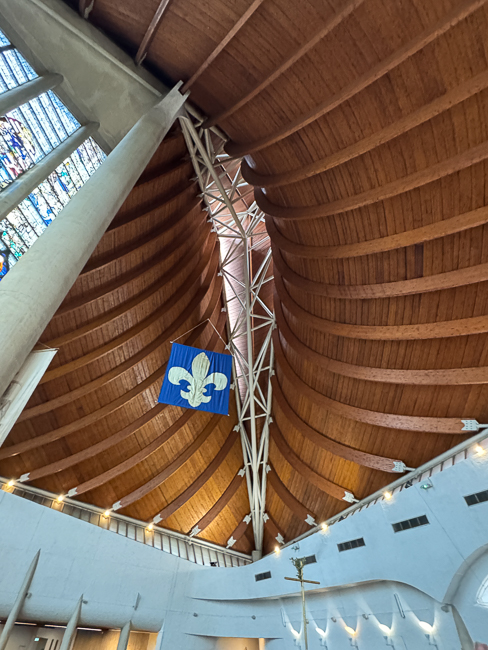 I found the church just stunning. Designed in 1969 by architect Louis Arretche, the sweeping curves of the structure are meant to evoke both the flames that consumed Joan of Arc and an overturned longship. Many early Christian churches were designed in the shape of an overturned longship.
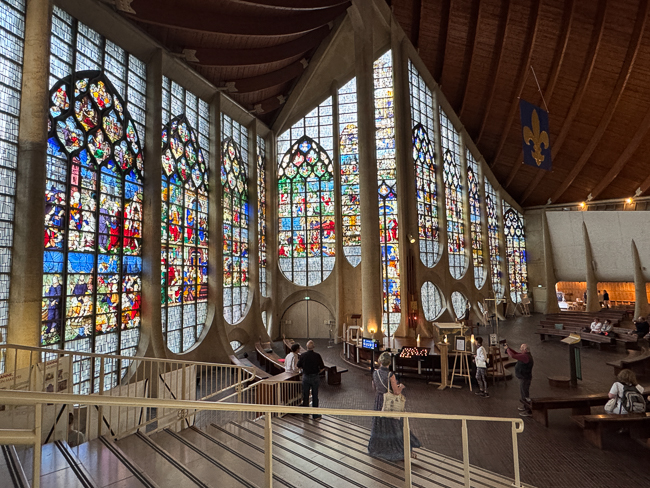 The stained glass windows originate from the 16th-century Church of Saint Vincent, an old church that was almost completely destroyed in 1944 during World War II. The windows had been removed and stored in a safe location during the war and were then incorporated into the Church of Saint Joan of Arc. The 13 window panels depict Christ’s childhood, Passion, Crucifixion, and Resurrection, and the life events of St.Peter, St. Anne, and Saint Anthony of Padua.
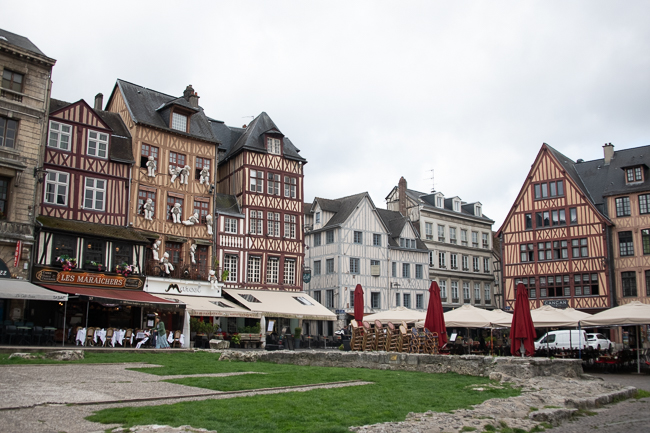
Rouen traces its origins to the fifth century, with Rouen becoming self-governing in 1150. The 12th century saw a significant growth in population, reaching around 30,000, which transformed the city into one of the most populous urban centers in medieval France.
 *
*
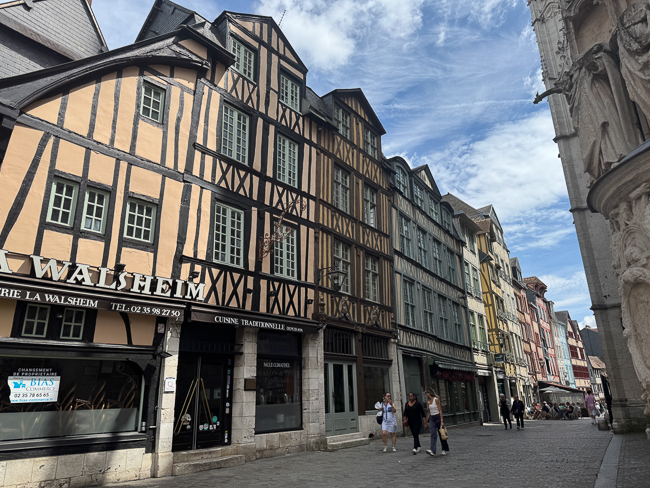
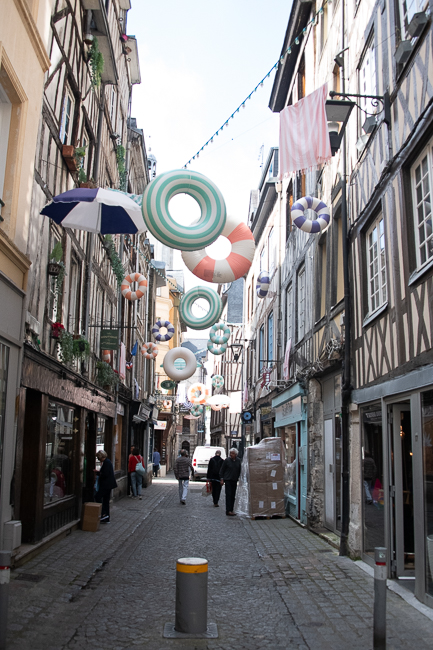
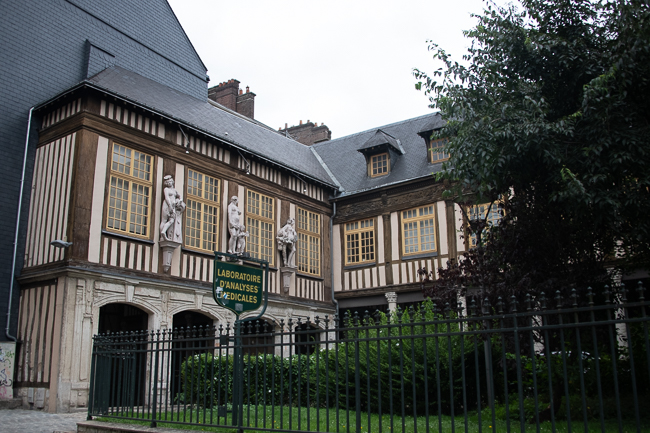
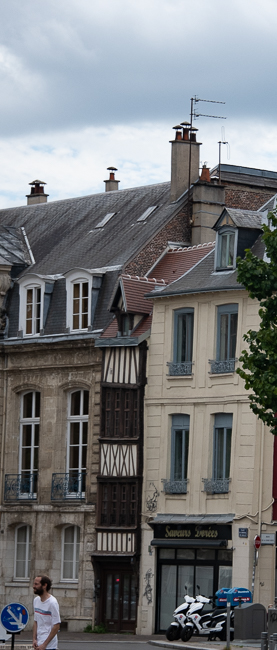
The size of the medieval portion of the town is astounding. It is hard to believe this many medieval buildings survived in any one location.
 *
* *
*
*
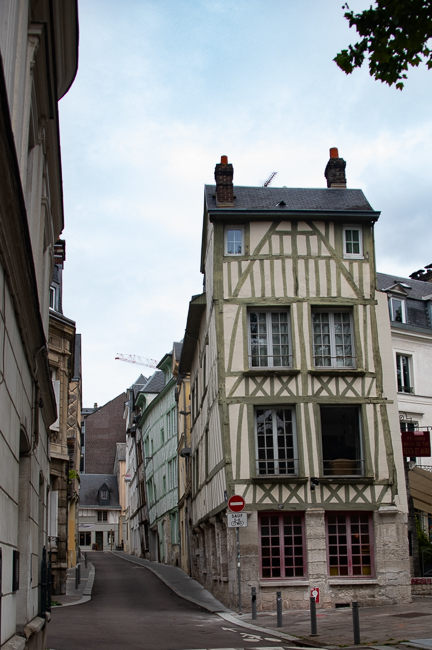
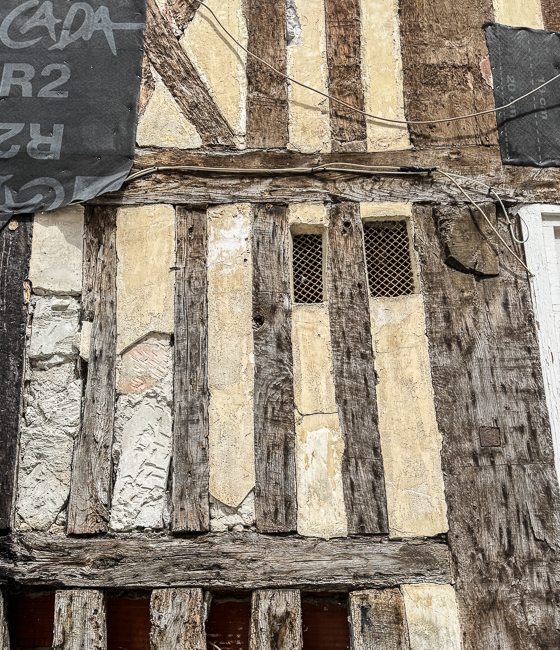
Half-timbering is a way of constructing wood-frame structures with the structural timbers exposed. This medieval method of construction is called timber framing. The wooden wall framing, including the studs, crossbeams, and braces, is exposed to the outside, and the spaces between the wooden timbers are filled with plaster, brick, or stone.
Gros Horloge
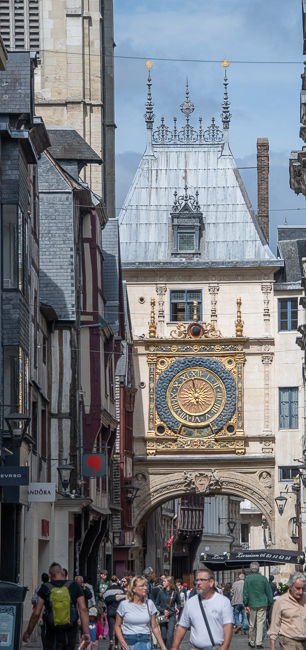
This gold-faceted Gros Horloge (an astronomical clock from the 14th century) is a functioning street clock that symbolizes the wealth generated by the wool industry in Rouen’s past centuries. The clock is installed in a Renaissance arch crossing the Rue du Gros-Horloge. The mechanism is one of the oldest in France, having been made in 1389.
Aitre St. Maclou
Of course, my love of the macabre was satisfied in Rouen.
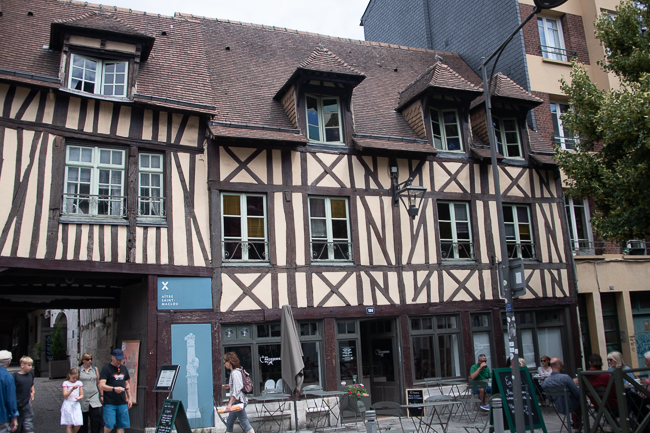
Aitre St. Maclou dates back to the Black Death of 1348. It is one of the few examples of an ossuary of this type remaining in Europe.
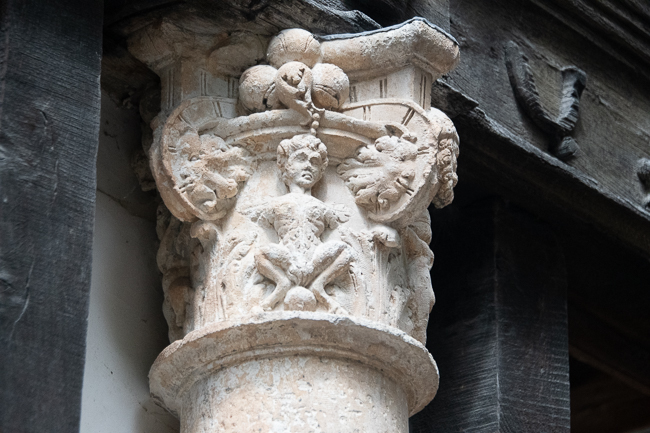
The aître Saint-Maclou takes its name from the old French aitre, meaning “cemetery”, from the Latin atrium, which designates the inner entrance courtyard preceding the entrance of a Roman villa.
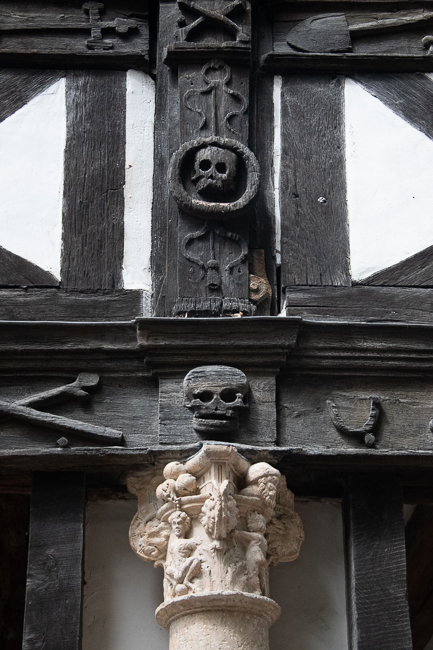
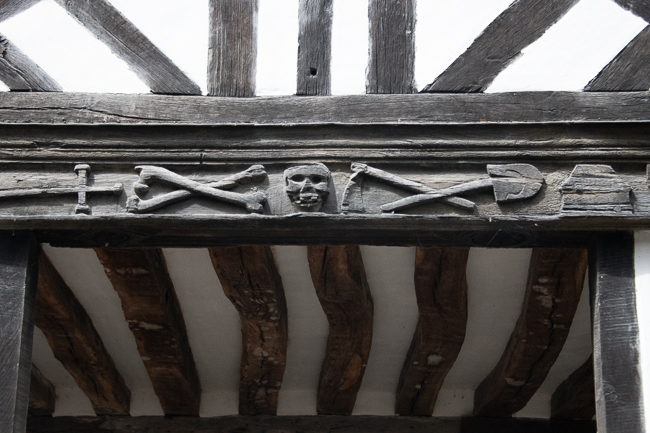
The wooden frames of the buildings were ornamented with macabre details: skulls, bones, shovels, pickaxes, cult objects, and other reminders of the airtre’s purpose. In 1705, the buildings were emptied and were destined to be a school for poor boys. Despite damage from war and revolution, the site remains a fine arts school.
Tower of Joan of Arc
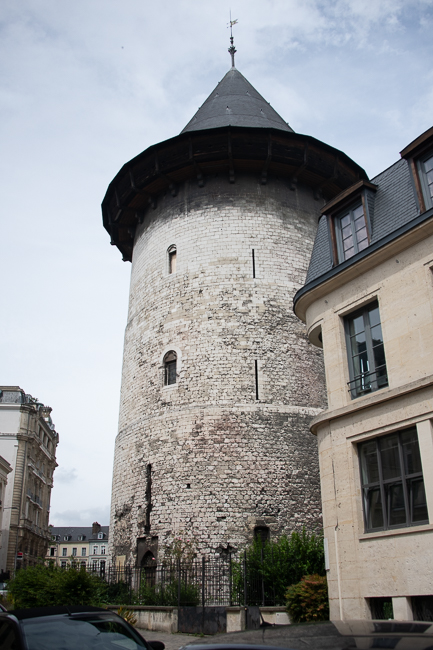
This 13th-century tower is the sole surviving relic of the medieval castle of Rouen, built by King Phillip II of France after his victory over the English. The castle played a crucial role in the Wars of the Hundred Years, the War of the Roses, and the religious conflicts between French Catholics and Huguenot Protestants. Still, its most infamous role was as the place where Joan of Arc was imprisoned and interrogated before being burned at the stake in 1431.
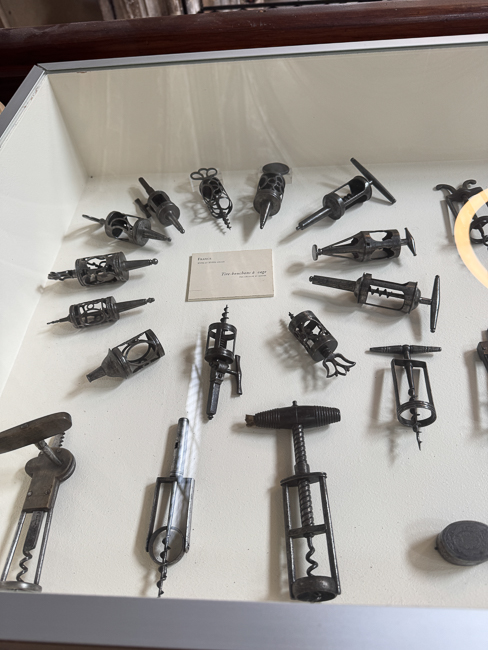
Musee Le Secq des Tournelles
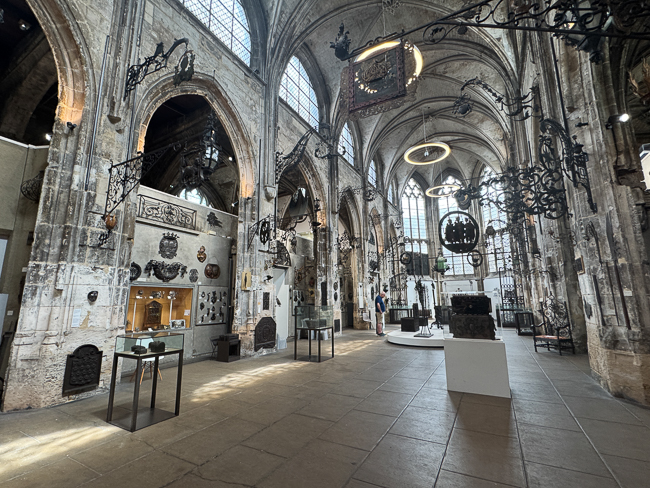
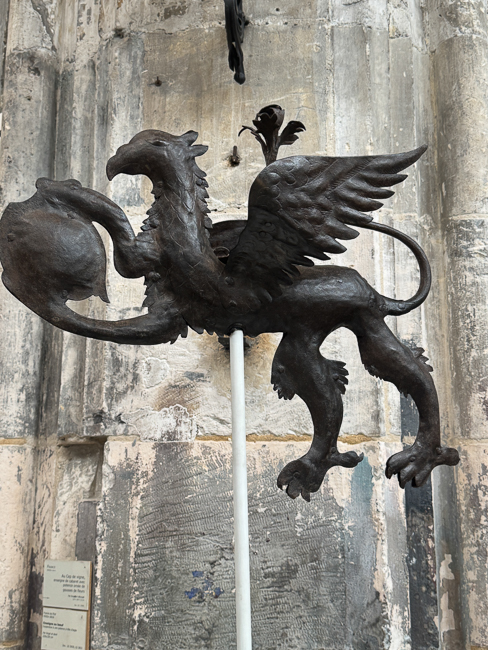
I finished my day enjoying this charming museum. Located inside the Gothic church of Saint-Laurent, the Musée Le Secq des Tournelles hosts a rare collection of metal signs and wrought iron objects.
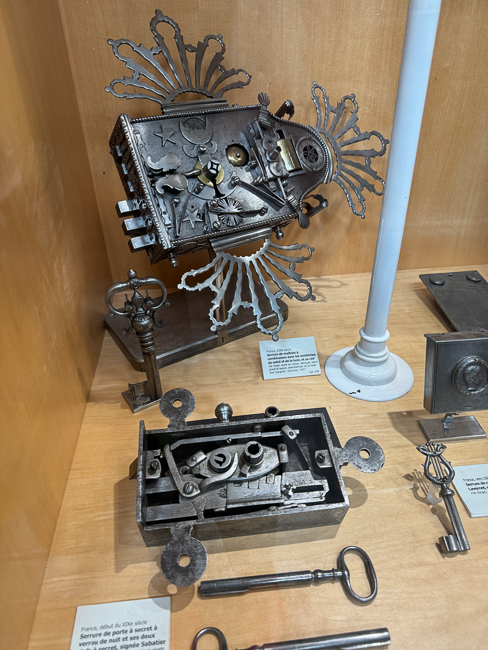
Henri Le Secq des Tournelles and his son created the museum from their personal collection, intending to donate it to the Louvre. However, they were concerned that the unusual objects would be lost or forgotten by the museum. In 1921, the family established the museum, donating their works to the church.
Sites around town
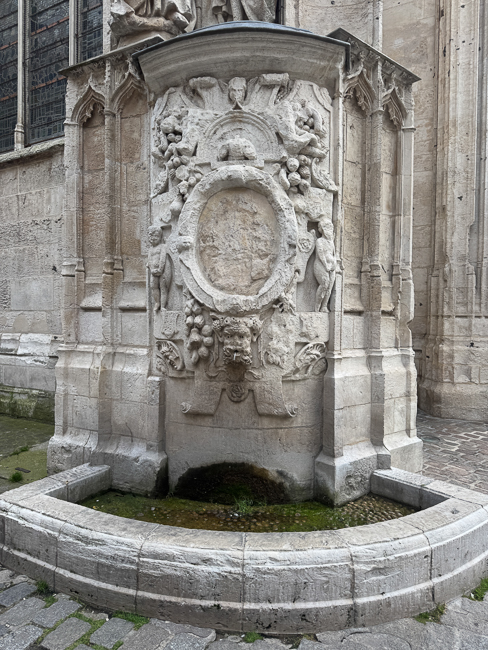
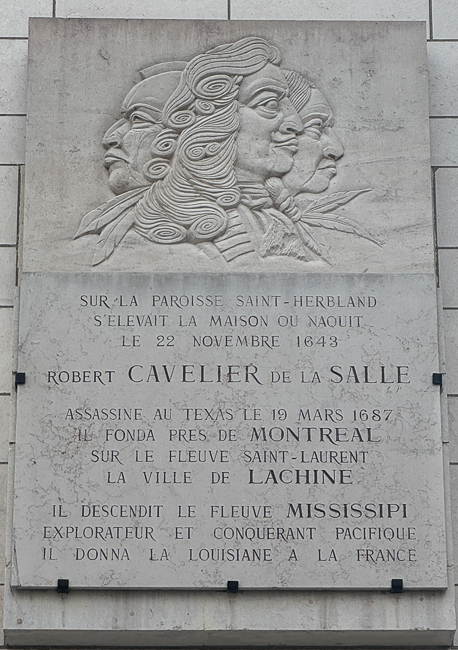
René-Robert Cavelier was a 17th-century French explorer and fur trader in North America. He explored the Great Lakes region of the US and Canada. He is best known for an early 1682 expedition in which he canoed the lower Mississippi River from the mouth of the Illinois River to the Gulf of Mexico, where he claimed the Mississippi River basin for France. La Salle was slain by Pierre Duhaut in Texas.
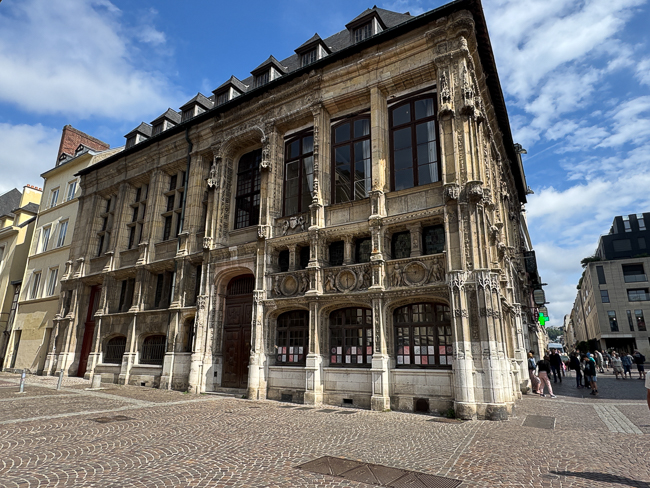
I fell in love with this building across from the Rouen Cathedral. It is the Finance Office. It is an excellent example of civil architecture of the Louis XII style of the first decades of the sixteenth century.
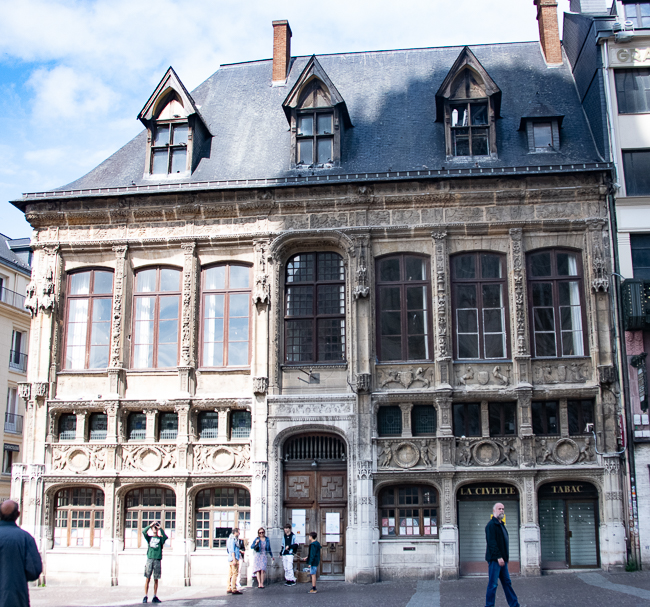
I must come back to the magical town, as I said, it has so, so much more to offer.
La Couronne
I finished the night in La Couronne. La Couronne was first established as an inn in 1345. This makes it the oldest continuously operating auberge in France and one of the oldest in all of Europe.
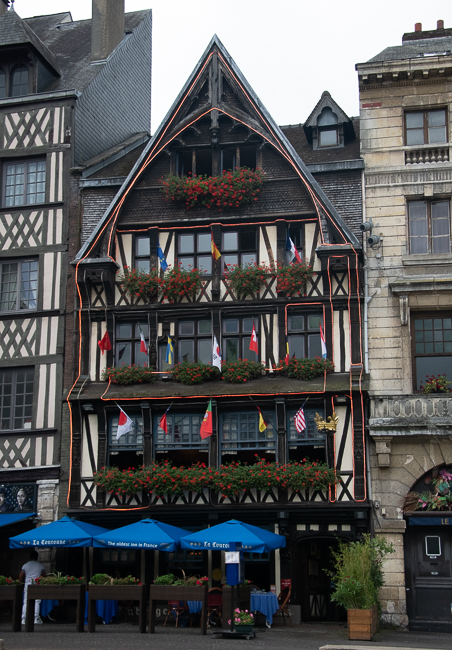
Julia Child’s first meal in France was at this restaurant in 1948. Her first meal, which introduced her to the joy of butter, was Sole Meunière.
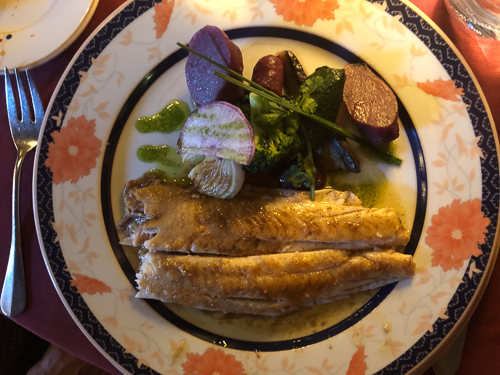
The dinner was spectacular, and the space was truly fun – a stop I would highly recommend, and reservations are a must.