May 25, 2026
To understand the Cathedral, one must learn of the Diocletianic or Great Persecution, which was the last and most severe persecution of Christians in the Roman Empire. In 303, the emperors Diocletian, Maximian, Galerius, and Constantius issued a series of edicts rescinding Christians’ legal rights and demanding that they comply with traditional religious practices. Later edicts targeted the clergy and demanded universal sacrifice, ordering all inhabitants to sacrifice to the Roman gods (Jews were exempt).
Diocletian purged the army of Christians, condemned Manicheans ( a major world religion founded in the third century AD by the Iranians prophet Mani) to death, and surrounded himself with public opponents of Christianity.
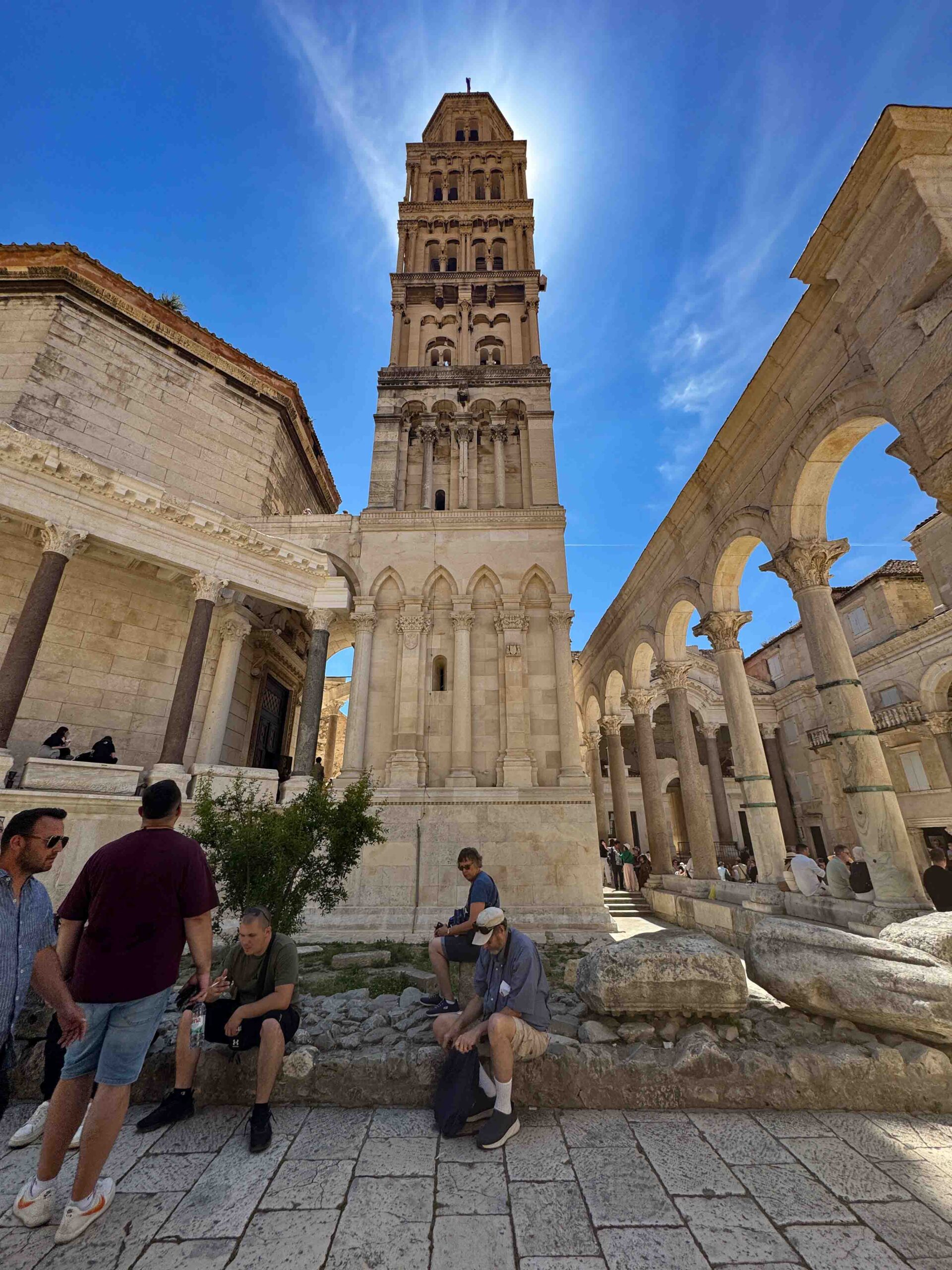
Around the turn of the seventh century, the mausoleum was converted to Christian use when survivors from the destroyed city of Salona (Diocletian’s hometown) took refuge inside the palace and adapted the tomb for worship. Pagan images and the emperor’s sarcophagus were removed or destroyed during this transformation. Relics of Saint Domnius, the former bishop of Salona, together with remains of Saint Anastasius, both of whom Diocletian himself had ordered to be executed, were brought from ruined basilicas at Salona and installed with places of honor in the new church.
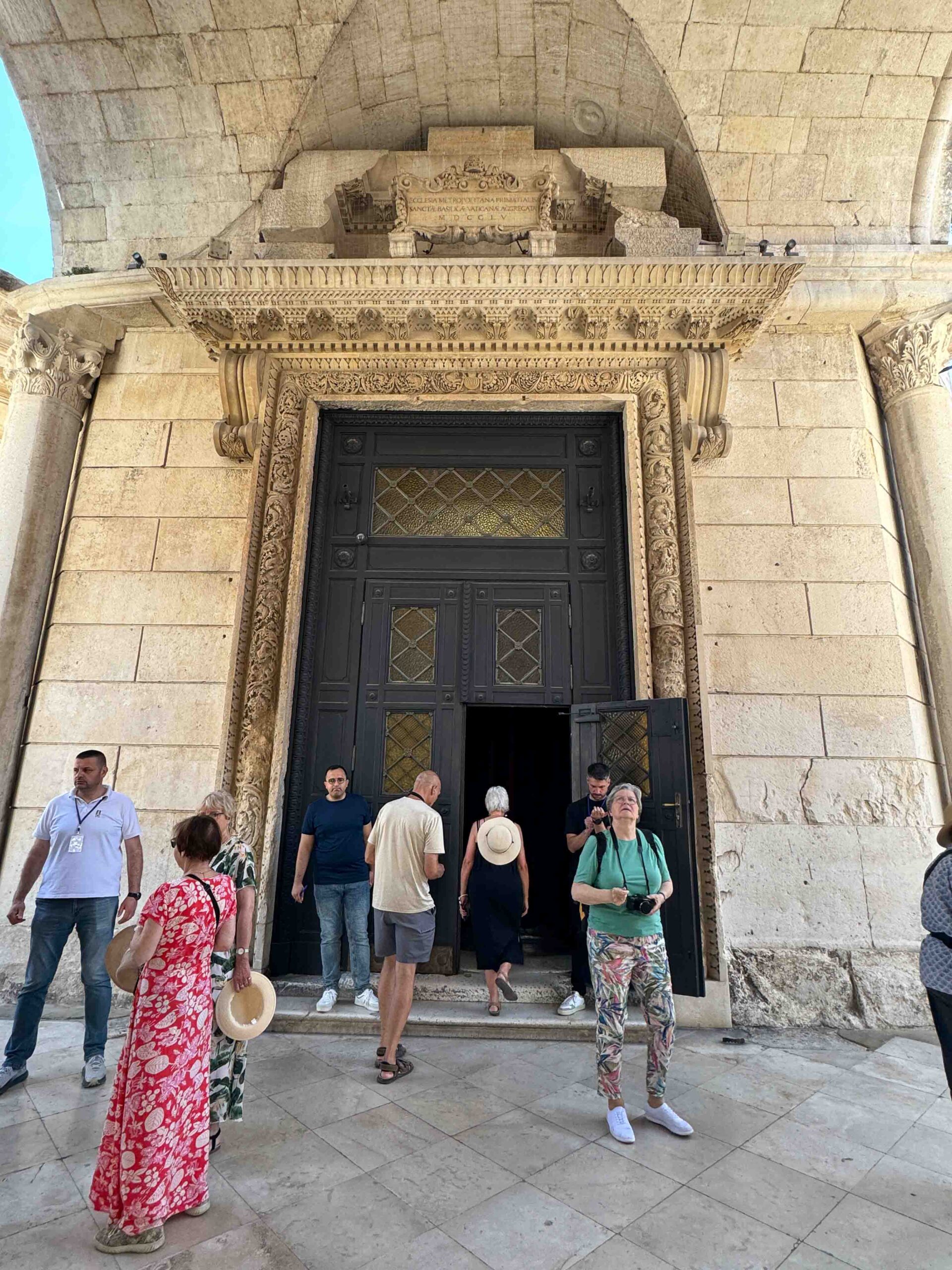
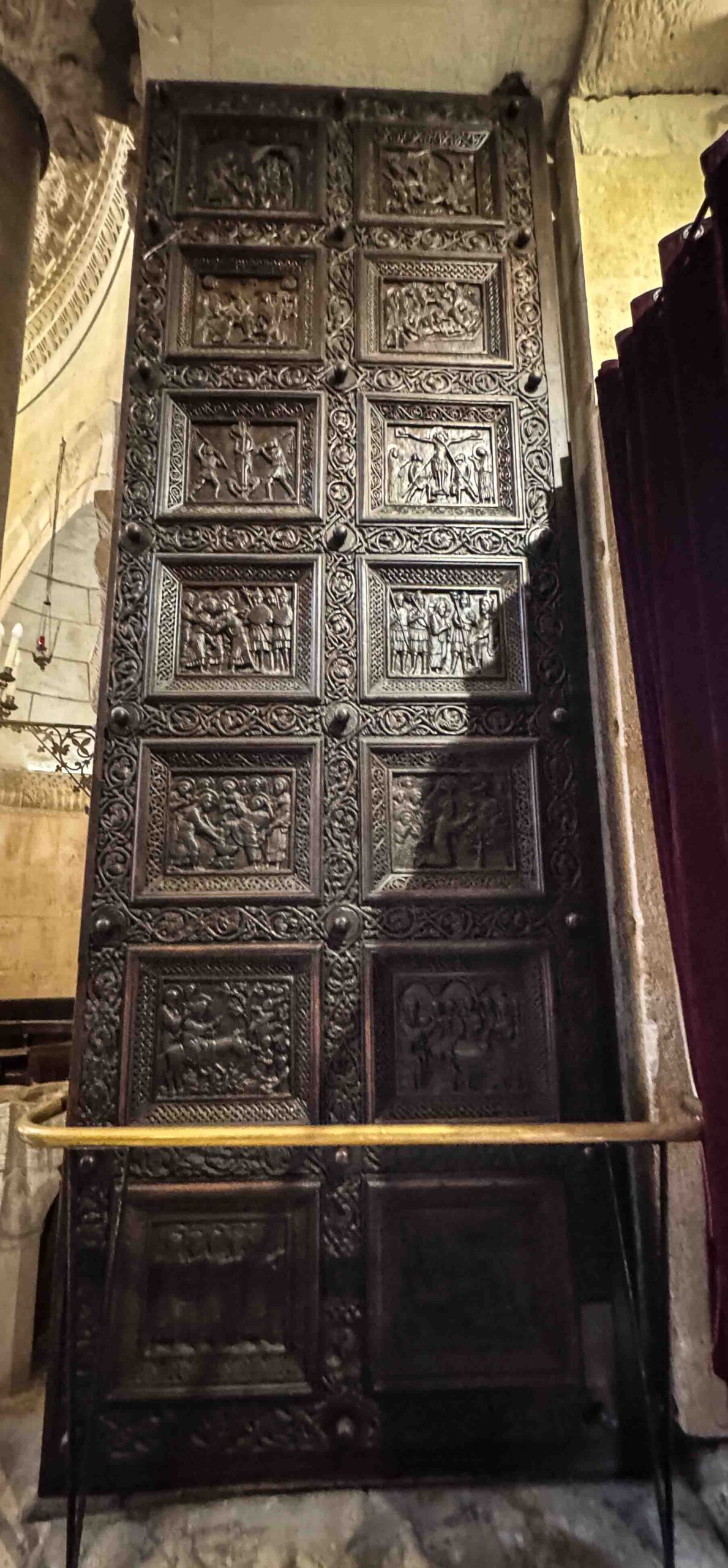
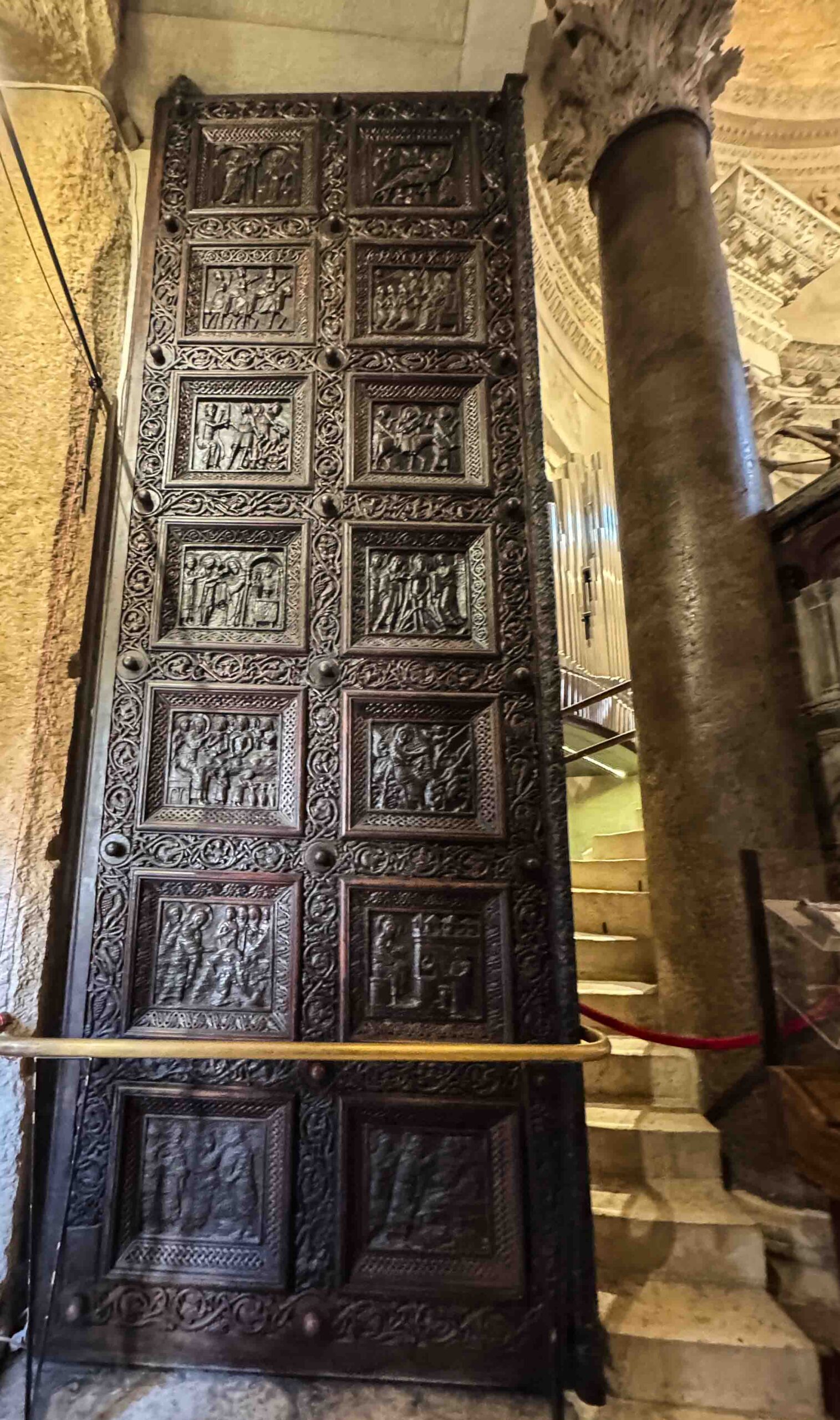
One of the cathedral’s most amazing features is its wooden doors, carved in walnut in 1214 by the Split native Andrija Buvina. They are decorated with 28 carved scenes—14 on each wing—depicting episodes from the life of Christ, ranging from the Annunciation by the Angel Gabriel to the Resurrection. Andrija Buvina’s doors are a rarity, as very few medieval doors made of wood survive.
I became enamored with the pulpit and its exquisite carvings.
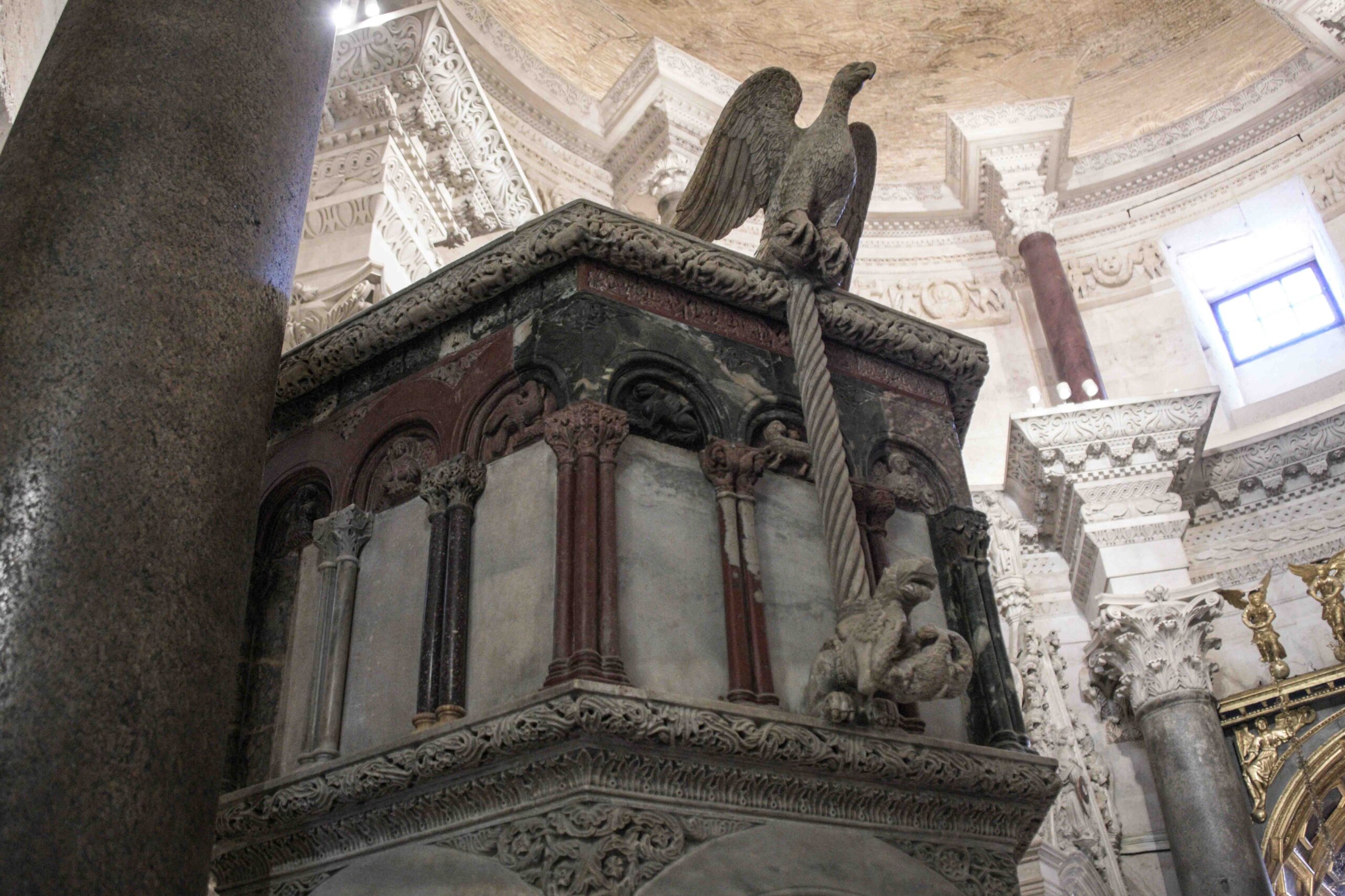
The pulpit is hexagonal and dates from the 13th century. It is made of green porphyry and was once entirely gilded.
*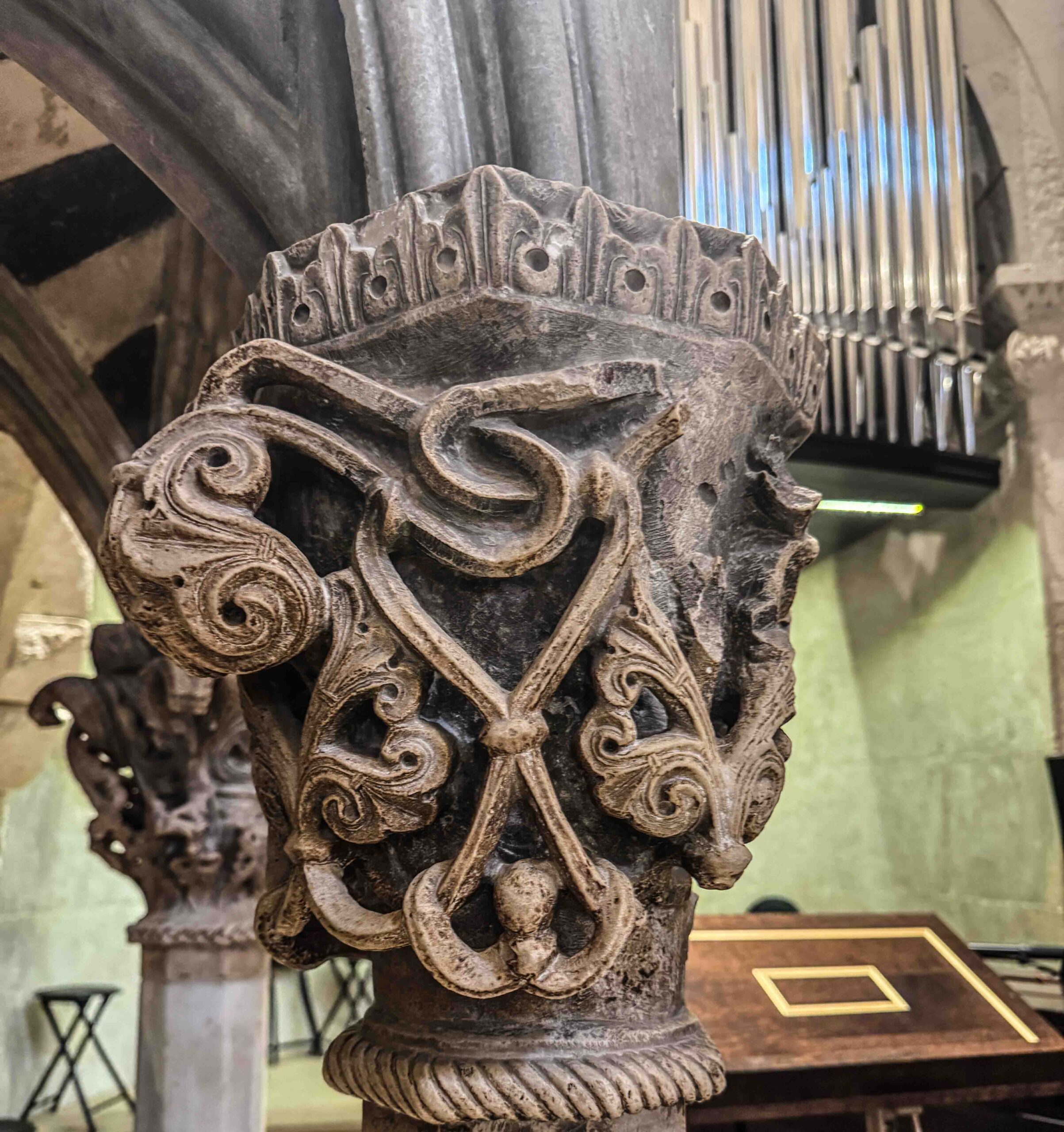
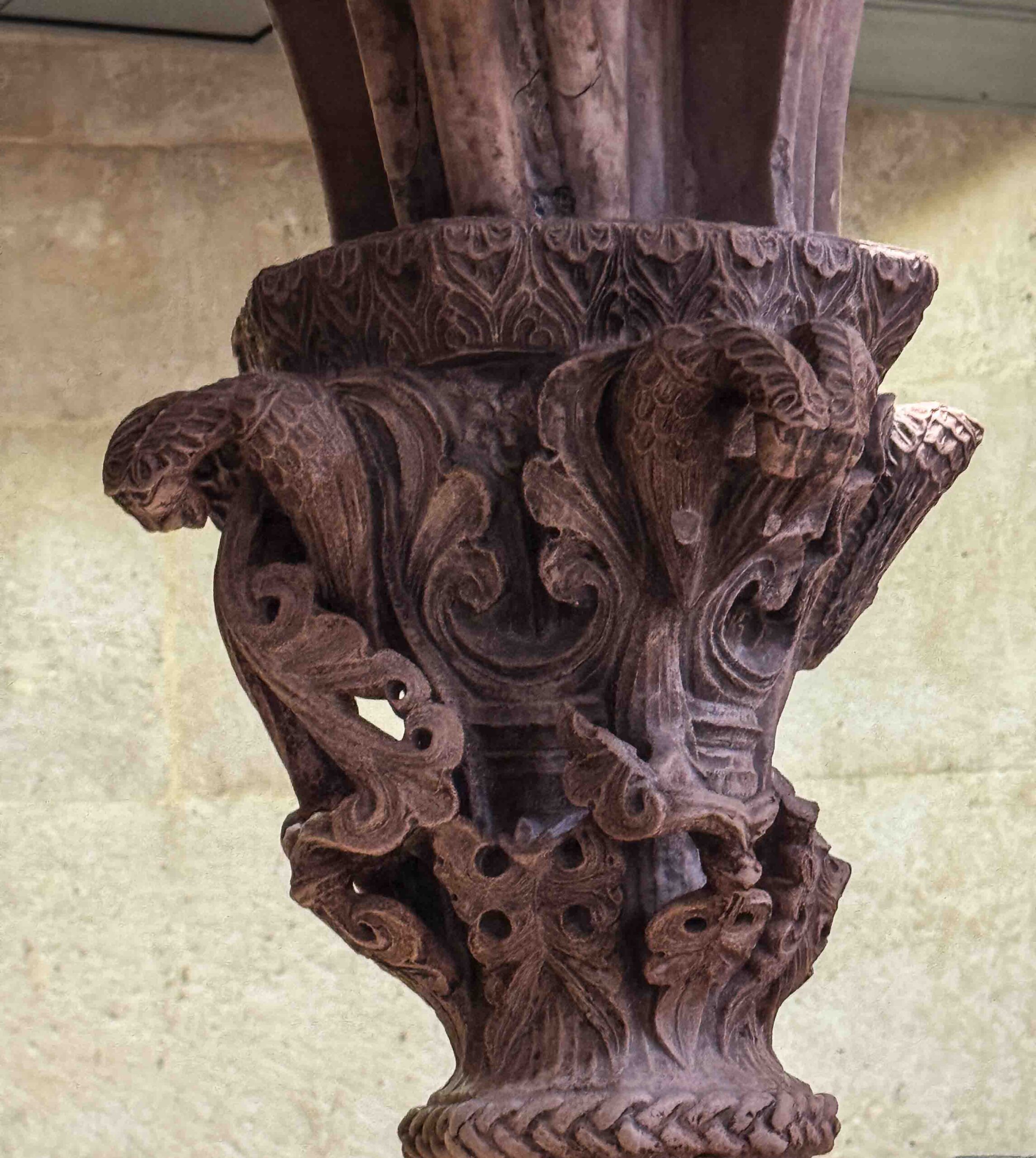
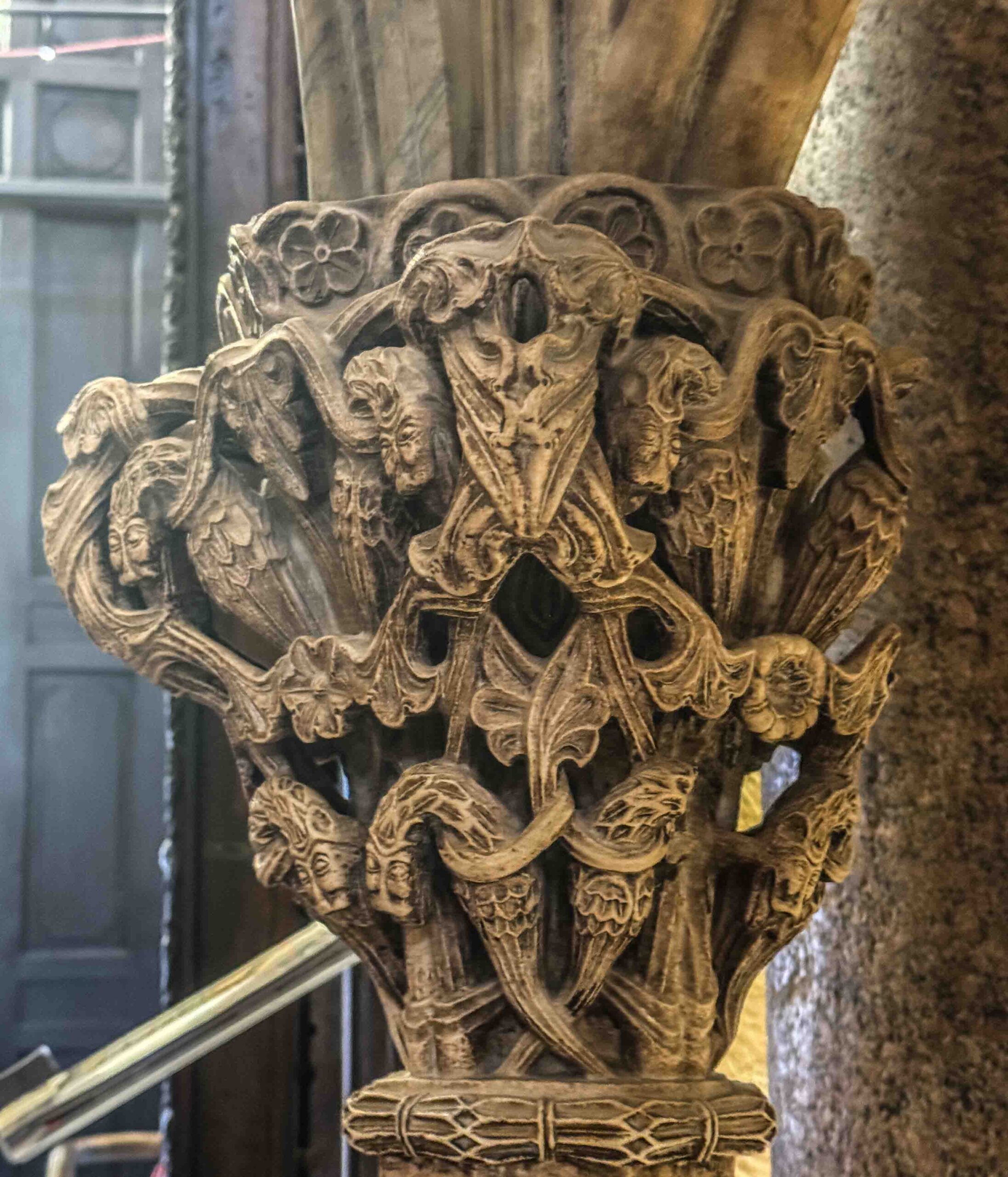
Then I fell in love with the columns and the column capitals
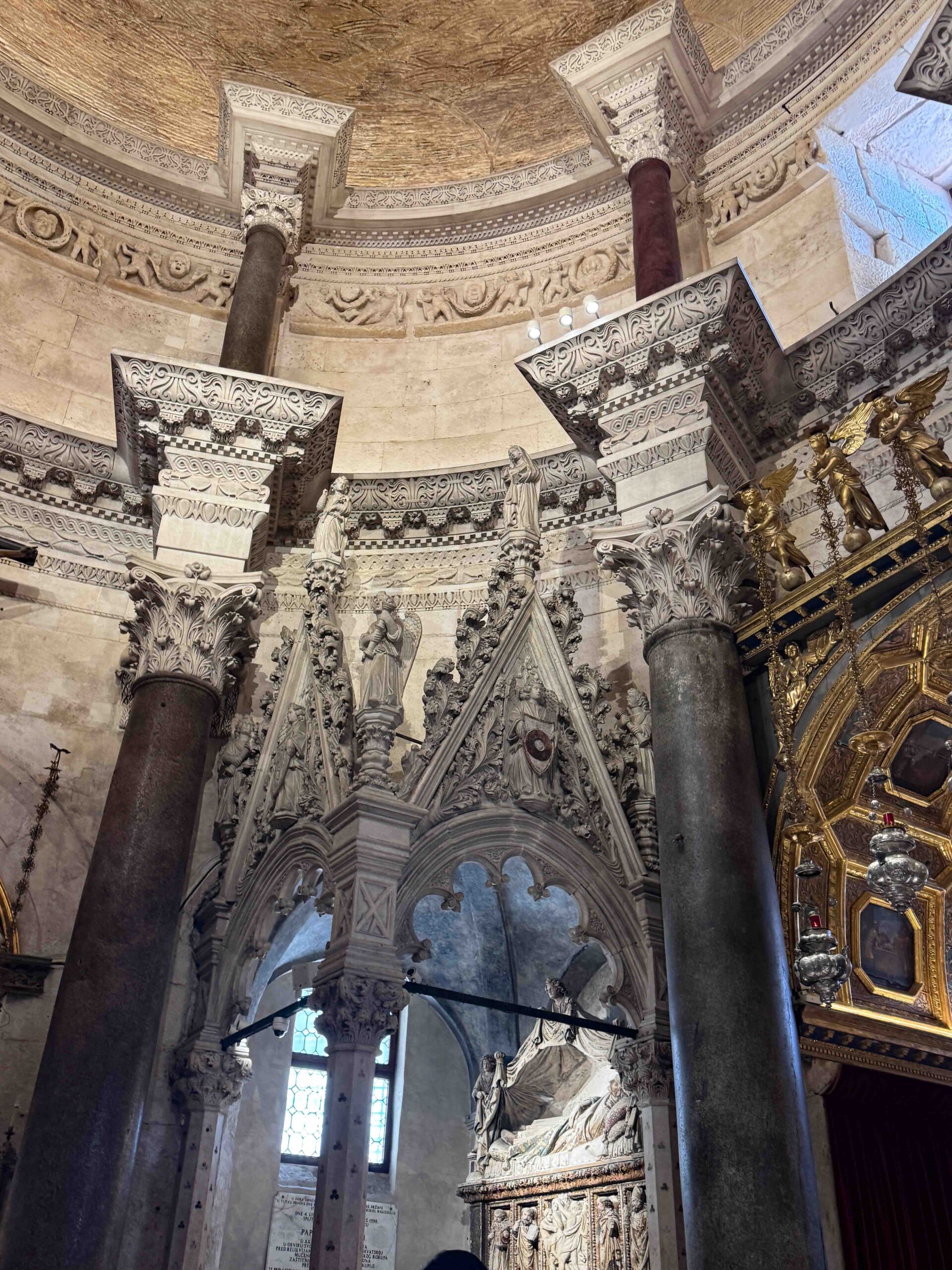
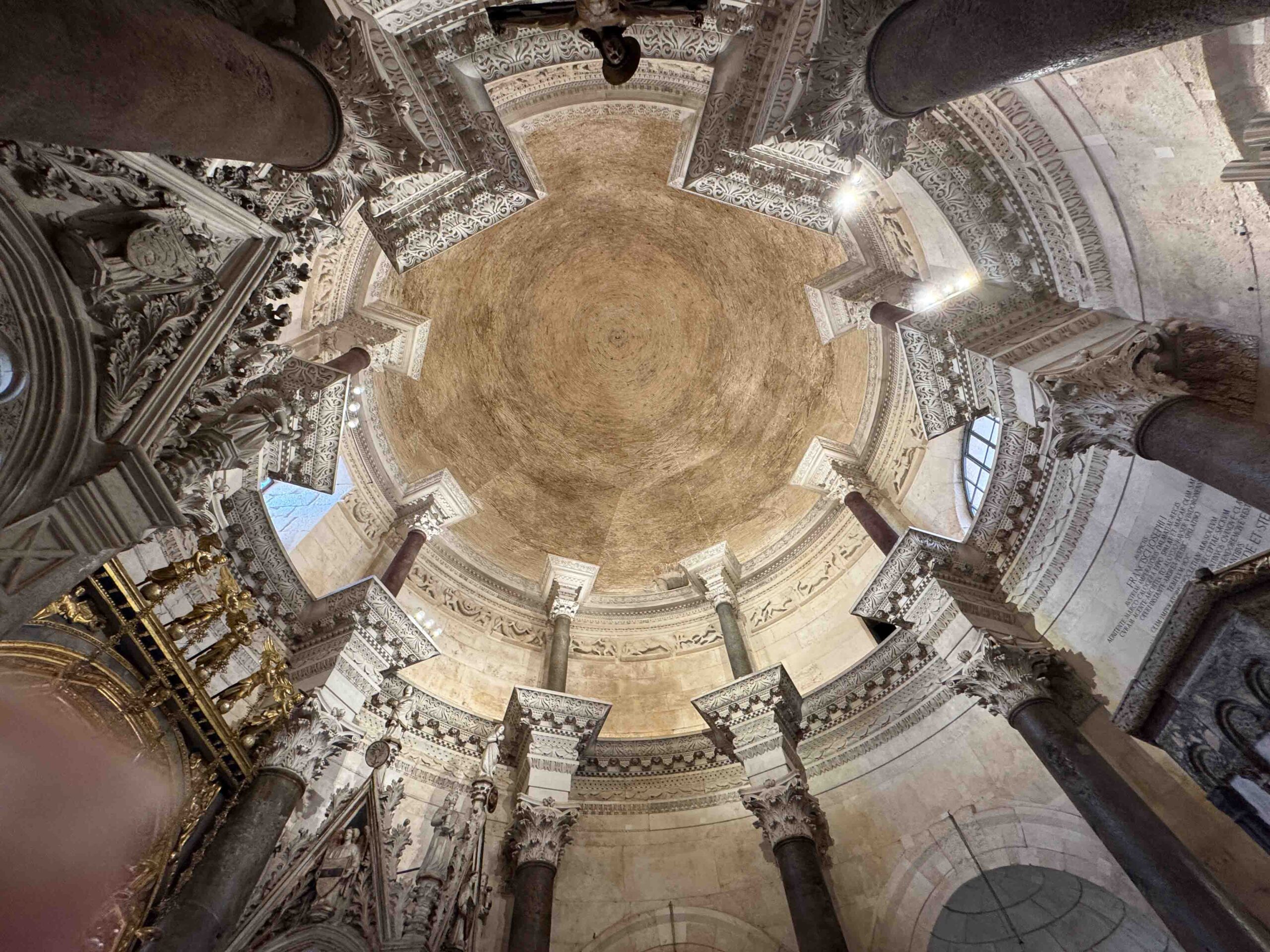
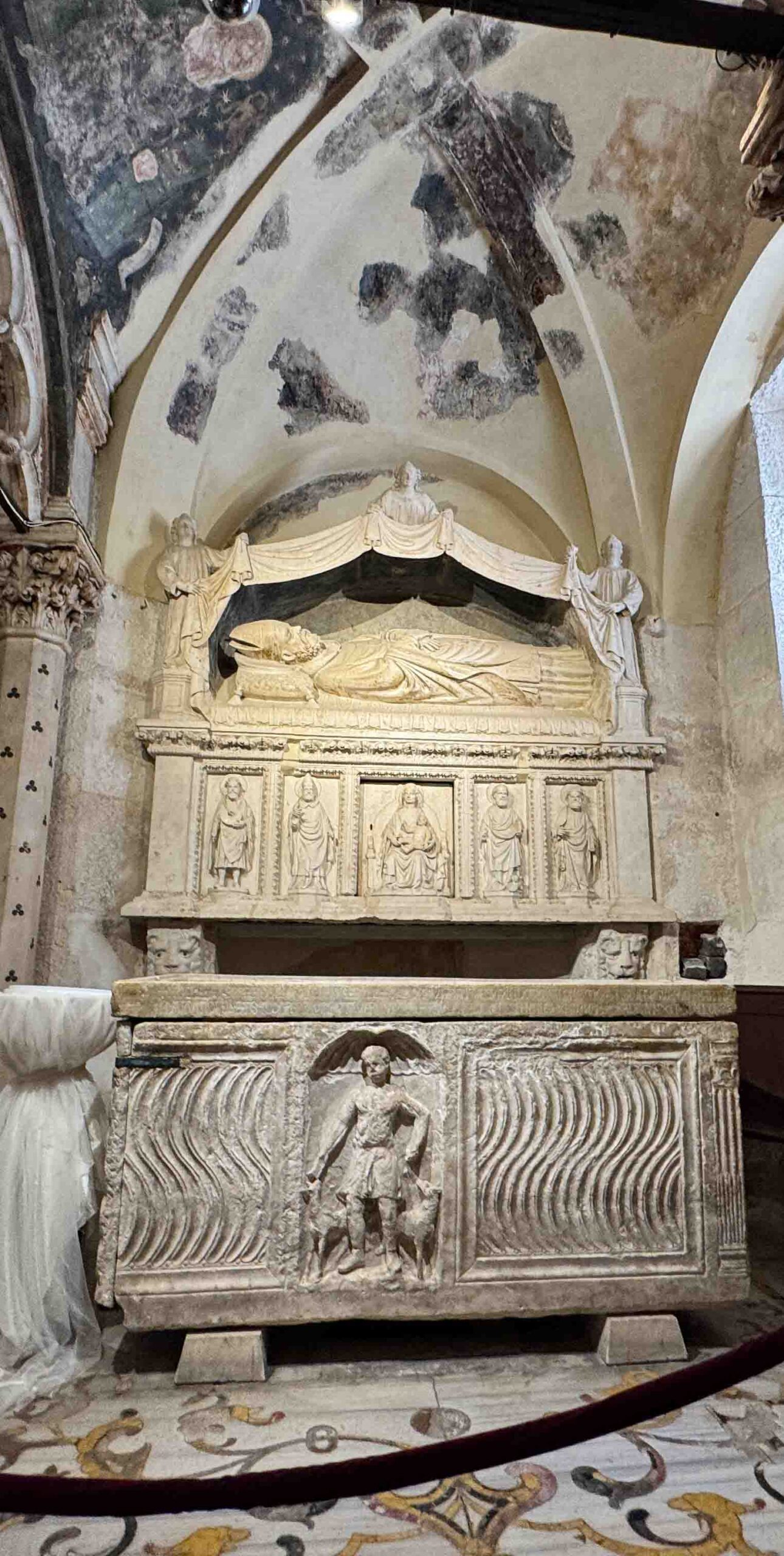
This altar, dedicated to St Domnius, is the older of the two altars in the cathedral. It was crafted by the Italian master Bonino da Milano in the Late Gothic style in 1427. The canopy of the altar was then covered with frescoes of the four evangelists (which have only been partially preserved) by Split’s most prominent medieval painter, Dujam Vučković, in 1429.
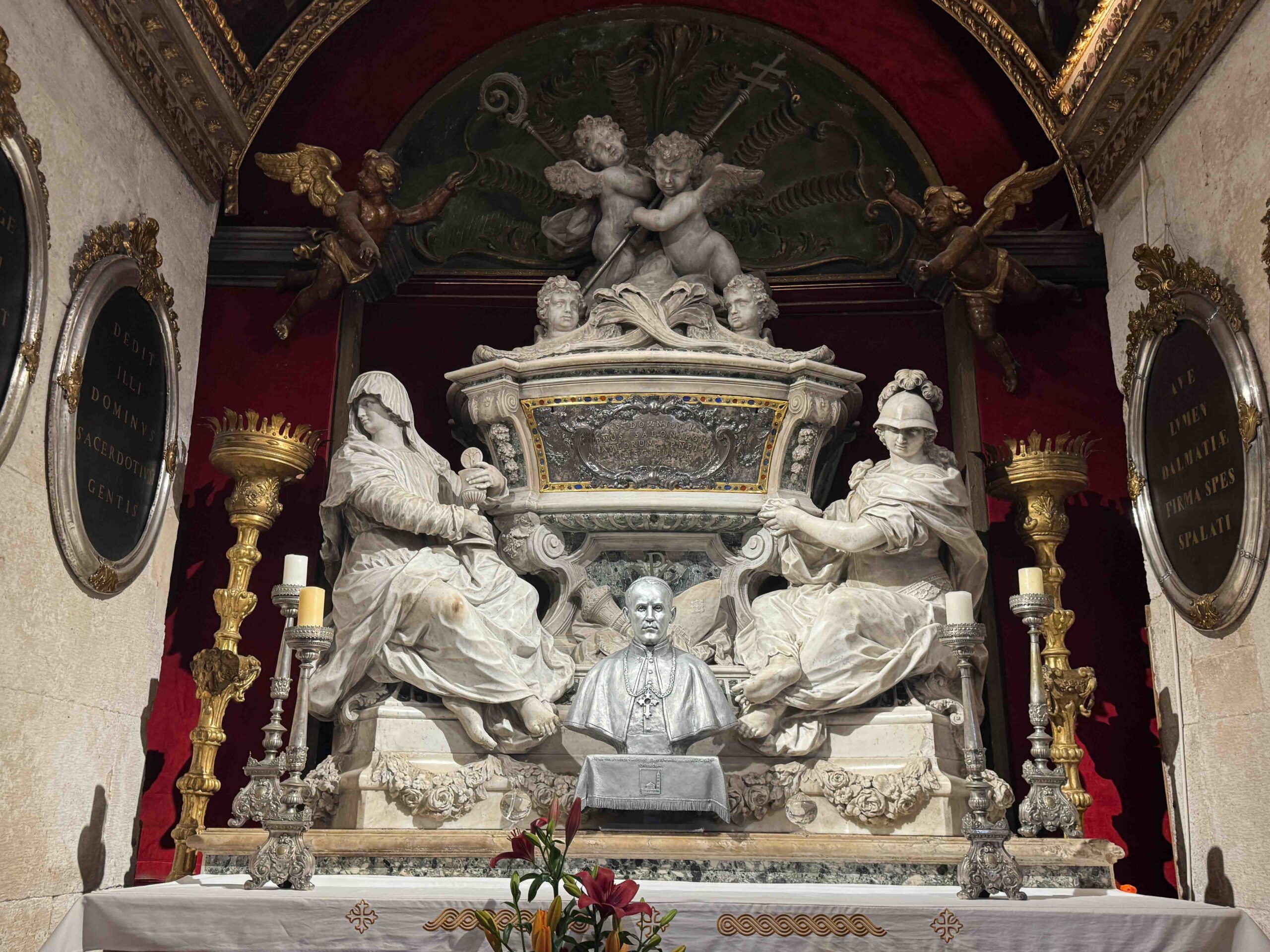
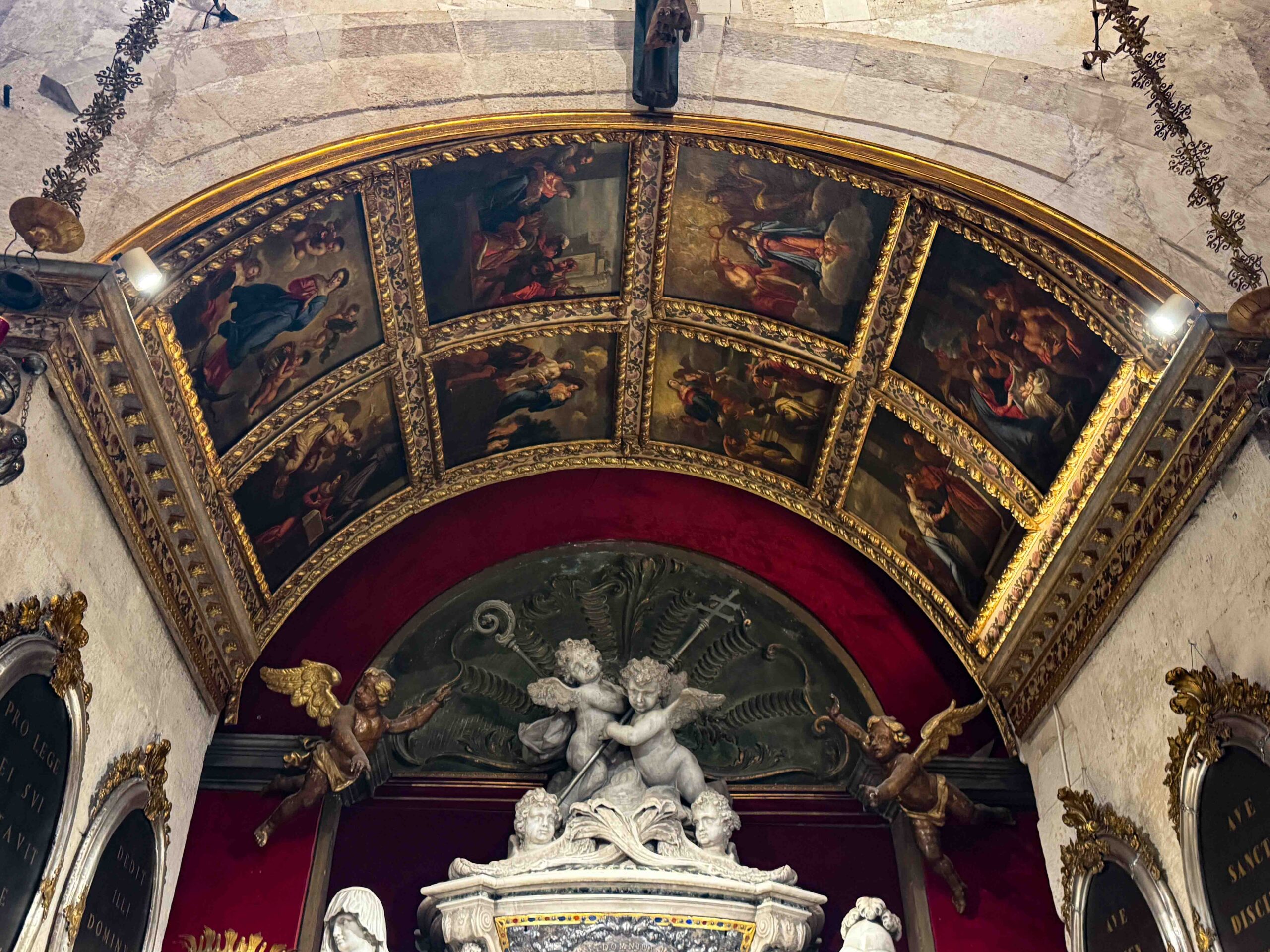
This altar is dedicated to St Anastasius and was made by Giorgio da Sebenico (Juraj Dalmatinac), the greatest Dalmatian sculptor of the period.
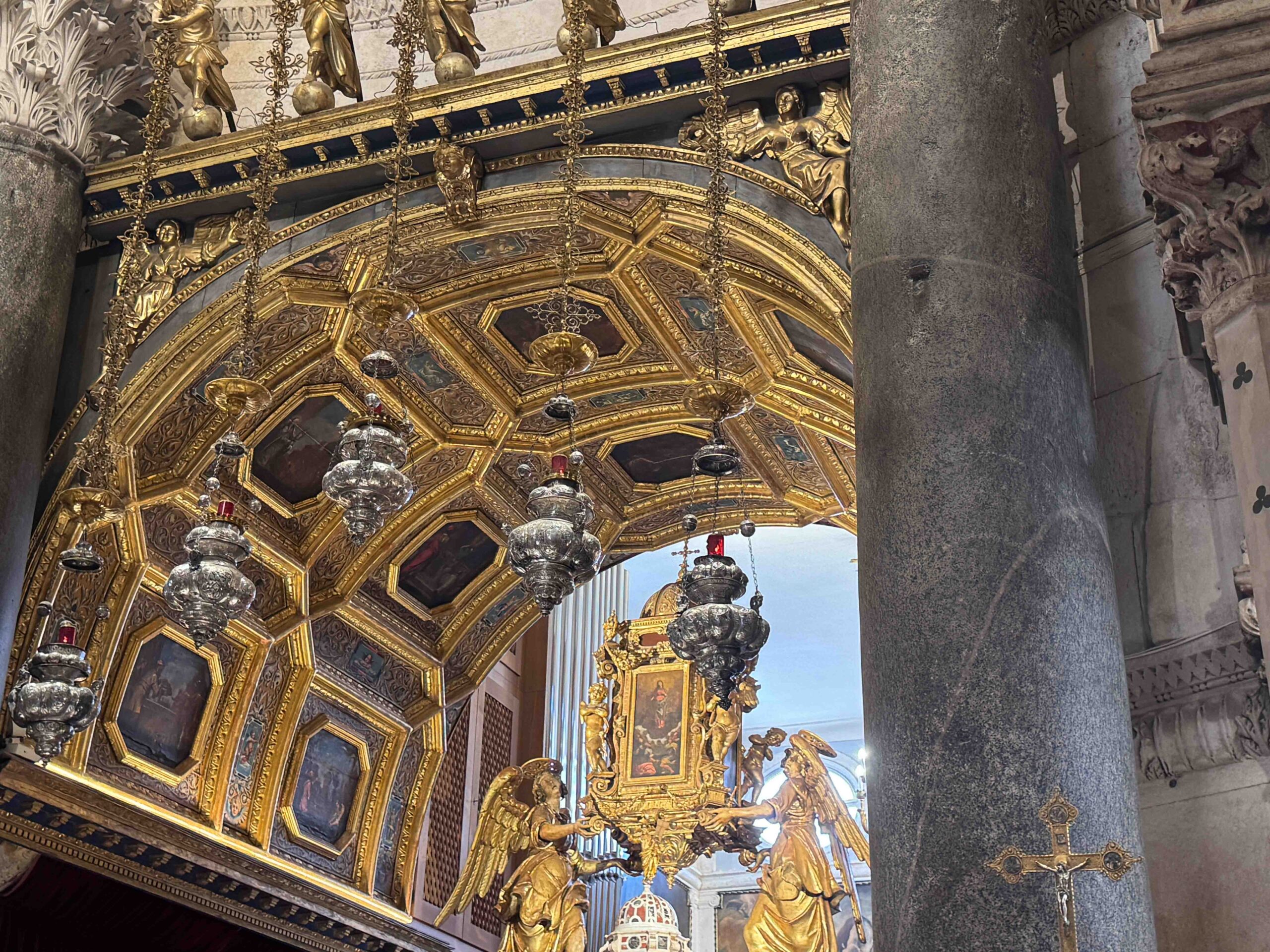
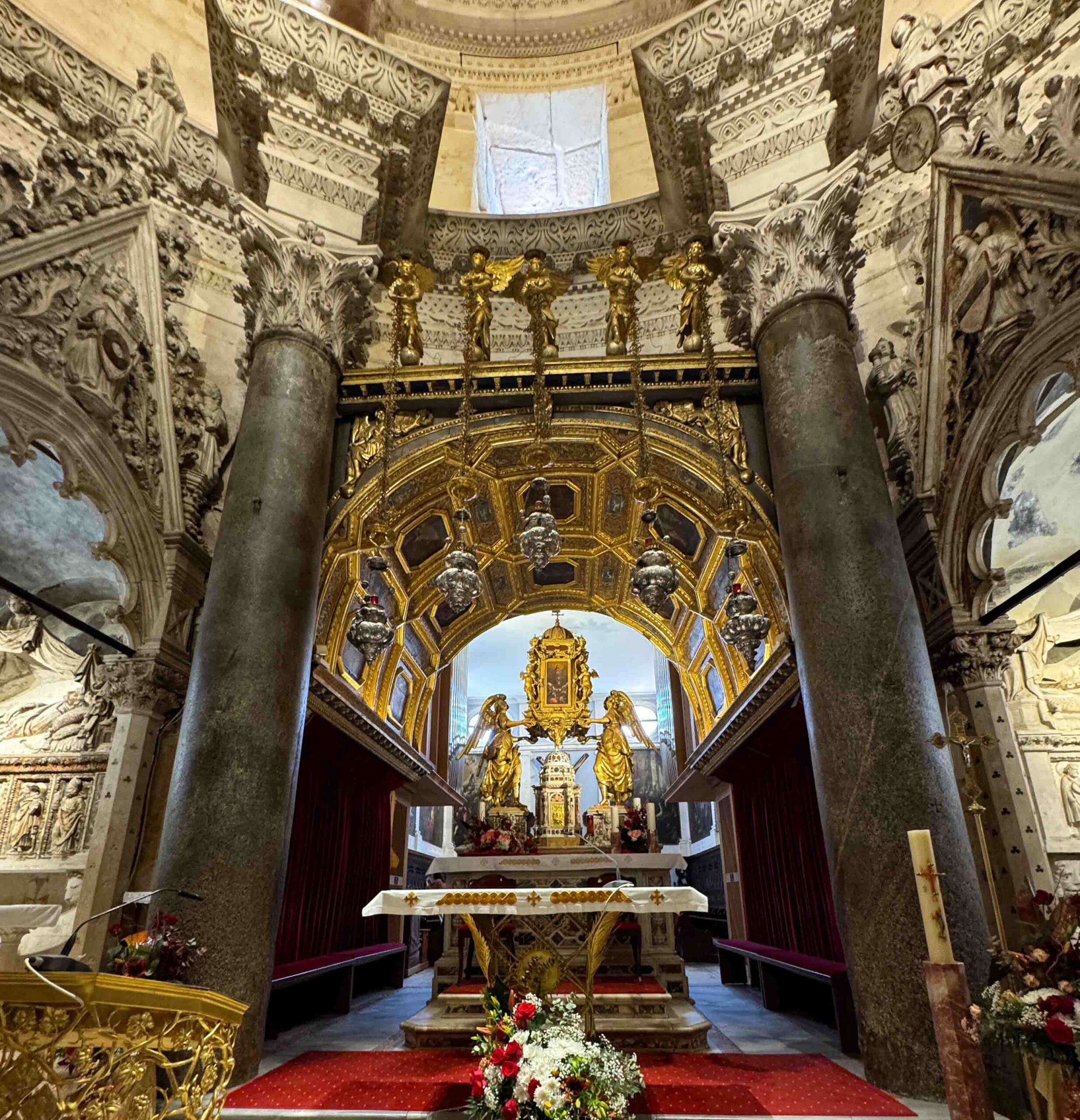
The Main Altar
 Climbing the Tower
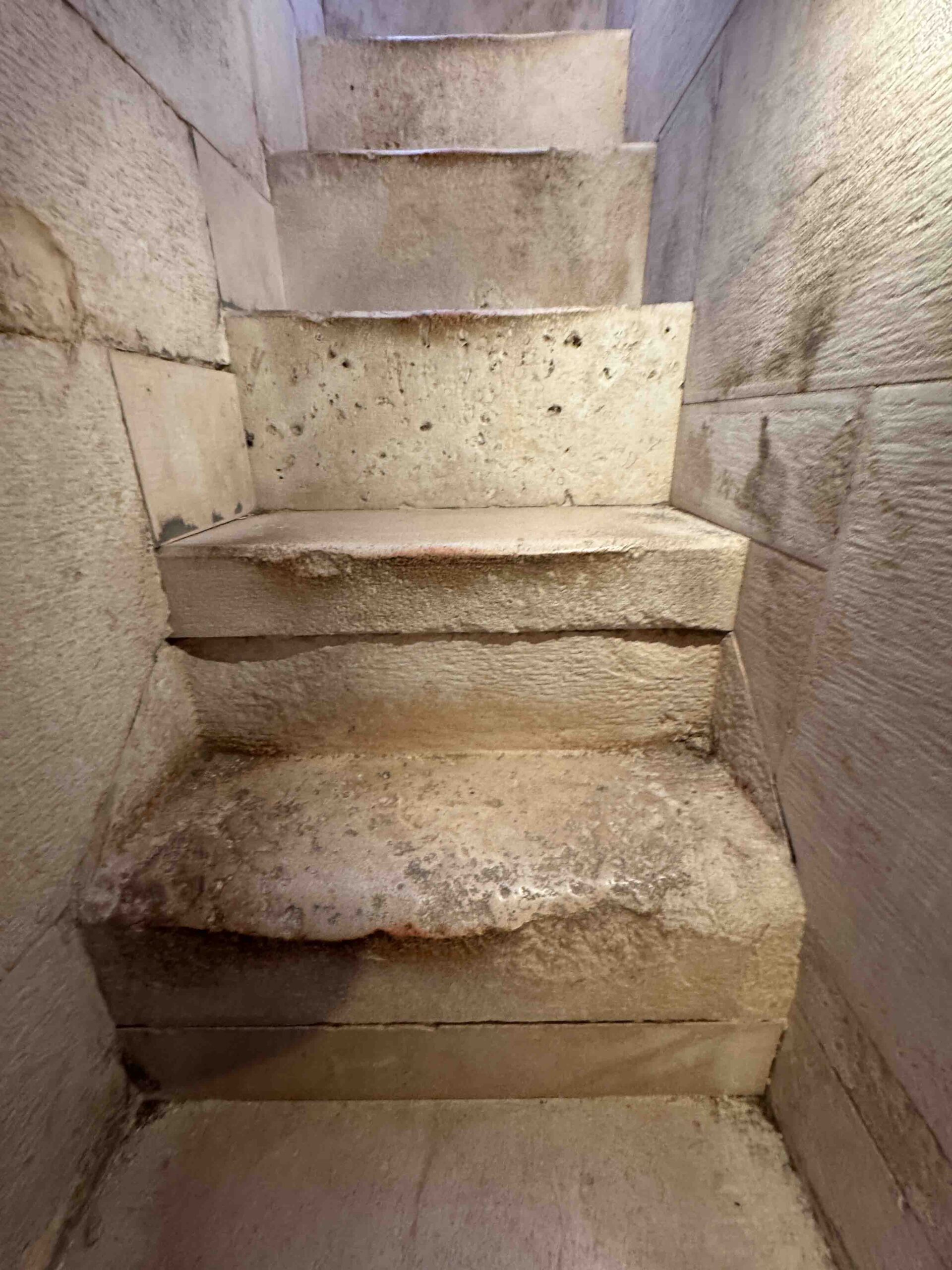
I walked to the top of the tower in the stifling heat. I had nothing to use to show the scale of the steps, but they were so high as to make the climb ridiculously difficult.
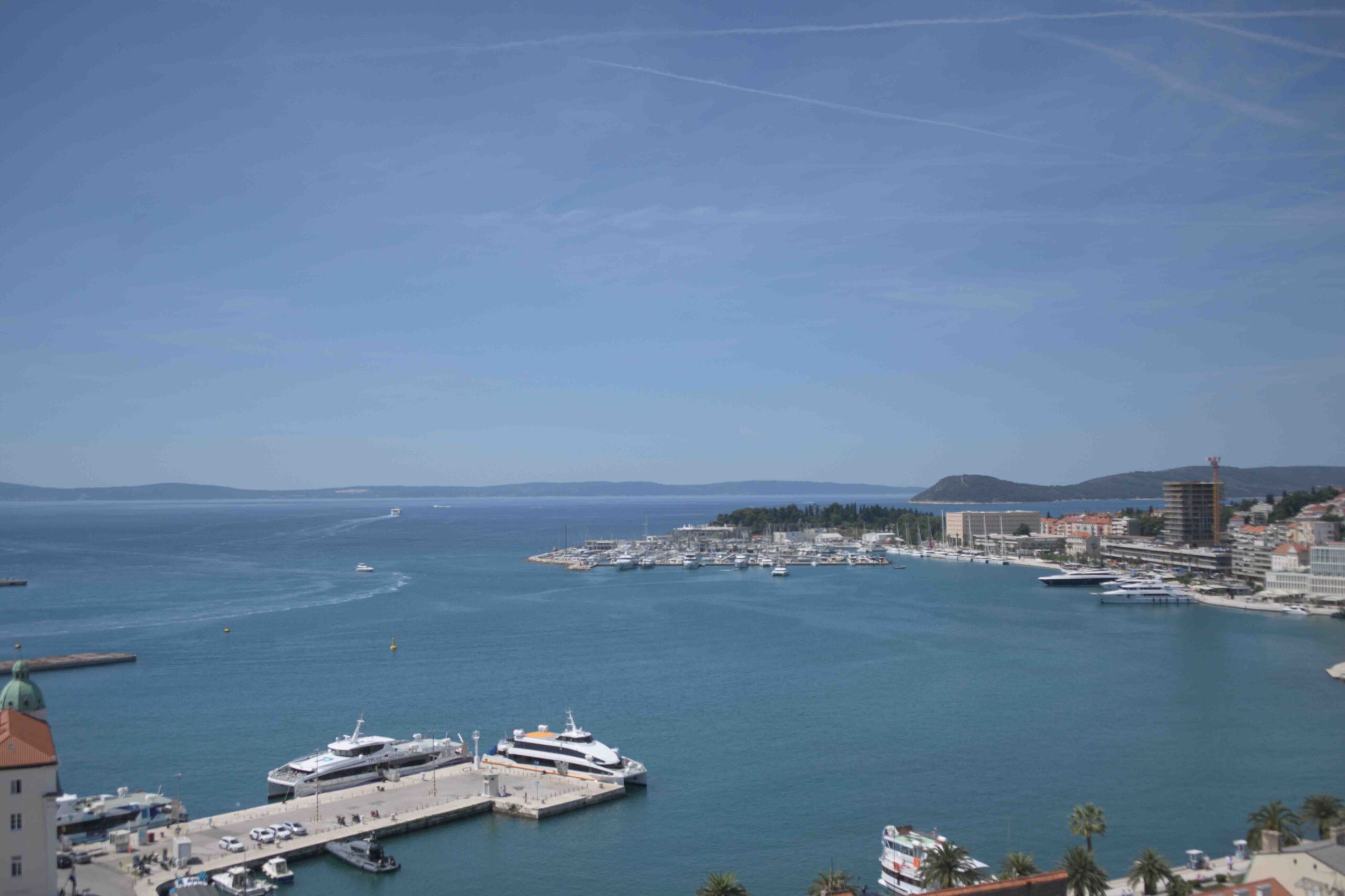
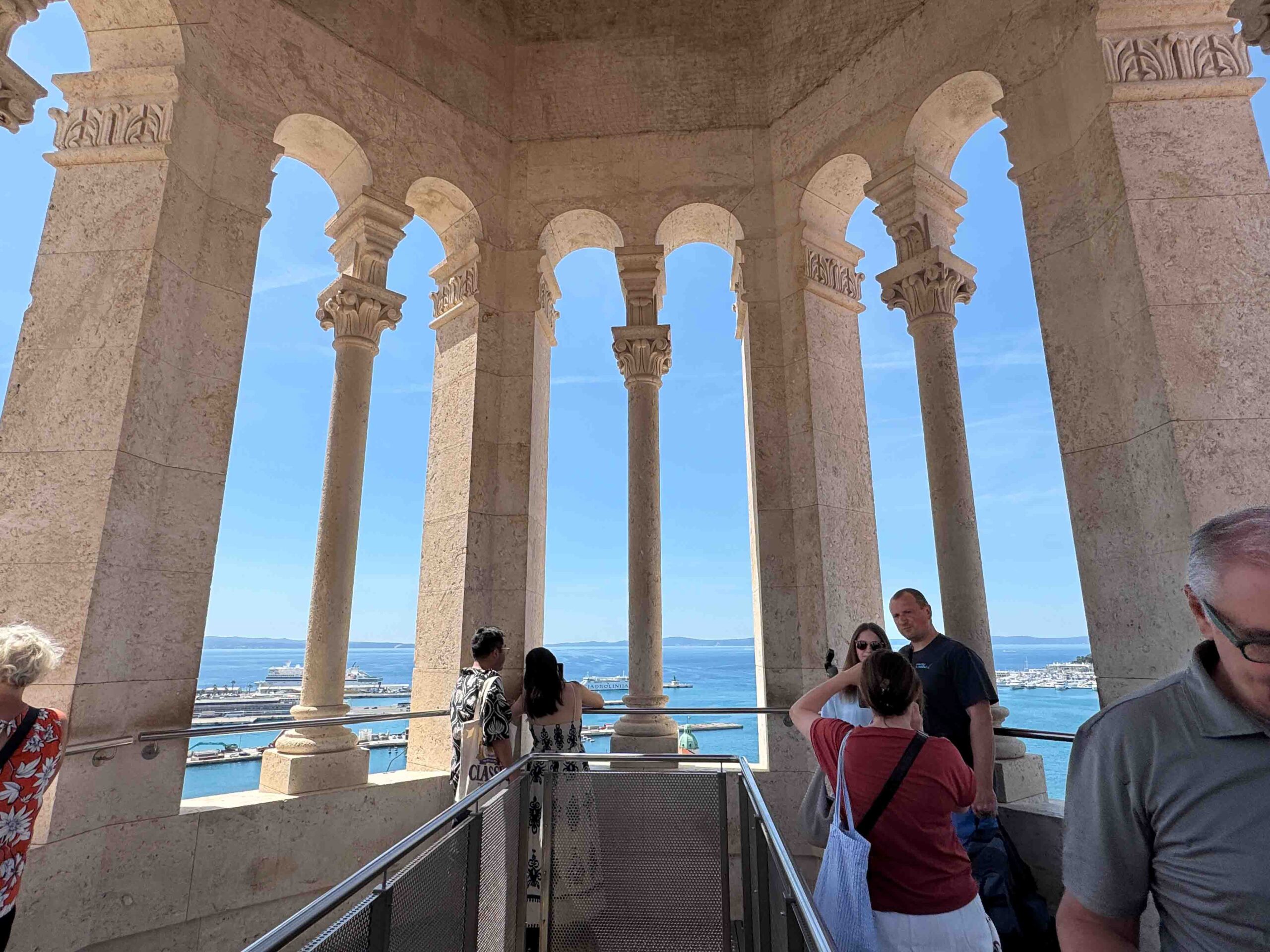
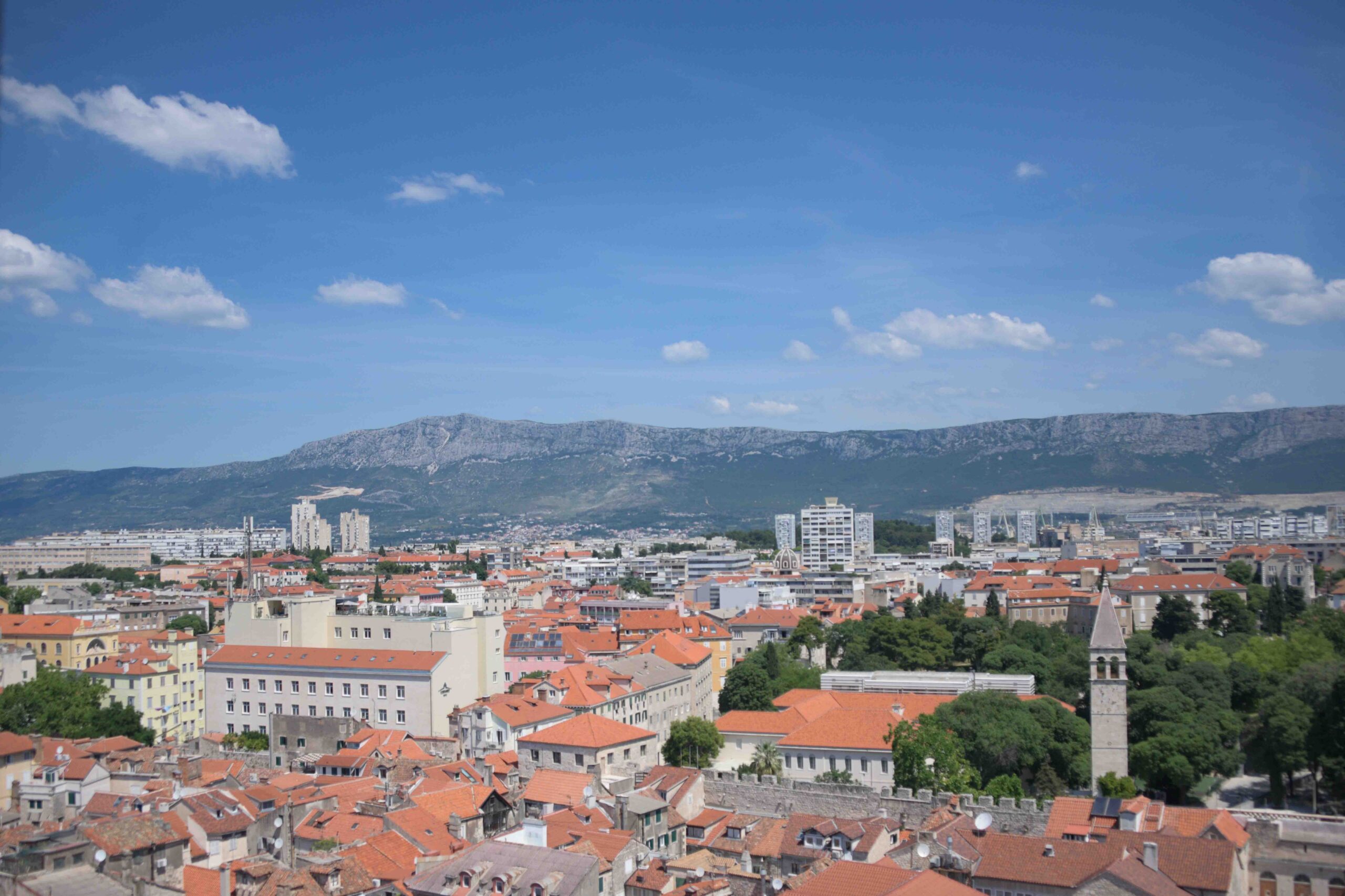
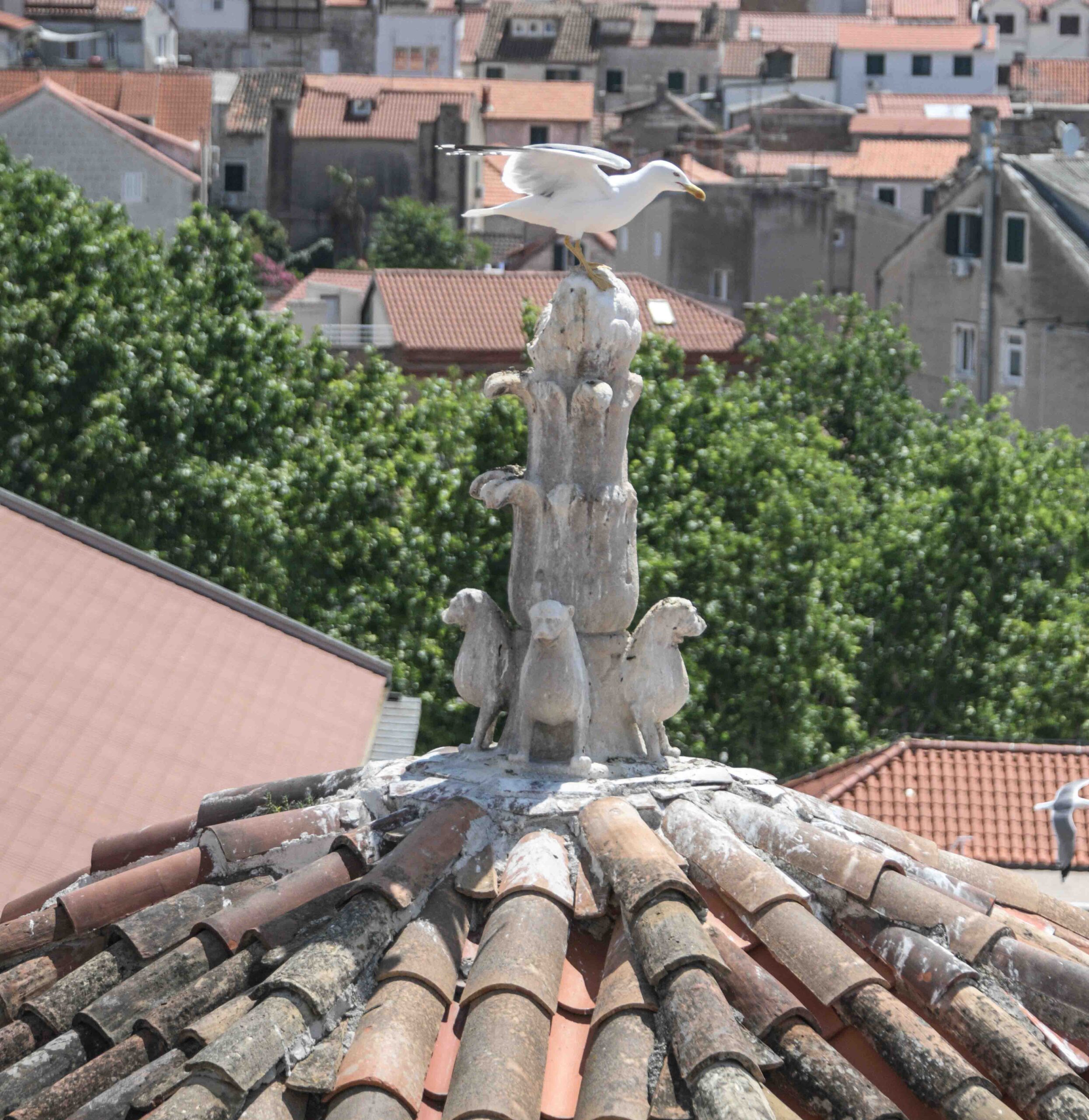
Views from the top:
*
*
*