July 29, 2025
The Bayeux Tapestry
Making headquarters in the small town of Bayeux for 3 nights is a lovely thing to do. It is a quaint town, albeit filled with tourists. Some to see the beaches of Normandy and some to see the Bayeux Tapestry.
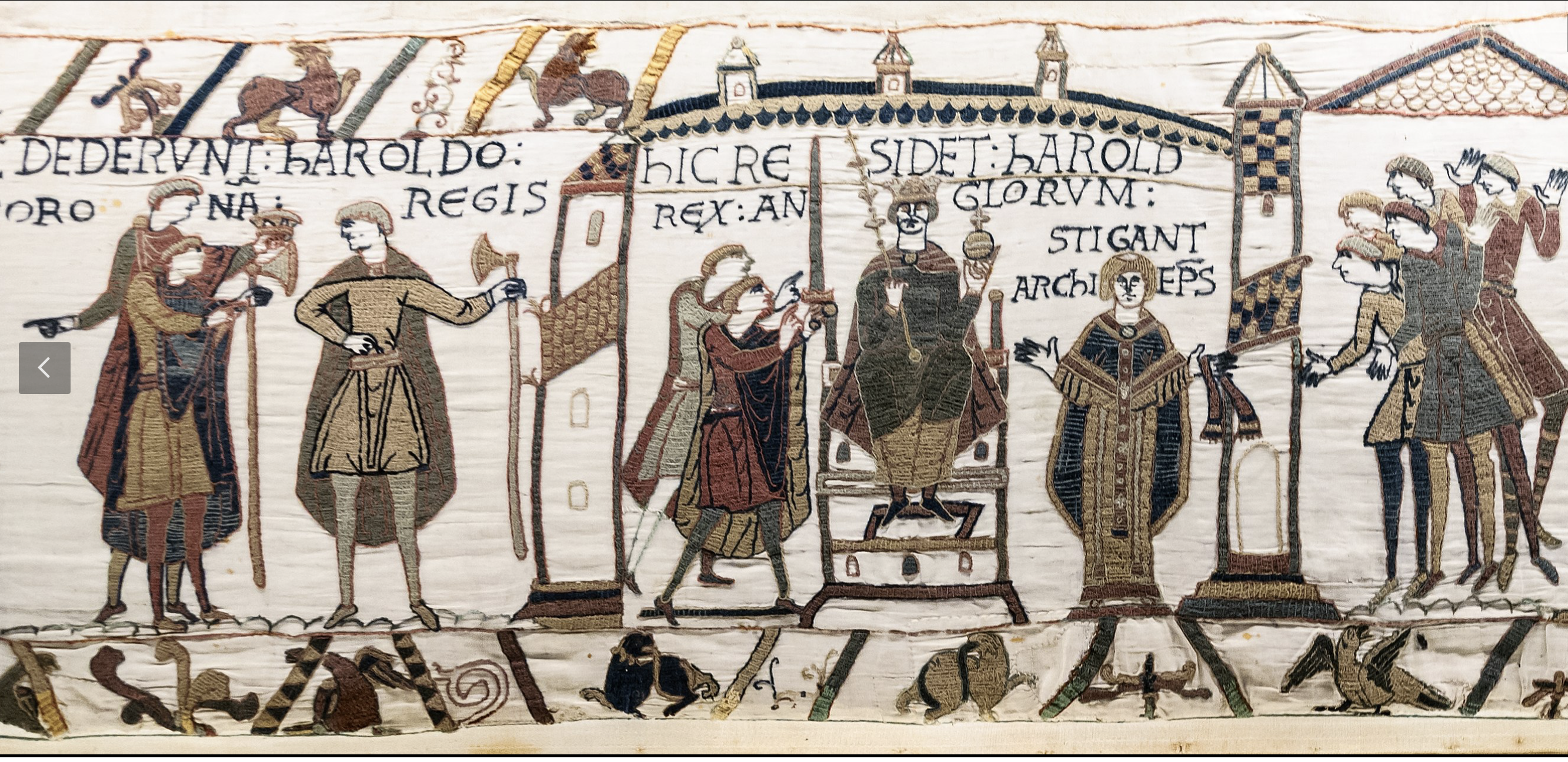
Photos are not allowed in the gallery of the tapestry, so I have borrowed these photos from Wikipedia.
The tapestry is actually an embroidered cloth nearly 230 feet long and 20 inches high. It depicts the events leading up to the Norman Conquest of England in 1066, led by William, Duke of Normandy, who challenged Harold II, King of England, and culminated in the Battle of Hastings. It is thought to date to the 11th century, within a few years of the battle. Now widely accepted to have been made in England, perhaps as a gift for William, it tells the story from the point of view of the conquering Normans and has been preserved in Normandy for centuries.
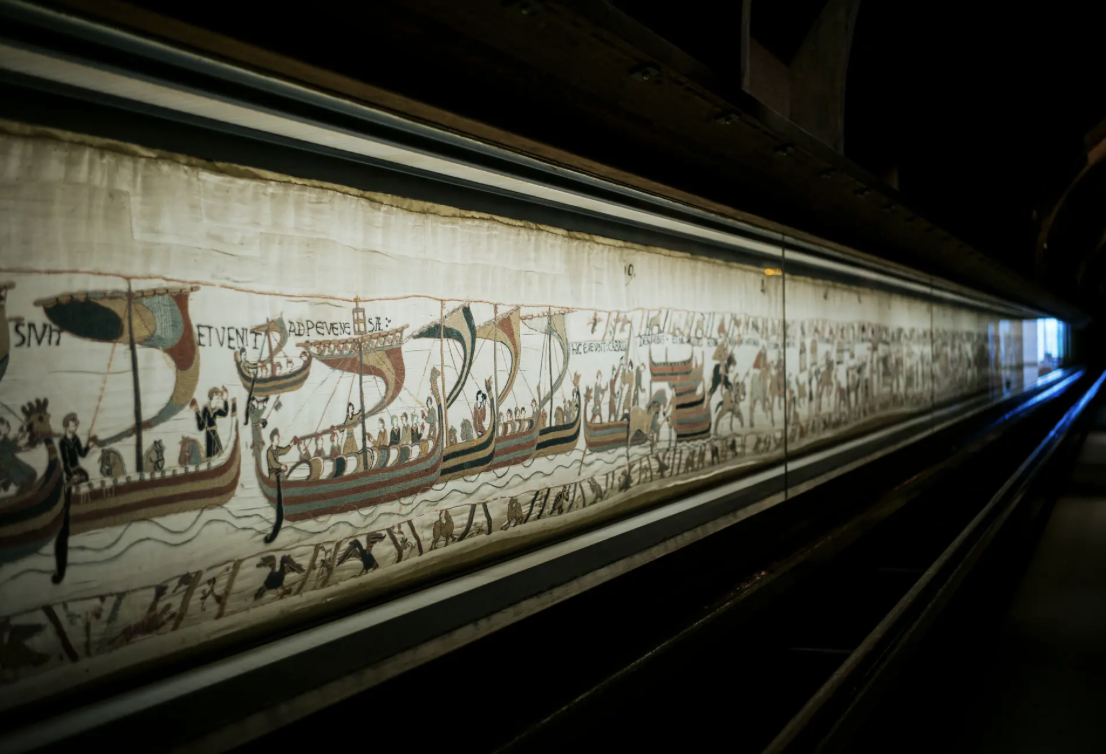
The big news is that with the advent of the expansion of the museum, the tapestry will return to London after 900 years and remain there for eleven months starting September of 2026. It will be packed up on September 1st, so my timing was perfect.
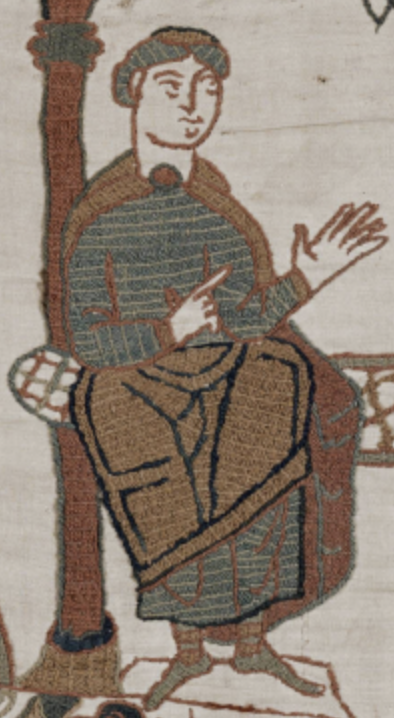
According to the British Museum, it was likely commissioned by William’s half-brother, Bishop Odo of Bayeux.
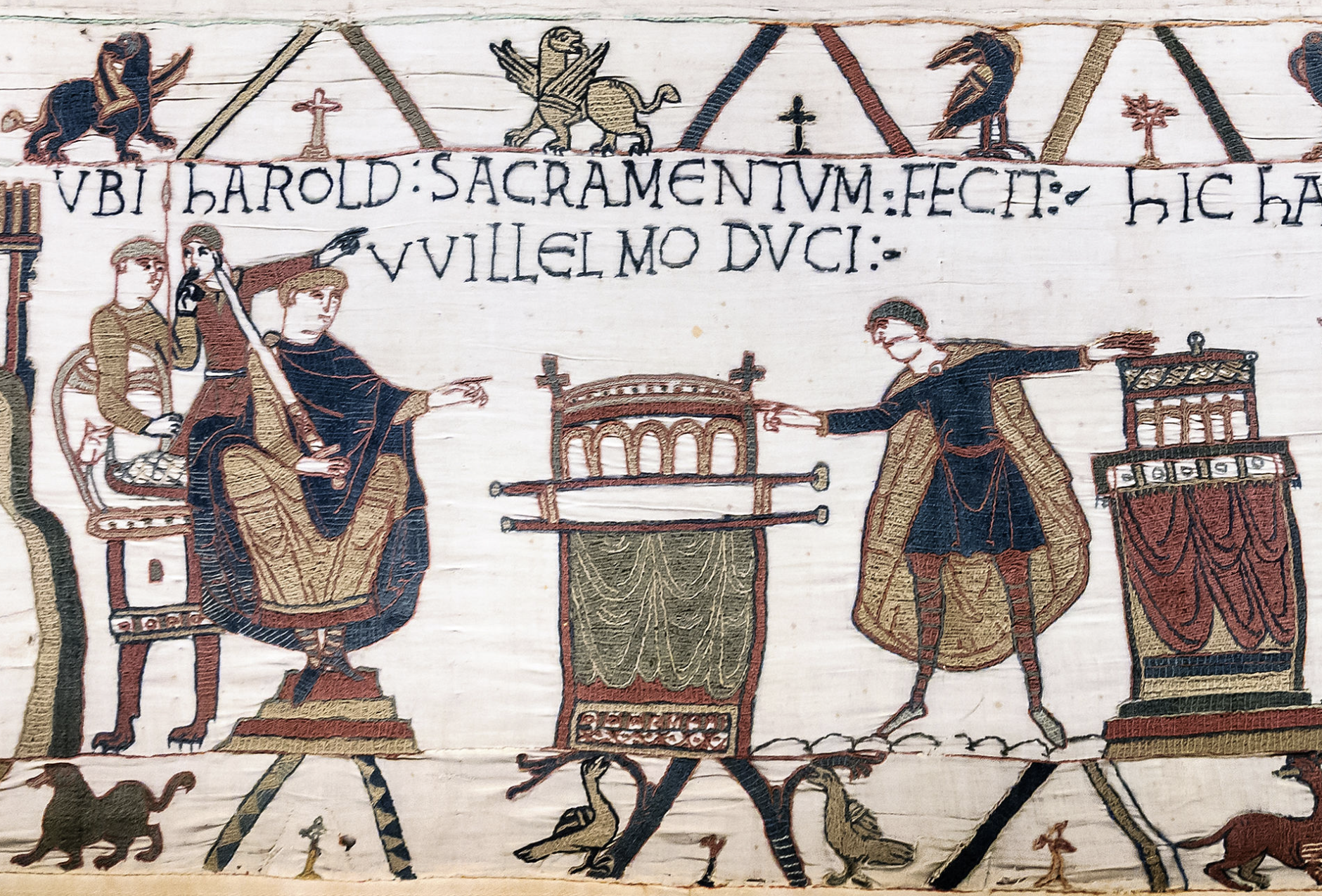
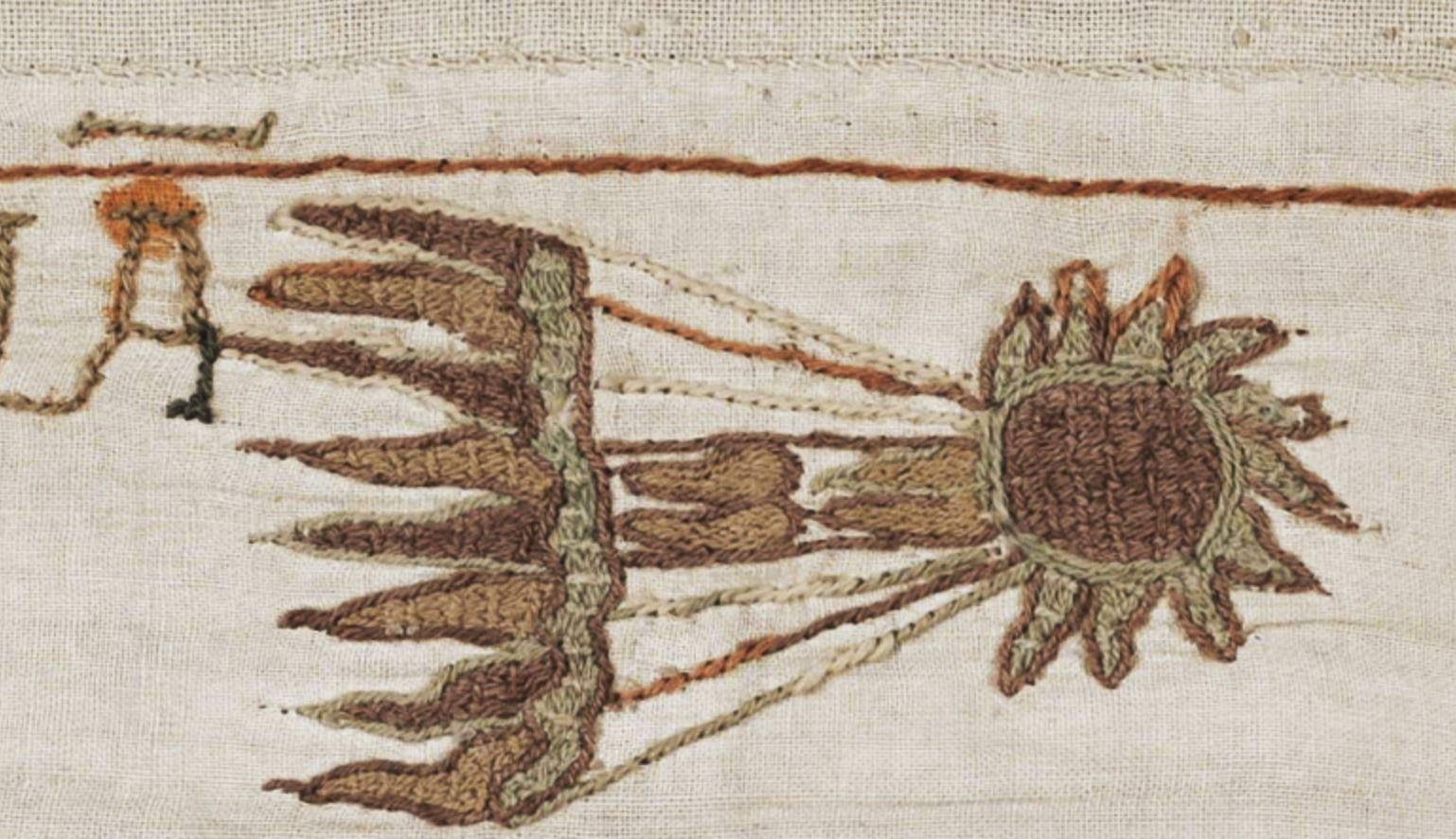
When William of Normandy was assembling a fleet to cross the Channel, to finagle his way into the succession crisis that was brewing in England, Haley’s comet raced through the sky. Sky viewers throughout Europe reported it as a bad omen for England. William took heart from the omen and launched his invasion.
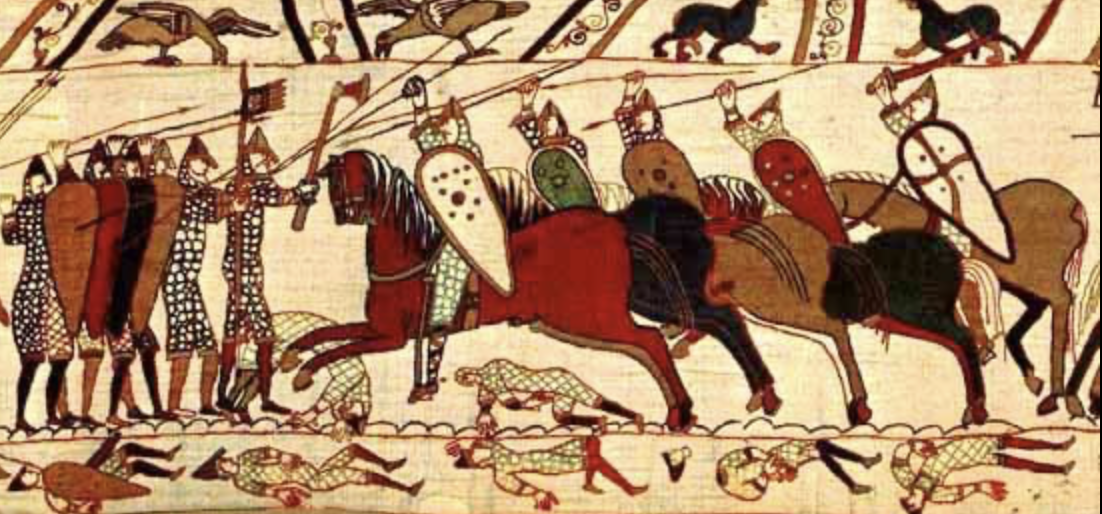
The tapestry was occasionally used to decorate the cathedral in Bayeux. It was threatened during the French Revolution in the 18th century, in one case, when revolutionaries sought to use it to cover ammunition wagons. Later, it was briefly exhibited in Paris by Napoleon in 1803, before being moved back to Bayeux.
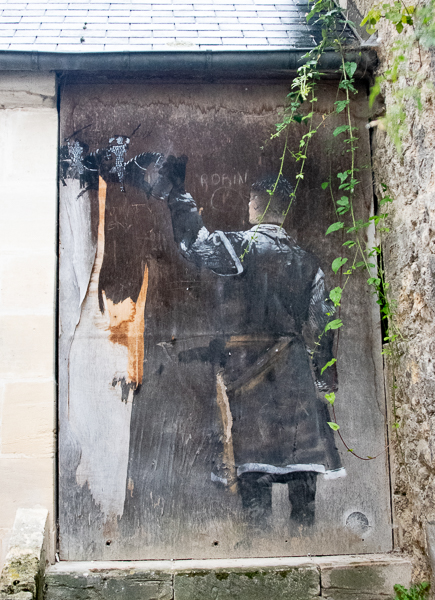
As I left the museum, I spotted this worn but excellent piece of graffiti of a Norman painting the tapestry with spray paint.
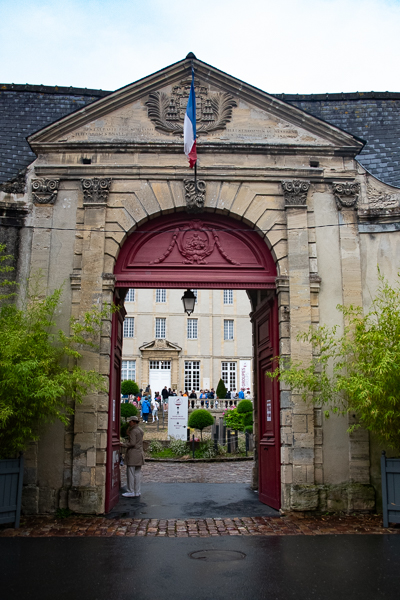
The Tapestry Museum is in the former Grand Séminaire de Bayeux, a training center for diocesan priests from the late 17th century until 1969. The first stone for the seminary was laid in 1693.
The tapestry has been displayed in the building since 1983.