May 24, 2026
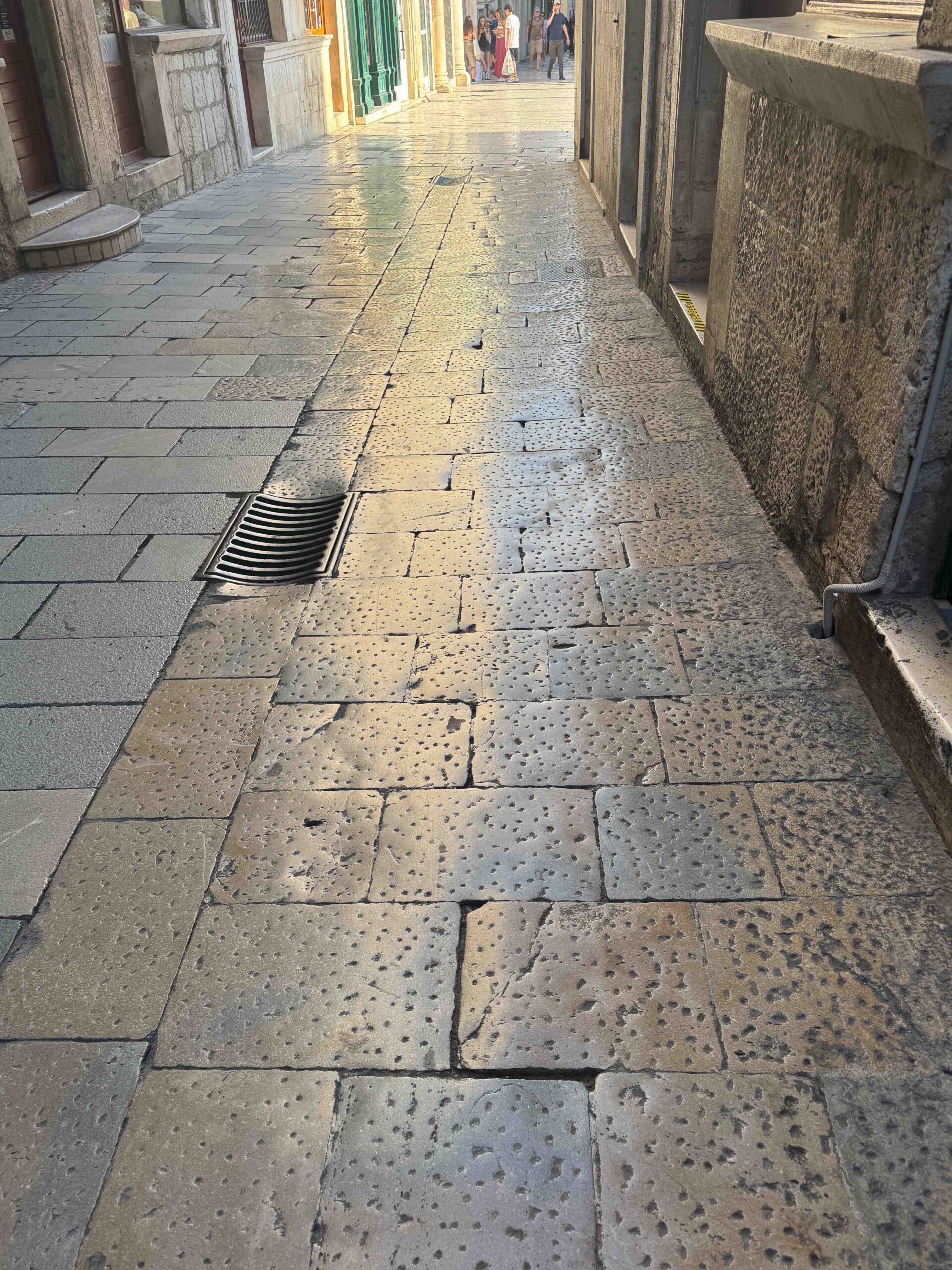
With over 900,000 visitors a year, it goes without saying that the town is crowded. It is a fabulous place to wander, and while all the streets are white marble as well as many of the buildings, the old town is small enough that it is pretty hard to get lost.
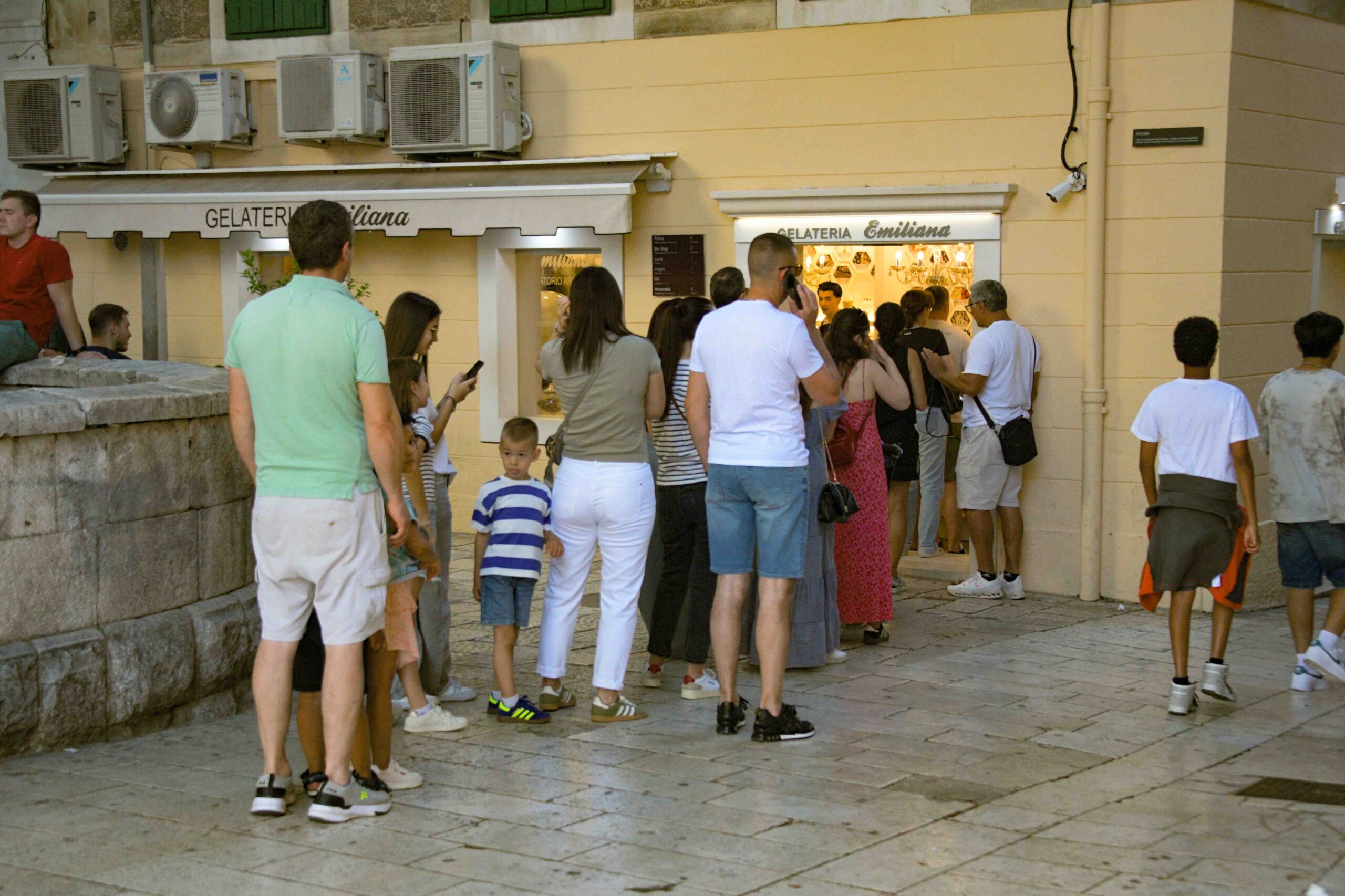
The one thing I did notice is that there are more ice cream stores than souvenir shops, which speaks primarily of the oppressive heat, even in May.
After the Fall of Rome, Dalmatia remained part of the Eastern (Byzantine) Empire, but by the early 7th century, the area was subject to frequent raids by Avars and Slavs, most of whom were Croats, prompting the inhabitants to move to the surrounding islands.
By the middle of the 7th century, these refugees chose to live within Diocletian’s Palace, whose formidable walls protected them from further incursions by the Croats. The city’s economy began to thrive through fishing and maritime trade. As the population increased over the centuries, the city began to grow.
Split retained most of its political rights under Hungarian rule, which lasted until the early 15th century. In 1409, after failing in his efforts to lay claim to the Hungarian crown, King Ladislaus of Naples sold his nominal rights to Split to the Venetian Republic, who used the sale as a pretext to take control of the city in 1420.
Venetian rule in Split lasted until 1797, when Napoleon Bonaparte conquered and abolished the Venetian Republic. He transferred the Venetian territories to the Austrian Habsburg Empire in return for recognition of republican administrations in northern Italy.
Split remained under Austrian rule until 1805, when Napoleon defeated the Austrians at the Battle of Austerlitz. Dalmatia then became part of the Napoleonic Kingdom of Italy, ruled by Napoleon’s stepson.
After the end of World War I and the collapse of the Austro-Hungarian Empire, Split became part of Yugoslavia in 1929. Since the Dalmatian capital, Zadar, had been annexed by Italy during the war, Split’s political and economic significance increased, and it became the most important port in the new kingdom.
During World War II, Split was occupied by Fascist Italy between 1941 and 1943.
While Split largely escaped the bloodshed of the Croatian War of Independence, which ended in November 1995, the economy went into sharp decline as much of Croatia’s industrial capacity had been destroyed during the war.
It has been revived through tourism.
Pjaca – The People’s Square
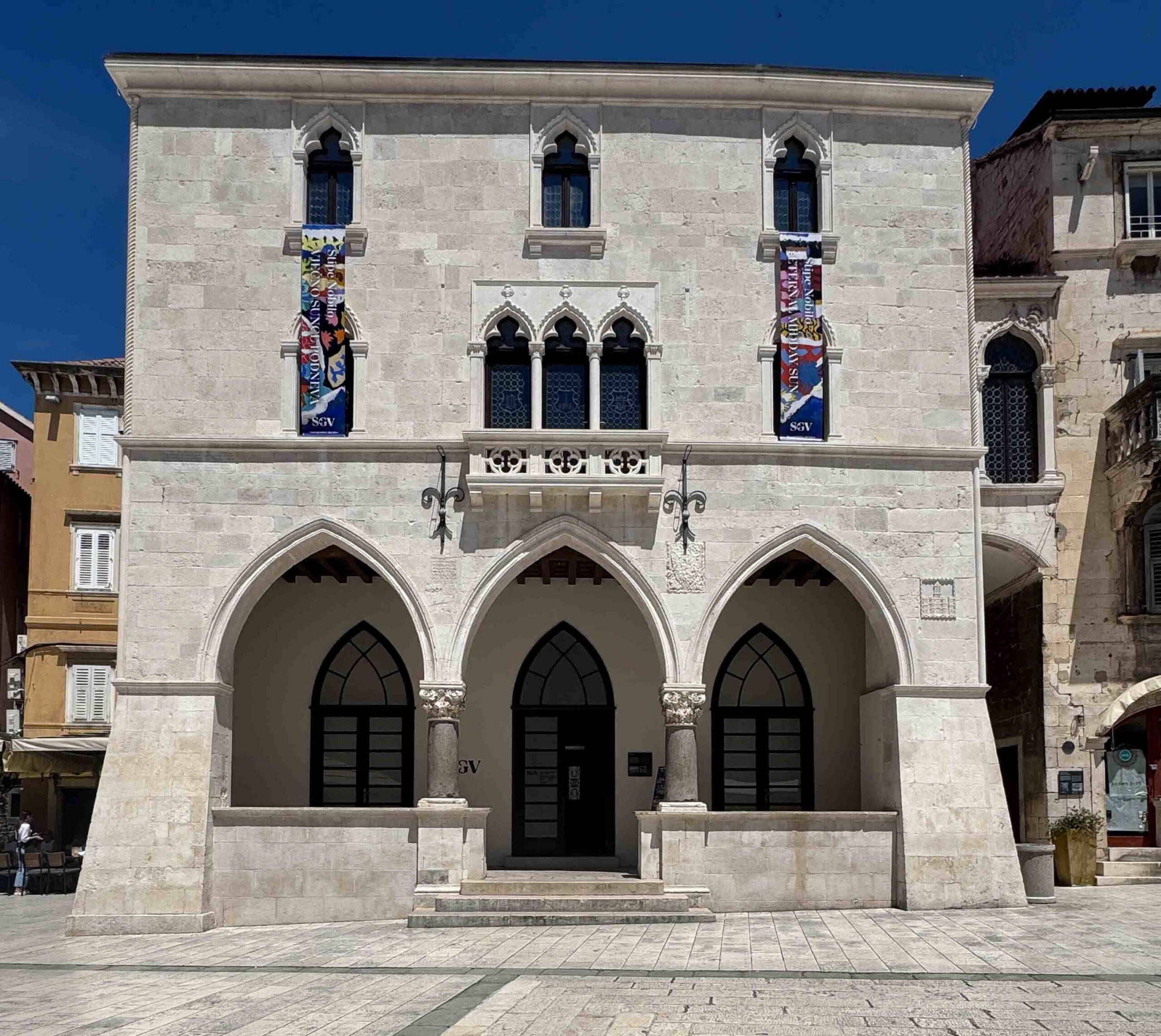
People’s Square is first mentioned in the 13th century, and it was the first inhabited part of Split outside the Diocletian Palace. This Gothic building was once the Old Town Hall.
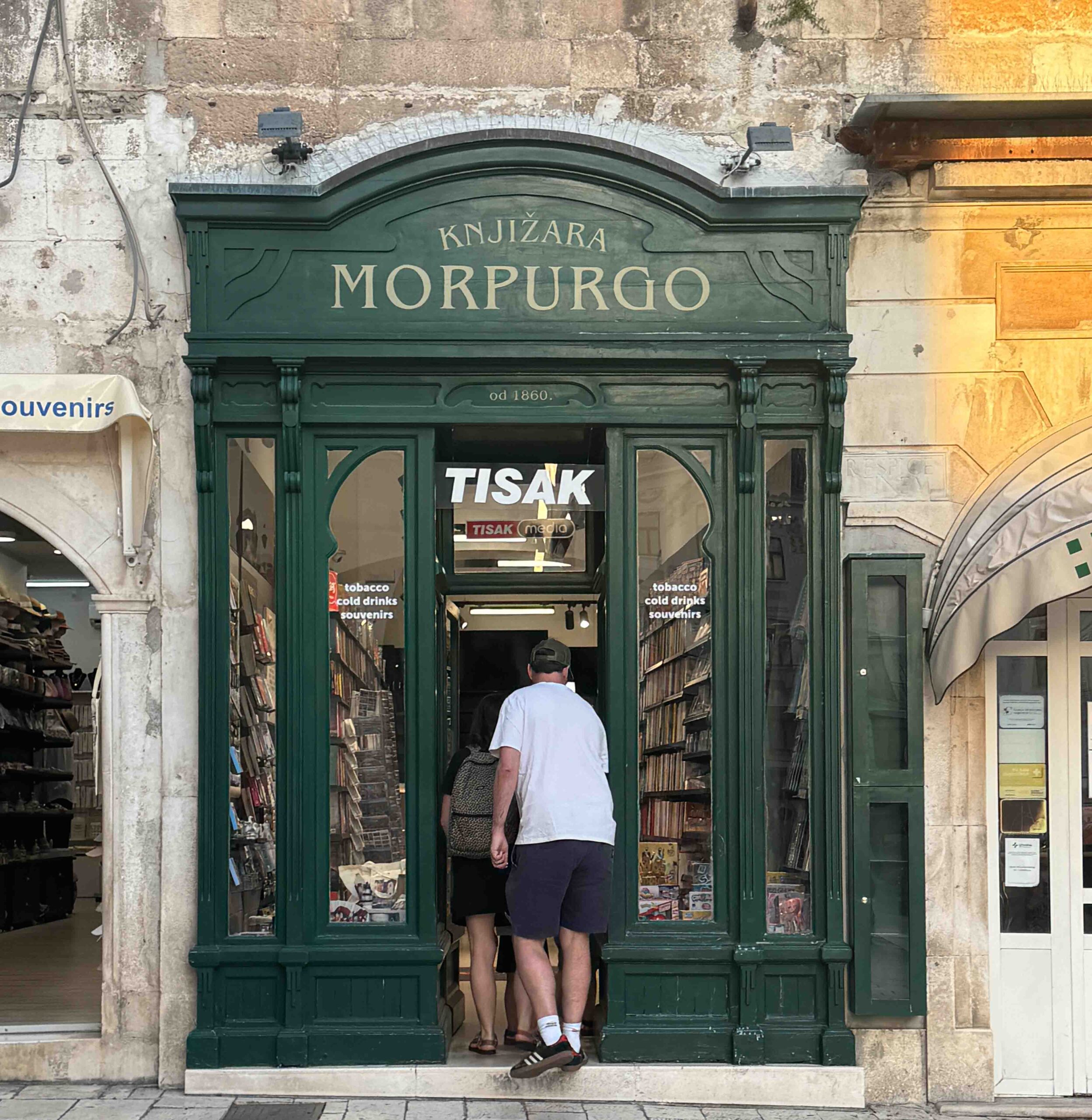 Still open is Morpurgo, one of the world’s oldest bookshops.
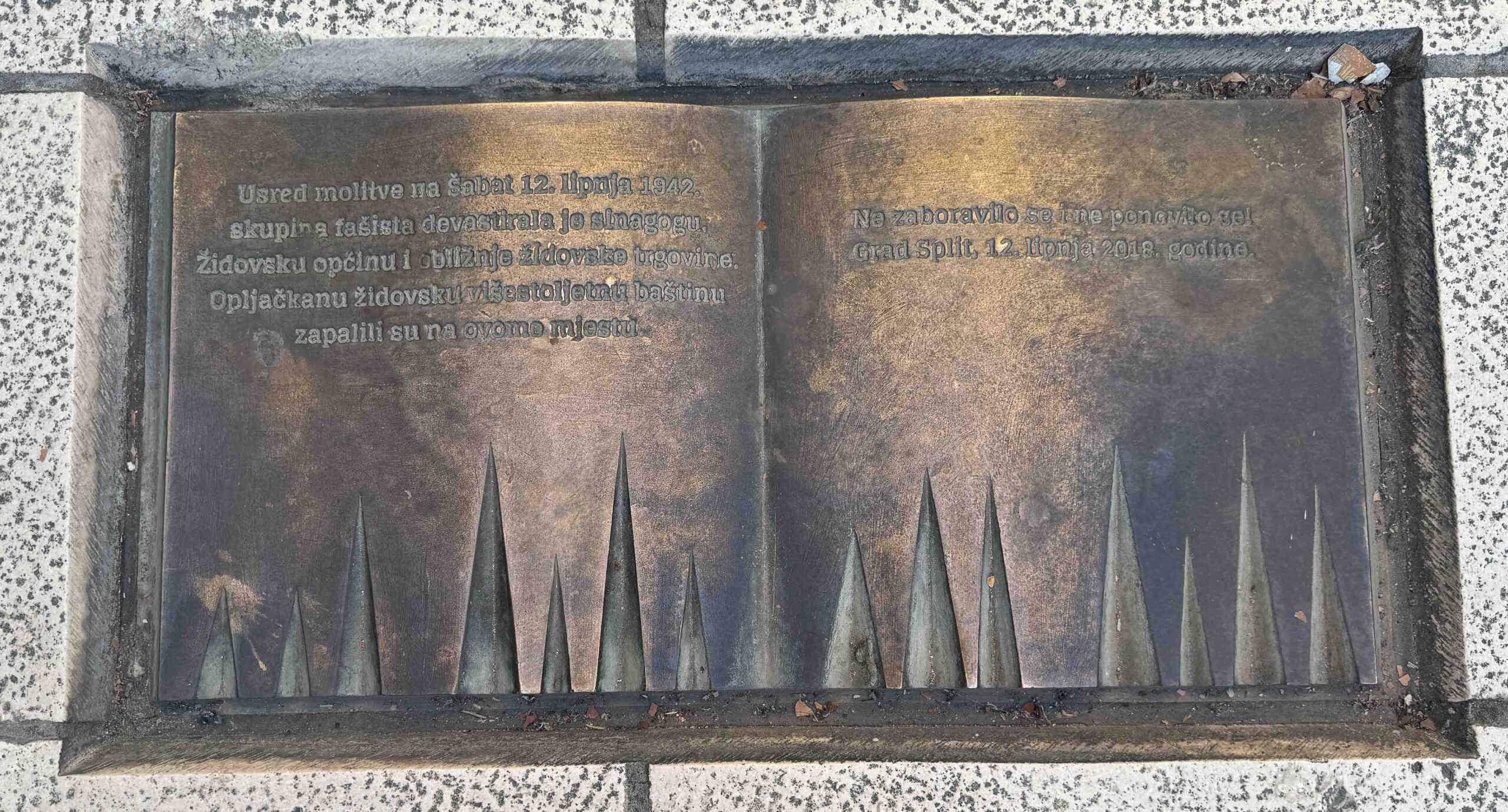
Easy to miss is this plaque in the ground of Pjaca. It commemorates the looting and devastation of the Split synagogue, the Jewish community center, and nearby Jewish shops by fascists on June 12, 1942.
The plaque is designed to look like an open book, symbolizing the destruction of books and property belonging to the Jewish community. It was installed and inaugurated on June 12, 2018, 76 years after the event.
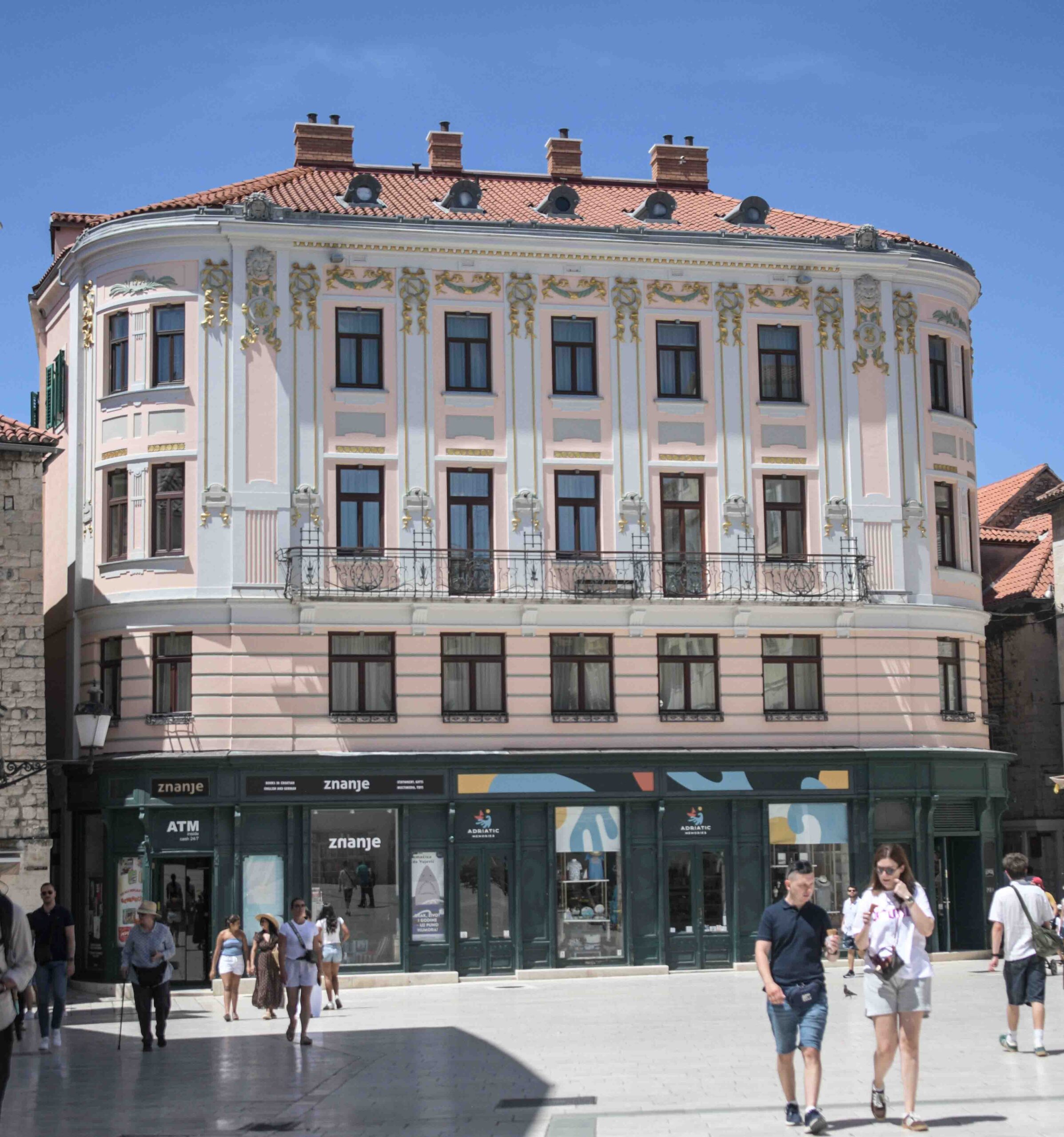
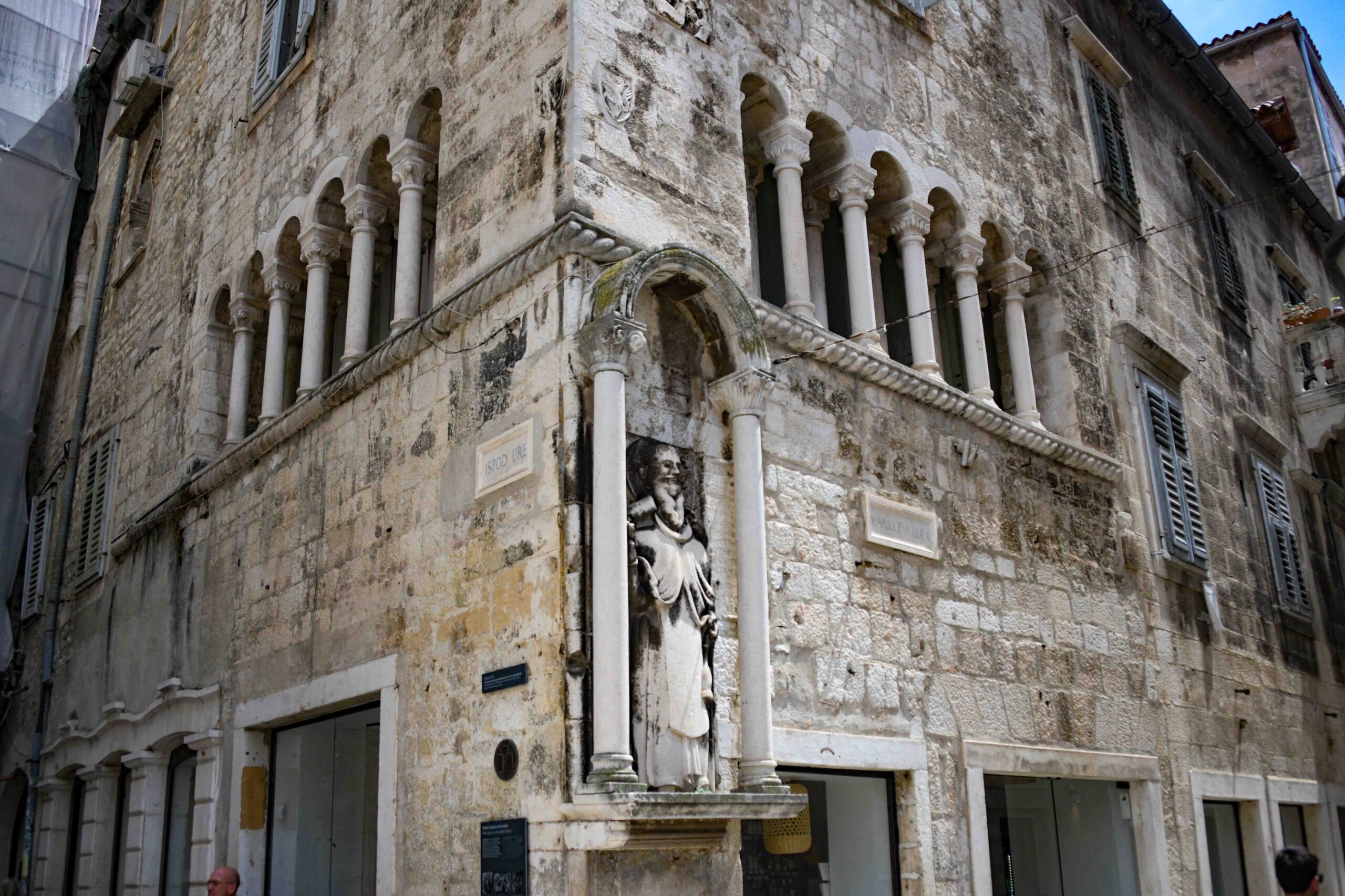
Built in the 14th century, the palace is renowned for its late Romanesque architecture, particularly the angular hexafors (windows divided by six columns) on the upper floor. A favorite style of mine.
The sculpture at the corner is St. Anthony the Hermit, a Christian hermit who was a contemporary of Diocletian.
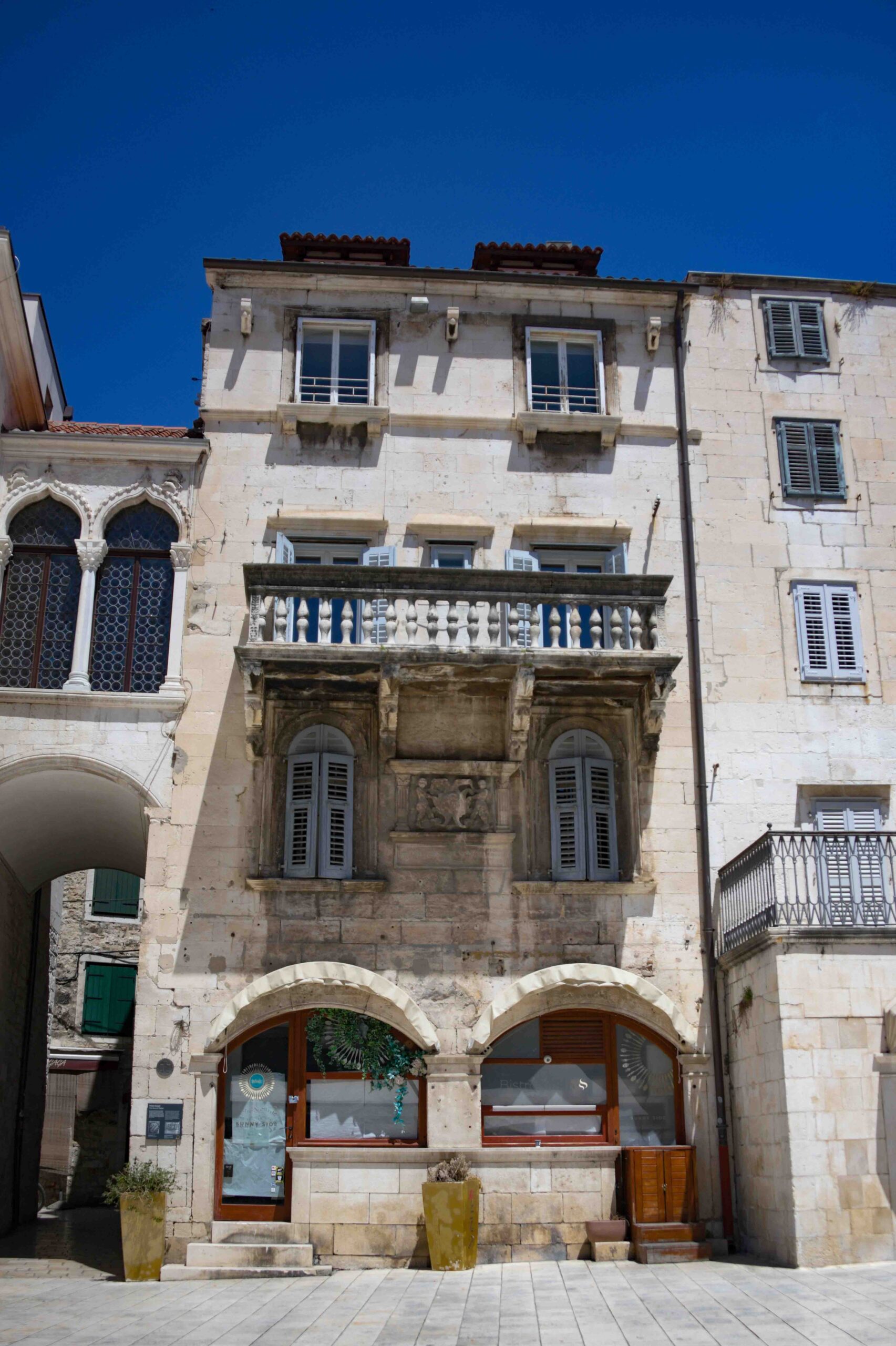
Voćni trg (Fruit square)
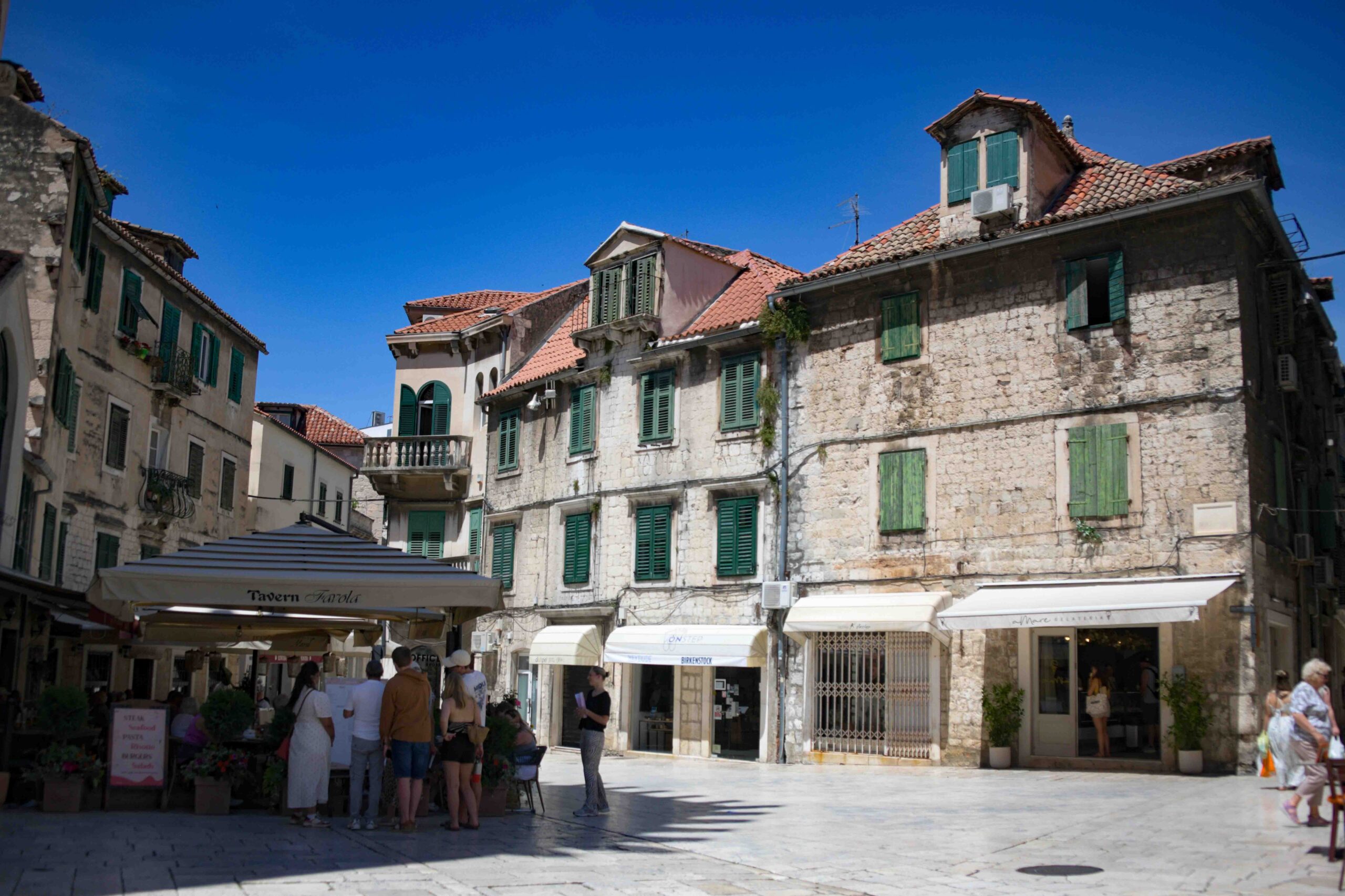
Known by locals as Fruit Square, the official name of the square is Trg Braće Radić (Square of the Radić brothers). It was once the market where women from the surrounding villages came to sell their fruit.
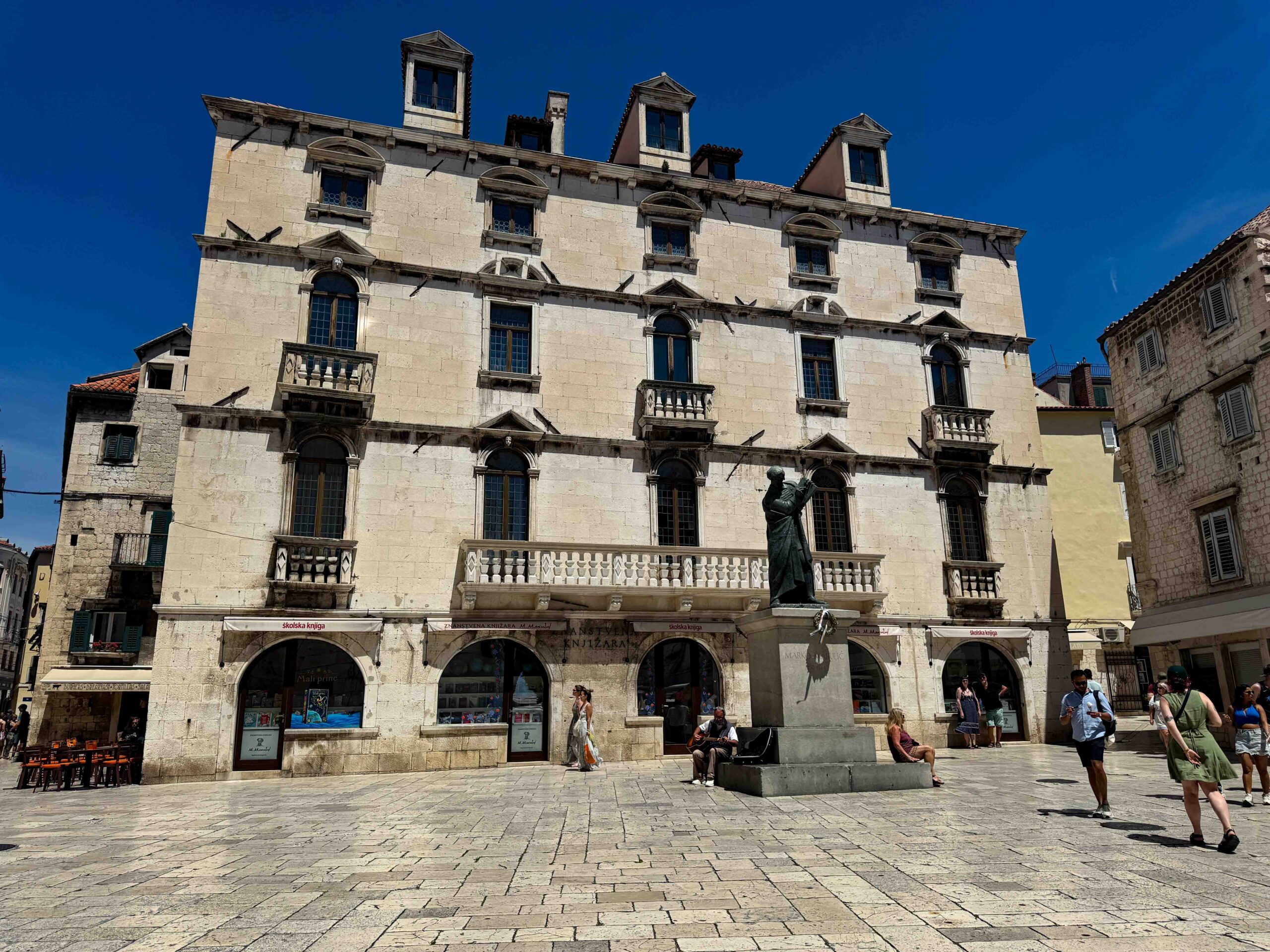
Palace Milesi dates from the 17th century with its spectacular Baroque facade.
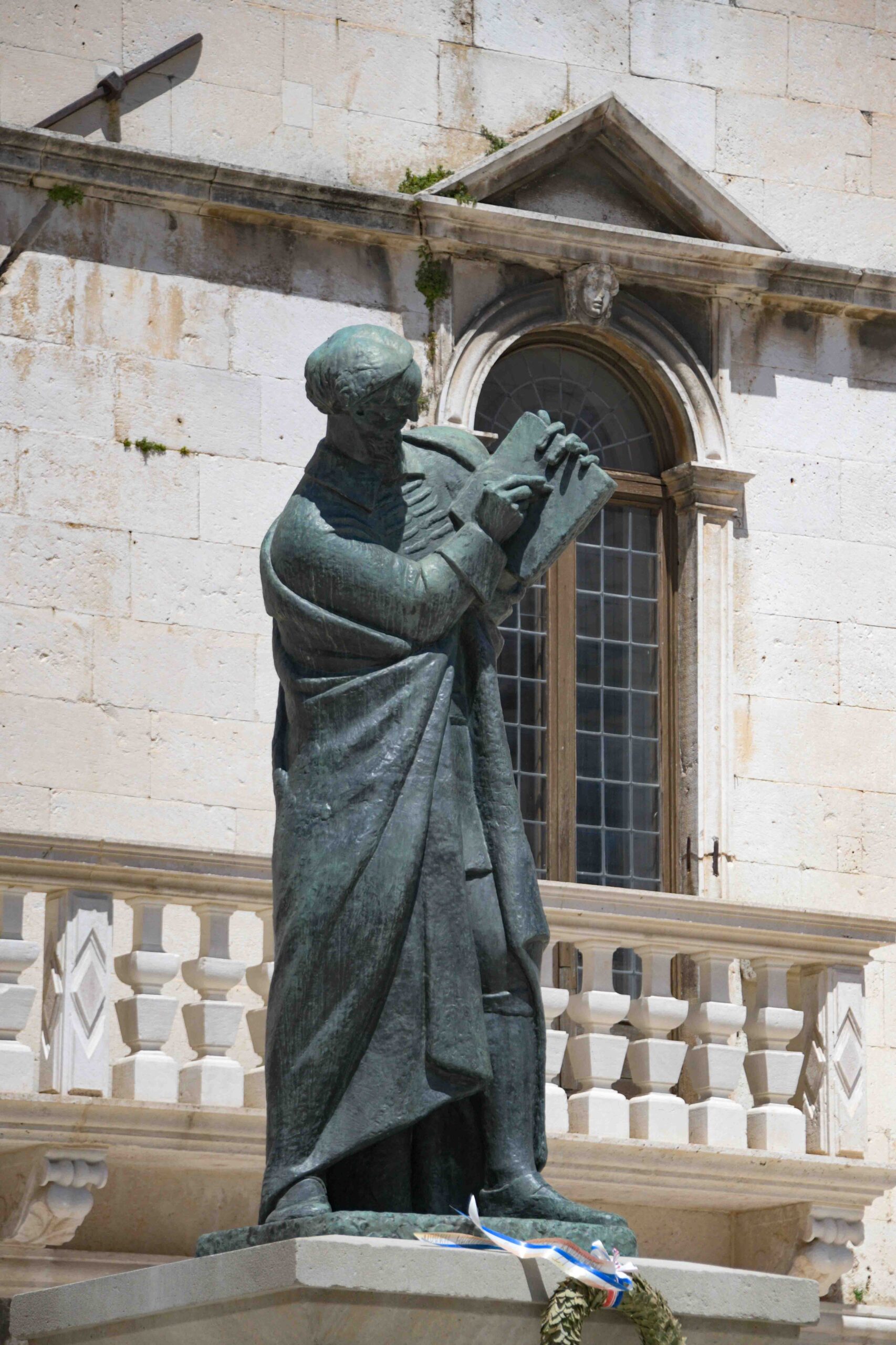
Just in front of the palace stands a statue of Marko Marulić, the father of Croatian literature, who was one of the most important philosophers and intellectuals of the 15th century.
The Remains of the Church of Saint Michael
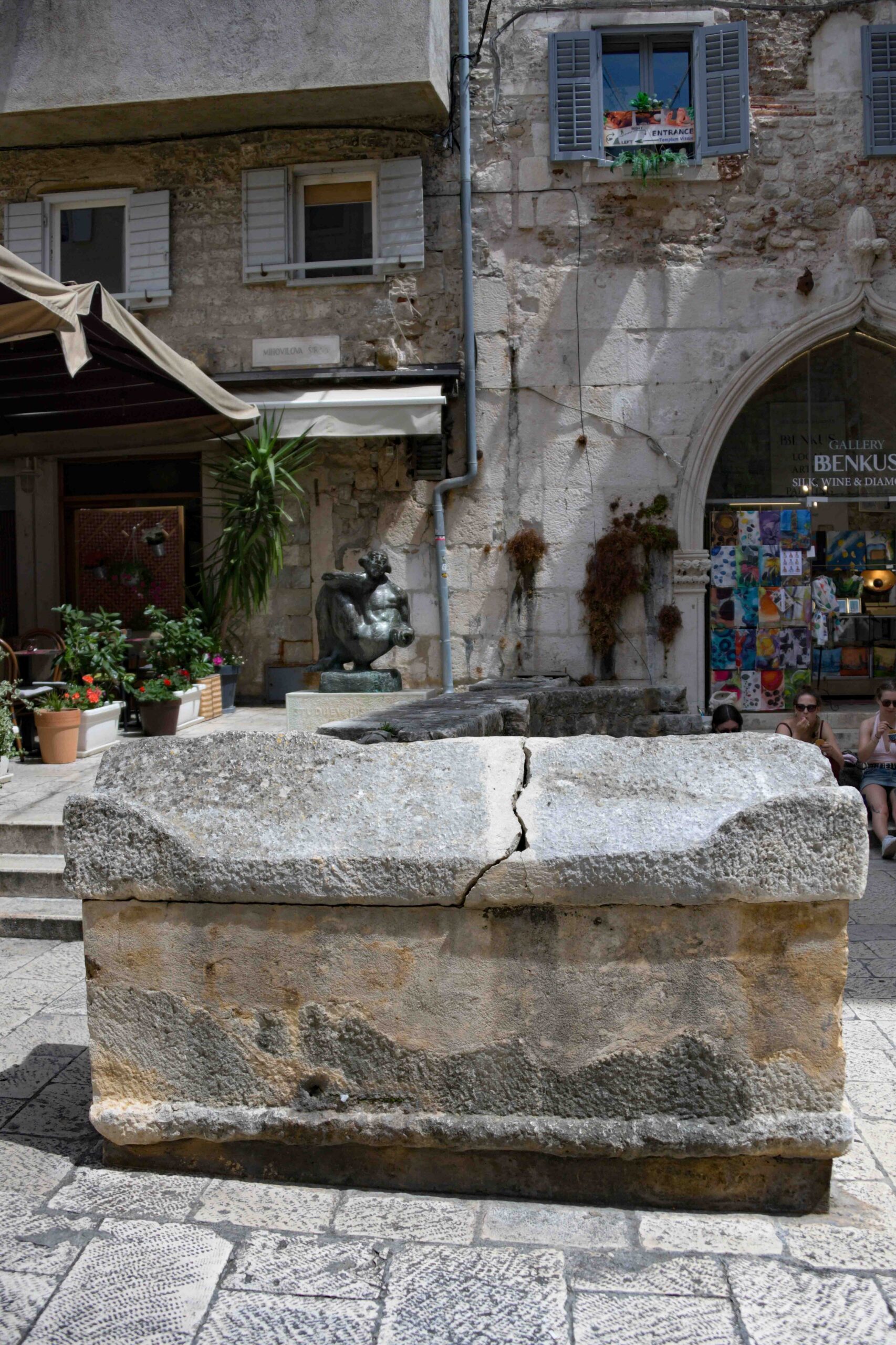
Tradition says that. The Church of St. Michael was commissioned by the first Archbishop of Split, John of Ravenna. It was enlarged for the first time in the 11th century and then again in the 15th. It was demolished in 1906, so all that remains are the walls and parts of one of the sarcophagi that were scattered around the church.
Church of St. Roch
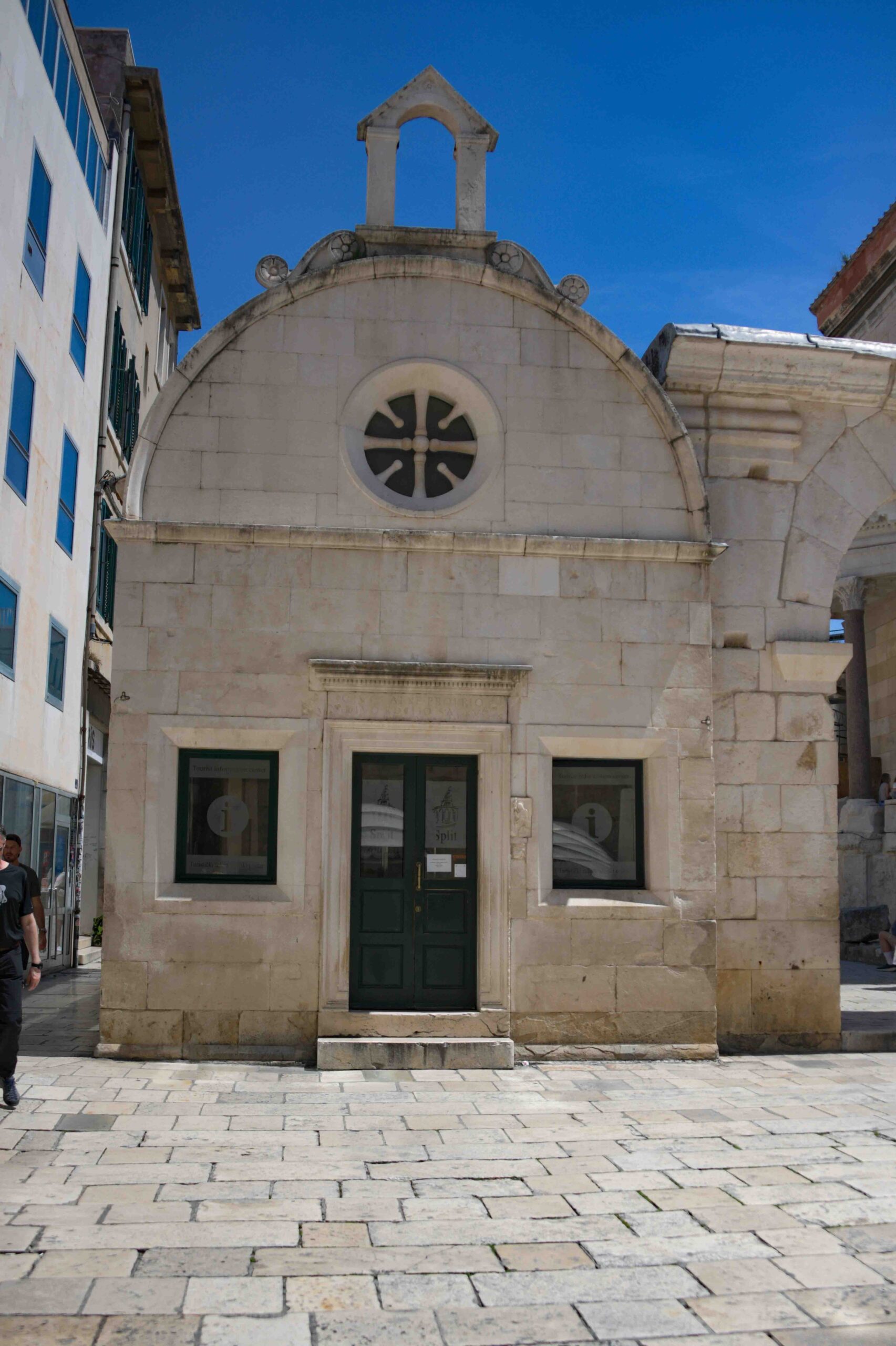
The Church of St. Roch, built in 1516, is an example of Renaissance architecture. It was constructed by converting a Romanesque 13th-century house, with the northern wall remaining intact.
Church of Our Lady of The Bell Tower
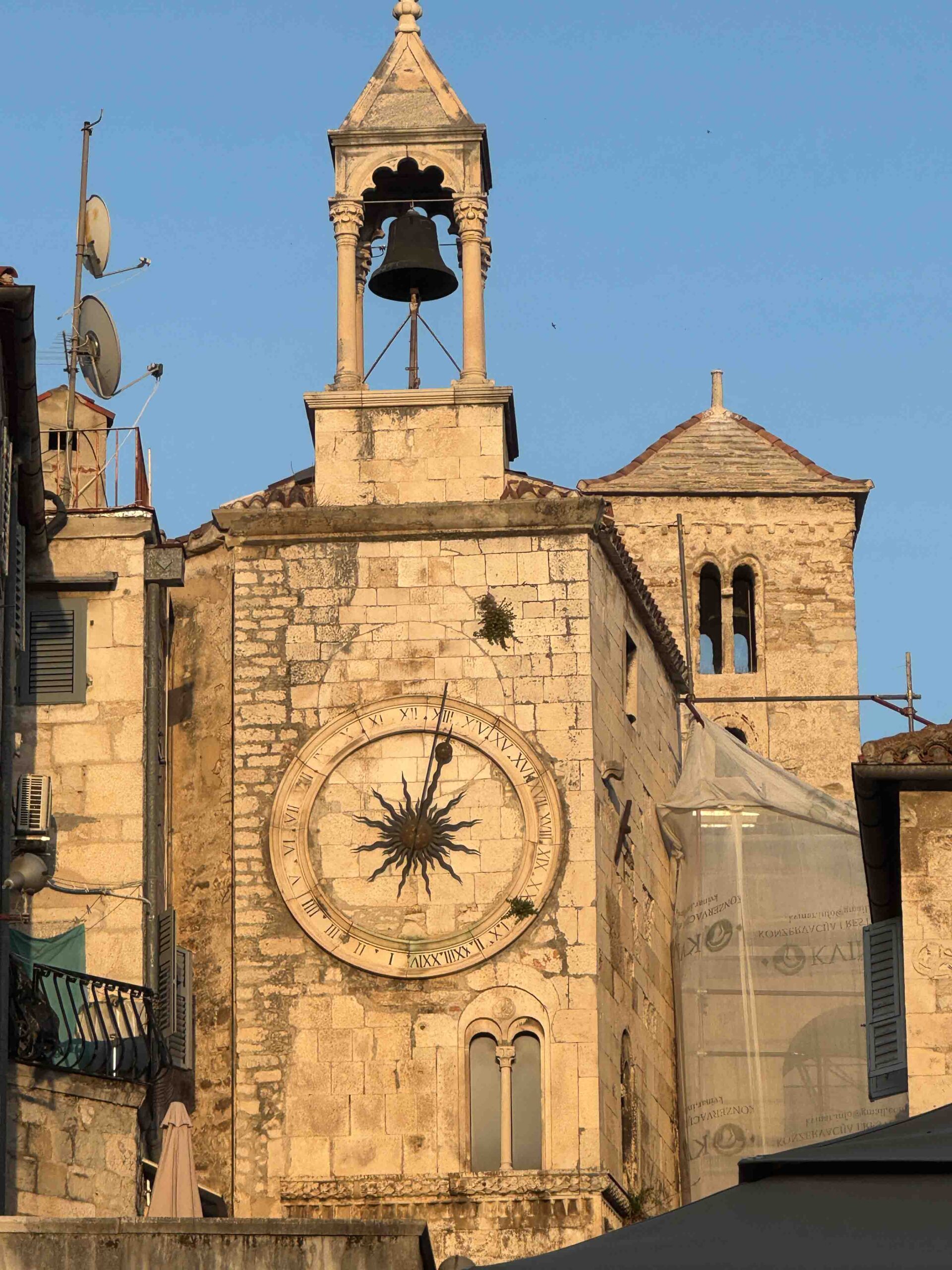
The church (which was closed) was built in the 6th century in the sentries’ walkway above the Iron Gate of Diocletian’s Palace. The Early Romanesque bell tower was added in the 11th century. It is the oldest still preserved clock tower on the Croatian side of the Adriatic.
The clock is unique in that it has 24 digits instead of 12.
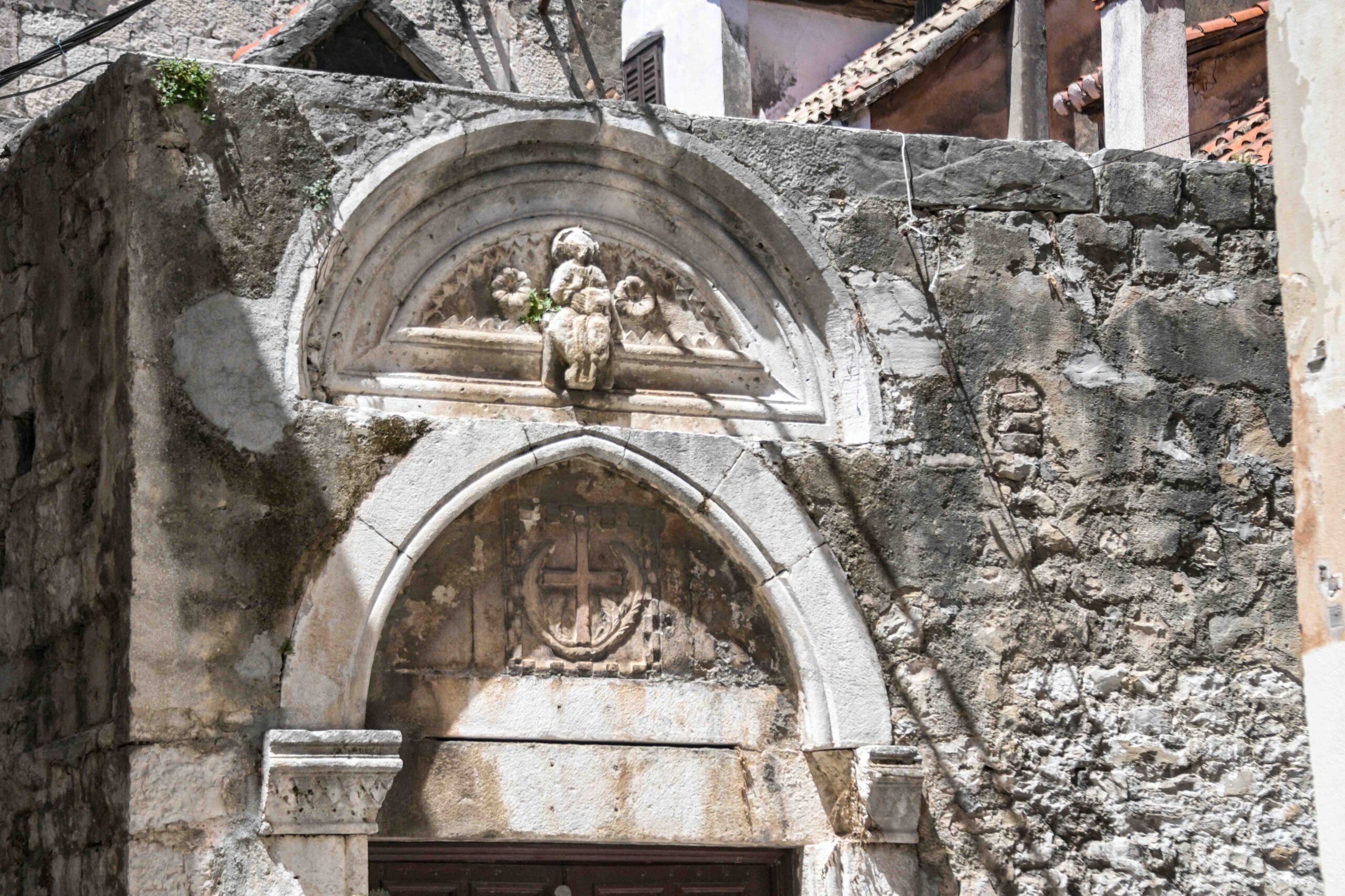
Church of the Holy Spirit
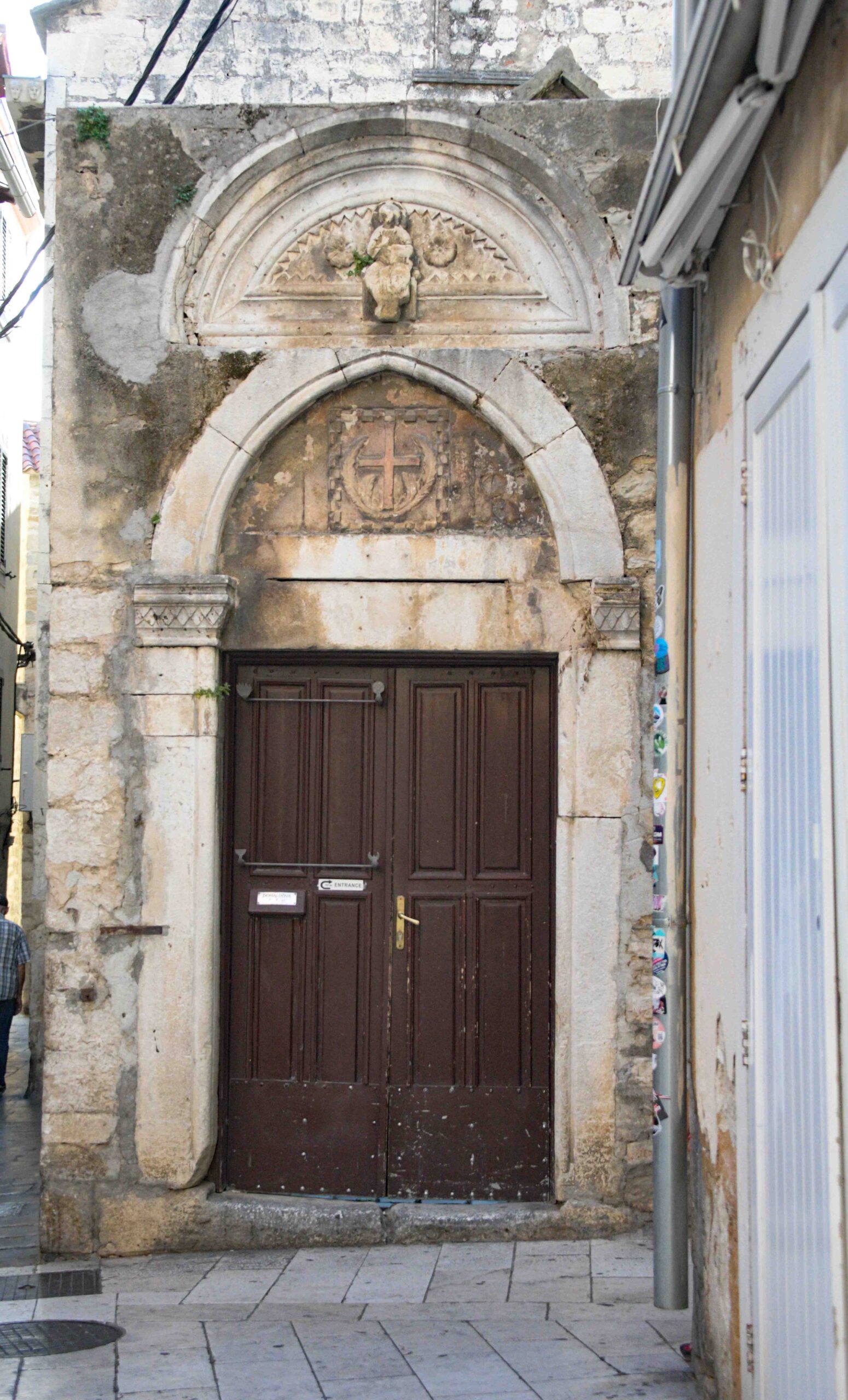
This little Gothic-style church was most likely built in the 15th century.
*
St Martin’s Church
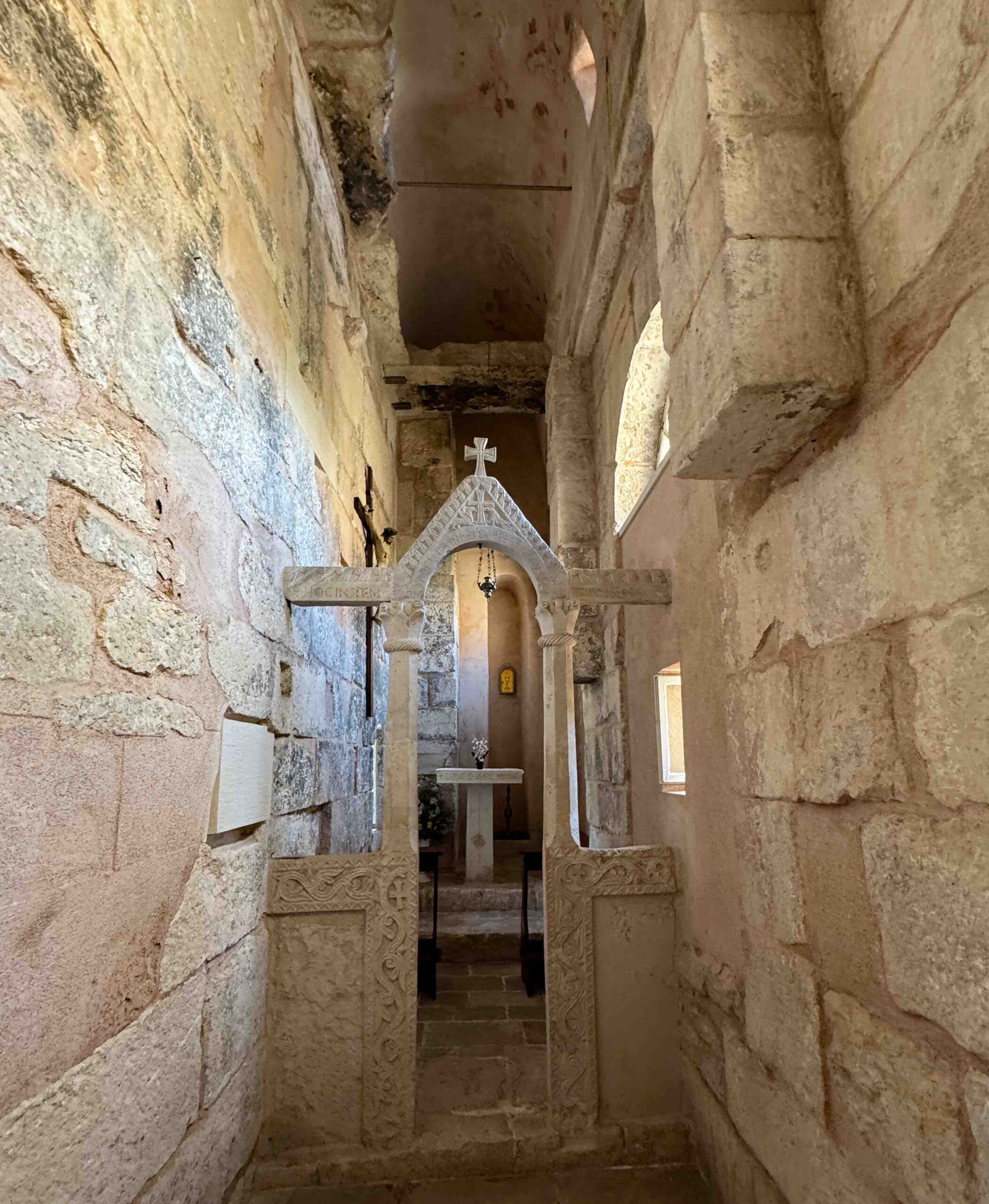
St Martin’s church is really sweet with a great history. It is in the care of the Dominican sisters, and the one who showed it to us was 80 years old and as kind as could be.
The church is built into an early guardhouse within the ancient Golden Gate of Diocletian’s northern wall. It is one of the oldest churches in the city and is known for its 11th-century chancel screen.
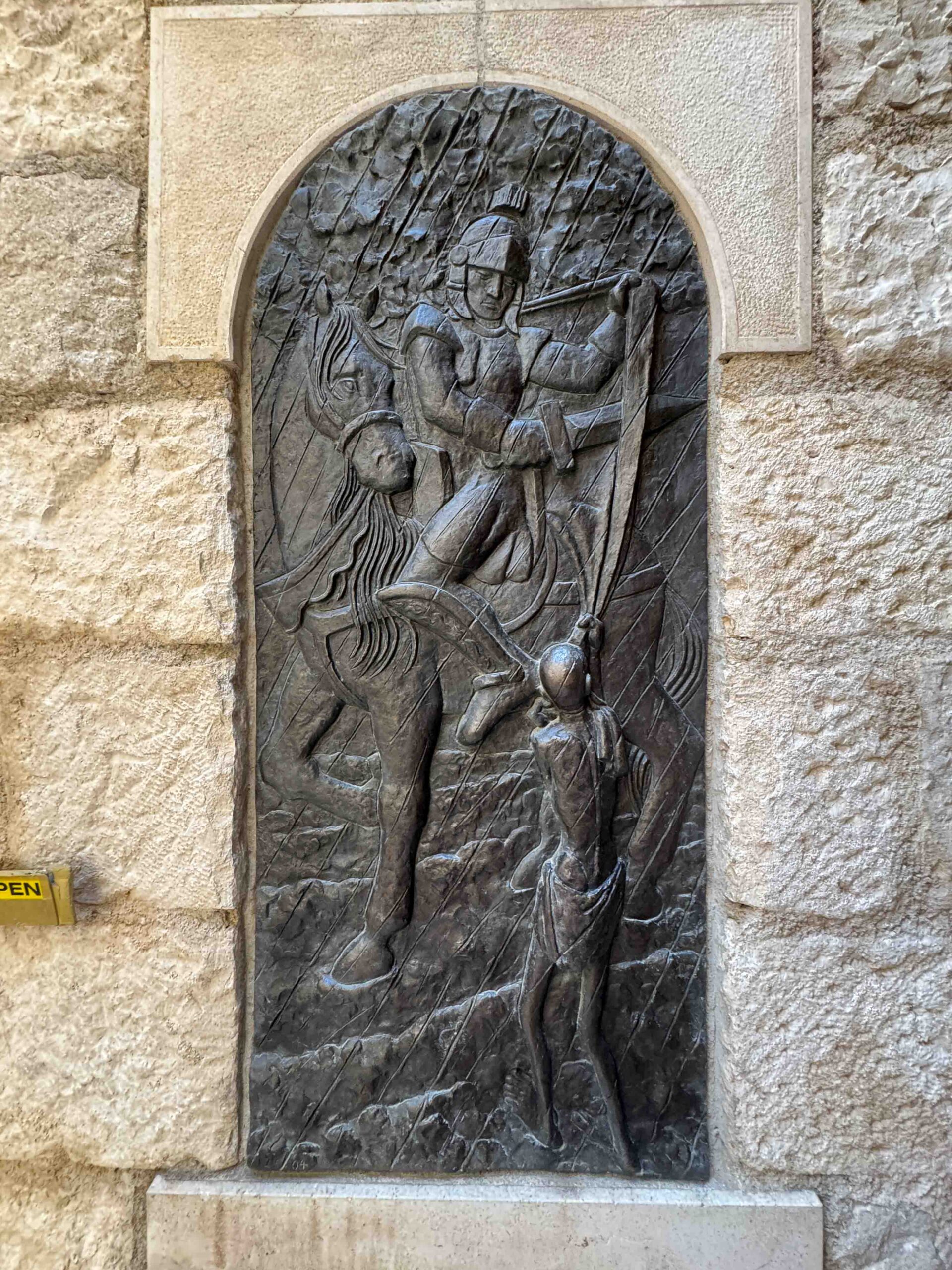
This bronze bas-relief sits at the entry to St. Martin’s. It depicts a scene related to Saint Martin, thought to represent the moment he shared his cloak with a beggar
Cambi Palace
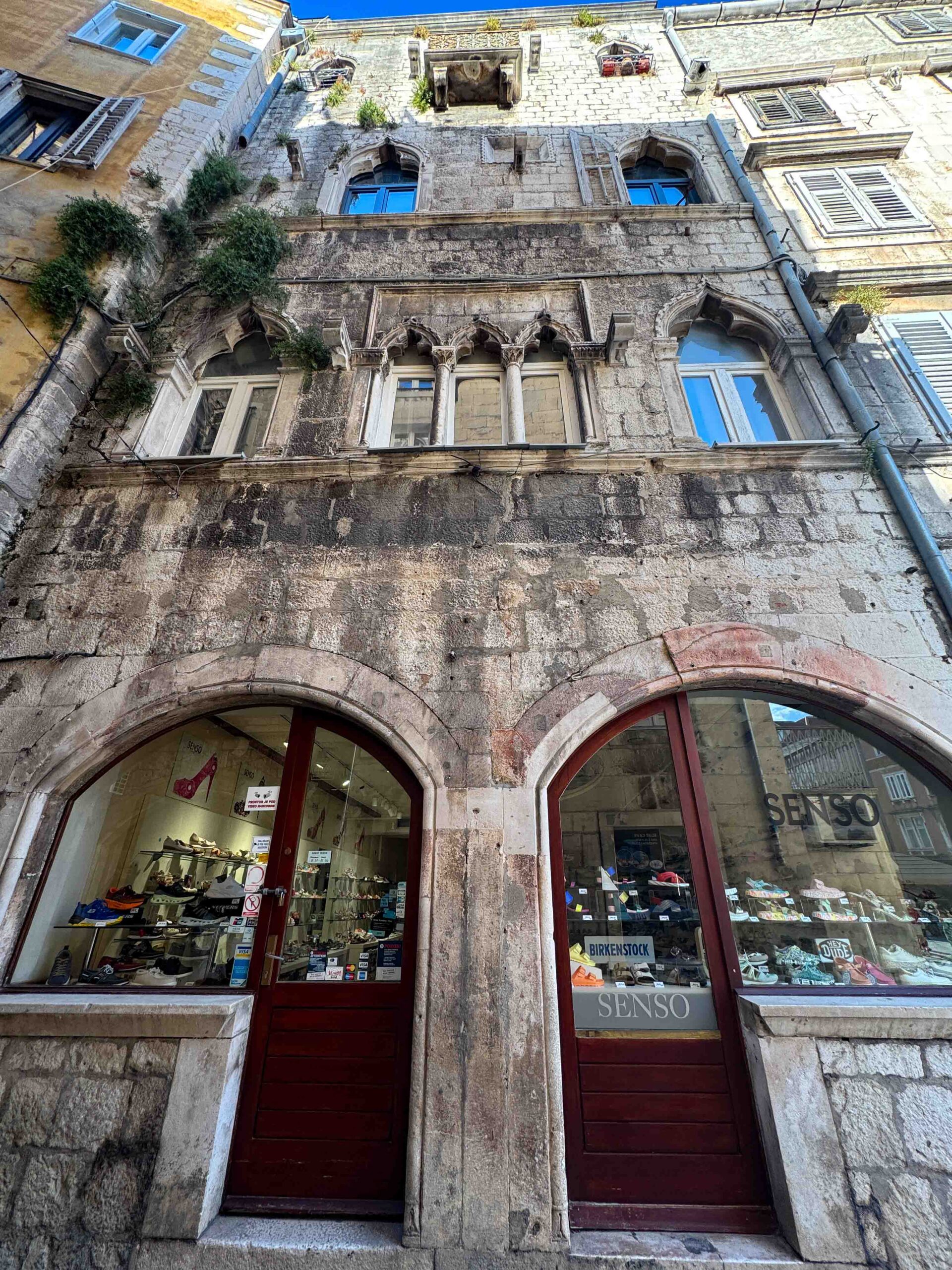
The Cambi Palace is a Gothic palace constructed in the first half of the 15th century and underwent some modifications in the 19th century. The principal façade of the palace is the most stylistically coherent among all the Split Gothic palaces built before the arrival of George of Dalmatia.
Geremia Palace
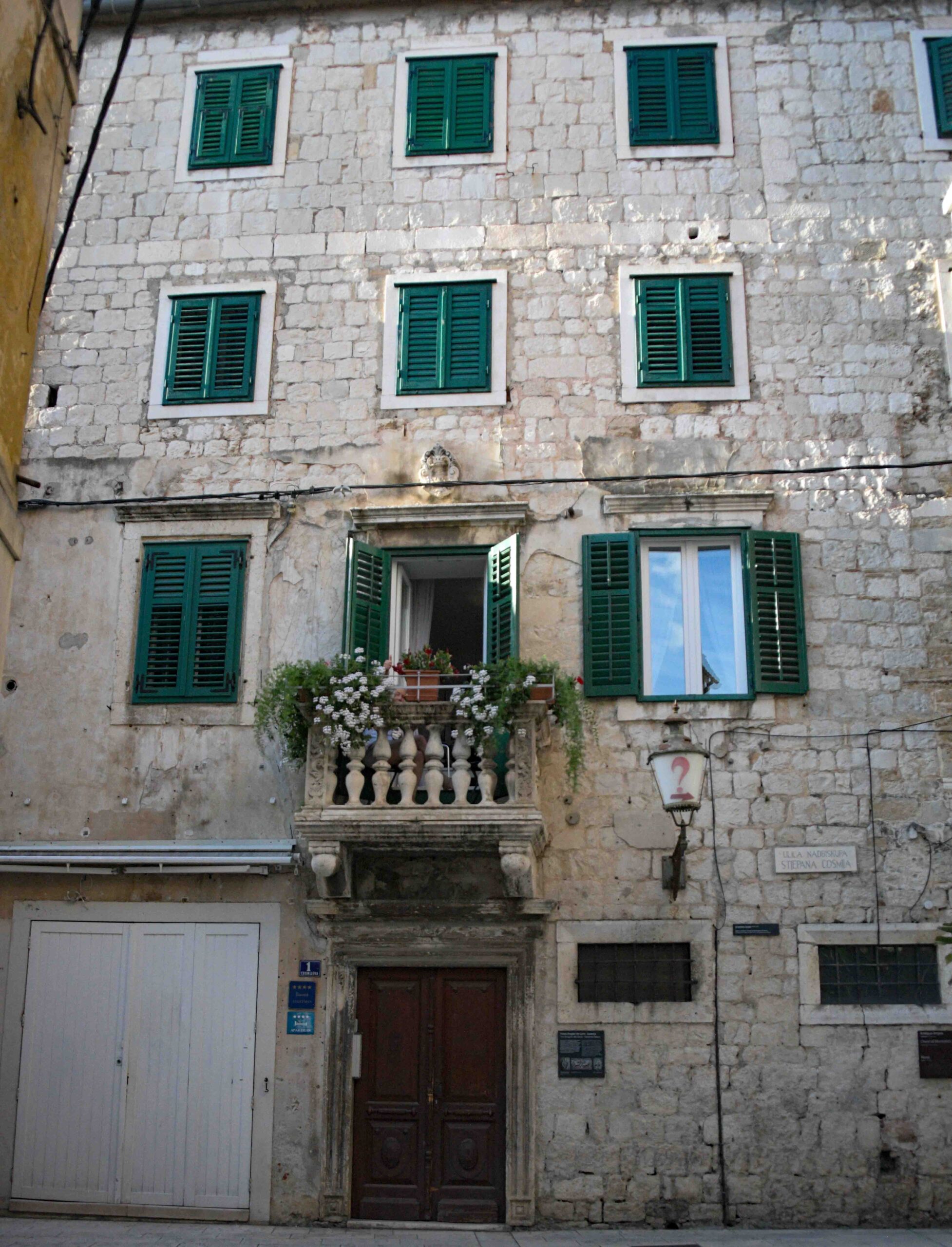
Geremia Palace dates back to the 13th century, originally built in the Romanesque style. In the 15th century, it was renovated in Gothic and Renaissance styles while preserving its historical layers. Later, in the 17th century, the Baroque style was added by Juraj Dragišić, a canon and writer from a patrician family from Poljica. The family coat of arms can be seen above the former courtyard portal in the Baroque style. The palace underwent significant remodeling in the 19th century.
Old Archiepiscopal Seminary – Islamic Place of Worship
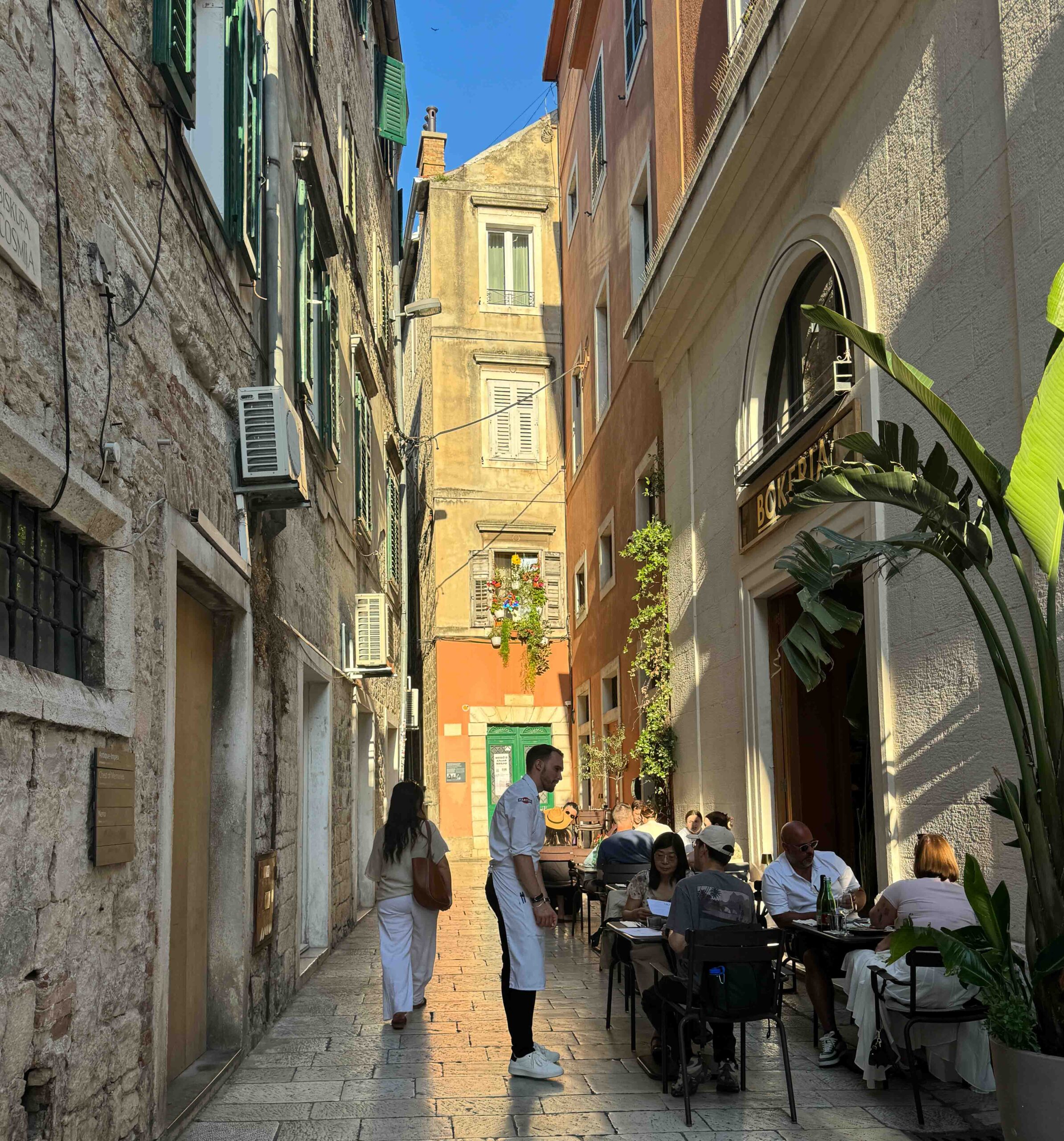
Originally constructed as the Archiepiscopal Seminary for the Catholic Archdiocese of Split, the building reflects the late 19th- to early 20th-century ecclesiastical architecture common in Dalmatia. It was built to train clergy for the local church. In the post–World War II period, the building was repurposed to meet the needs of the approximately 200 Muslim families.
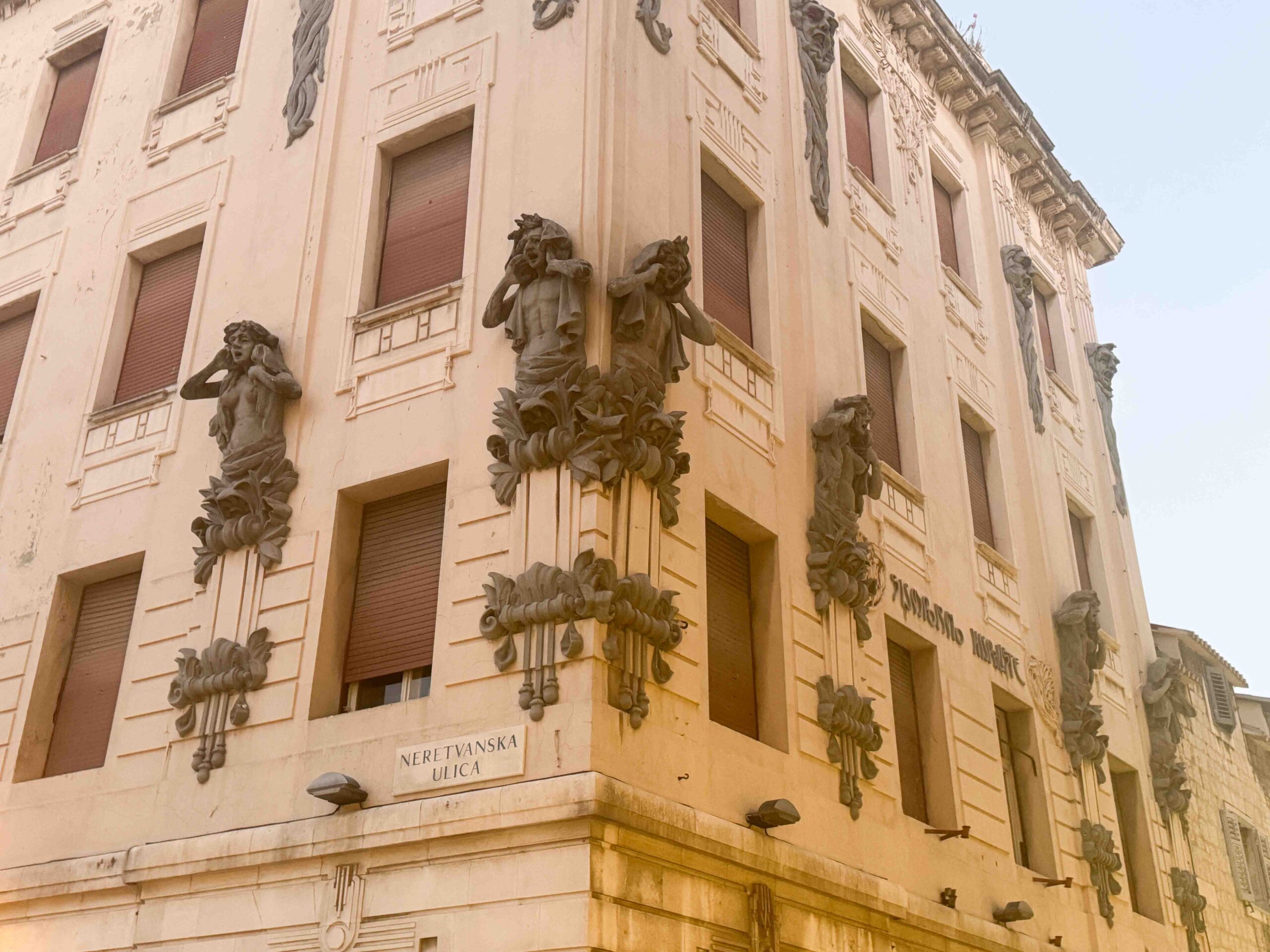
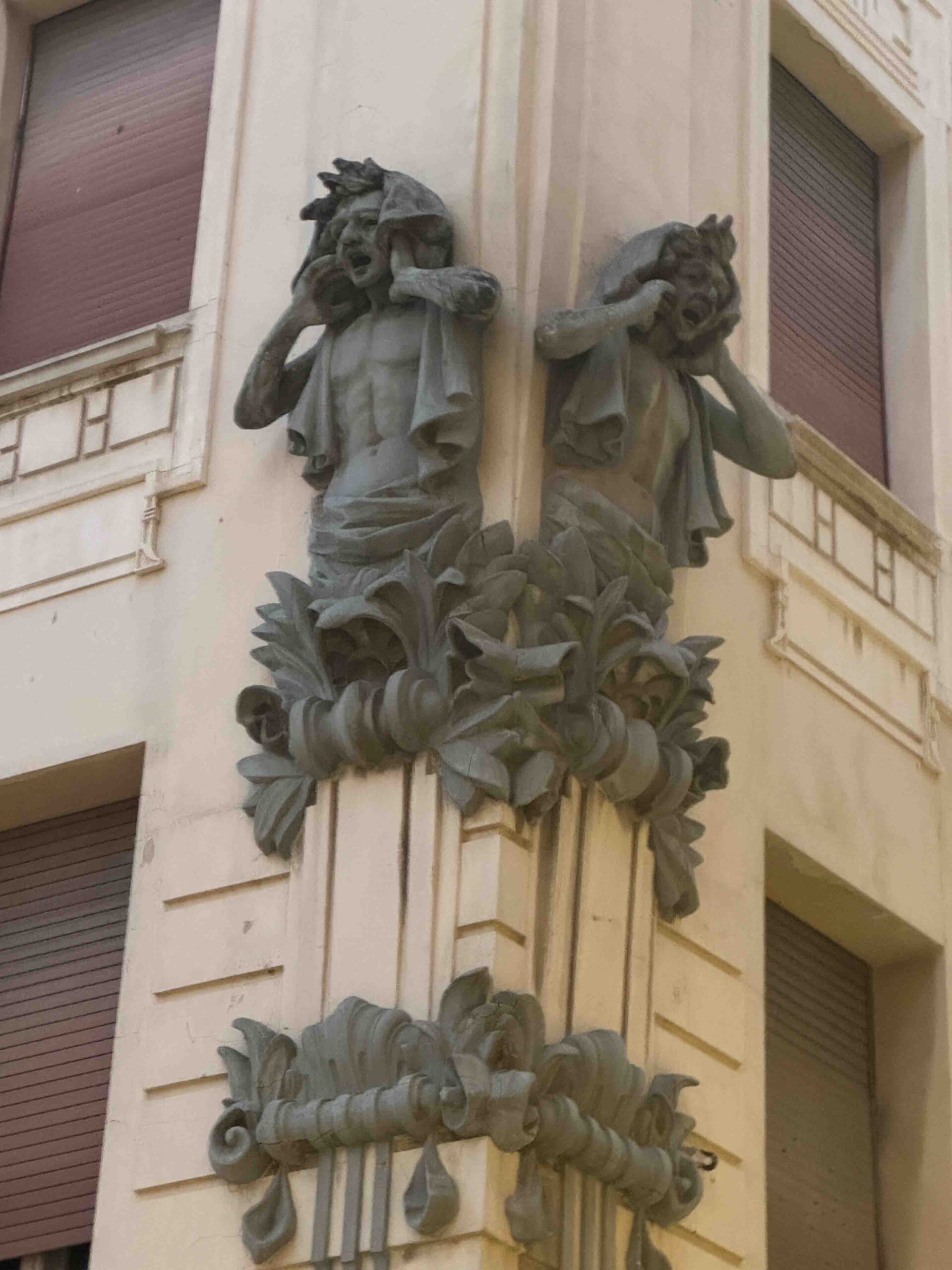
This 1903 building, designed by Kamilo Tončić, is an important specimen of Croatian Art Nouveau architecture. It was built over natural sulphur springs that have been used for therapeutic purposes since the 18th century.
Wandering Looking Down