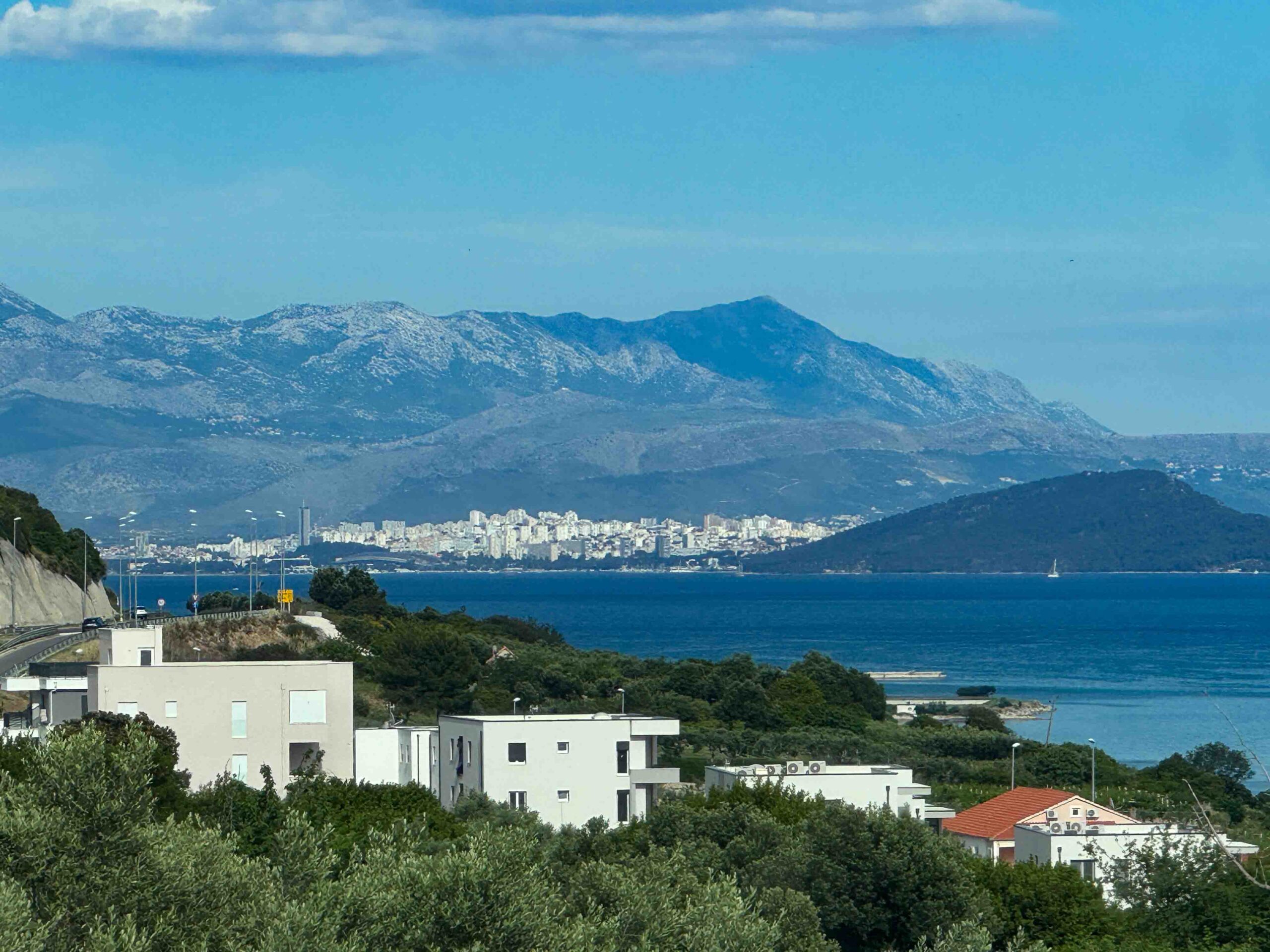
With a population of 160,000, Split is Croatia’s second-largest city and hosts 900,000 visitors a year.
My destination is the historic core, which has been a UNESCO World Heritage Site since 1979. The history of the historic core is as complicated as the history of Croatia itself.
The history of Split begins around the 3rd century BCE with the foundation of a small Greek colony known as Aspalathos. When the Romans arrived at the end of the century, the settlement came to be known as Spalatum in Latin.
In 305, Emperor Diocletian moved to Spalatum and built his palace there as his retirement residence. About half of the complex was for Diocletian’s personal use, with the rest housing the military garrison.
The beginning of the construction of Diocletian’s palace has not exactly been established. It is assumed to have begun around 295. It appears that when Diocletian abdicated in 305, the palace was still not finished, and there are indications that some work was underway while the emperor was residing at the Palace.
With the death of Diocletian, the palace remained an imperial possession of the Roman court, providing shelter to the expelled members of the Emperor’s family.
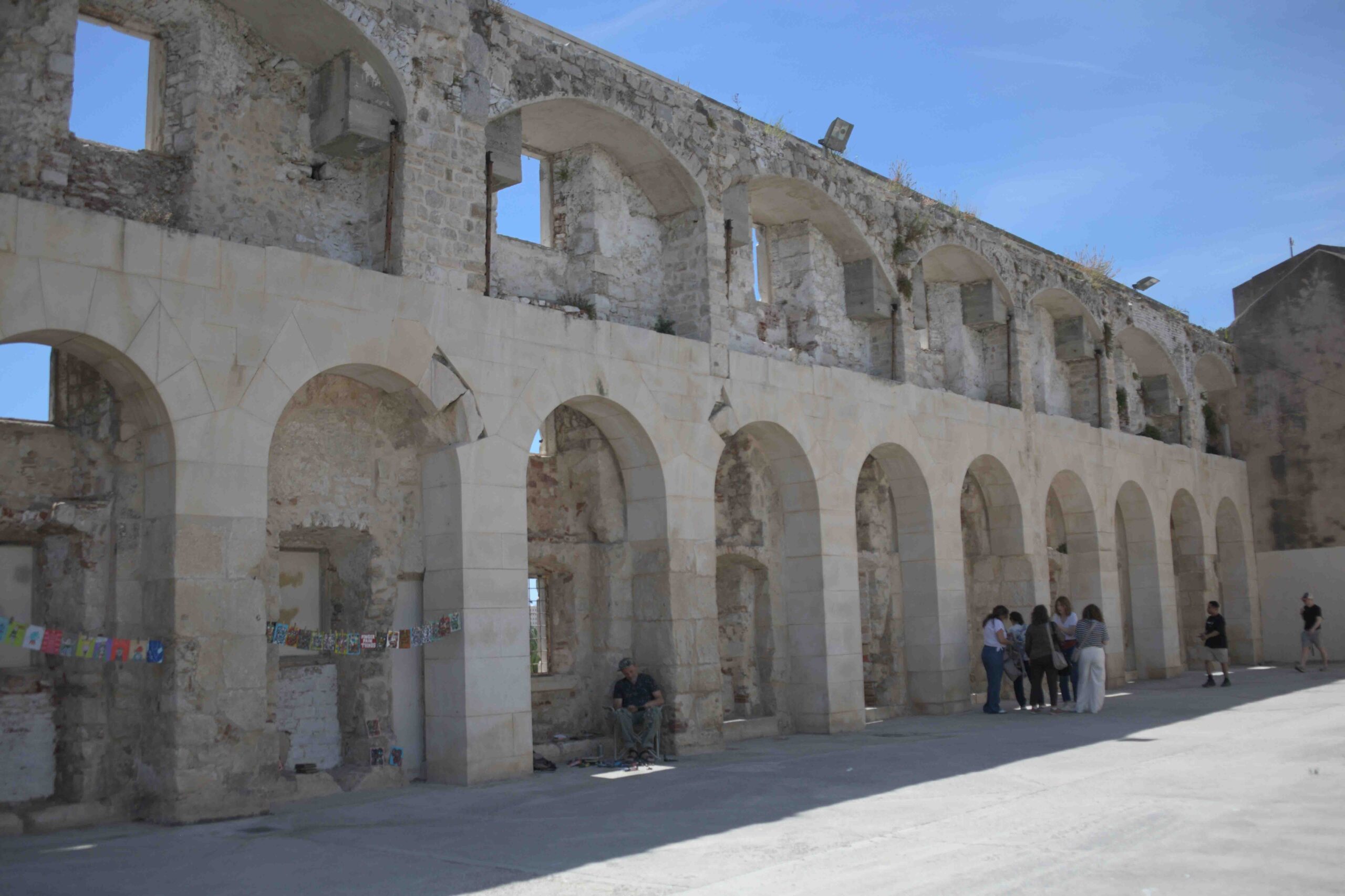
The Palace Walls
The Golden Gate
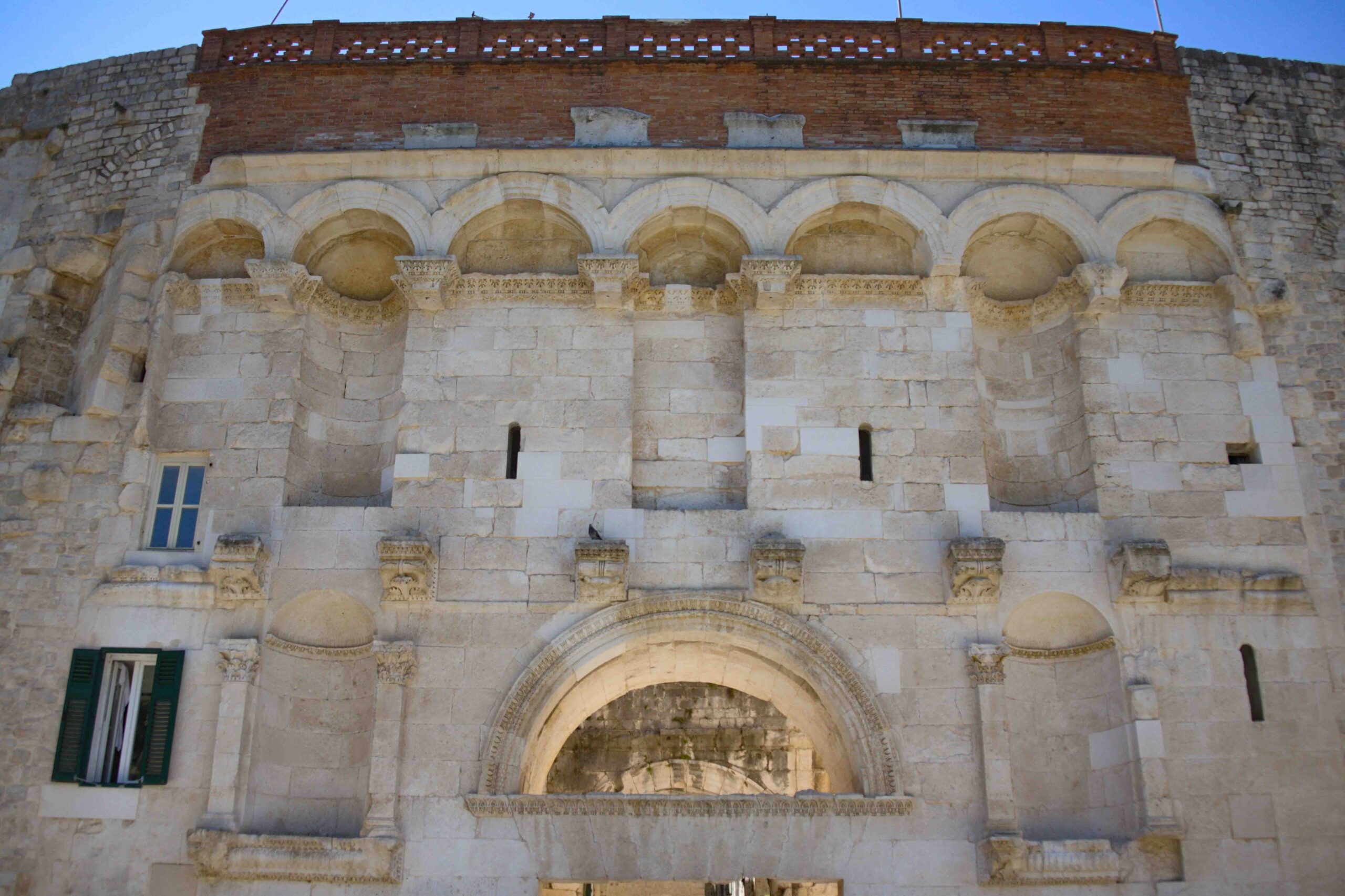
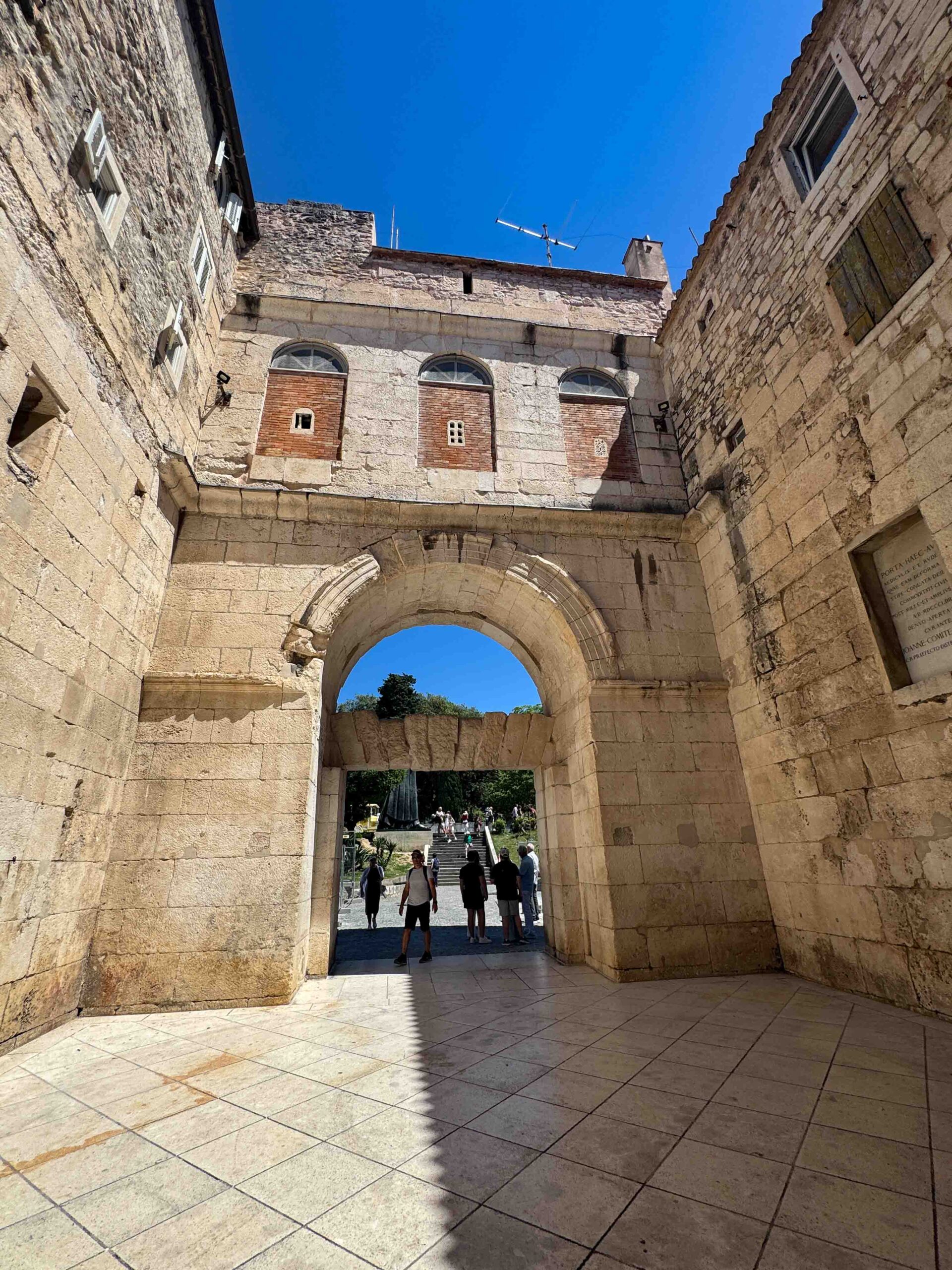
The Golden Gate was built by the Romans in the early 4th century AD as the main entrance to Diocletian’s Palace. The Golden Gate received its name from the gilded bronze gates that once adorned the entrance. It served as a ceremonial entrance for the emperor and his entourage.
The East Gate
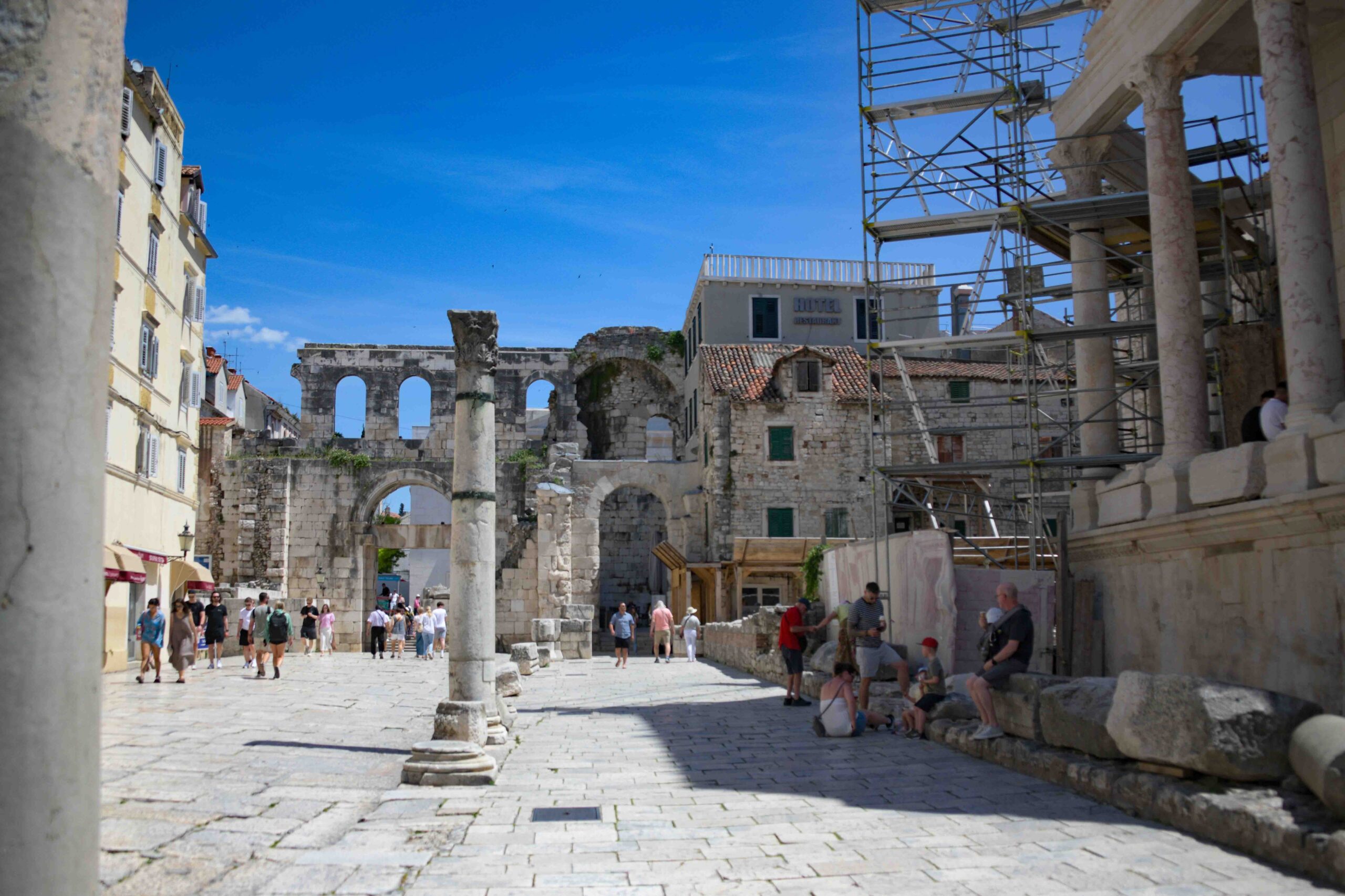
The Peristyle
The monumental Peristyle is a columned courtyard that stood at the northern entrance to the imperial suite and served as a focal court. Its proportions are approximately 88 by 42 feet, and its colonnades include columns of Egyptian red granite and various marbles.
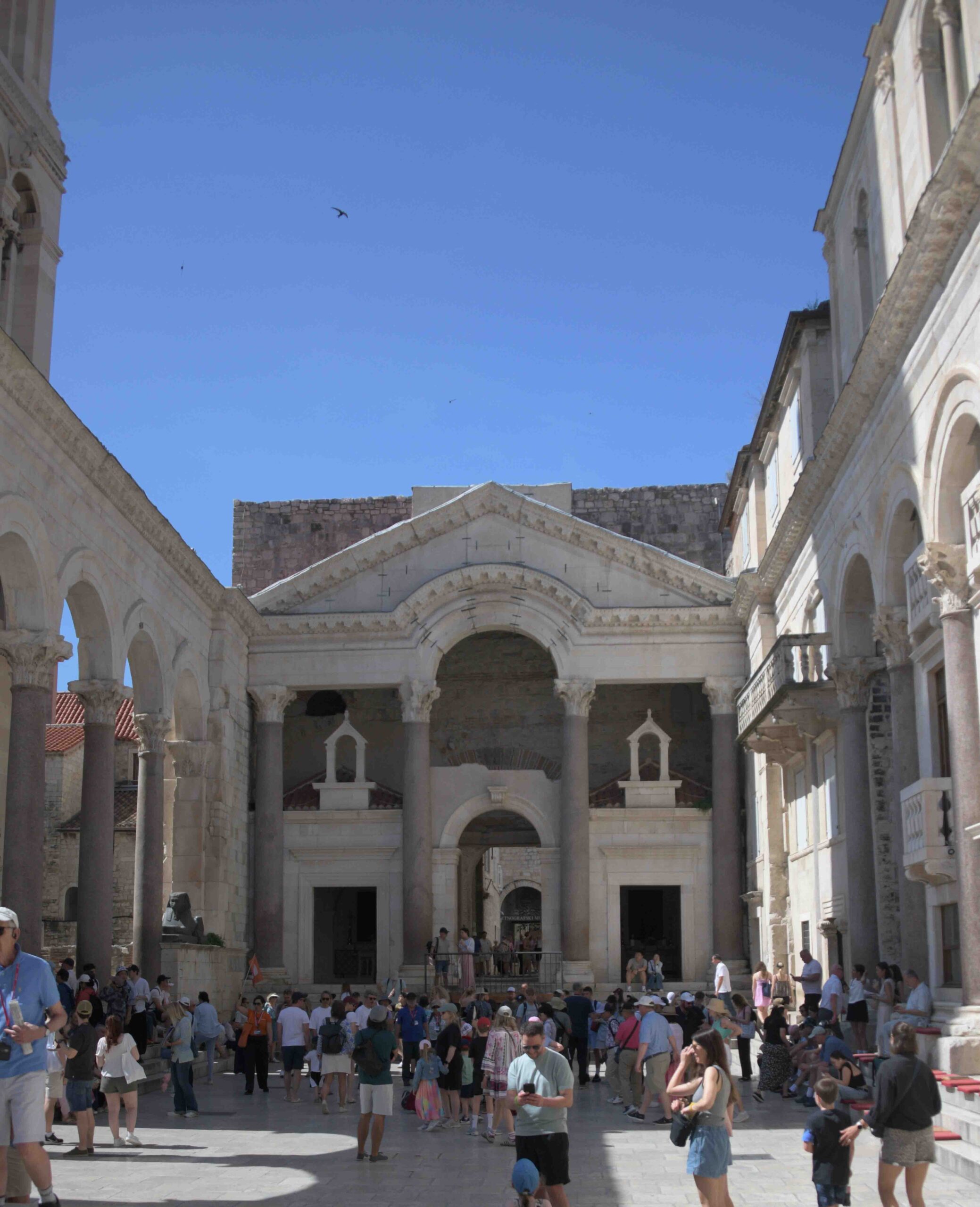
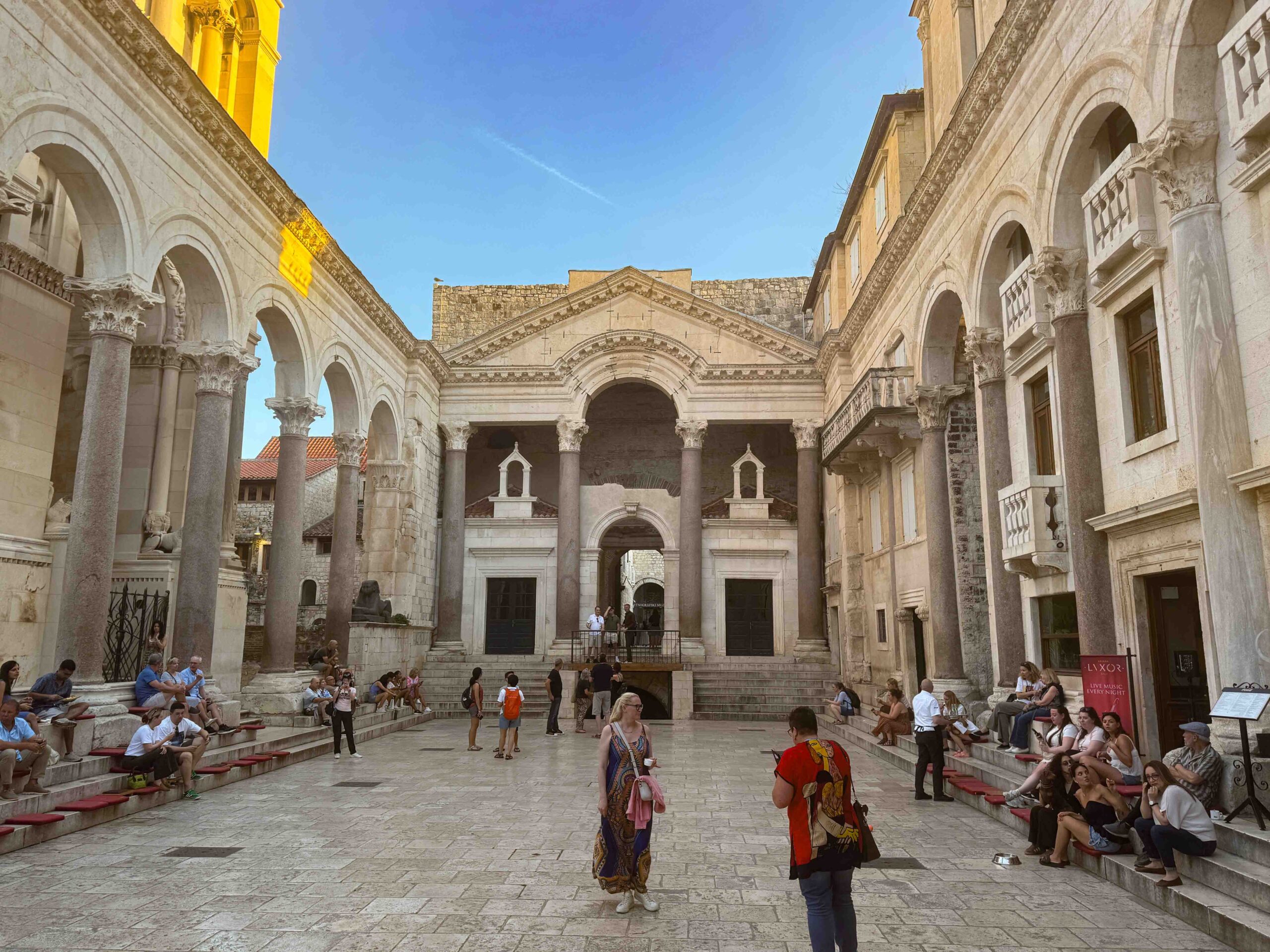
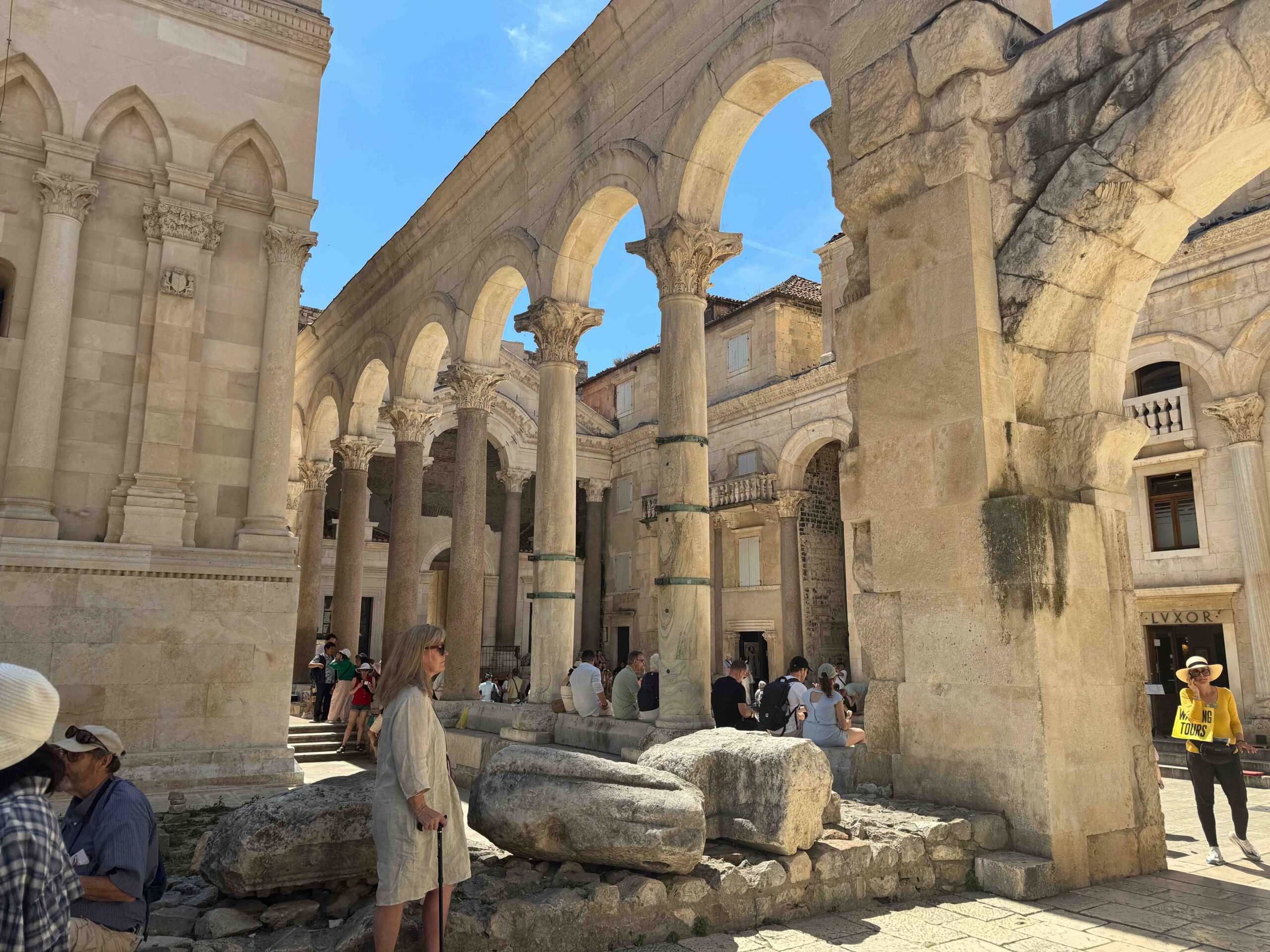
From the Peristyle, visitors moved into the Vestibule, an entrance hall with a large rotunda.
The Vestibule
The Vestibule was built around the beginning of the 4th century, as the original part of the ancient palace. It is a circular hall, once topped with a dome, 56 feet in height and 39 feet in diameter. It was built as a grand meeting hall only for selected audiences, such as ambassadors
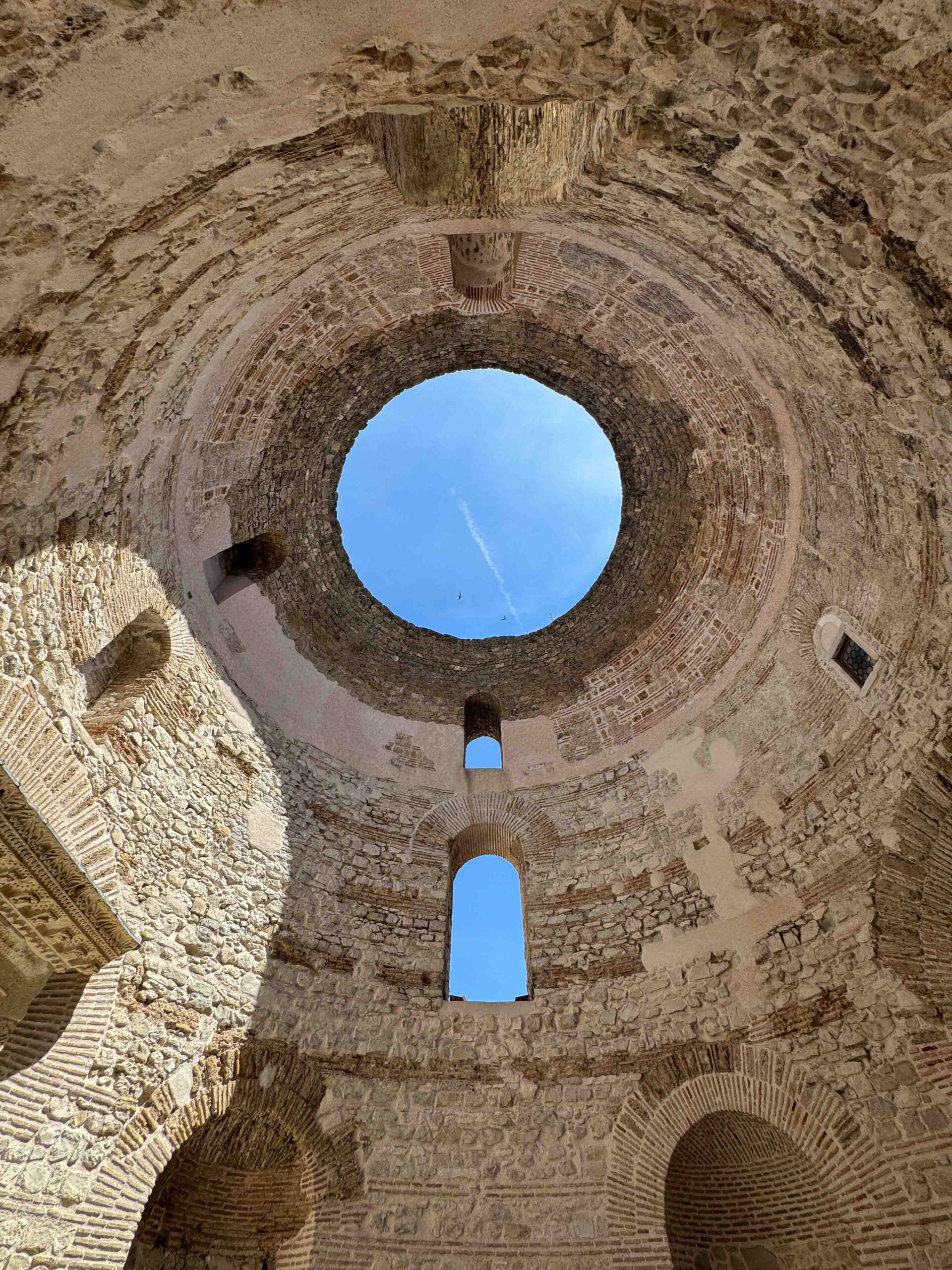
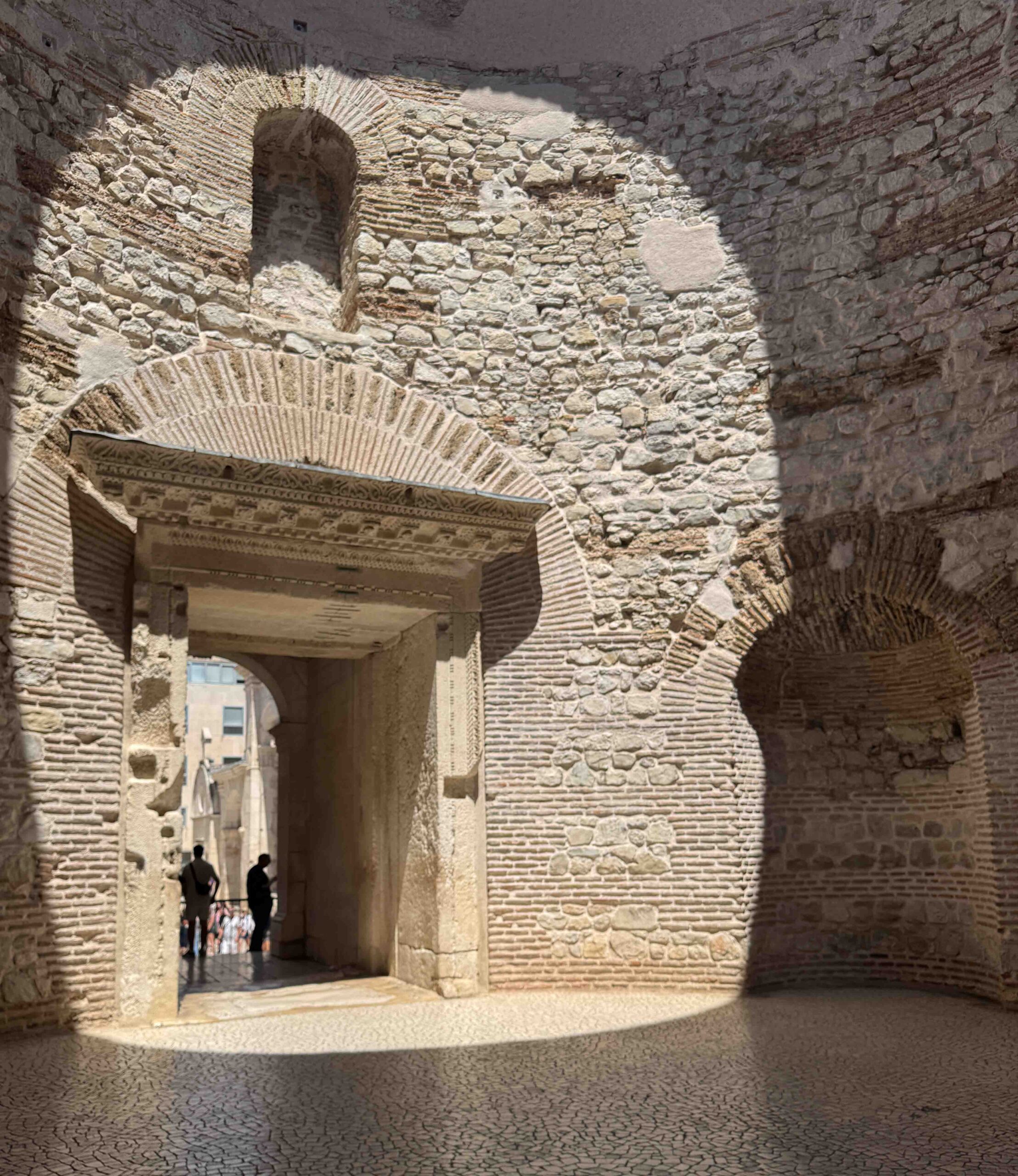
Ornamentation around the Peristyle
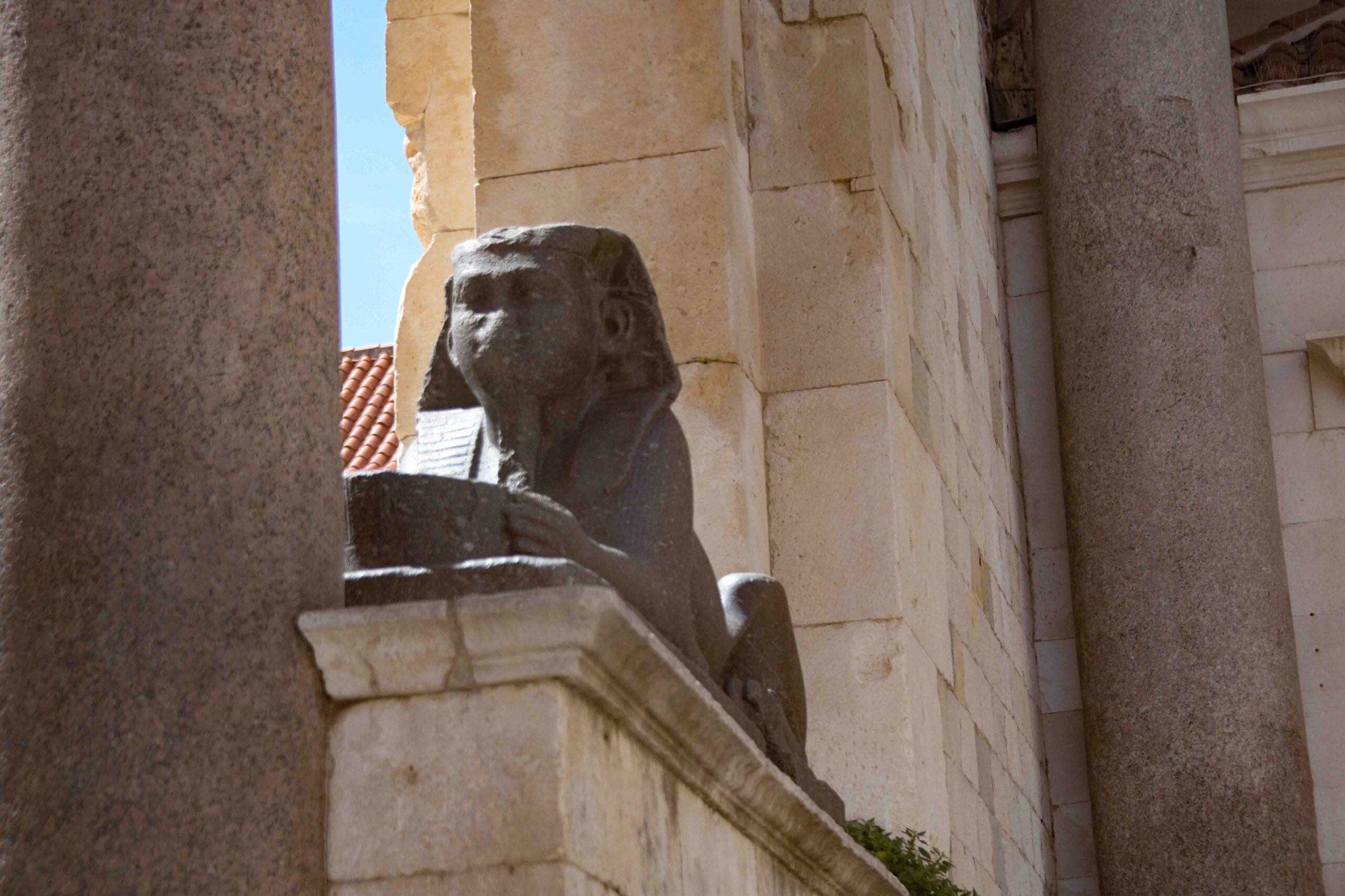 The Palace was decorated with numerous 3500-year-old granite sphinxes from Egypt. Originally, twelve sphinxes were brought from Egypt by Emperor Diocletian. Only three have survived the centuries.
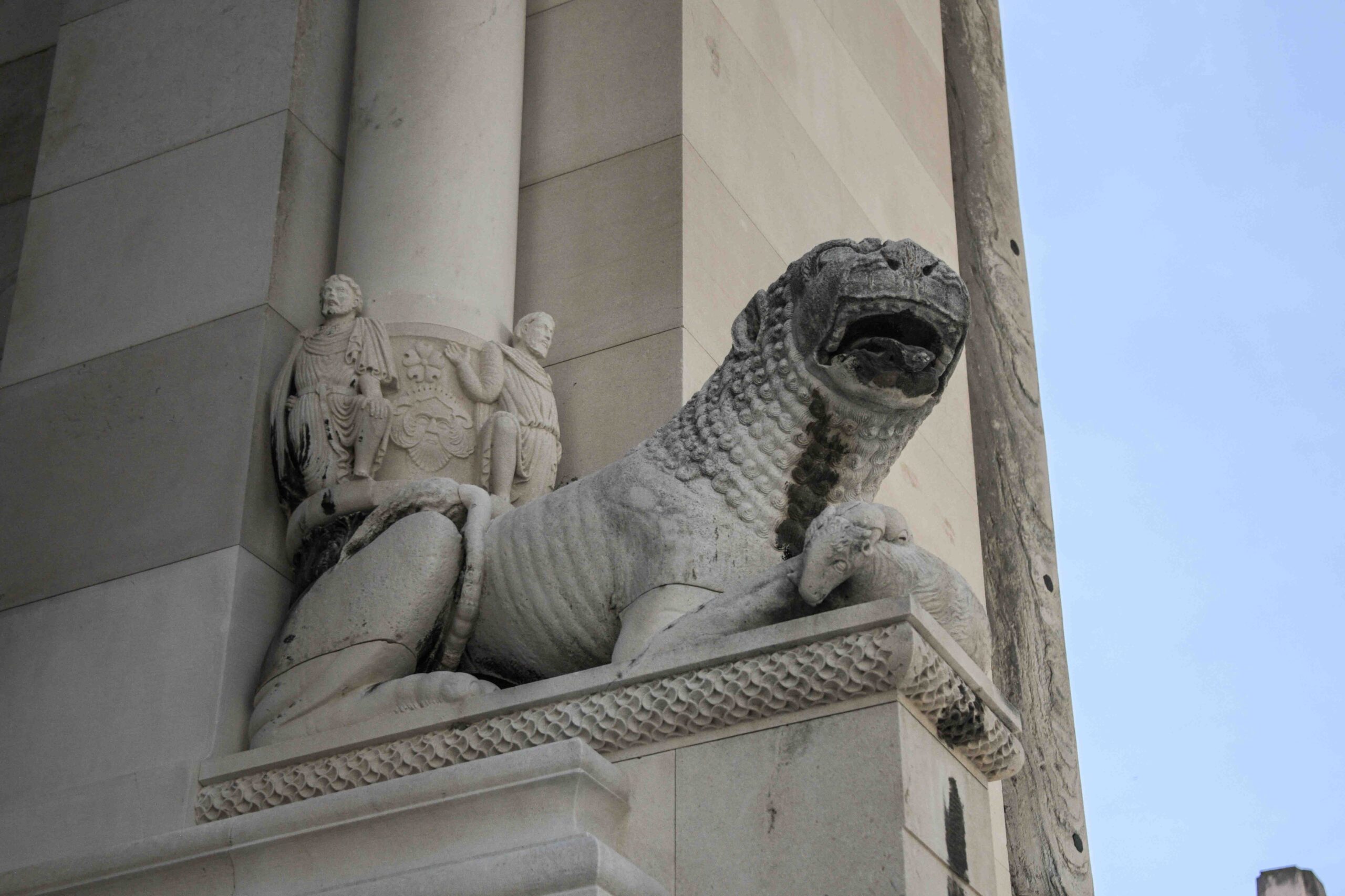
The lion is depicted holding a lamb, which some interpretations suggest symbolizes the Roman authorities (the lion) in relation to the Christian martyrs (the lamb).
Temple of Jupiter
The Temple of Jupiter is one of the best-preserved Roman temples in Croatia. The structure was built at the turn of the 3rd and 4th centuries.
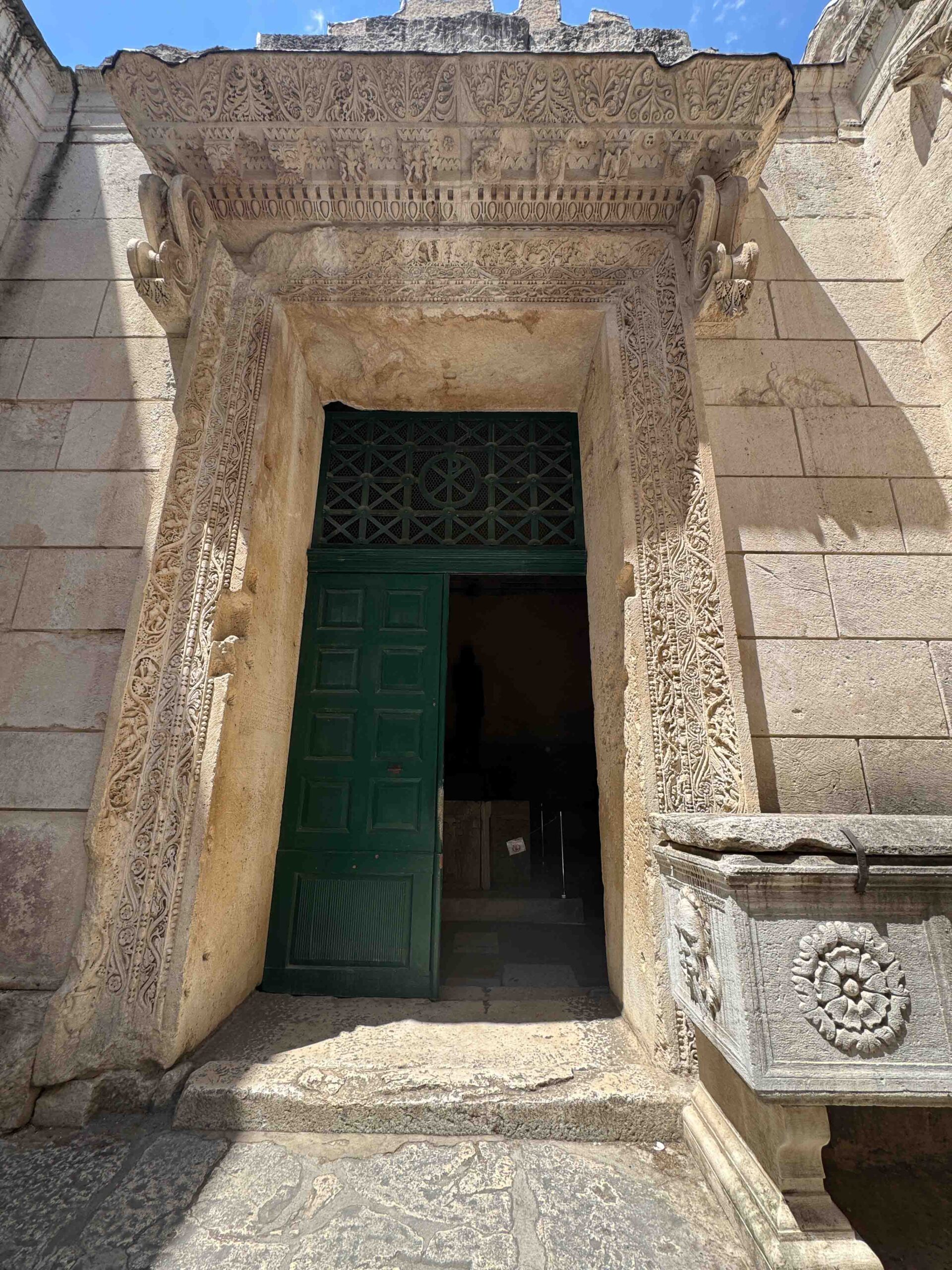
The temple was dedicated to Jupiter, the supreme god of Roman religion and divine protector of Diocletian. The entry in rather spectacular.
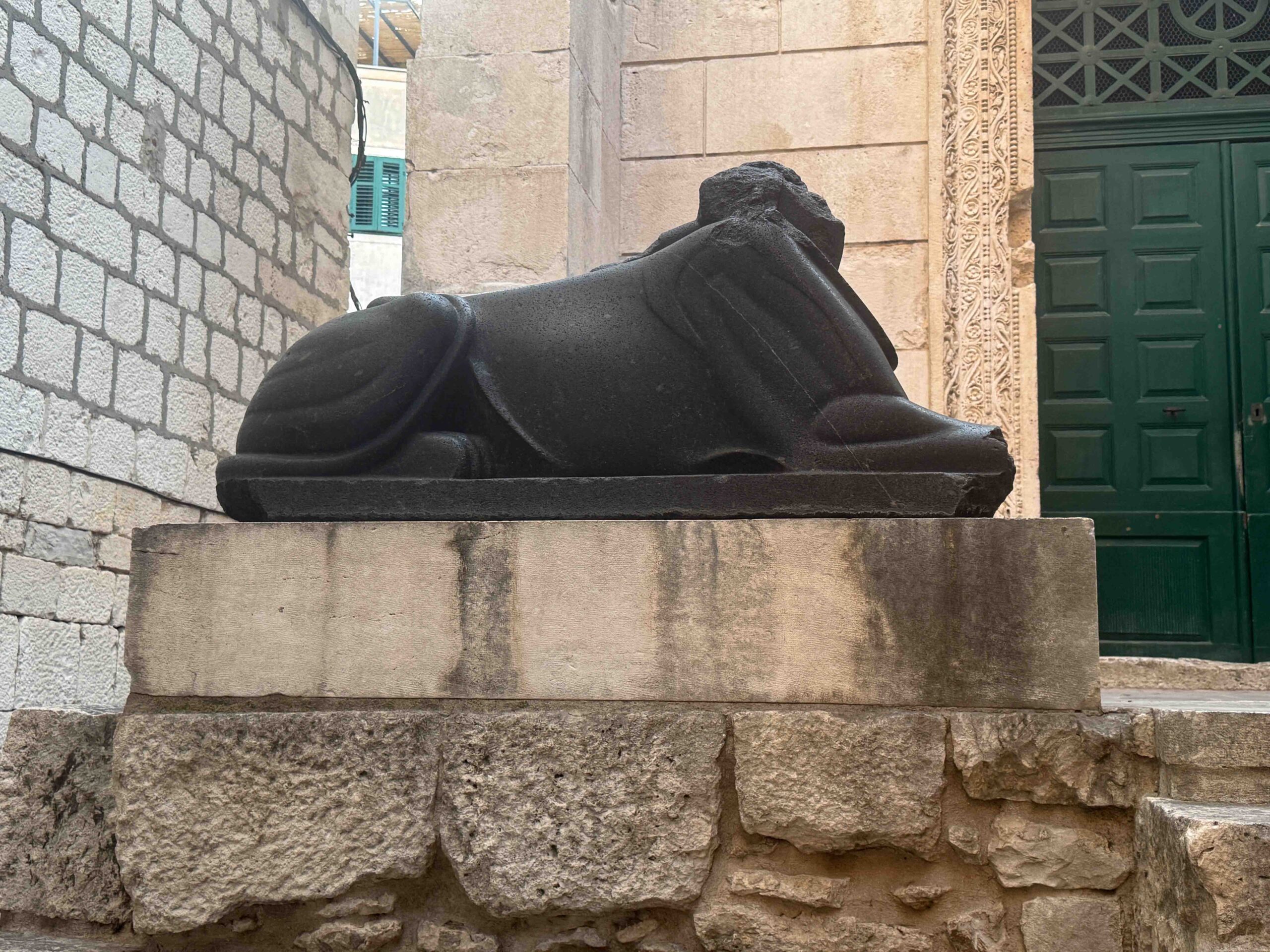 In front of the temple, an authentic albeit headless, Egyptian sphinx made of black granite, brought to Split from Egypt during Roman times, can still be seen.
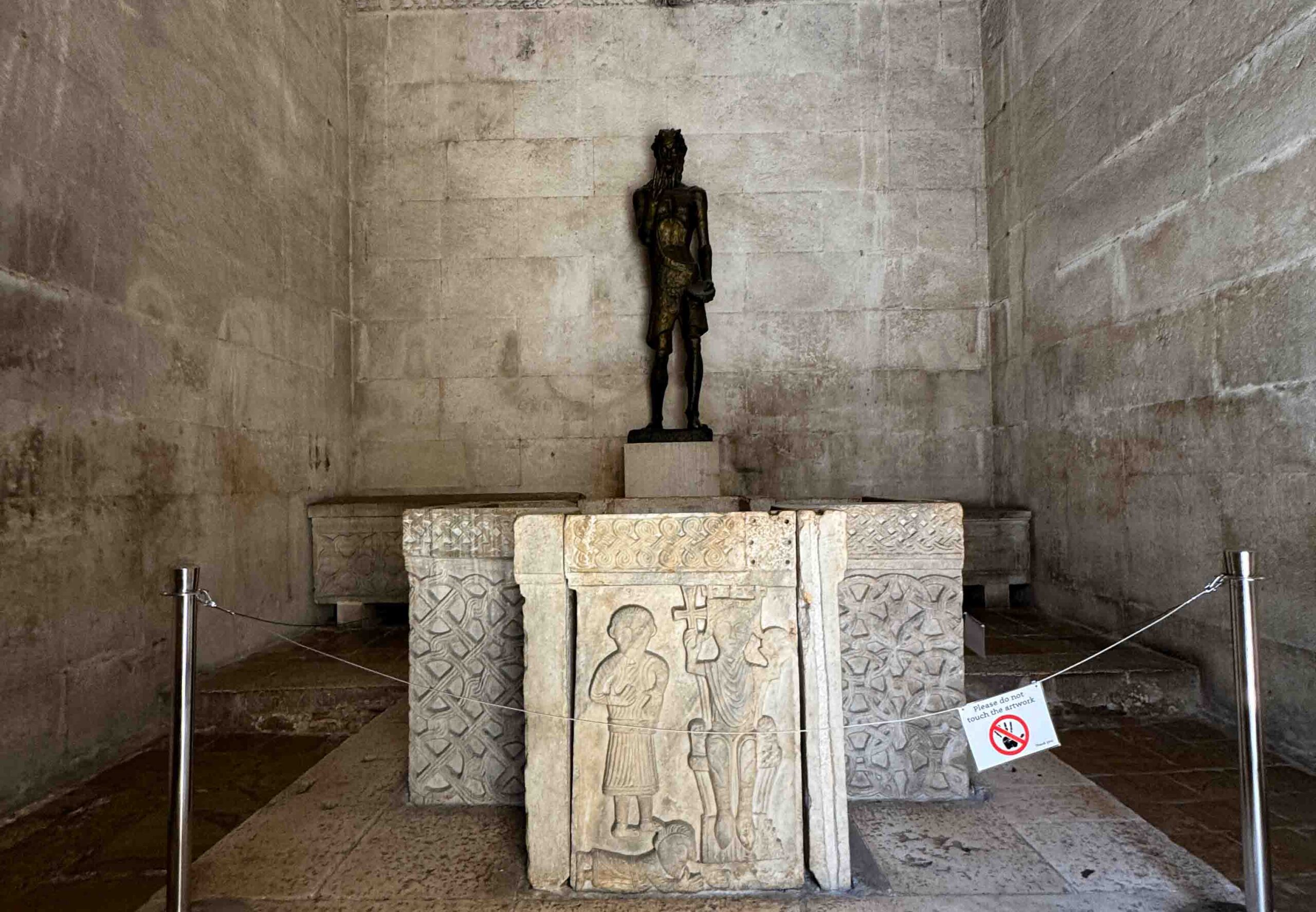
In the Middle Ages, the temple was converted into a Christian baptistery.
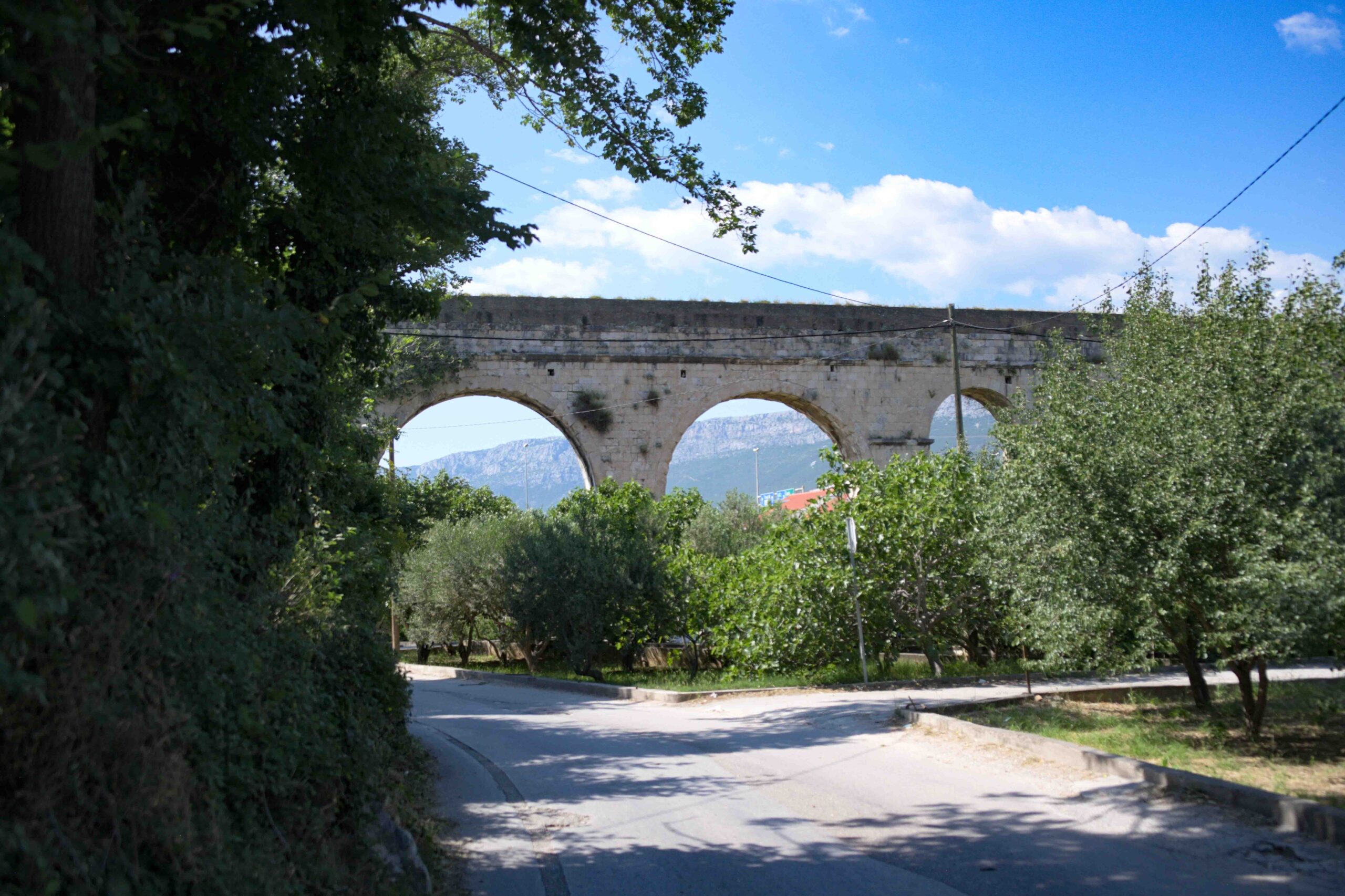
Outside of town is the Aqueduct of Diocletian. It was constructed between the end of the 3rd and the beginning of the 4th century CE, at the same time as the palace.
The aqueduct took water from the river Jadro, 5 1/2 miles northeast of Diocletian’s Palace. Another aqueduct took water from the same source to Salona. It was destroyed during the Goths’ invasion in the middle of the 6th century and remained in ruins for 13 centuries. The first reconstruction of the aqueduct took place during the Austro-Hungarian Empire (1877–1880), but was abandoned in 1932 due to the construction of a modern water system.