May 2026
Named for Timur’s wife, Saray Mulk Khanym (Bibi Khanym was her nickname, meaning ‘senior princess’) between 1399 and 1405.
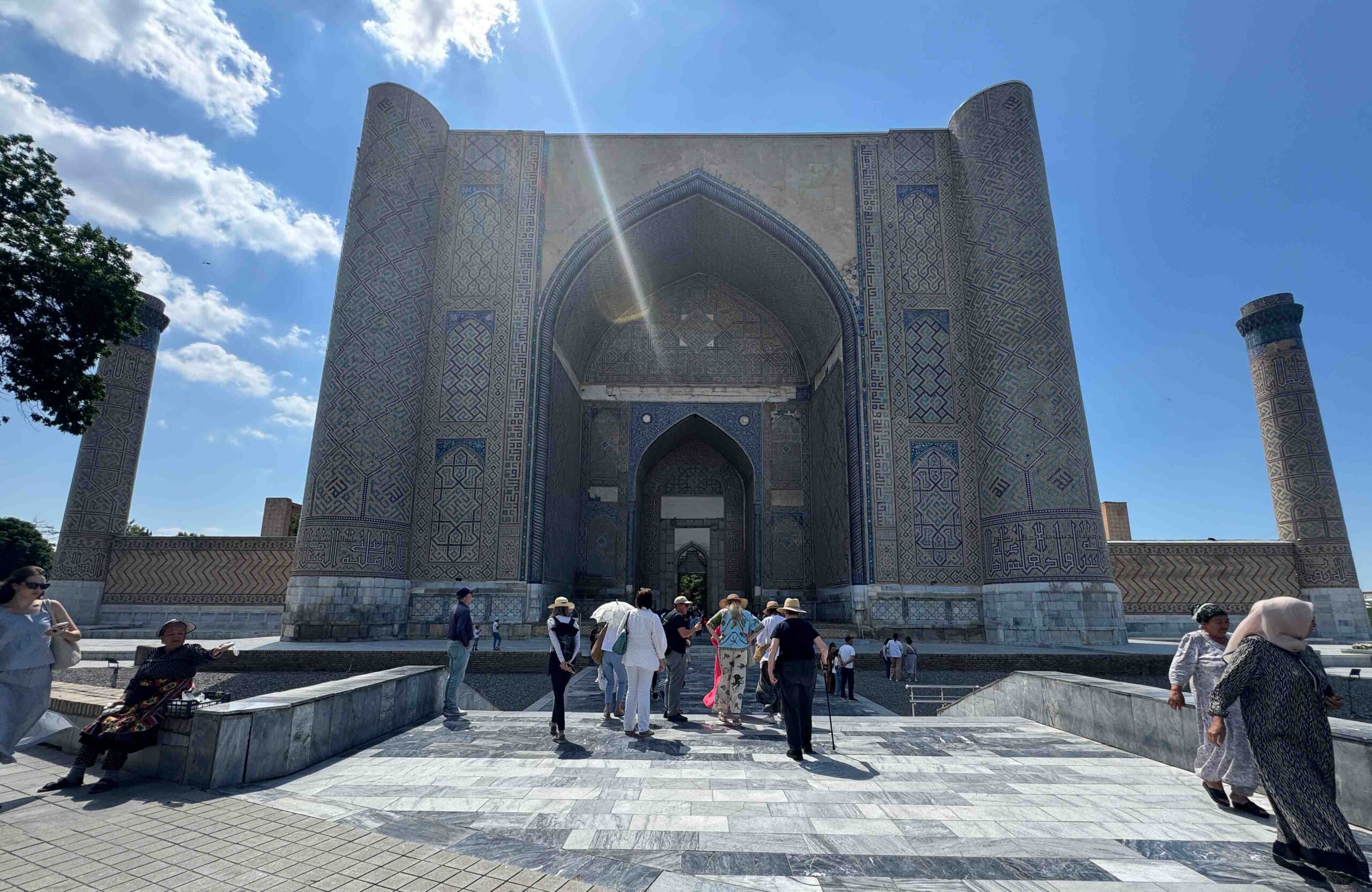
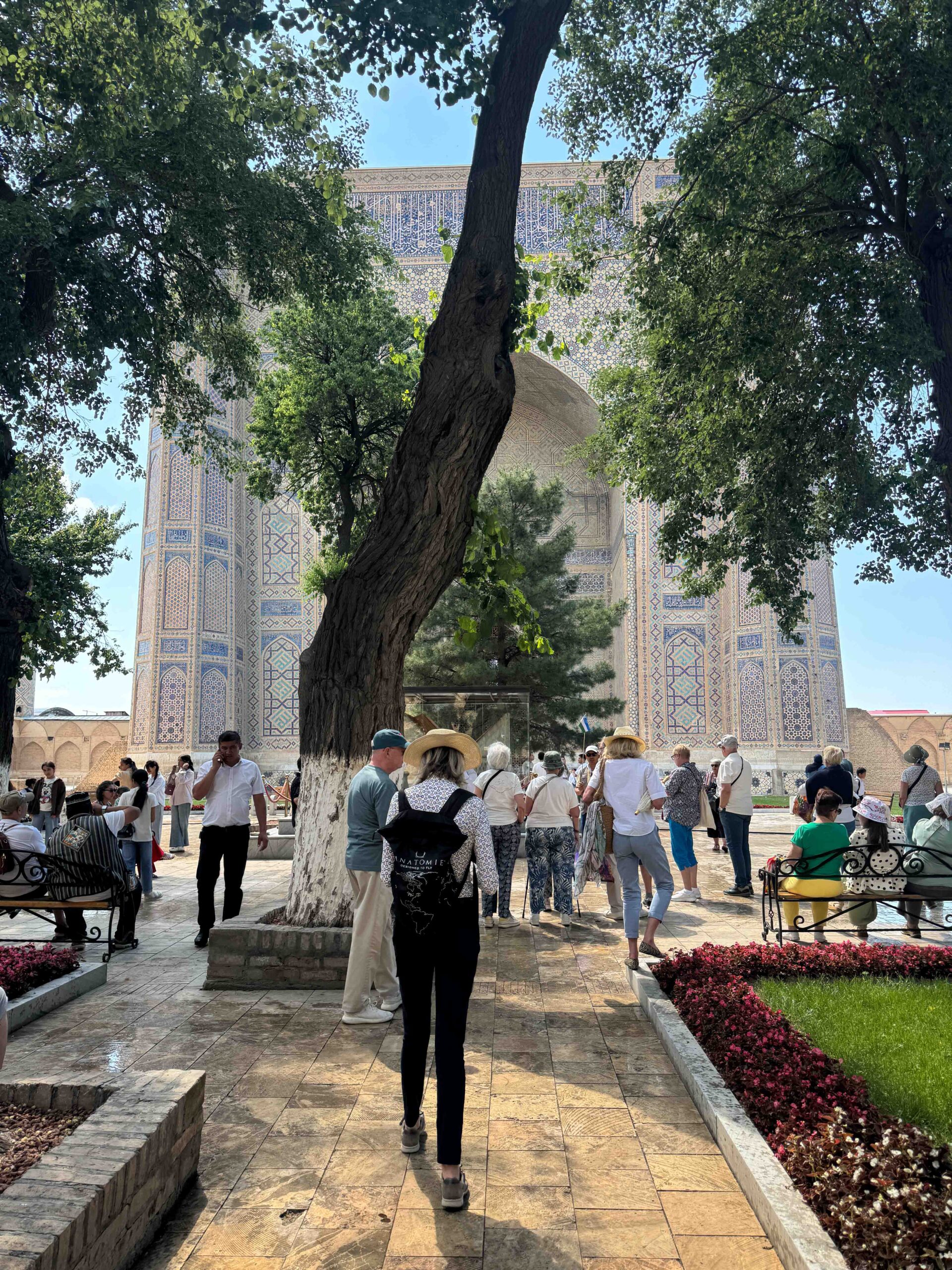
Timur was a huge fan of the arts. His megalomania project was the Bibi Khanum mosque. It was to be a monument to God and to himself. It was originally to have 160-foot minarets and tall turquoise domes. However, once he returned from a campaign, he executed the architects because the building’s portals were too low. He tossed meat and coins to masons who pleased him, while 95 elephants lugged the marble into place, which he had ordered from Persia and the Caucasus.
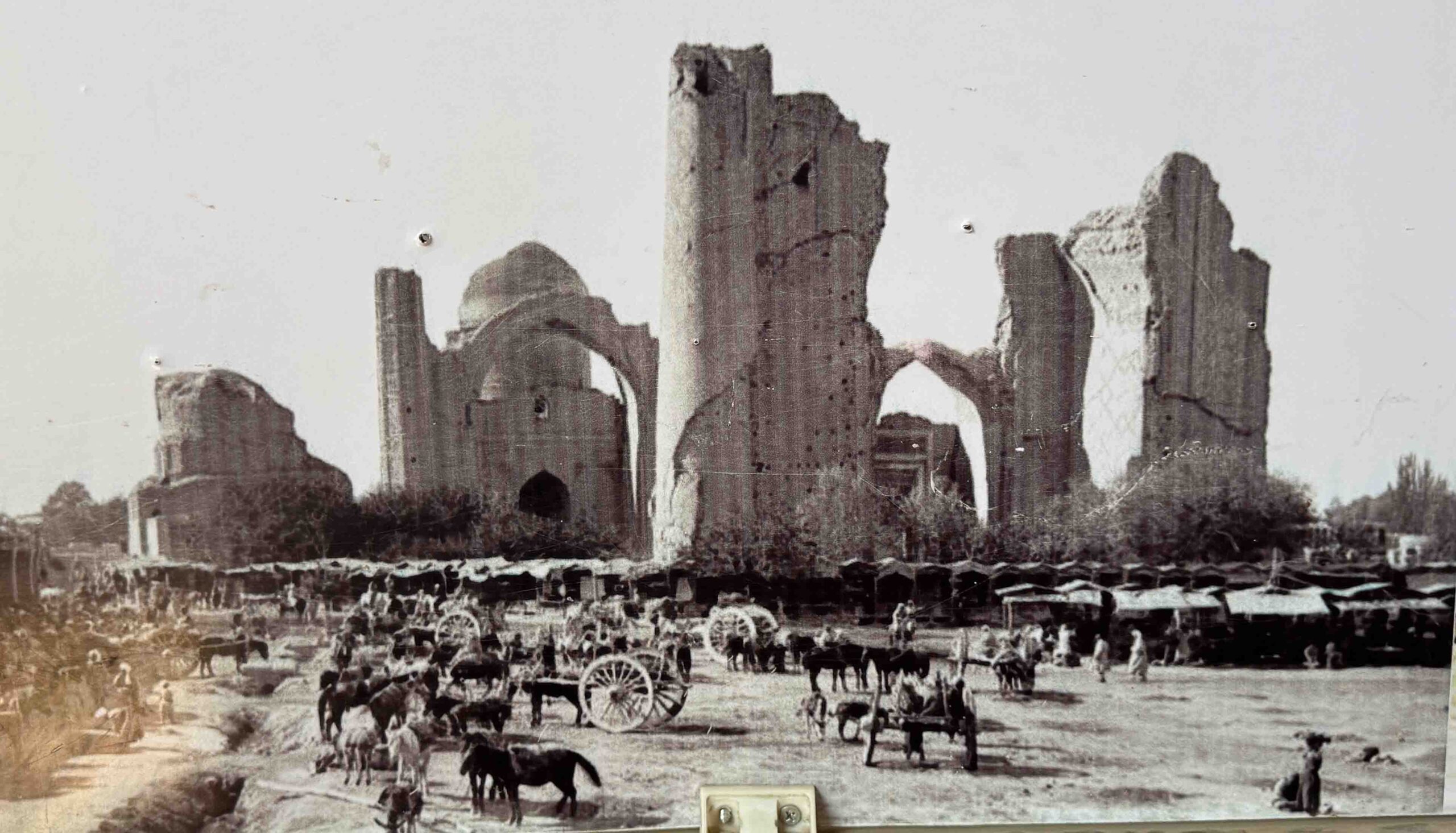
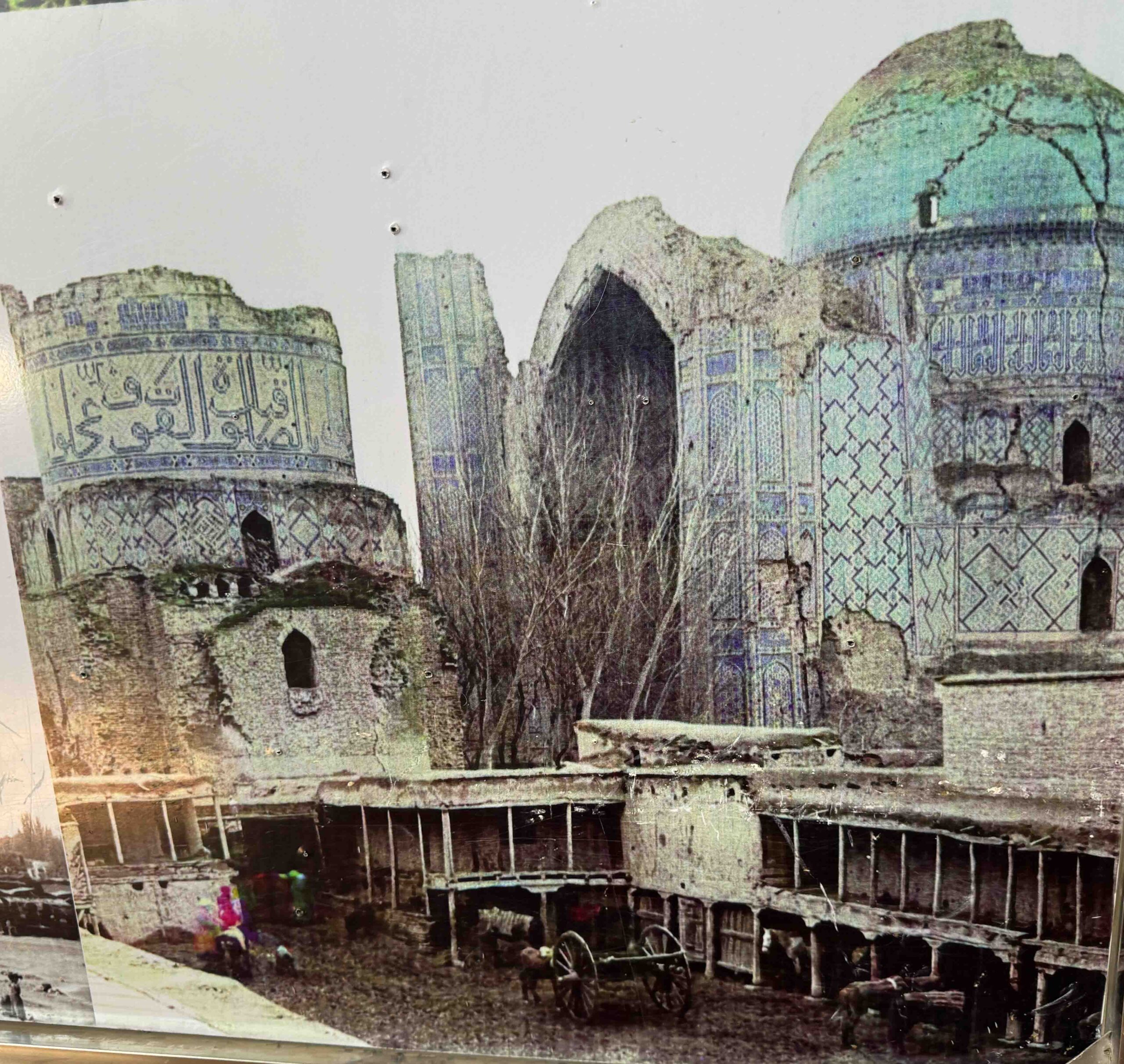
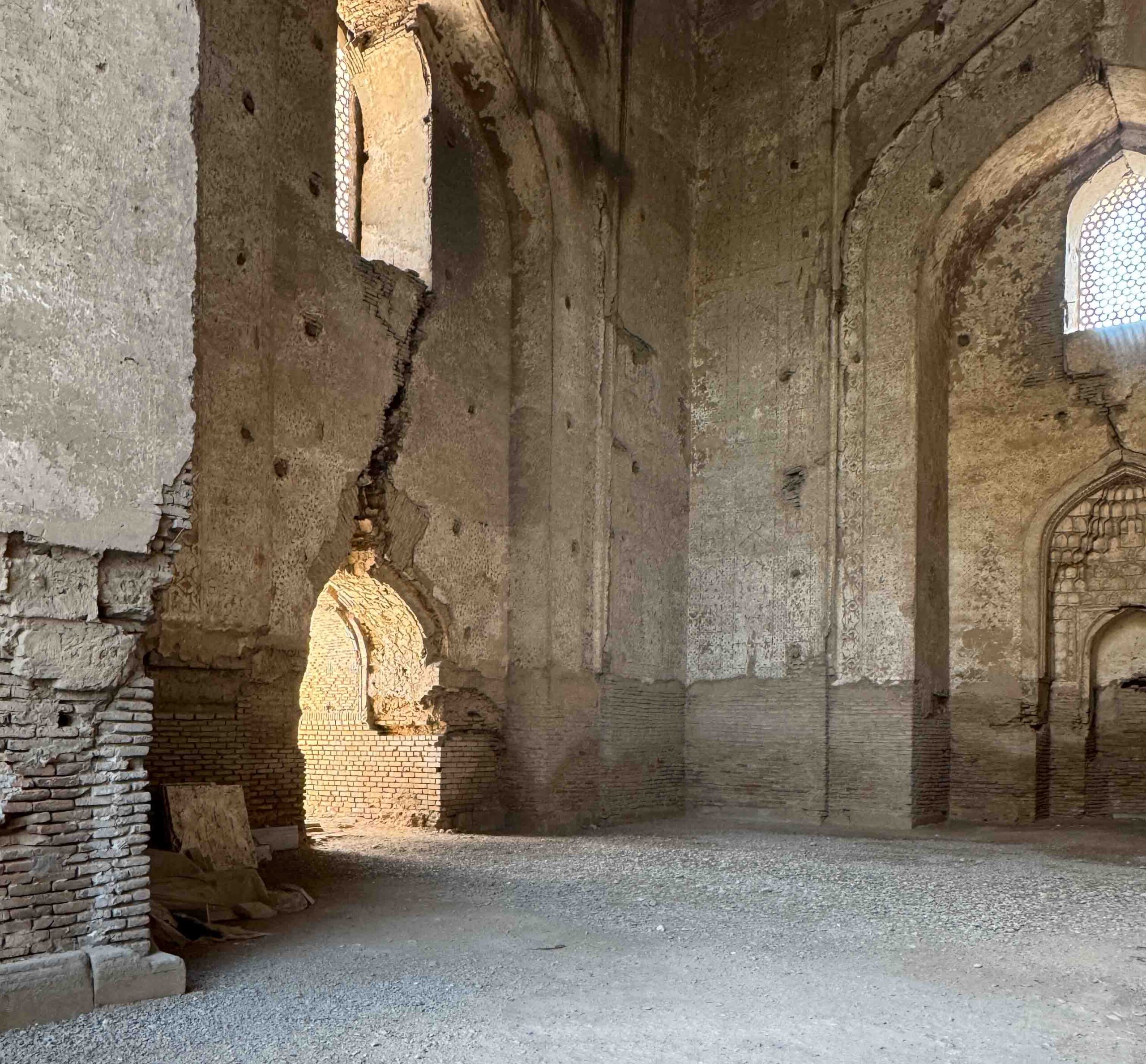
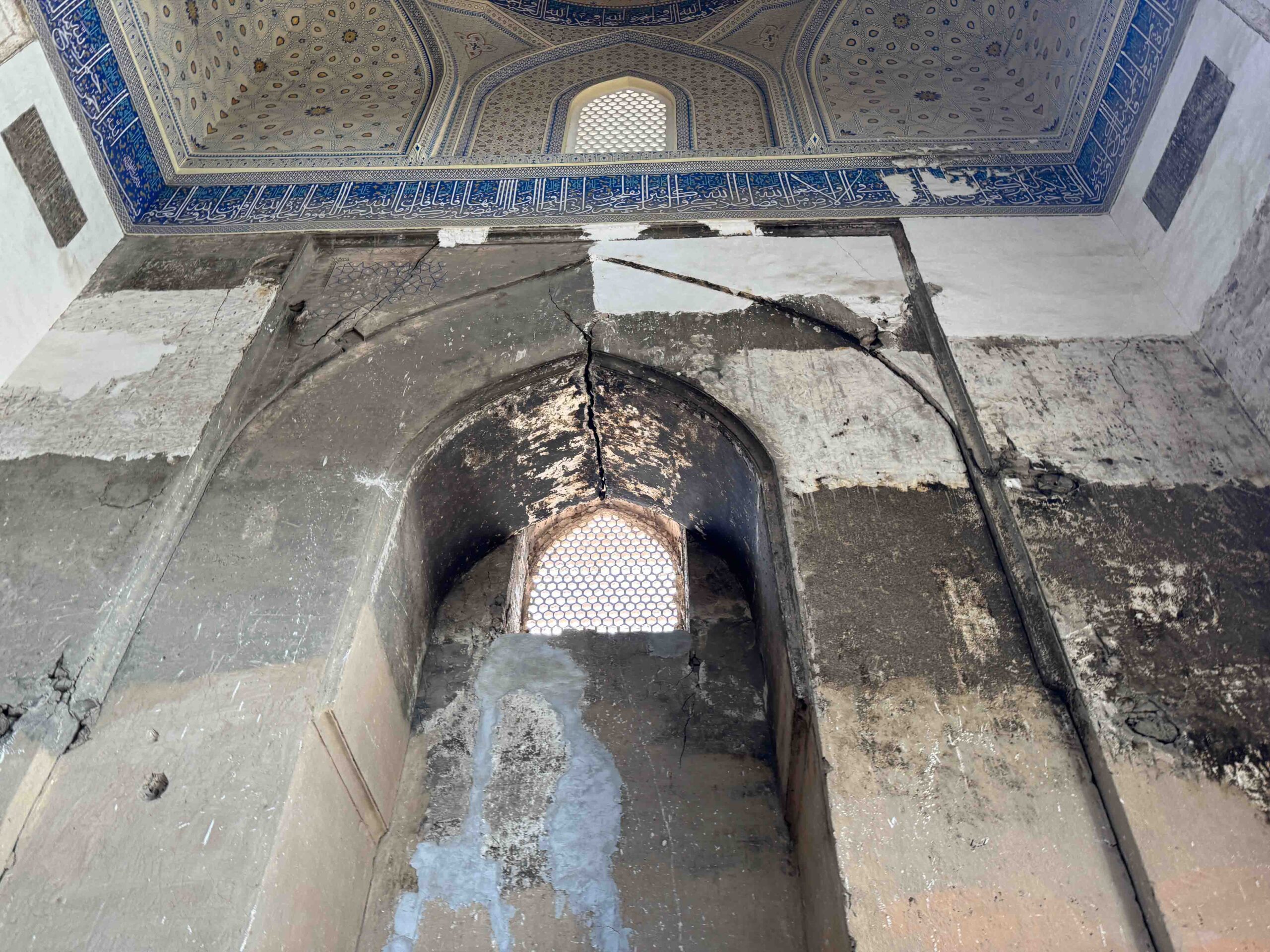
Frightened of him, the workers raised the building too quickly, and within Timur’s lifetime, it began to crack apart. By the 19th century, it was being used as a cotton warehouse and a stable for tsarist cavalry, and it was later severely damaged in an earthquake.
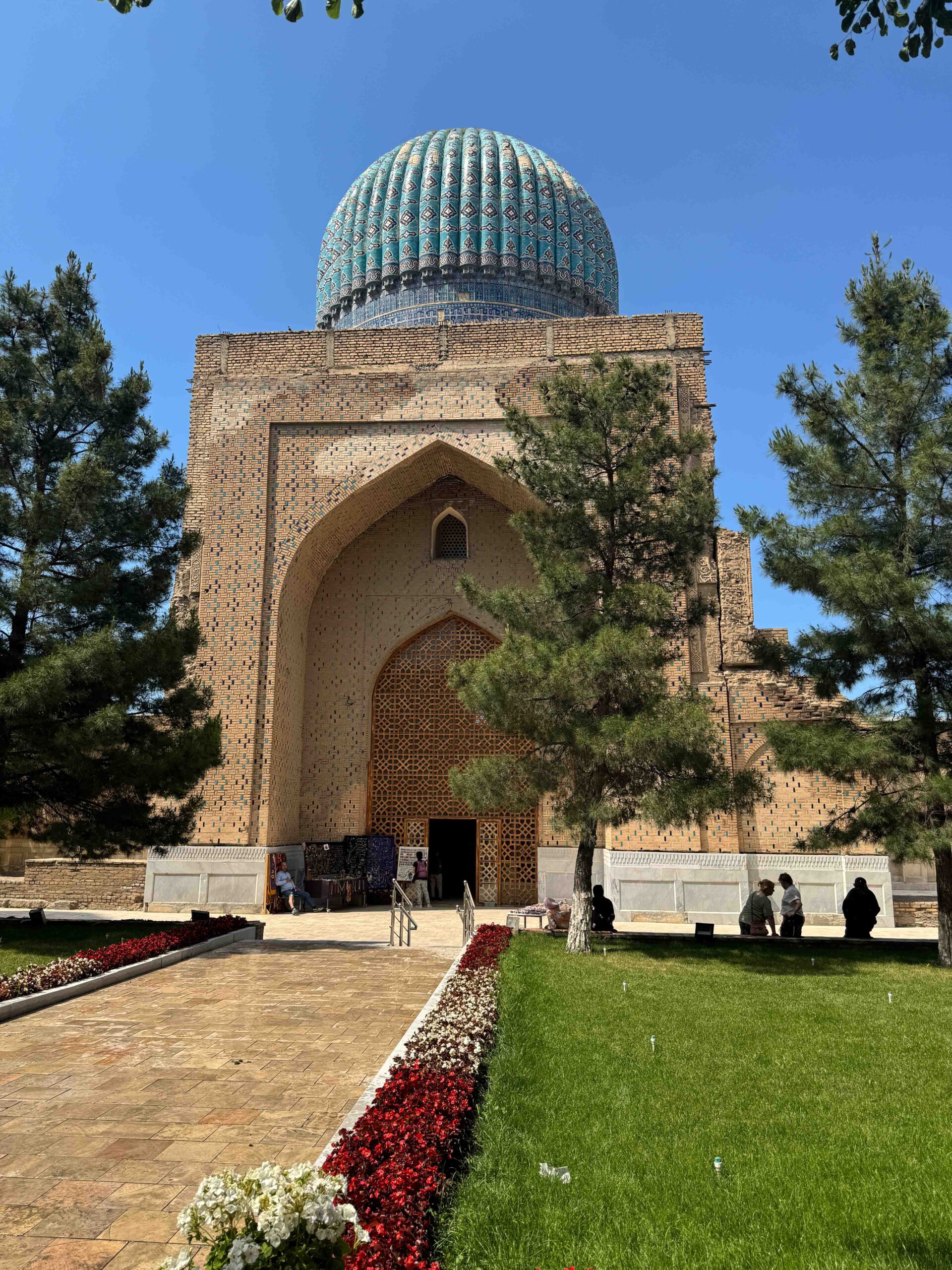
By 1974, the Soviet Union had begun reconstructing the mosque, restoring the facades and revealing Quranic inscriptions.
However, you can see that the damages are still rather large.
*
In 2004, a $4 million fund was established by the Qatar Fund for Development and the Uzbekistan Art and Culture Development Foundation to support further restoration.