June 2026
Whenever I wander the streets of Paris, I come across things that just don’t have a place in a given post. So here are many of those sites from this trip.
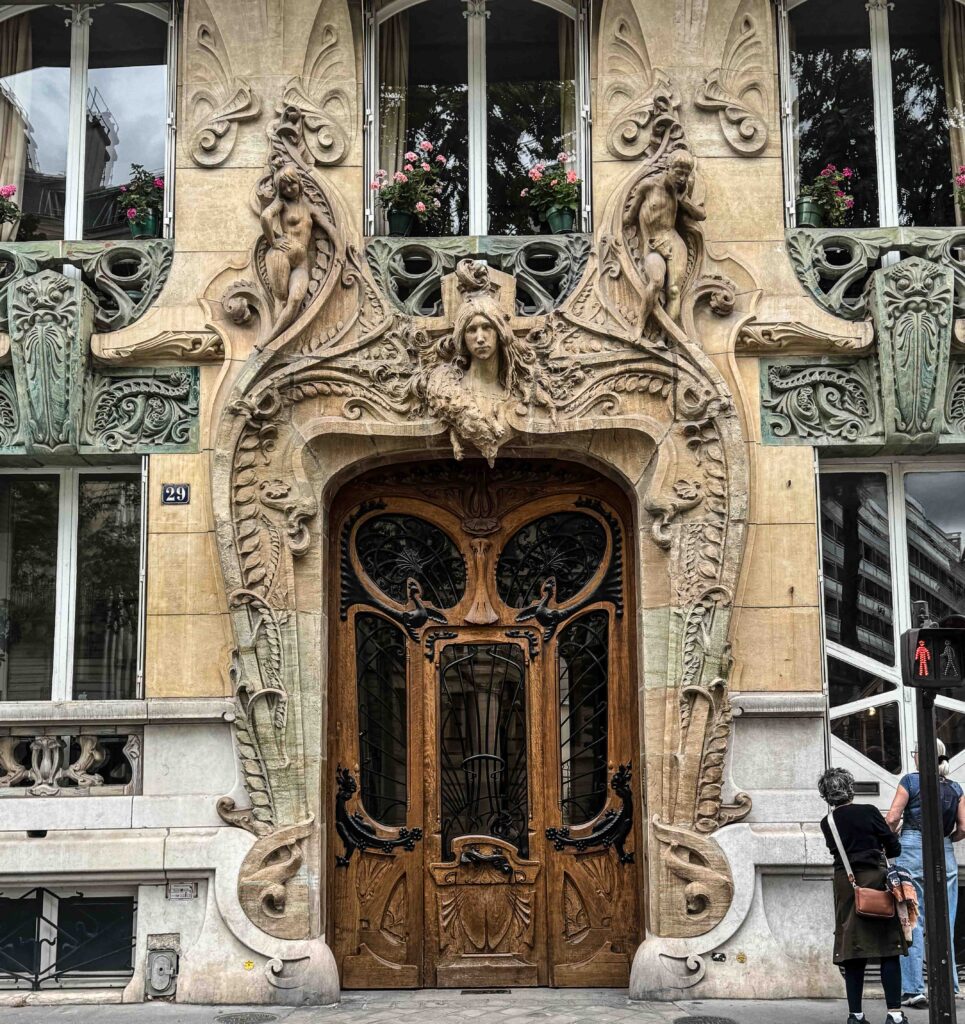
29 Avenue Rapp
Years ago, my late husband and I came to Paris to view and photograph as many Art Deco buildings as we could. Whenever I pass one we had shared, it brings me joy. However, this is one amazing one we missed.
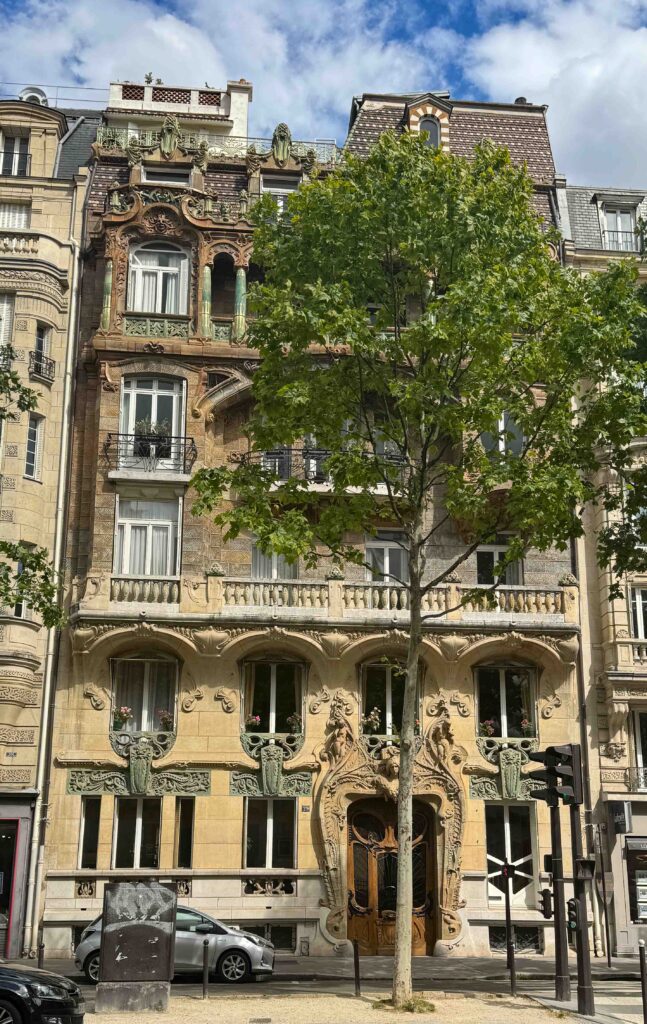
The Lavirotte Building, in the 7th arrondissement, was designed by the architect Jules Lavirotte and built between 1899 and 1901.
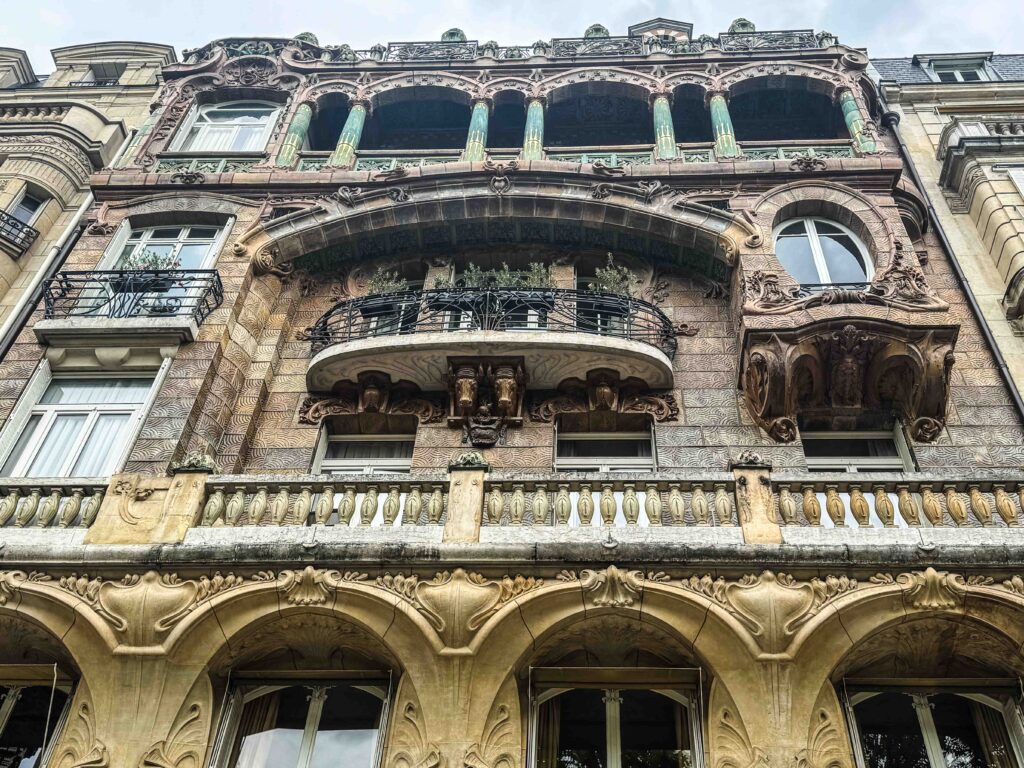
The facade is lavishly decorated with sculpture and ceramic tiles made by the ceramics manufacturer Alexandre Bigot.
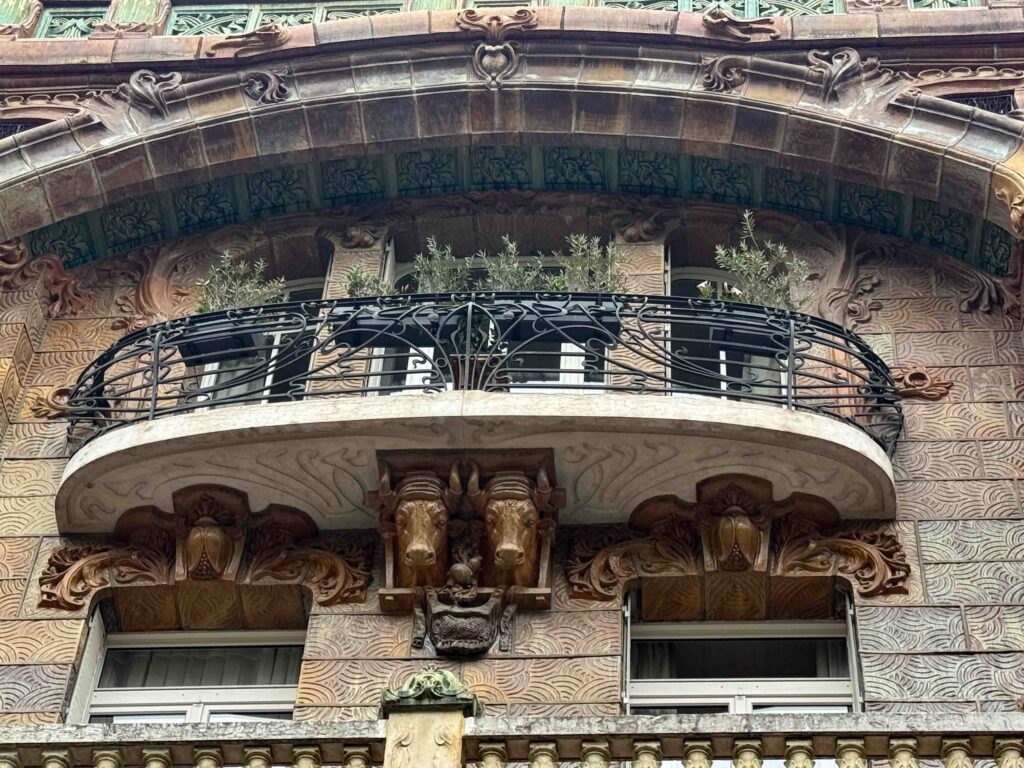
Lavirotte was awarded the prize for the most original new facade in the 7th arrondissement in 1901.
The competition was created to encourage Paris architects to break away from the apartment-building model established by Georges-Eugène Haussmann during the reign of Napoléon III, which critics at the time found monotonous and that people today cherish.
Someone is watching
Enjoying a fabulous oyster dinner at Au Rocher Cancale one evening, I looked out and saw someone staring at me.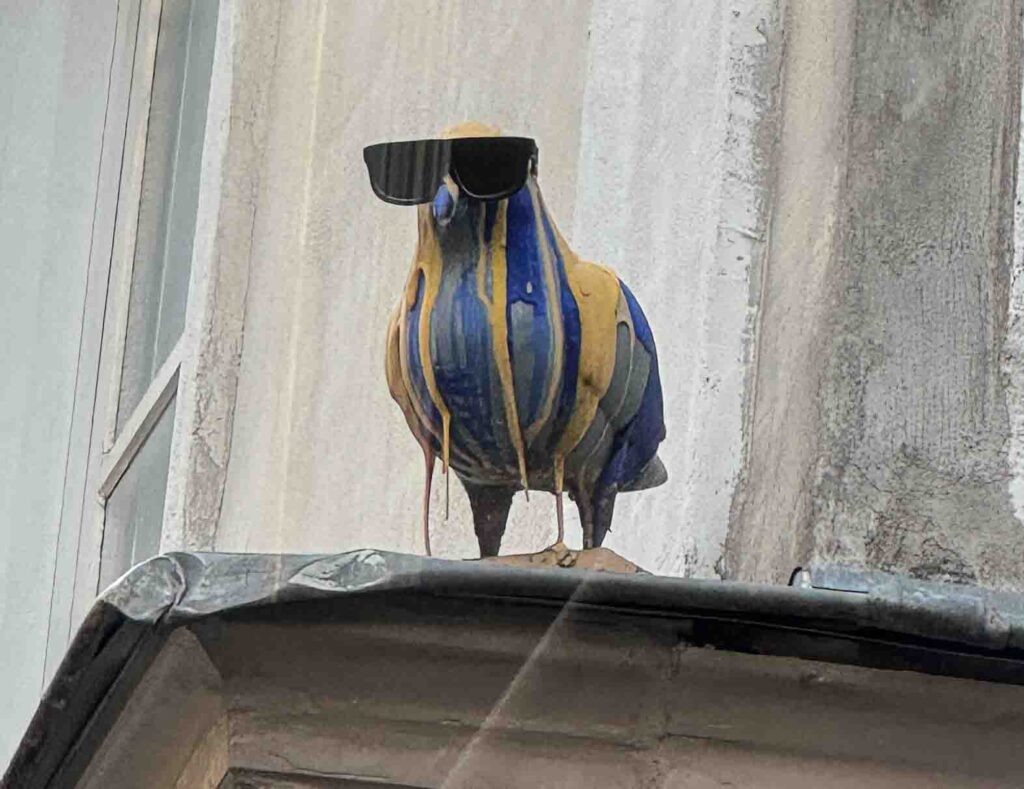
Le Centaure
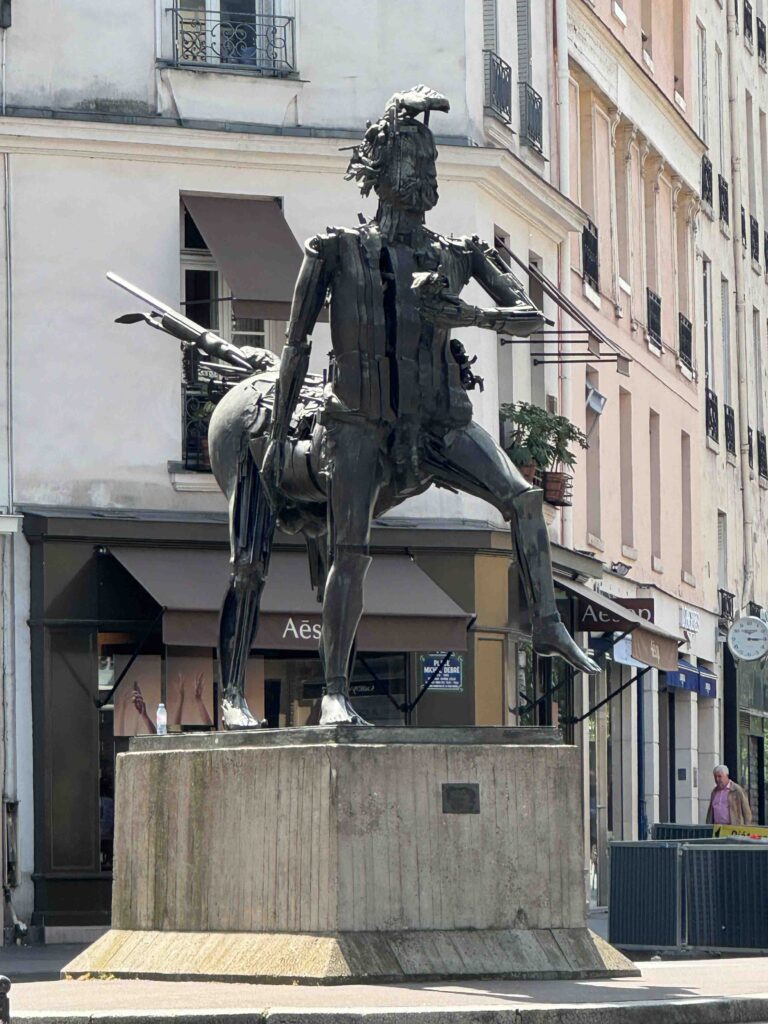
I have passed this guy before, and very probably photographed him, but this time I decided to find out about him.
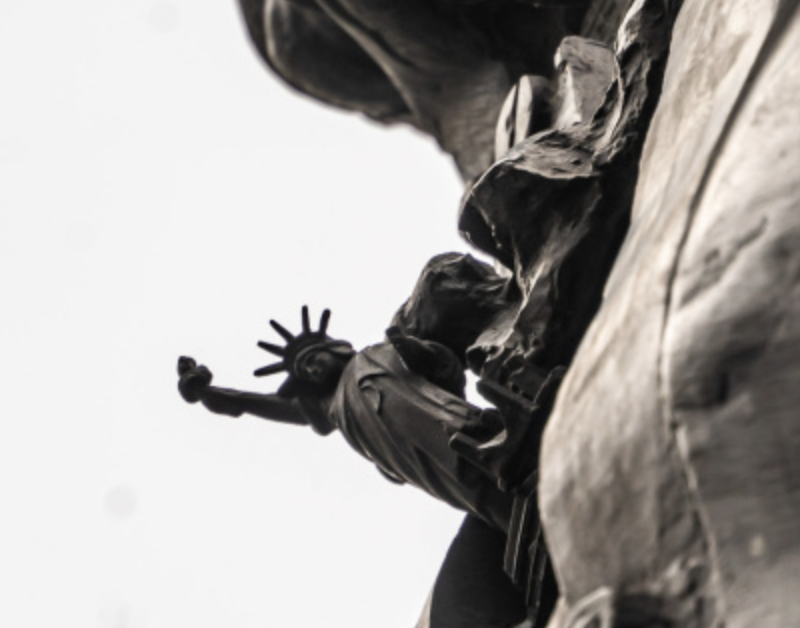
Completed in 1985, the modern piece of art is a tribute to Pablo Picasso. What is not known by many is that in its breastplate is a miniature reproduction of the Statue of Liberty. There are many Statues of Liberty throughout France, and it always gives me a kick to find one, no matter how well hidden.
Le Centaure was commissioned as part of a project initiated in the 1970s by Jack Lang, then Minister of Culture, to pay tribute to Pablo Picasso, who died in 1973.
Caryatids and Atlas
I have a passion for Caryatids (female) and Atlas (male).
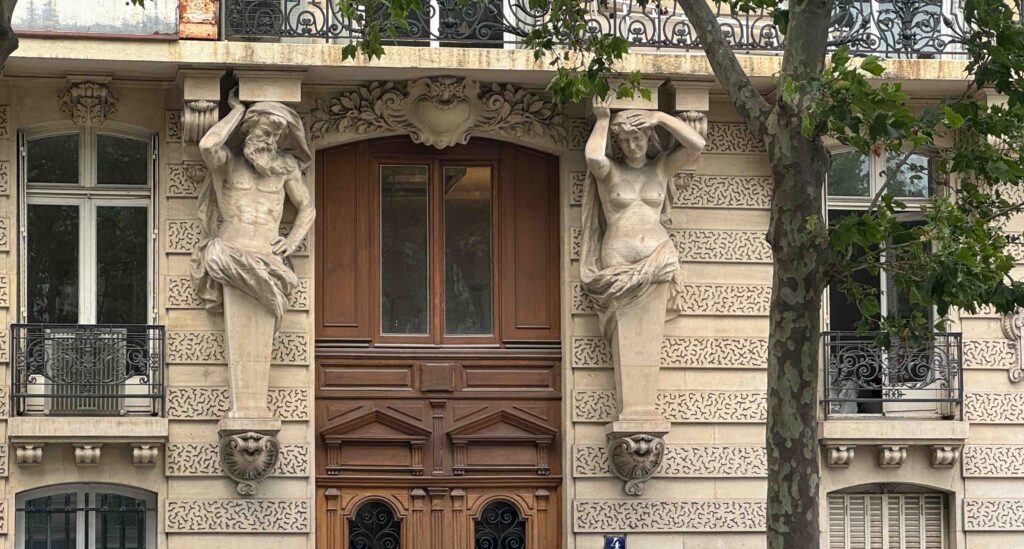
Caryatids of Actaeon and Diana, the Huntress
I had to go searching for these in the 17th. The sculptures, created in 1987 by artist Philippe Rebuffet and inspired by the name of the street (“Passage du Petit-Cerf,” or “Passage of the Little Stag”)
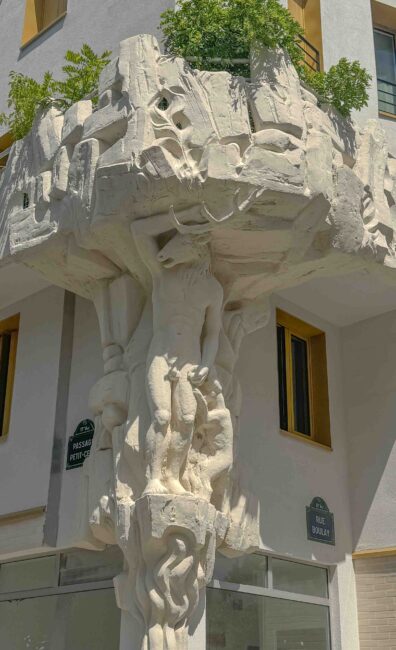
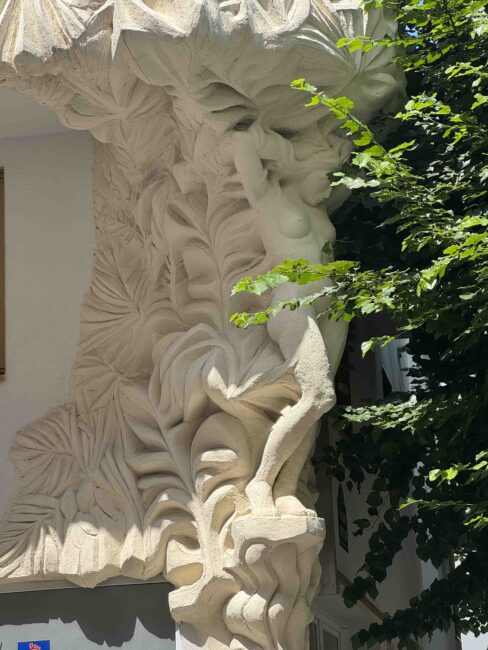
They represent a classic passage from Book III of Ovid’s Metamorphoses, in which Actaeon, transformed into a stag, while Diana is at her bath. According to legend, Actaeon, a young hunter, ventures into the woods with his pack of hounds. Unknowingly, he stumbles upon the goddess Diana (Artemis), patron of the hunt and chastity, as she bathes. Outraged by being seen nude, she splashes him with water and transforms him into a stag. Moments later, his own dogs—no longer recognizing their master—tear him apart.