June 2026
Thanks to my friend Susan’s subscription to the Paris Opera, we got in on a very rare back-of-the-house tour of the Paris Garnier Opera House. They are restoring in stages, so there has been scaffolding on the exterior for some time, but performances continue. In mid 2027, the 150-year-old Opera house will close for approximately two years.
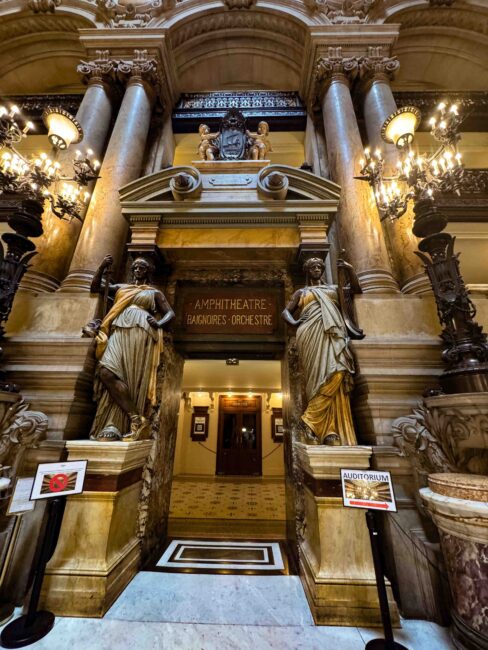
On January 14th, 1858, Napoleon III (President of France) and his wife rode by carriage to a show at the rue Le Peletier, then the Paris Opera venue. As they stepped from their carriage, bombs were thrown in an attempt to kill the President. The assassin was Felice Orsini, an Italian nationalist revolutionary, who wished to incite a revolution in France that would spread to Italy. His attempt failed, as the King and his wife were uninjured, but several others were killed. Orsini was arrested and sentenced to death, but his actions did lead to Napoleon III declaring war on Austria in 1859, leading to Italy’s independence. This inspired the idea for the construction of a new opera house– one with a separate and secure entrance for Napoleon. Thus, the Palais Garnier.
Designed by Charles Garnier, it is highly decorated with elaborate marble carvings and medallions stamped “N” for Napoleon III, and meant for the rich of Paris.
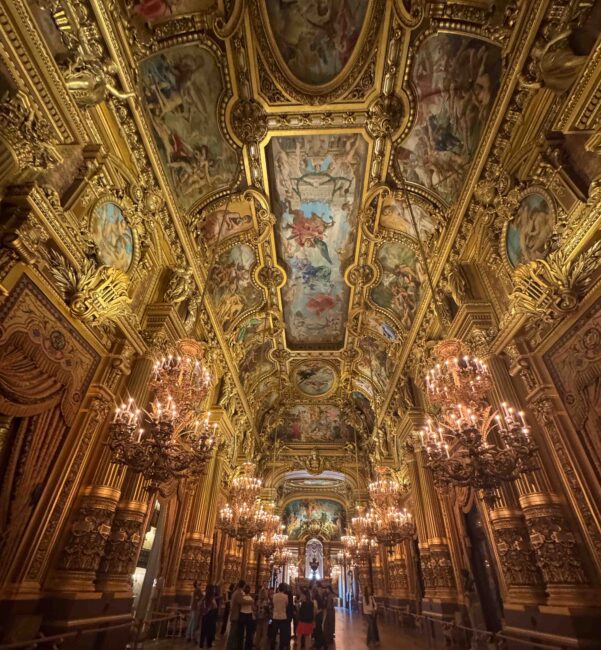
The Opéra National de Paris finally opened its doors on January 5, 1875. All of Parisian high society was there. However, as the Opéra was being built, the Franco-Prussian War broke out, and Napoleon III, defeated by Bismarck, was exiled in 1870. By 1875, a new power was in place: President Mac Mahon and his government did not want to be associated with anyone associated with the former Emperor. So even though the architect, Charles Garnier, had been chosen anonymously, he was not invited to the inauguration of his creation… He had to buy his own ticket to attend!
The Garnier Opera House holds an average of 380 performances a year, seen by approximately 800,000 people.
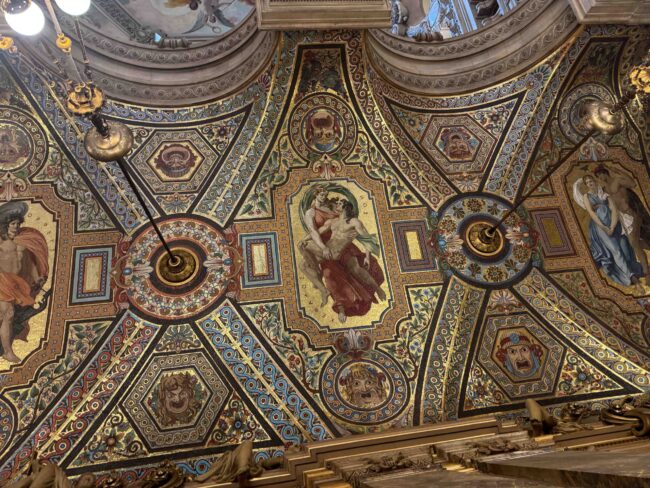
We began on the bottom floor of the opera house, way in the bowls.
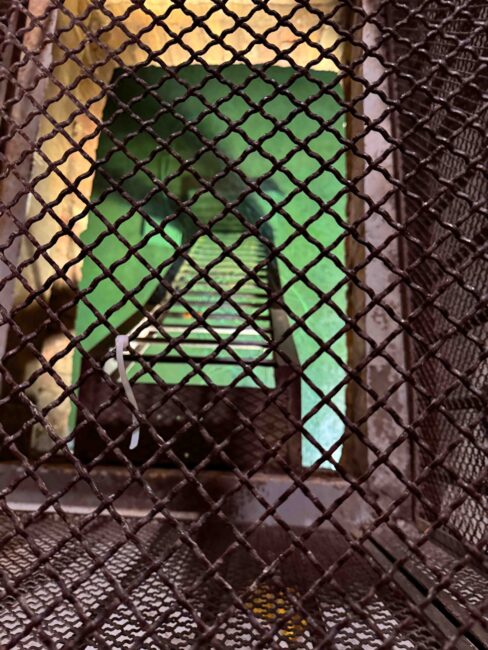
When the foundation was being built in 1862, a combination of wells and steam pumps operating 24 hours a day could not keep the groundwater away for long enough to lay the substructure. Garnier incorporated a cistern into his design to redistribute the water and relieve the water pressure on the basement walls. It also kept the water available in case of a fire. In fact, the Paris fire department trains there from time to time for swimming in the dark.
Much of the narrative of Gaston Leroux’s classic novel, The Phantom of the Opera, took inspiration from real events and rumors that circulated the Palais Garnier throughout the nineteenth century. The cistern does not hold any ghosts. However, in May 1896, Garnier’s seven-ton bronze and crystal chandelier really did break free from its counterweights, crashing down through the auditorium ceiling and killing a concierge standing in the audience below, giving way to a scene in Andrew Lloyd Weber’s adaptation of the opera. The rumor that there are fish in the cistern is another fun but false tale.
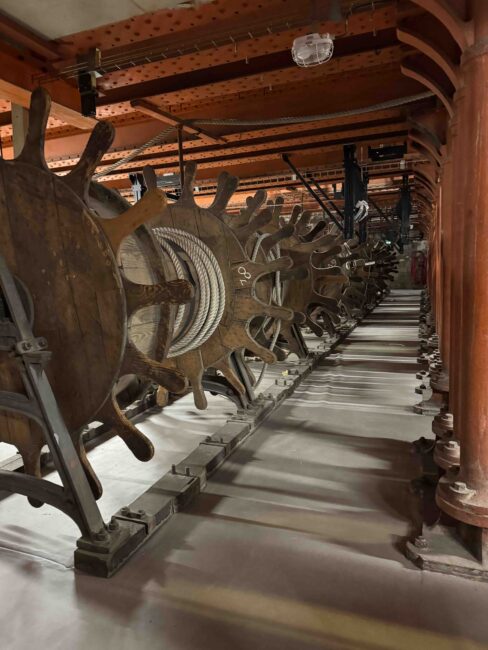
After the basement, we were escorted into this magnificent room.
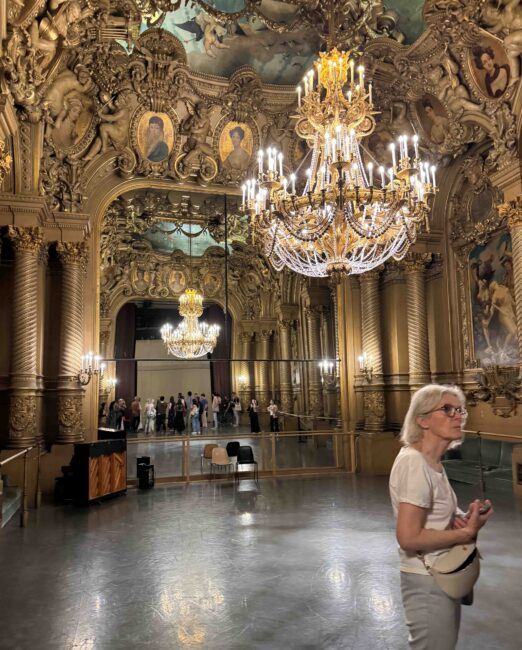
The Foyer of the Dance
The home of the dance is located at the back of the stage, separated by a mere 19 feet, according to the architectural drawings.
Garnier was not happy with the construction of this room. Apparently, the work was rushed, and thus an irreparable error in the arch reinforcement hid the rear of the ceiling.
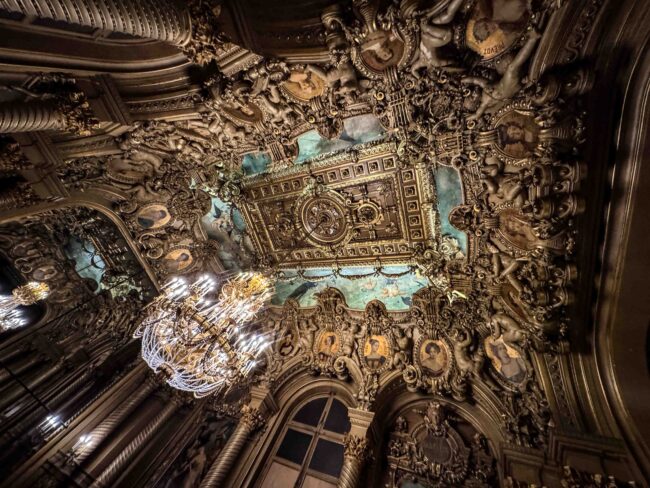
The room is surrounded by twelve spiral fluted columns. The back wall is entirely covered with a three-part mirror. At the time, glass maker Saint-Gobain could not create one piece that large.
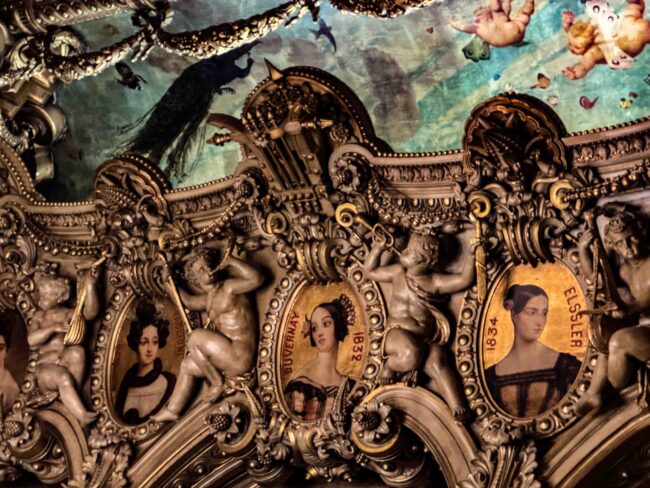
Along the top of the walls are the portraits of twenty famous dancers.
The floor mimics that of the mainstage in that it is constructed of oak flooring laid, uniquely to the Garnier, on a six percent incline toward the audience, providing the illusion of greater depth and better viewing for the audience.
In the 19th century, only a select group (wealthy donors) to the Opera Garnier were admitted to the Foyer. It provided inspiration for both the author Honoré de Balzac and the impressionist painter Edgar Degas.
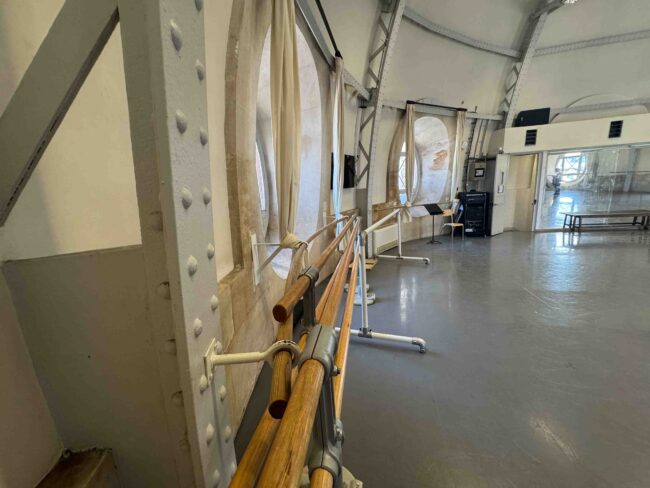
Today, the Foyer serves as a daily rehearsal space for the corps de ballet, as well as a warm-up and practice space for dancers before and during performances.
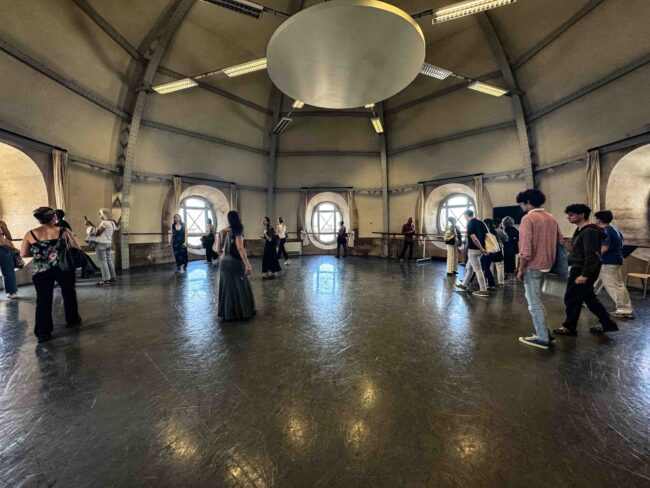
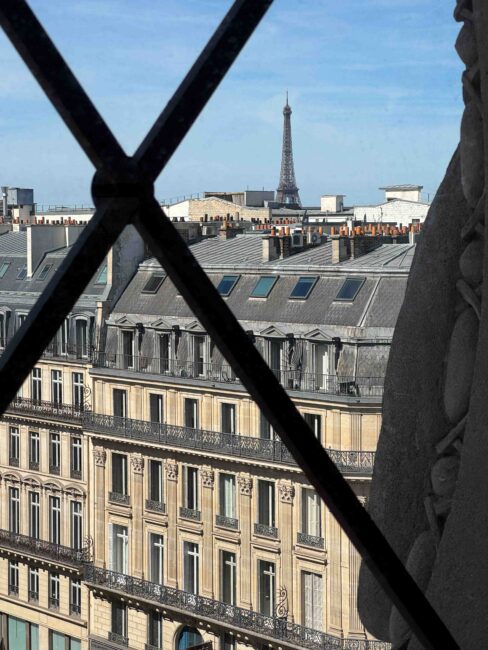
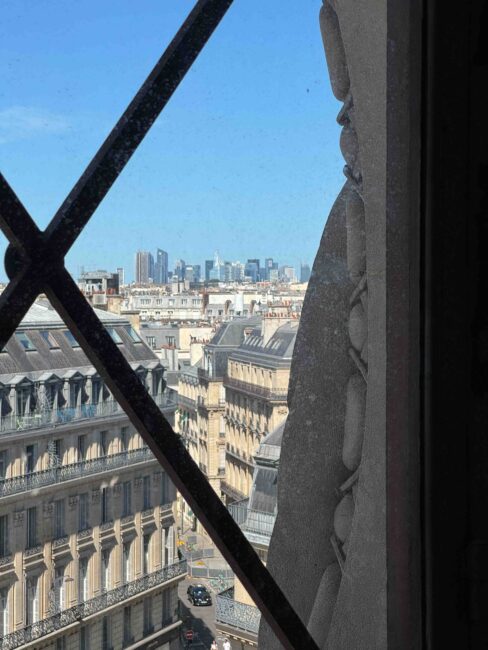
This is one of three rehearsal spaces added in more modern times. The views from the windows are spectacular.
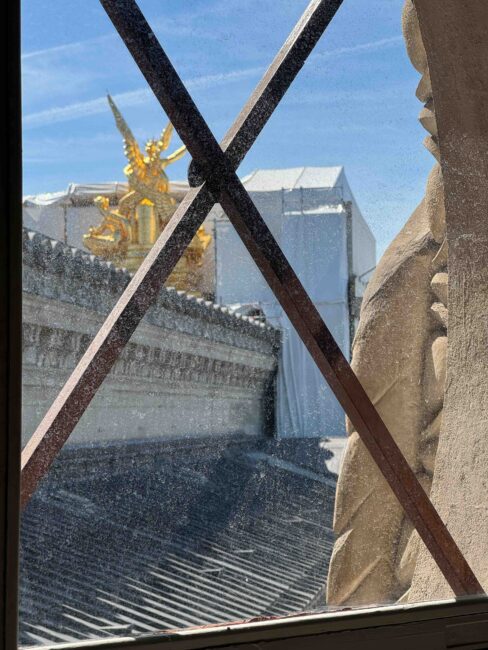
*
*
*
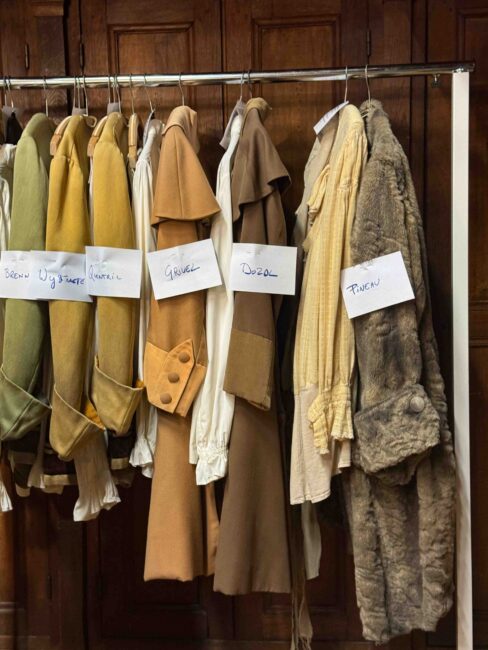
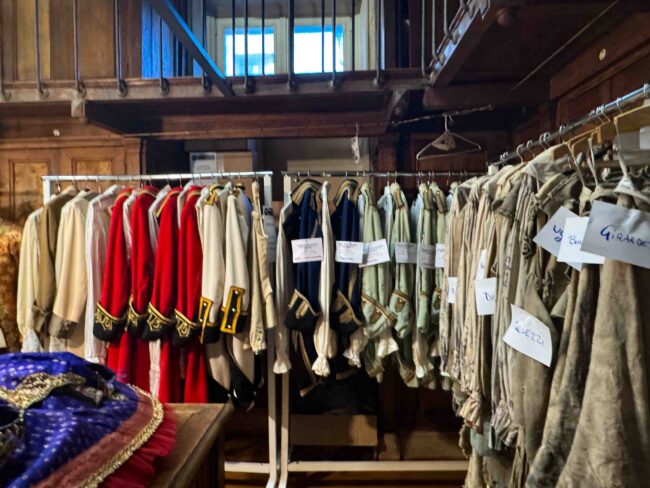
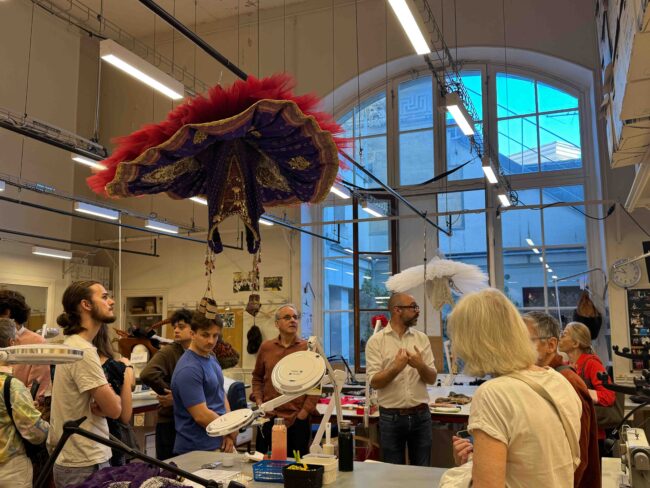
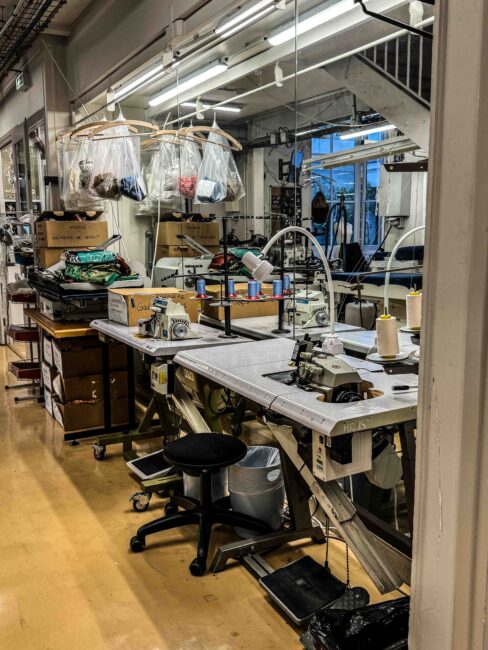
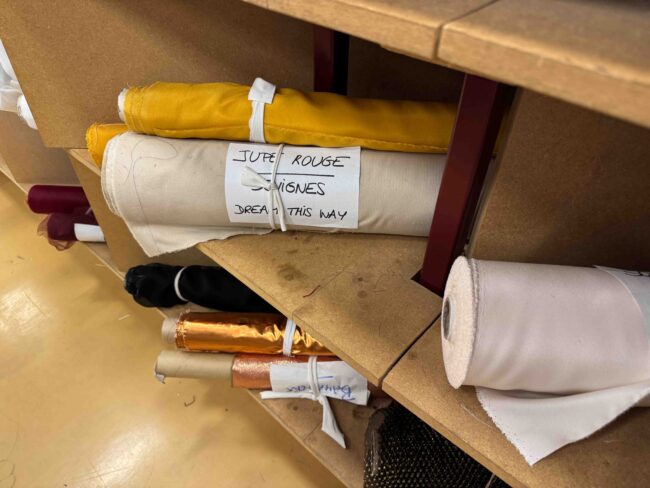
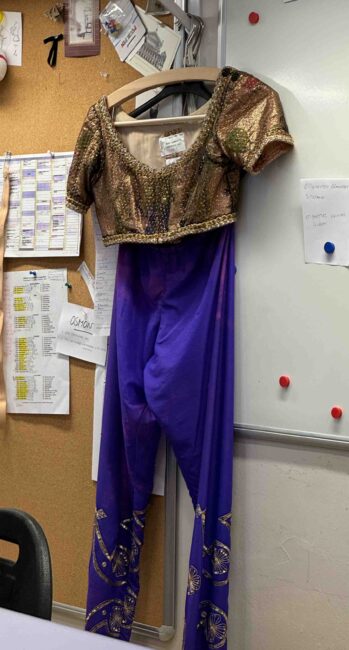
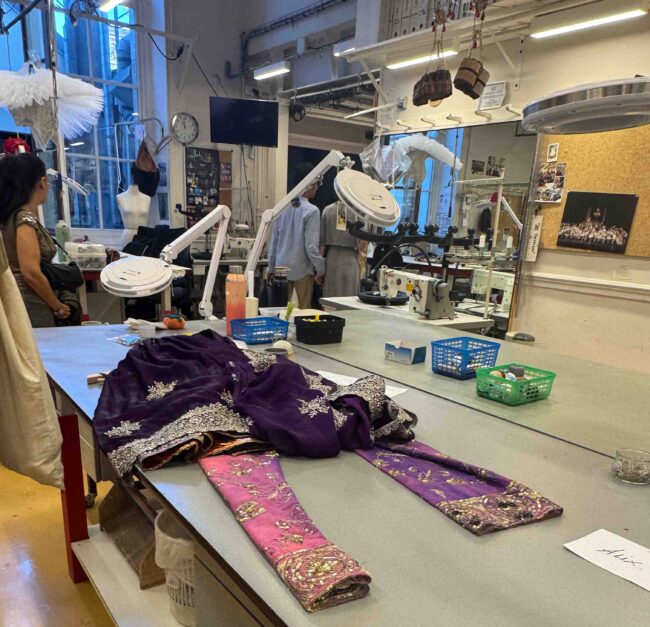
The highlight of the tour was the discussion with the head of the costume department. This is sadly where it all fell apart for me, as it was all in French, and my understanding of his 1/2-hour discussion meant it was completely lost on me. However, the costumes speak for themselves.
*
*
*
*
*
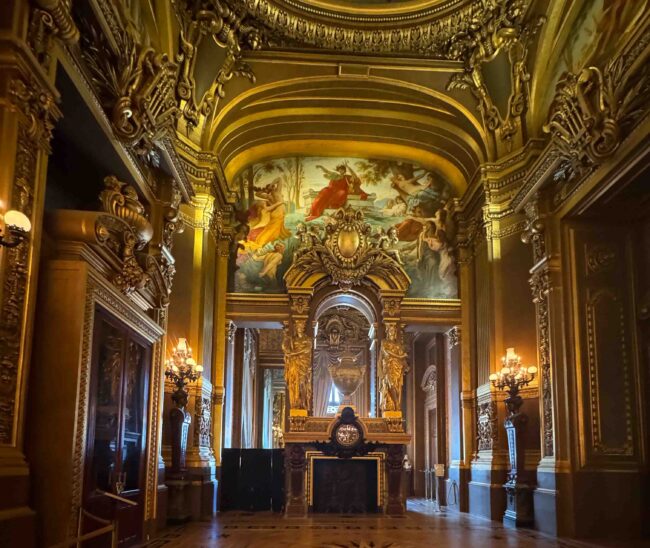
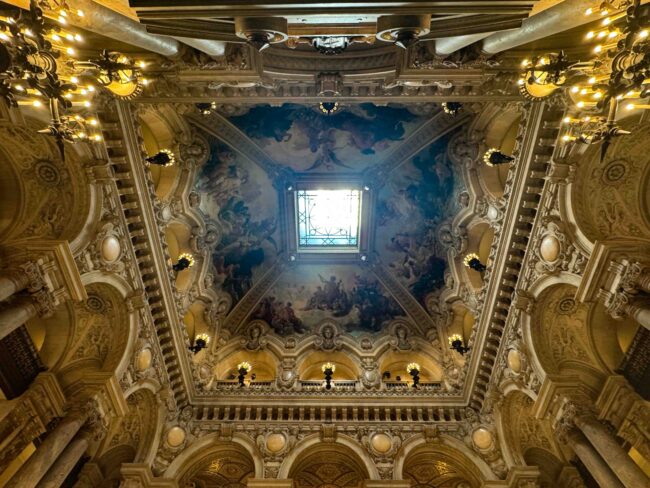
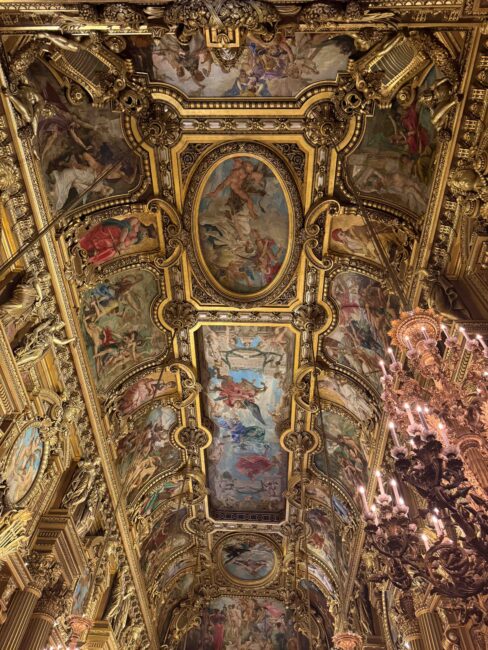
Images from the lobby and entryways
This was strictly a behind-the-scenes tour, so, aside from walking through, we were not shown any of the public spaces.
*
*
I was so thrilled to get to see as much of the Garnier Opera House as I did, considering its forthcoming closure.