May 19, 2026
We have left Zagreb, and our destination today is Plitvice with a few stops along the way.
Dubovac Castle
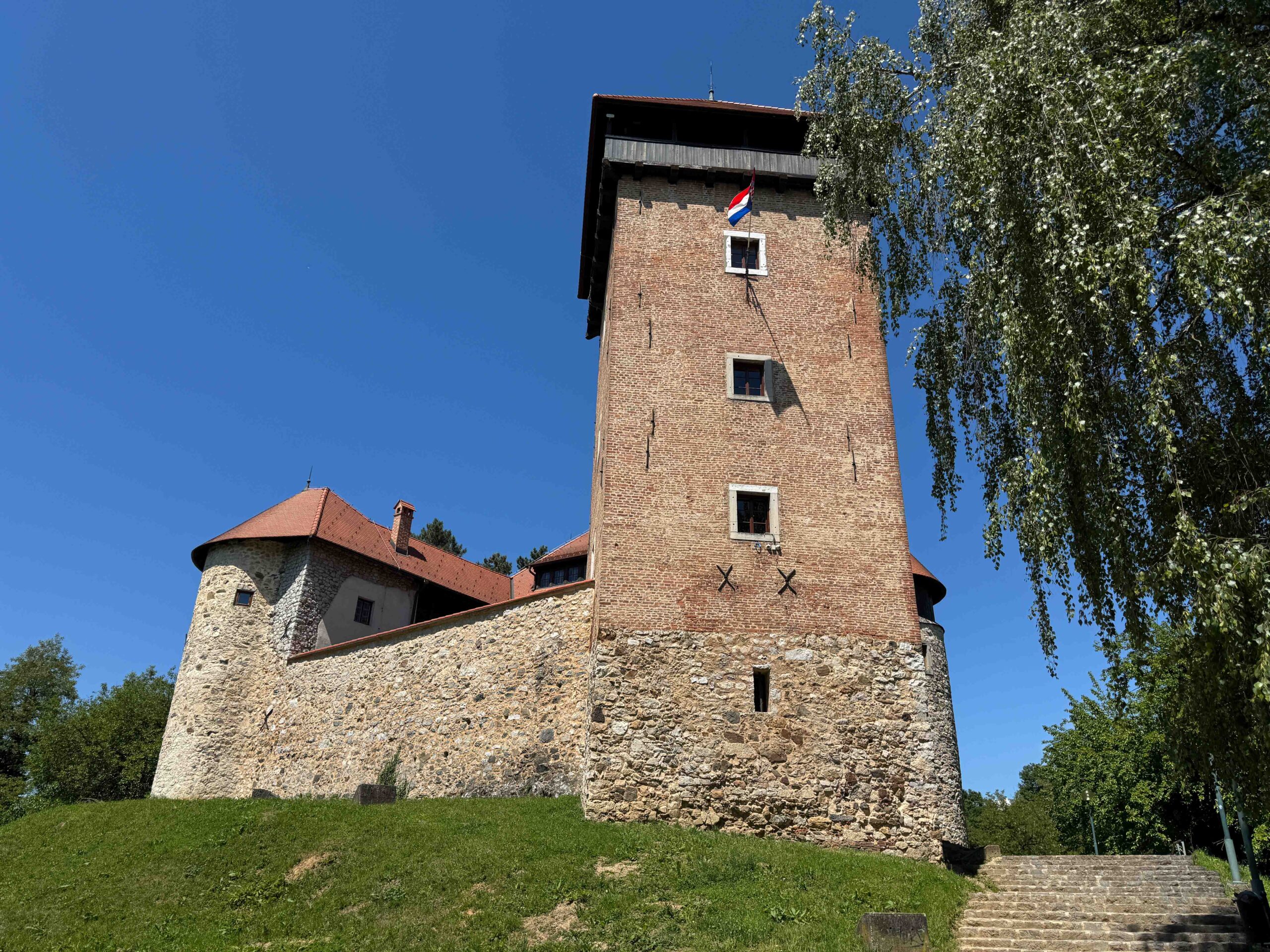
There have been inhabitants of this area for some 3000 years. Dubovac Castle was built on a large artificial mound. Construction began sometime at the end of the 12th or the beginning of the 13th century. The castle often changed hands after the 14th century. During the Turkish assaults of the 16th century, the castle was badly damaged, but never taken. However, it lost its strategic and military purpose in the 16th century when it became simply a military warehouse.
Under French rule from 1809 to 1813, it was modified into a romantic country residence, causing considerable damage. Restoration began in the 1950s with a rethink on usage and further restoration in the 2020s.
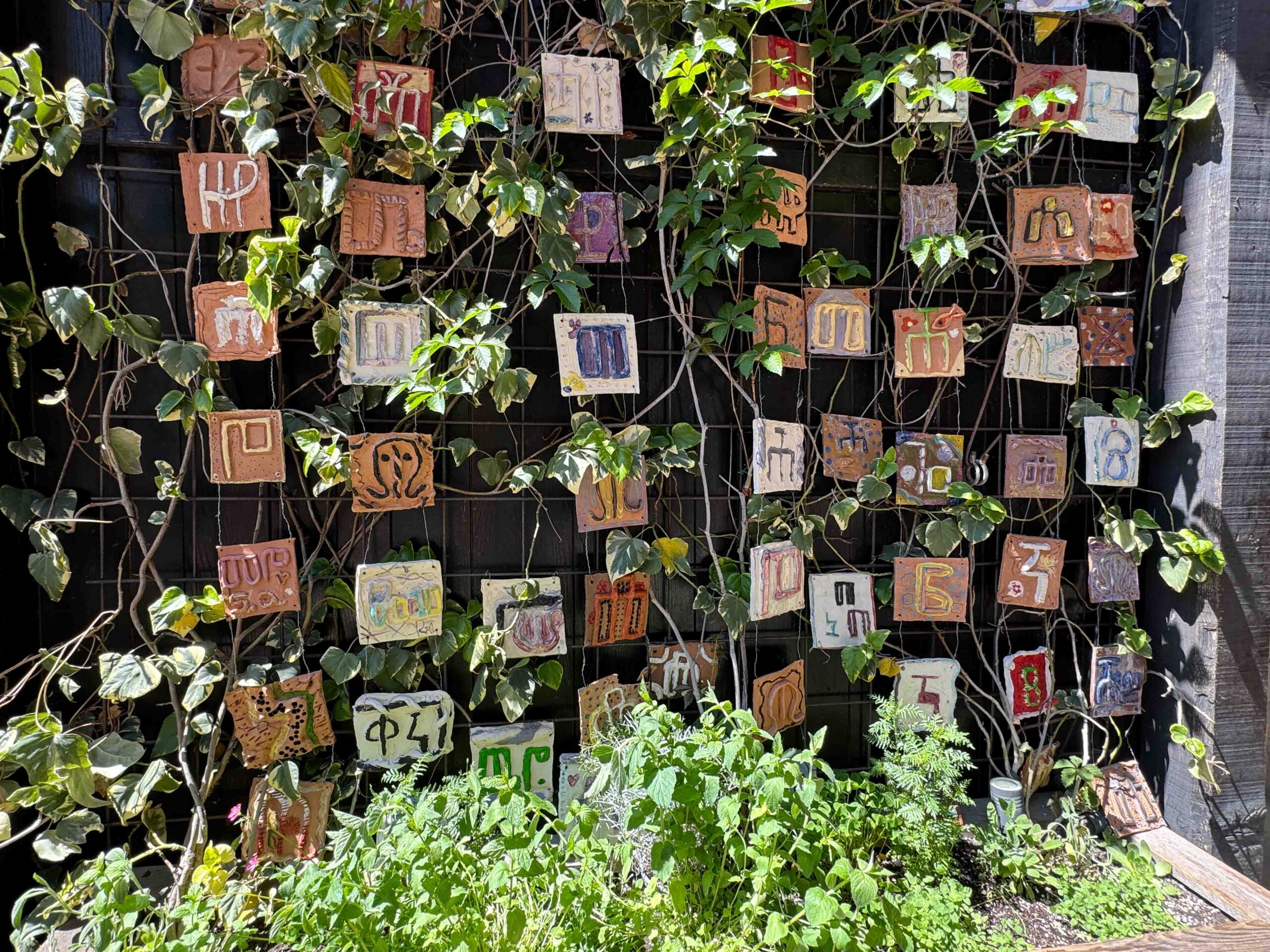
The castle is now used for many children’s educational projects. This is from a local school, where they all had to make a tile with the first letter of their name in Cyrillic script. Cyrillic is a historical script used by the Croats, with its use traceable from the 12th to the 19th century.
Rastoke – Slunj
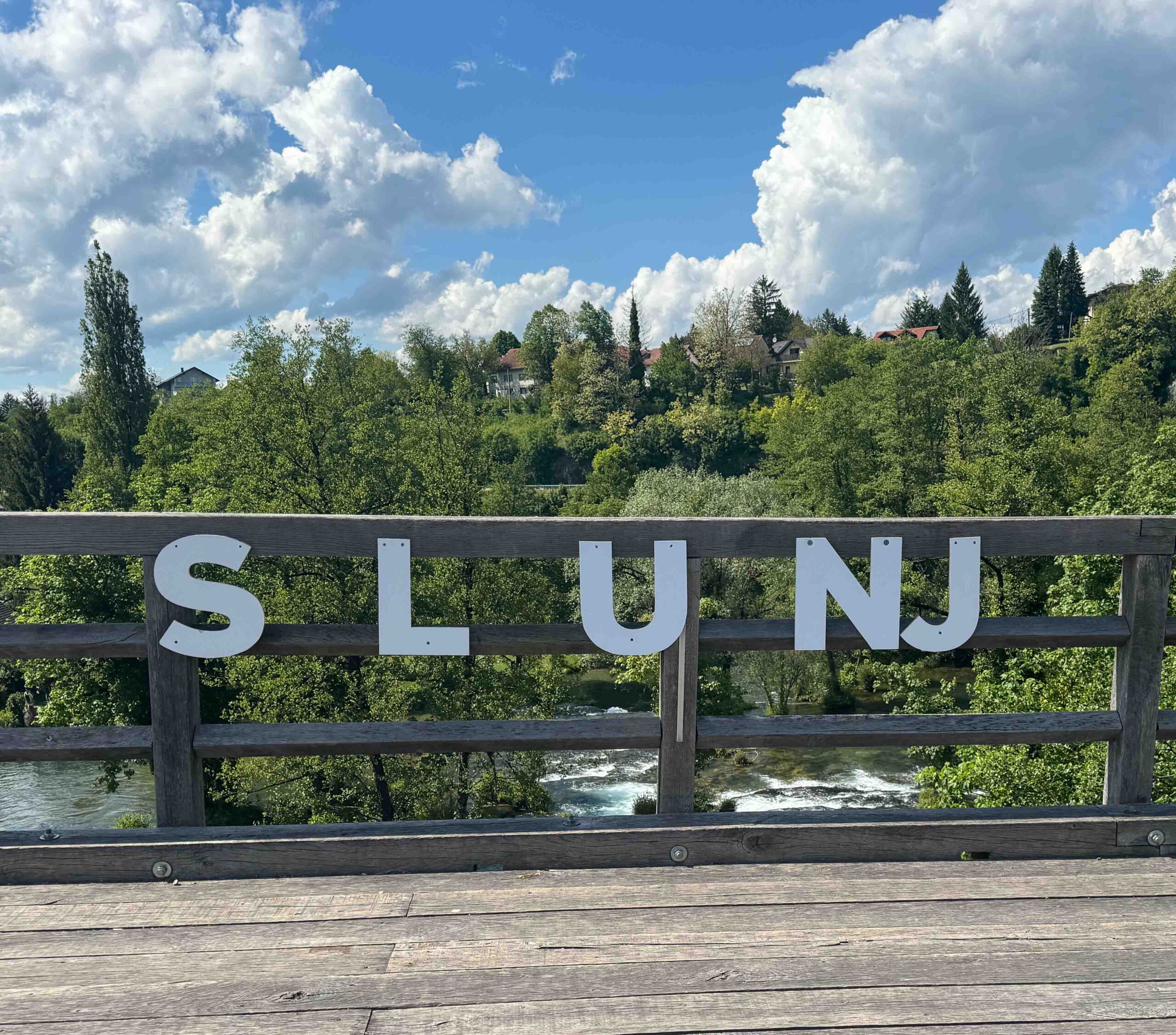
We stopped in Rastoke, a part of Slunj, for river trout, for which they are famous.
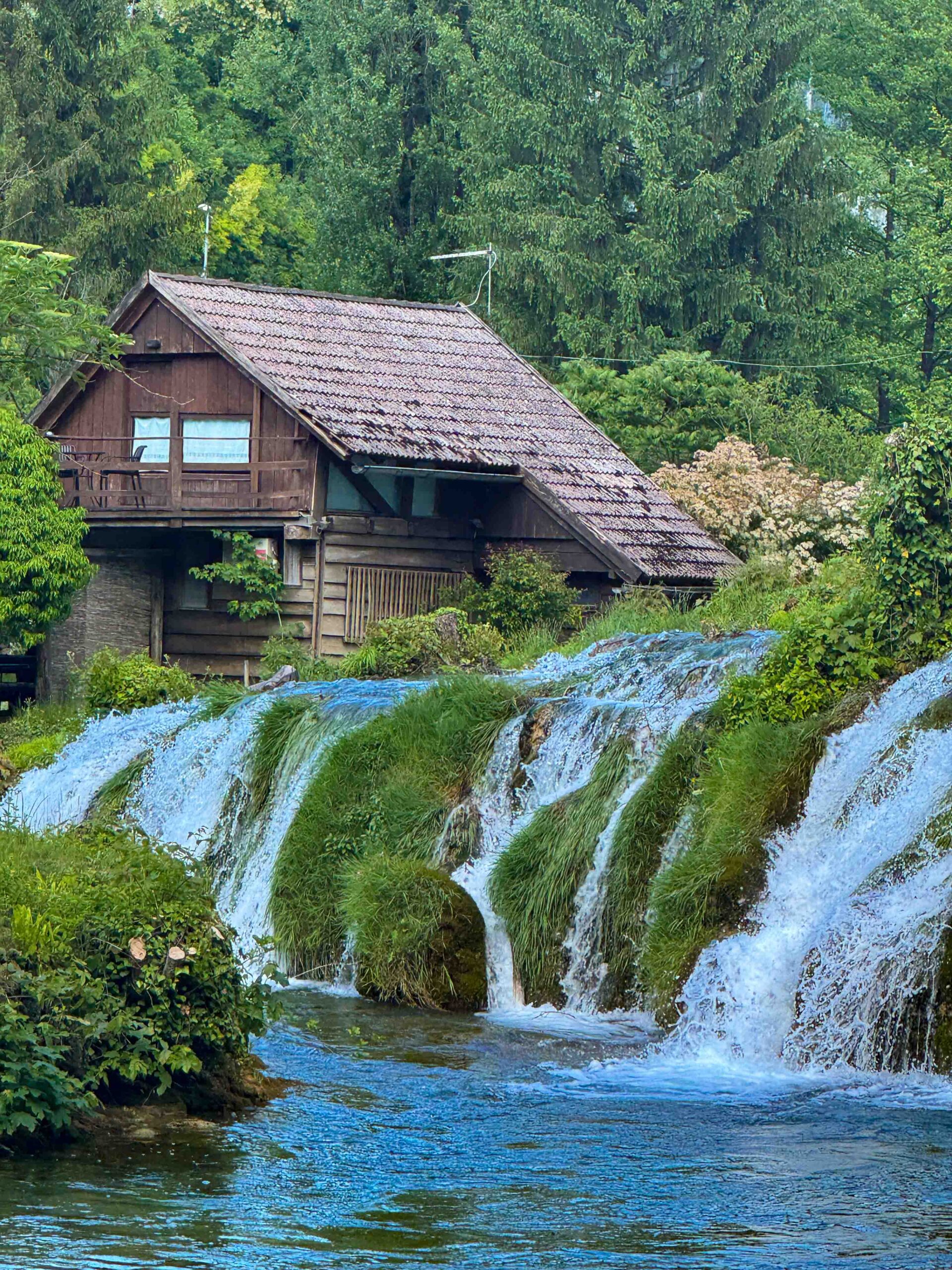
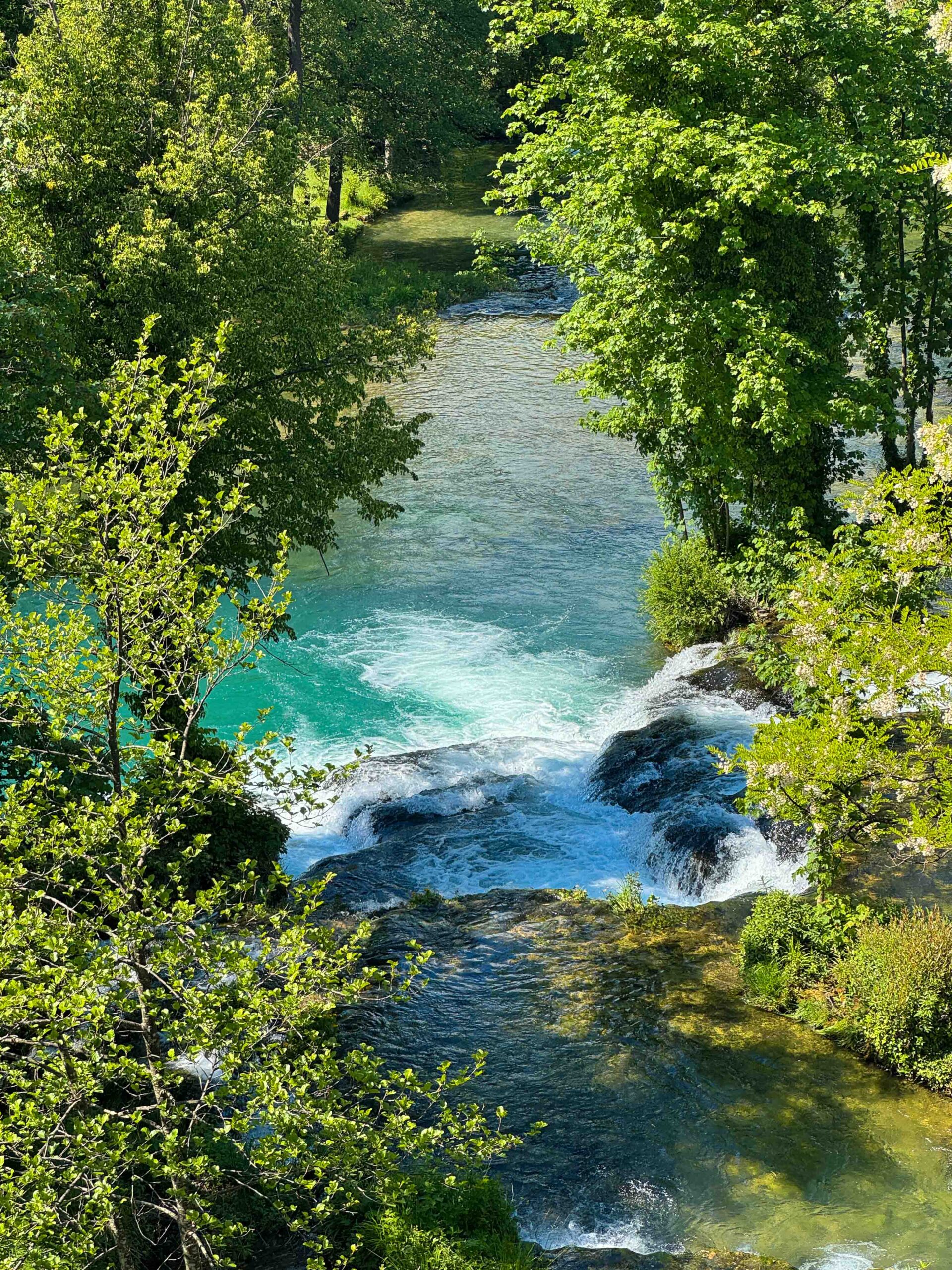
At Rastoke, similar natural phenomena are occurring as at the Plitvice Lakes, which we will visit later. Rastoke is sometimes known as “the Small Lakes of Plitvice”, and is connected to the Plitvice Lakes by the Korana River.
In medieval times, it was known as no man’s land, an uncertain border region between Europe and the Ottoman Empire. Slunj was under French rule from 1809 until 1813. During this time, Croatian became the official language of the province.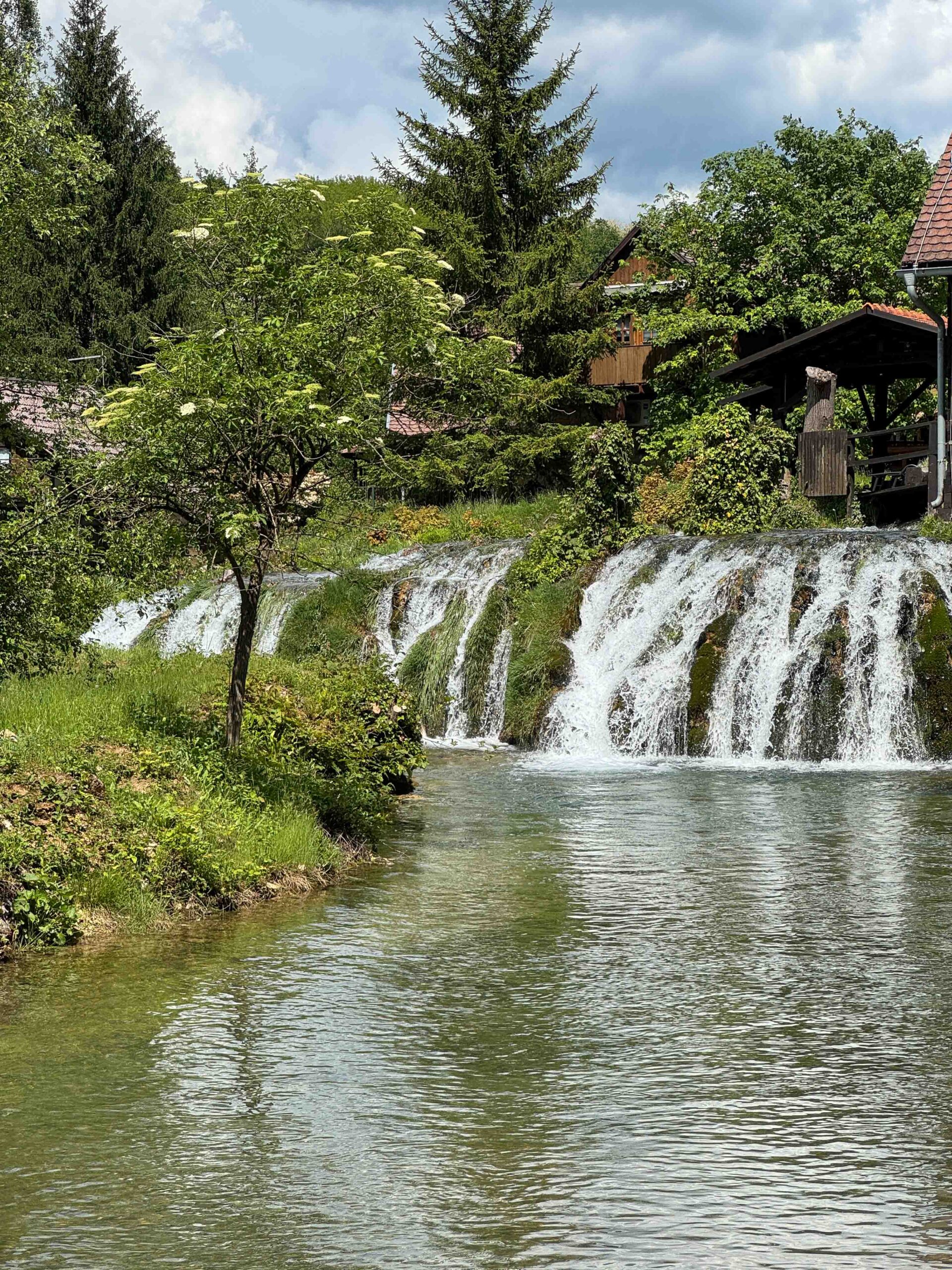
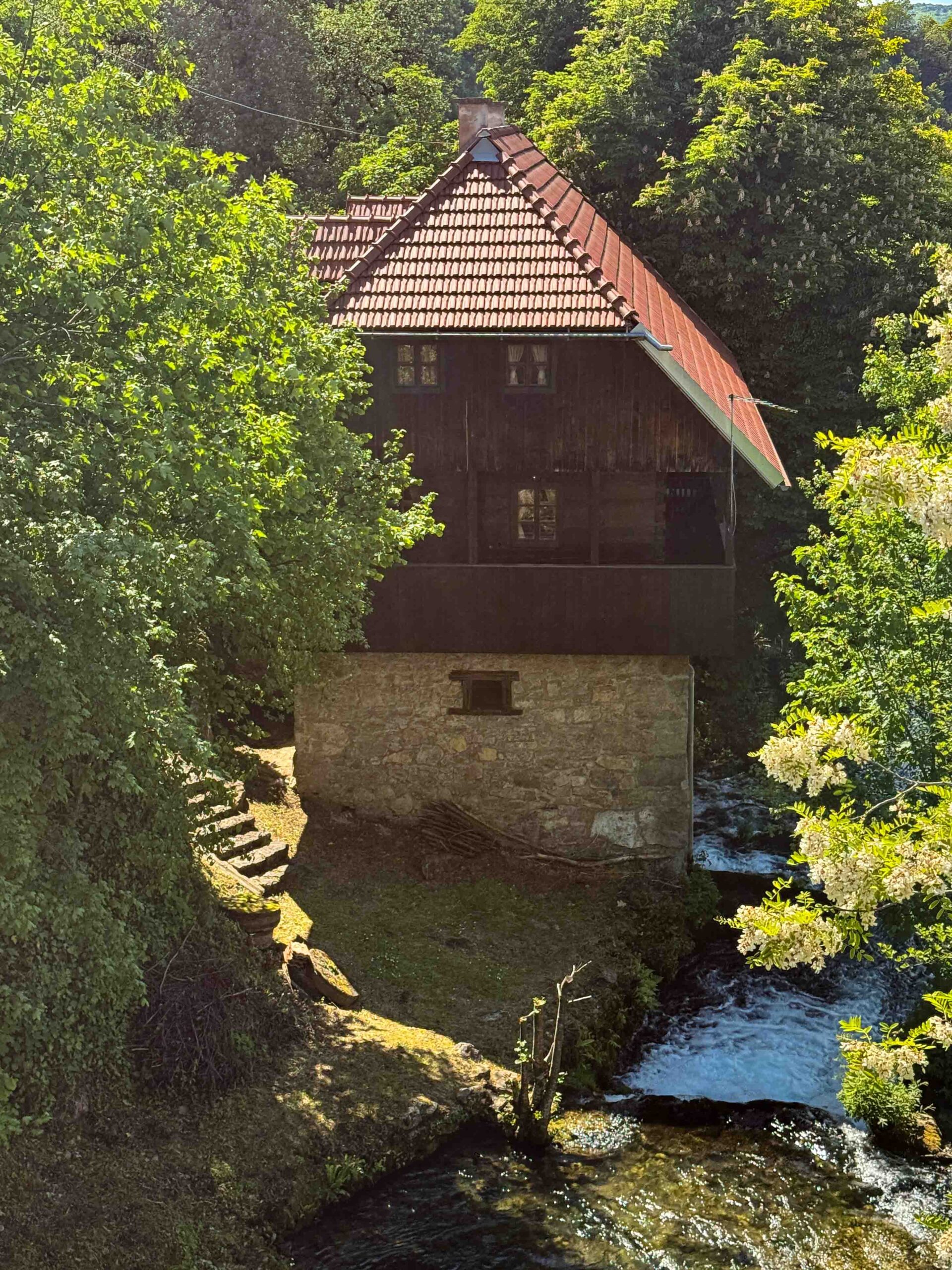
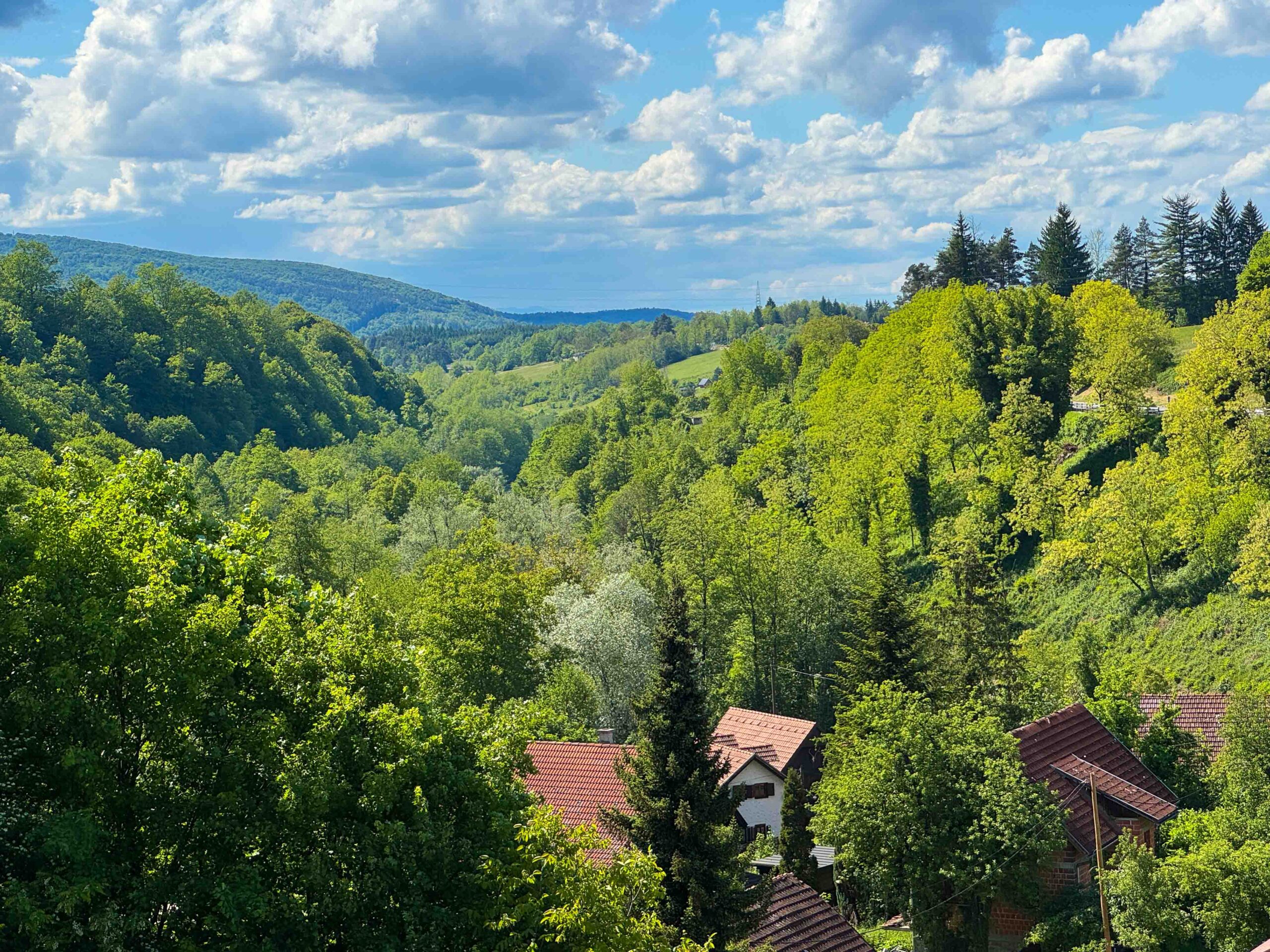
Rastoke is known for its water-powered mechanical mills. The architectural style of the region combines those of the Dalmatian region. The ground parts of the houses are made of travertine, while the upper parts are made of wood. The roofs are made of shingles or tiles. Due to high concentrations of calcium that regularly form at the openings between stones, the areas near the ground have been covered with a layer of cinder so that water cannot run into the houses, even at high water levels. Sadly, during the War in Croatia from 1991 to 1995, many century-old houses were partly destroyed.
*
*
Petrova Gora
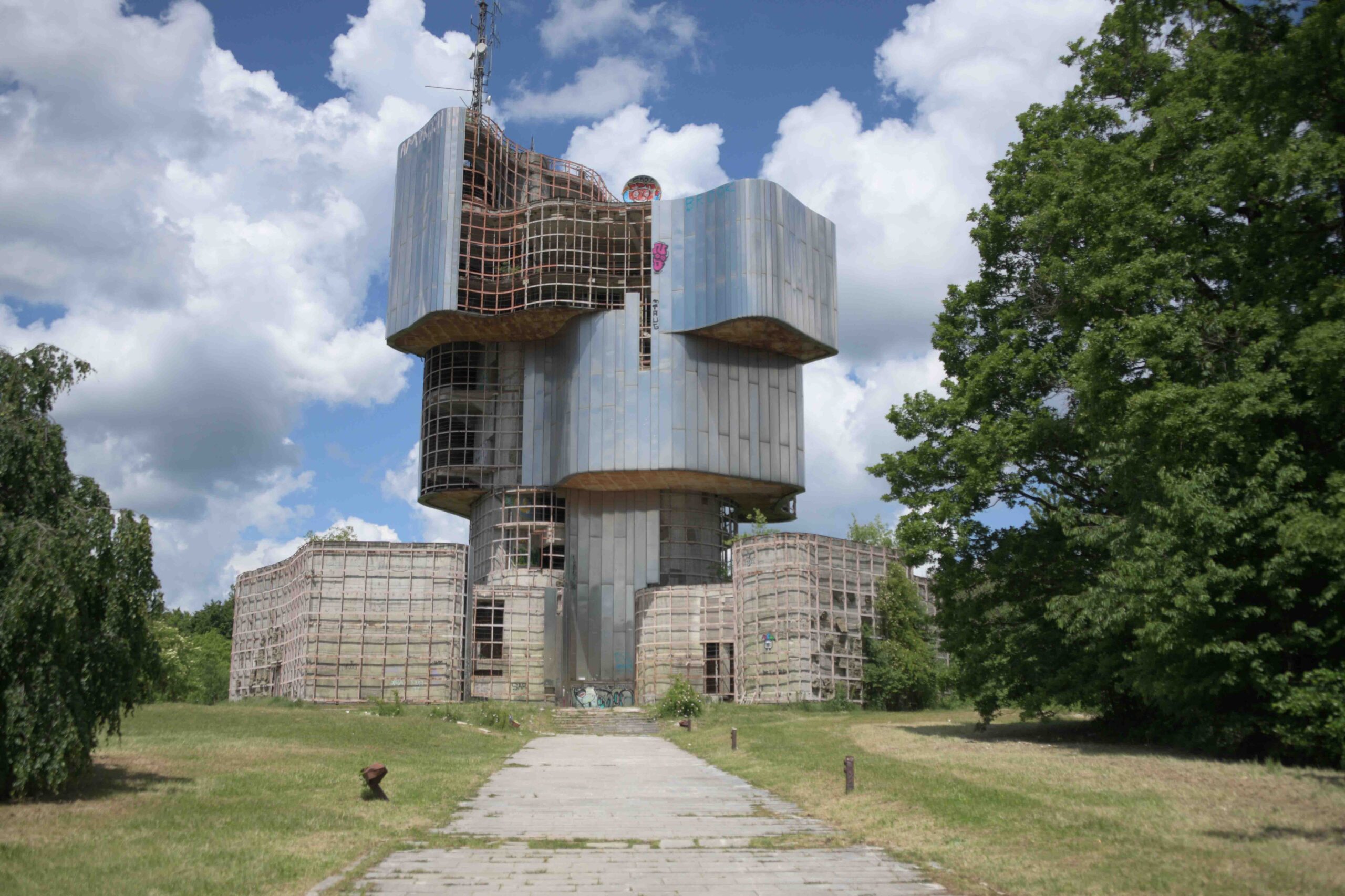
So, taking a long detour up a windy mountain road where the only things we saw were logging trucks and potholes, we eventually came to Petrova Gora.
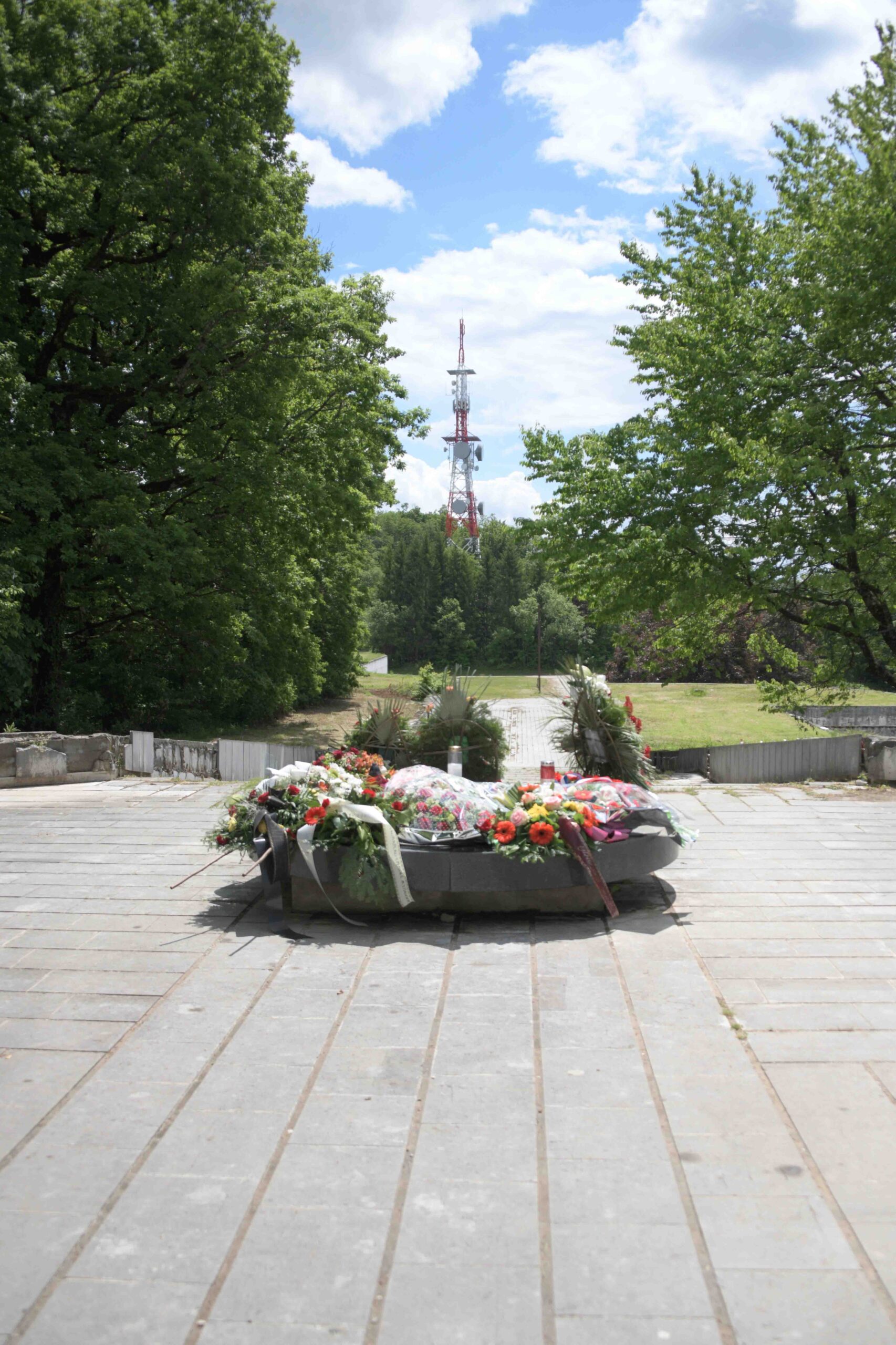
On March 19th, 1942, the Ustaše militia (Croatian fascist and ultranationalist organization (1929–45) known for their cruelty) began “Operation Petrova Gora”, an Axis offensive intended to rid the Petrova Gora region of all ethnic-Serbs resistance and all Partisan rebel fighters. However, the Ustaše offensive only escalated the uprising, and ethnic-Serb anger increased further. During a sudden breakthrough of defenses in early April of 1942, Ustaše forces stormed multiple Partisan positions around Petrova Gora. Surprised and only minimally armed with pitchforks and crude weapons, many hundreds of ethnic-Serb peasants who sought refuge on the mountain top charged towards Ustaše soldiers. They stood little chance against the trained and armed soldiers, and over 300 ethnic-Serb peasants were killed.
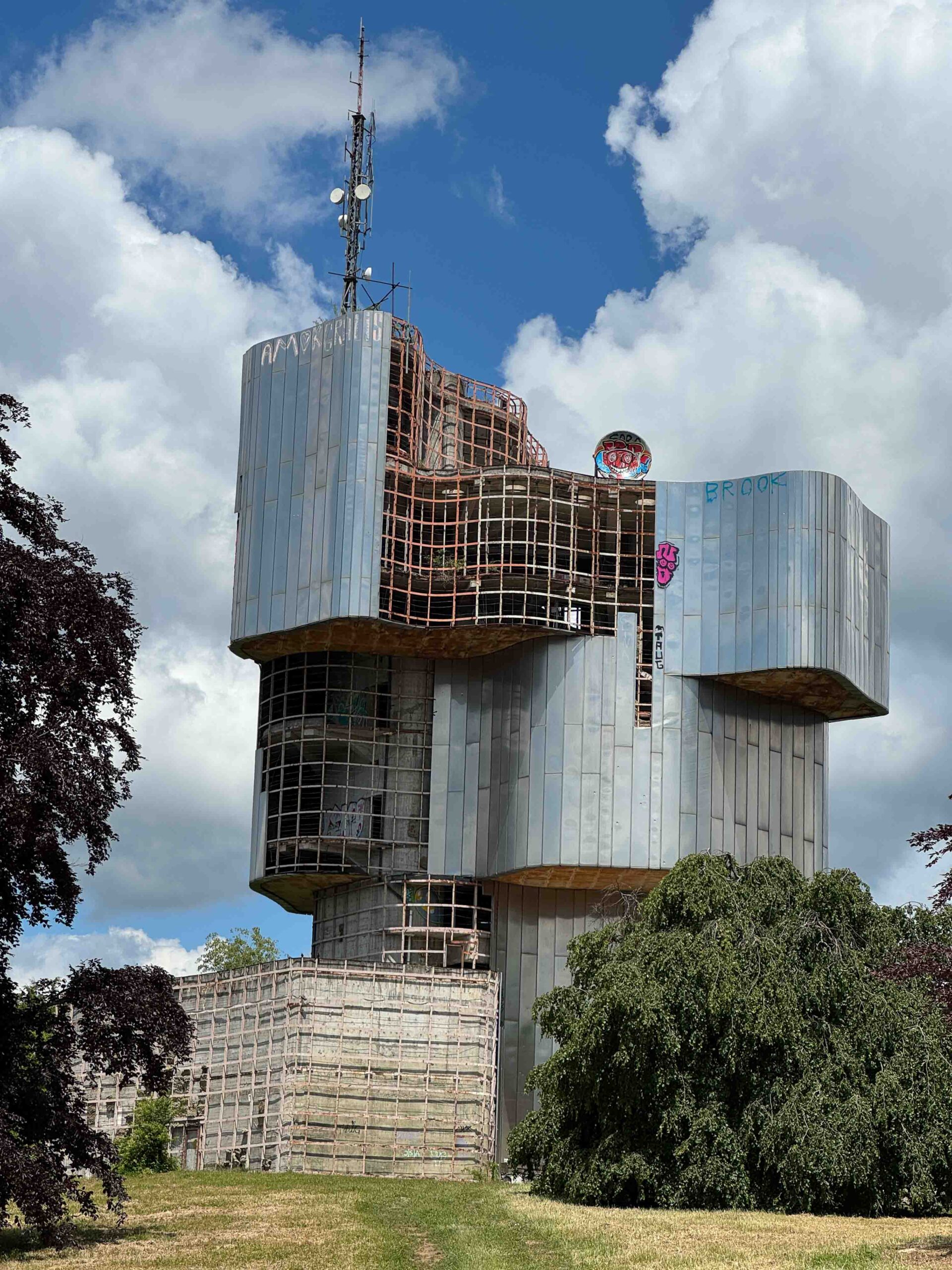
The monument to those Serbians who were killed was completed in October 1981. Within the structure, over its thousands of square meters of floor space, was originally intended to be a 250-person congress hall, a library, a reading room, a cafe, and a museum which housed hundreds of documents, relics, and artifacts related to the battle and the history of ethnic-Serbian struggles in the region. However, the vast majority of these grand ideas were never fully realized.
Over the decades, it became completely defaced, looted, and demolished, with all its historical artifacts and relics in its museum and archives taken or destroyed. With the onset of the Yugoslav Wars in the 1990s, the monument fell into further disrepair.