June 2026
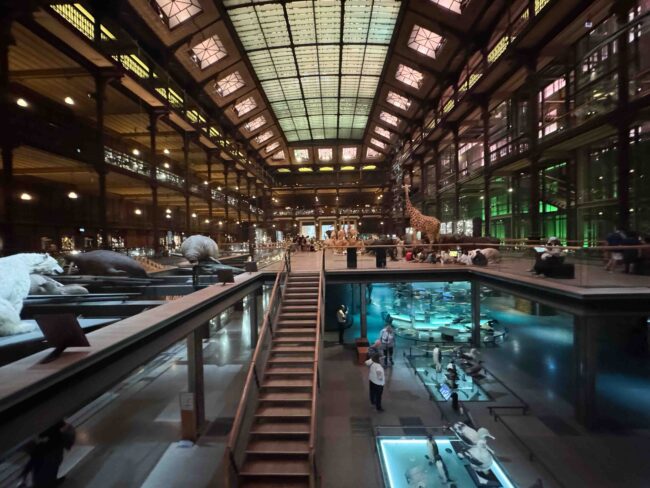
The Gallery of Evolution in the Jardin des Plantes is a spectacular building with exhibits that are educational, thoughtful, and truly worth several visits.
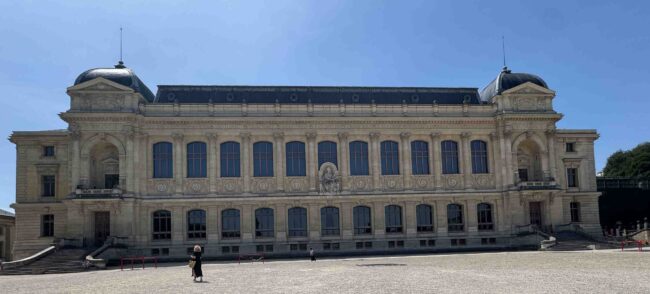
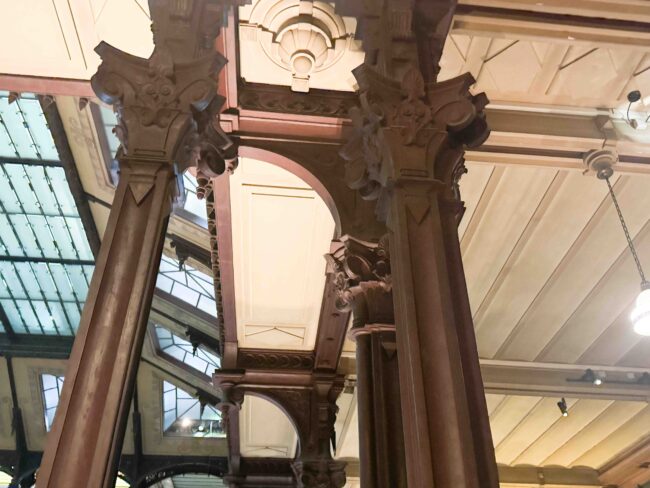
The present-day MNHN (Muséum national d’histoire naturelle) replaced an earlier Neoclassical gallery that opened in 1785. It was proposed in 1872, began in 1877 under the architect Louis-Jules André, and stands as a prominent example of Beaux-Arts architecture. It opened for the Paris Universal Exposition of 1889.
The origins of the MNHN date back to the Royal Garden of Medicinal Plants, created by King Louis XIII in 1635 and directed by the royal physicians.
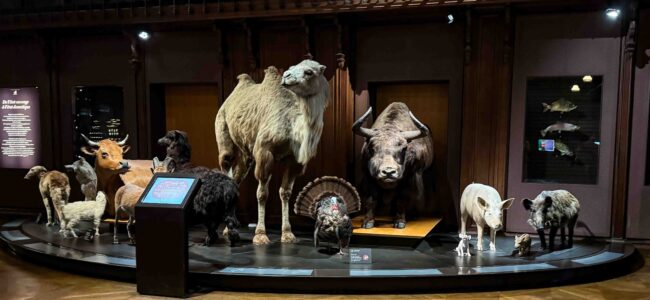
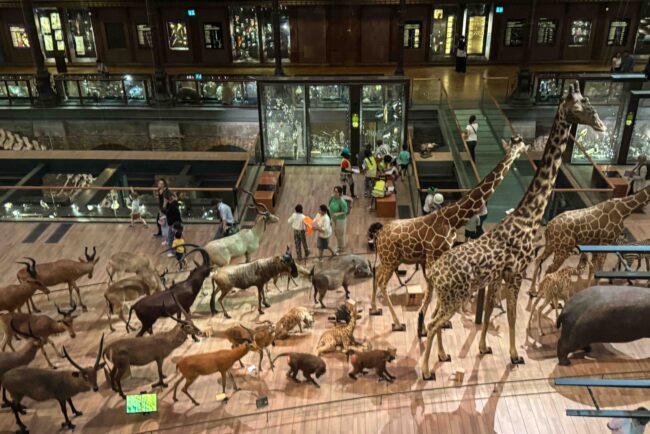
When Napoleon Bonaparte launched his military campaign to conquer Egypt in 1798, his army was accompanied by more than 154 scientists, who took back a large quantity of specimens to enlarge the collections of the museum.
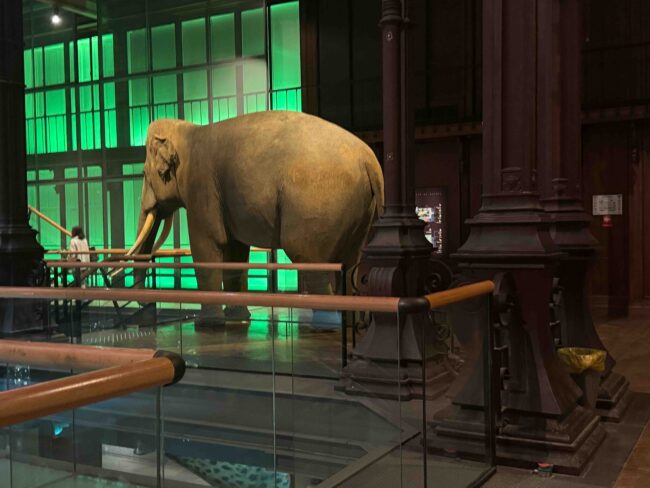
The Grand Gallery of Evolution, completed in 1889, was in poor condition by the mid-20th century. It was closed entirely in 1965, then underwent major restoration between 1991 and 1994 to its present state.
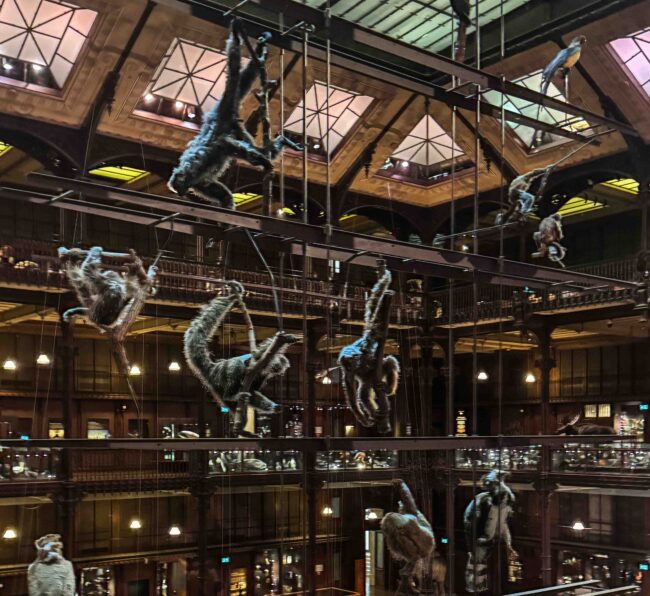
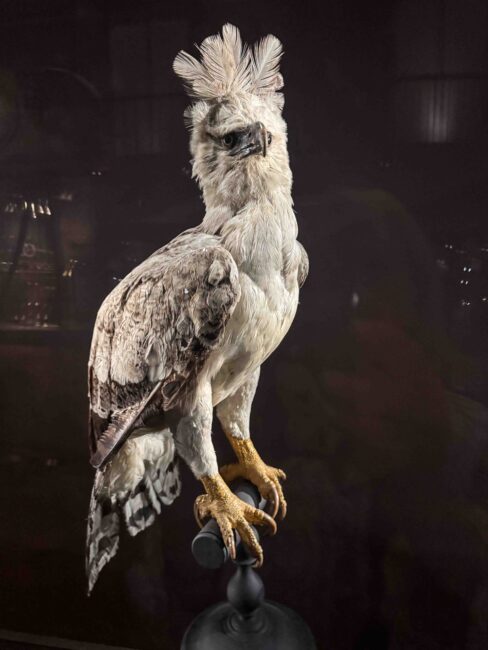
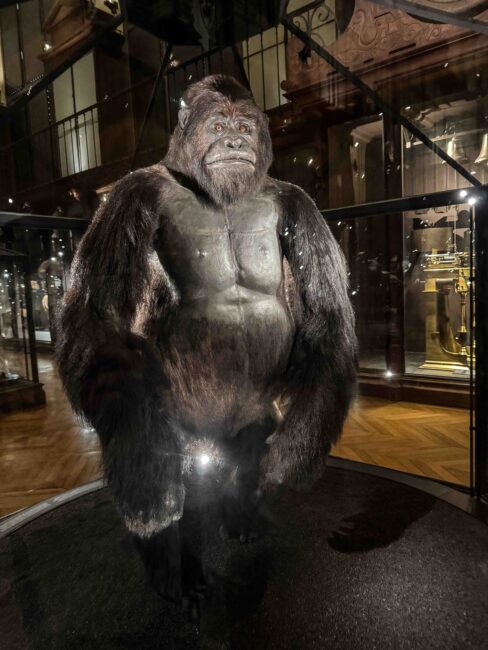
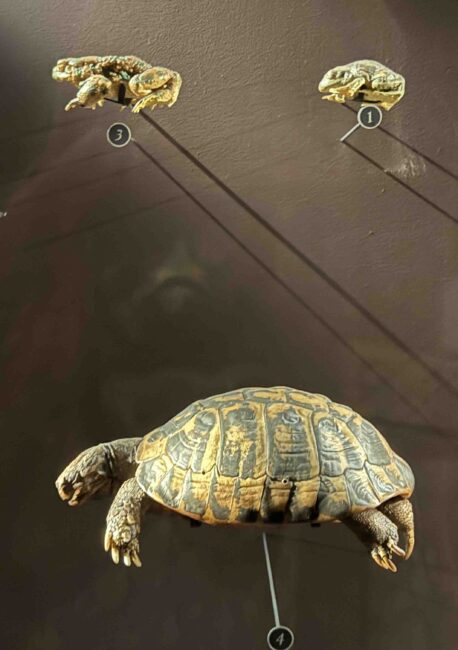
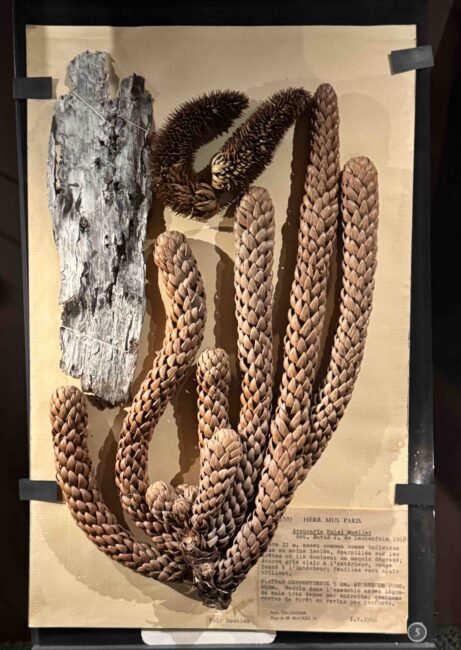
The Gallery of Endangered and Extinct Species
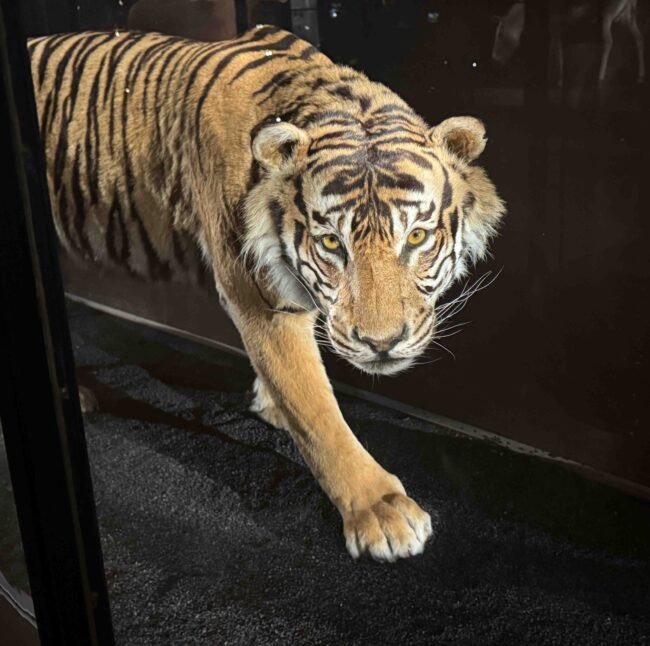
I will admit I spent most of my time in this small gallery. It is highly educational and not quite as full of screaming schoolchildren.
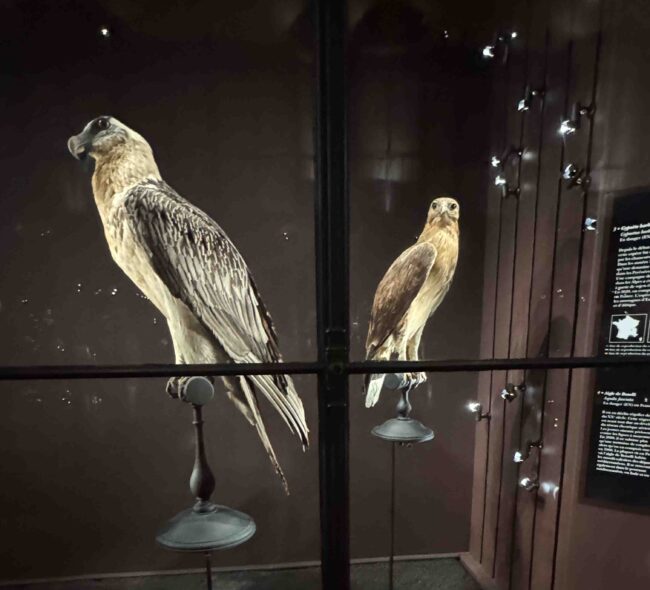
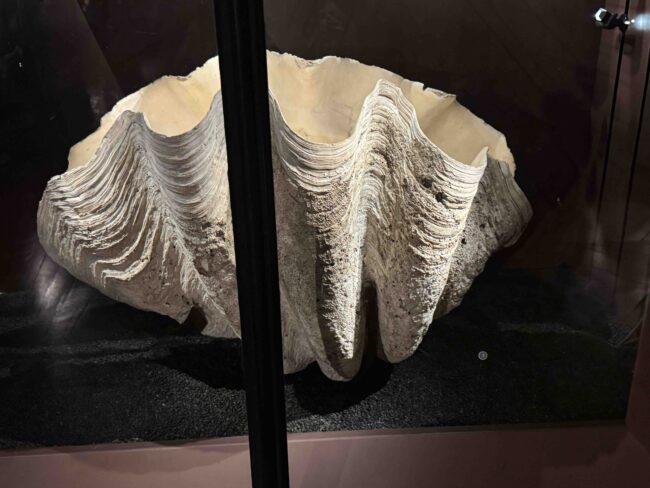
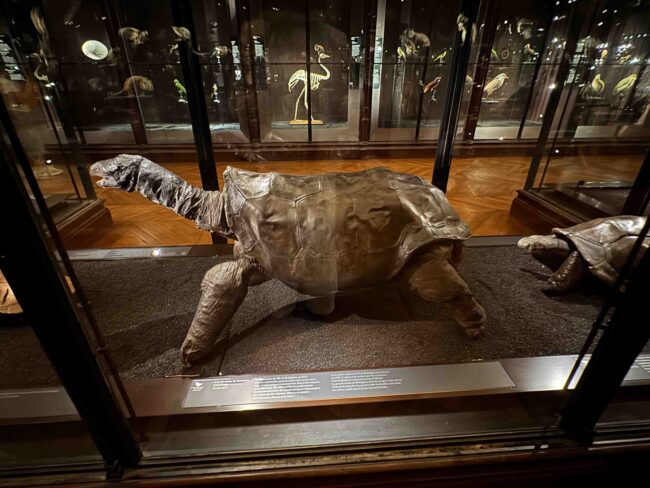
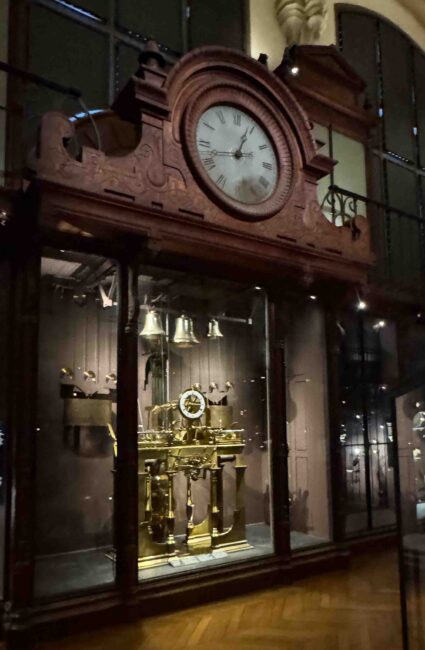
Hidden in the middle of the gallery’s display cases is this clock that once belonged to Marie-Antoinette.
Cabinet of Curiousities of Joseph Bonnier de la Mosson
Unbeknownst to many employees of the Museum is this cabinet tucked behind a wall in the library next door. I had quite the hunt until I found a librarian who was so excited that someone was actually anxious to see it.
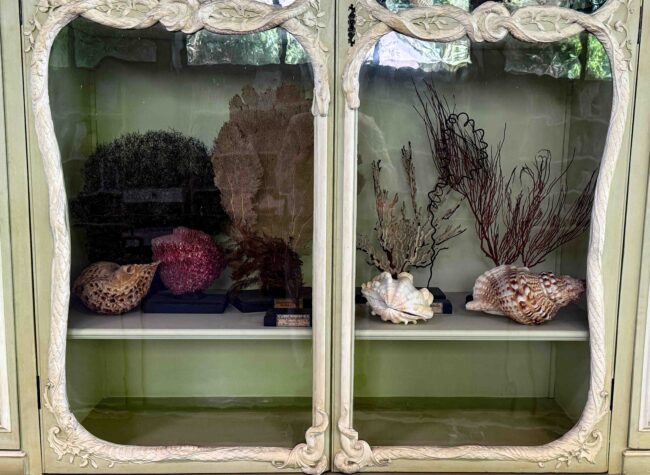
The aristocrat Joseph Bonnier de La Mosson inherited an incredible fortune and a lavish residence, the Hôtel du Lude, on Boulevard Saint-Germain. Due to his intense interest in science, he created his cabinet of curiosity, which encompassed objects related to anatomy, chemistry, physics, mechanical devices, optic machines, fine art, and natural history, many of which he collected on his world travels.
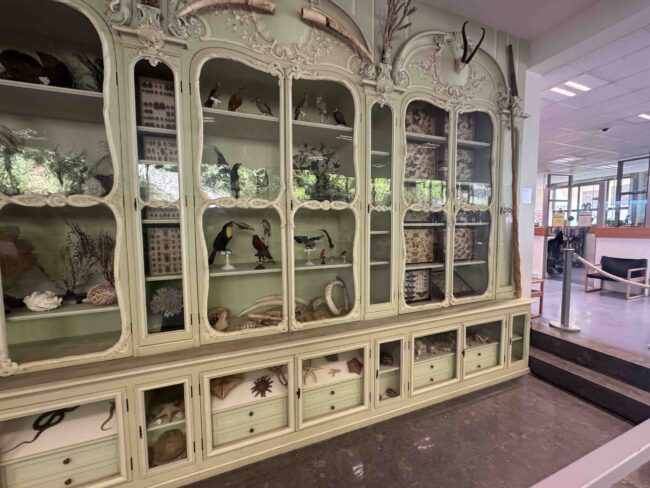
Mosson was destitute at the time of his death in 1744. So his widow resorted to selling it off in pieces. The carefully carved wooden cabinets, with details of winding reptiles and flourishing flora, that focused on natural history, were all purchased by the naturalist Buffon for the Jardin des Plantes.
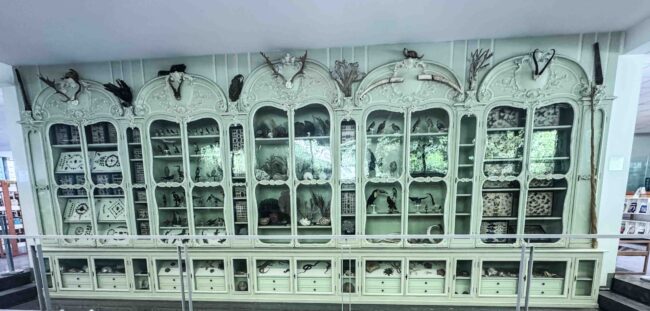
The cabinets were declared historic monuments in 1979 and were restored between 1985 and 1994.
The Carousel
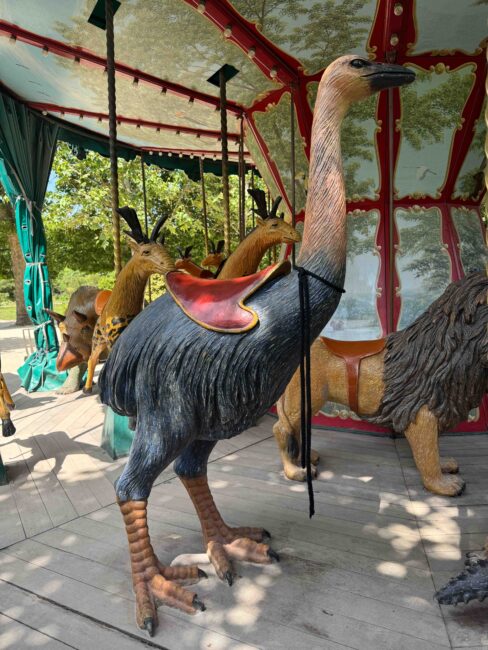
In keeping with the theme of endangered species, I thought I would include the Jardin’s carousel.
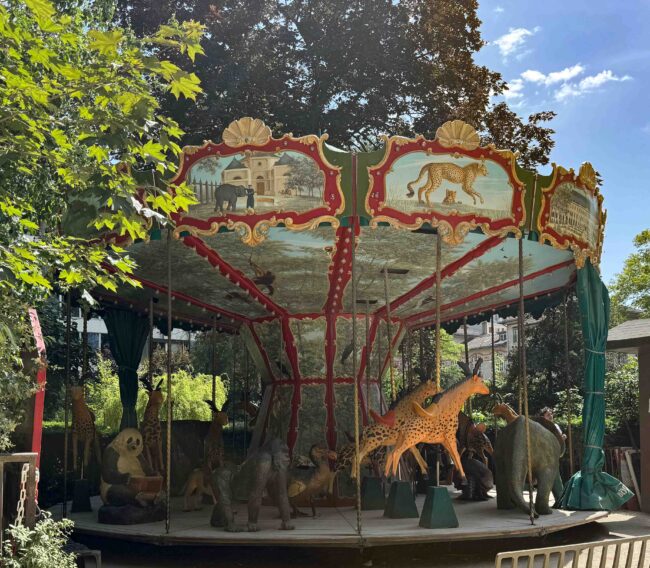
Called the Dodo Manège and created in 1992, the carousel is the brainchild of a scientist who wanted to draw more attention to the increasing extinction and loss of biodiversity on Earth.
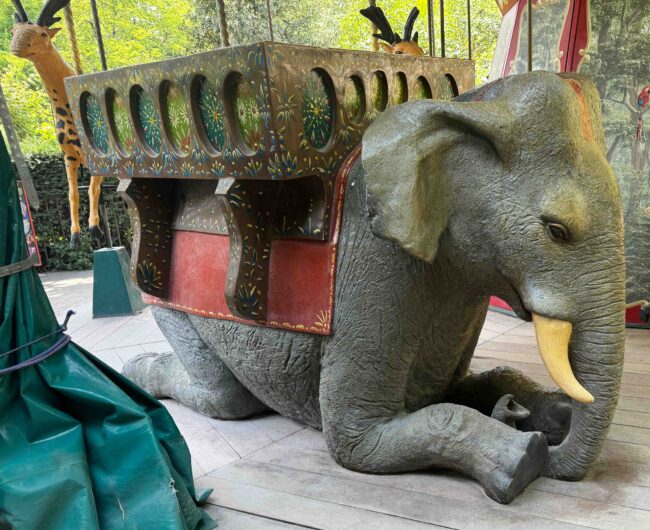
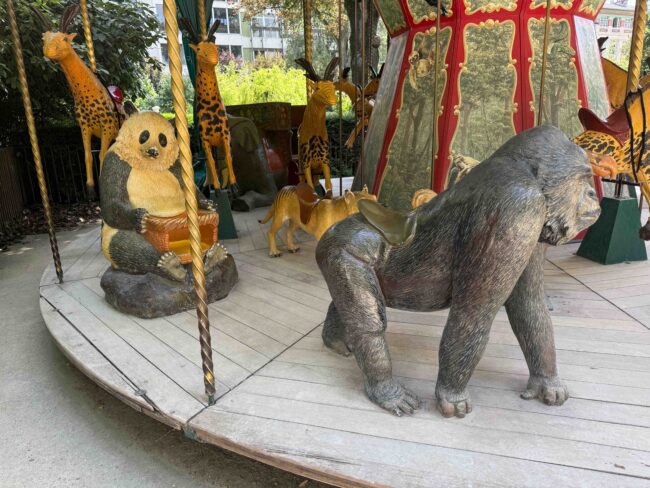
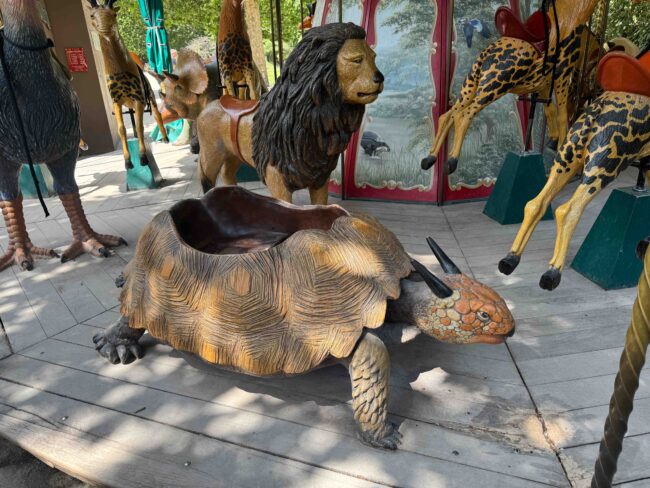
Animals you can ride are the dodo, the aepyornis (a massive creature known as the “elephant bird”), the Barbary lion, the horned turtle, and the sivatherium (a type of early giraffe). There are also endangered animals like the panda and the gorilla in the herd.
 *
* *
*