June 2026
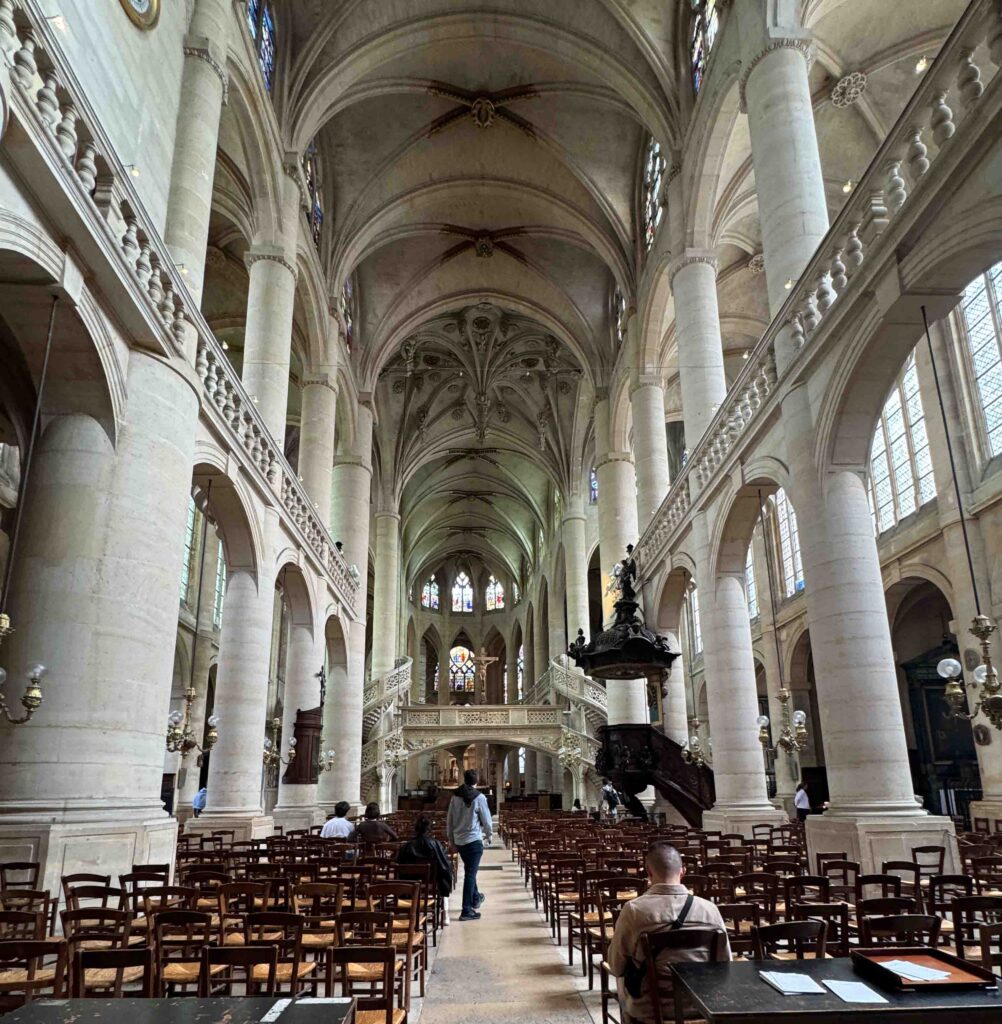
The church was slow in getting built. The architect Stephen Viguier planned the apse and the bell tower in 1494, and the first two bells were cast in 1500. The choir was completed in 1537, and the altars of the apse chapels were blessed in 1541.
The nave, in the Renaissance style, was not finished until 1584.
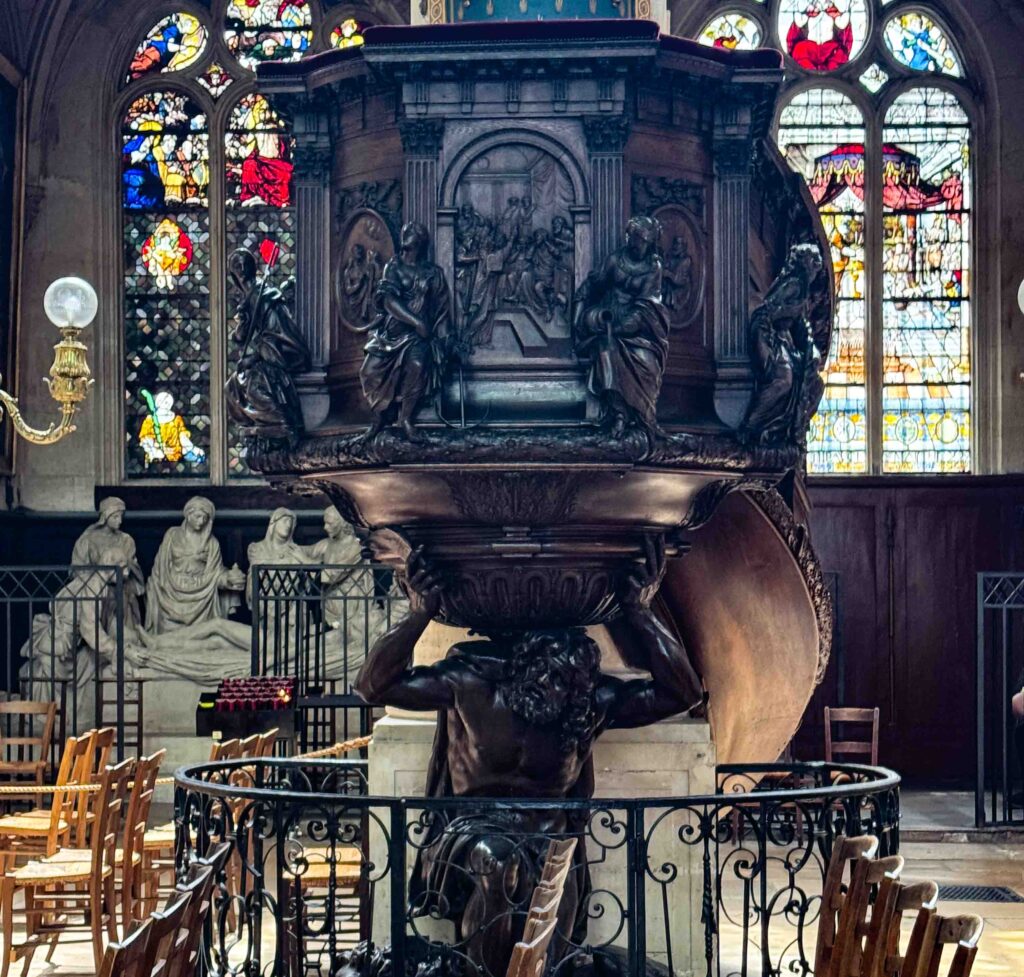
The church was finally consecrated in February 1626 by Jean-François de Gondi, first archbishop of Paris; the ornate carved pulpit was installed in 1651.
What I came to see in particular was the jubé or rood screen, created in about 1530. It is the only existing rood screen in Paris. The screen was used as a platform to read the scripture to the ordinary parishioners. They were very common during the Middle Ages, but were largely abolished in the 17th and 18th centuries under a decree of the Council of Trent (1545–1563).
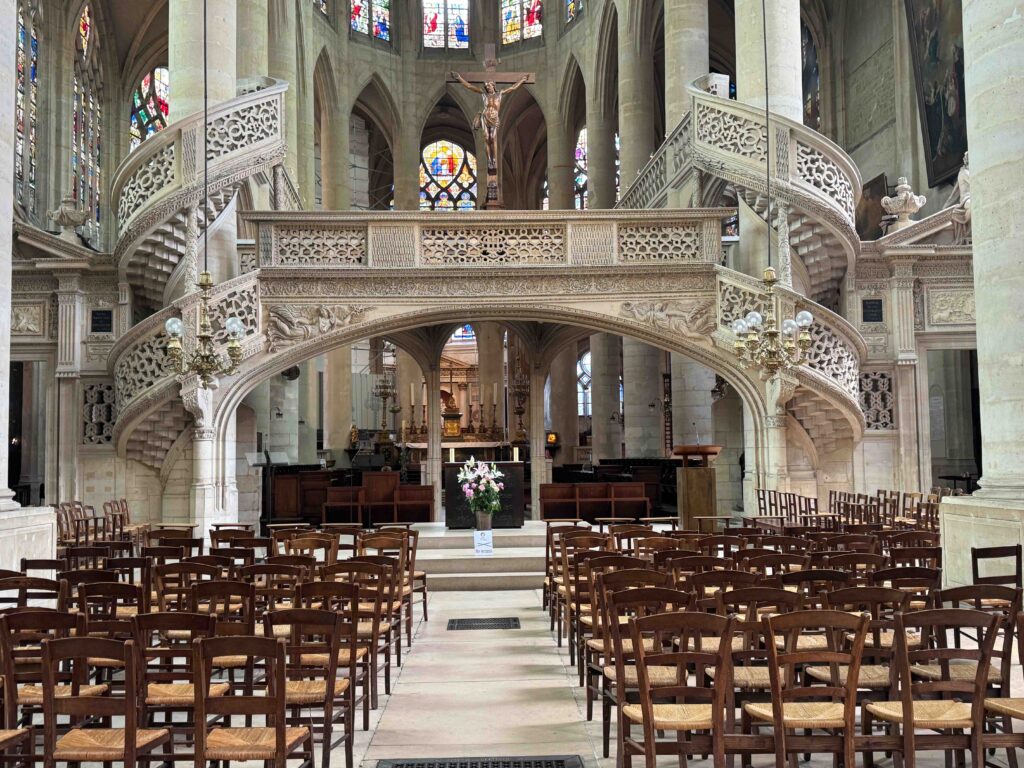
The screen was designed by Antoine Beaucorps in the French Renaissance style. It takes the form of an arched bridge facing the choir with three arcades. Two elegant spiral staircases give access from the sides.
After sitting and gaping at the spiral staircases, I wandered the church and learned it houses the Chapel of Saint Genevieve, the patron saint of Paris.
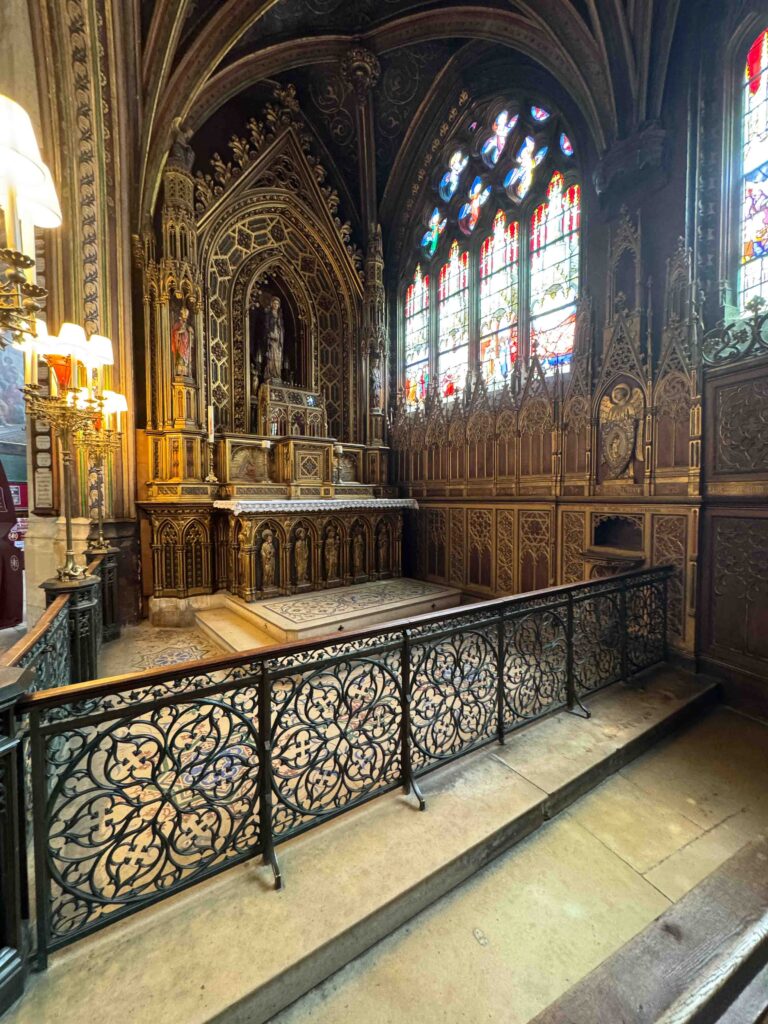
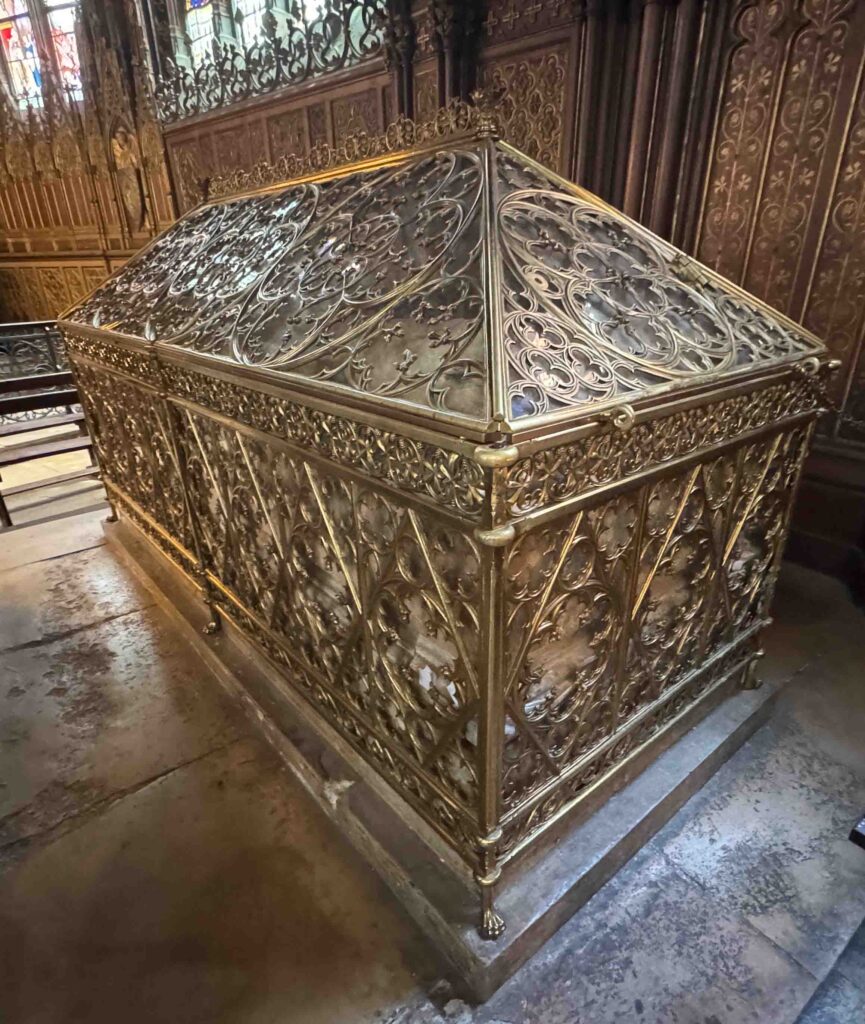
During the French Revolution, the shrine was desecrated, her bones burned, and then her ashes thrown in the River Seine. However, the original tombstone from the shrine survived, which is what lies inside this glass crypt.
*