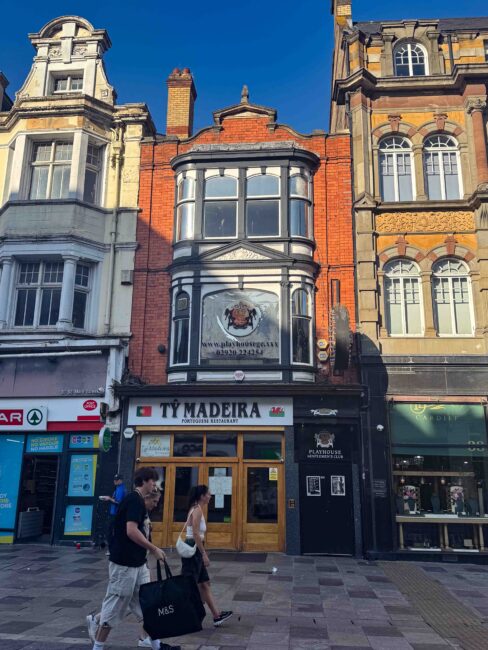
July 2026
After a week of studying at Oxford, I joined my good friend James, and he introduced me to the churches, castles, and gardens of Wales. James amazes me every year with his stamina in sightseeing and driving. It was a great week!
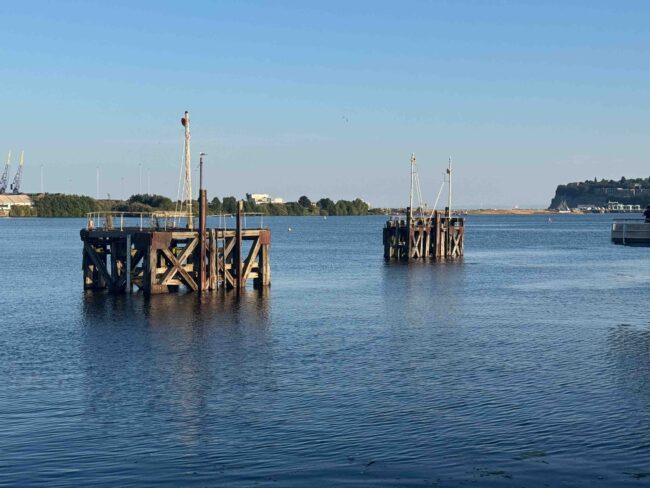
I had a day in Cardiff before James arrived to wander.
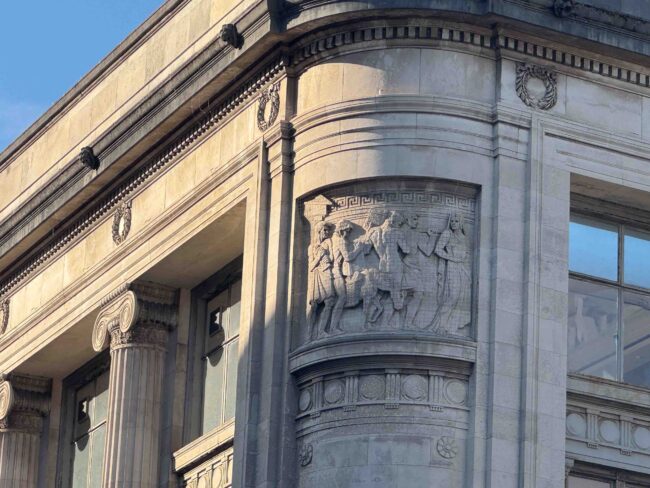
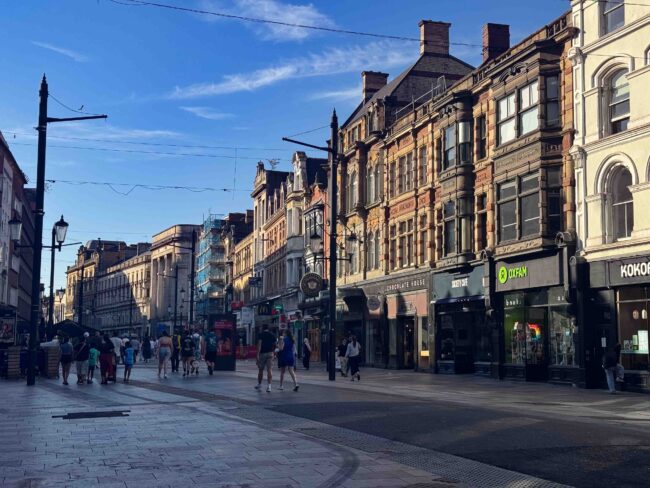
Cardiff is the capital and largest city in Wales. Its roots lay in coal. Where I was staying was a great place to wander and enjoy the architecture.
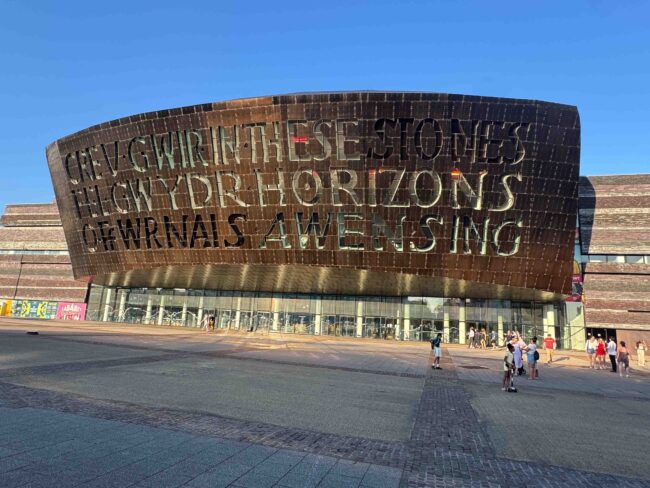
The Wales Millennium Center is the arts center for Wales. Opened in 2004, the exterior of the building is clad in multi-coloured slate collected from Welsh quarries. Narrow windows are built into the slate layers to give the impression of rock strata in sea cliffs. The purple slate came from the Penrhyn Quarry, the blue from Cwt y Bugail Quarry, the green from the Nantlle Valley, the grey from Llechwedd Quarry, and the black from the Corris Quarry.
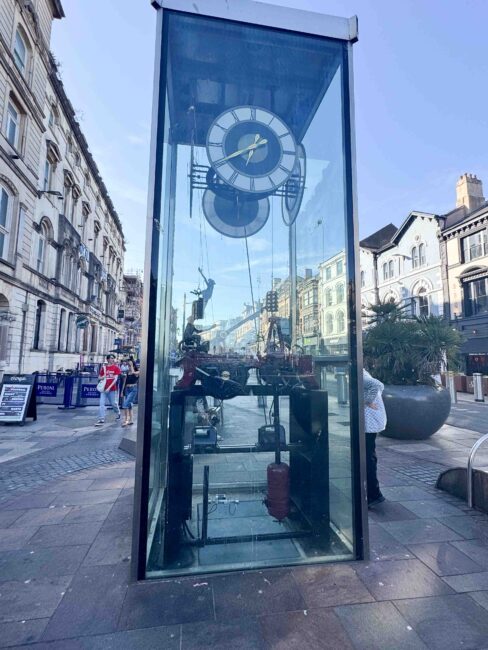
I was walking down the street and was attracted to this clock. Of course, the glass was filthy, so my picture is horrible, but you can still see some of the unique mechanism.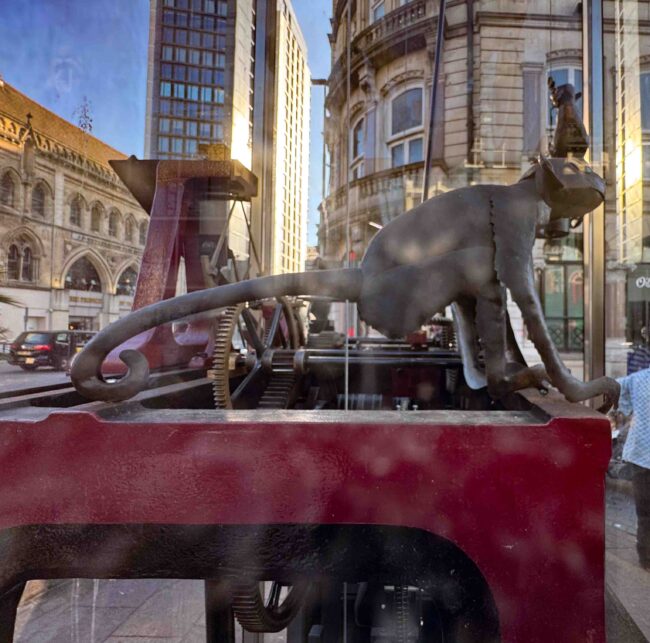
The Pierhead clock, named for the building it once stood in front of, is also known as the Monkey Clock. It features three monkeys (not real) swinging on the pendulums and striking the bell on the hour. They are reputed to represent the Third Marquis of Bute’s rebuttal to Charles Darwin’s theory of evolution. Three monkeys of questionable wisdom, perhaps. It is also said he saw monkeys as good luck symbols.
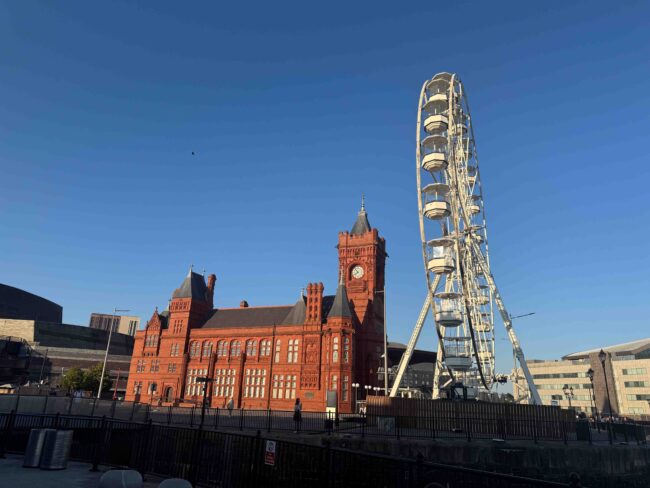
The Pierhead building was built in 1897 and designed by the English architect William Frame. It was a replacement for the headquarters of the Bute Dock Company, which burnt down in 1892.
The clock on the building is unofficially known as the “Baby Big Ben” or the “Big Ben of Wales”.
*
*