August 2025
The 18th is called Buttes-Montmartre. The name refers to the hilly terrain shaped by gypsum quarries long before artists arrived.
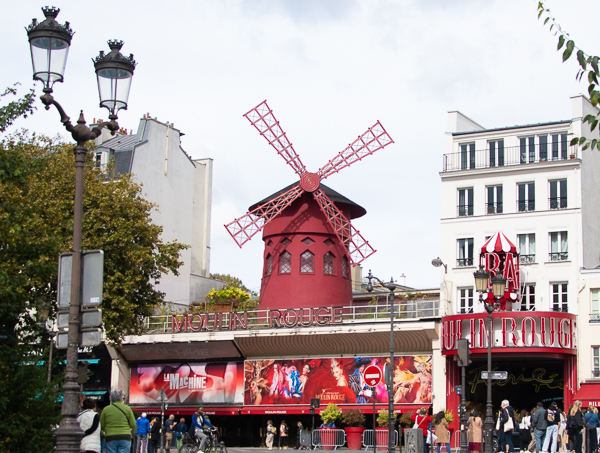 The 18th is best known for Sacre Coeur and the Moulin Rouge. But there is more.
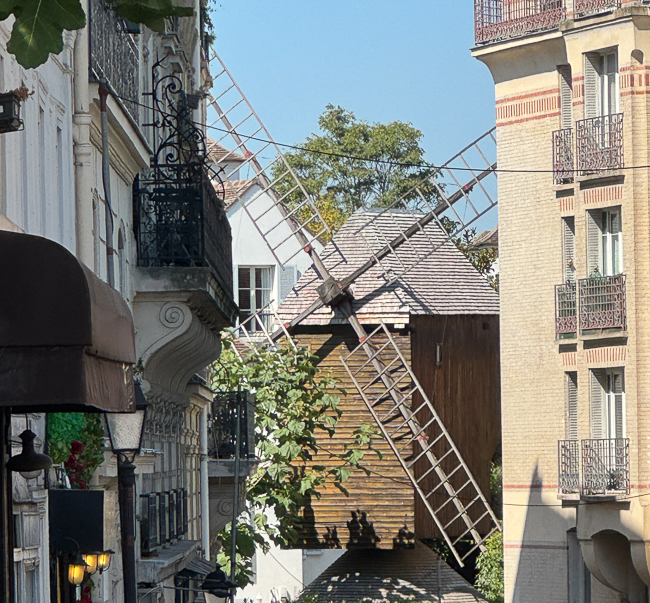
The windmill Moulin de la Galette, also known as Blute-fin, was built in 1622. The name Blute-fin comes from the French verb bluter, which means sifting flour for the separation from bran.
Since the 17th century, the windmill has been known for more than just its milling capabilities. Nineteenth-century owners and millers, the Debray family, made a brown bread galette, which became popular and was adopted as the name of the windmill. Artists such as Renoir, van Gogh, Ramón Casas, and Pissarro have immortalized Le Moulin de la Galette, probably the most famous example being Renoir’s festive painting, Bal du moulin de la Galette.
An association, Friends of Old Montmartre, saved it from destruction in 1915. In 1924, its owner moved the windmill to the corner of Girardon and Lepic streets. It was restored in 1978, but it no longer runs.
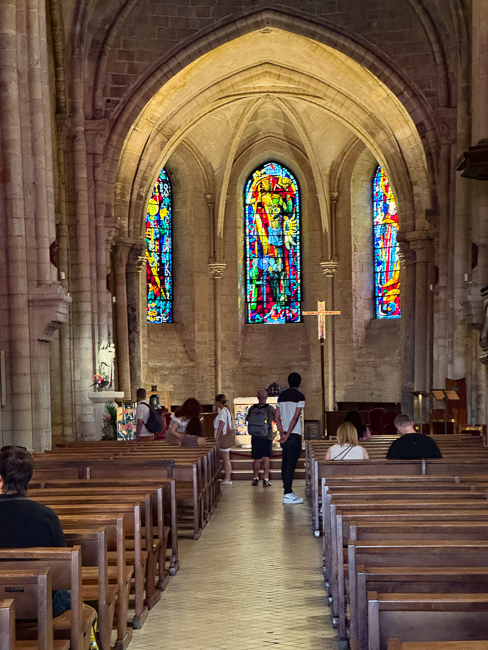
Hidden in the shadow of Sacre Coeur is Église Saint-Pierre de Montmartre one of the oldest in Paris, built in the 12th century. Built on the site of an old Roman temple dedicated to Mars and replacing a later Merovingian church from the 7th century,
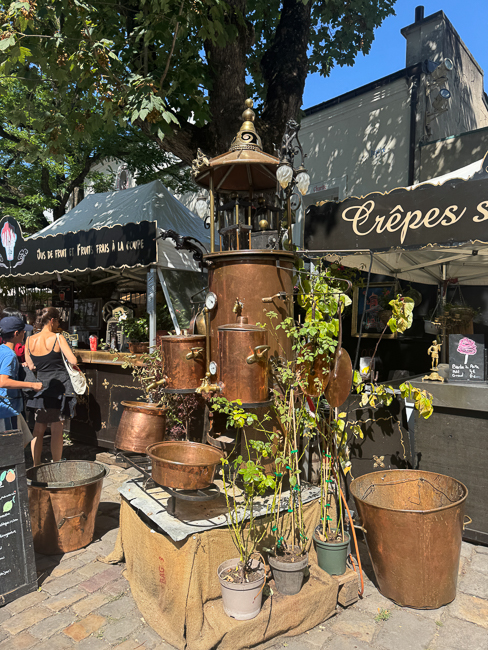
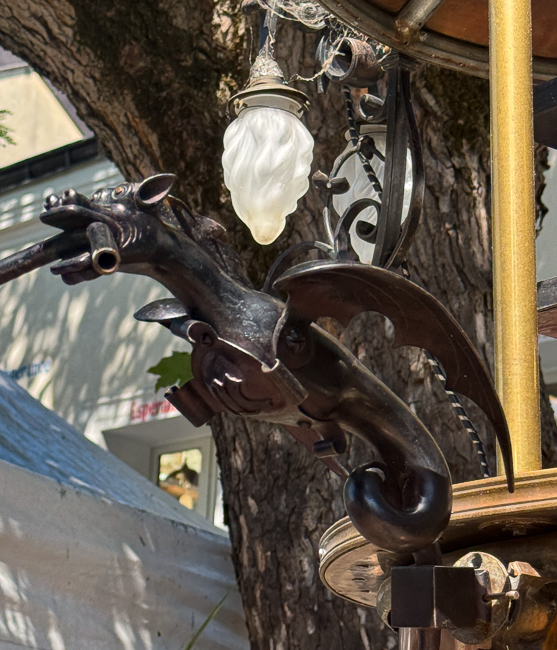
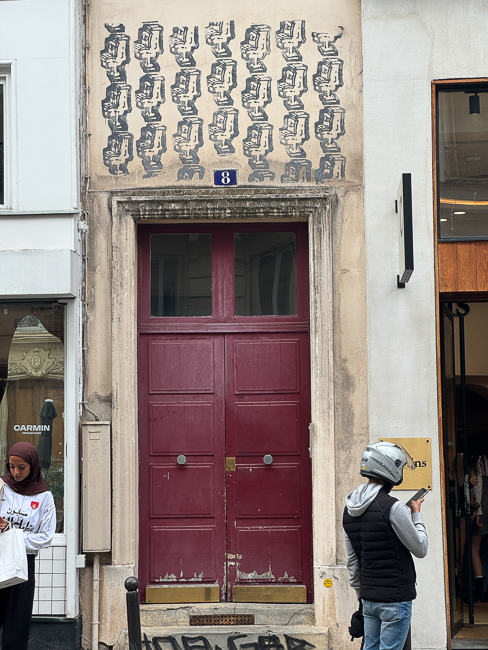
Wandering around the area of Sacre Coeur can be exhausting due to the prolific tourism; however, once in a while, you see something different. This is a tea-making machine. What caught my eye was the dragon.
*
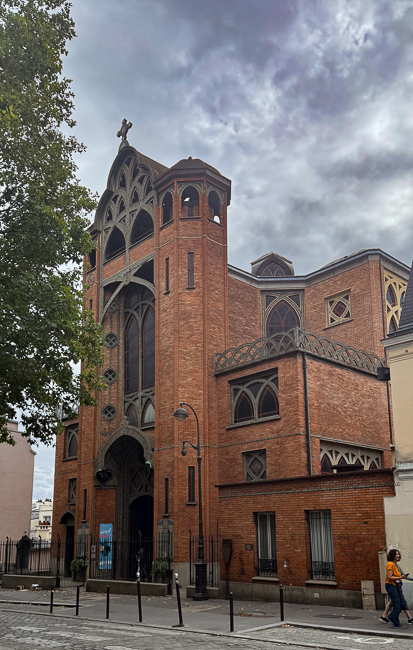
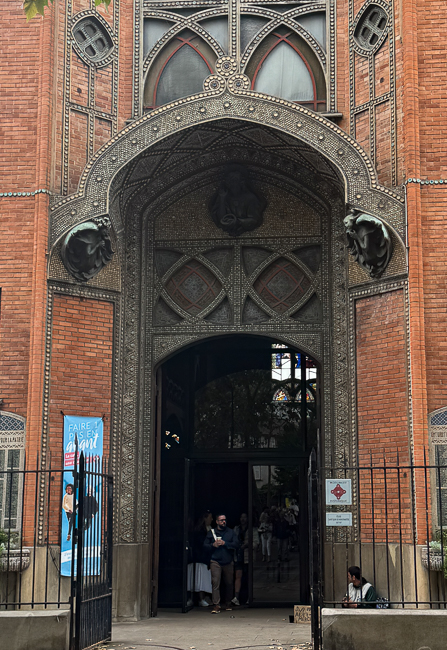
Another lovely church farther down the hill is Saint-Jean de Montmartre. The new church was designed by architect Anatole de Baudot (1834-1915). The reinforced concrete structure followed a system patented by the engineer Paul Cottancin in 1892. The church was the first religious building in France to be built from reinforced concrete.
*
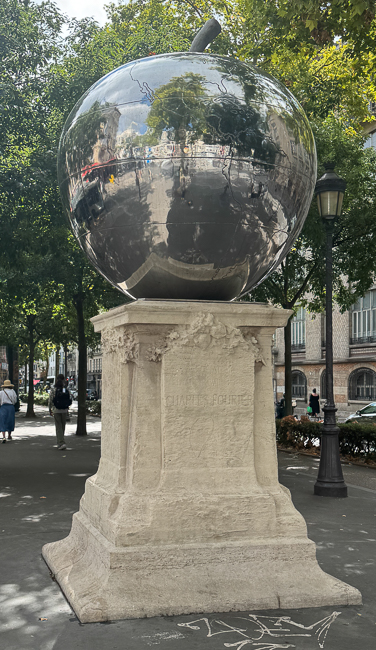
This has a rather interesting story. For decades, the pedestal featured a bronze statue of Charles Fourier, the French philosopher and social theorist who stood for utopian socialism and workers’ rights. Then, during WWII, the statue was melted down by the Germans for metal.
The apple, as depicted by artist Franck Scurti, symbolizes an idea that sparked Fourier’s core critique of industrial society. At some point in the early 19th century, he realized that an apple in Paris cost many times more than an apple in his hometown of Besançon. As the apple changed hands from farmer to seller to reseller and so on, it gained exponential value at no gain to the man or woman who actually grew the fruit. This inequity was the “fundamental disorder,” as he wrote, of any industrialized society.
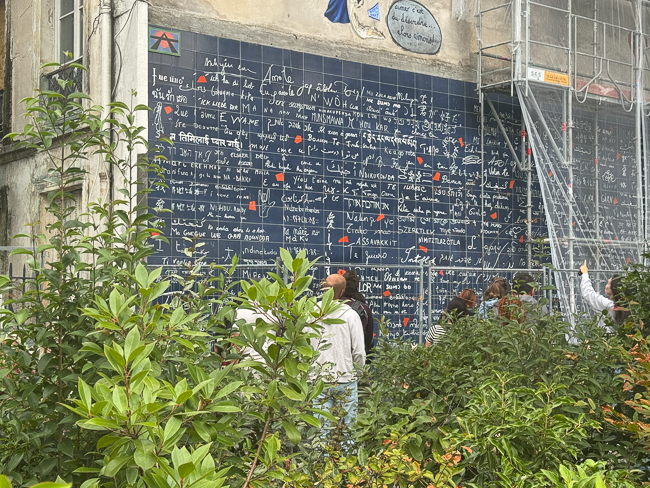
The Wall of Love was created in 2000 by artists Frédéric Baron and Claire Kito and is composed of 612 tiles of enameled lava, on which the phrase ‘I love you’ is featured 311 times in 250 languages, including Navajo, Inuit, Bambara, and Esperanto.
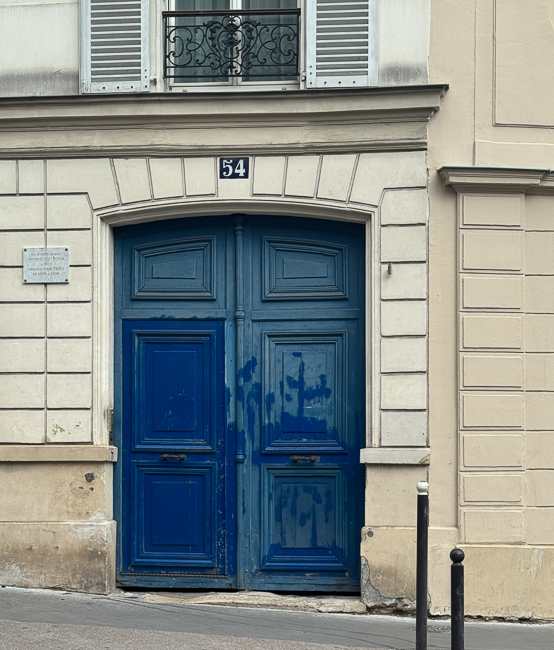
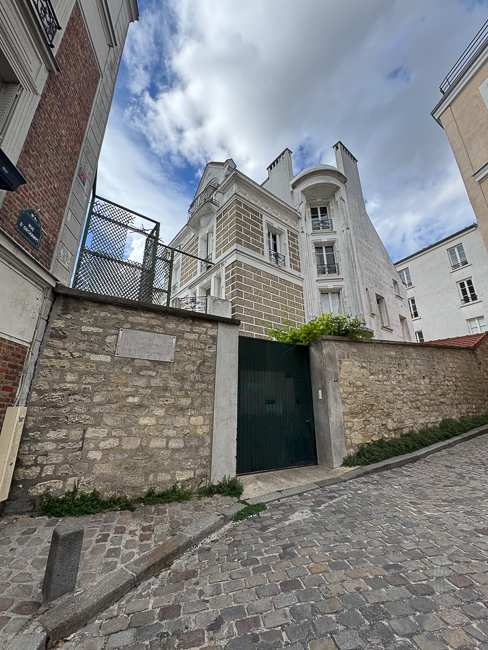
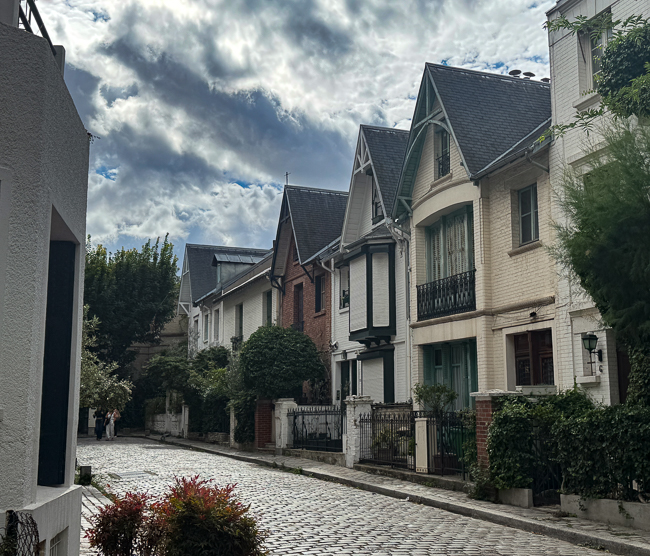
This dead-end street, with its Art Deco, English-inspired houses, comprises Villa Leandre. The street is named for a local comedian, Charles Léandre. This is proof that there is quite a bit of Montmartre that has not been invaded by tourists.
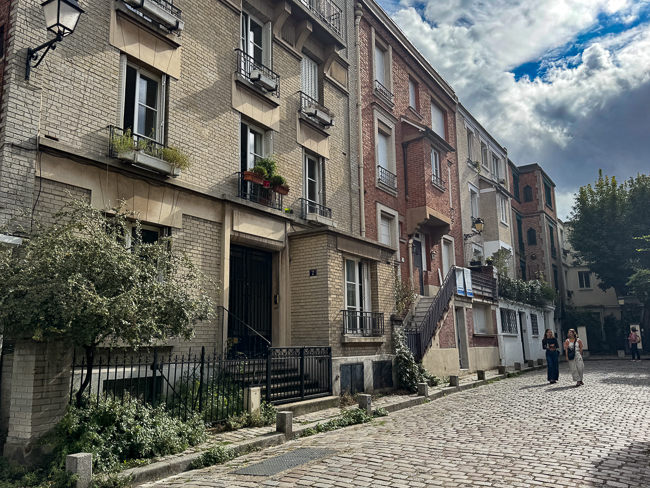
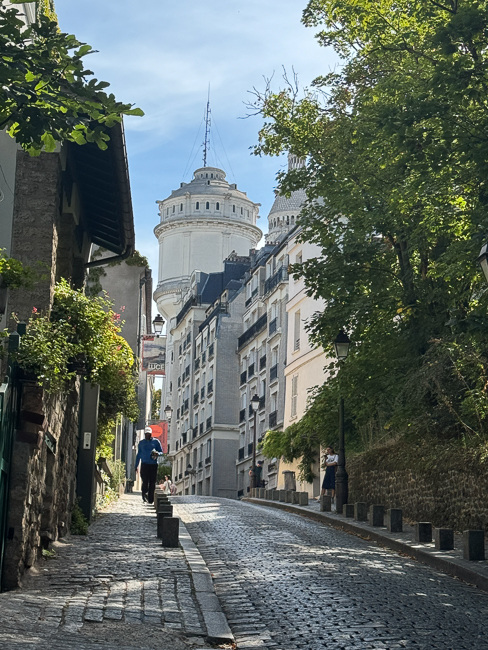
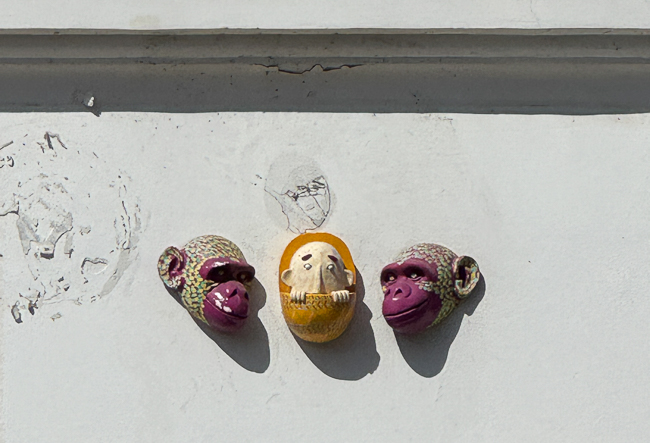
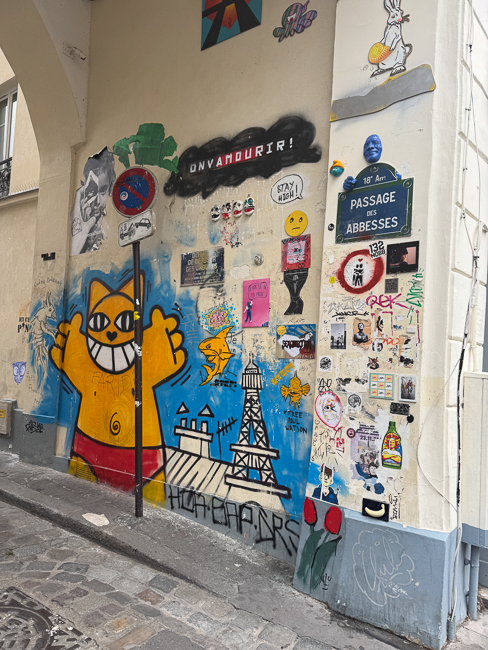
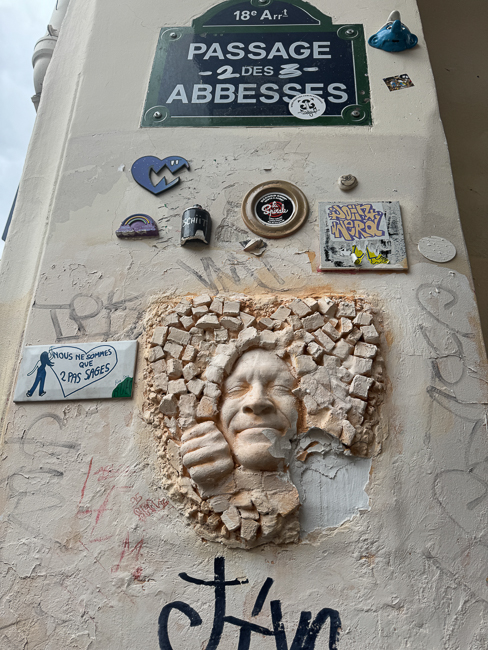
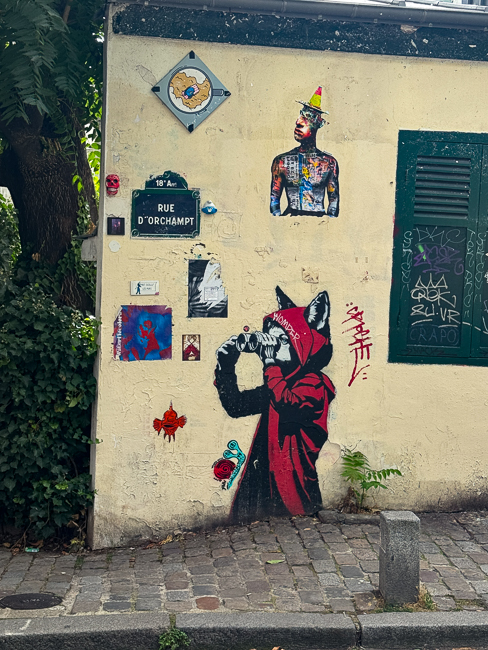
Some fun things I captured walking around.
* **
** *
*
*
Lunch atop of Terrass Hotel afforded these views, a great way to wind down in the afternoon.
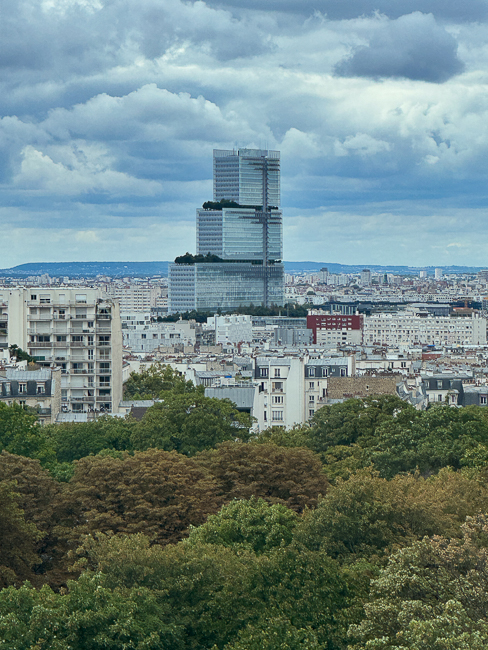
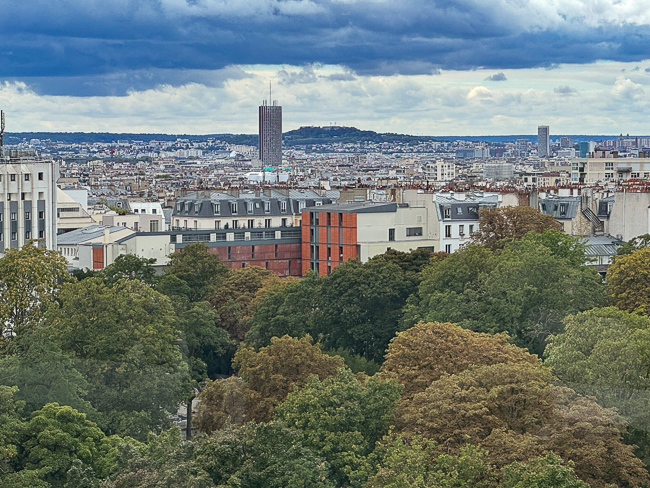
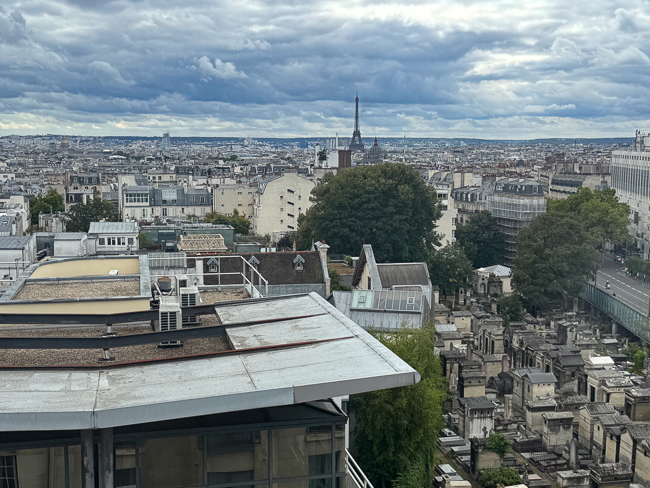
Montparnasse has a split personality. It is swarming with tourists to see Sacre Coeur and shop, but it also has a lovely, quiet side that should not be missed.
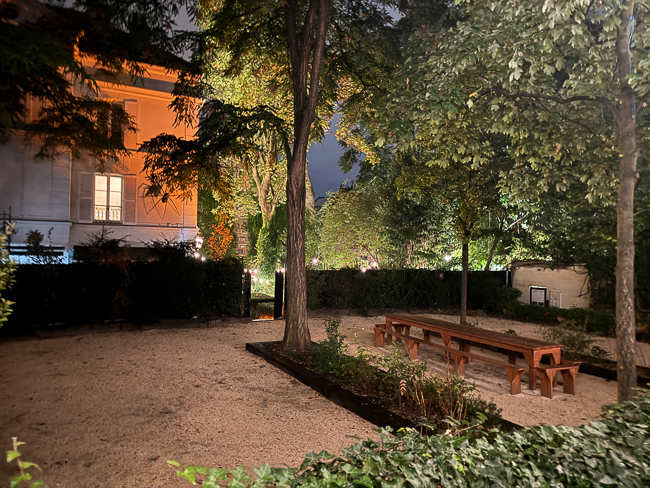
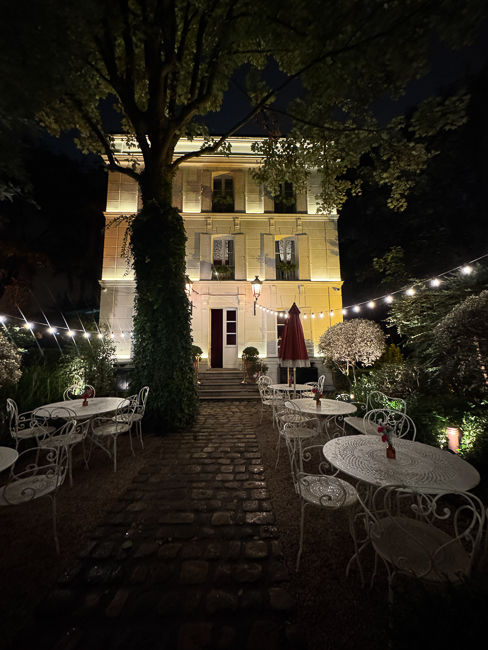
If you are looking for a fabulous hidden five-star hotel in Montmartre, I suggest the Hotel Particular Montmartre
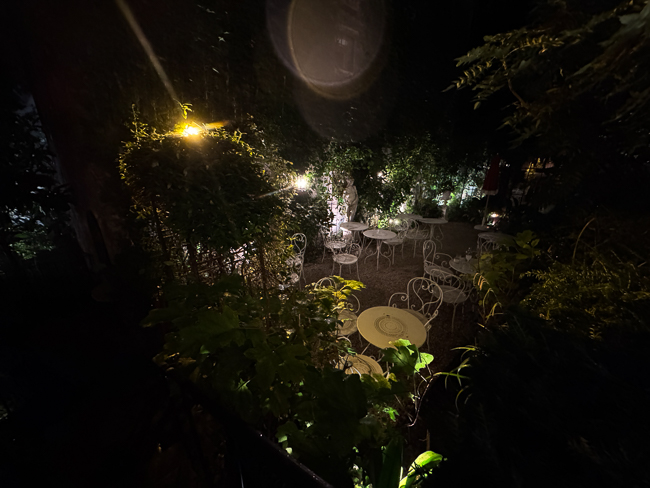
My niece Molly and her friend flew over to spend an all-too-short 4 days with me. She suggested the Hotel Particulier ( 5 5-room suite hotel) for dinner, and it was a magnificent treat. The food was exceptional, the service and the people were kind and efficient, and the grounds were a hidden gem.
*
*