May 6, 2026
Tashkent – Day 2
Islamic Civilization Center
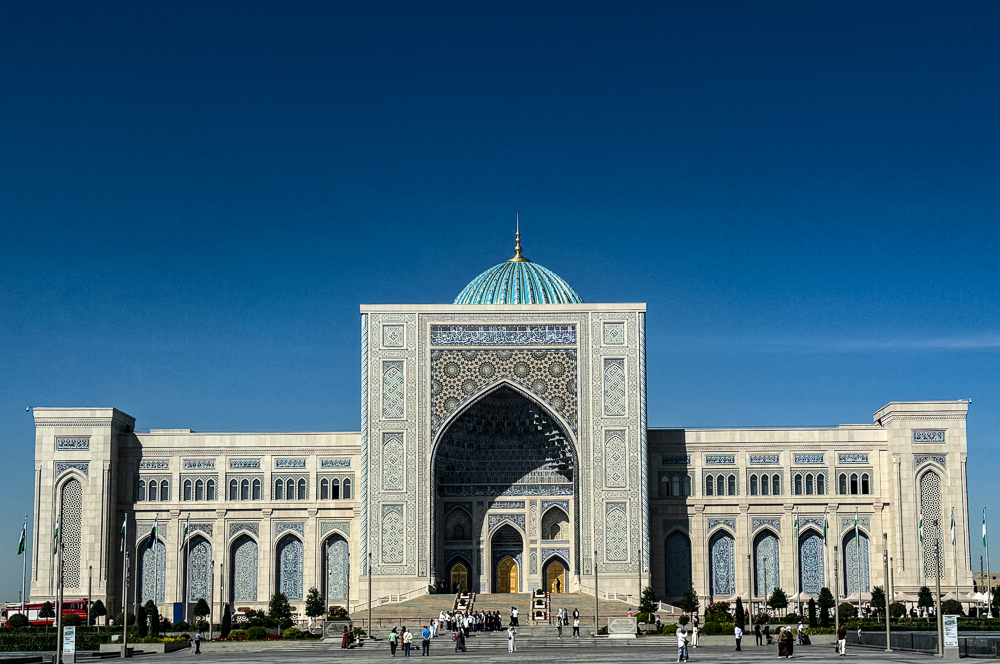
The Islamic Civilization Center is one of those experiences that is both divine and absolutely frustrating. The building itself is a three-story structure with a total area exceeding 430,000 square feet. It is topped with a 35-foot-tall dome. In an attempt to show more than 3000 years of history, it is organized into four main sections: the pre-Islamic period, the First Renaissance, the Second Renaissance, and the New Uzbekistan.
Due to its scale, collection size, and multifunctional design, the center was officially recognized by the Guinness World Records as the “World’s Largest Islamic Civilization Museum.”
The issue I had is that, and this is understandable, you are required to be on a guided tour with a government-sponsored guide. This meant that your pace was set by the guide and the thousands upon thousands of people who are doing the same thing. It also meant you focused on what the guide wanted to focus on. 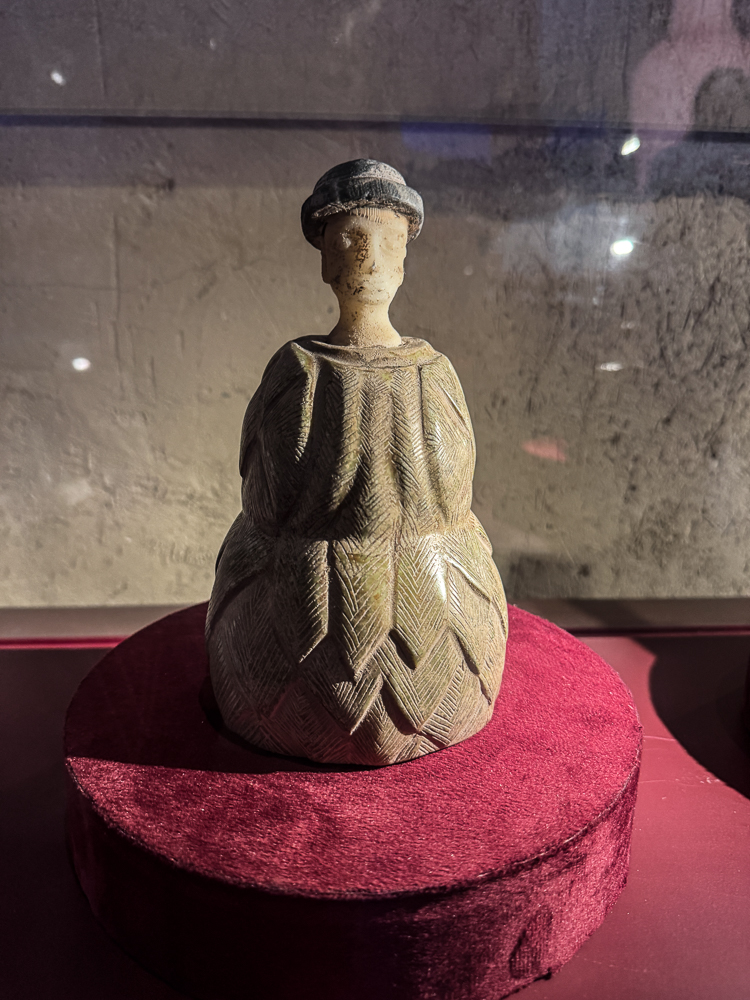 While the signage was in three languages, including English, the data was sparse, leaving me with more questions than answers. The explanation for this stunning piece above reads:
Male Head – 10th-17th centuries BCE – Mirshodi, Surkhandarya region – Stone
I have a lot of googling to do.
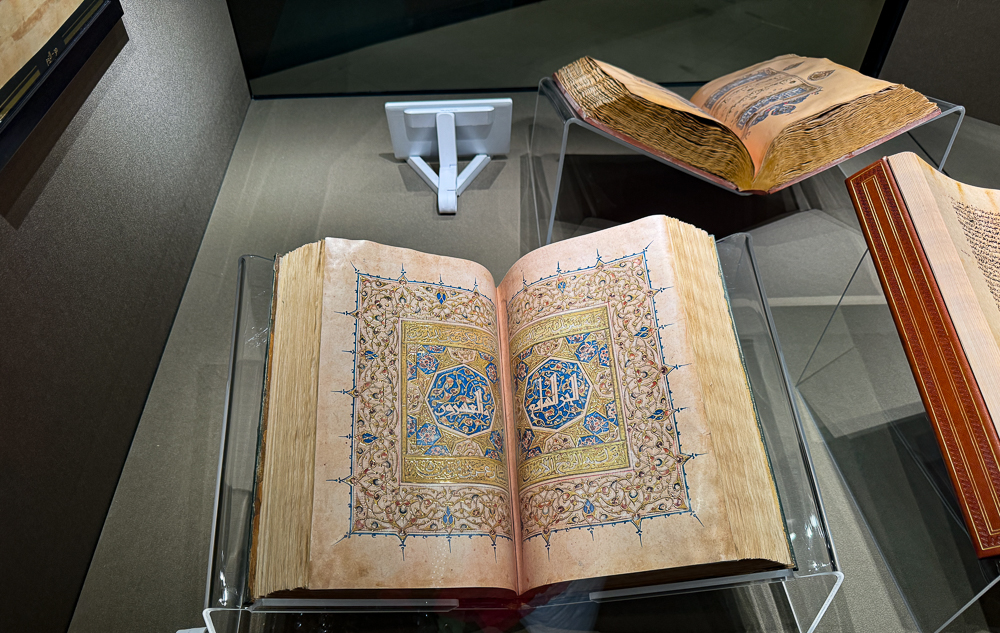
The major benefactor of the project was Alisher Usmanov, an Uzbek billionaire and philanthropist, who not only financed the construction but also donated a collection of rare and valuable books. These were supplemented with ancient manuscripts and objects purchased from antique dealers, private collectors, and international auction houses.
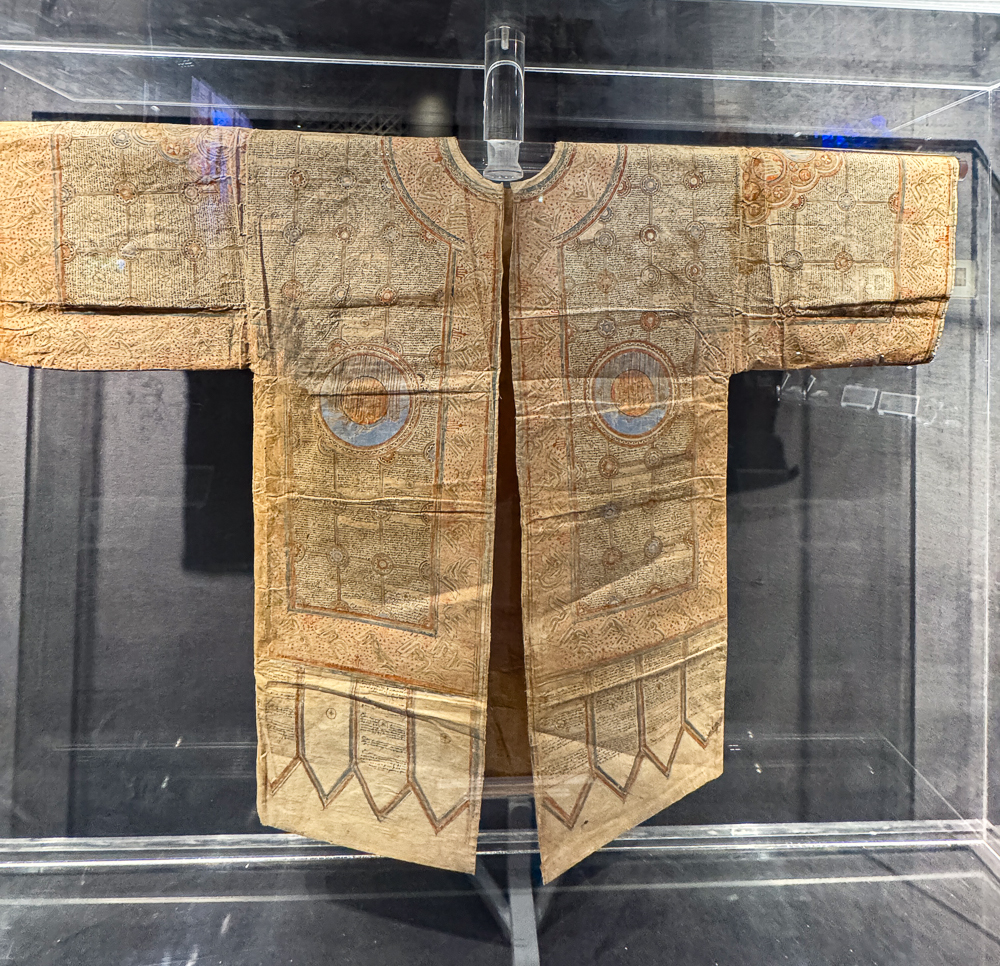
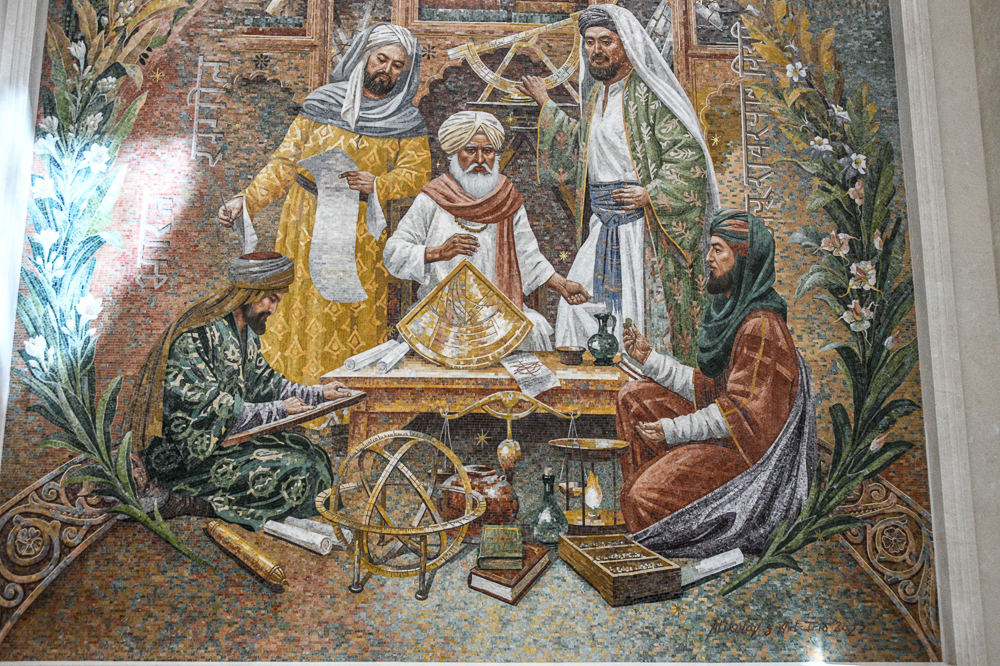
I first saw a Talismanic Shirt at a special exhibit in Oxford and became enamored with them. The shirts may be inscribed with verses from the Quran, names of Allah and the prophets, or with numbers, images, symbols, or astrological signs. The inscribed names are believed to offer protection and guidance to the carrier. Although talismanic shirts can be worn to protect against many evils, most of them seem to be intended as a shield in battle.
Teleshayakh Mosque
Across from the expansive space in front of the Islamic Civilization Center, which would have at one time been an open bazaar, sits the Teleshayakh Mosque.
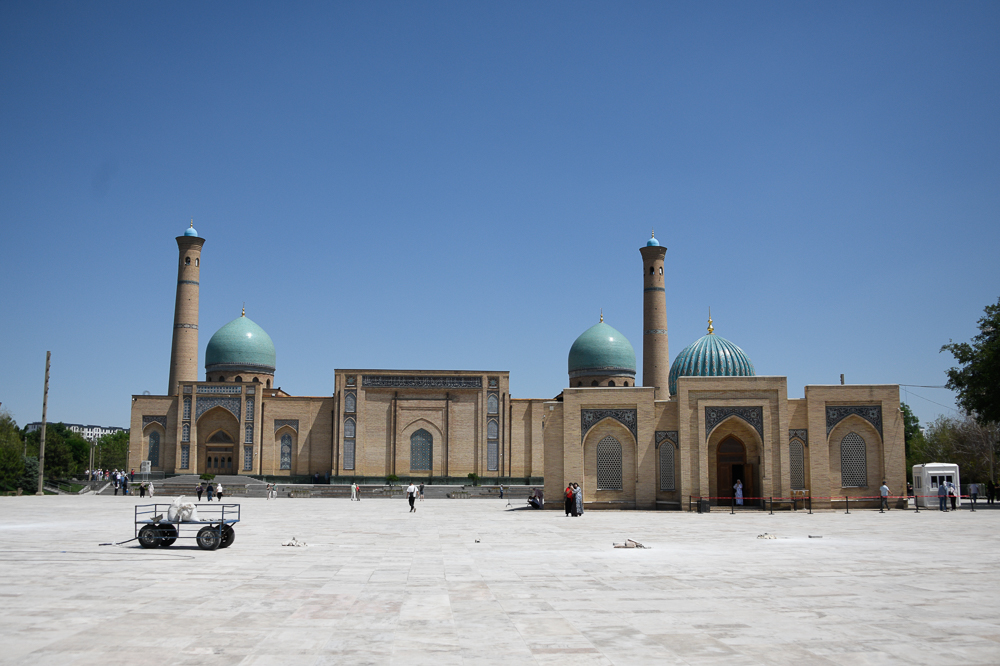
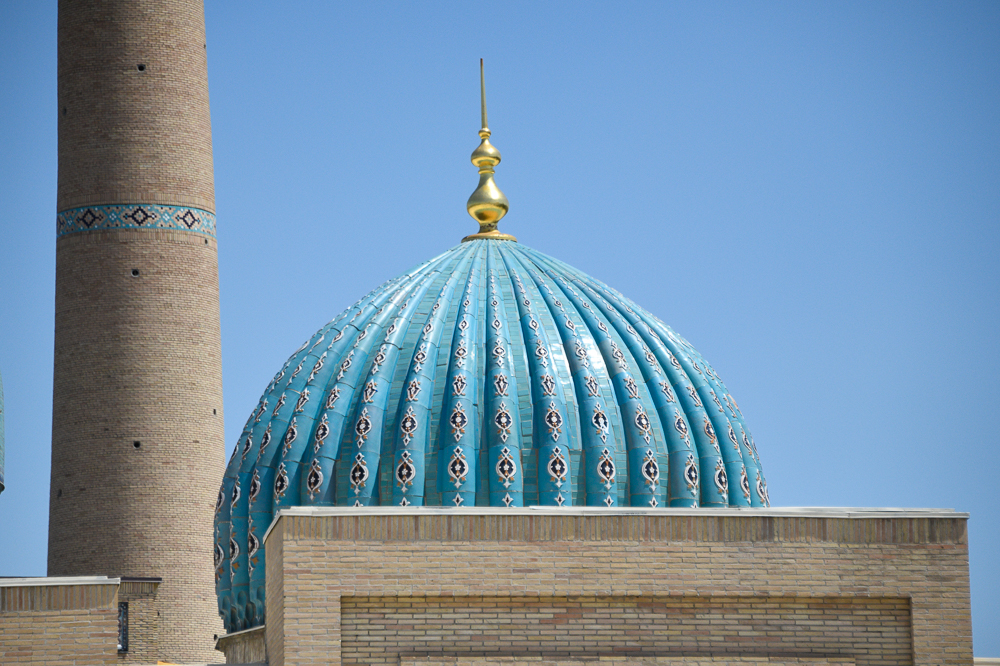
The mosque is purported to be the oldest and largest in Tashkent. Unfortunately, as is often the case, the rules had changed when we arrived, and female tourists were no longer allowed in.
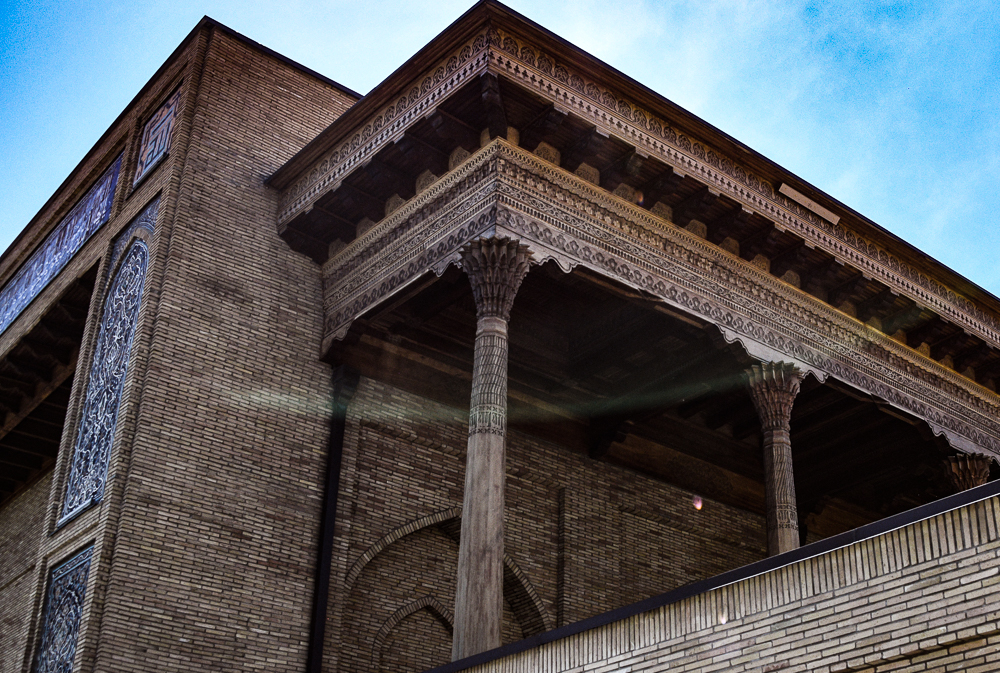
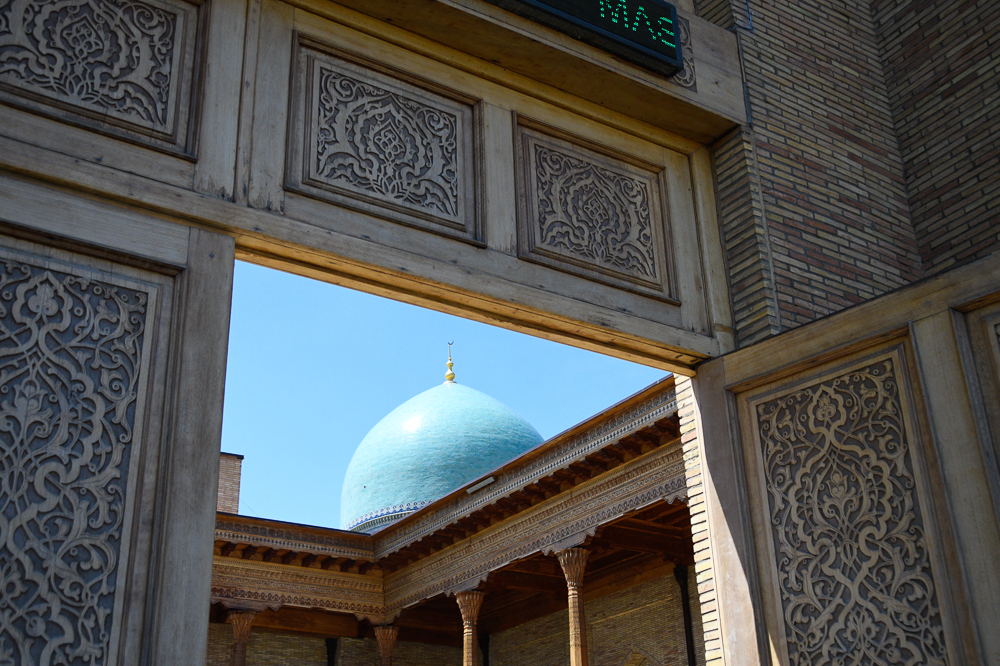
A look at the carved Mulberry wood on the mosque
Chorsu Bazaar
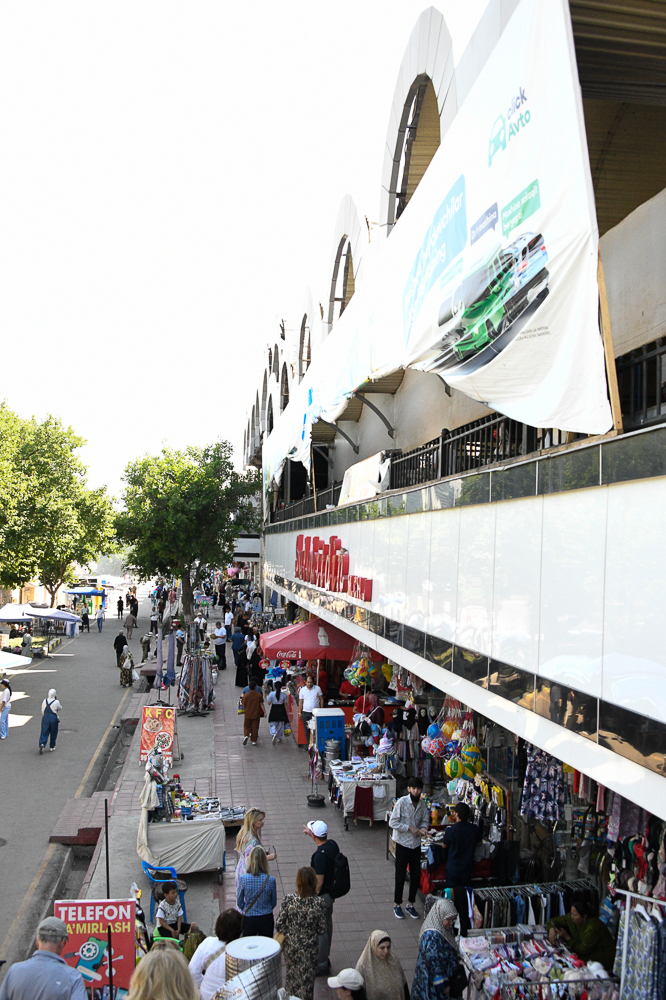
This traditional marketplace in Eski Shahar, Tashkent’s old city, claims to be over 2,000 years old. In Farsi, the word chorsu means “four streams,” an indication of how this place has long existed at a cultural crossroads.
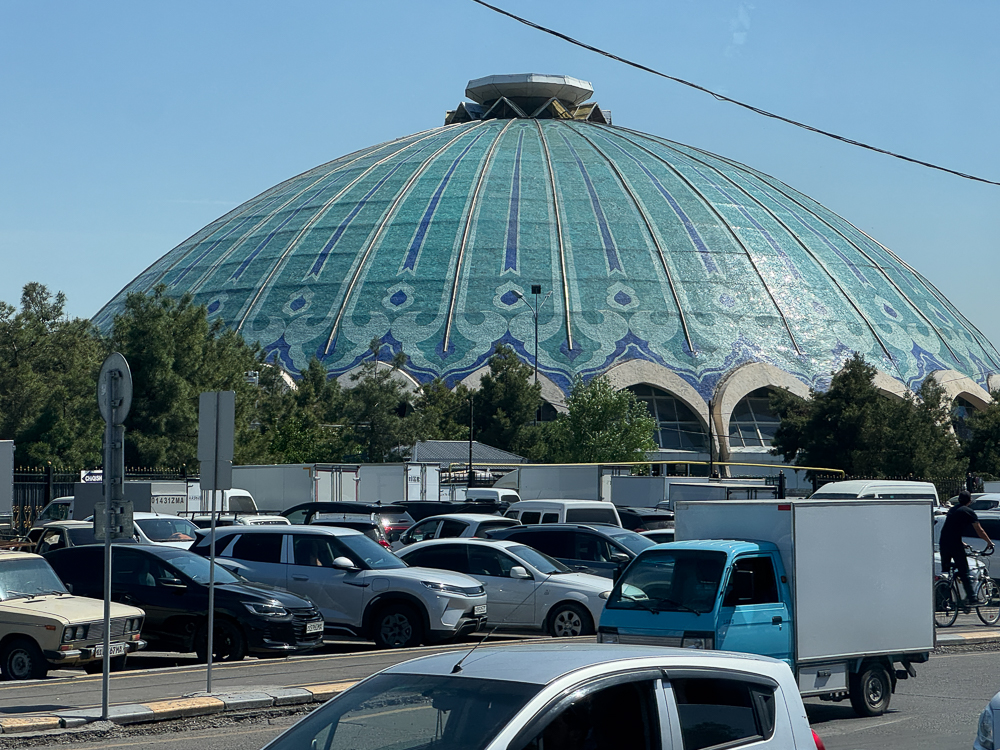
While the bazaar itself was built around 1570, the modern building and its characteristic blue dome were designed by Russian architect Vladimir Azimov in 1980, as a late example of the Soviet Modernism style.
*
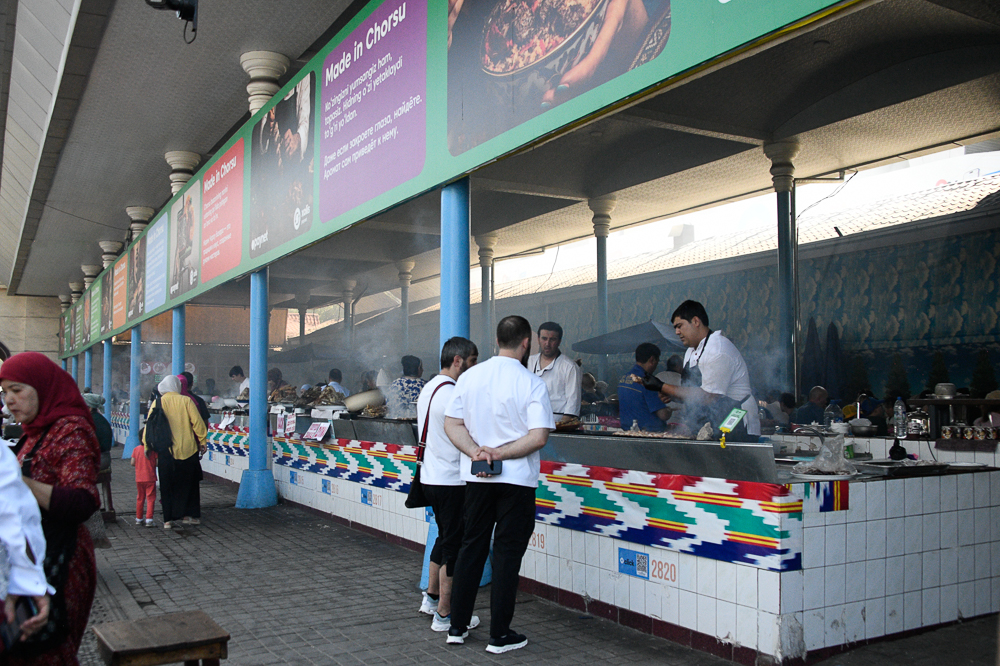
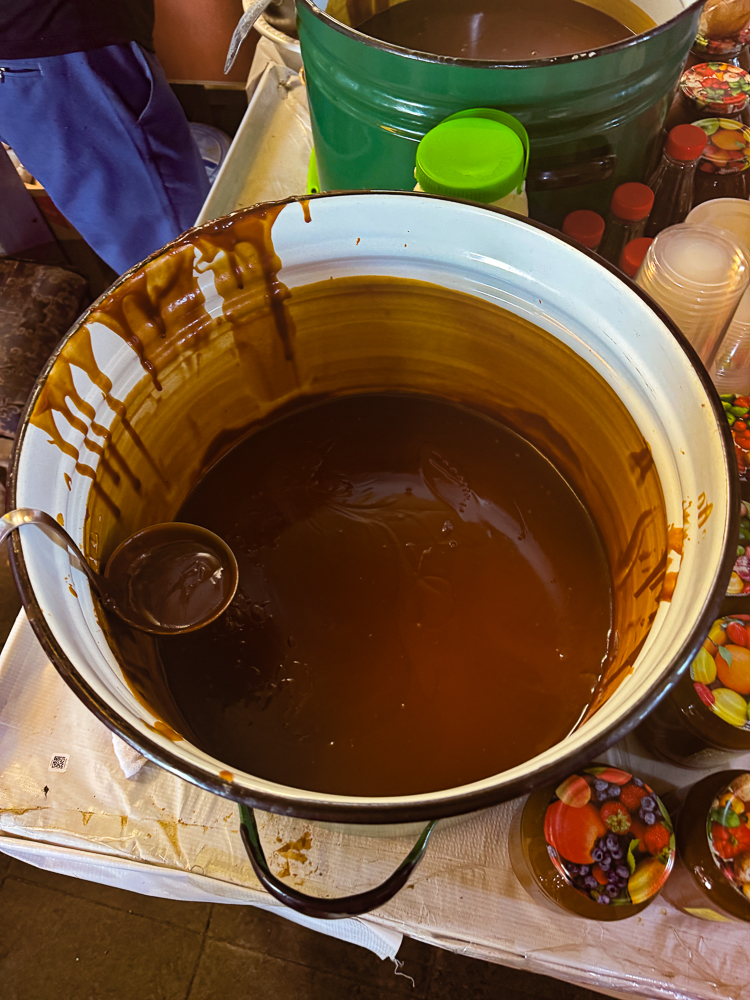
Sumalak is a traditional dish made from sprouted wheat, prepared annually during Navruz, the Persian New Year.
One legend has it that a poor mother boiled wheat, flour, and water with stones to calm her hungry children. When she woke up, she found the mixture had transformed into a sweet, nourishing dish – sumalak. The name is believed to mean ‘30 angels’, referring to the unseen helpers who bless the dish.
Ingredients (large batch, 80 liters):
- 16 kg wheat grains
- 80-100 kg wheat flour
- 5 liters of vegetable oil (traditionally cottonseed oil)
- 10-15 small clean stones or walnuts (optional, to prevent burning)
- Water, as needed
Basic steps:
- Sprout the wheat: Soak for 3 days, then let it germinate for 3-4 days.
- Extract the wheat liquid: Grind the sprouts, mix with water, and strain.
- Cook slowly: Mix wheat extract, flour, and oil in a large pot, stirring constantly for 10-12 hours until thick and caramel-coloured.
Bread
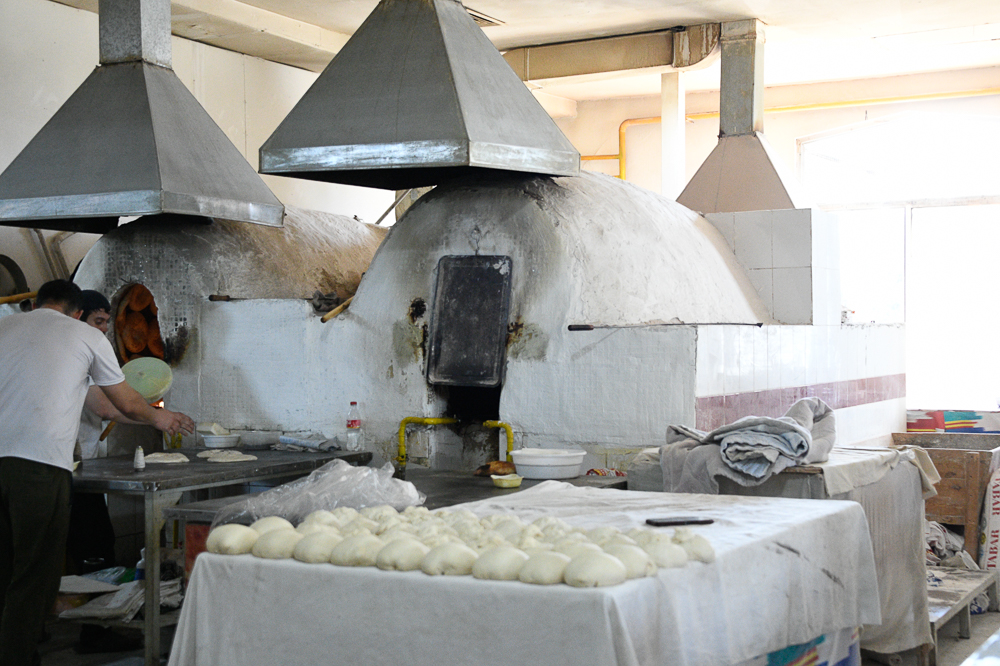
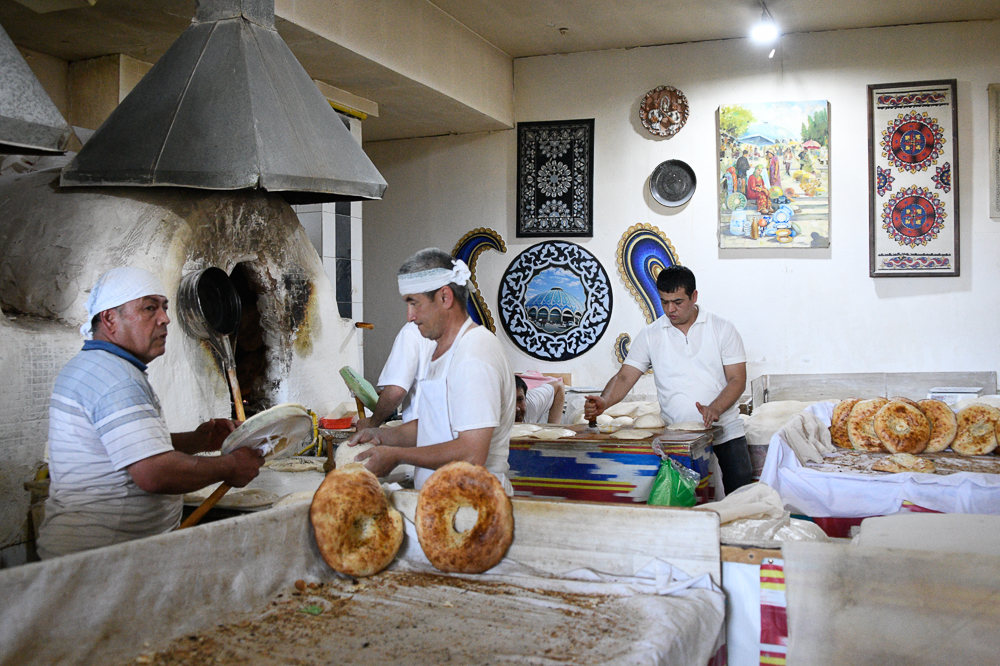
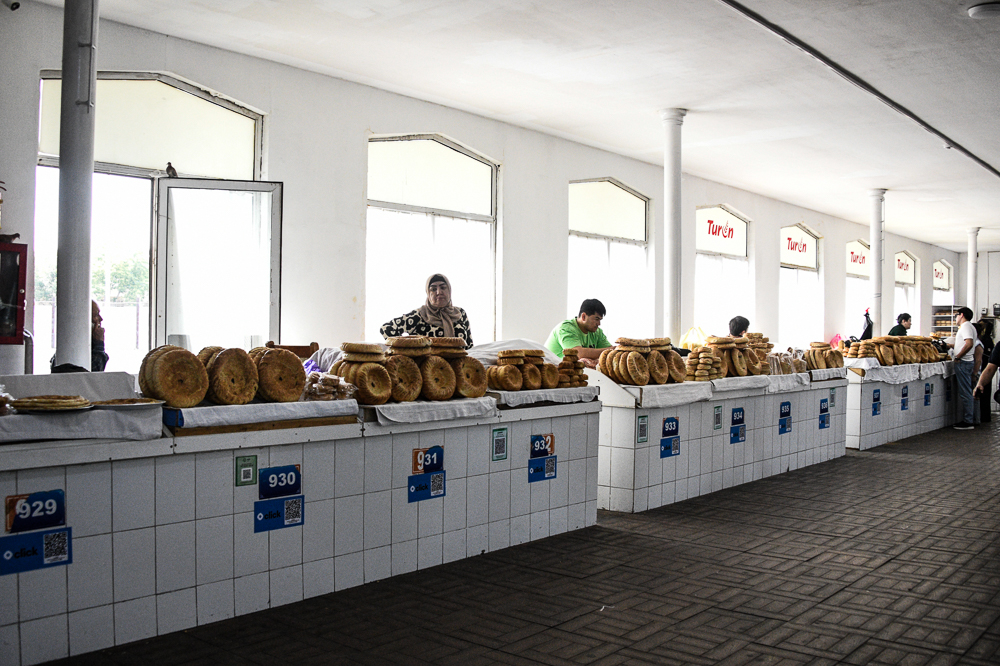
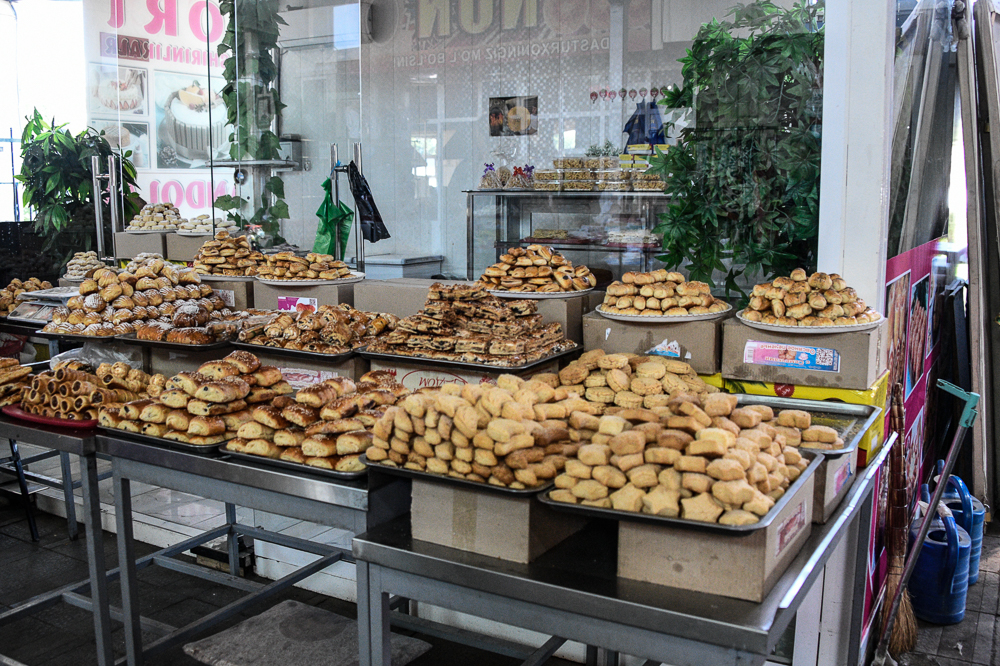
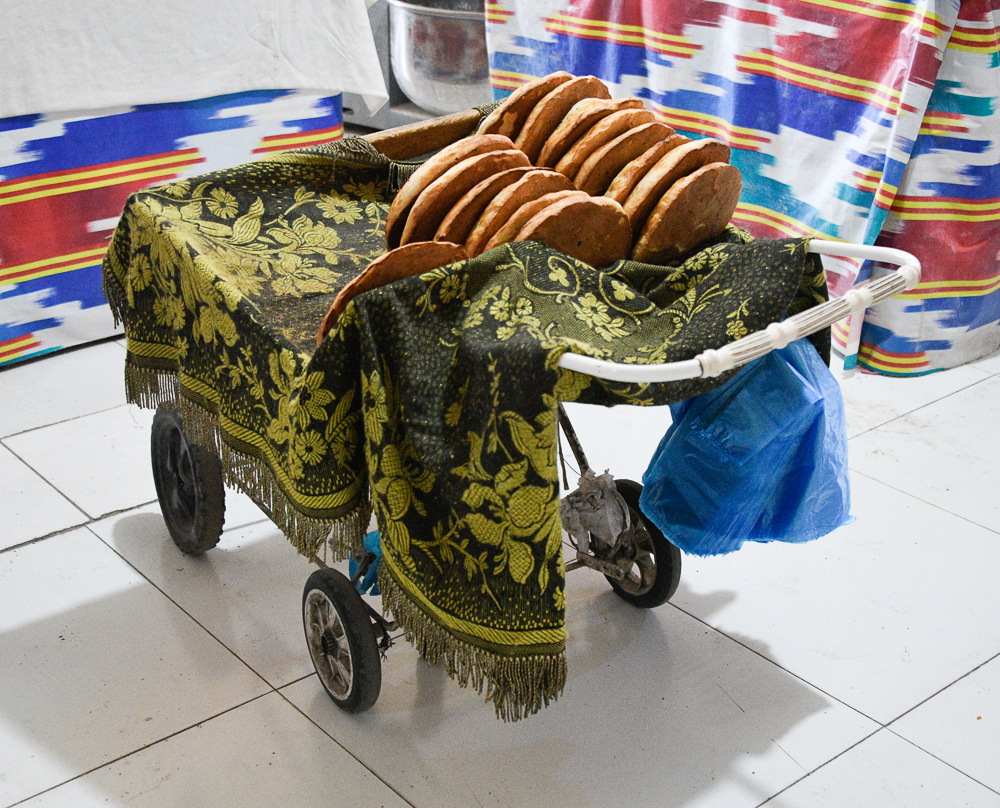
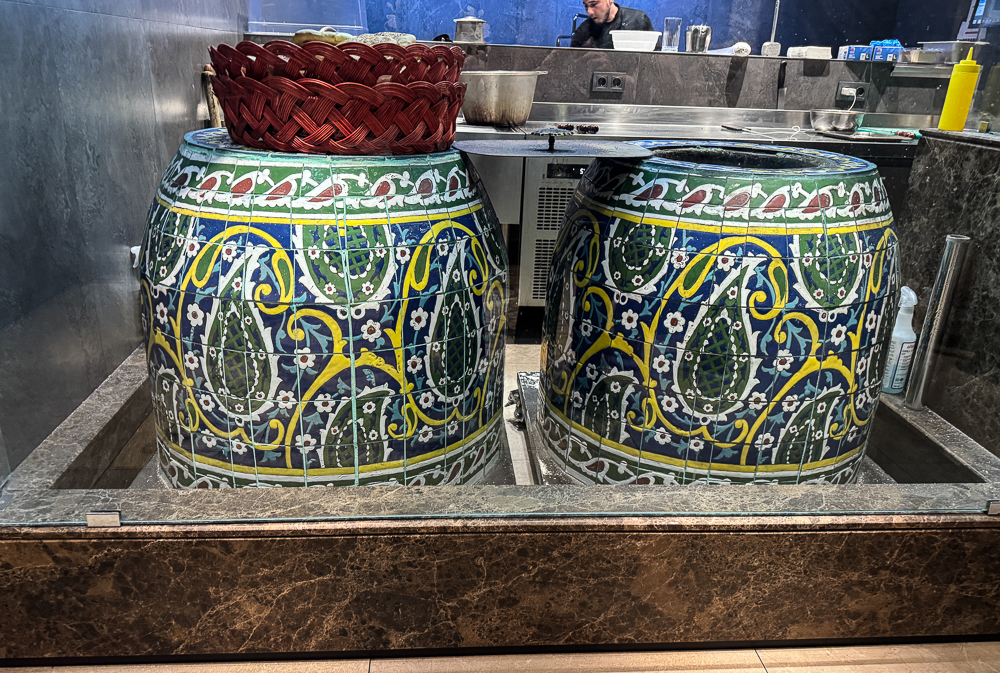
While the classic fruits, vegetables, spices, and more can be found in the bazaar, what intrigued me and where I just loved being, not just for the chaos and interest, but also the aromas, was the bread factory.
*
*
*
*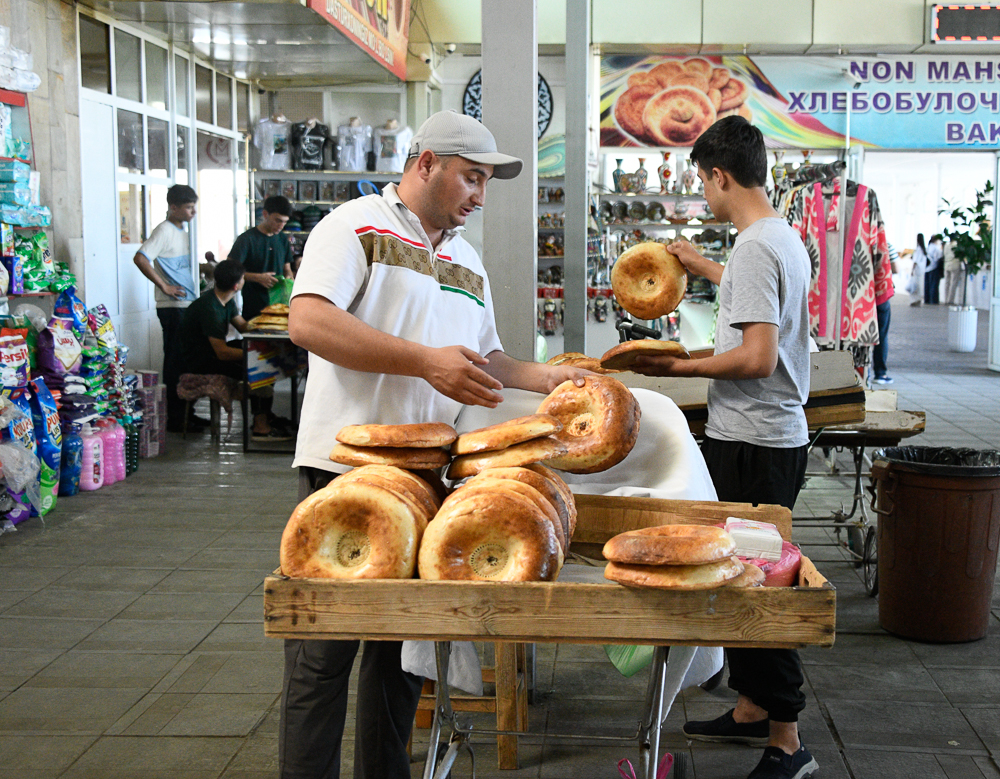
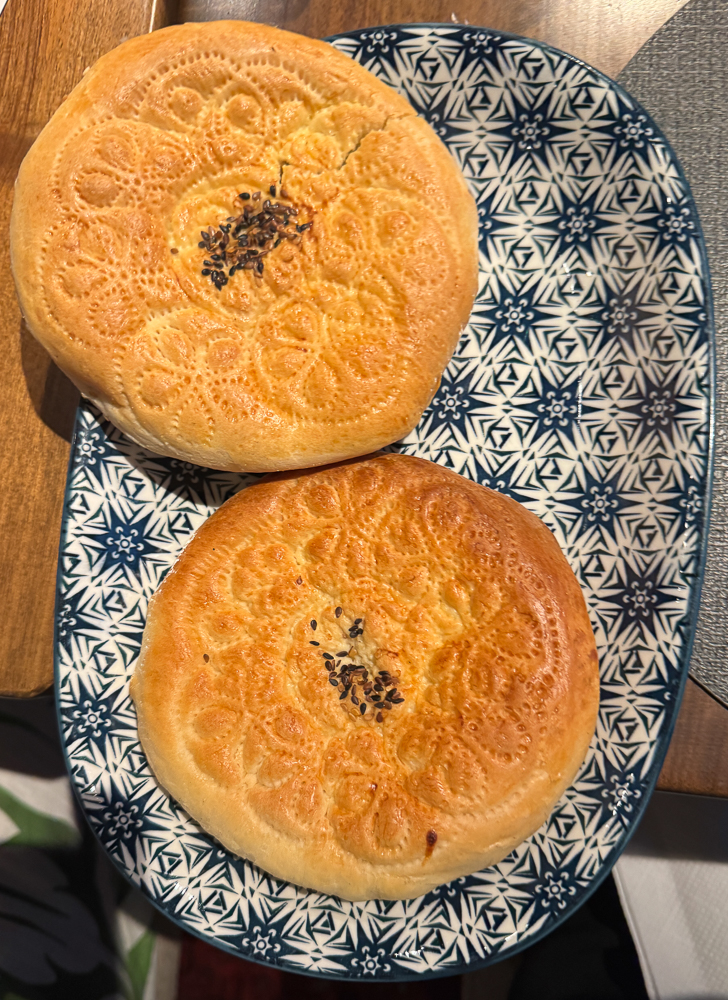
As you can see bread is a very important part of the Uzbek diet. That evening, the bread laid on the table was so intricately designed that I had to grab a photograph.
Tashkent City
On our last evening, we headed out to the new modern project the city is developing called Tashkent City. The project officially began in March 2023, when the foundation stone was laid.
It is a purpose-built city designed to accommodate population growth, ease environmental pressures, and introduce new urban living standards in Central Asia.
Strategically located between the Chirchik and Korasuv rivers, New Tashkent is planned to cover around 80 square miles, hoping to position it as a potential new urban core rather than a peripheral suburb.
According to the plan, the city will accommodate about 2 million people and create 200,000 high-income jobs driven by innovative technology.
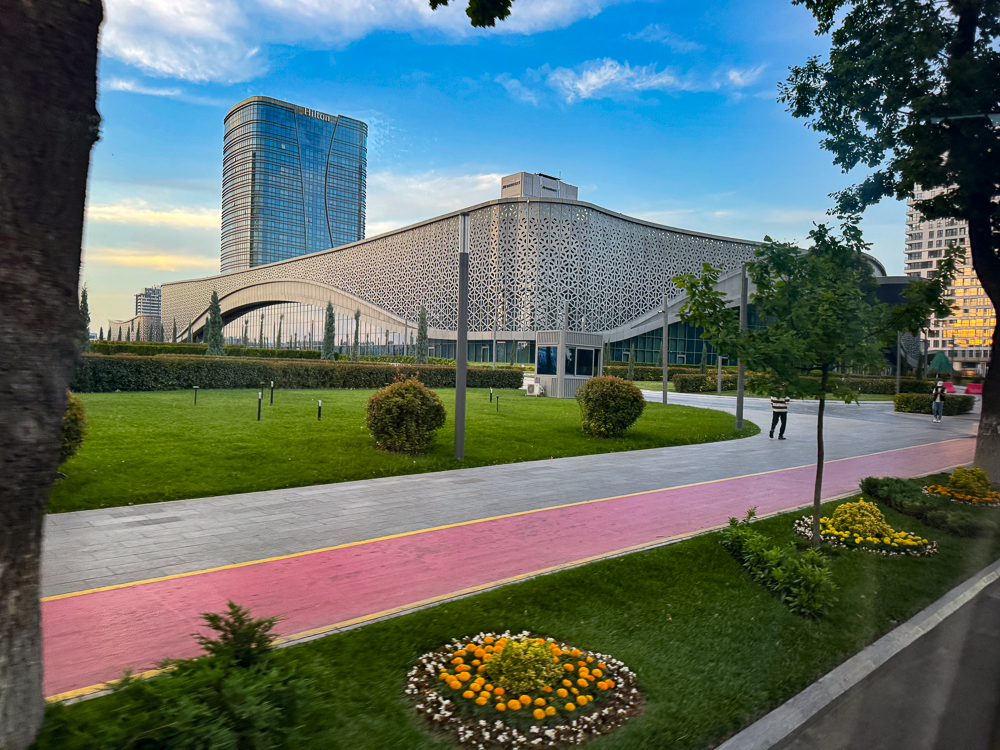
However, our guide said that on the salary of an ordinary worker in Tashkent, they simply would never be able to afford to live there.
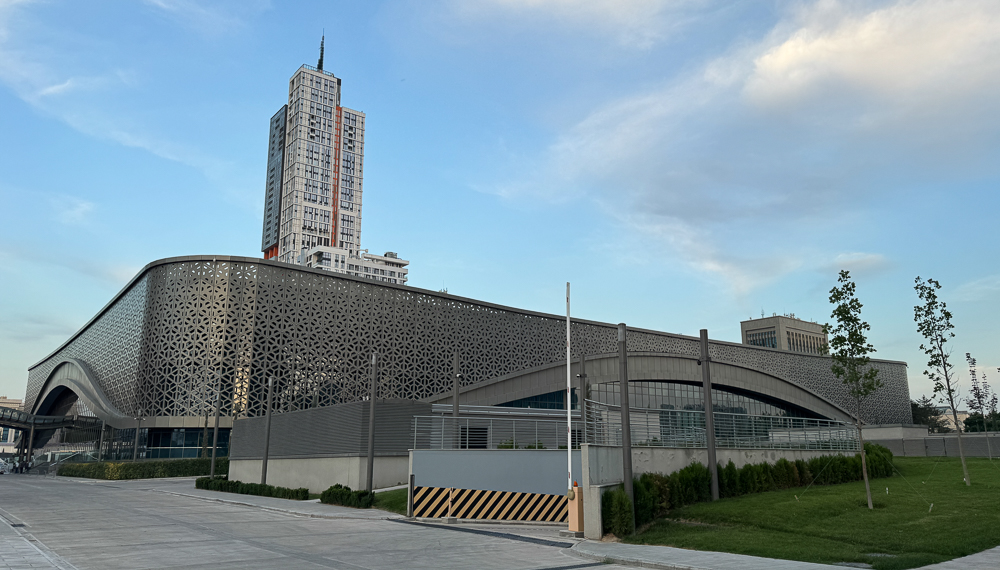
The city has grand ecological plans, including green LEED building requirements, public transportation, and a major new addition to the Metro system.
It will be powered by existing hydropower, a 400-megawatt solar farm currently under construction, and a tri-generation facility that converts waste into heat and electricity.
With a growing population and the sprawl of Tashkent, it is no doubt needed. Will it serve the people of Tashkent or the global wealthy and their corporations? That is yet to be seen.
When I see a planned city like this, I always worry about what will happen to the historic architecture in the future. Tashkent has considered this as well. In 2023, Rem Koolhaas, Sumayya Vally, Shumon Basar, and Lukasz Stanek took part in a symposium, Where in the World is Tashkent?, to discuss Tashkent’s modernism, which arose after the 1966 earthquake.
French architect and architectural historian Jean-Louis Cohen, prior to his untimely death, started an application for UNESCO to help certify Tashkent’s modernist architecture as world heritage. Professor of architectural history in Milan, Davide Del Curto, in Cohen’s stead, has submitted applications for 21 Tashkent modernist buildings to UNESCO.
Tashkent is sold as a city wiped out in the earthquake of the 1960s and rebuilt in soviet style. It is so much more. As we move forward on this journey, older ancient buildings will be on the itinerary; however, the modern architecture up against the brutalism of Soviet architecture was something that easily could have kept me here a few more days.