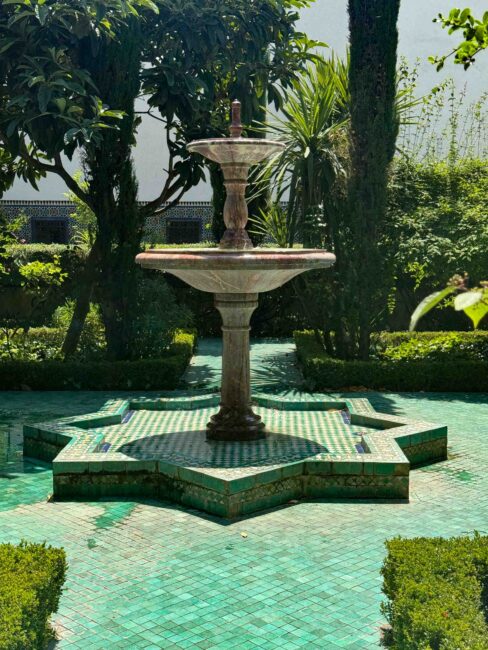
June 2026 – Also called the Great Mosque of Paris
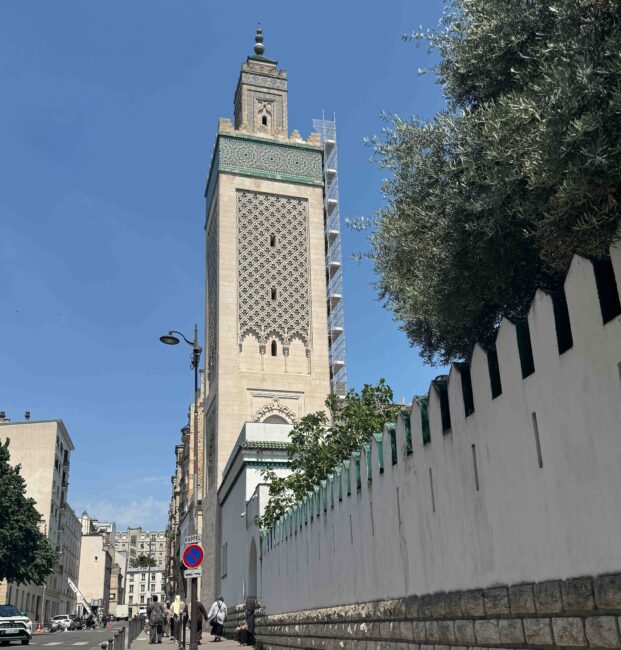
As someone who has spent years traveling in Muslim countries, even I thought it odd that I would visit a mosque in Paris. However, the history of this mosque is so inspiring that I had to go see it for myself.
The Great Mosque of Paris was funded by the French state in accordance with a law passed on August 19, 1920, for 500,000 Francs. The purpose was a Muslim Institute composed of a mosque, a library, and a meeting and study room.
Construction began in 1922. The work was completed by Robert Fournez, Maurice Mantout, and Charles Heubès based on plans by Maurice Tranchant de Lunel.
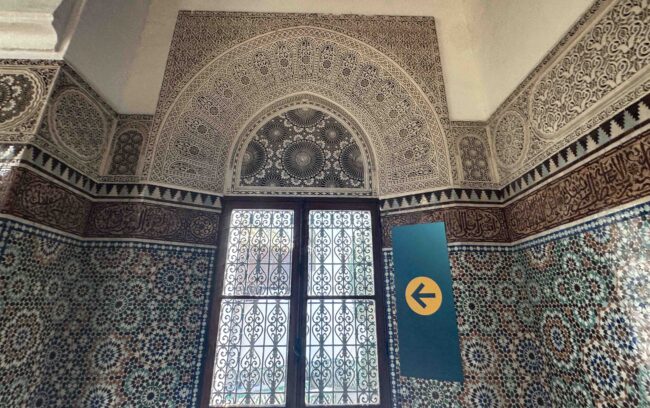
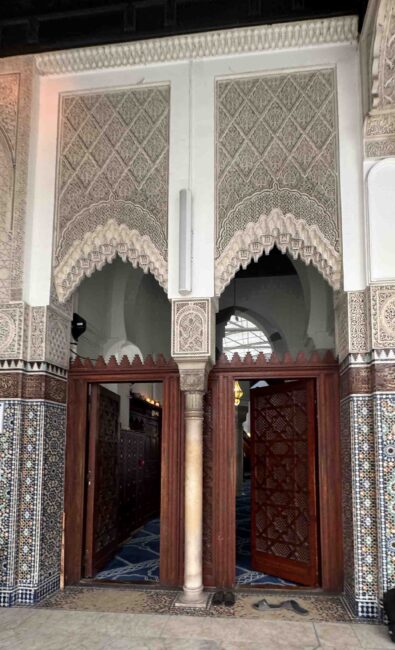
The mosque is in the Moorish Revival style, and its minaret is 108 feet high.
During the Second World War and the occupation of France by the Nazis, the mosque served as a site of resistance for Muslims living in France. The Algerians of the Francs-Tireurs et Partisans made it their mission to secure and protect British parachutists and find them shelter. Built on caves, the Mosque permitted them to secretly reach a tributary of the Seine.
They also helped Jewish families relocate to the Mosque while they waited for transit papers to travel to the Free Zone or to cross the Mediterranean Sea to the Maghreb.
Jewish refugees were given papers declaring that they were Muslim and members of the mosque in order to protect them from persecution
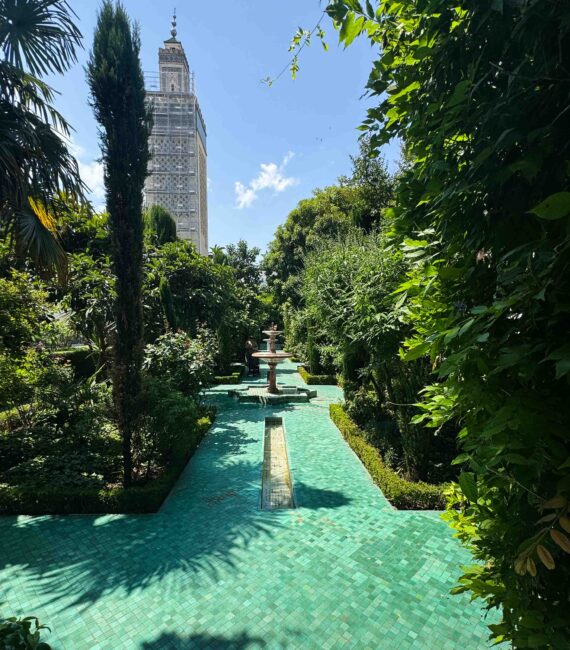
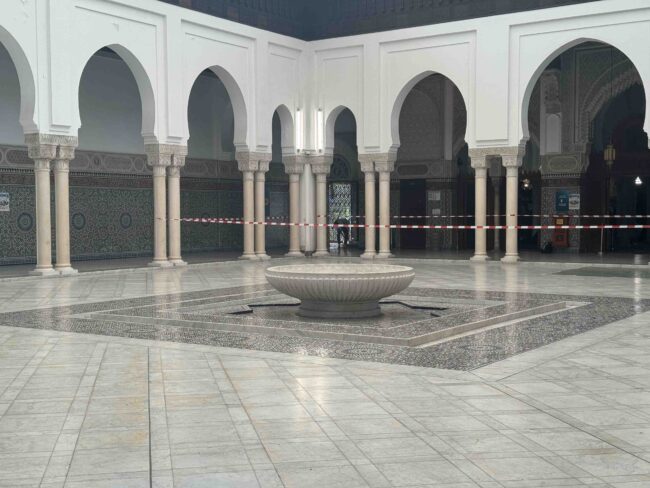
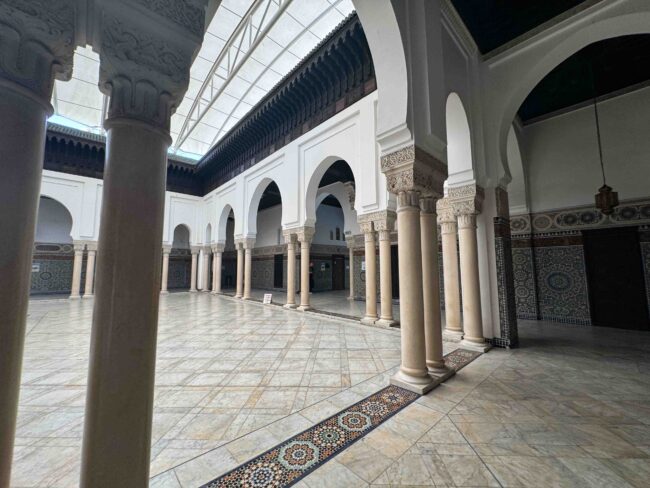
The mosque is inspired by North African mosque architecture. For example, the courtyard, horseshoe arches, and green-tiled roofs are inspired by the Qarawiyyin Mosque in Fez, Morocco, while the minaret was inspired by the Zaytuna Mosque in Tunis, Tunisia.
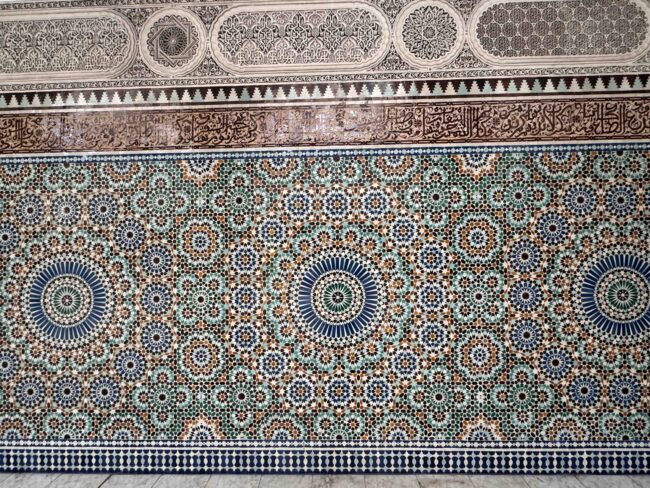
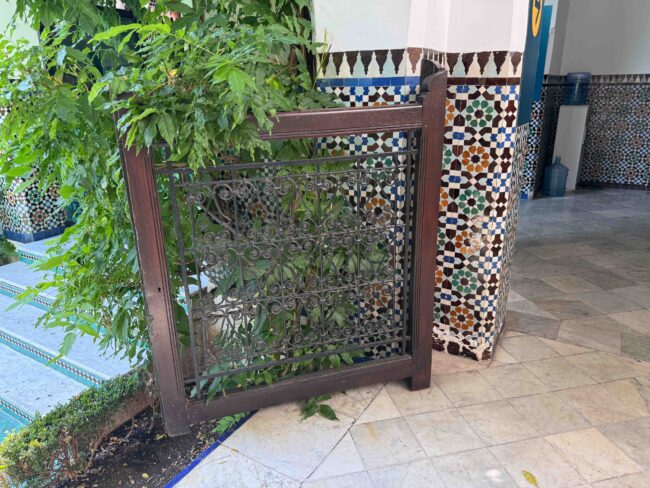 The zellij tilework was installed by specialized craftsmen from North Africa using traditional materials.