June 2026
Sometimes you just see the strangest things when you walk through a city. There is no rhyme nor reason to these shots; they just caught my eye.
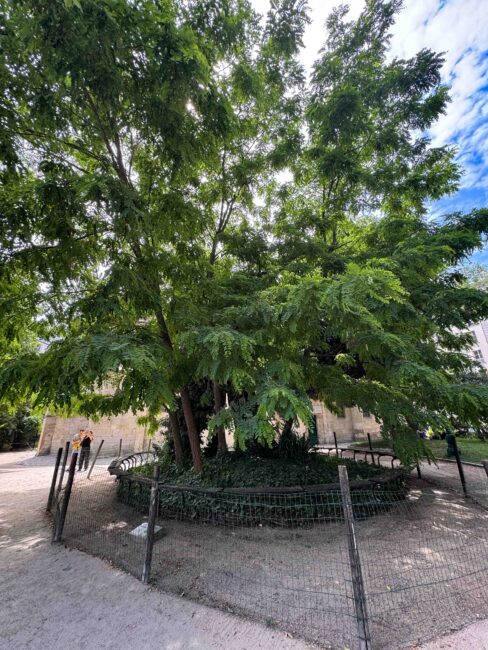
The locust of Square René-Viviani, of the species Robinia pseudoacacia, is believed to have been planted by its namesake, Jean Robin (1550–1620), in 1601, from a seed brought back from the Appalachian Mountains in the United States. The tree lost its upper branches to a shell during World War I, but it continues to bloom every year.
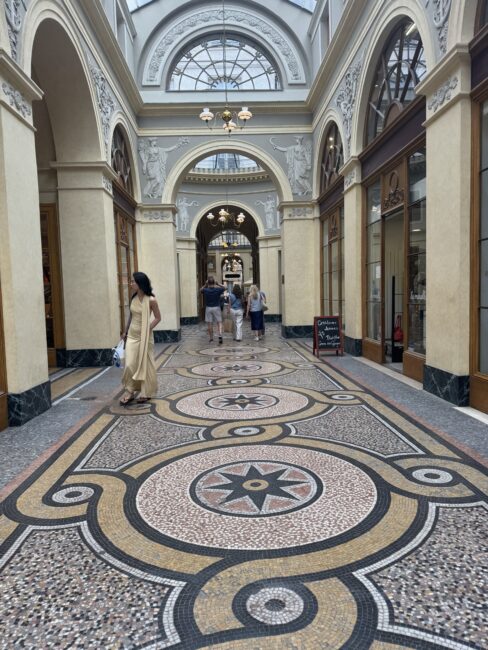
Galerie Vivienne, opened in 1826, is one of the many stunning covered passageways in Paris. It is also home to Librarie Jousseaume, one of its first tenants,and one of Paris’ oldest bookstores.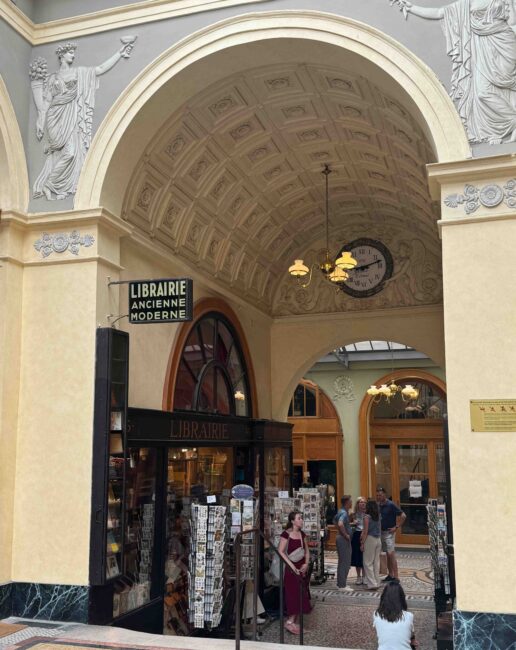
If you are in the area stop in at the restaurant Vivienne, it is really a great place to dine.
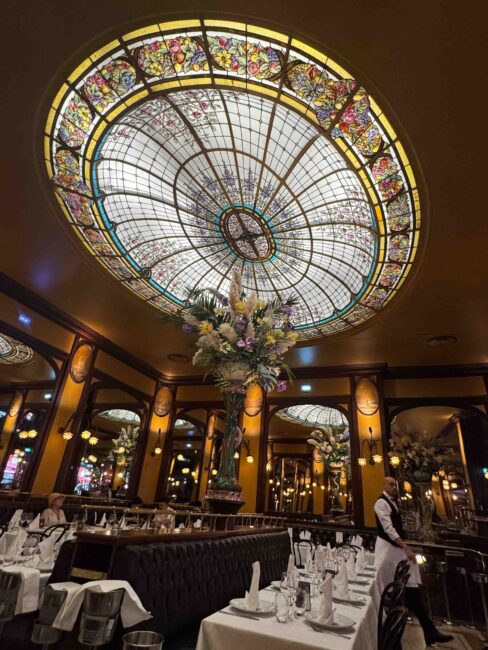
Another Paris classic for dining is Bofinger near the Bastille. The food is great, but the room is spectacular.
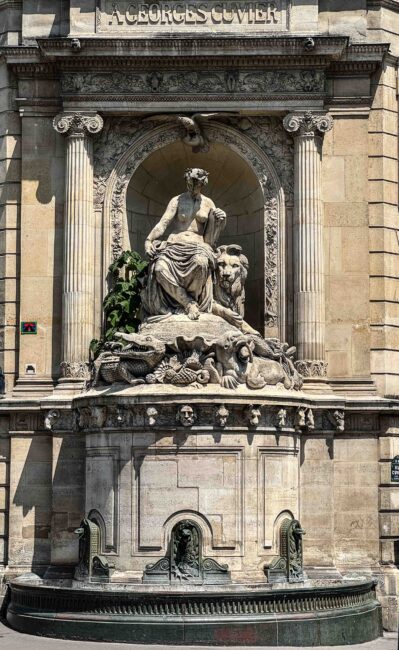
The fountain was built in 1840 under the guise of the architect Alphonse Vigoureux, inspector of the waters of the city of Paris. The fountain pays tribute to the famous naturalist, Georges Cuvier.
The central statue is by the sculptor Jean-Jacques Feuchère, and is a young woman holding tablets engraved with Cuvier’s motto: “Rerum cognoscere causas”.
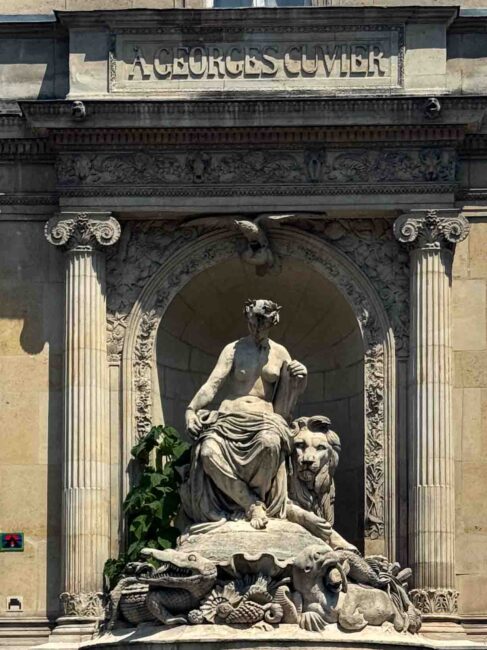
It is surrounded by symbolic animals, including an anatomically impossible crocodile. The ornamental elements, such as the frieze and tympanum, are signed by Pierre-Jules Pomateau, a sculptor known for his architectural ornamental sculptures.