September 2025
The 5th is called Panthéon. The name comes from the grand monument on the hill built for Louis XV and later turned into a national mausoleum after the French Revolution.
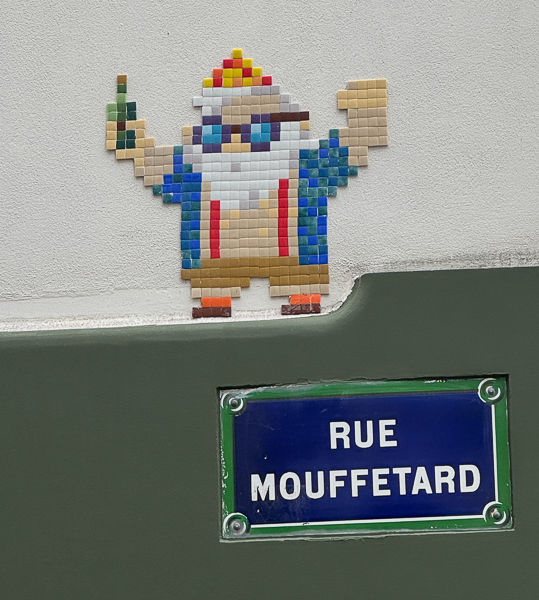
One of the more important and fun things to do in the 5th is to stroll Rue Mouffetard.
 *
*
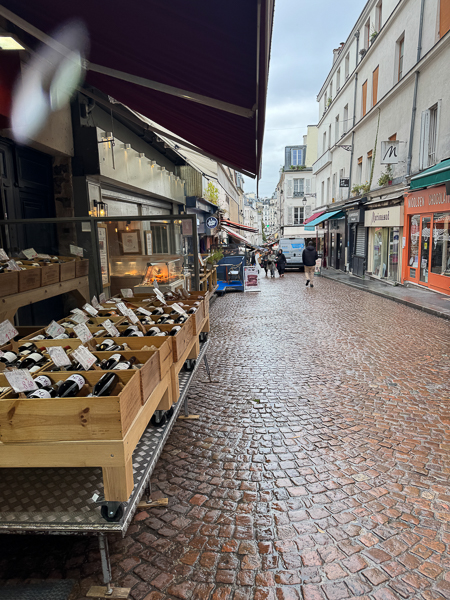
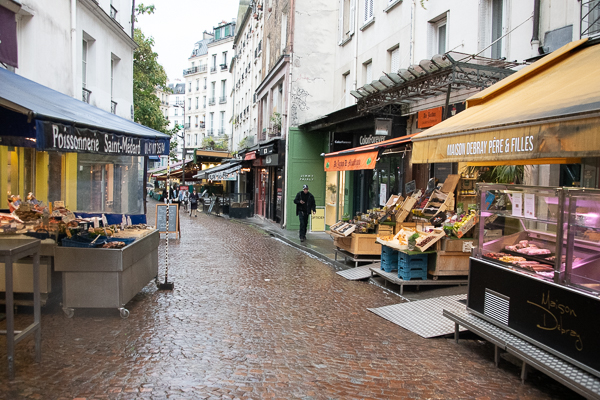
This pedestrianised street, which Parisians call “la Mouffe”, is one of the oldest streets of Paris with a great history. There has been a road here since the Romans, 2000 years ago. Most importantly, it is home to a beautiful street market.
Mouffet means “skunk” in French. The street was popular as a location for animal skinners, and mofettes is related to the word meaning “odors of pestilent”, referring to the smells emitted by the process of skinning.
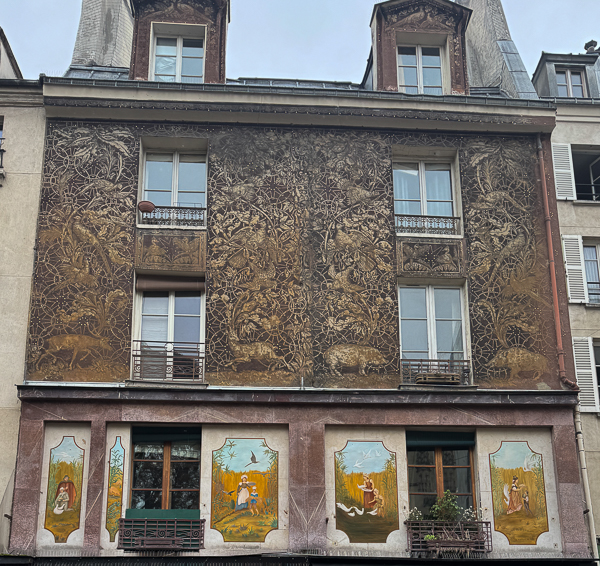
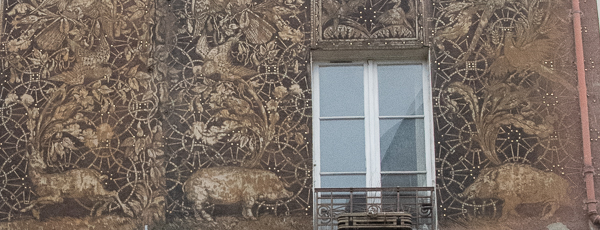
One of the first buildings you encounter is ornamented with this facade, which was in effect an advertisement for the 1930s boucherie at ground level. The building dates from the early 17th century; the fresco, however, was made between 1929 and 1931 by an Italian bricklayer, Adigheri, using sgraffito, a technique widely used during the Renaissance period, which Art Nouveau brought back at the beginning of the 20th century.
Between the mezzanine windows, four cartouches are adorned with panels depicting rural scenes.
 *
*
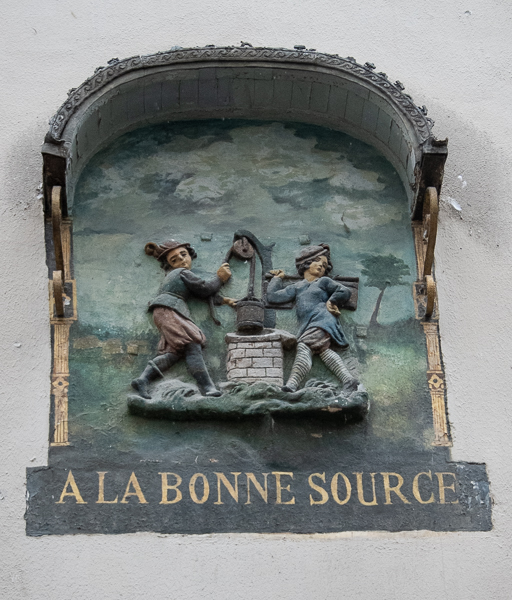
At 122 rue Mouffetard, there is a sign that reads “A la Bonne Source. It is left from when a wine merchant in the 18th century was here. The scene is a play on words. The two figures are drawing water from an “endless well”, refers to “a powerful wine.” The friendly jokes were intended to attract more customers because of the merchants’ humor.
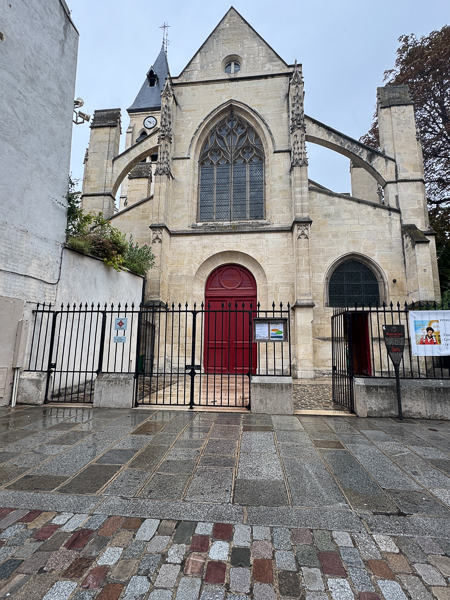
Legend has it that the initial iteration of the church dates back to the 7th century. However, marauding Norman invaders razed the structure during their 9th-century raids, leaving it in ruins for centuries until it was reconstructed in the 12th century.
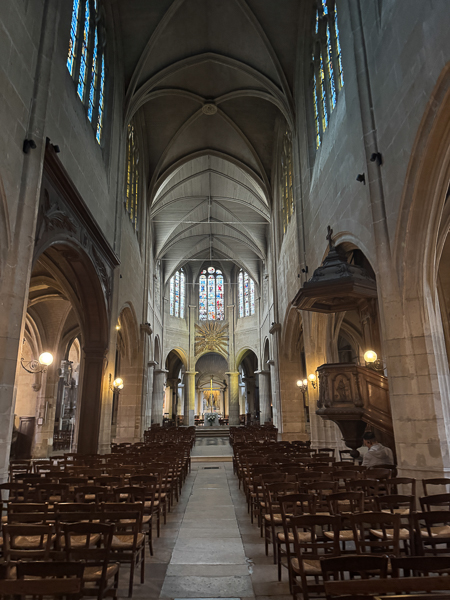
St Medard is the most invoked of the patron saints concerning weather-related matters in Paris. Something that could have been used on this rainy day.
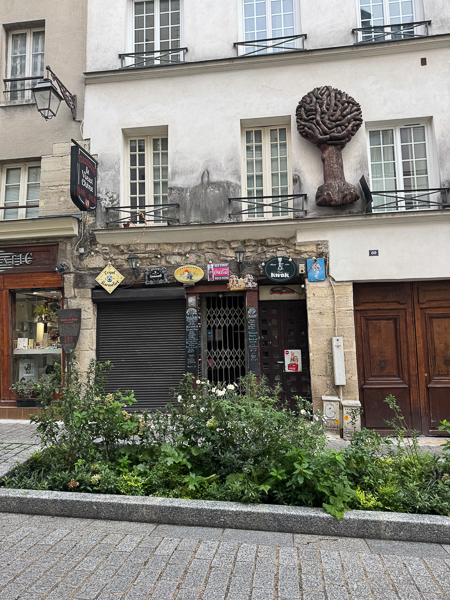
At 69 Rue Mouffetard is a small bar called ‘Le Vieux Chêne’ (The Old Oak), it is one of the oldest watering holes in Paris, dating from the early 18th century. In 1848, it served as the seat of the Revolutionary Committee whose aim was to finally overthrow the monarchy, which they did.
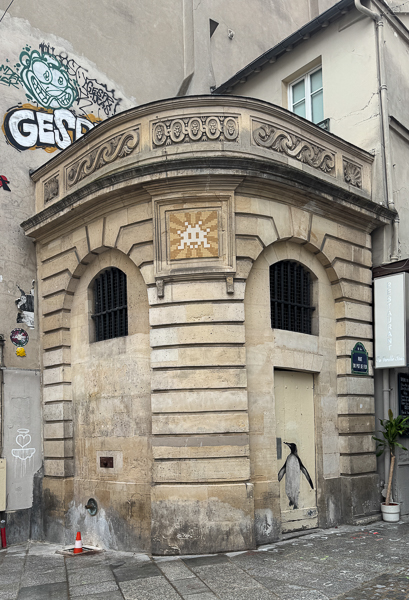
The “fountain” or water source on the corner with Rue du Pot-de-Fer was built in 1671 by Michel Noblet, royal architect and guardian of the city, and is today the only public water source from this period in the district to have escaped the modernization of the city.
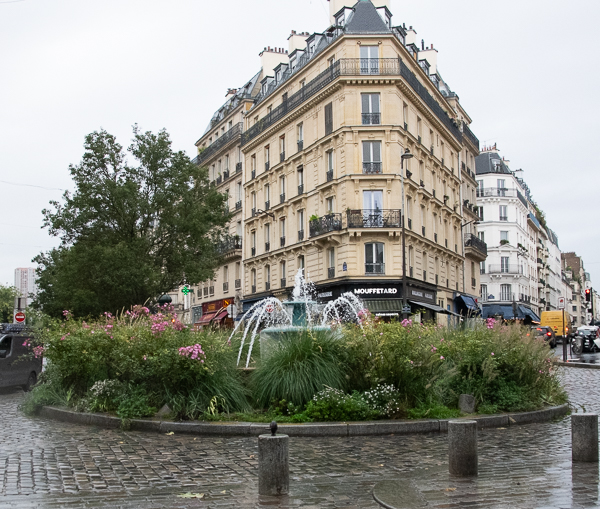
Place de la Contrescarpe served as the opening setting of Ernest Hemingway’s novel, A Moveable Feast. Hemingway lived not far from the square during the 1920s at 74 rue du Cardinal-Lemoine. At the time, the neighborhood was outside the city walls and not nearly as nice as it is today.
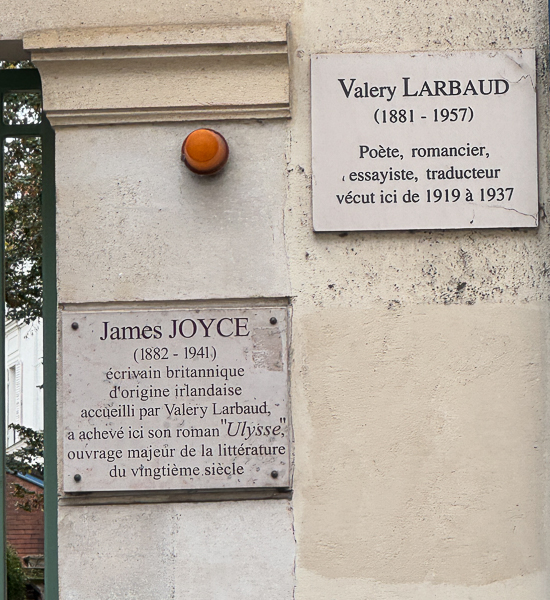
James Joyce spent a considerable part of his life in Paris. He lived here, in Valery Larbaud’s apartment, at 71 Rue du Cardinal Lemoine from June to September 1921.
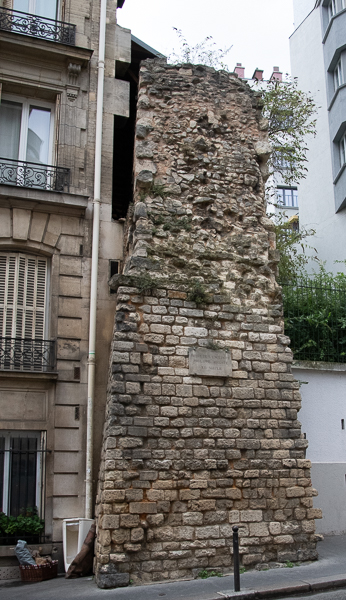
The Wall of Philip Augustus is the oldest city wall of Paris (France), whose plan is accurately known. The wall was built during the struggles between Philip II of France (called Philip Augustus) and the Anglo-Norman House of Plantagenet. The French king, before leaving for the Third Crusade, ordered a stone wall to be built to protect the French capital in his absence.
The walls of the Left Bank (the location of the 5th) were destroyed under Henry IV in 1590. By the 1680s, the wall had become completely invisible.
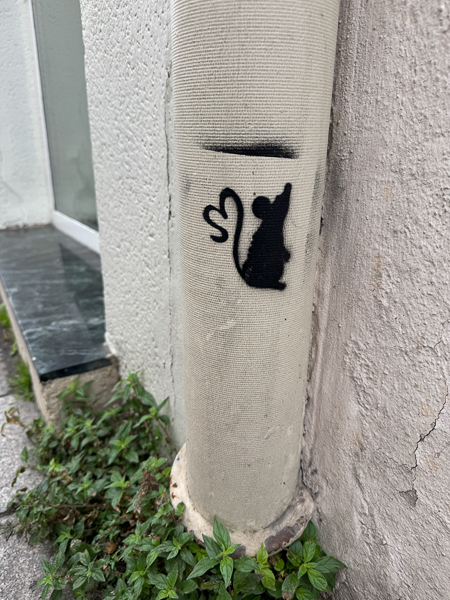
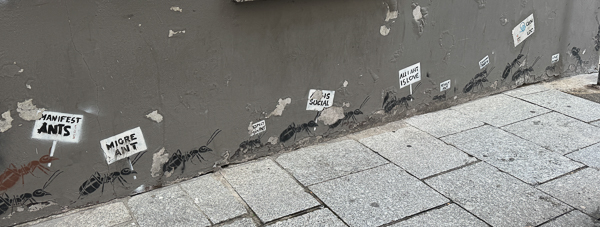
Here are some random fun shots from my stroll.
 *
* *
*
*
*