September 2025
I once again had the pleasure of taking a walking tour of Paris with Flo. It was a private tour of what it was like to be in Paris during the occupation.
On May 10, 1940, when Germany attacked France, the French government moved its headquarters to Vichy. From there, a nominal French authority led by Marshall Philippe Pétain ruled under the evil eye and control of the Germans.
The Marais
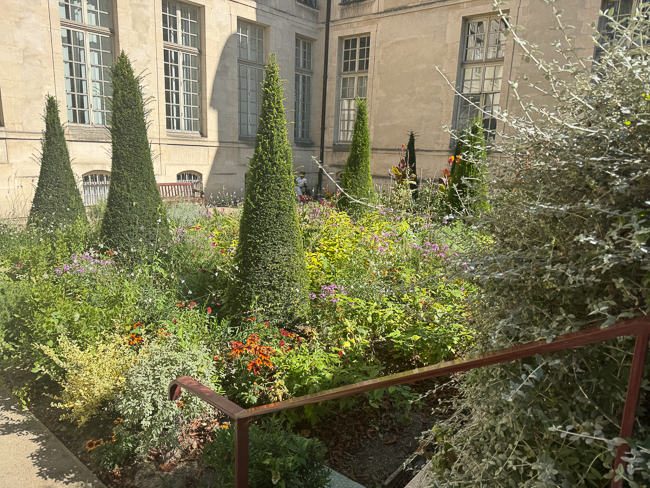
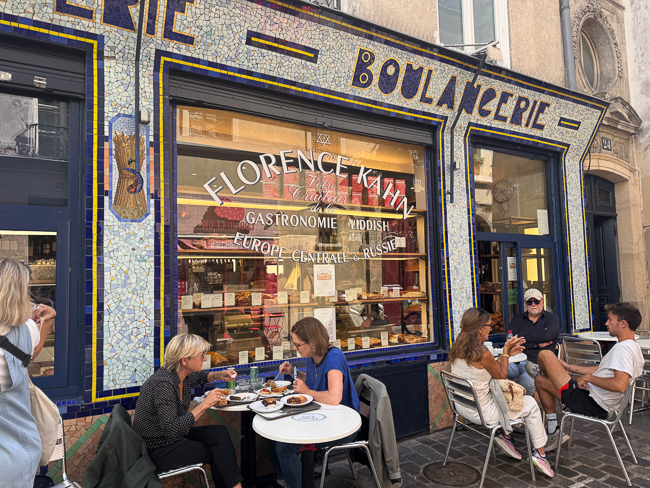
We started in a garden in the Marais, which was and to an extent, still is, the Jewish Quarter of Paris. At the beginning of the war, it housed the largest Jewish population in Paris.
This area faced devastating persecution as the war progressed. Movement was restricted, and a 9.00 pm curfew was imposed in many areas.
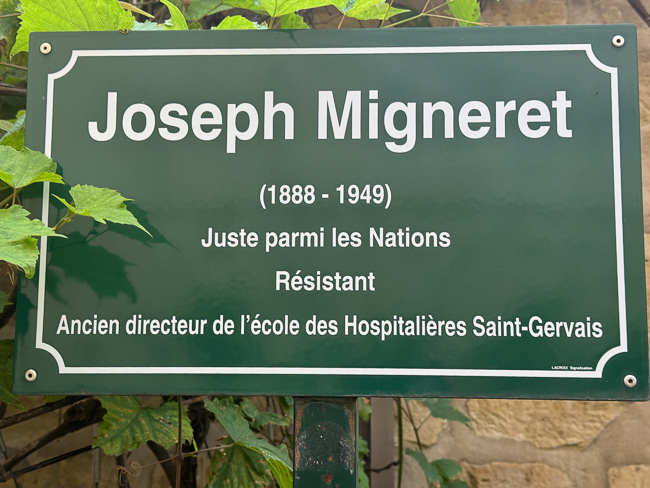
The garden was named for Joseph Migneret, the director of the “École élémentaire des Hospitalières-Saint-Gervais”, a boys’ school located nearby. During World War II, Migneret was actively resistant in providing false papers to fleeing Jews and sheltering many of his former students, saving them from deportation and death.
On one wall is this plaque.
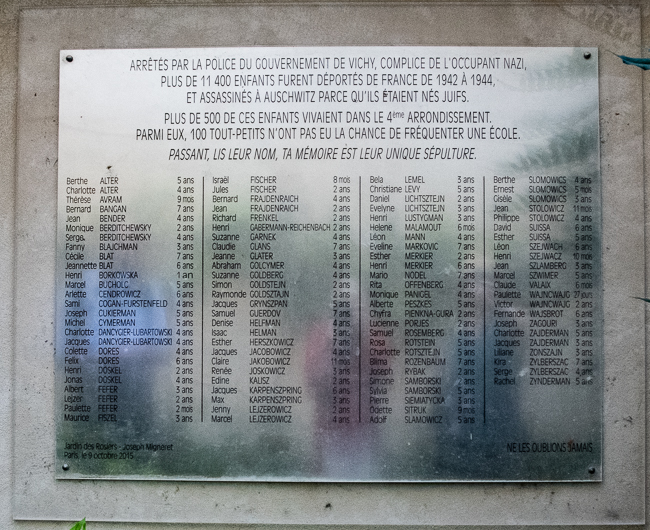
It reads:
Arrested by the police of the Vichy government, an accomplice of the Nazi occupation forces, more than 11,000 children were deported from France and murdered in Auschwitz because they were born Jewish. More than 500 of these children used to live in the fourth arrondissement. Among them, 101 were so young that they didn’t have a chance to go to school.
Passerby, read their names. Your memory is their only tombstone. We must never forget them.
Throughout Paris, as the needs of the German war effort took priority, much of the food being produced was sent out of the country, leading to severe food shortages. There was also a shortage of fuel, as that was being diverted to help the German War effort. Coal for heating was scarce, as was gas for cars. Many people were no longer able to drive, and the number of cars on the roads dropped dramatically. Public transport, including the Metro, still ran but was much less reliable, and the number of buses dropped from 3,500 to just 500.
Many Parisians left the city. During 1940, it is estimated that more than one million Parisians headed out to the provinces. Others were forced to leave the country. Under a forced work program known as the Service du Travail Obligatoire, many French workers were deported and sent to provide labor for Germany.
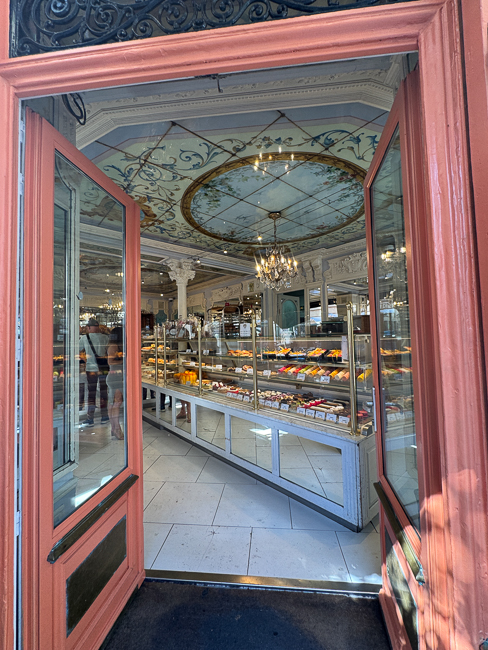
Above Au Petit Versailles is this plaque.
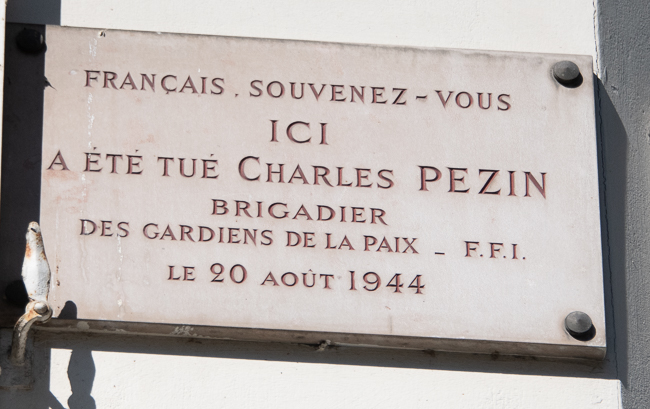
FFI is the French Forces of the Interior (FFI; French: Forces françaises de l’Intérieur). They were French resistance fighters in the later stages of World War II. Charles de Gaulle used it as a formal name for the resistance fighters.
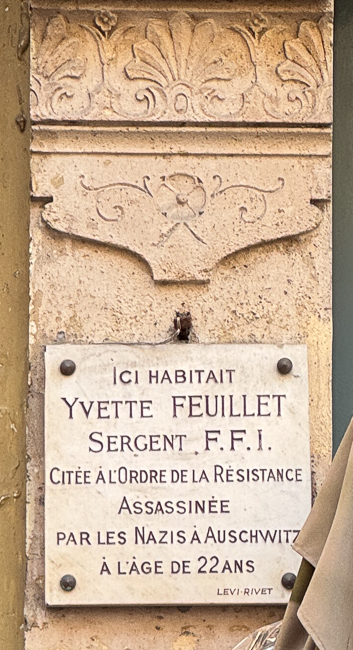
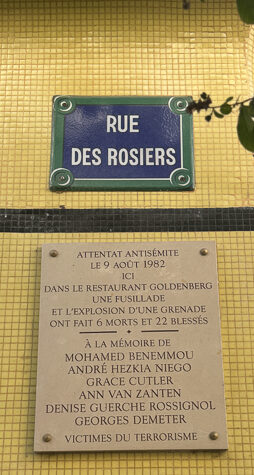
Some things don’t change. The plaque reads: Anti-Semitic attack on August 9, 1982. Here, in the Goldenberg restaurant, a shooting and a grenade explosion left six dead and 22 injured. In memory of Mohamed Benemmou, Andre Hezkia Niego, Grace Cutler, Ann Van Zanten, Denise Guerche Rossignol, Georges Demeter – Victims of Terrorism.
The Holocaust
It was only a matter of time before French Jews met the same fate as German and Polish Jews. In July 1942, they were rounded up and taken to the concentration camps. More than 75,000 Jews were deported to death camps, where about 72,500 were killed.
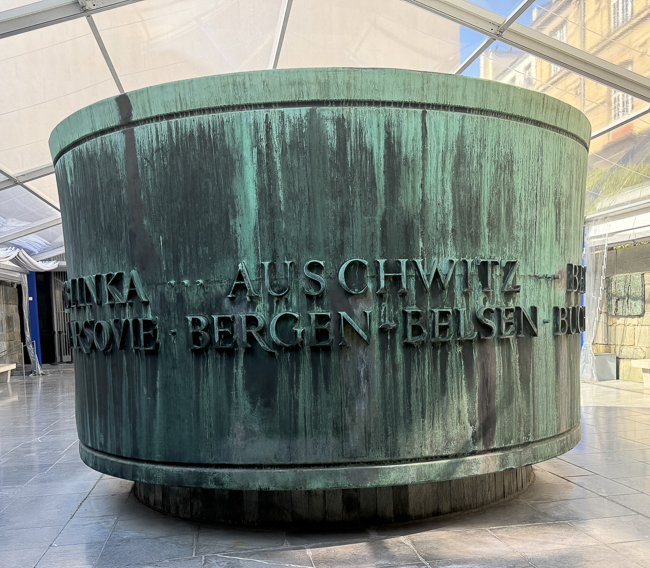
Mémorial de la Shoah is Paris’ Holocaust Museum. It was opened by President Jacques Chirac on January 17, 2005. The day was chosen to coincide with International Holocaust Remembrance Day and the 60th anniversary of the liberation of the Auschwitz concentration camp.
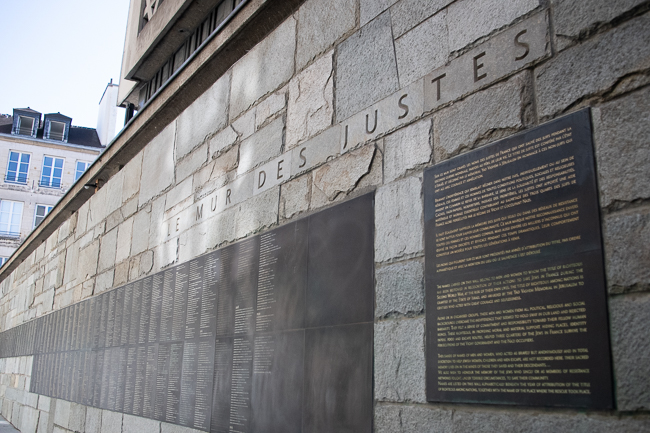
Since 1963, the Museum Memorial of Yad Vashem in Jerusalem has awarded the title “Righteous Among the Nations” to non-Jewish people who helped save Jews during the war. As of 2014, this wall lists 3,300 people, either French or acting in France, who have been awarded this title. This is one wall of the Memorial de la Shoah.
Hotel de Ville and Prefecture of Police
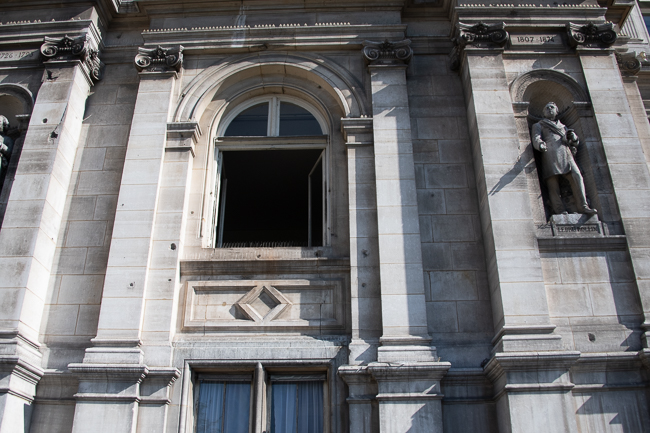
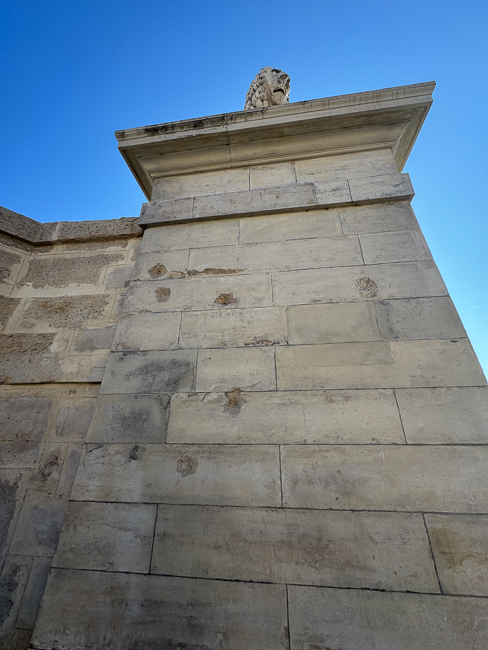
During the Liberation of Paris, which started on August 19th, 1944, street fights occurred everywhere in the city. Many buildings still bear the traces of the fights of the time. Especially those in the center of the city, such as City Hall (Place de l’Hotel de Ville), and the Prefecture of Police (Police headquarters) near Notre Dame.
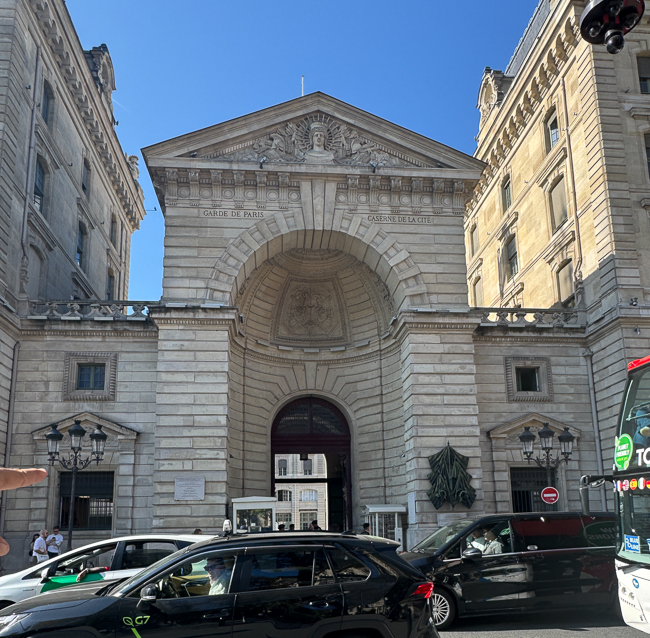
Bullet holes, traces of shells, and bombs are still visible.
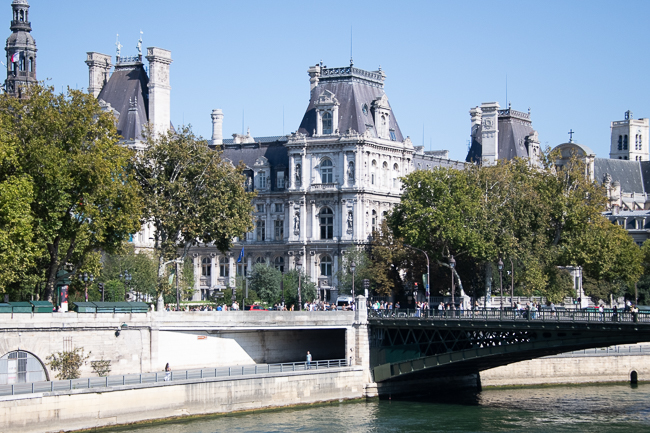
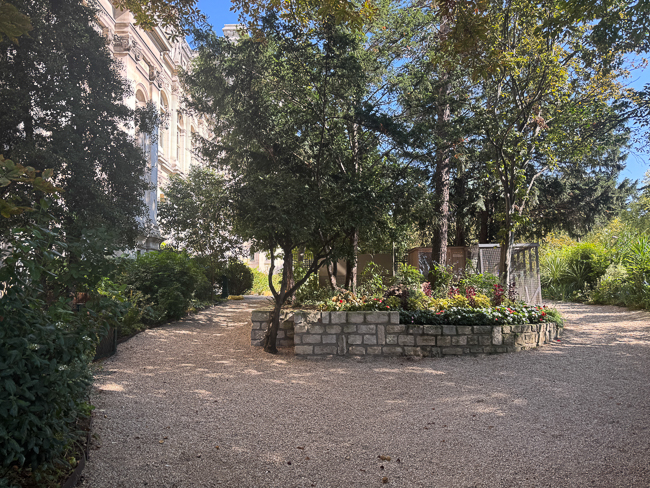
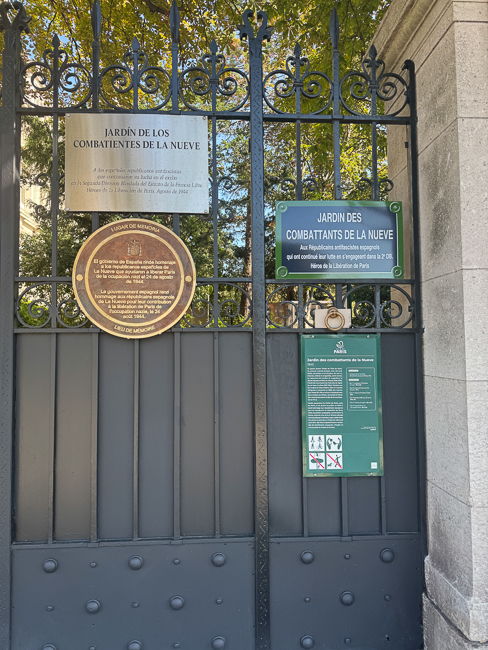 The Jardin de l’Hôtel de Ville was renamed Jardin des Combattants Espagnols de la Nueve to honor the Spanish Catalan combatants who were the first liberation troops to arrive at the Hôtel de Ville in August 1944. The Nueve was primarily composed of Spanish Republicans who continued their fight in France after the victory of Franco in Spain.
Art Galleries
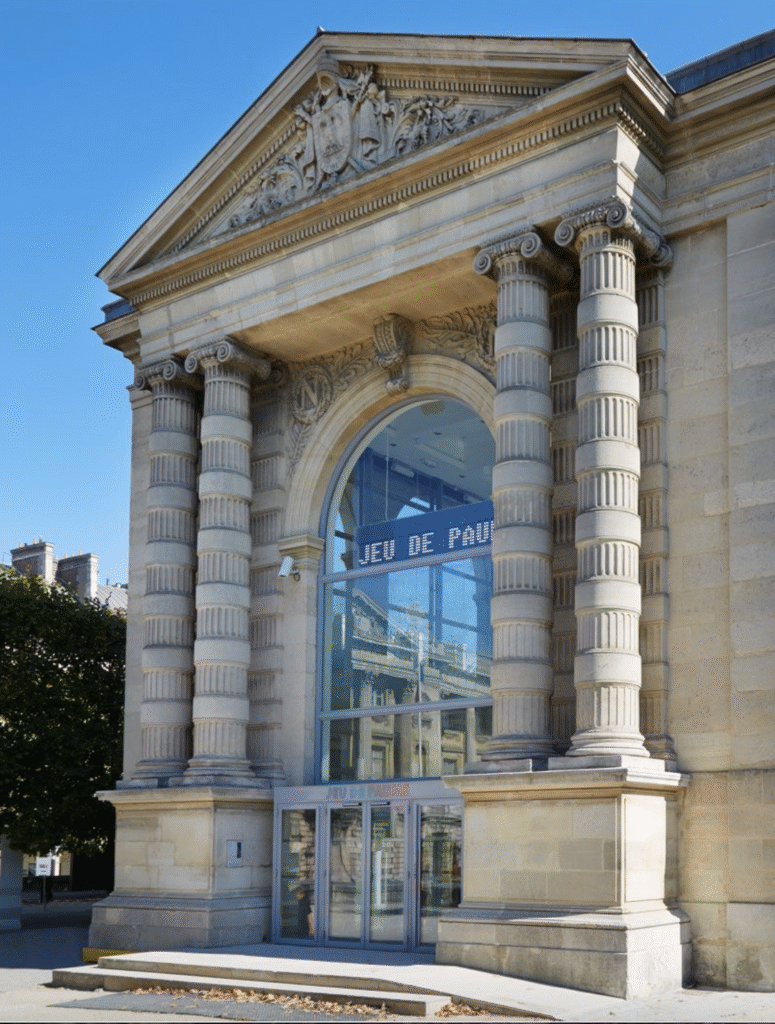
Early in the occupation, the government moved many of the city’s art treasures out of Paris to chateaus in safer parts of the country. However, many great works of art remained in Paris, and the Germans, especially Goebbels, had their pick.
Saving Paris Architecture
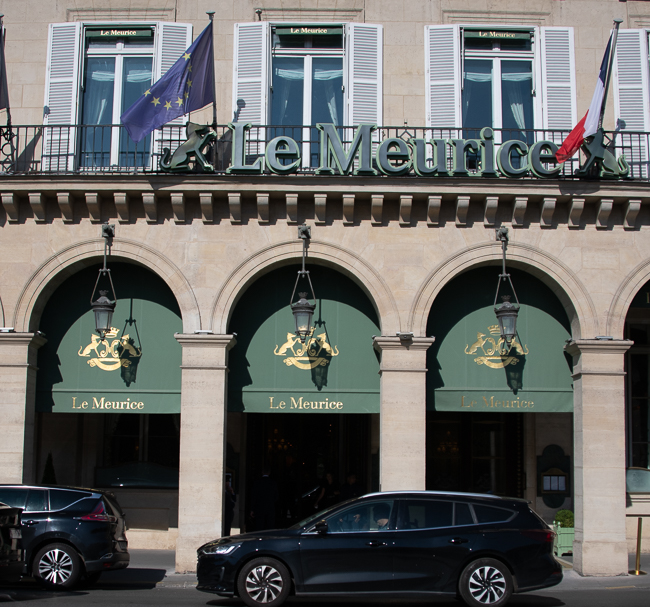
Paris was liberated on August 25, 1944, following the Battle of Paris.
When Paris was about to be freed in the summer of 1944, the German general in charge of the city, von Choltitz, received orders from Hitler to destroy all the bridges and some monuments of Paris. It is said that bombs were placed, and Nazi soldiers were waiting for orders, which were never given. Much of the credit for this is given to Swedish diplomat Raoul Nordling, who spent the night at the Hotel Meurice convincing von Choltitz not to destroy Paris.
Paris was not a strategic target and therefore did not suffer from bombings by the Allies either. The factories were outside of the city, and Paris was not, unlike the German cities, a hub where railways would cross.
Place de la Concorde
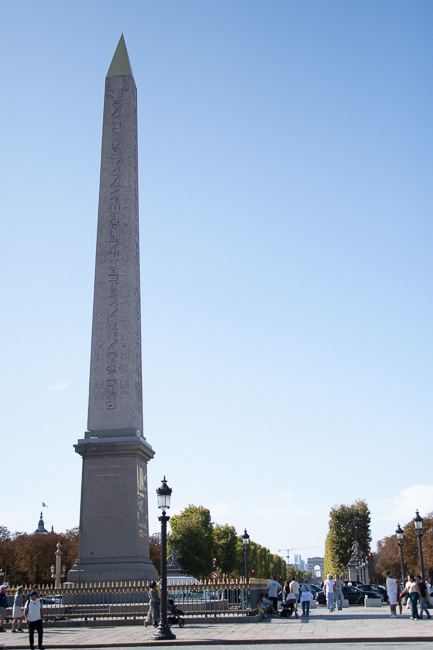
Led by the second Armored Division and the FFI, an attack began at 1:15 p.m. on Rue de Rivoli. Captain Branet, Captain Julien, and Lieutenant Bricard headed the operation that gave rise to the most violent fighting of the liberation of Paris. After several hours, the Place de la Concorde and the Tuileries Garden were finally taken over, precipitating the German surrender.
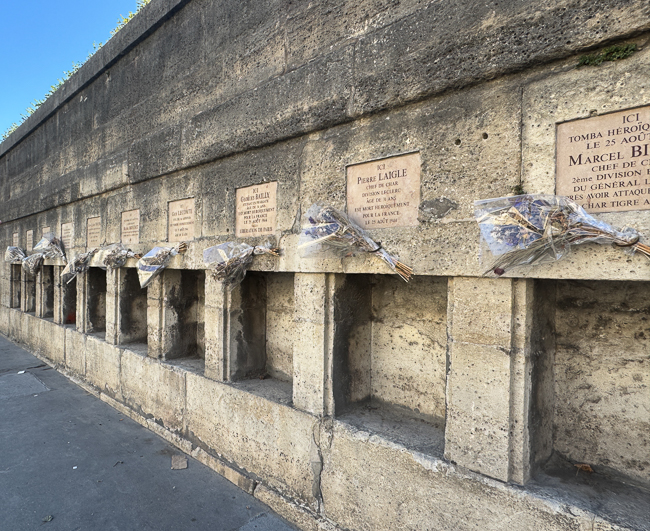
At the very end of Rue de Rivoli, right before the street meets the Place de la Concorde, and on the wall of the Tuileries Gardens, are ten plaques honoring people who died on August 25th, 1944, during the liberation of Paris.
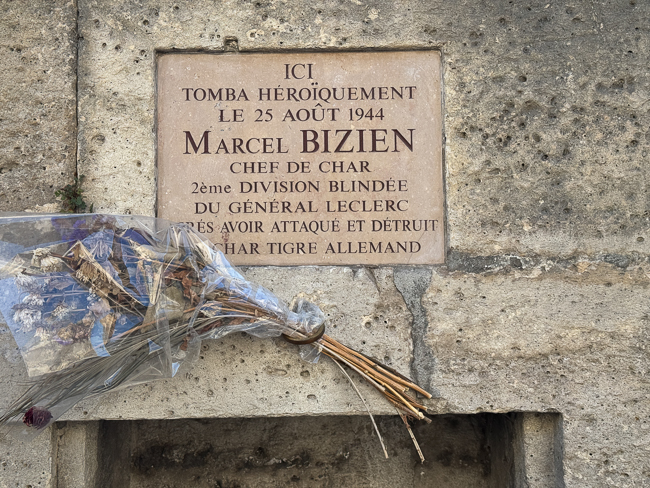
Tank chief (chef de char) Marcel Bizien was riding a Sherman tank, the “Douamont” in Place de la Concorde on August 25th. He rammed a German tank and pierced it at close range with four shells, setting it on fire. Upon getting out to inspect the damage, Bizien was shot by a German sniper.
Remembrances
In Europe, the two World Wars are periods in history that are remembered every day in so many ways. I have shown such a small sampling, this one is in the Metro.
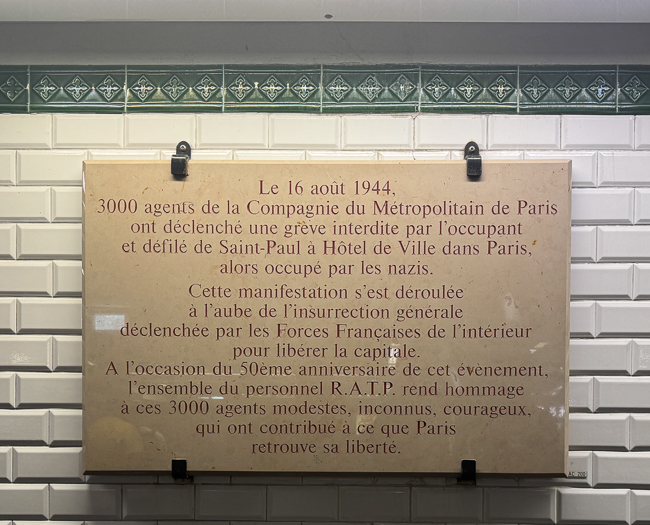
On August 16, 1944, 3,000 Paris Metropolitan employees launched a strike banned by the occupier and marched from Saint Paul to City Hall in Nazi-occupied Paris. This demonstration took place at the dawn of the general uprising launched by the French Forces of the Interior to liberate the capital. On the occasion of the 50th anniversary of this event, the RATP staff assembly pays tribute to these 3000 modest, unknown, and courageous employees who contributed to Paris regaining its freedom.