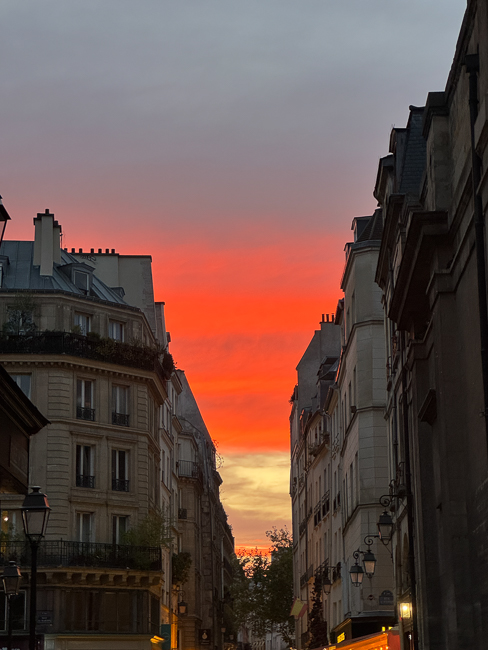
September 2025
The 4th is called Hôtel-de-Ville. It refers to the city hall at the corner of rue de Rivoli and rue de Lobau. The site has been the center of municipal authority since the Middle Ages.
Maison de Victor Hugo
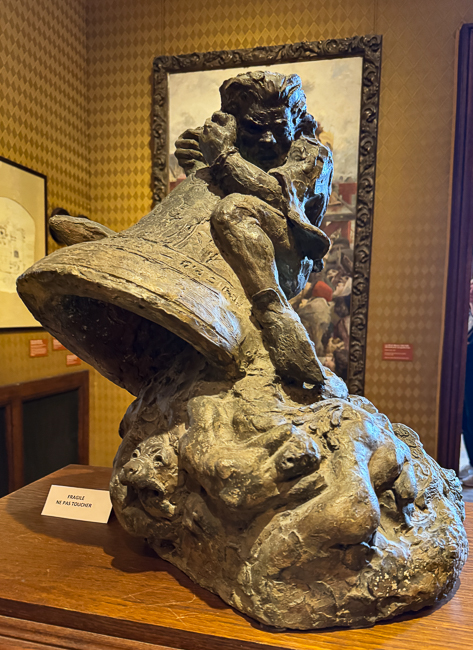
I am always so embarrassed when I realize how close Victor Hugo’s home was to my rental years ago, and I never got there. It is a magnificent home. The house is where the artist lived for 16 years between 1832 and 1848. However, it is not exactly like his home at the time; it is an amalgam of his home in Paris and his home in exile in Guernsey, as well as serving as a museum to show works of art about and by the artist.
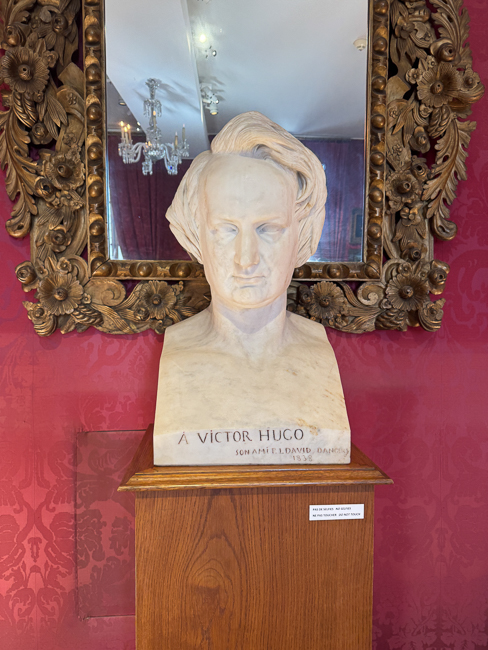
At a very young age, Hugo had made a name for himself with poetry (Les Orientales [Eastern Poems]), drama (Hernani), and prose (The Hunchback of Notre Dame).
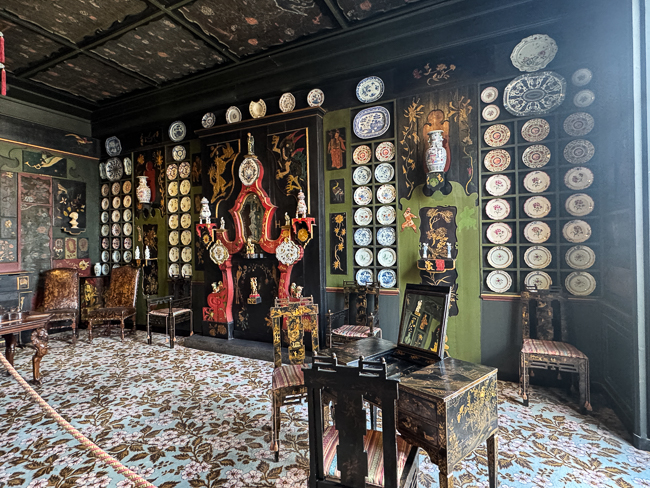
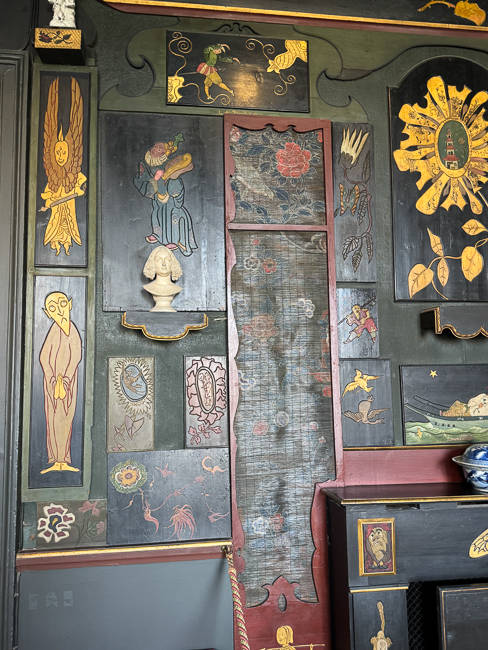
This room showcases the décor and furniture he designed for Juliette Drouet’s (his mistress’s) house, Hauteville II.
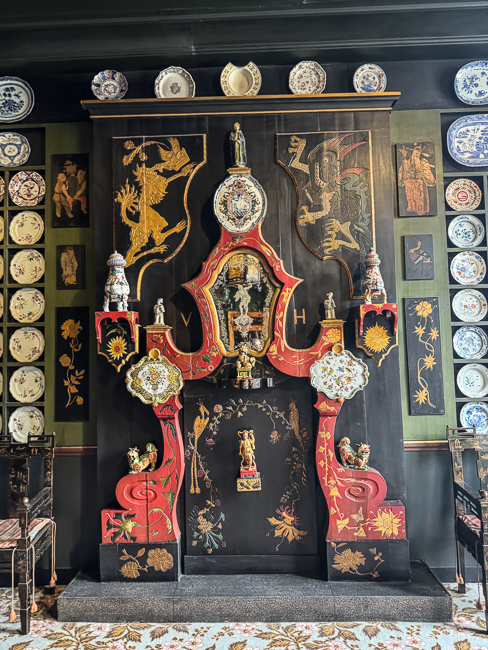
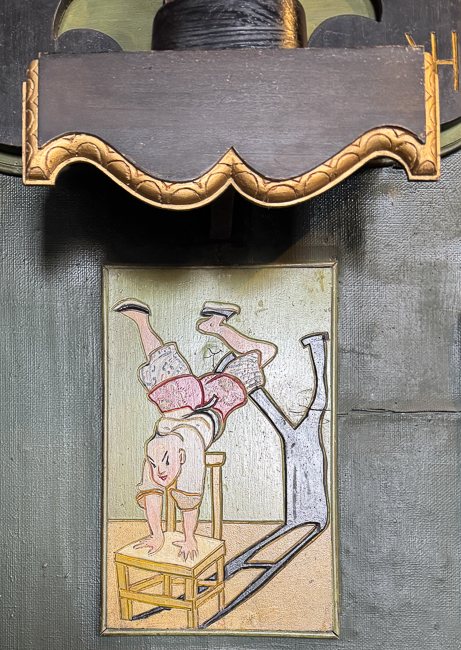
The Chinese-style panels were designed by Hugo in 1863-1864 and painted with the help of Tom Gore, a craftsman who was already working on the refurbishment of Hauteville House.
*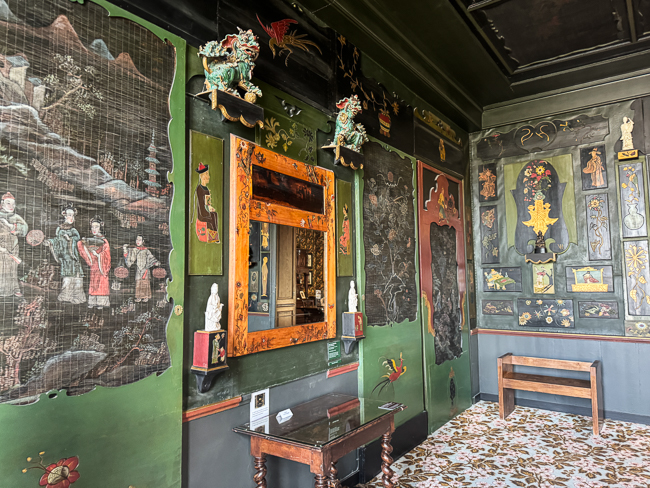
The panels are peppered with his and her initials
The Fourth is one of those Arrondissements that is so full of amazing things to explore that it takes days and days. This is a quick compilation of those days.
Wandering
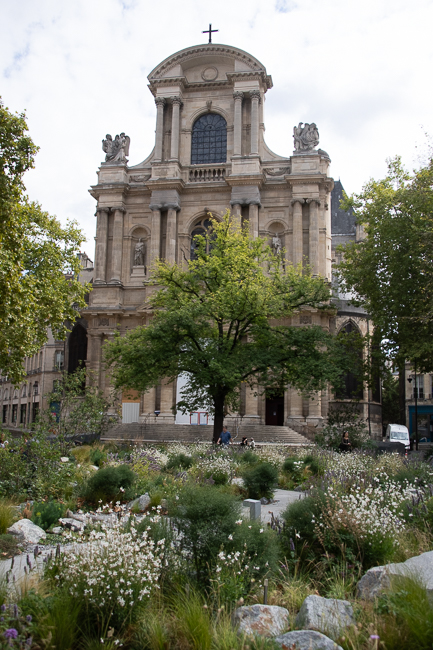
On November 13, 2015, Islamic terrorists attacked Paris in several of its neighborhoods, killing 130 people and injuring nearly 500. In tribute to the victims of the attack, a memorial garden was inaugurated at Place Saint-Gervais, a stone’s throw from Paris City Hall.
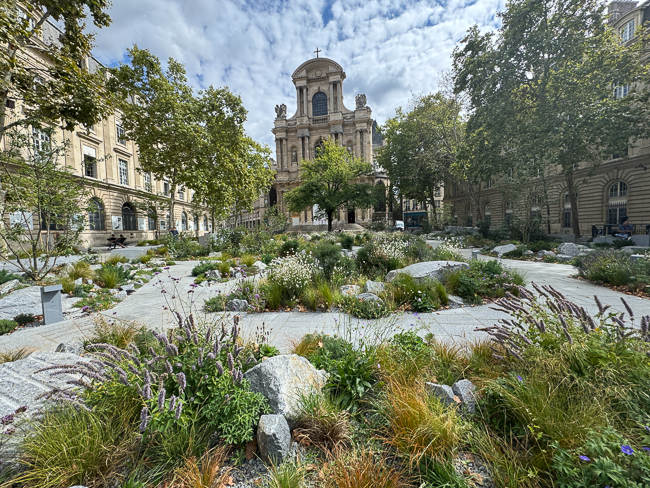
The landscaping recalls the six locations affected by the attacks: the Stade de France, Carillon and Petit Cambodge, Bonne Bière and Casa Nostra, Belle Équipe, Comptoir Voltaire, and the Bataclan.
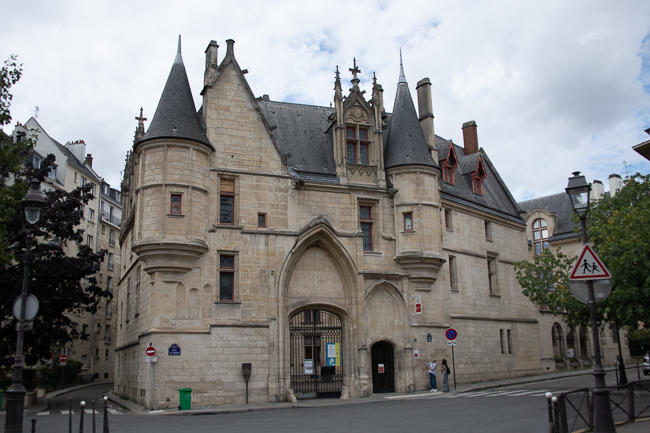
The Hotel Sens has many things to draw you to it. The first being that it is famous for having a cannonball stuck in its wall that hails from the French Revolution. It is also the oldest mansion in the Marais. Built at the end of the 15th century, it was commissioned by the Archbishop of Sens, Salazar. Building work began in 1475 and took 27 years to complete. It now houses the Forney Library, which specializes in the decorative arts.
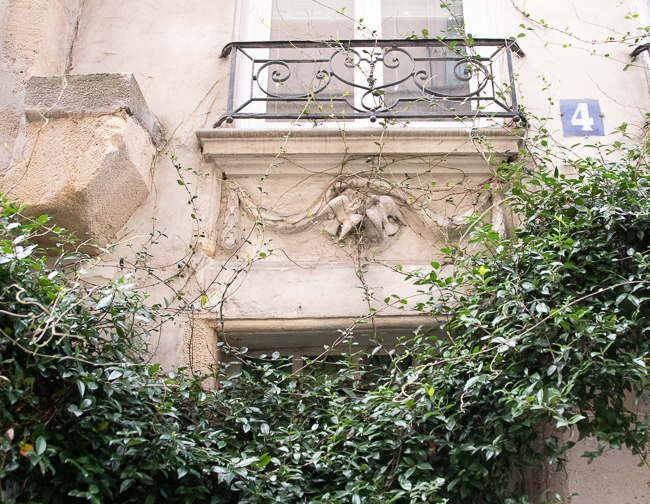
This is number 4 on Rue de la Colombe, or Dove Street. The story goes that around 1225, this place was occupied by a dilapidated one-story house. The first floor was inhabited by a sculptor who used to shelter a couple of tamed doves. When the house collapsed in his absence, the two doves were trapped in the stones.
The male dove managed to escape, but he did not want to leave without his companion, and he continued to feed her with seeds and water from the river Seine.
The dove’s loyalty attracted the neighbors’ attention, who helped remove the stones one by one to free the female dove.
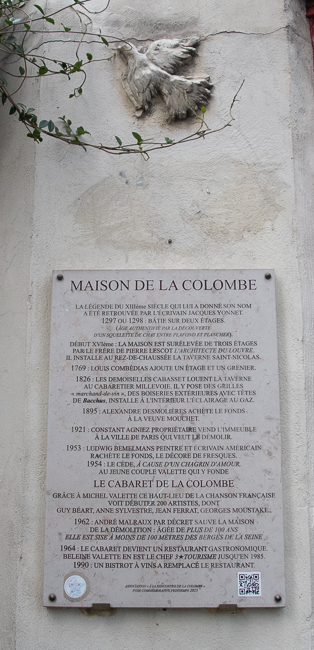 Today, this plaque at the end of the street recalls this legend.
But this is not all. In a block that is not very long it has quite a history.
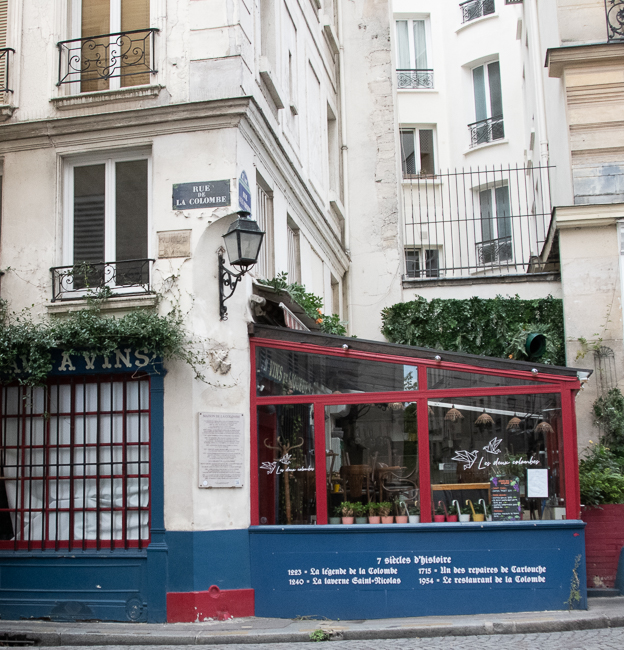
This is apparently the oldest bistro in Paris. Dating from the 16th century, the bistro changed hands many times until 1954, when new owners took over the business and turned it into a cabaret named La Colombe. The cabaret went broke in 1964, and today it is a restaurant named Les Deux Colombes.
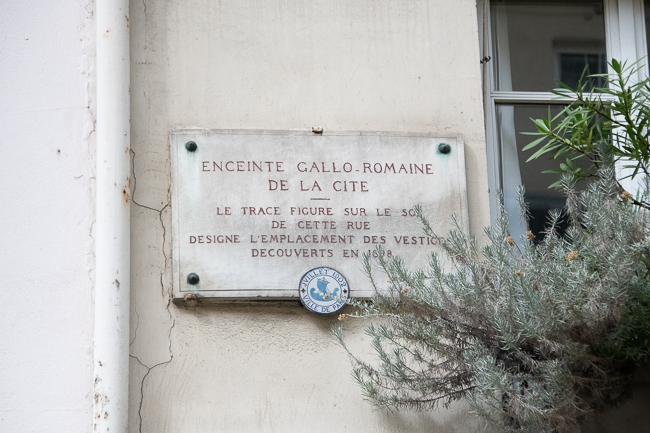
Then at Number 6 is this plaque, which recalls the discovery of the remains of the first wall in Paris, raised in 276 AD to resist the Barbarian invasions. The walls were called the Lutetia walls.
Between 52 BC and the late 5th century, part of today’s French capital was the site of a modest Gallo-Roman city, then called Lutèce (Lutetia in English). One way to see some of the remains is to visit the Arenes de Lutece in the 5th, which I did in 2021.

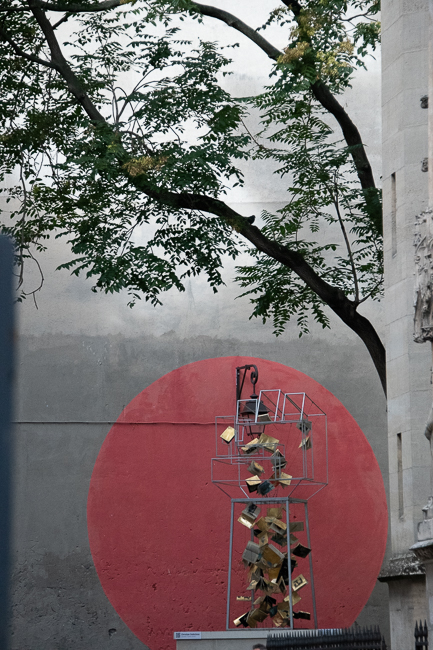
Near the Eglise Saint Merri church is this sculpture entitled Speakers‘ Corner.
According to the artist, the books published by DIS VOIR form the flesh of the work. Having become unsaleable due to the negligence of their distributor, these books were normally destined for the scrap heap. The books have been reworked with gold leaf, a timeless material that evokes kintsugi, a Japanese technique used to repair and embellish porcelain.
The books are presented open, suspended inside the sculpture in the shape of a raised fist that has become the symbol of minority voices trying to make themselves heard in the face of dominant discourse.
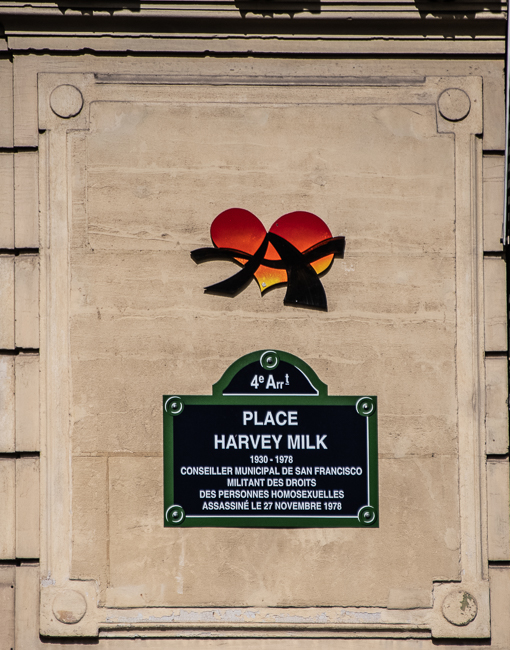
What a surprise I got, wandering the 4th and finding a tribute to a famous San Franciscan.
Some of the oldest buildings in Paris are in the 4th.
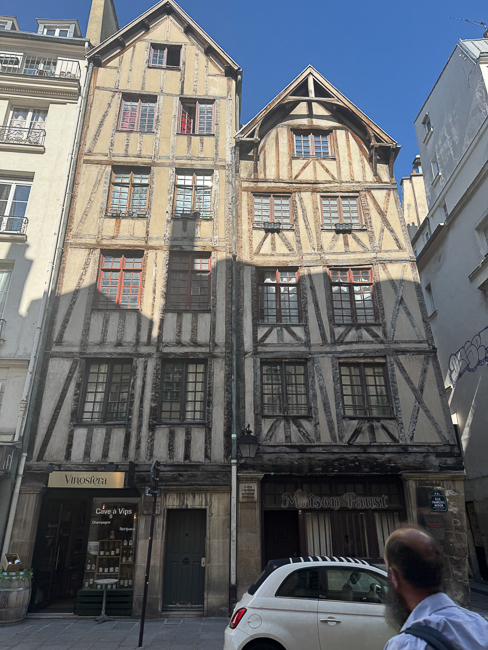
These two houses, on rue François Miron (n°11-13) and another at the corner of rue des Barres and rue du Grenier-sur-l’Eau, are typical medieval houses, erected around 1327.
These gabled houses are narrow, with only two windows per floor. Their sides protrude from corbelling, and their facades end with triangular pediments and are topped with high-pitched roofs that allow rainwater to drain down the sides of the buildings. These houses are easily recognizable thanks to their half-timbering, which was uncovered during restoration work in the 1960s.
In 1607, Henri IV (1589-1610) ordered that visible wooden elements be covered with plaster as a means of fire prevention.
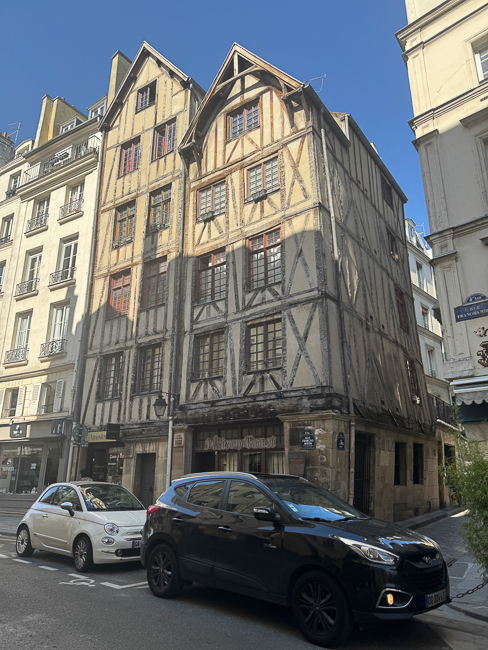
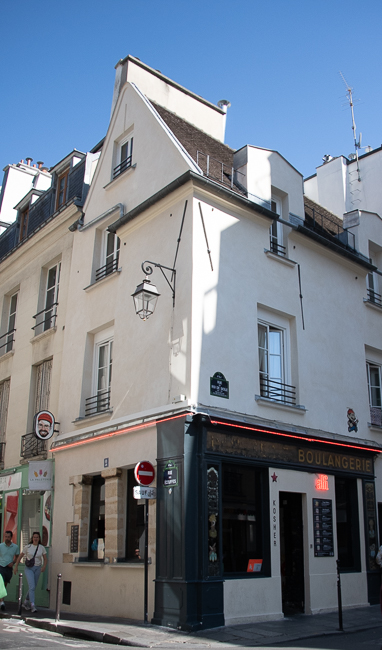
Peaked roofs were the norm in Paris before Baron Haussmann’s 19th-century urban renovations, which replaced many older peaked roofs with the characteristic zinc Mansard roofs.
Notre Dame
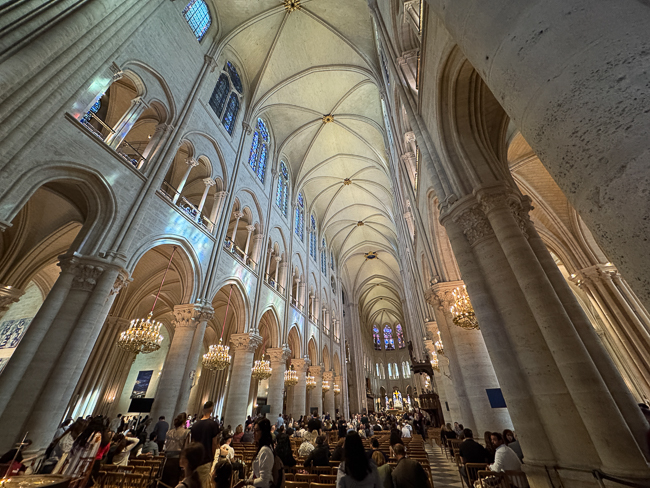
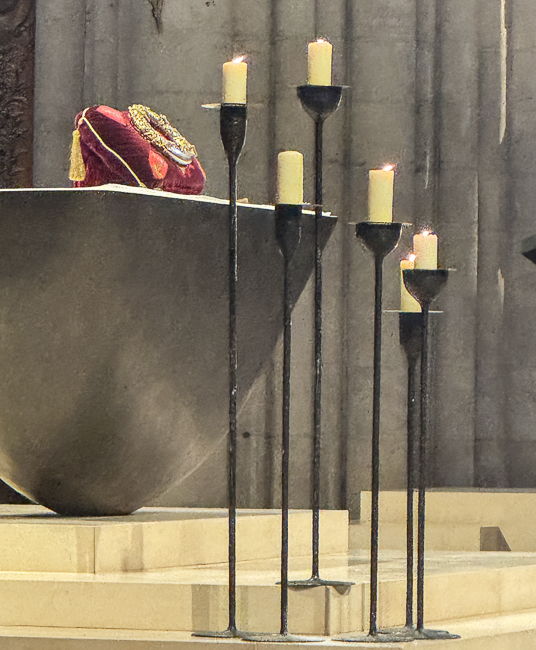
Notre Dame has been restored. I was there on a Friday to see the Veneration of the Holy Crown of Thorns. The restoration will be a little jarring for those who had spent a lot of time in the Cathedral before the fire, but it is still a majestic piece of architecture.
The Billettes Cloister
The Billettes cloister in the 4th Arrondissement is Paris’s only remaining cloister from the Middle Ages. The cloister was built in 1427 for the convent of the Brothers of Charity Hospital of Our Lady, also called Billettes.
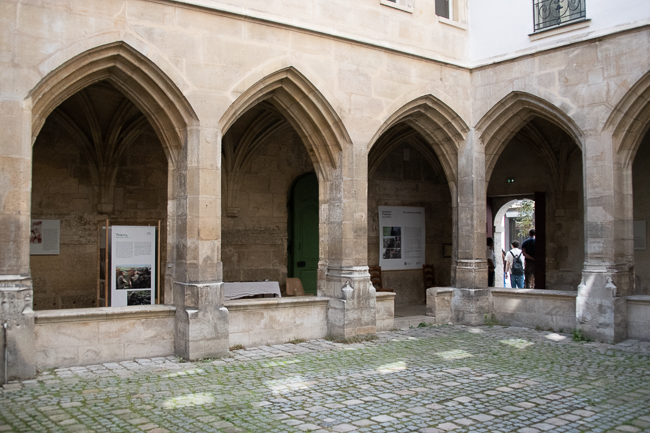
The cloister and the adjoining church were desecrated during the French Revolution. In 1808, Napoleon authorised the City of Paris to acquire the church and its cloister to be a place of worship for the Lutheran community in the French capital.
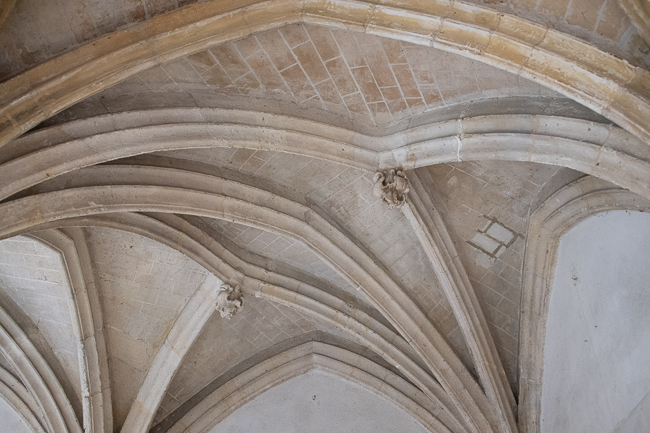
Today, it is used more for exhibit space.
The Tower of St Jacques
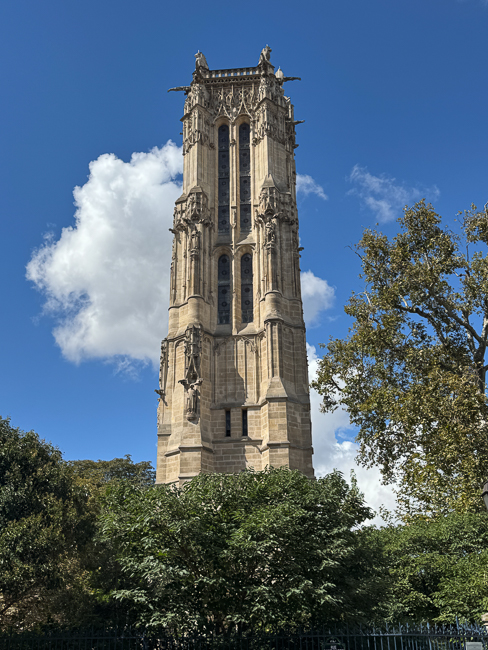
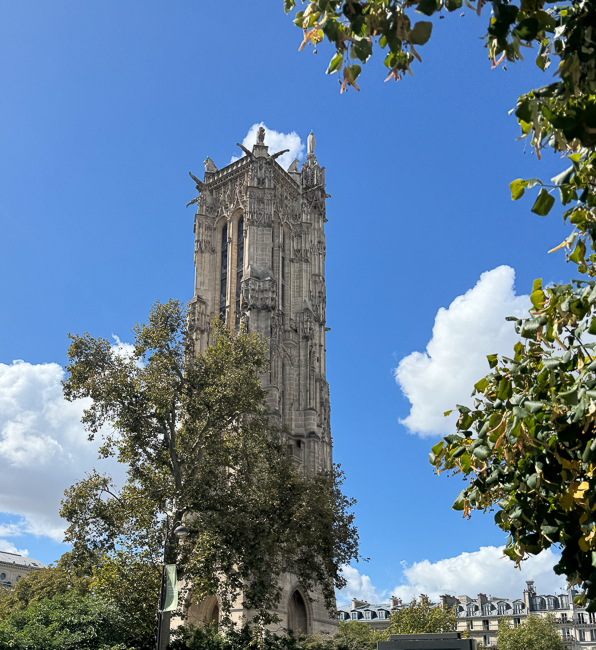
The Tower sits on the Rue de Rivoli, and yet, it is really easy to miss.
The Tour Saint-Jacques is the last remaining element of the Gothic church Saint-Jacques-de-la-Boucherie, which was first mentioned in books in the 12th century. However, the tower dates from between 1509 and 1523.
The church, once a significant stop on the Pilgrimage to the Camino de Santiago, was destroyed during the Revolution.
The church was the patron of the butchers, which makes sense since Les Halles is just around the corner.
*
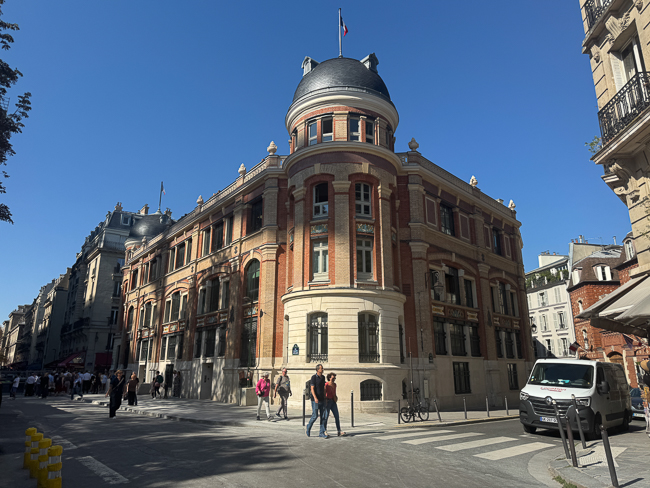
Twelve Rue Massillon was designed in 1893 by the architect Ernest Papinot. Today, it houses the Louis-Lépine Foundation, the social services of the nearby police headquarters.
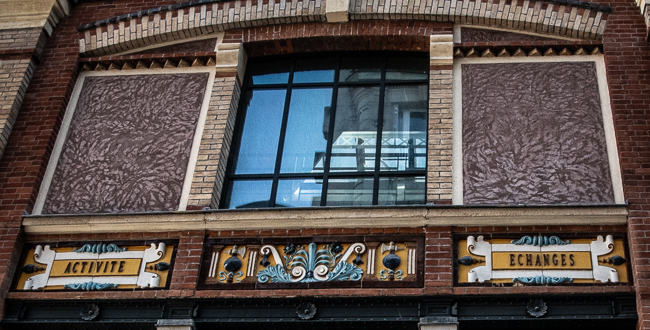
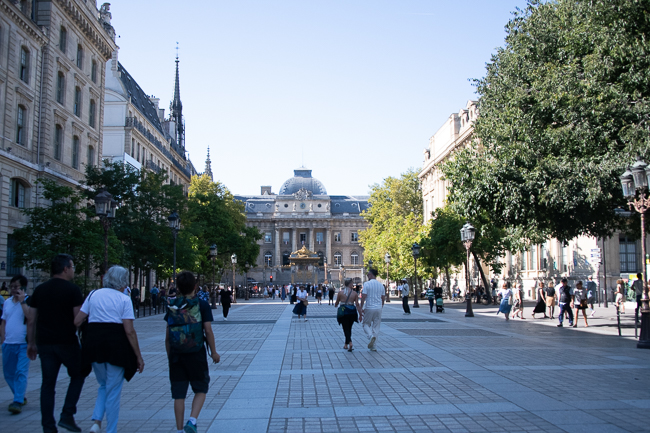
Near the Police Prefecture is Place de Louis-Lepine. It is named after Louis Lépine, Governor General of Algeria from 1897 to 1898, Prefect of the Paris Police from 1893 to 1897, and again from 1899 to 1913.
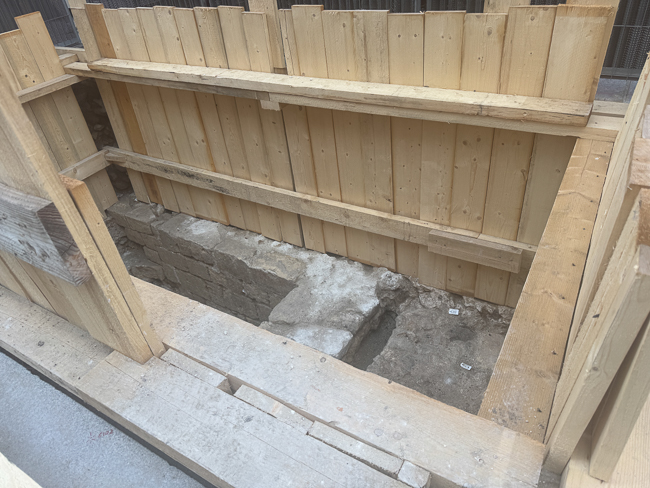
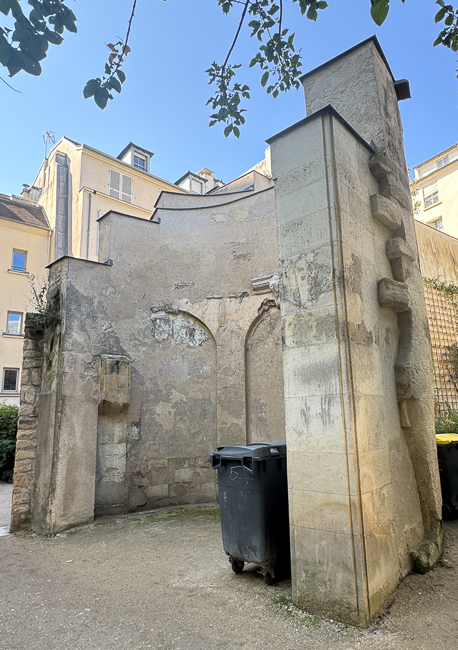
While digging to plant trees along the sides of Notre Dame, the archeologists came upon this wall dating from the 1700s. They will soon be buried in dirt and housing shade trees for all to enjoy.
1910 Flood
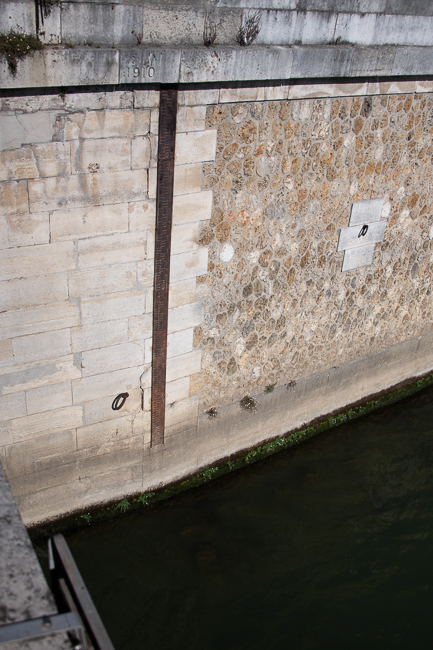
Quai de l’Archevêché sits at the tip of the Île de la Cité where the Seine splits to surround the isle. There, you can find a 1910 flood marker. It is a little more digestible than those found in the middle of the city, as you can see how high the Seine rose.