September 8, 2025
This will have been my third visit to Versailles. I seem to put between 2o and 30 years between each visit, and yet, nothing has changed.
I came with some friends who had never been, so I left them to tour the house while I decided to concentrate on the gardens.
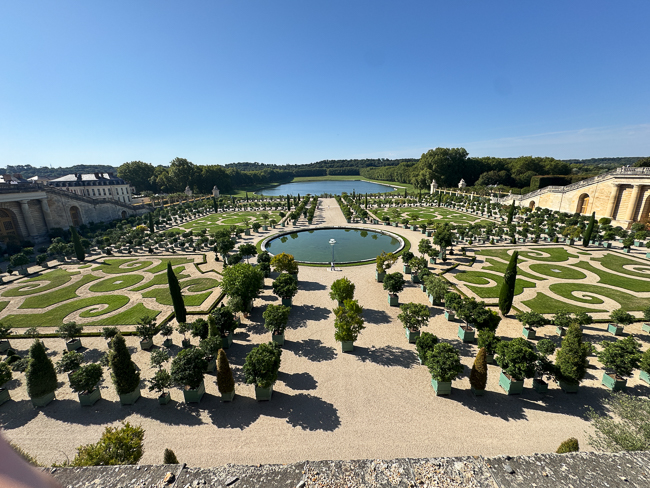
I walked over 11 miles just to see the gardens, so I am going to share some of my favorite spots. I will add that the fountains were most of what I could find; there are countless fountains on the grounds. The Gardens and Groves, where many are located, are mazes, and I got lost more times than I can count.
The Palace of Versailles has over 50 fountains, and they use an estimated 1,200 gallons of water per minute. That means that in an hour, the fountains use about 72,000 gallons of water. In a day, they use about 1.7 million gallons, and in a year, they use about 630 million gallons. They are actually operated by gravity through a network of pipes and pumps, bringing water from a nearby river.
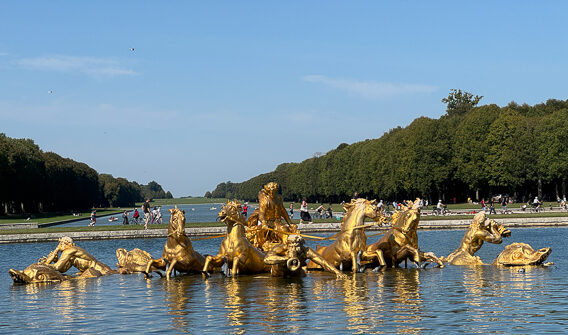
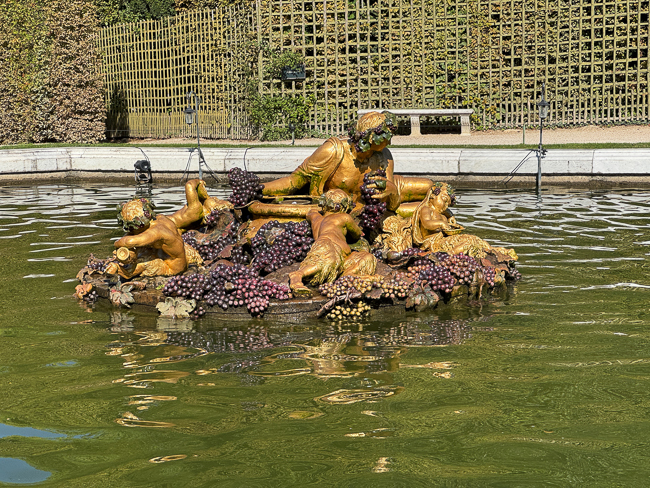
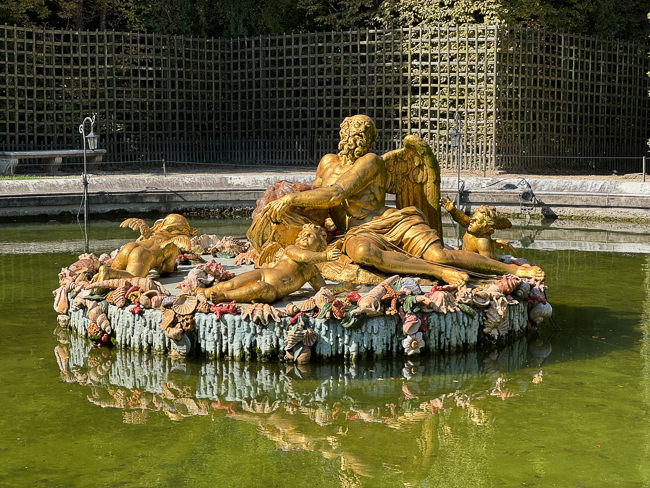
I have such a vivid memory of this fountain from my first visit in the 1970s. It still remains one of my favorites.
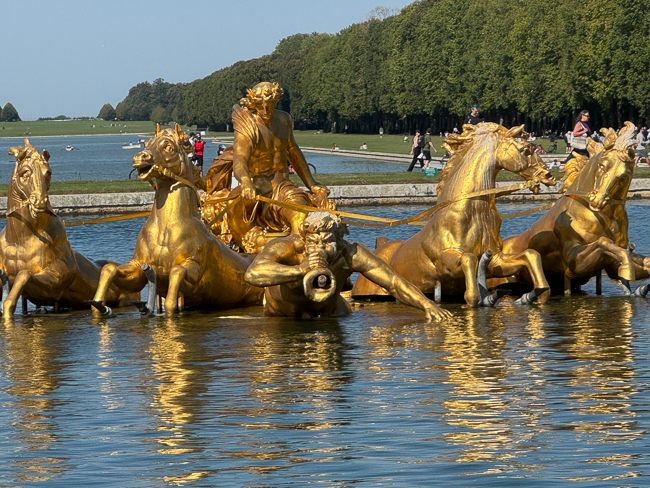
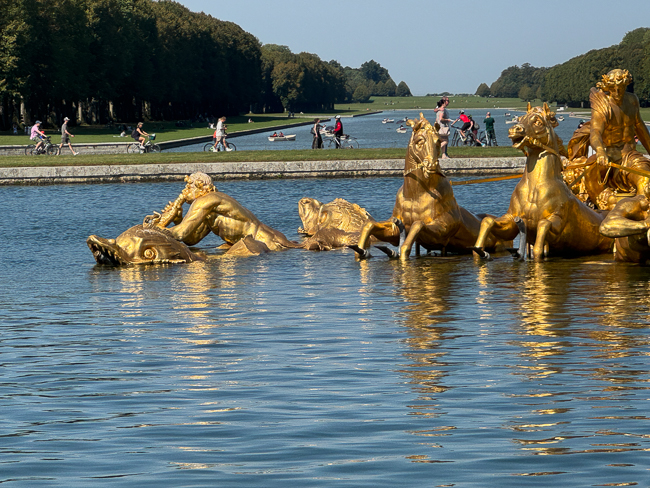
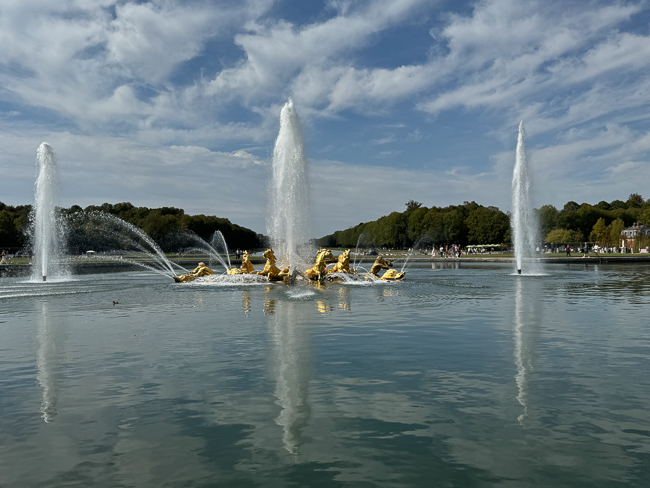
The lead sculpture comprises 13 statues and weighs some 30 tons. At the centre of the piece, Apollo stands on his four-horse chariot, accompanied by a cherub. Tritons mark the four cardinal points of the composition, while dolphins are perched in the spaces between them.
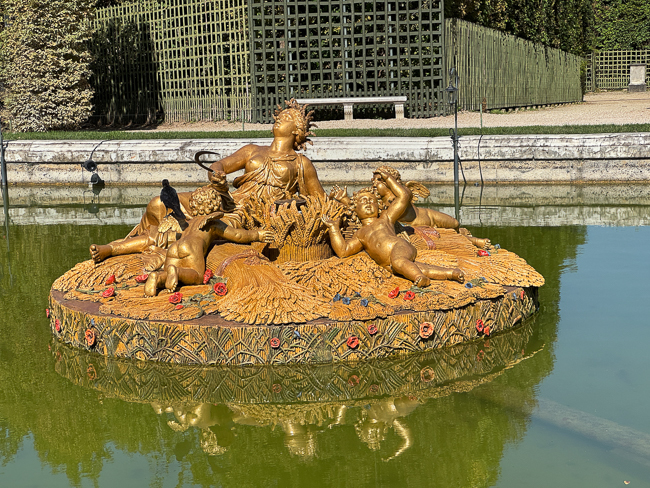
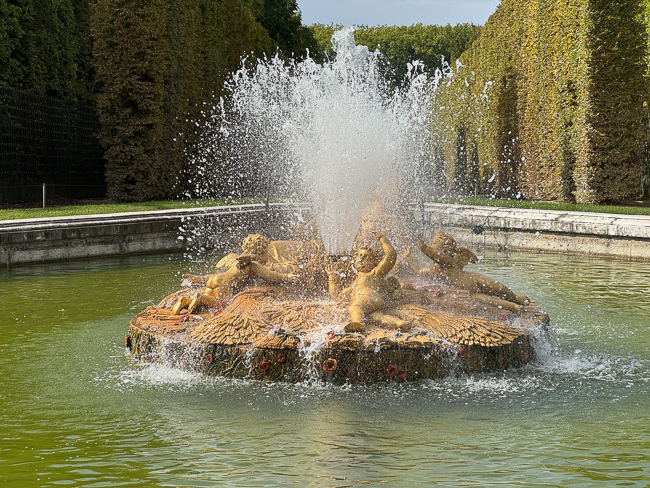
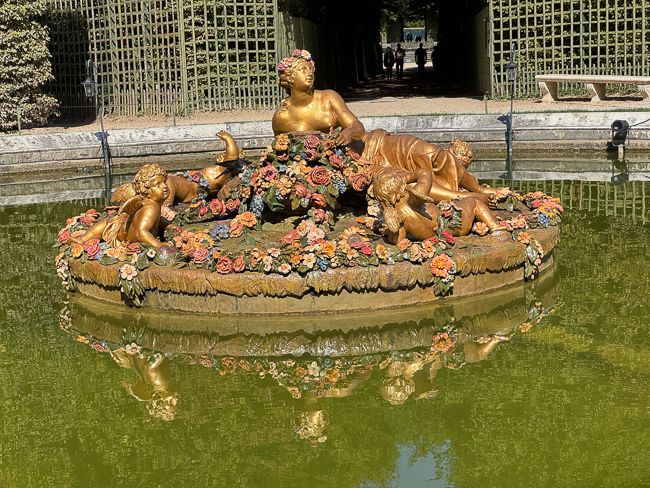
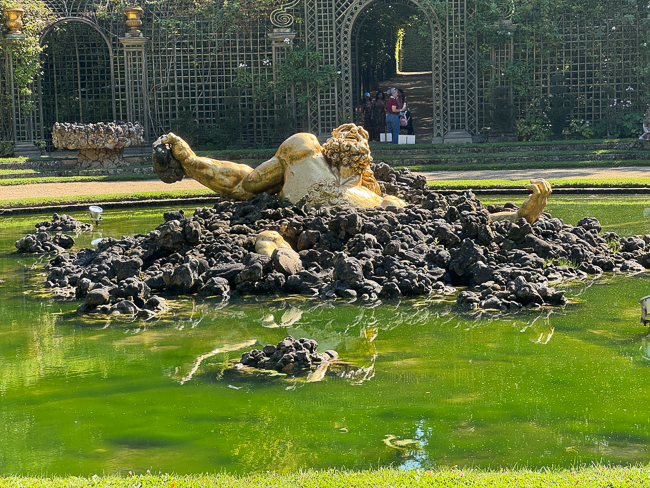
This was absolutely one of my favorites! The Enceladus Fountain was made of lead by French sculptors, Gaspard and Balthasar Marsy, between 1675 and 1677. The subject is borrowed from the fall of the Titans, buried under the rocks of Olympus by the gods they had wished to dethrone. The sculpture portrays the giant Enceladus half-buried under a pile of rocks, struggling to survive.
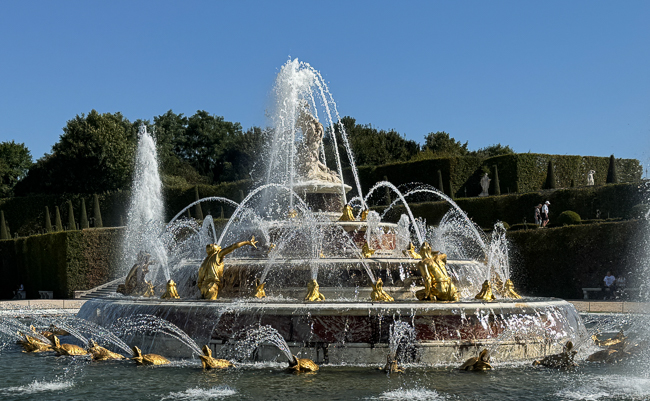
Latona’s fountain was inspired by The Metamorphoses by Ovid. It illustrates the story of Latona, the mother of Apollo and Diana, protecting her children from the insults of the peasants of Lycia and pleading with Jupiter to avenge her. The god obliges by turning the inhabitants of Lycia into frogs and lizards.
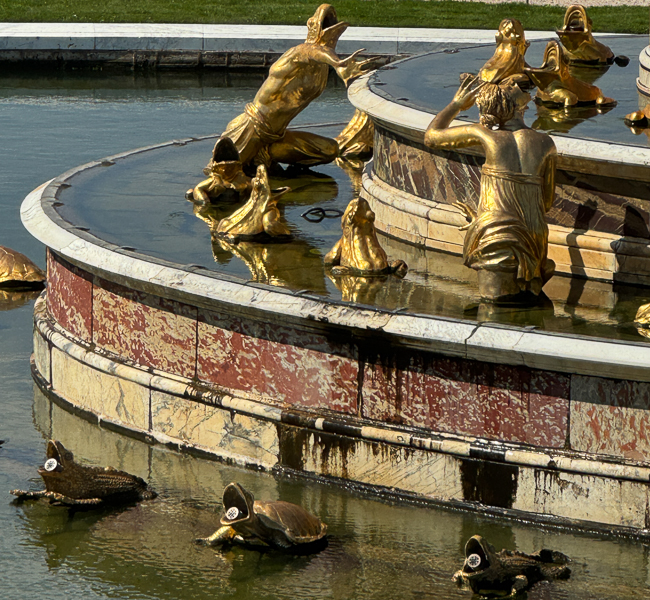
The Water Theatre Grove was laid out between 1671 and 1674 and enabled the hydraulic engineers François and Pierre Francine to utilize the system to its fullest. The area was designed as an open-air theater for spectators to enjoy the fountain show.
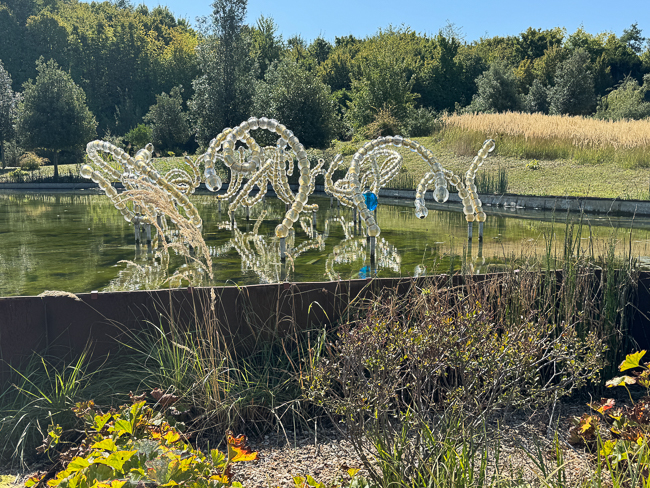
In 2009, the Palace of Versailles launched an international competition to restore the grove. The project submitted by landscaper Louis Benech and artist Jean-Michel Othoniel won, and the new grove was inaugurated in 2015. These two artists had a show in the Petite Palace when I was here in 2021. I have very mixed emotions.
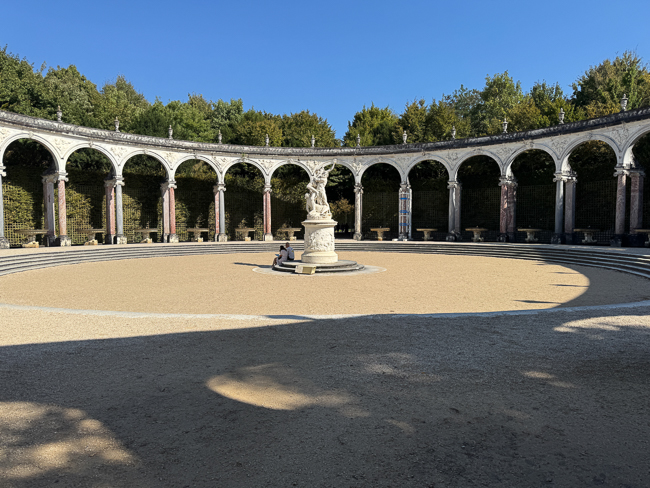
The Collonade Grove was created by Jules Hardouin-Mansart in 1685. The sculpture is the Abduction of Proserpine by Pluto.
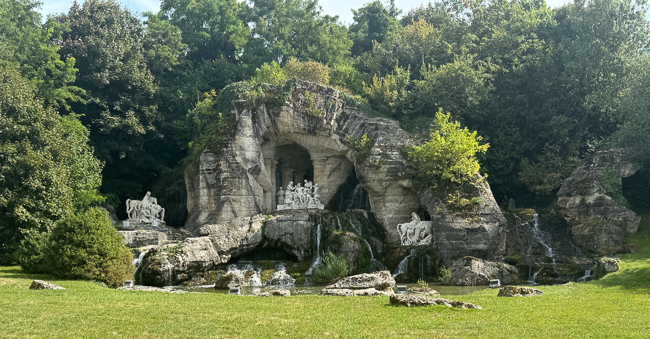
The Baths of Apollo are interesting. The grove itself is beautiful, but to me it feels like the sculptures are toys and that any minute a giant child is going to reach down and rearrange them like chess pieces. The current grove dates from the reign of Louis XVI and was built between 1778 and 1781. The central point is a large artificial rock decorated with waterfalls and hollow caves. It houses the sculpted groups of The Horses of the Sun standing on either side of Apollo Served by Nymphs, by François Girardon and Thomas Regnaudin.
The Queen’s Hamlet
It has now been in the neighborhood of four hours of exploring the gardens it was time to head to the Trianon.
The Petite Trianon, built between 1762 and 1768, stands empty. It was a place for Marie Antoinette to escape her royal duties. We completely ran out of time to see the Grand Trianon, which was good because exhaustion had set in. However, we did get to one of my favorite areas, the Queen’s Hamlet.
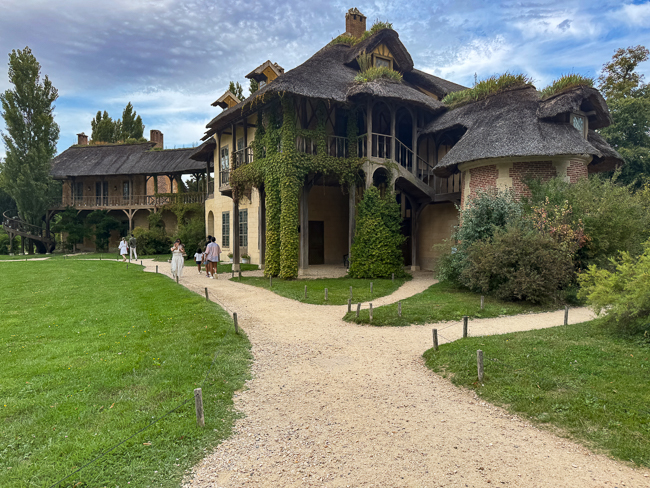
In 1783, Marie-Antoinette ordered her architect Richard Mique to construct a set of factories. It was completed in 1786 along an artificial pond.
It was for Queen Marie Antoinette a place of receptions and walks. This small rural village consisted of pleasure buildings, but also housed a farm, used as a teaching tool for children.
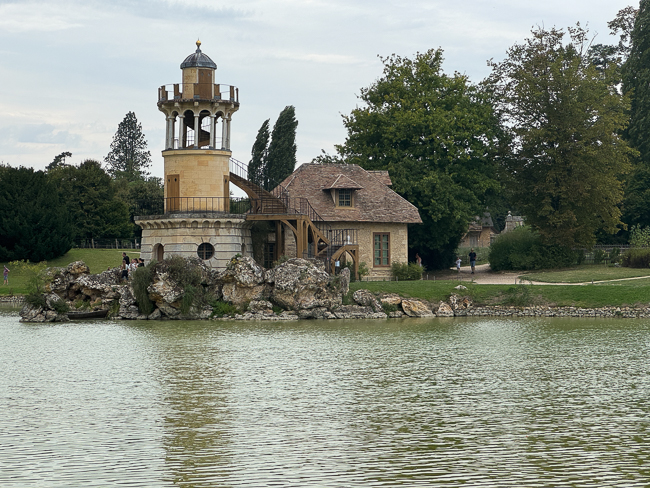
Needless to say, during the Revolution, the Hamlet suffered. Napoleon ordered a full restoration between 1810 and 1812, but in doing so had the most dilapidated structures torn down, including the barn and the working dairy.
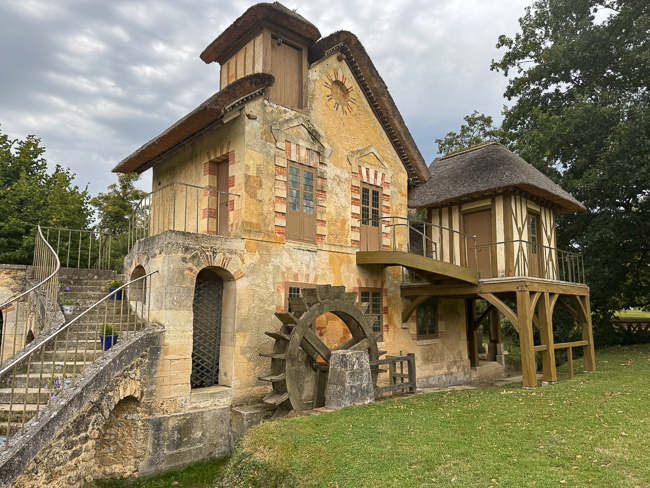 A second round of restoration work took place in the 1930s, thanks to a donation from John Rockefeller.
Part of the hamlet was restored again in the late 20th century, with some buildings returned to their original configuration. The farm, which almost totally disappeared over the course of the 19th century, was reconstructed in 2006 and is now home to a variety of animals looked after by the Foundation for Animal Welfare.
Versaille takes many visits to see, so getting to just a small portion this day was not surprising.