August 2025
I am back in Paris for 5 weeks. It is in the 80s, not something I am very UNcomfortable with. So I decided to start my exploration in the 20th because it is known for its parks, and I had hoped it would be slightly cooler than the 16th, where I am staying. It wasn’t, but it was still a great day.
Parisians don’t always call the arrondissements by their numbers. They are too big to use as a defining neighborhood. The 20th is sometimes called the Ménilmontant after one of its neighborhoods.
The 20th is most famous for Père Lachaise Cemetery. I had been there before, so today was an exploration of as much of the 20th as I could bear in 80-degree heat.
So I started at Pere Lachaise, sort of.
Jardin Naturel Pierre-Emmanuel
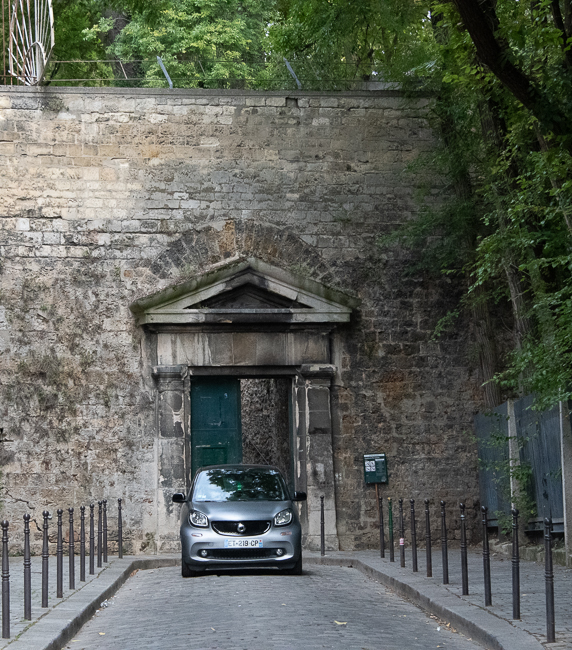
This is one of the entries to Pere Lachaise. However, on the right before you enter is a small park.
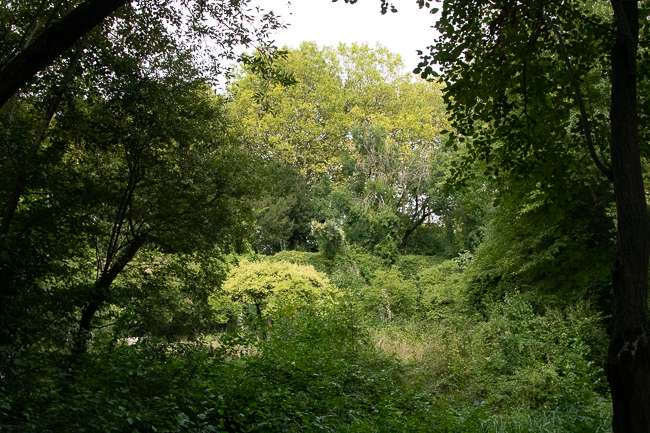
The park was created in 1995 to honor Pierre-Emmanuel (1916-1984), a French poet and writer, member of the French Academy, whose tomb is in Père-Lachaise. As it says, it is a natural park, it is planted with wild plants characteristic of different natural environments of Paris, and its meadows are only mowed two or three times a year.
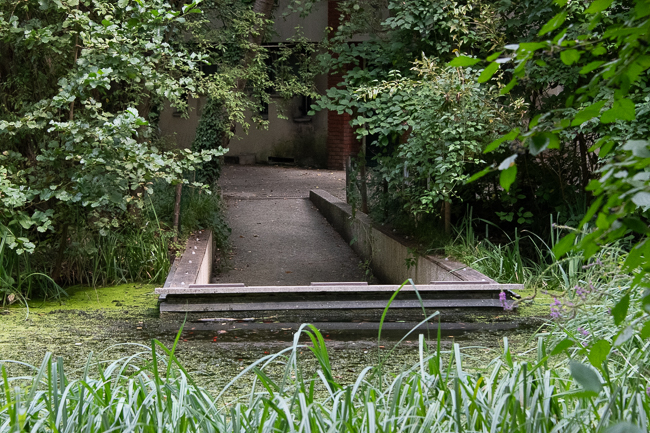
There is a delightful little pond filled with goldfish in front of this concrete drive. I have no idea what that drive is.
Outside of Pere Lachaise
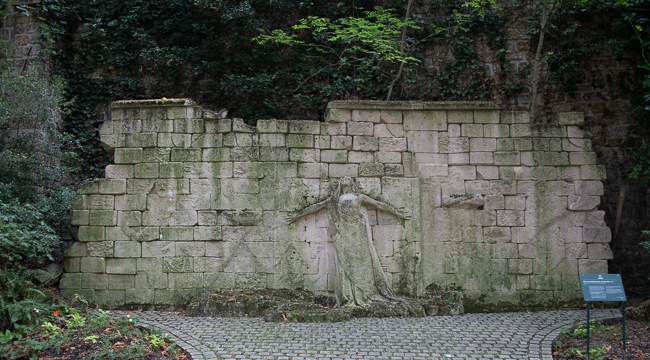
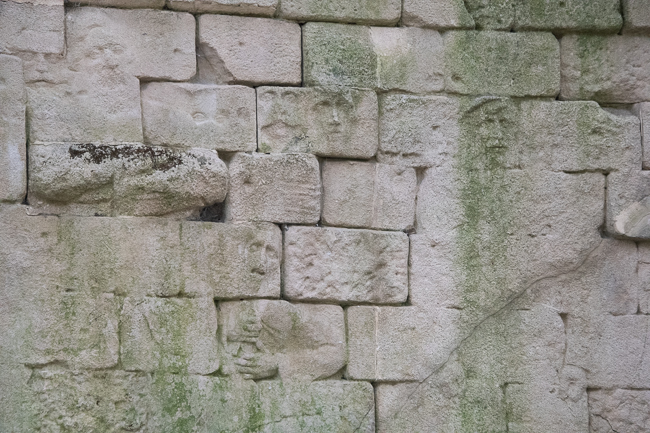
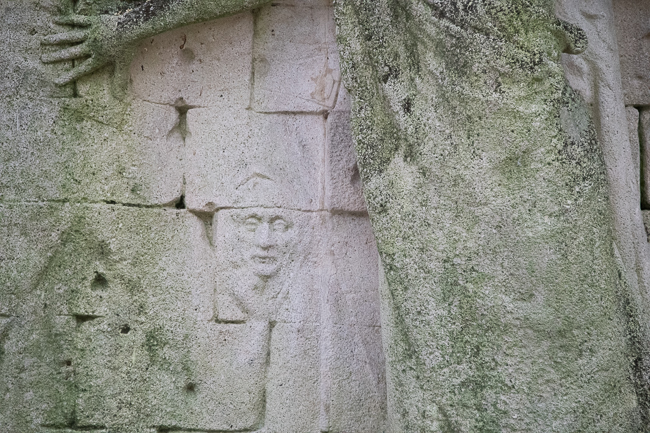
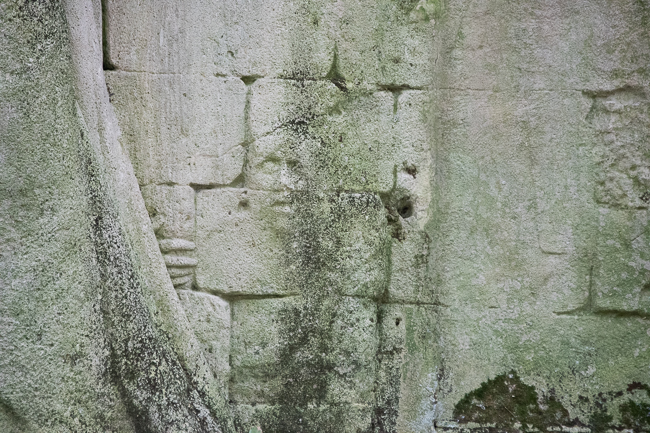
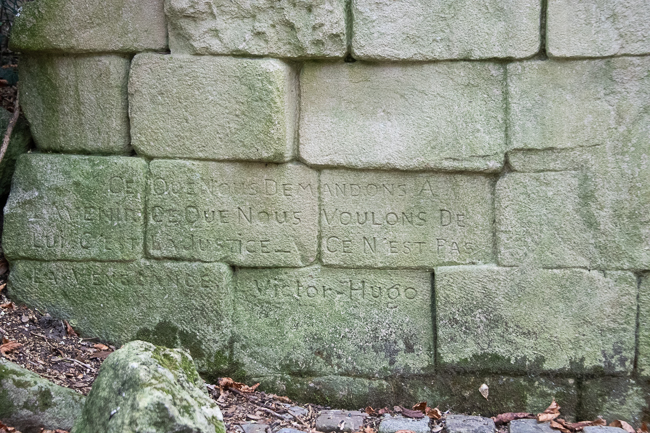
If you walk along Avenue Boulevard de Ménilmontant, you can walk a strip of park that follows the walls of Pere Lachaise. If you do, you will find this haunting piece of art. Sculptor Paul Moreau-Vautier created this work in memory of the many victims of revolutions, regardless of which side they fought. The primary objective was reconciliation and open discussion for the sake of peace.
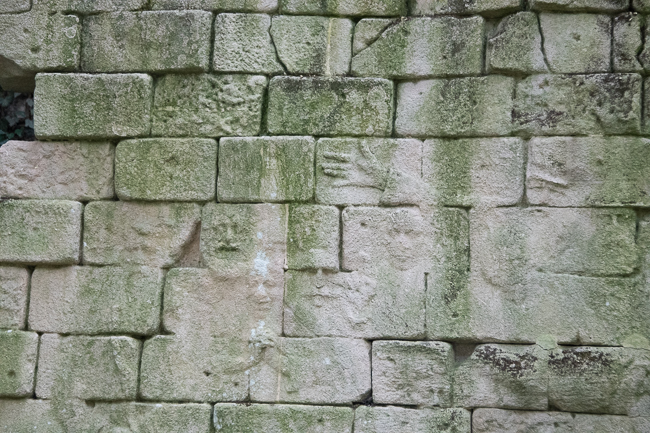
The piece was created in 1907 from the stones of the wall, with traces of the original bullets on the stones where the Versailles Communards (the 1871 Paris Commune) were shot after the Franco-Prussian War.
 *
* *
*
On the lower left-hand side is a quote from the French author and novelist Victor Hugo (1802 – 1885): “What we ask of the future, what we want from it, is justice, not vengeance!”
Paris Petite Ceinture
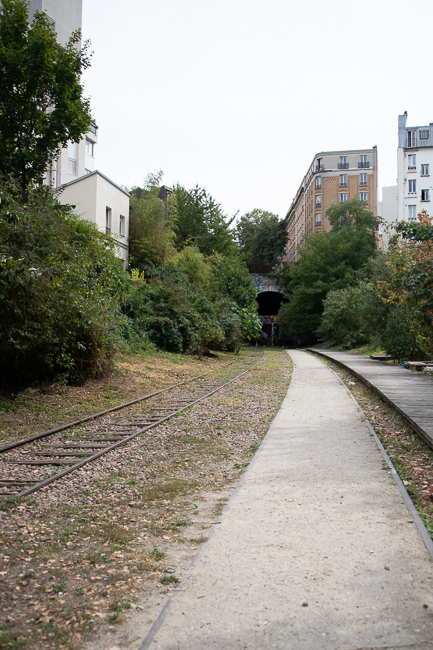
La Petite Ceinture is a circular railway built in 1852 as a means to supply the city’s fortification walls, and as a means of transporting merchandise and passengers between the major rail-company stations in Paris. The rails have a very long history of serving Paris in many ways throughout the years. It reached its height of popularity in 1900 during the Exposition Universelle, when it transported 39 million passengers.
There is a project underway to transform the Ceinture into an urban park. They are doing that piece by piece. This one is in the Belleville neighborhood, and not easy to find.
Parc de Belleville
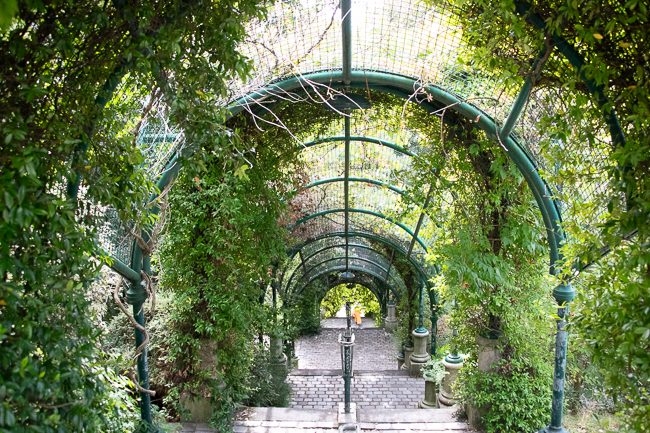
Parc de Belleville is the highest park in Paris. Built in 1988, it was conceived by the architect François Debulois and the landscaper Paul Brichet. 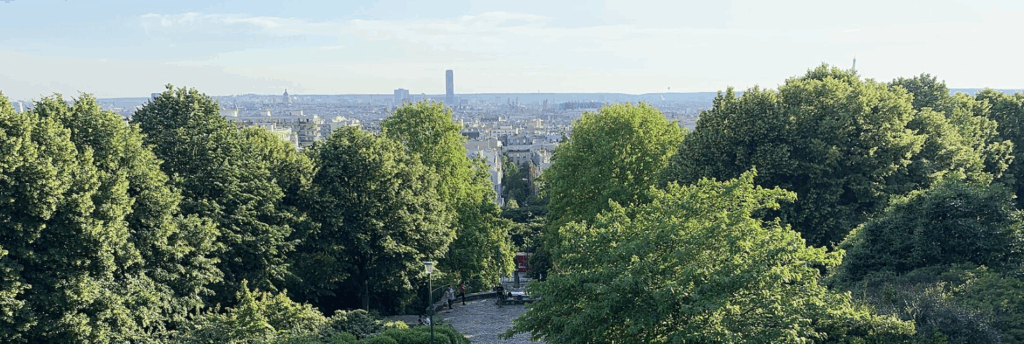 There are amazing views from many places in the park.
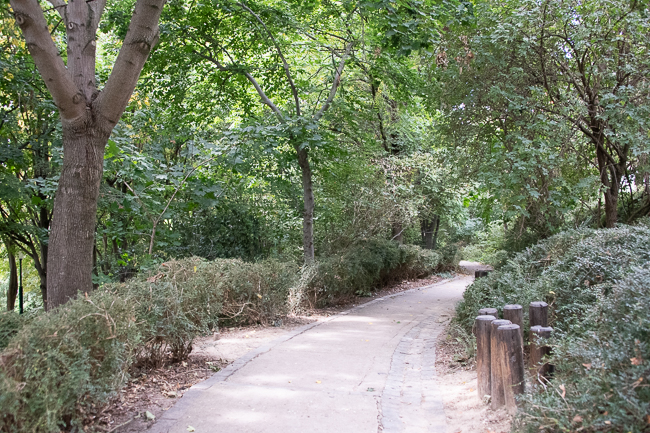
Pavillion de l’ermitage
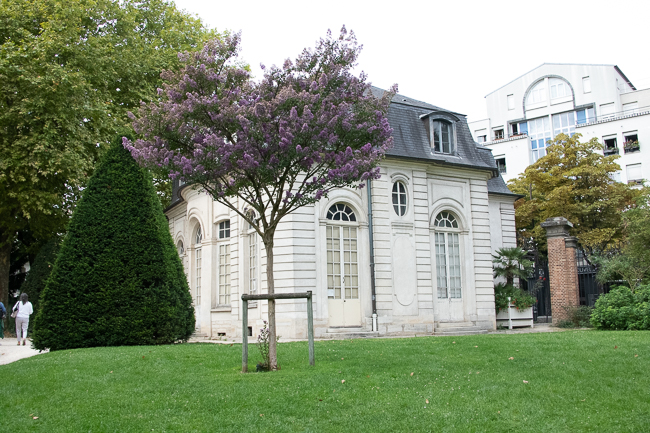
I needed a rest and came across this park with this wonderful building. It was built between 1723 and 1727 and is the only remnant of the Bagnolet domain, which was the property of the Duchess of Orleans, daughter of Louis XIV and the Marquise de Montespan.
Square Édouard-Vaillant
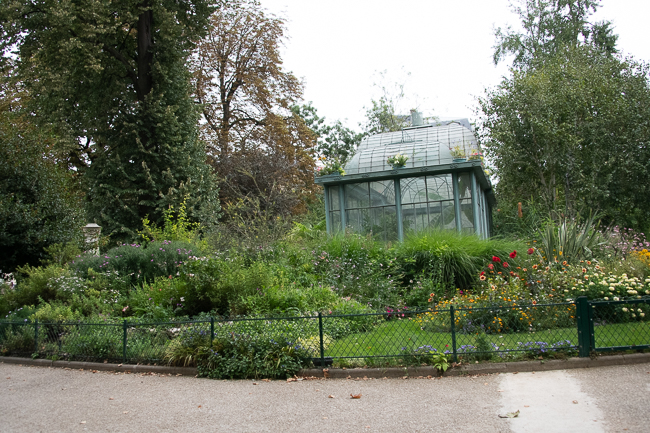
Miles of walking, and I needed another bench. This greenhouse lured me in. The square Édouard-Vaillant runs alongside the building that has housed the Tenon hospital since 1878. It is named after the surgeon Jacques-René Tenon (1724-1816). He reformed the Paris hospital service under Louis XVI and gave his name to the garden. Later, the garden was renamed “Édouard-Vaillant” (1840-1915), after the city councilman of the district.
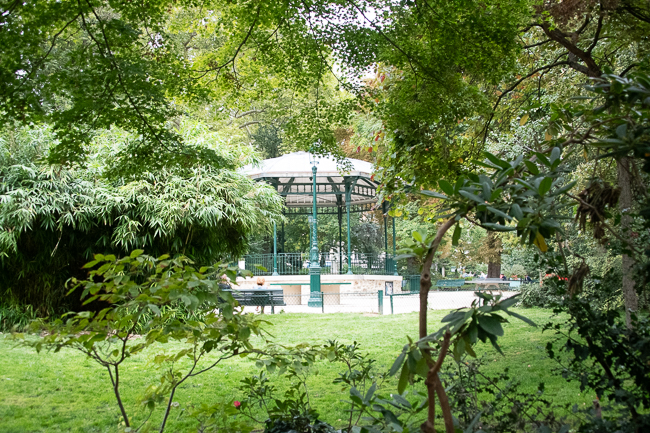
I walked over 8 miles to see the 20th. These are just the gardens. I will write about the other things I saw next.