July 31, 2025
Rouen is absolutely magical.
Rouen Cathedral
One of the more popular sites in Rouen is the Rouen Cathedral.
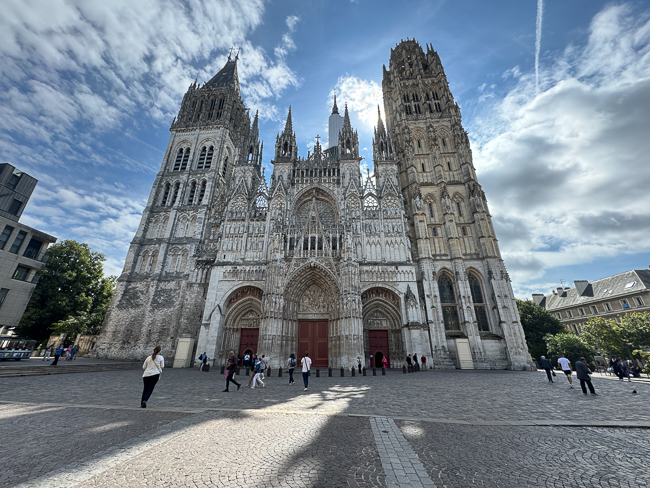
The Cathedral is renowned for its three towers, each in a distinct architectural style. The cathedral, built and rebuilt over more than eight hundred years, features elements ranging from Early Gothic to late Flamboyant and Renaissance architecture.
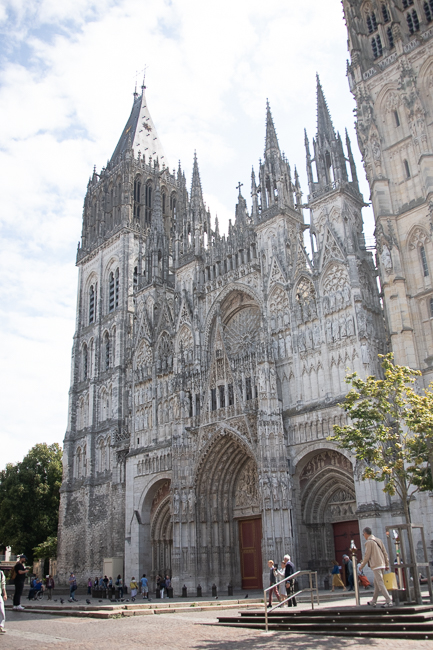
The West front is framed by two tall towers: Tour St. Romain to the left and Tour de Beurre to the right. Between these is seen the spire of the Lantern Tower, which rises from the crossing of the transept.
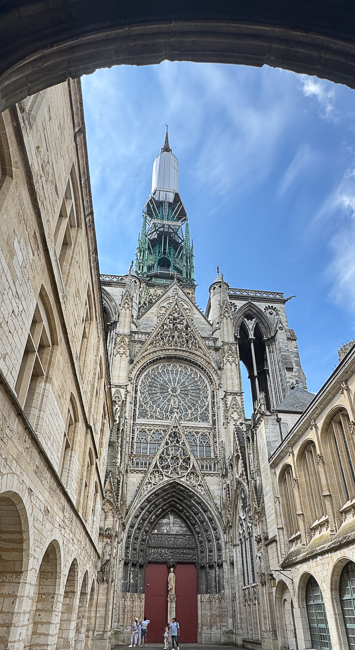
The lantern tower is topped by a cast iron spire, the highest in France. Destroyed by lightning in 1822, it was architect Jean-Antoine Alavoine who proposed using cast iron, a very modern material for the time, as it would be less combustible than wood and lighter than stone.
The Cathedral has been undergoing renovations since 2016. That is the reason for the white protective covering.
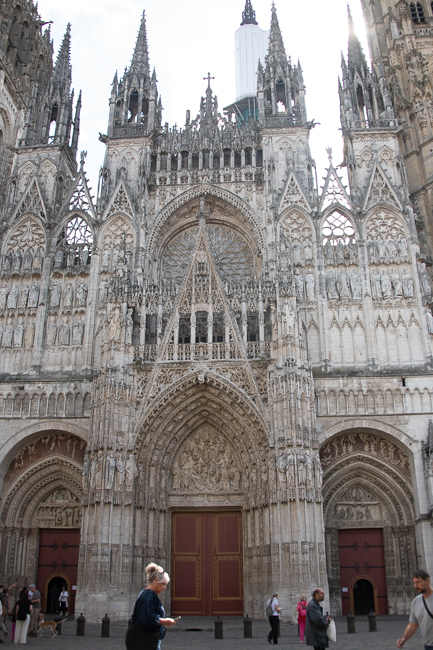
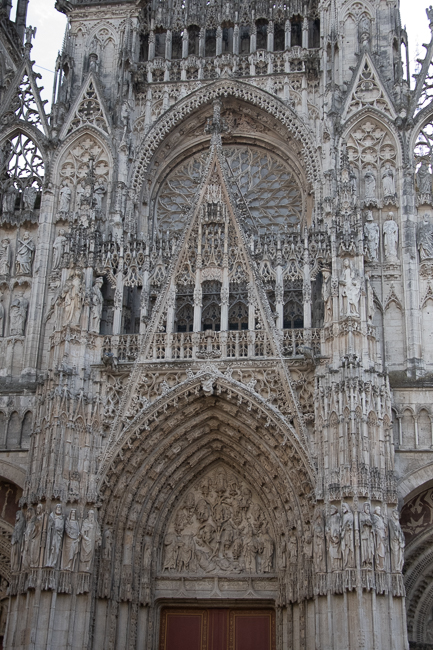
The space between the two towers is covered with arcades adorned with lacy Flamboyant Gothic stonework and topped by open canopies and pierced gables.
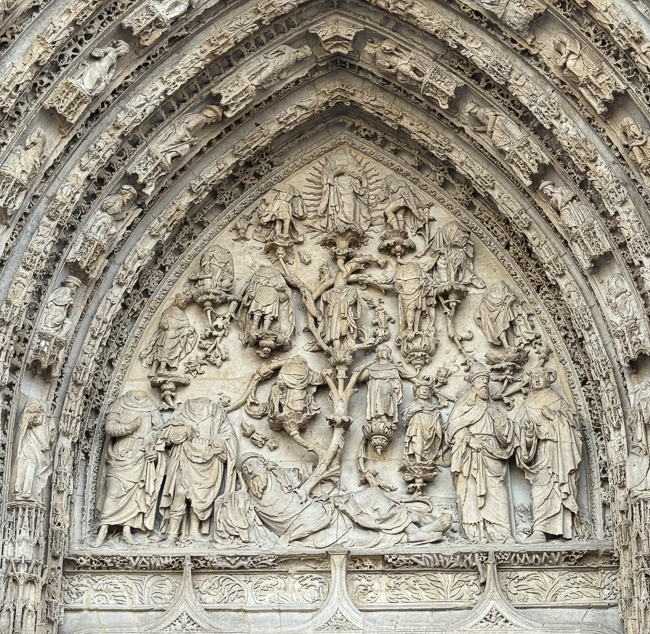
The tympanum is decorated with statues forming a ‘Tree of Jesse’, the Family Tree of Jesus. The Calvinists heavily damaged it during the Wars of Religion. Some statues were decapitated during the French Revolution.
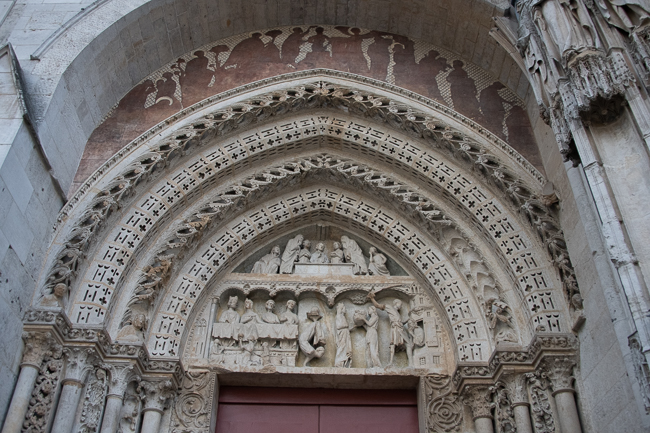
This is the Porte Saint-Étienne dedicated to St. Stephen, the first Christian martyr. The tympanum is comprised of two registers. The lower register depicts the stoning of St. Stephen in the presence of Saul, and the upper register shows Christ in majesty.
I took this specifically because I was fascinated with the construction of the brown and white marble above the tympanum. In researching, I found that most of the historical photos do not include this element. And I have been left at a loss as to how it was actually constructed.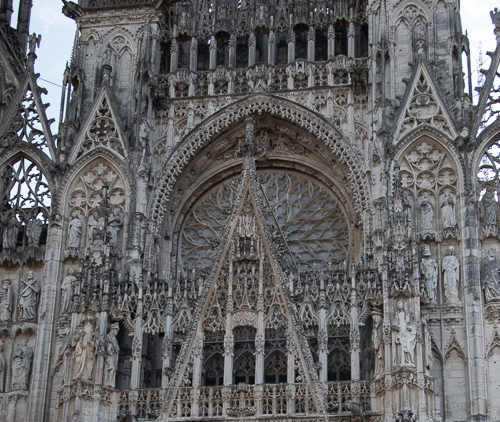
The rose window is found above the central portal and is partly concealed by the great gable. It was created at the end of the 14th century by the cathedral’s master architect, Jean Périer. The pattern of the rose window represents flames, which directly refers to the Flamboyant Gothic style.
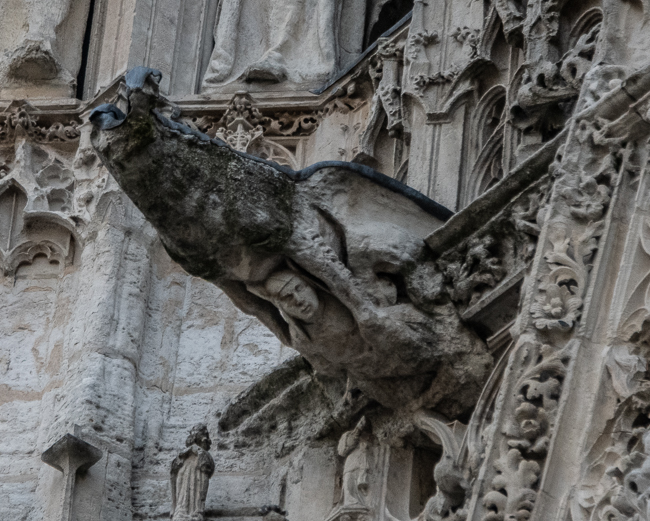
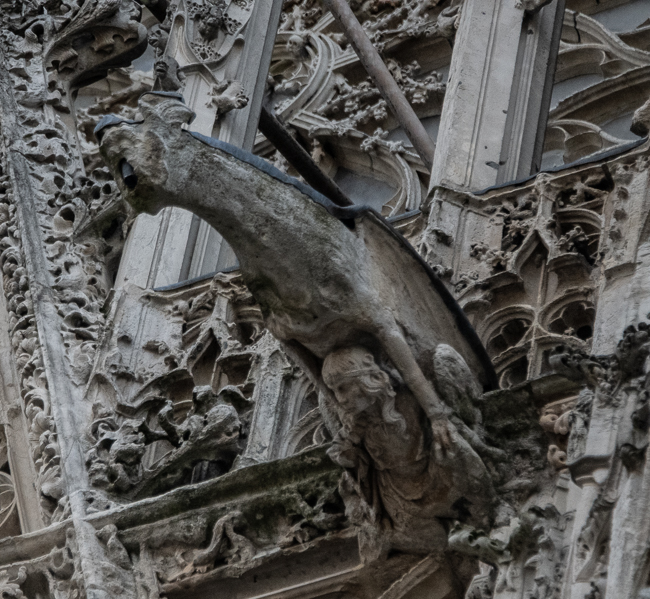
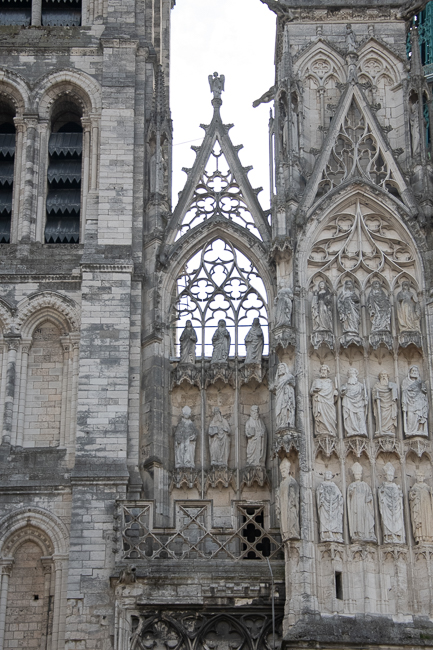
There are a myriad of gargoyles on the Cathedral. These two caught my eye. It is unusual to see gargoyles with humans at their chests, and yet I have no idea why these two do.
*
*
The inside of the cathedral is nowhere near as flamboyant.
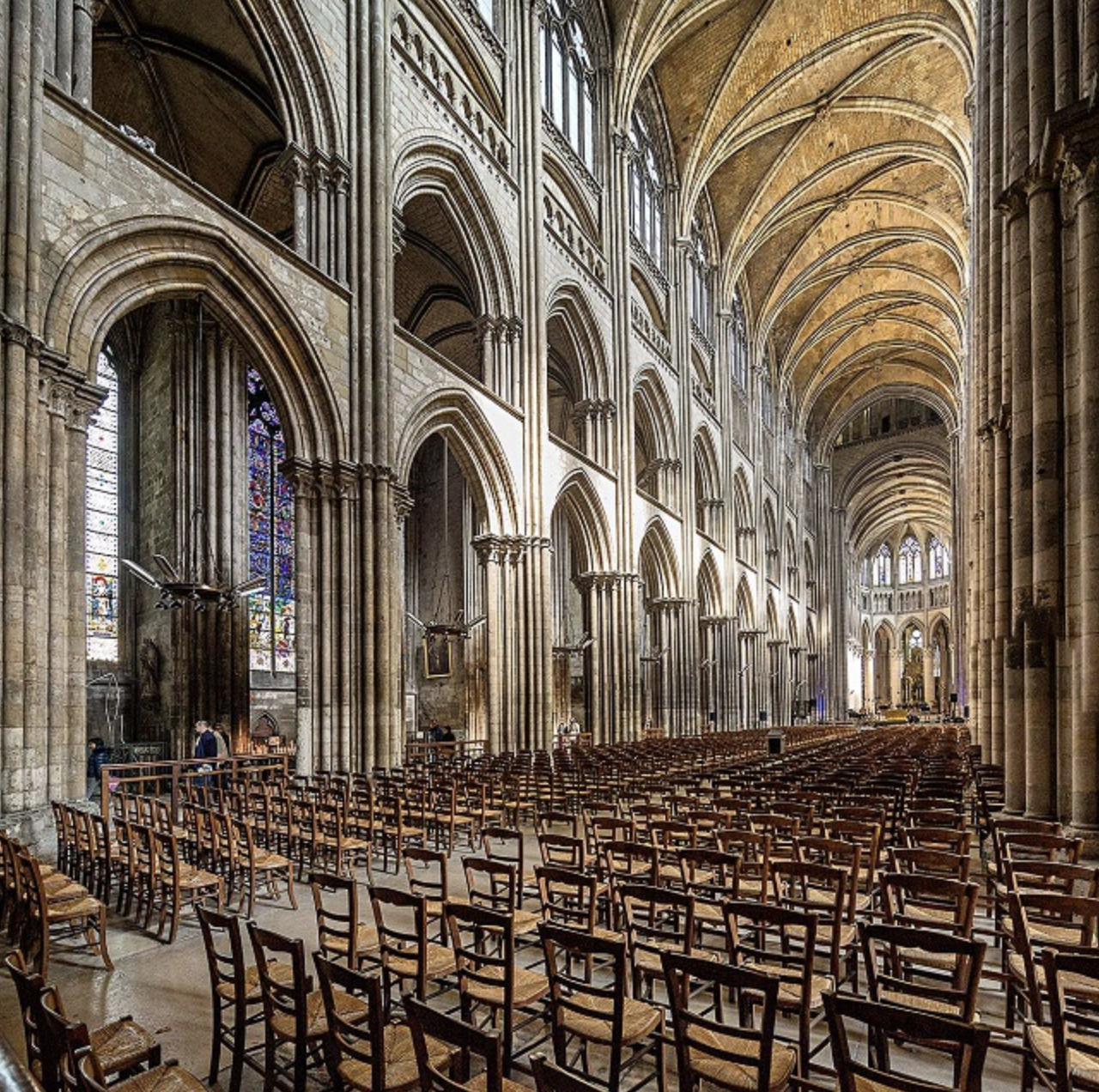
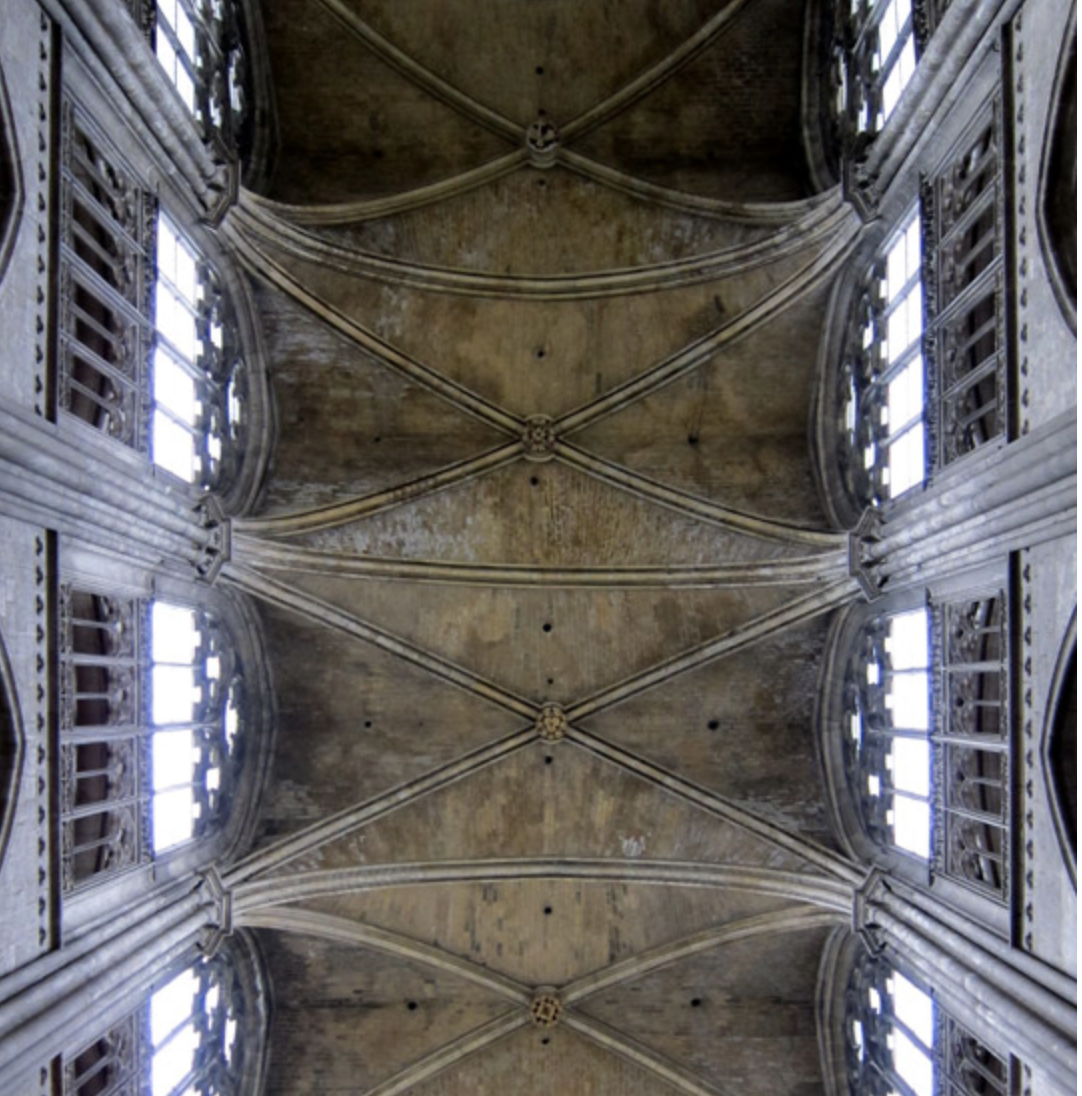
The nave is covered with four-part rib vaults, supported by colonettes that reach down the walls to the massive pillars on the ground floor.
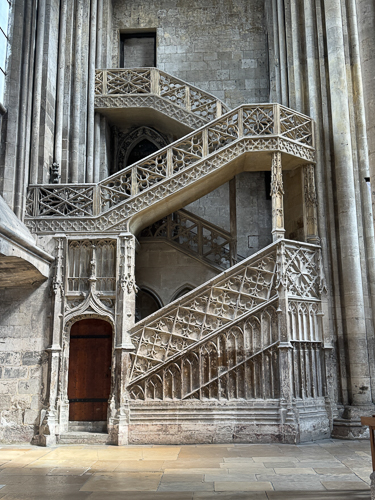
These stunning 15th-century stairs, called the booksellers’ stairs, lead to the library. In 1562, during the start of the Wars of Religion, the library was ransacked by Calvinists.
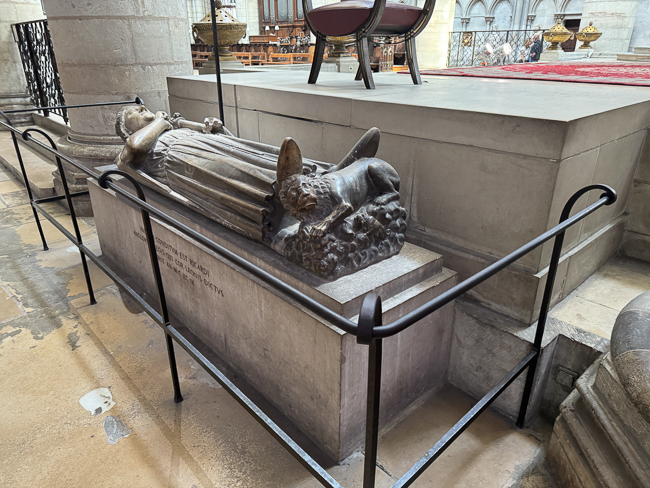
As was the tradition of the time, after he died in 1199, King Richard I of England (Richard the Lionheart) was divided up. As a result, the heart of King Richard the Lionheart lies in Rouen Cathedral.
Damage Done. Over the Years:
In the late 16th century, the cathedral was severely damaged during the French Wars of Religion: in 1562, the Calvinists attacked the furniture, tombs, stained-glass windows, and statuary. The cathedral was struck by lightning in 1625 and 1642, then damaged by a hurricane in 1683.
In 1796, during the French Revolution, the new revolutionary government nationalized the cathedral and temporarily converted it into a Temple of Reason. Some of the furniture and sculpture were sold, and the chapel railings were melted down to make cannons.
In the weeks before D-Day in Normandy, the cathedral was hit twice by Allied bombs. In April 1944, seven bombs dropped by the British Royal Air Force struck the building, narrowly missing a key pillar of the lantern tower, and damaging much of the south aisle and destroying two windows. In June 1944, a few days before D-Day, bombs dropped by the U.S. Army Air Force set fire to the Saint-Romain tower. The bells melted, leaving molten remains on the floor.
To do the Cathedral justice, one needs many, many hours, which sadly, I did not have.