July 28th 2025
This was a full box of Kleenex, mascara running day.
Omaha and Utah Landing Sites
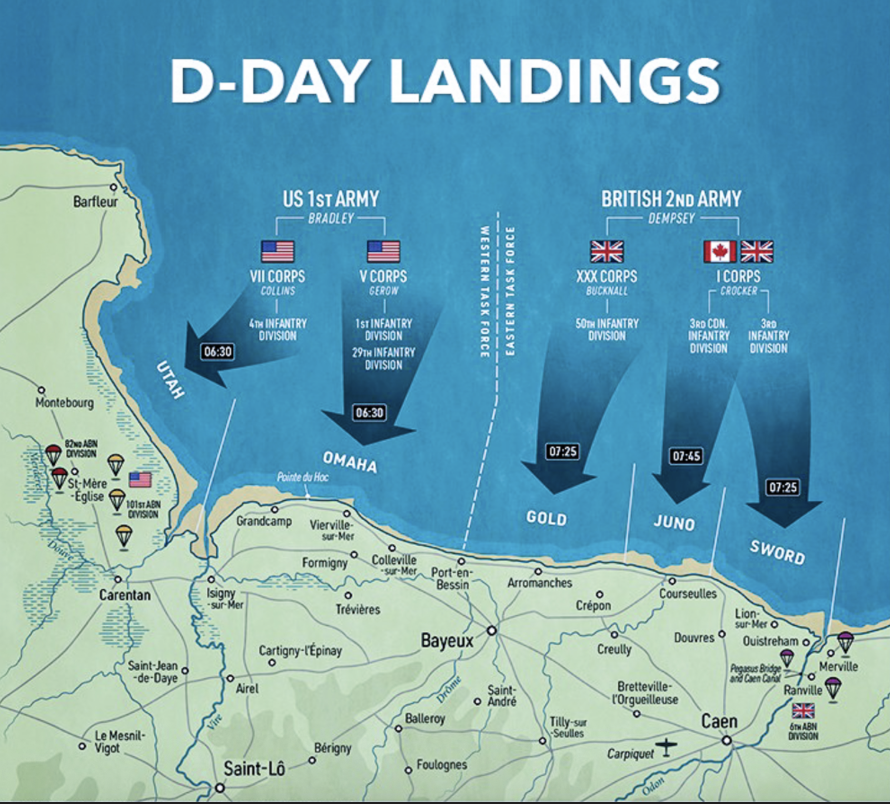
I am standing at the Omaha landing site, approximately where the Western and Eastern Task Force dotted white line is on the above map, at the far end of the American landings.
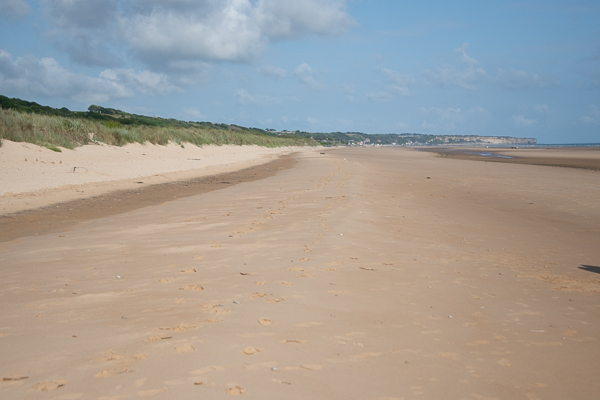
This is looking towards the Ponte du Hoc.
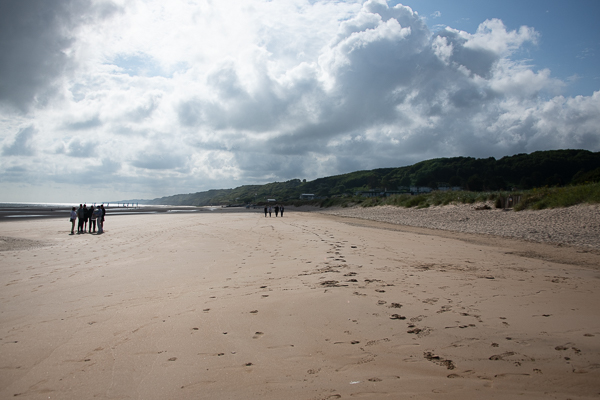
This is looking towards the Gold, Juno, and Sword Landing sites.
It is impossible to take all that you know of this battle and then put that onto the sheer scale of the five miles of beach where American blood was spilled.
“No Mission Too Difficult, No Sacrifice Too Great, Duty First”
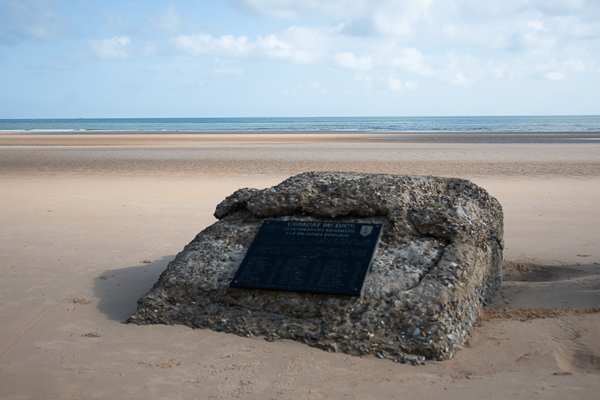
The memorial on this stone, standing on the sand of Omaha Beach, is to the Combat Medics of the 1st Infantry Division.
It was here that SSGT Arnold ‘Ray’ Lambert set up the first casualty collection point on Omaha during the D-Day landings on the morning of June 6, 1944.
These men placed their lives on the line to save their comrades, and their professionalism and dedication gave their units the confidence to prevail in the face of extraordinary danger.
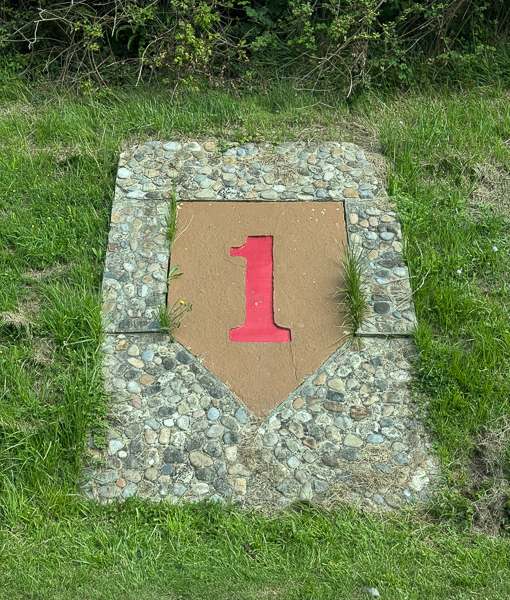
As you leave the beach, you pass the insignia of the 1st Infantry Division. They were in charge of the assault on Omaha Beach with the 29th Infantry Division.
La Pointe du Hoc
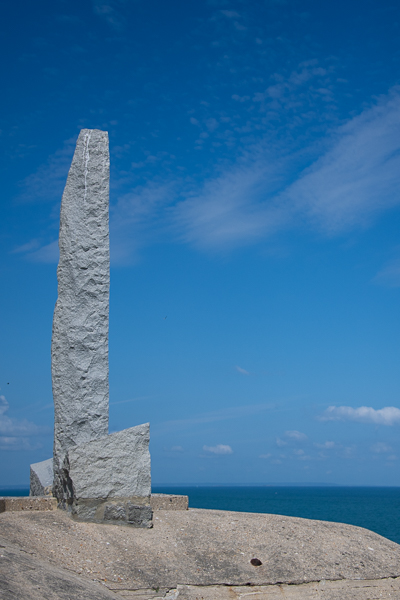
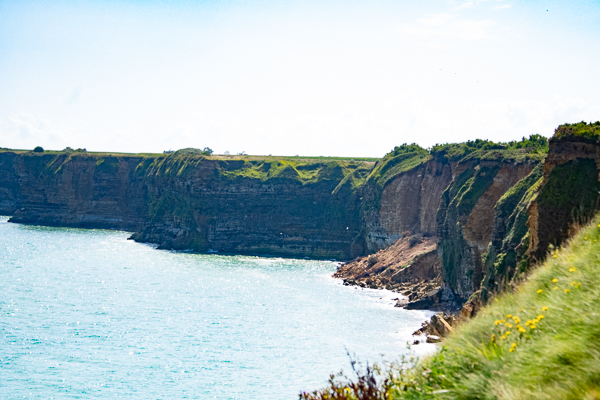
Pointe du Hoc is located between Utah and Omaha Beaches and sits atop overhanging cliffs up to 100 feet in height. On D-Day, Colonel James E. Rudder and his force from the 2d Ranger Battalion, made up of 225 soldiers, would carry out their mission to scale the cliffs before dawn and neutralize enemy positions atop Pointe du Hoc. As happened at Omaha and Utah, it was a disaster due to the weather.
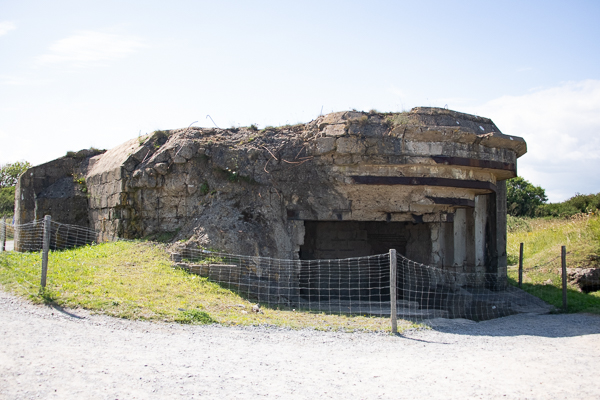
The above memorial monument honors the 2nd Ranger Battalion. The memorial consists of a granite pylon representing a commando fighting dagger, and it sits atop a German concrete bunker with tablets in both French and English at the base. I could not access the tablets as much of the site is roped off due to erosion on the cliffs and other safety concerns. This was the site og President Ronald Reagan’s famous “Boys of Pointe du Hoc” address given on June 6, 1984
Some 20,000 Normandy civilians were killed in the invasion, and as Allied forces fought their way inland. 80% of the town of Caen was bombed, and 90% of the town of St. Lo. Allied casualties in the Normandy campaign were also appalling, with 73,000 troops killed and 153,000 wounded. On the 80th anniversary, a woman commented, “For Normans, D-Day and its aftermath were ‘a bit of a confusion of feelings. We cried with joy because we were freed, but we also cried because the dead were all around us.”
That was just part of the morning. Next was the Normandy American Cemetery and Memorial