May 1, 2026
I am traveling with my friend Susan, who loves to go on market and food tours. Because of this, my palette has expanded greatly, and I have been able to try foods I might not otherwise have. Today, we headed to the Asian side of Istanbul for a wonderful food tour.
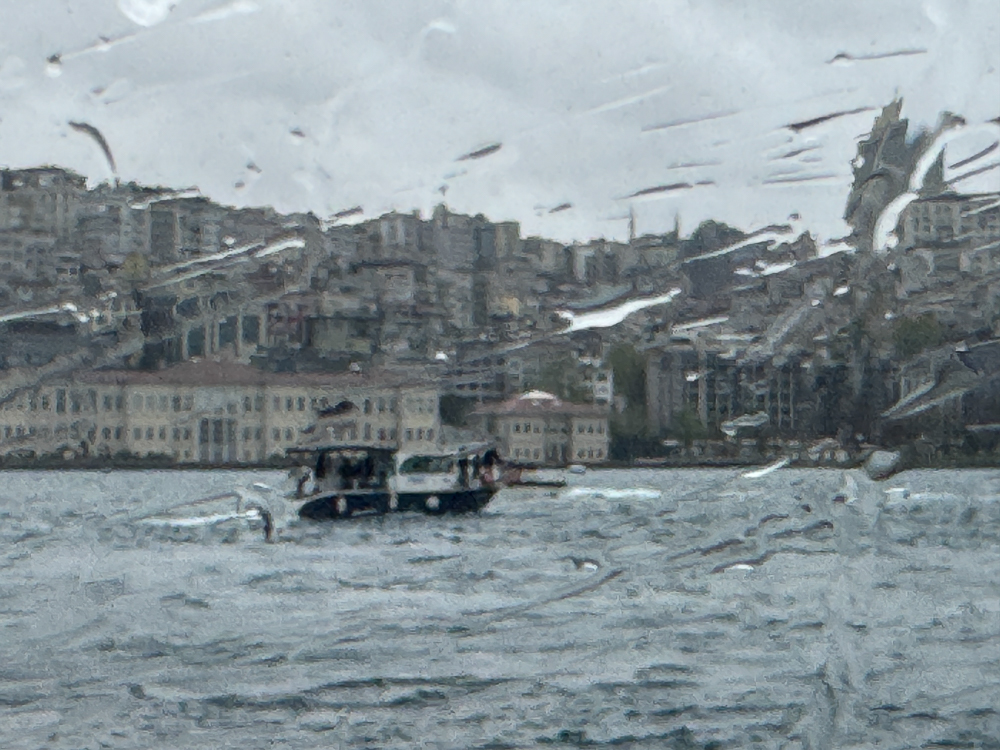
Getting there, however, was easier said than done. First, it was raining, and then it was May 1st, or Labor Day in Turkey. Our adventure began with a tram ride from the hotel to the ferry station. There we boarded a ferry to Kadikoy. Upon alighting at Uskudar, we were told the ferry would not continue on to Kadikoy due to the observances. So we found bus 12 to take us there. 3/4 of the way there, the bus said it doesn’t go any further due to the observances. So we hailed a cab. He said he couldn’t take us there because of the observances. After fumbling trying to find Google Translate, I typed in, Can you get us close? He started the car, and off we went. He did a great job, and we arrived but a mere 5 minutes late, only to find out that we were on one side of the fences and our guide was on the other. So, after lots of phone calls, map-swapping via text to show our locations, and hiking, we met and started our tour.
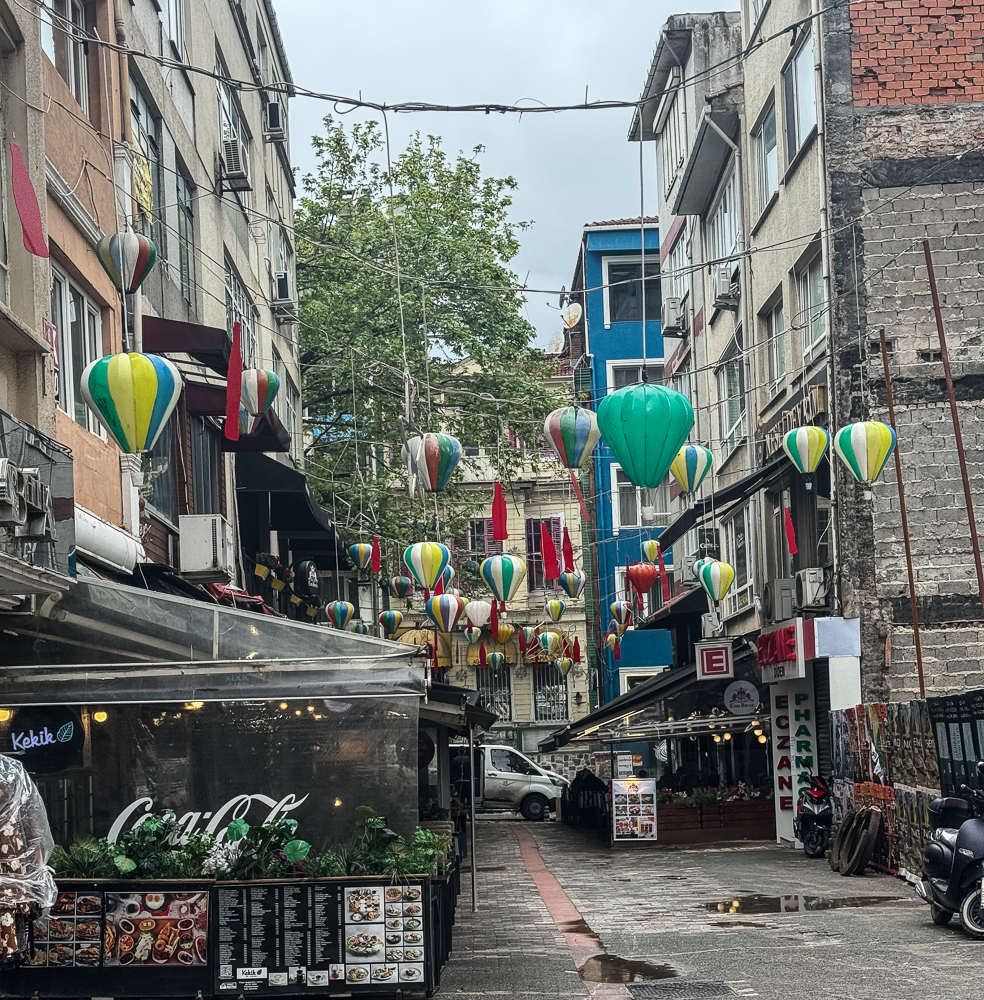
The Asian or Anatolian side got its real start when Ottoman Sultan Beyazıt built the Anatolian fortress as part of his preparations for a siege on the then-Byzantine city of Constantinople between 1393 and 1394.
In 1455, shortly after the conquest of Constantinople, the district had three categories of inhabitants: Genoese, Venetian, and Catalan merchants; Genoese with Ottoman citizenship; and Greeks, Armenians, and Jews. According to a census of 1478, almost half of the local population was Muslim. From 1500 onward, Sephardic Jews arrived after their expulsion from Spain in 1492. A second wave of Christian arrivals occurred when British, French, and Italian Allied forces arrived in Istanbul to fight in the Crimean War (1854–1856). After 1917, thousands of White Russians fleeing the Bolshevik Revolution landed here and settled in the area.
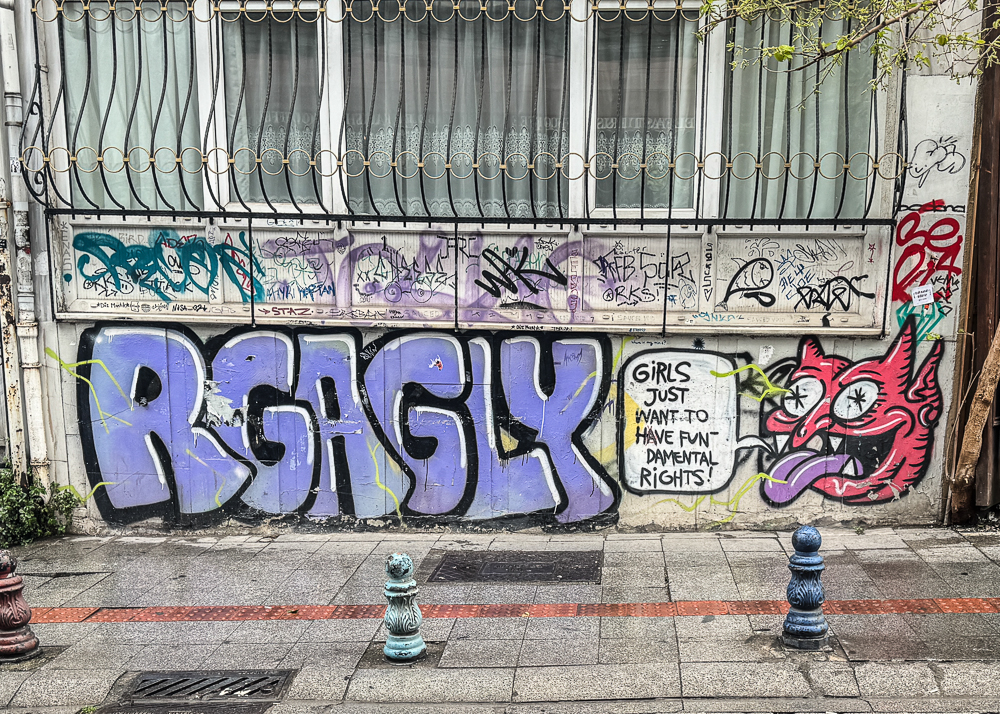
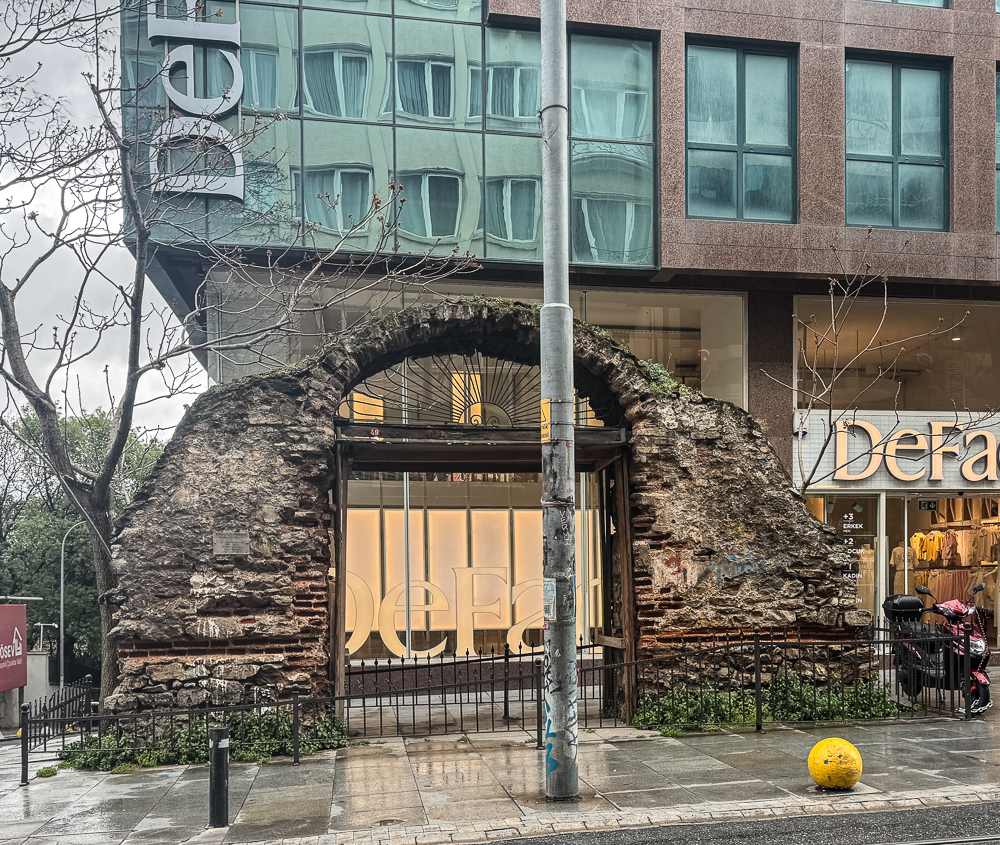
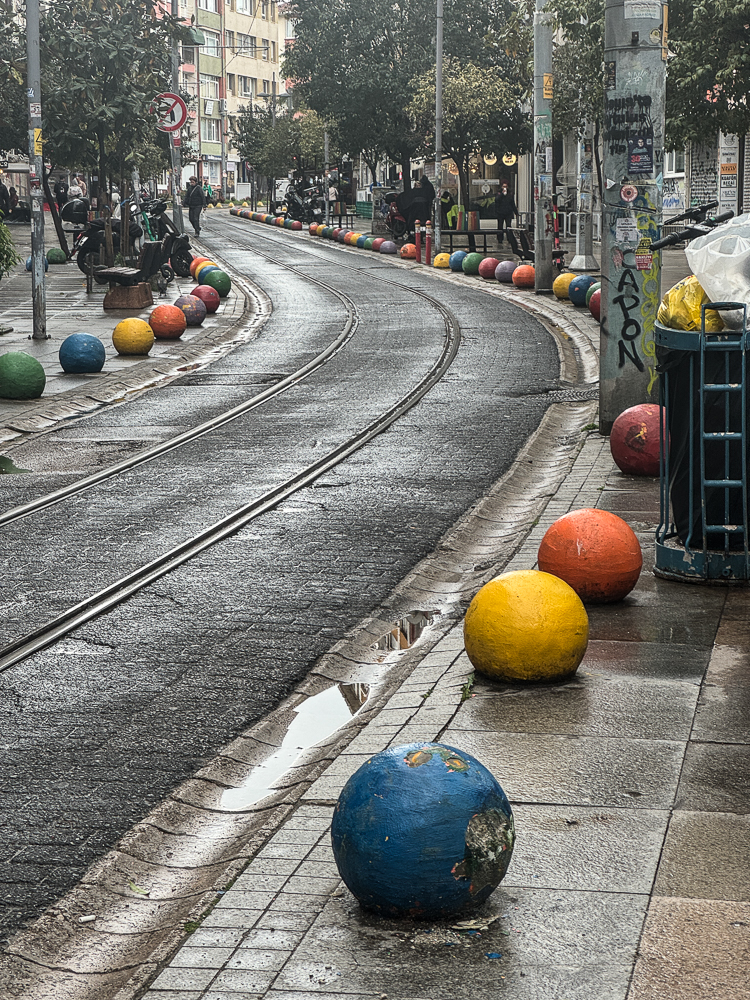
We began with a walk through Moda, considered the up-and-coming hip section of Kadikoy. Moda is also a very diverse part of the area. It has Armenian, Greek, and Anglican church buildings, a Georgian art house, theaters, and the French Lycée Saint-Joseph (founded in 1870).
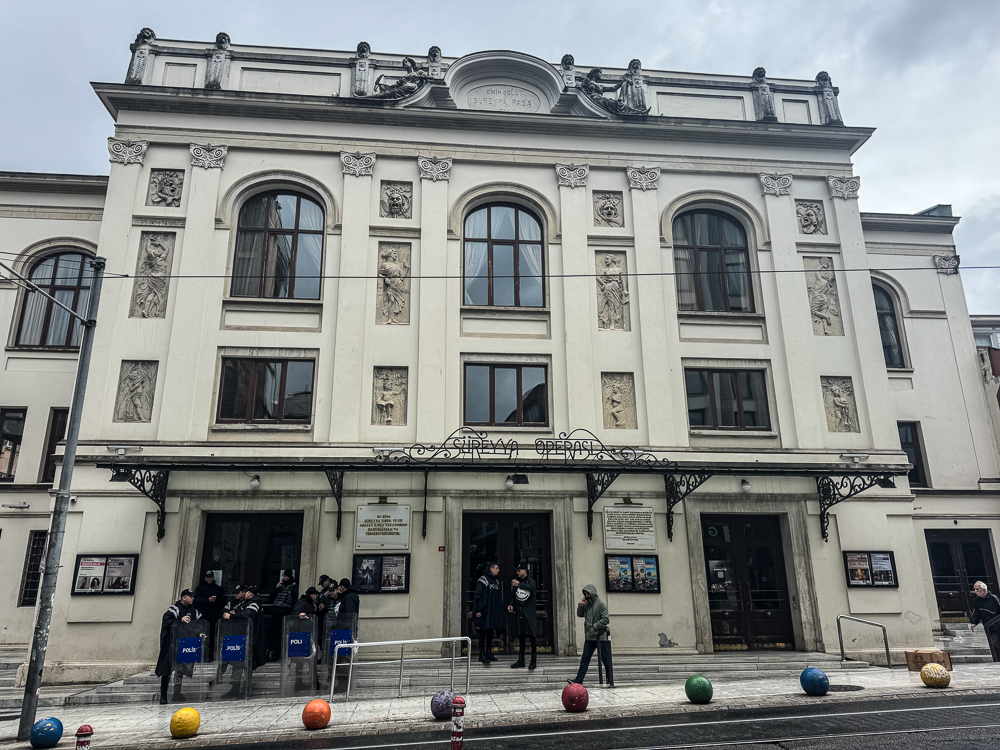
The Sureyya Opera House was designed by Ottoman Armenian architect Kegham Kavafyan. It was originally established in 1927 as the first musical theatre on the Anatolian part of Istanbul. However, due to the lack of appropriate facilities and equipment at the theatre, operettas weren’t staged until 2007. The venue was used as a movie theatre until the building underwent a functional restoration and reopened as an opera house on December 14, 2007.
Our first food stop was for “breakfast”. Our guide joined us with simit, something that I have loved since my first trip to Istanbul over 25 years ago.
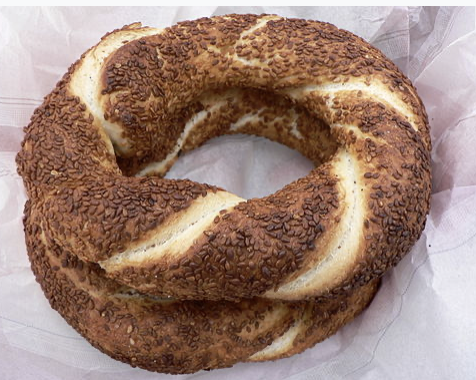
If you are not familiar, Simit is a circular bread, typically encrusted with sesame seeds. Simit is found across the cuisines of the former Ottoman Empire and the Middle East, especially in Armenia, Turkey, and the Balkans. The word simit comes from Arabic samīd, meaning “white bread” or “fine flour.”
Our next stop was for Menemen (on the right) and Kuymak. I found the Menemen absolutely delicious; the kuymak was not my thing.
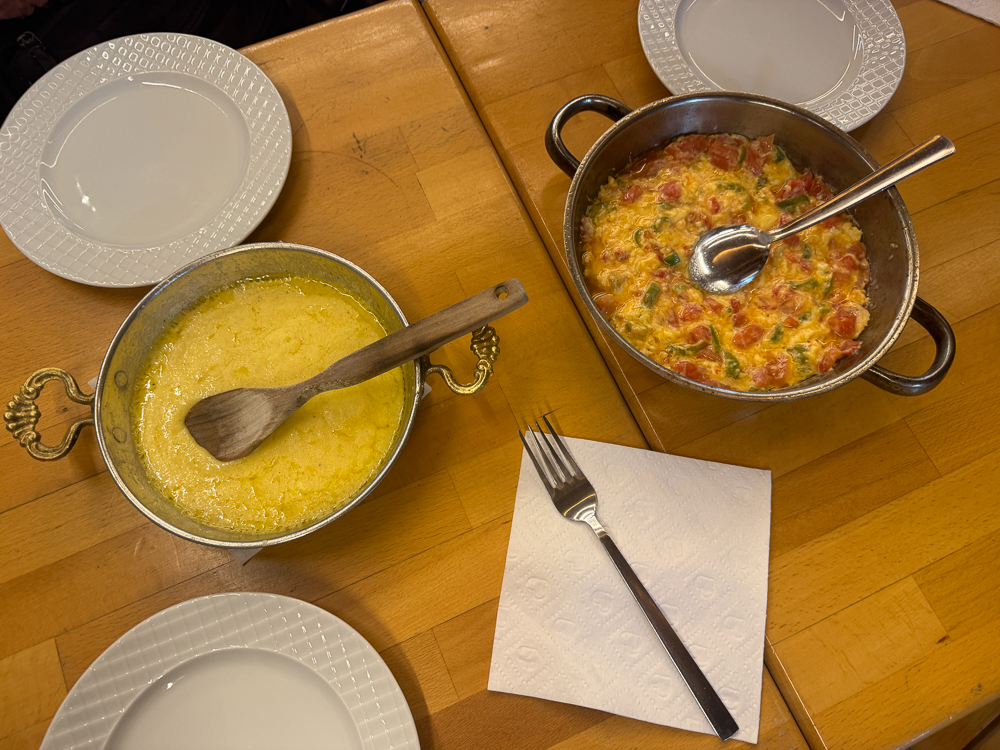
Menemen is tomatoes, bell peppers, just 2 eggs, and cheese with a little spice. It is similar to shashuka, but I like it better.
Kuymak is melted cheese and either cornmeal or cornstarch. It is from Turkey’s Black Sea region, and what makes it special is the Trabzon cheese from the area. It is served hot, so it remains liquid, and you eat it by dipping bread in it.
I dined with Salça. Salça (a deep red paste made from peppers or tomato and salt) and parsley are nicknames for busy bodies in Turkey, as they are two ingredients found in everything.
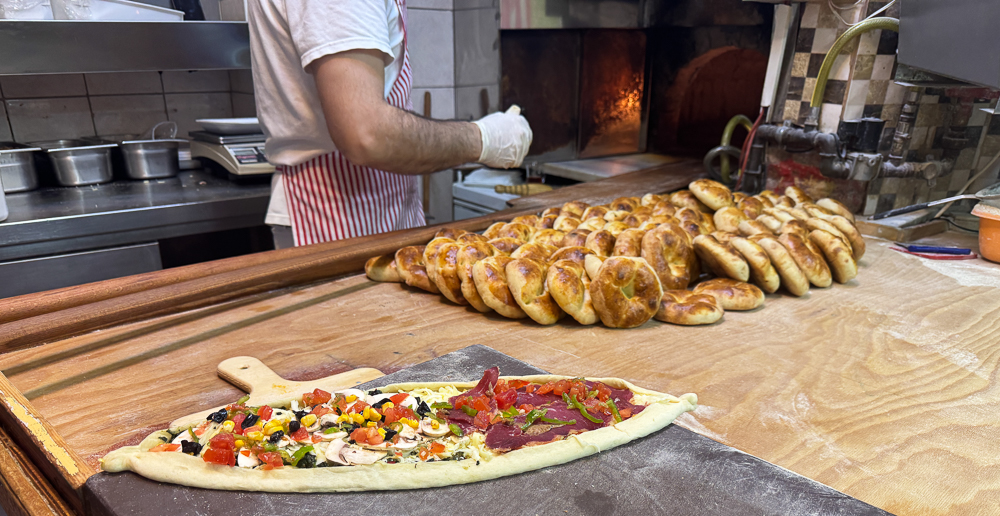
Next was pide, or pita. Pide is a thin, boat-shaped flatbread with a filling inside, originally from the Aegean Region. The most popular fillings are: minced meat (kiymali pide), cheese (peynirli pide or kaşarlı pide), sausage (sucuklu pide), tahini (Tahinli pide), and cheese with eggs (kaşarlı-yumurtalı pide).
Traditionally cooked in wood-fired stone ovens, pide has a crisp, boat-shaped base on which the filling and toppings are placed.
Very filling and really, really good!
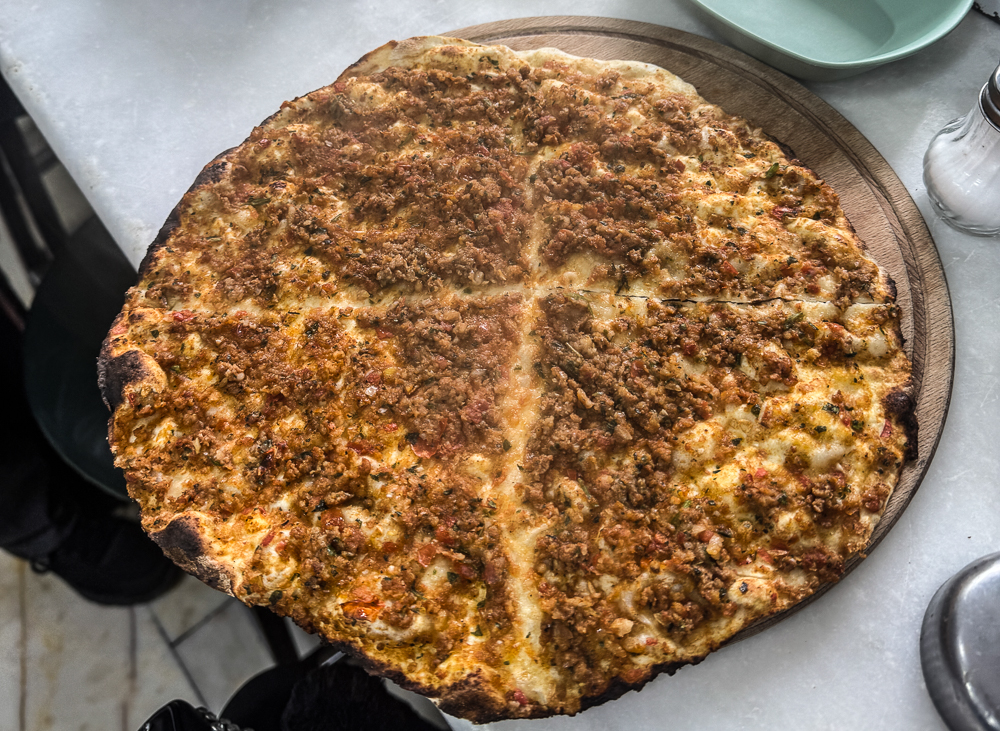
Lahmacun is a flatbread topped with minced meat (most commonly beef or lamb), minced vegetables, and herbs such as onions, garlic, tomatoes, red peppers, and parsley, flavored with spices such as chili pepper and paprika, then baked. At the table, you can dress it up with lemon, sumac, or roasted peppers. Absolutely delicious!
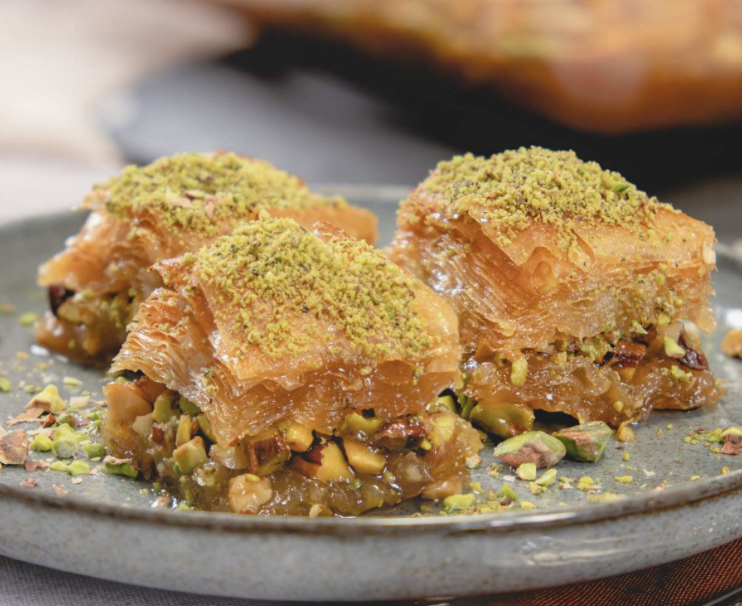
Two other stops included a glass of red Turkish wine and Turkish coffee, and we finished off the day with baklava.
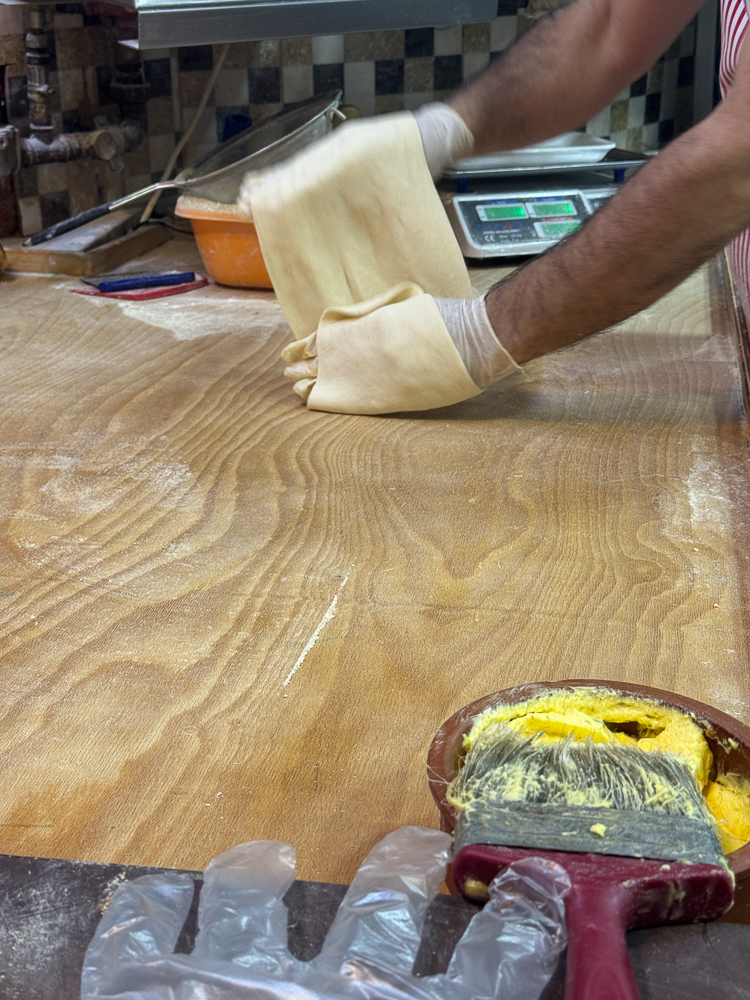
We were given the rules of baklava in Turkey. A minimum of 40 layers of dough and no honey, but a simple syrup. In fact, the syrup used varies greatly from country to country. In Algeria, the syrup is typically flavored with orange blossom water, whereas in Iran, rose water and cardamom are preferred. A honey and lemon syrup is the go-to in Greece. The Turks use pistachio nuts and only pistachio nuts. You will find different types of nuts, primarily walnuts, in other countries. Our guide was quick to point out that baklava originated in Syria, not Turkey.
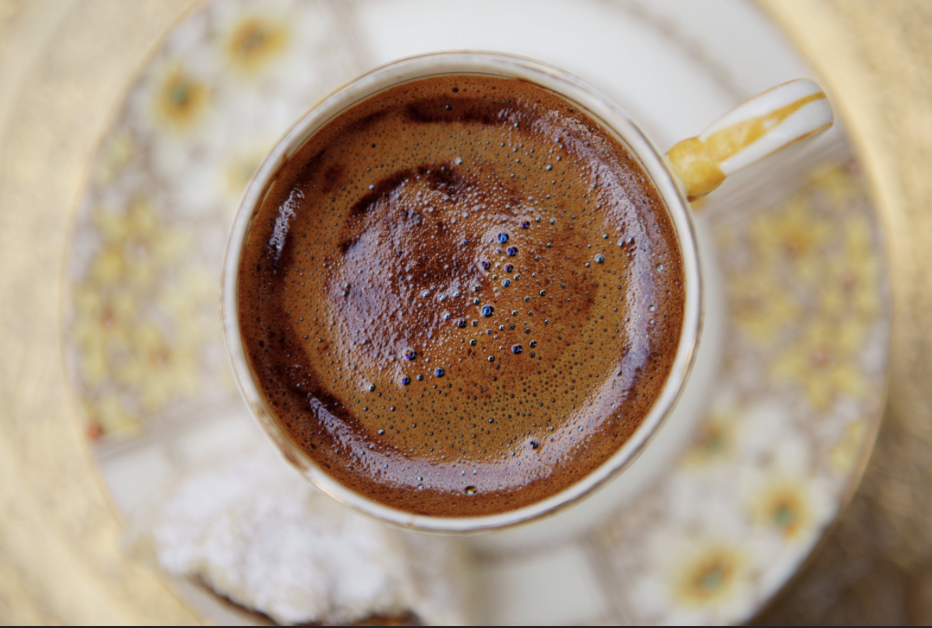
The coffee tree was first cultivated commercially in Yemen, having been introduced there from Ethiopia’s rainforests, where it grew wild. For a long time, Yemenis had a world monopoly on coffee bean exports. For nearly a century (1538–1636), the Ottoman Empire controlled the southern coastal region of the Yemen, notably its famous coffee port Mocha.
It is said that the first coffeehouse in Istanbul was opened in 1554. The history of Turkish coffee is a bit cloudy. Some say the method originated in Yemen or Damascus (a plausible, if unsubstantiated, claim, since the Middle Eastern coffeehouse probably originated in Damascus) and was brought to Istanbul by Syrians.
One of my favorite forms of Turkish coffee is Sand Coffee.
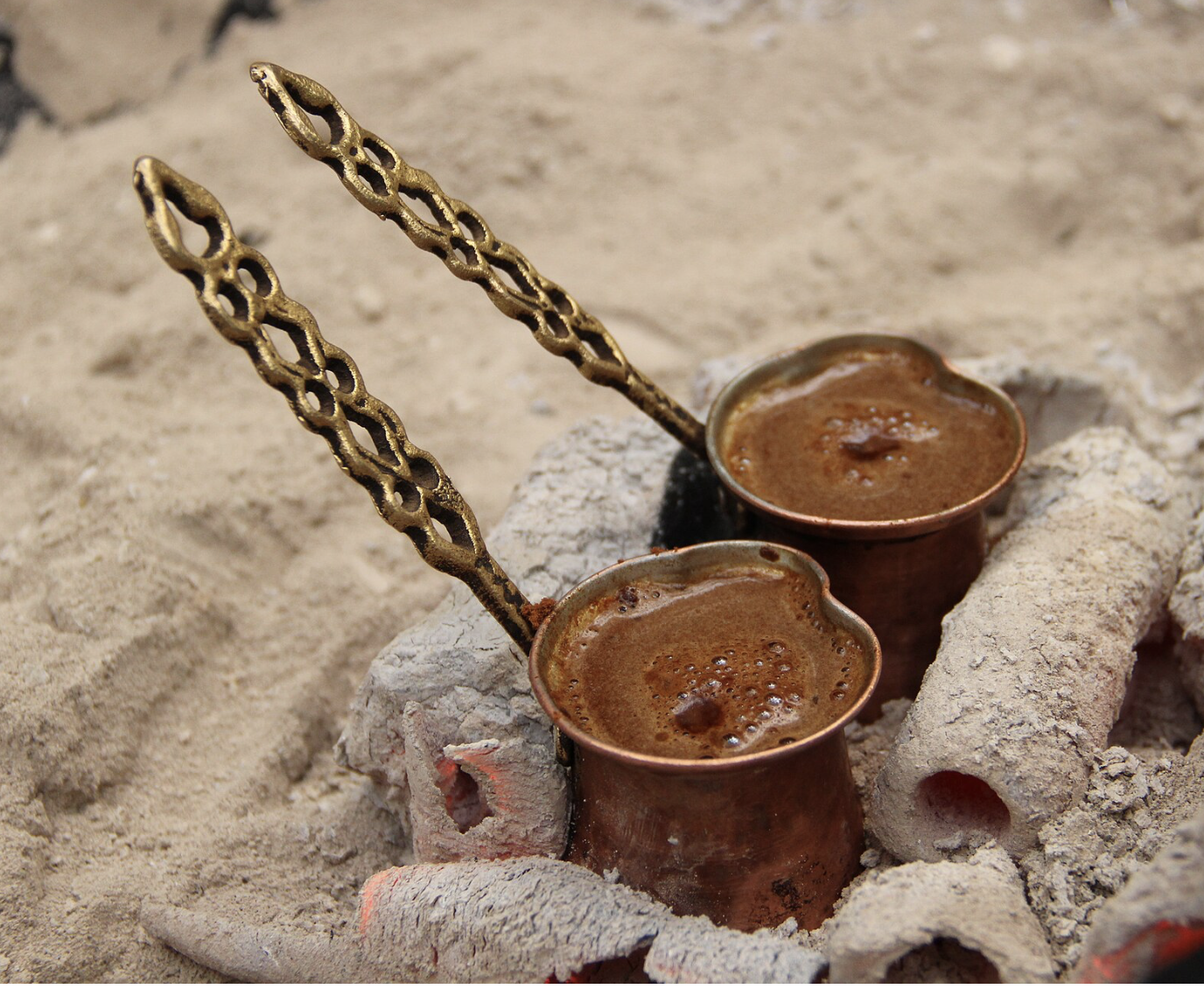
Sand coffee involves placing the cezve filled with coffee in a pan filled with hot sand. The pan is heated over an open flame, allowing the sand to take full control of the heat. The heat from the sand lets the coffee foam rise to the top almost immediately. The heat can also be adjusted by the depth of the cezve in the sand. This process is usually repeated three to four times.
Susan likes sugar in her coffee; I do not. In Turkish coffee, sugar must be added to the coffee before, not after, it’s prepared.
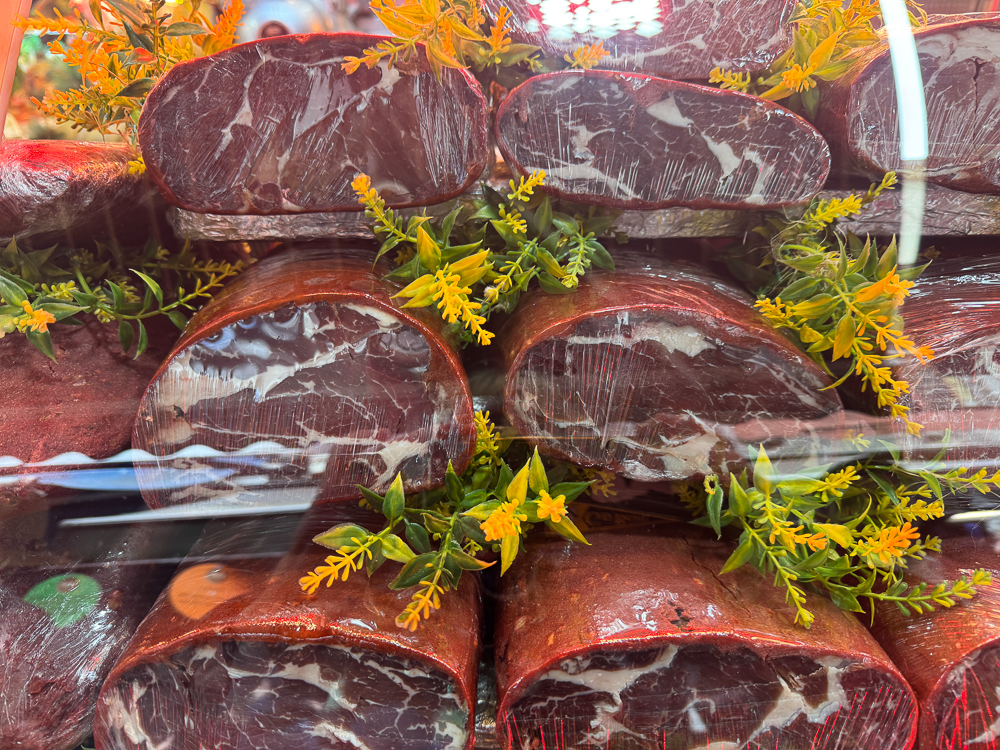
In our pide we had kayseri pastirma, a very interesting-tasting meat with an almost dried-meat texture. Pastirma is prepared by salting the meat, then washing it with water and letting it dry for ten to 15 days. After that, the blood and salt are squeezed out of the meat, which is then covered with a cumin paste called çemen (“fenugreek”), prepared with crushed cumin, fenugreek, garlic, and hot paprika, and then thoroughly air-dried.
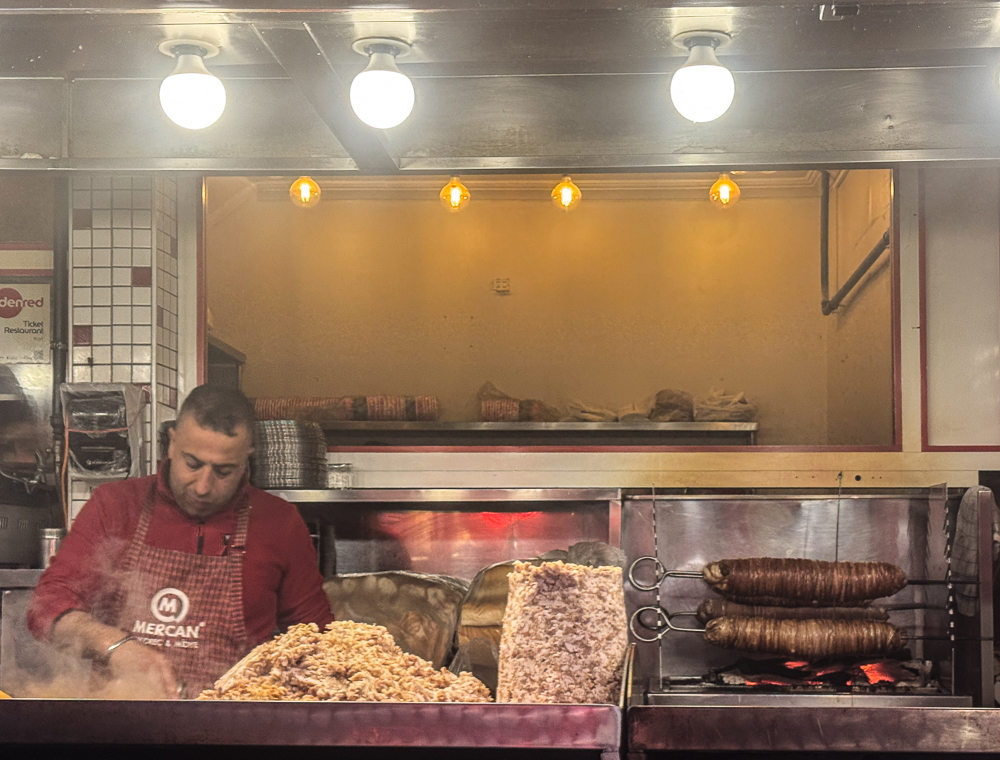
This is kokorec being made. We did not try this, although I believe I would have liked to. Kokorec is seasoned, skewered, charcoal-grilled lamb intestines — usually wrapped around sweetbreads (thymus gland), chopped up and served in a half or quarter-bread loaf.
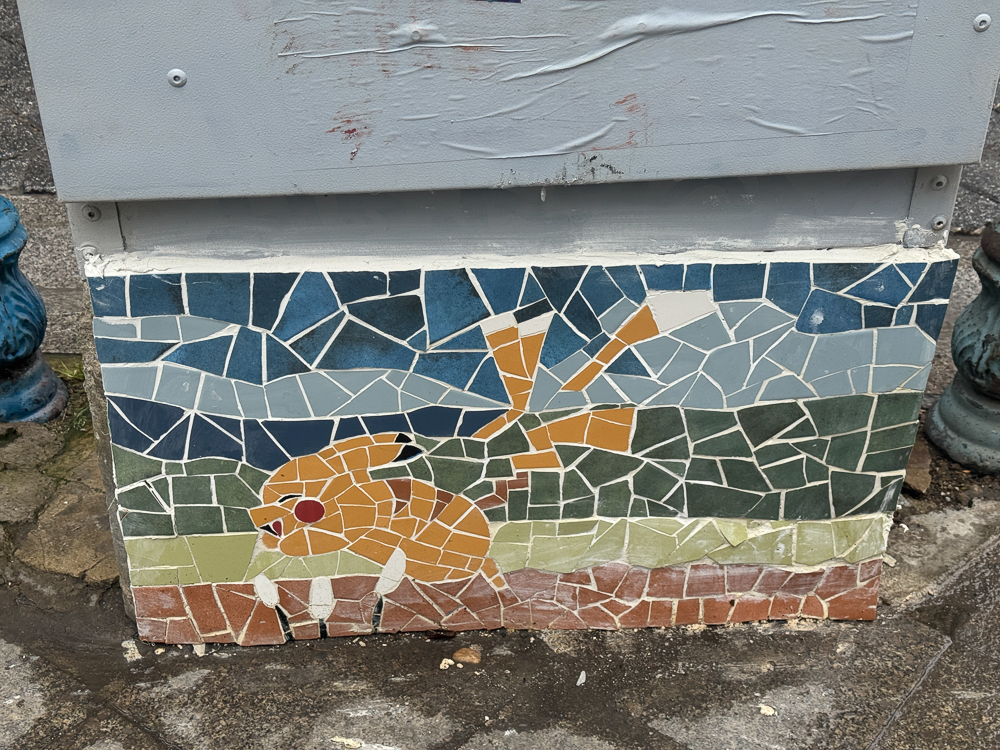
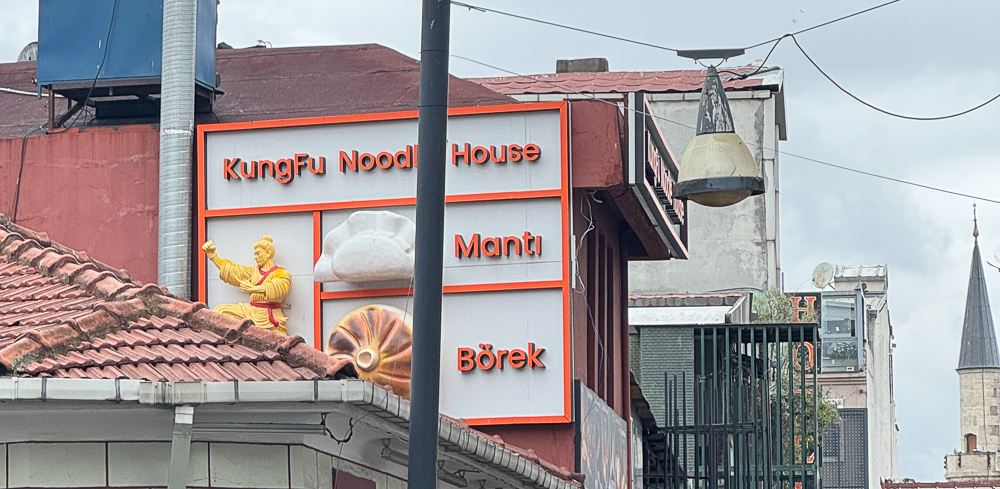
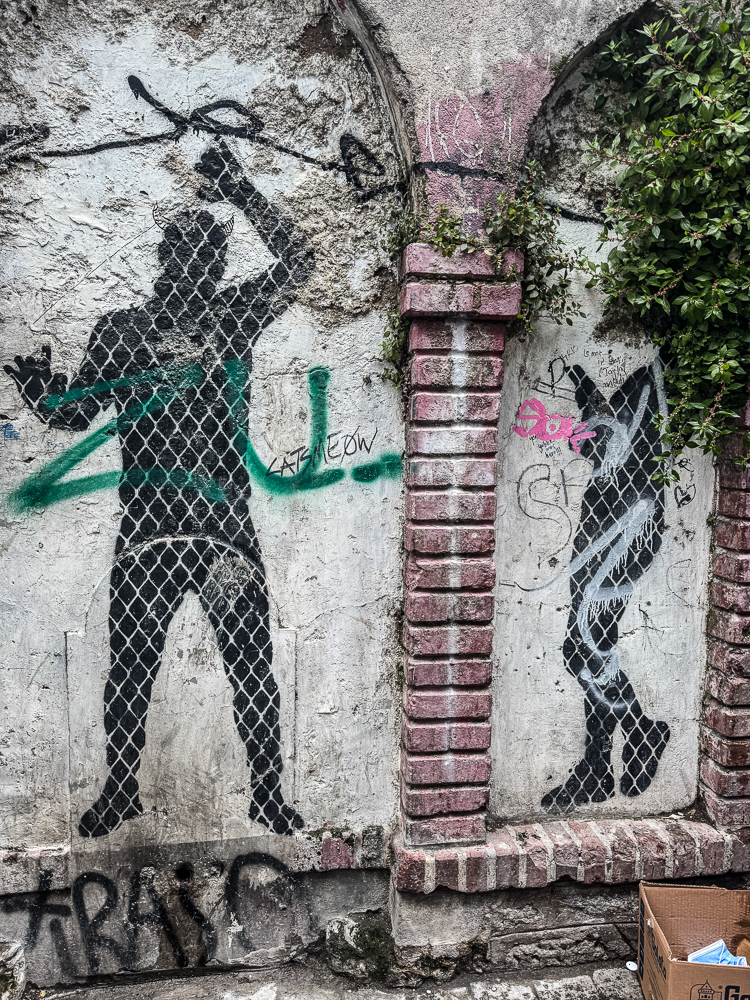
More sights from the area.
*
*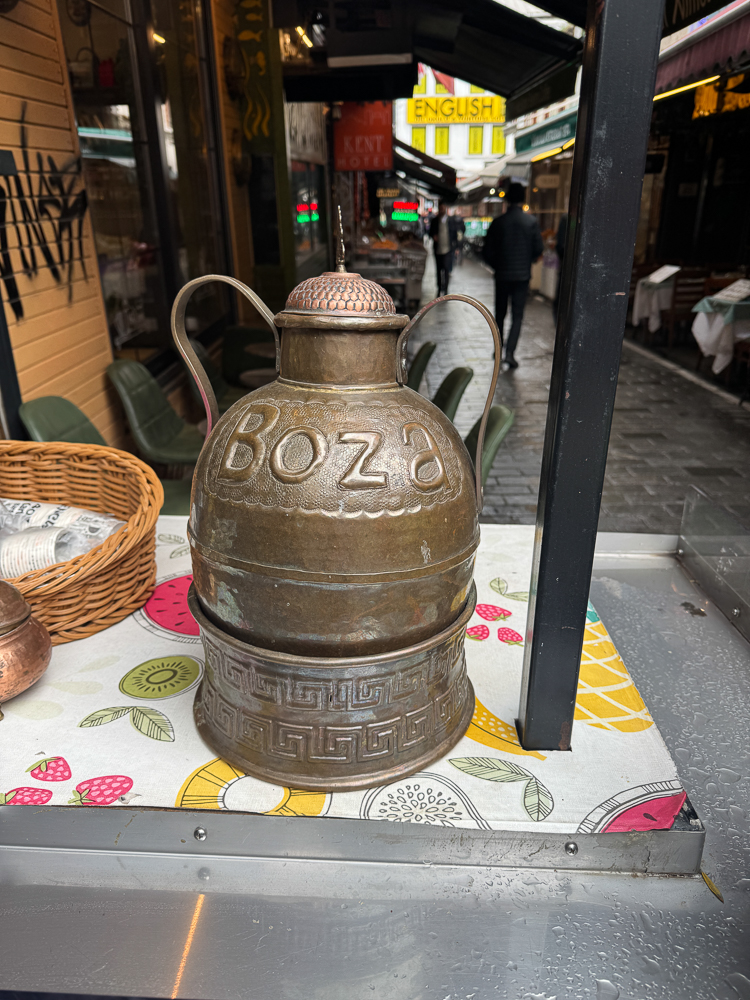
Something else we did not try is Boza, a fermented beverage originating from Central Asia and one of the oldest Turkic beverages. It is a malt drink made by fermenting various grains: millet, wheat (or bulgur), and maize (corn) in Turkey. It has a thick consistency, a low alcohol content (around 1%), and a slightly acidic, sweet flavor.
Today was an amazing adventure. Taking the metro home means we utilized five forms of transportation to complete our day. The food was delicious, the adventure fun, so overall a wonderful day.