May 11, 2026
Ismail Samani Mausoleum
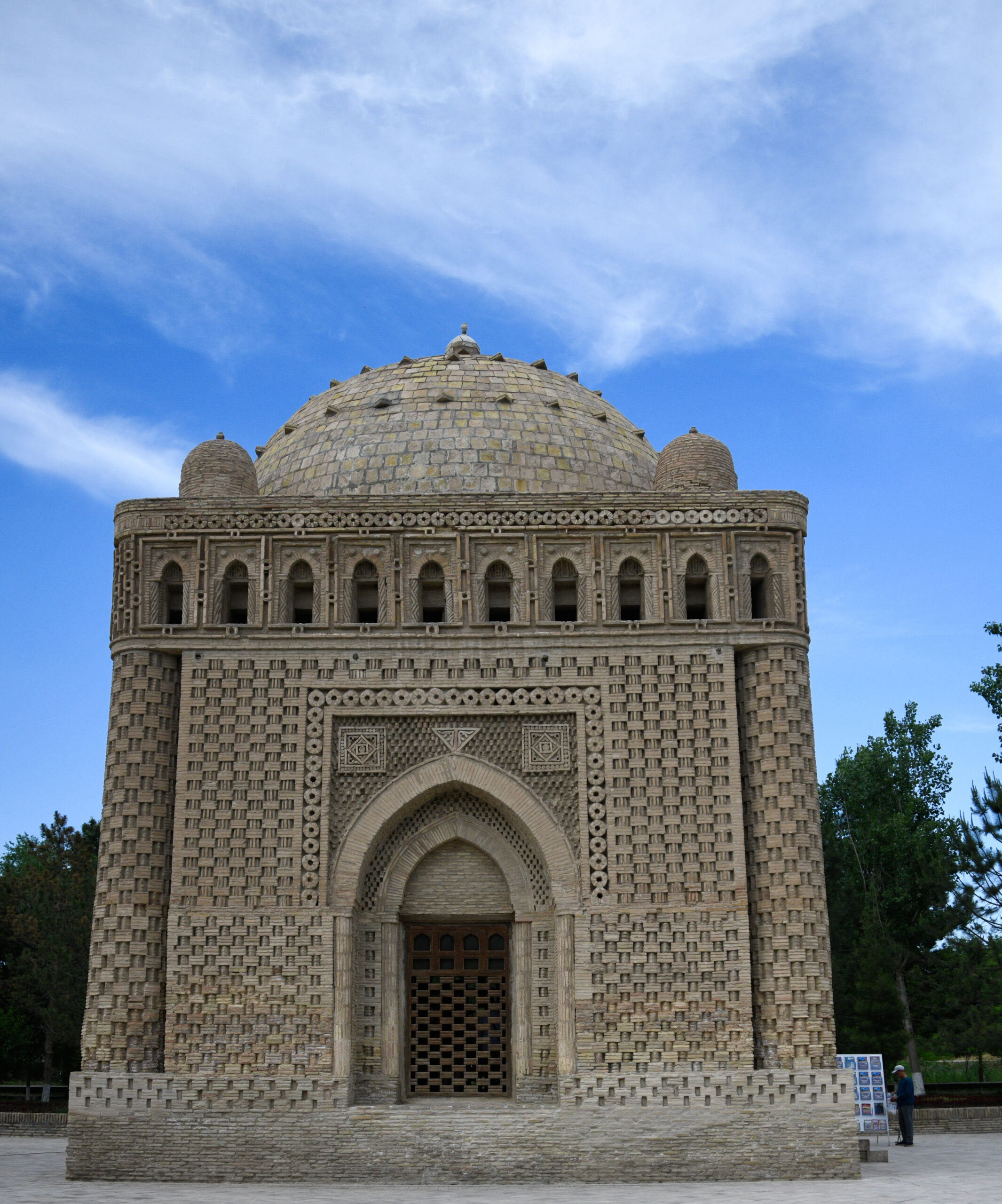
The Ismail Samani Mausoleum is the oldest building in Bukhara. The mausoleum is believed to have served as the family tomb of the Samanid dynasty (819-1005). The tomb is named for Ismail Samani (r. 892-907), the dynasty’s most esteemed ruler.
The mausoleum is extremely important from an art-historical perspective, as it is the earliest surviving Islamic tomb in Central Asia. Traditionally, Islam discouraged the construction of durable mausoleums, stressing the idea of the “equalization of tombs”.
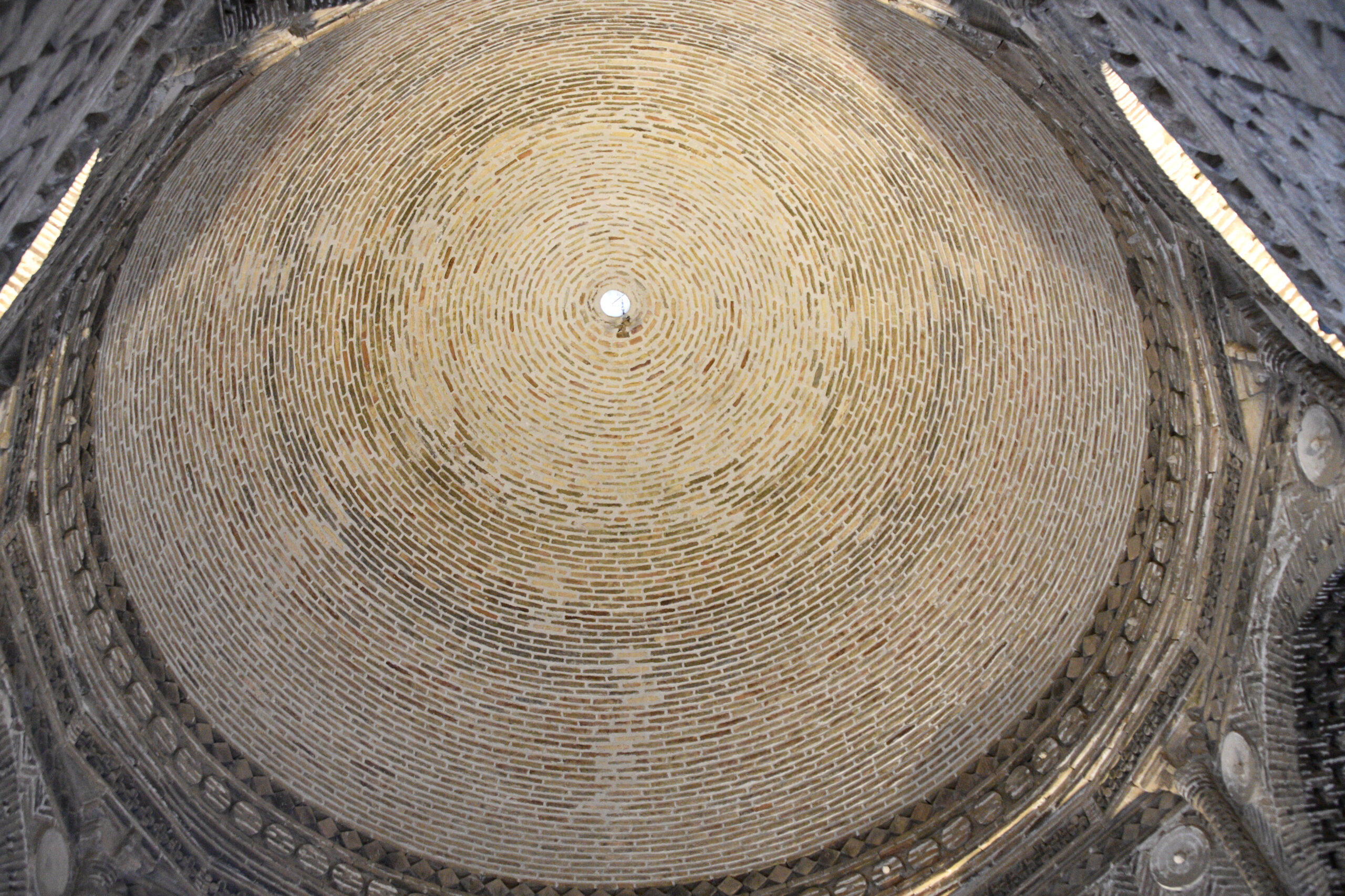
The builders of the Ismail Samani mausoleum, lacking established precedents for Islamic tomb design, borrowed heavily from Sassanian fire temples called chahar taq, which literally means “four arches” in reference to their square ground plan with four arched openings, with a dome set atop.
From a technological standpoint, the tomb is the first in Central Asia to employ squinches to mediate the transition from a round dome to a square base, pioneering a design feature that was widely used in subsequent centuries.
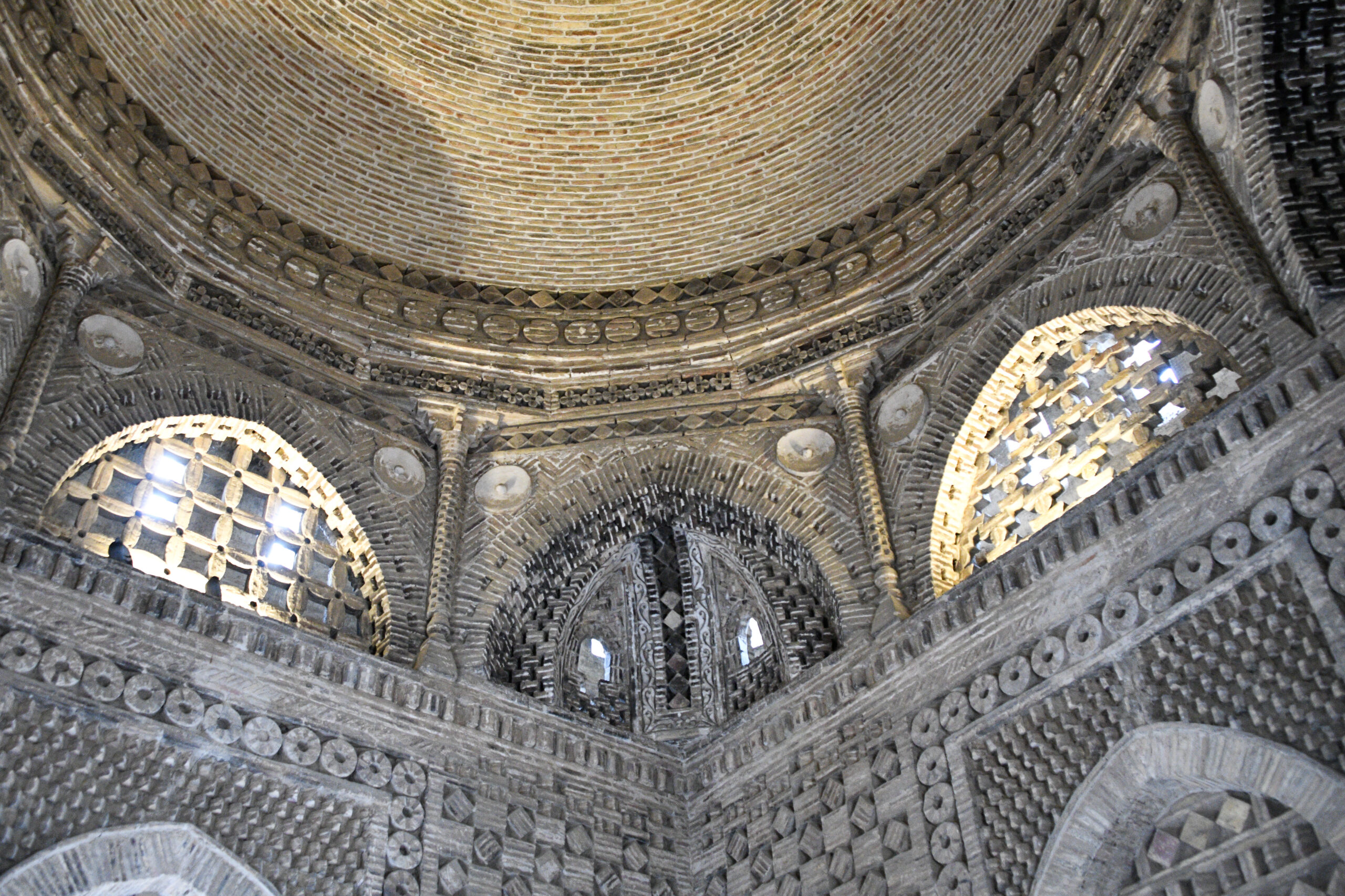
The tomb survives only by accident, having lain undisturbed in mud for many centuries until its rediscovery in the 1930s by the Soviet-era archeologist V. A. Shishkin.
The Mongol invasion of the area occurred in the 13th century. The legend says that after conquering Bukhara, Genghis Khan rode up to its main minaret, Poi-Kalyan, to take a look at the tower. He raised his head, and a battle helmet rolled off his head. The conqueror leaned over it and then said, “I conquered Bukhara, but bowed before its minaret,” and ordered that it not be destroyed.
The Bolo Hauz
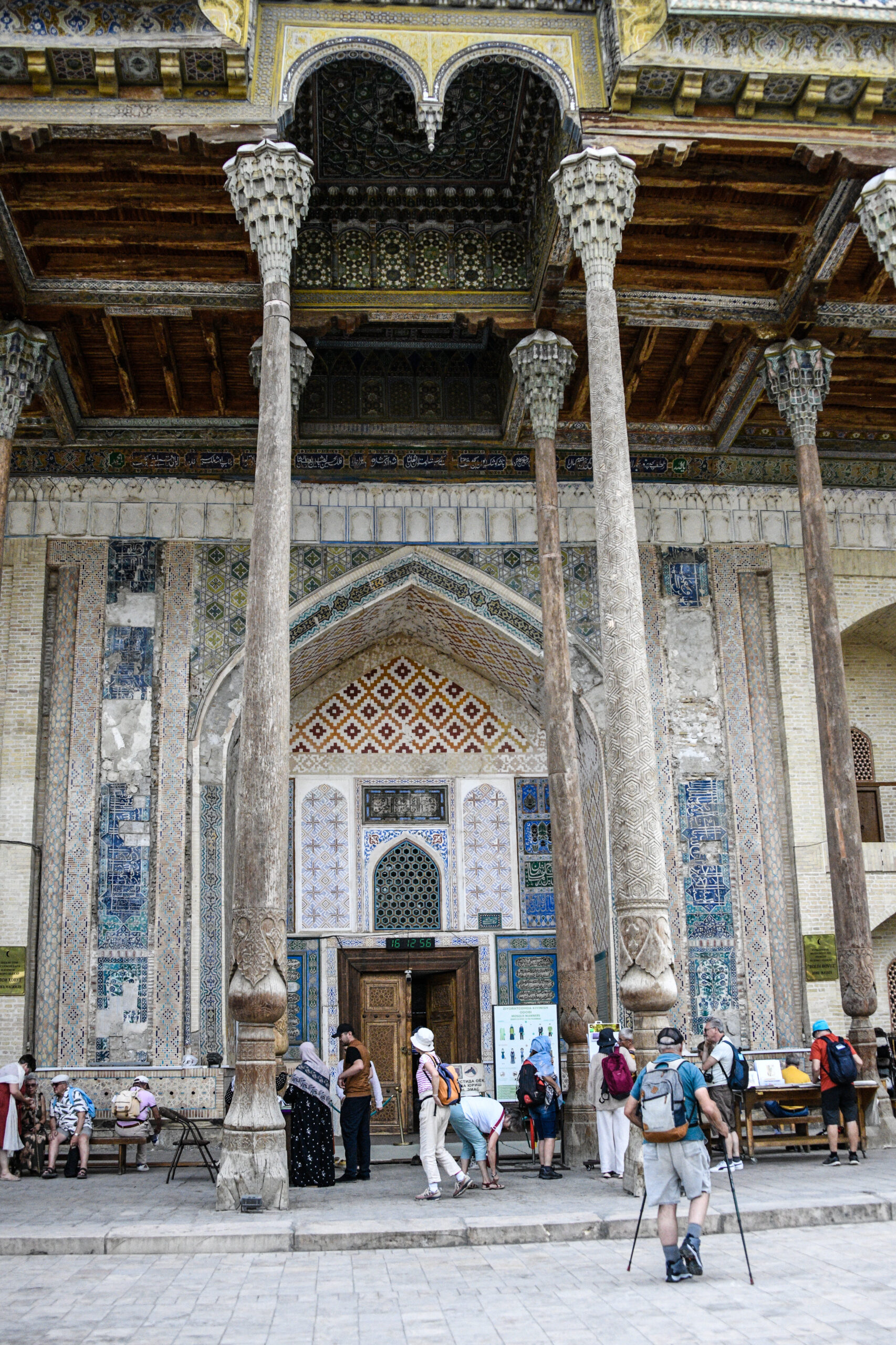
Bolo Hauz means “above the pool”, referring to the hauz, or artificial pond, located directly in front of it (mosques in Bukhara traditionally incorporated a hauz whenever possible.
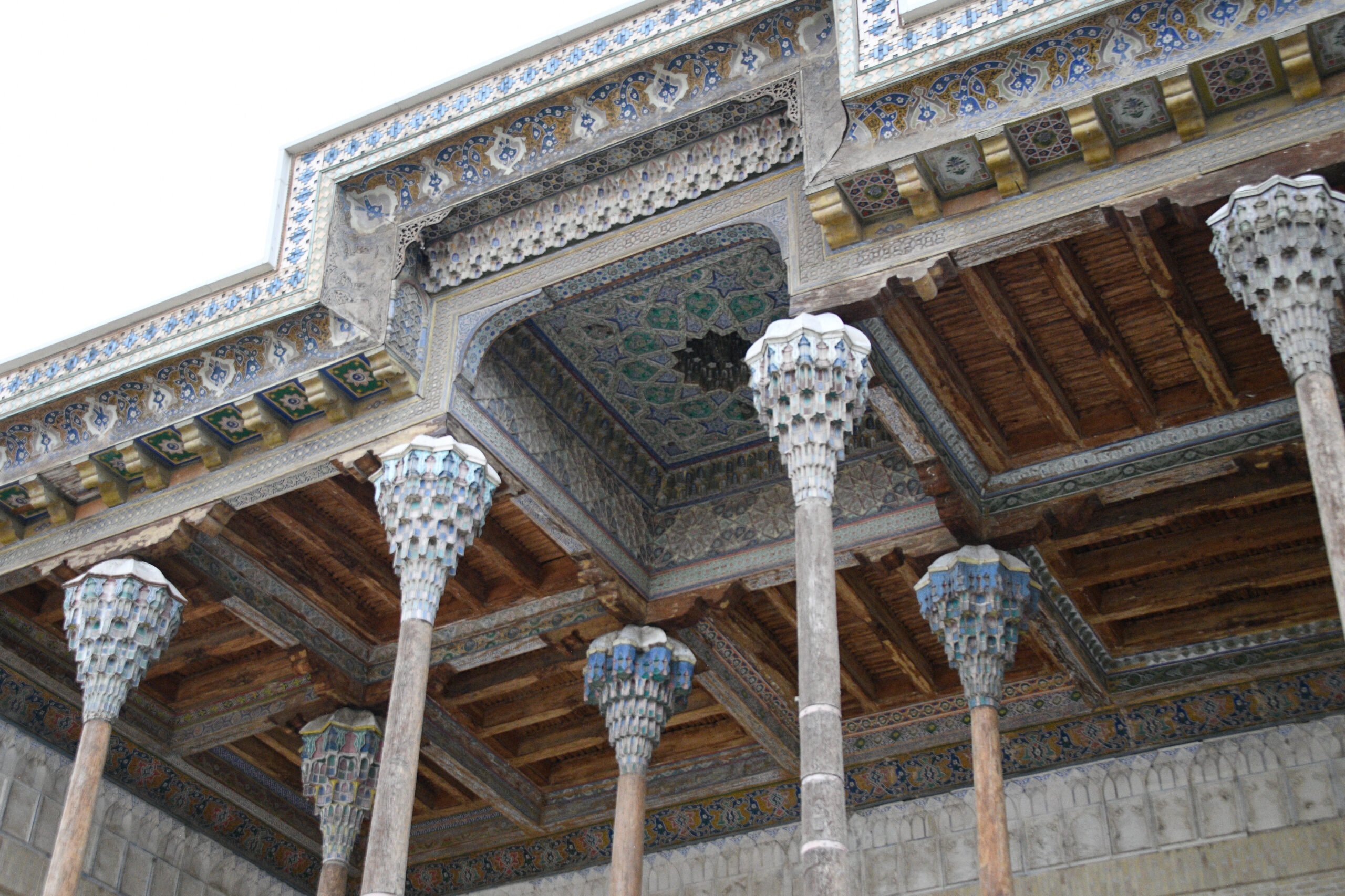
The design of Bolo Hauz utilizes the concept of “forty pillars” (Chehel Sotoun) common in Persian architecture. Each of the pillars is fashioned from two tree trunks connected end-to-end (to extend the length) and is made of walnut, elm, and poplar wood.
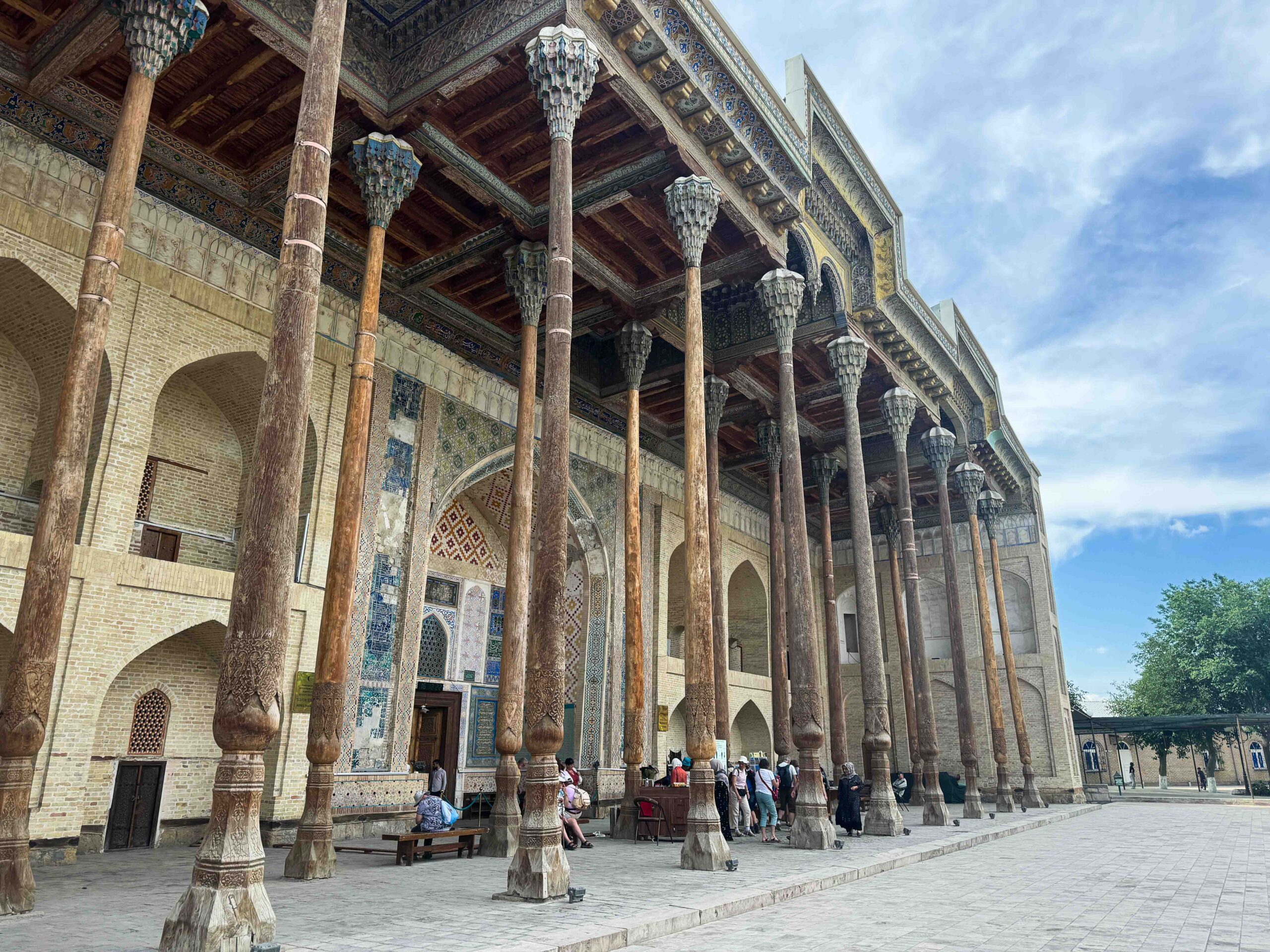
The construction of the 20-pillar iwan hall was added at the beginning of the 20th century. The Iwan escaped destruction in the 1920 siege of Bukhara by the Red Army.
The Shukov Water Tower
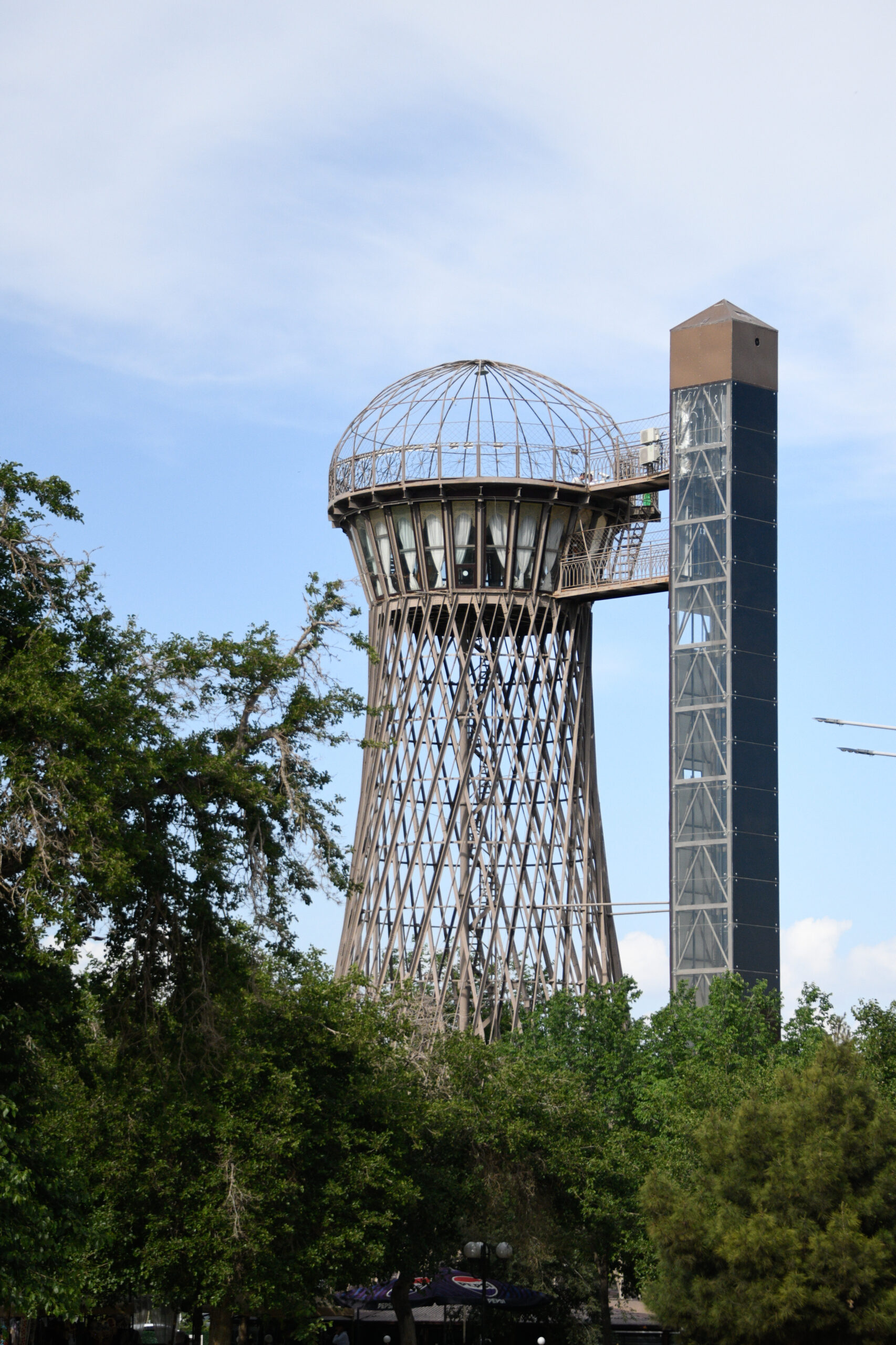
The Shukhov Tower (Bukhara Tower) is a metal hyperboloid structure built in 1927-1929. Designed by Russian architect V. G. Shukhov. In 1968, the wooden sheathing of its top burned down, and the water tank was damaged, rendering the tower useless. In the 1990s, a local businessman added an elevator to the tower, and the top of the tower was turned into a restaurant, which closed after the elevator failed. The tower found a “second life” thanks to a French investment in 2018. It reopened on March 24, 2019, under a new name – Bukhara Tower.
The Ark of Bukhara
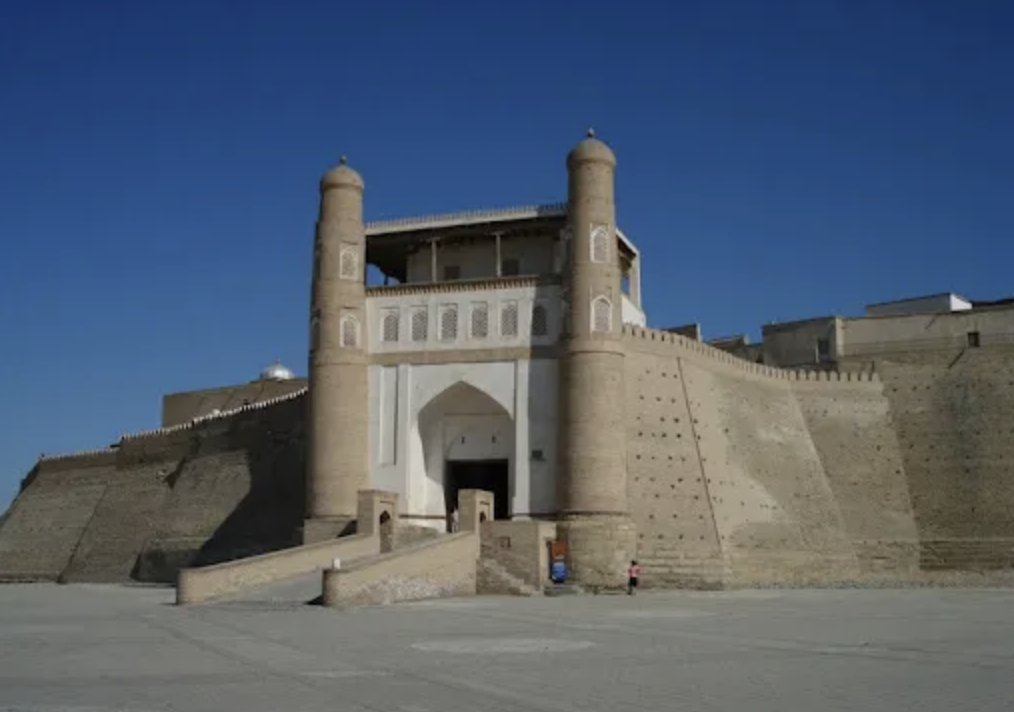
The Ark of Bukhara is a massive fortress that was originally built and occupied around the 5th century AD. The Ark’s current structure began to take shape during the 16th century under the Shaybanid Uzbek dynasty, while all of its existing buildings were constructed over the last three centuries.
In addition to being a military structure, the Ark encompassed what was essentially a town that, during much of the fortress’s history, was inhabited by the various royal courts that held sway over the region surrounding Bukhara. It was used as a fort until it fell to the Russians in 1920.
I was fascinated with the Bug Pit, but also the large area of the fortress that was missing a wall.
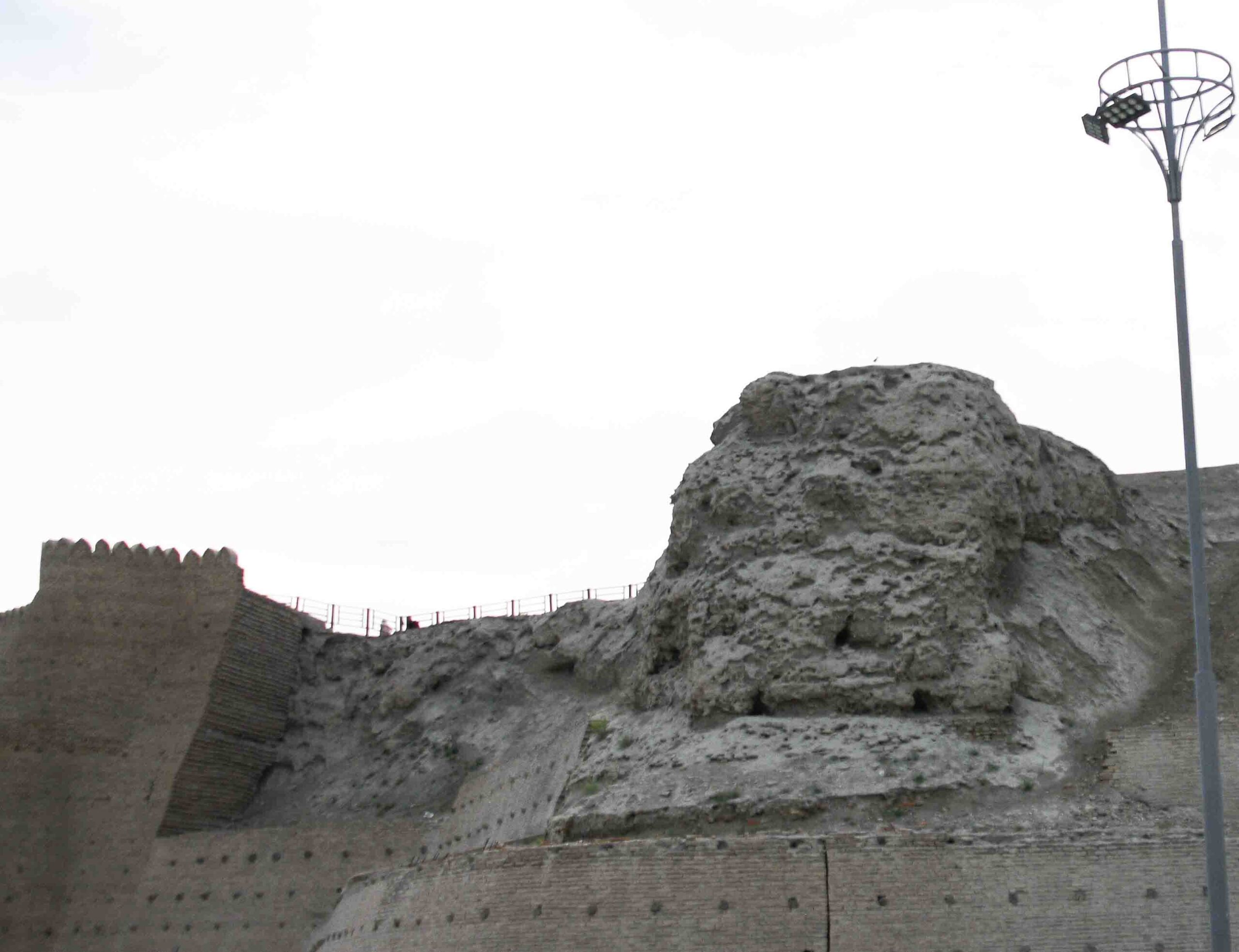
During the Russian Civil War, the Ark was greatly damaged by Red Army troops during the 1920 Battle of Bukhara. The commander ordered the Ark bombed by aircraft, which left a large part of the structure in ruins. There is also reason to believe that the last Emir, Mohammed Alim Khan (1880–1944), who escaped to Afghanistan with the royal treasury, ordered the Ark to be blown up so that its sacred places (especially the harem) could not be defiled by the Bolsheviks.
The Bug Pit
In 1842, the British soldiers Connolly and Stoddart were executed in front of the Ark Fortress in Bukhara. It was the grim finale to years of torture (for Stoddart – four years) in the Zindon prison located within the fortress. They spent those years in “the Bug Pit,” a thirteen-foot-deep hole accessible only by rope. While Connolly and Stoddart were held in the Bug Pit, guards poured scorpions, bugs, and rodents onto their heads.
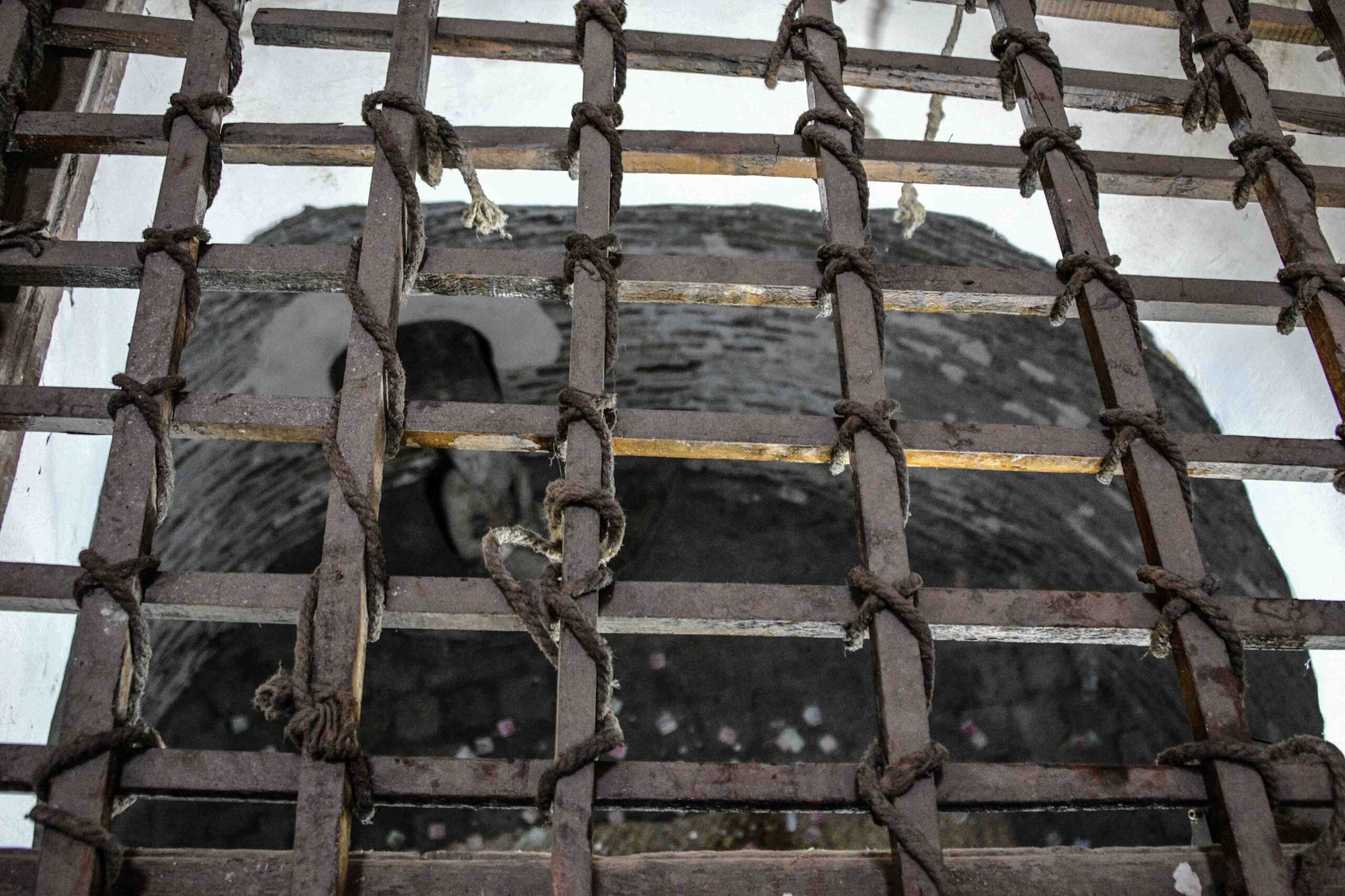 Stoddart spent three years in prison, more than one of which he was in the Bug Pit, before Conolly, sent to rescue Stoddart, was thrown down to join him. They spent a year together in the Bug Pit before the Emir finally had them executed.
This is just one tale recounted in the book The Great Game, an unsurpassable account of the Silk Road in the heyday of gentleman archaeologists.
Nadir Devanbegi Madrasah
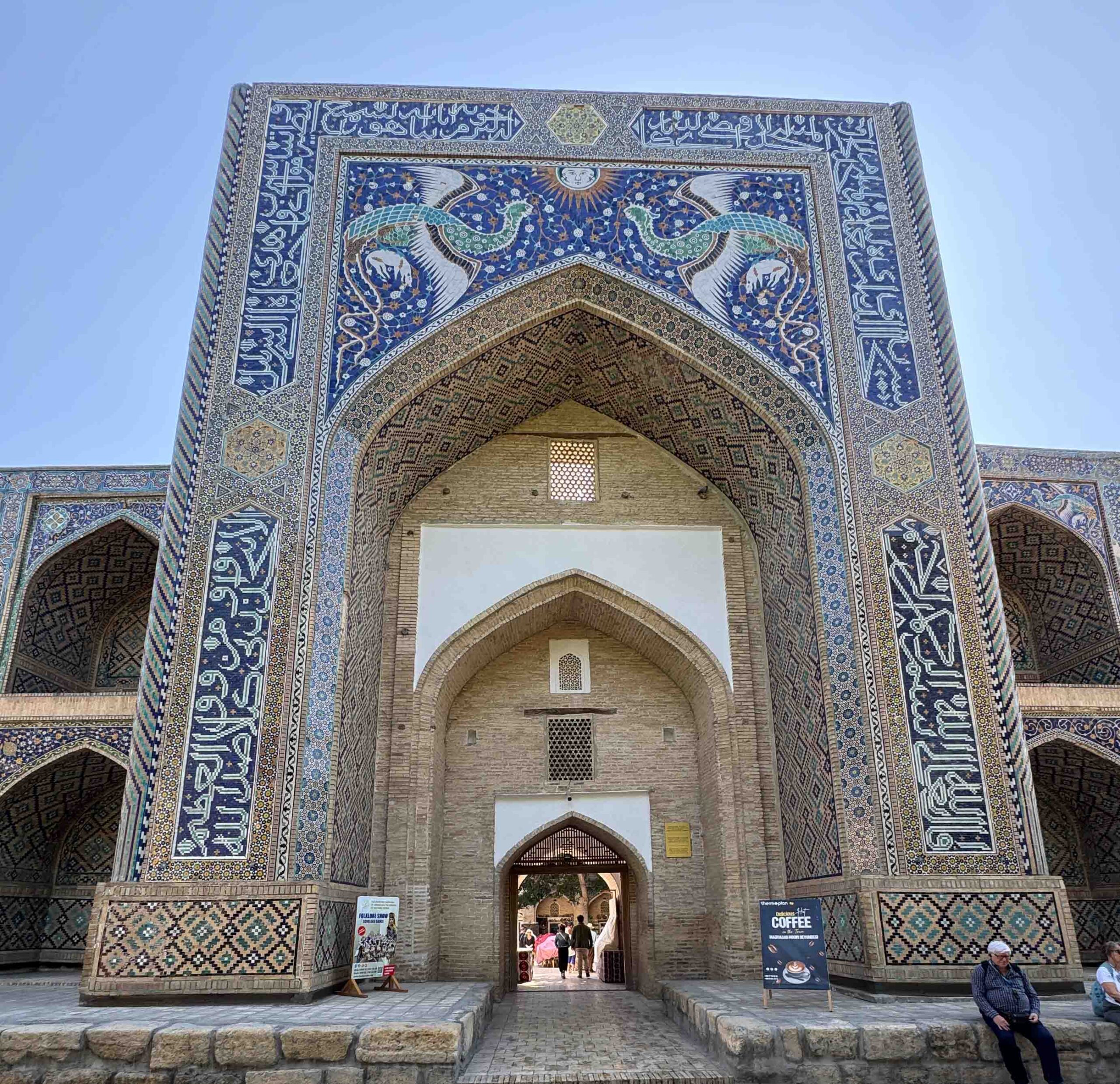
Nadir Devonbegi madrasah was built by Nadir Devonbegi in 1622–1623.
The building strongly resembles a caravanserai—a combination warehouse and hostel for traveling caravans. Evidence for this is that the main entrance opens directly onto the courtyard; the usual practice is to provide a screen wall to shield the interior courtyard from the public eye. The building also lacks a mosque and corner classrooms, which are usually regarded as critical features.
Two theories—not mutually exclusive—have been put forth to explain this discrepancy. First, according to one account, the Khan mistakenly declared the building to be a madrasa at its dedication, obliging his vizier to hastily convert it from a caravanserai by adding corner towers (guldastas) and a monumental entrance (as the Khan’s word was supreme, no one—even his vizier—could call out his mistake). Another possibility is that declining trade in the early 17th century rendered a new caravanserai unnecessary, obliging the vizier to convert the partly completed building into a madrasa.
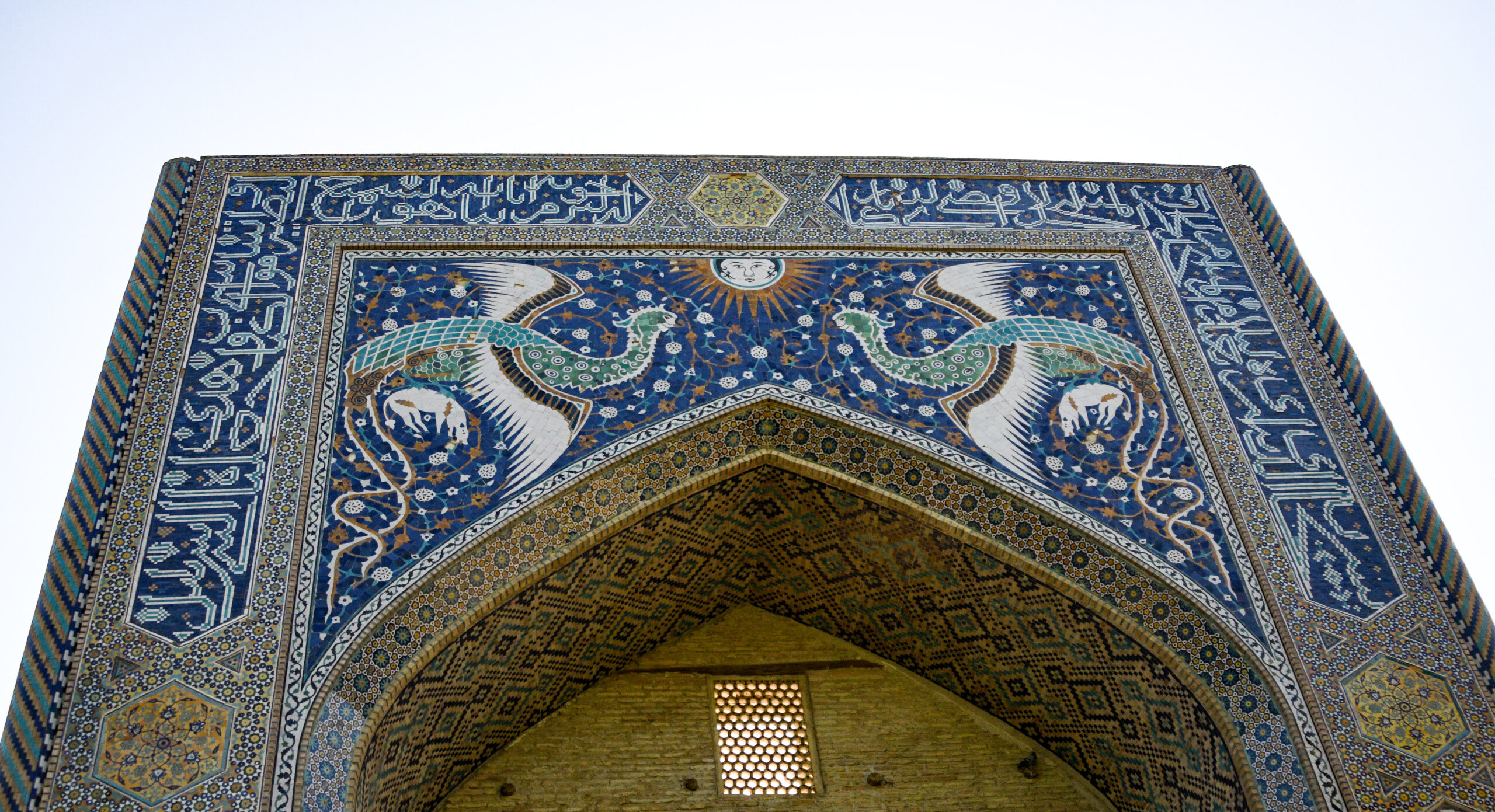
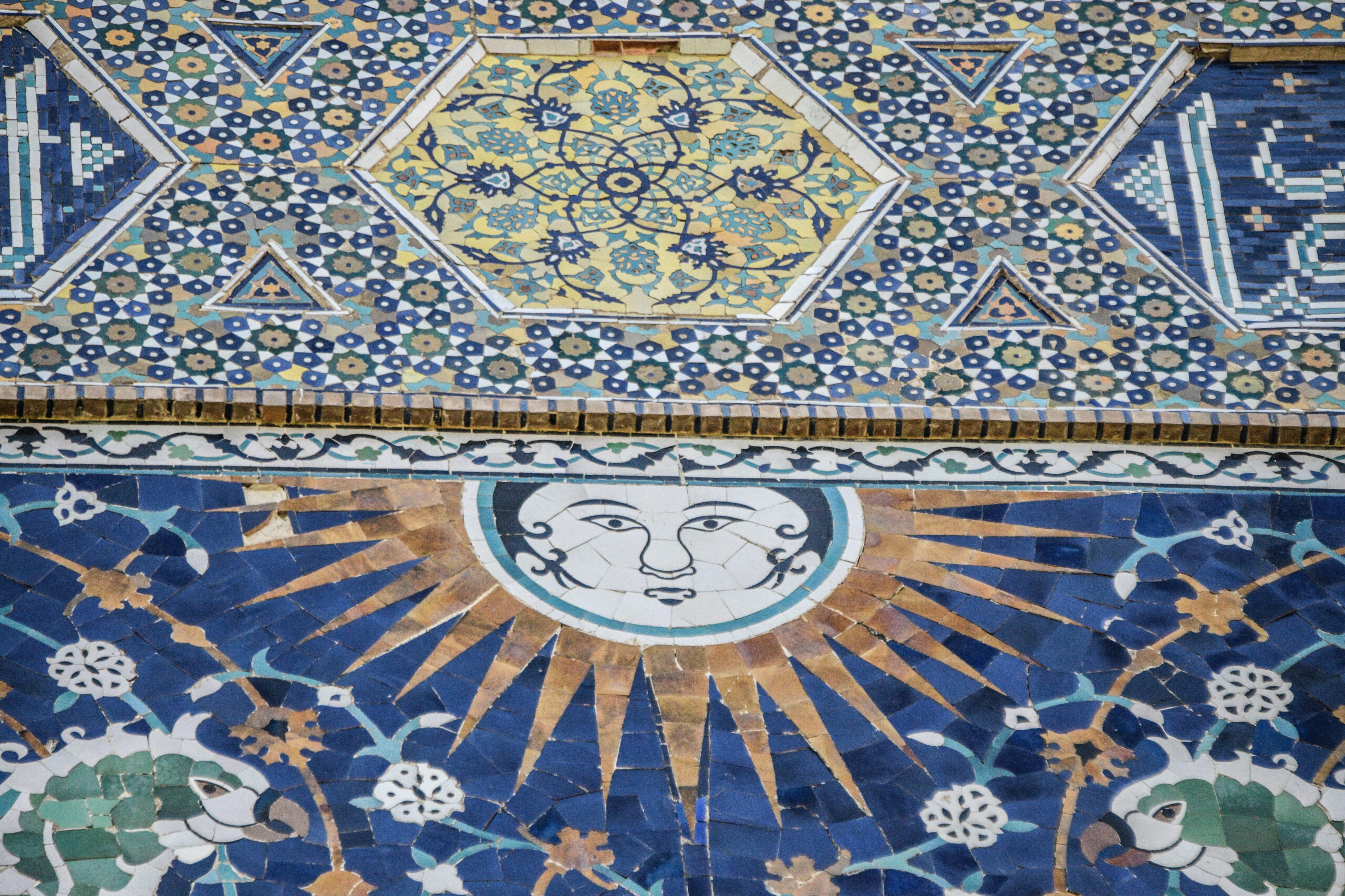
At the top of the arch, you can see fantastical birds (possibly, the Persian simurgh, a mythical bird of benevolence and fertility) facing a central solar disk with a human face. This is unusual; in central Asia and parts of the Persian world, in the early 17th century, there was a relaxation of Islamic orthodoxy in the visual arts. Traditionally, Islam strongly discouraged the depiction of human and animal forms, lest it lead to idolatry. Under the Shaybanids, the rule was not so strictly enforced.
Magok-i-Attari Mosque
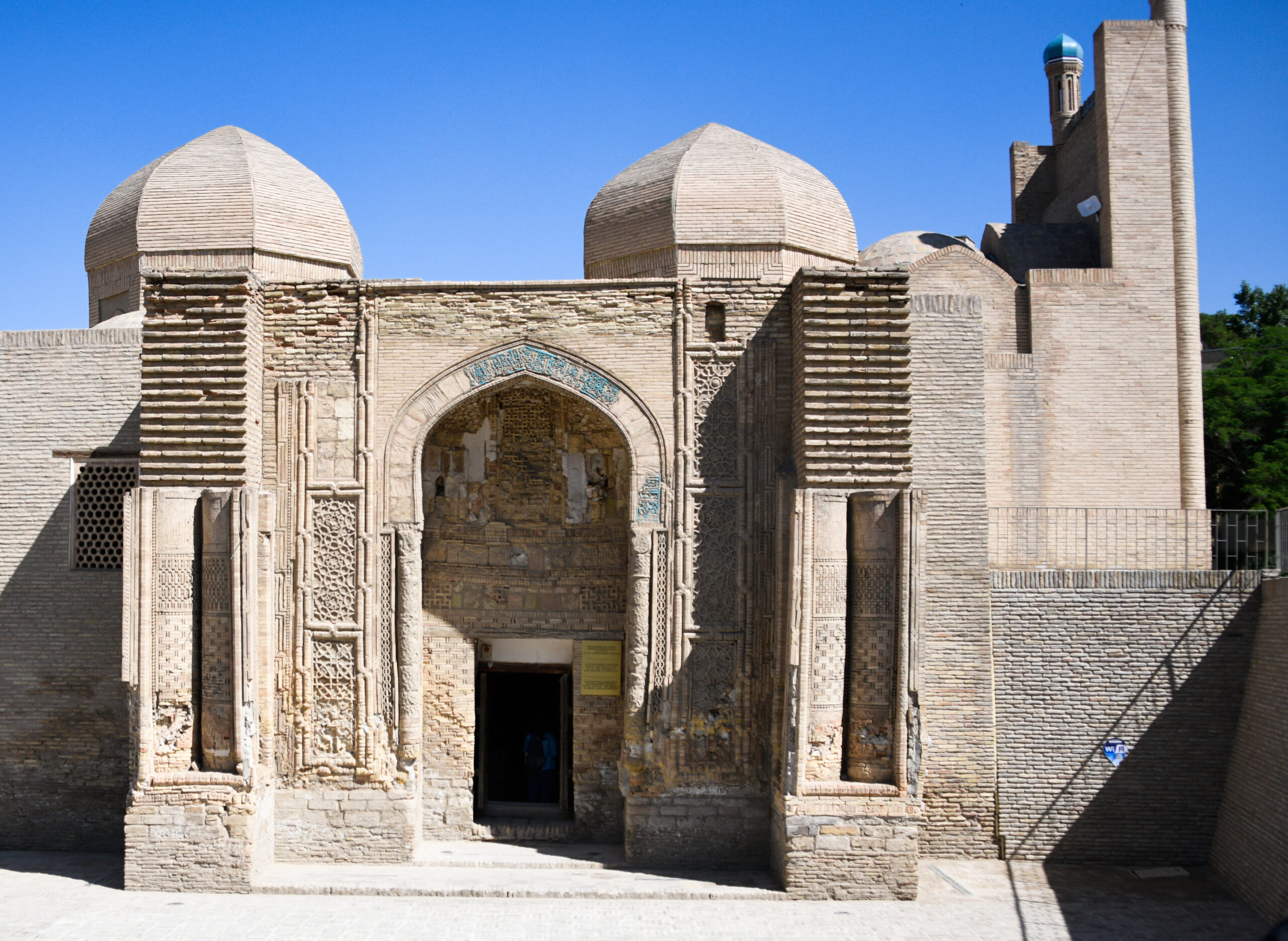
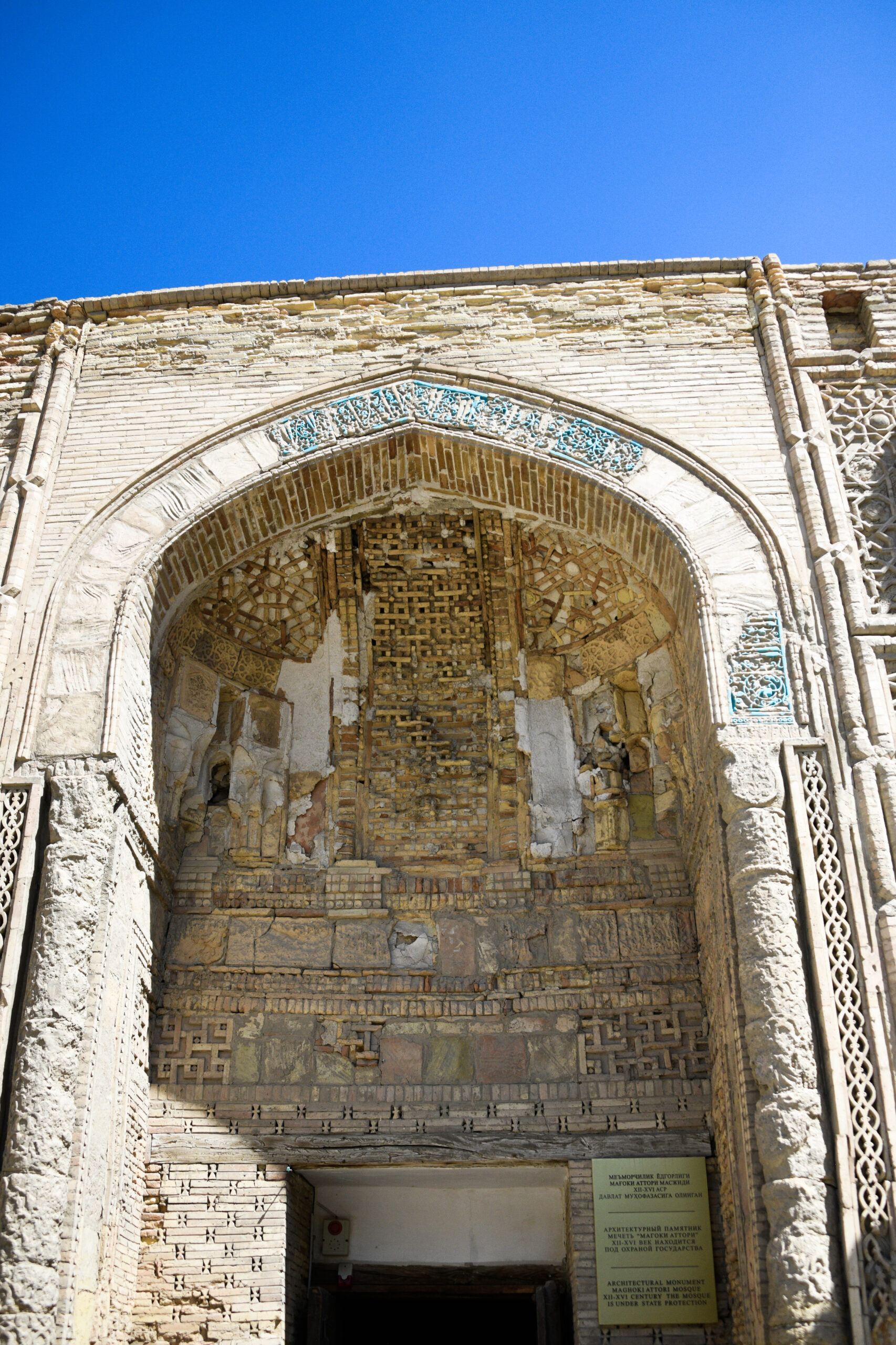
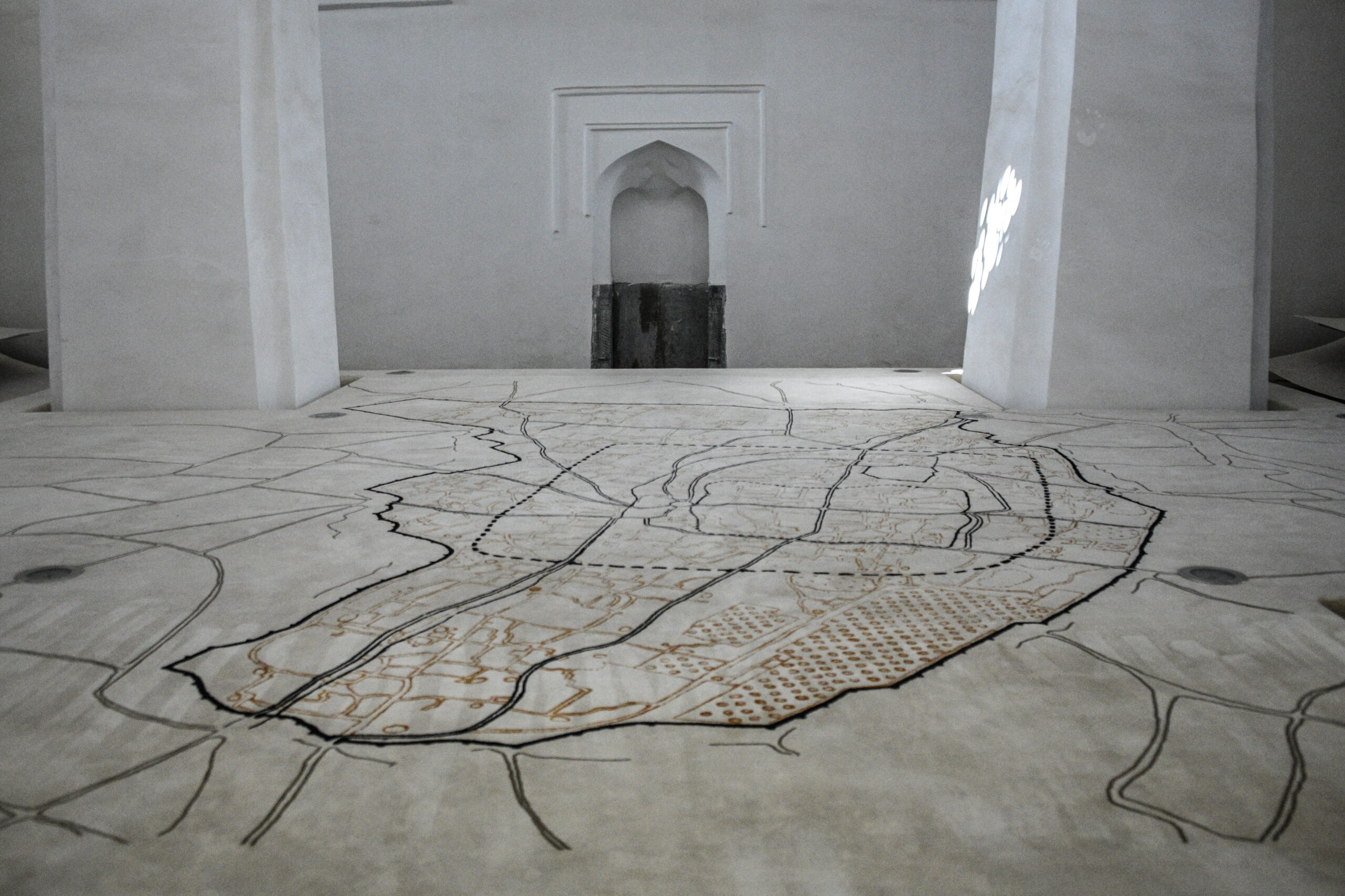
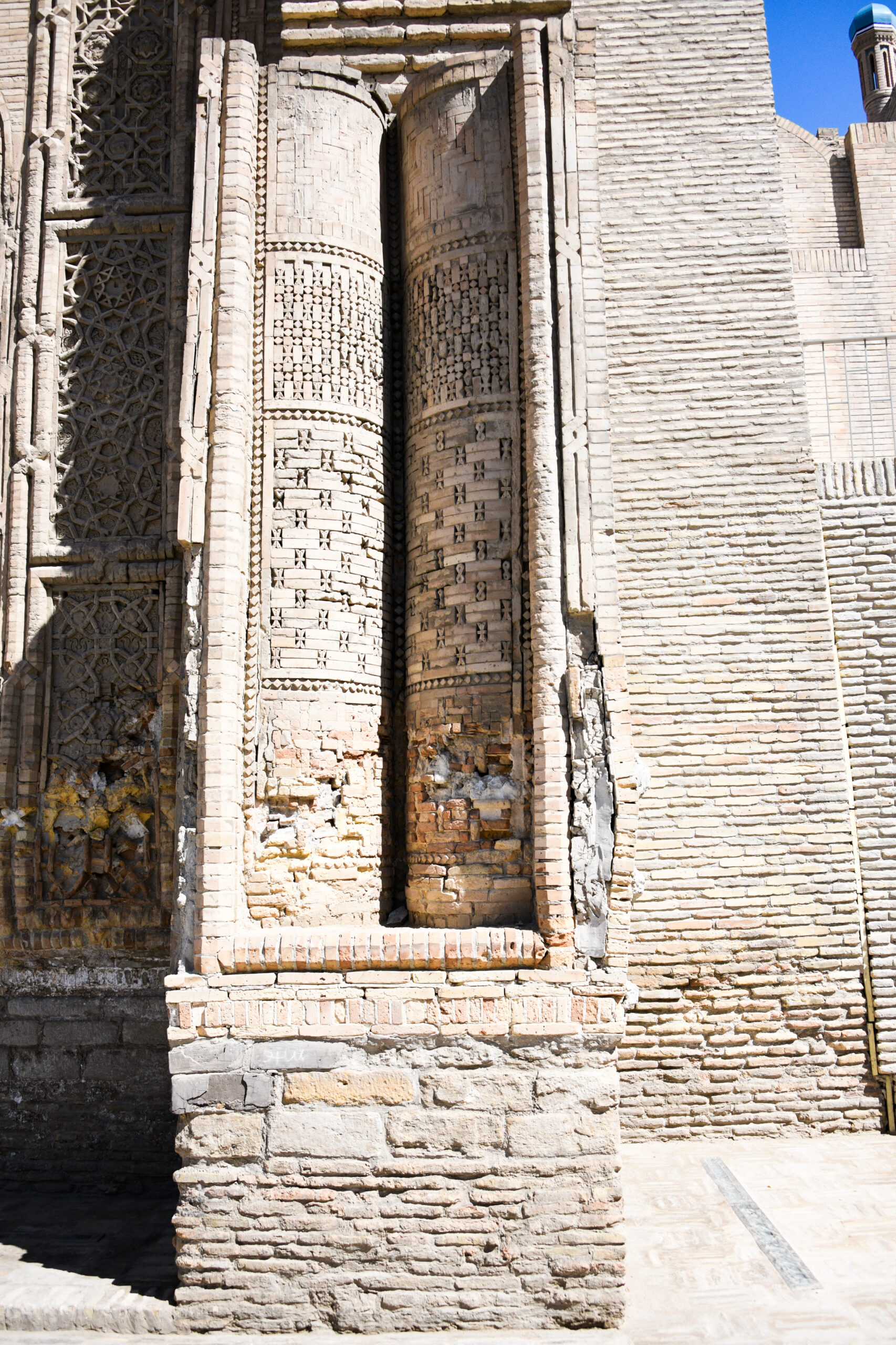
The mosque was built in the 9th to 10th century on what are suspected to be the remains of a Zoroastrian temple from the pre-Islamic era. Before the Arab conquest, there was a bazaar on the site for idols, potions, spices, attar (perfumes), and other goods. Before the construction of the first synagogue, Jews in Bukhara had shared a place in the mosque with Muslims. Some say that Bukharian Jews and Muslims worshipped alongside each other in the same place at the same time. Other sources insist that Jews worshipped after Muslims. The mosque is also notable as one of the oldest surviving mosques in Central Asia and one of the few surviving buildings in Bukhara from before the Mongol invasion. In the 12th century, when Kara-Khanids reigned in Bukhara, the mosque was substantially rebuilt. It was restored in the 15th Century and again in the 1930s.
*
Zoroastrianism
I have mentioned that Uzbekistan is a secular country with a primarily Muslim population. However, there is a very large contingency that still appreciates their Zoroastrian history. Estimates suggest it has approximately 7,400 followers in Uzbekistan today.
Out of all Central Asian countries, Uzbekistan has perhaps the greatest number of Zoroastrian-related archaeological sites
Zorastrianism is an ancient monotheistic religion that predates Christianity and Islam — it found a home in Uzbekistan in the 6th century when Persians established a base in the region. The religion has roots in Persia, and its followers are spread across regions such as Iran, India, and Central Asia. It was widely practiced in Uzbekistan for years before the Arab Muslims conquered the Silk Road in the 7th and 8th centuries.
Many of the rituals involve fire, which represents purity and an illuminated mind, and water, which represents spiritual cleansing.