April 30, 2026
I am back in Istanbul for a very quick 5-day stop. Istanbul has always been one of my favorite cities in the world, and I have explored it many times over the years.
On my last visit, in 2023, I stayed at the Pera Palace in Tepebasi Beyoglu on the other side of the Golden Horn. In 2016, I spent some time here in Sirkeci at the Sirkeci Mansion Hotel as part of a month-long visit to Turkey. All of those I have had the privilege to write about. On this trip, I am on the European side, staying in a funky hotel in Fatih, and I had intended to return to some of the places I visited before I started this blog. However, I had no idea that tourism in Istanbul had grown so large and that the classic tourist sights had become so crowded as to be unbearable.
However, I got to a few new places and hit on some old ones as well.
The Grand Bazaar
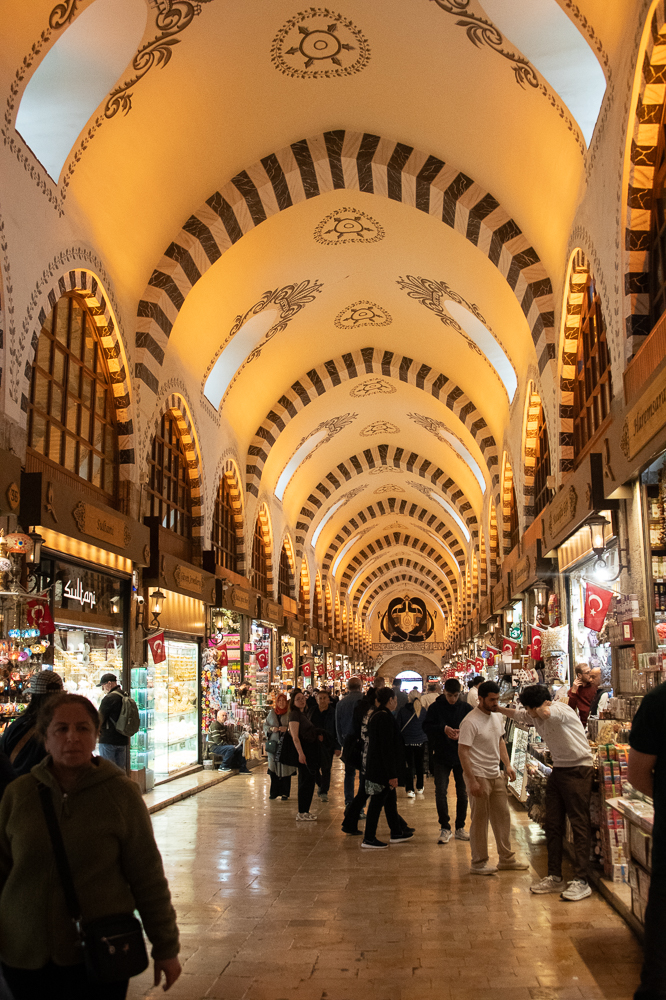
The historical Grand Bazaar, with a total area of almost 10 acres, 3,125 stores, 97 different goods, 25,000 employees, 300,000-500,000 visitors a day in normal times, 64 streets, 5 mosques, 2 covered bazaars, 7 fountains, and 22 gates, is the biggest indoor shopping mall in the world, and it has gone through a complete restoration. While it is lovely to walk through, it has lost a lot of its charm.
The Spice Bazaar
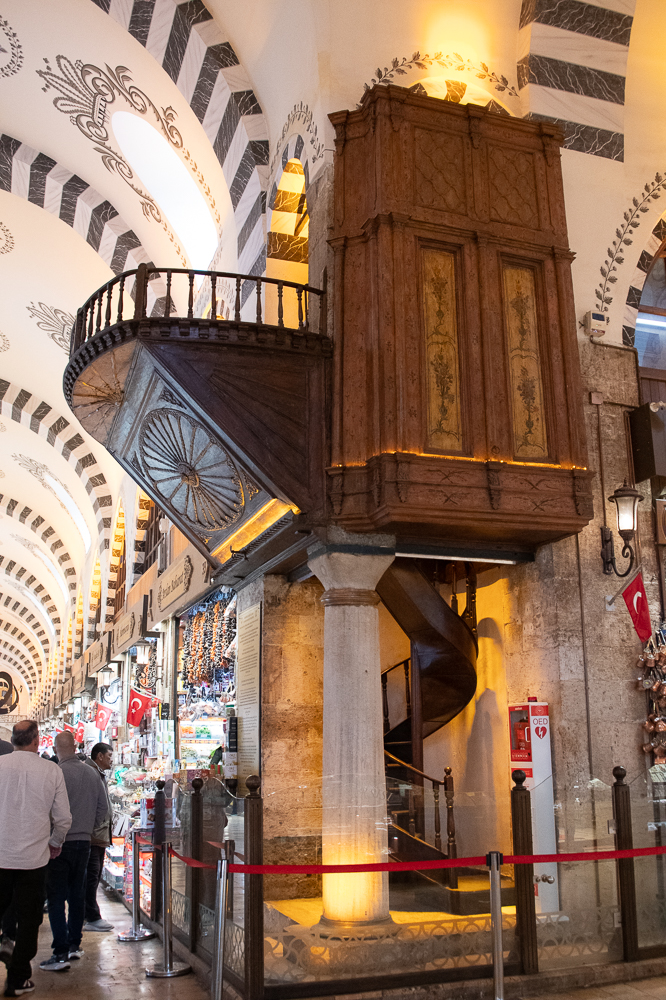
The Spice Bazaar is one of Istanbul’s oldest covered markets. It was built in 1664. It has 6 historic gates, an L-shaped layout, and around 85 shops selling spices, Turkish delight, teas, nuts, dried fruits, and souvenirs. It too has undergone a major restoration.
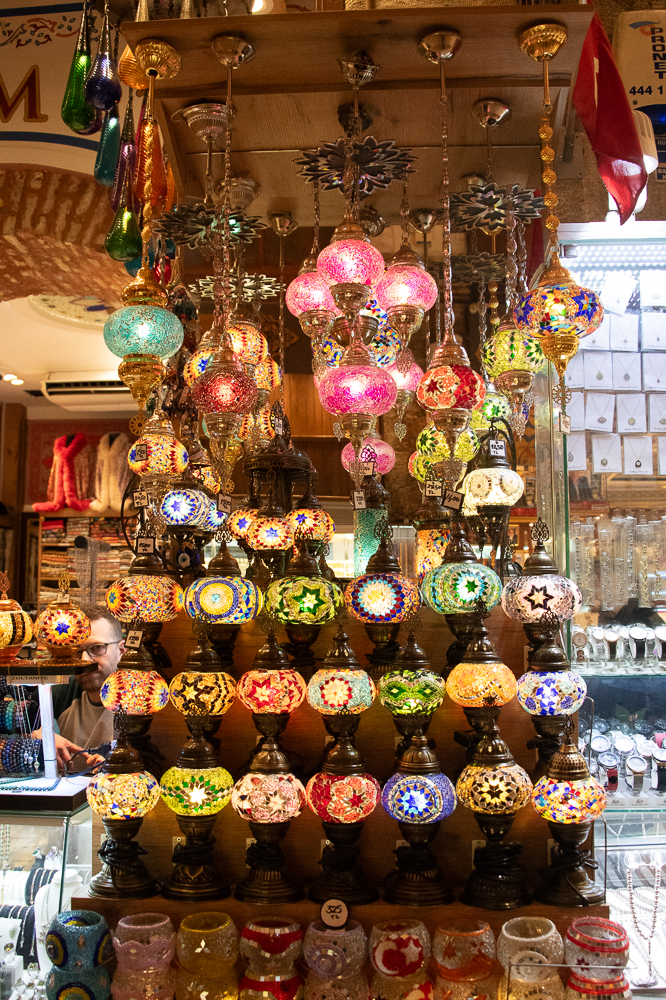
The Cistern of Theodosius
This Cistern is not as well-known, having only been discovered in 2010. It was a joy to spend time in it with only a handful of people.
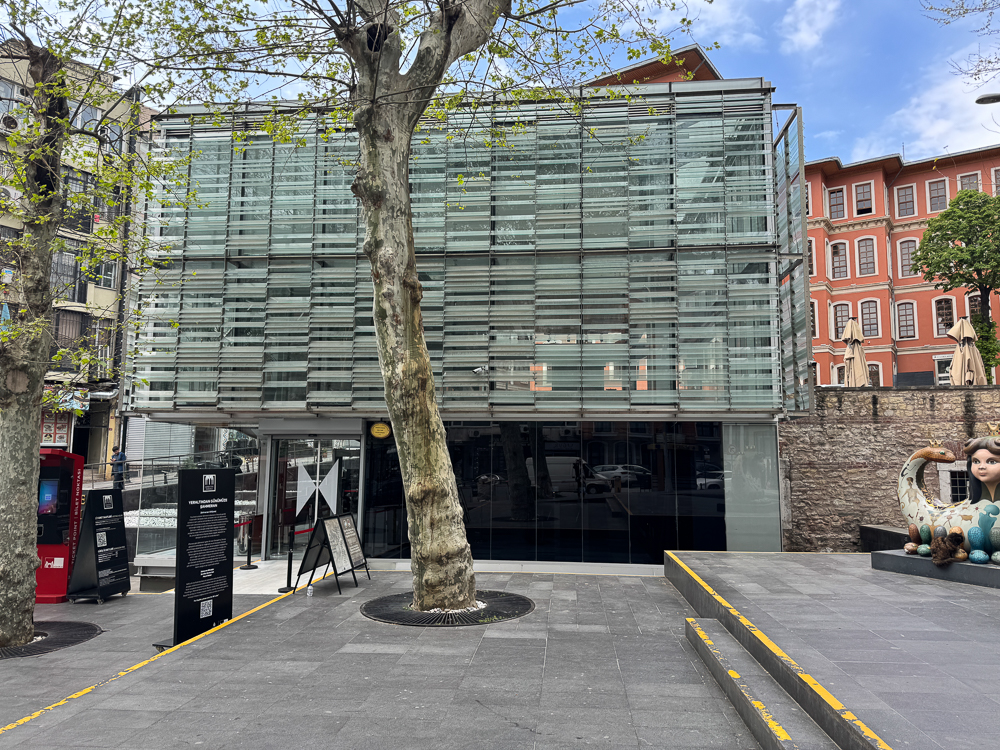
The first conduit system to bring water to the area was 29 miles long and was created by Emperor Hadrian in the 2nd century CE, when the settlement had been known as Byzantium.
Constantine proclaimed the city to be the new capital of the Roman Empire in 330 CE, and the population grew rapidly. He started the construction of the longest water conveyance system in the Roman Empire. It was further extended in the second half of the 4th century by Emperor Valens. I visited the Valens Aqueduct in 2016.
In the city, cisterns formed a unique storage and distribution system, far more extensive and developed than in any other location of the Roman Empire. The exact number of cisterns that existed is not known. However, the two most popular today are the Basilica Cistern and the Theodosius. The name of the Theodosius Cistern comes from Emperor Theodosius II, who ruled the Eastern Roman Empire in the first half of the 5th century.
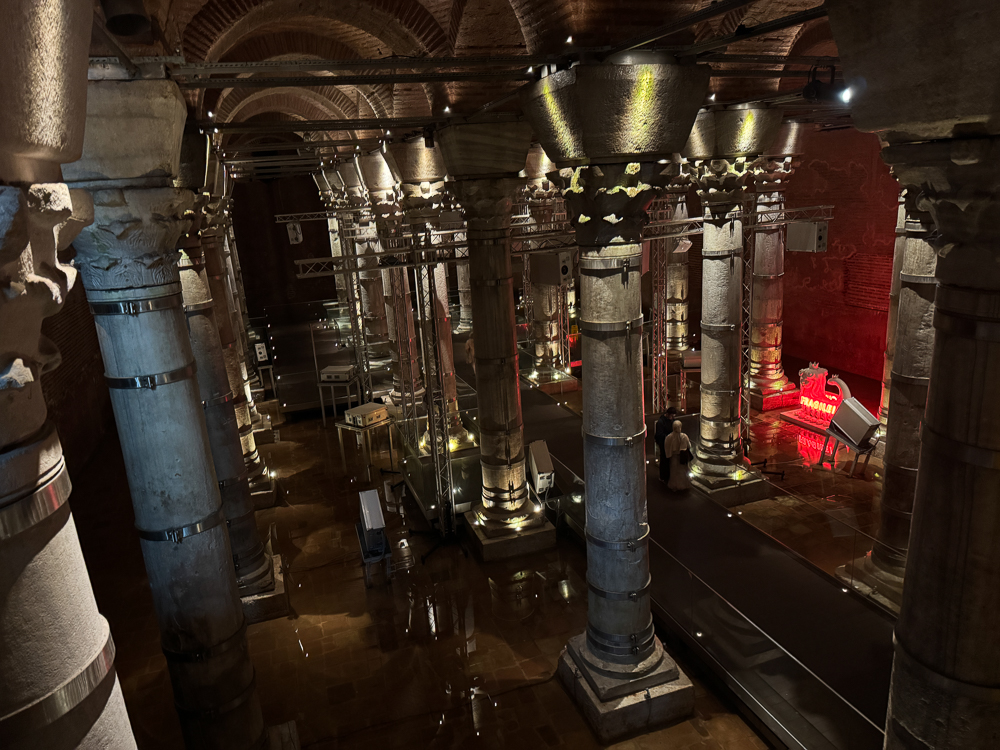
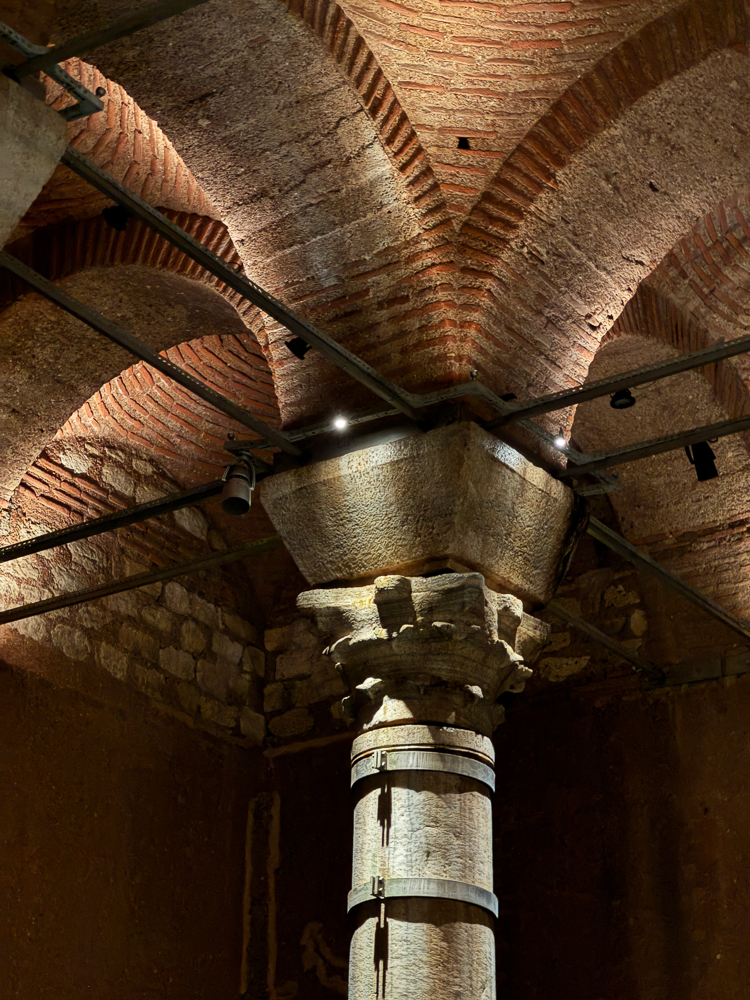
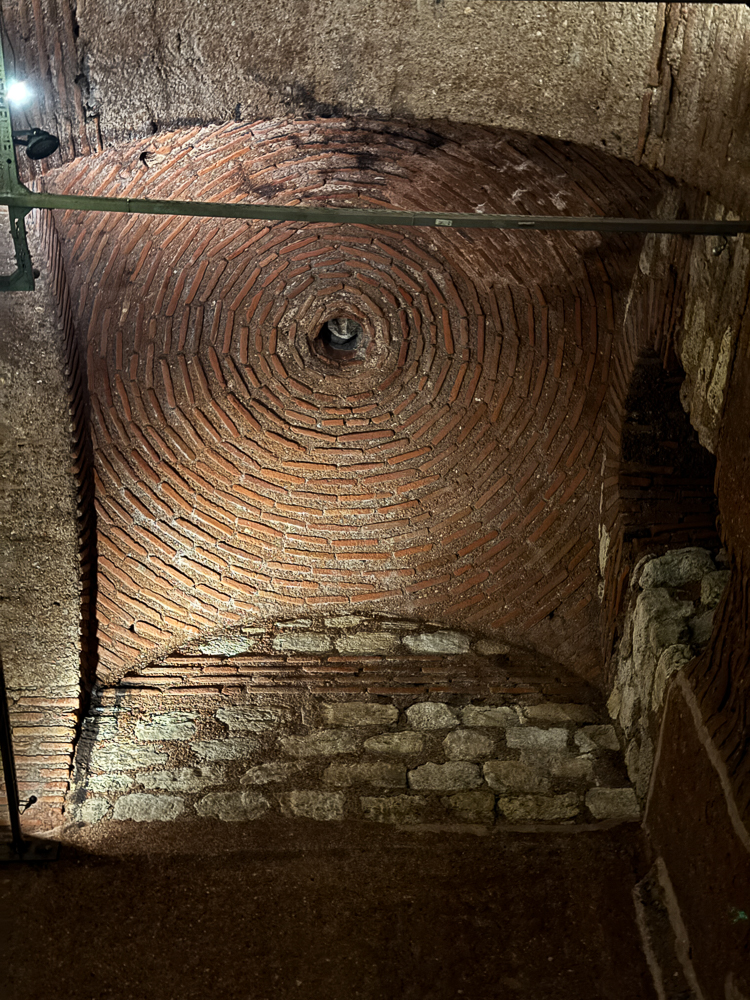
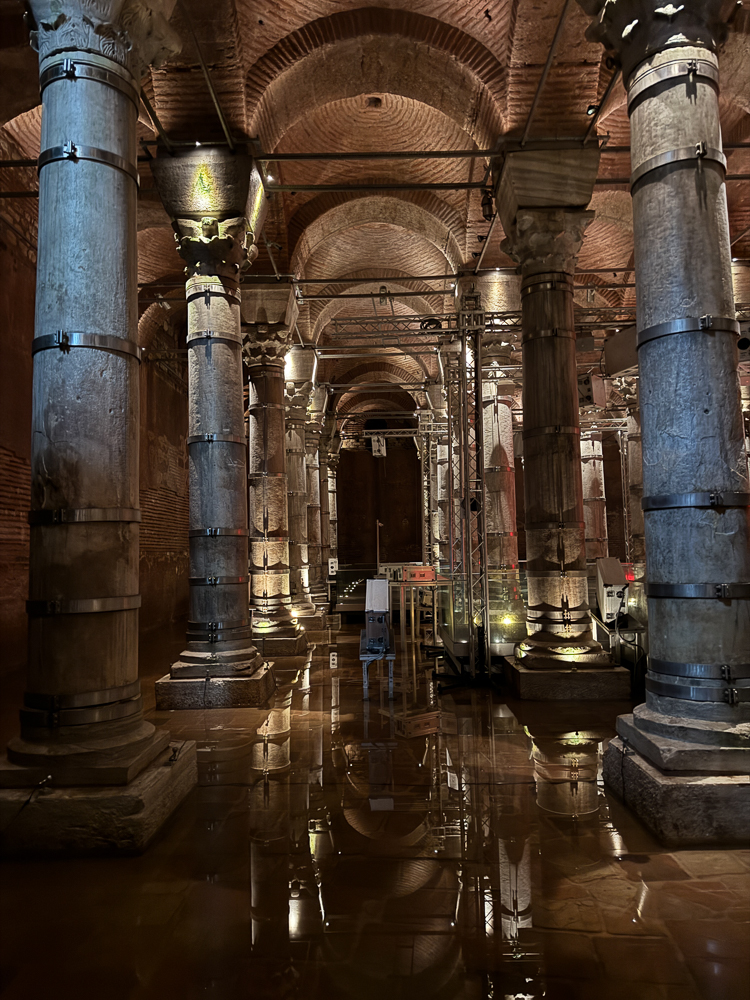
The cistern has a roof with 45 sail vaults, supported by 32 marble columns about 29 feet high. All column capitals are of Corinthian order with bearing impost blocks above. The marble of the columns was brought from Marmara Island. The interior walls of the cistern are covered with waterproof plaster, and its corners are curved to withstand water pressure. The walls were also erected of bricks, separated by thick joints.
*
*
Columns of Istanbul
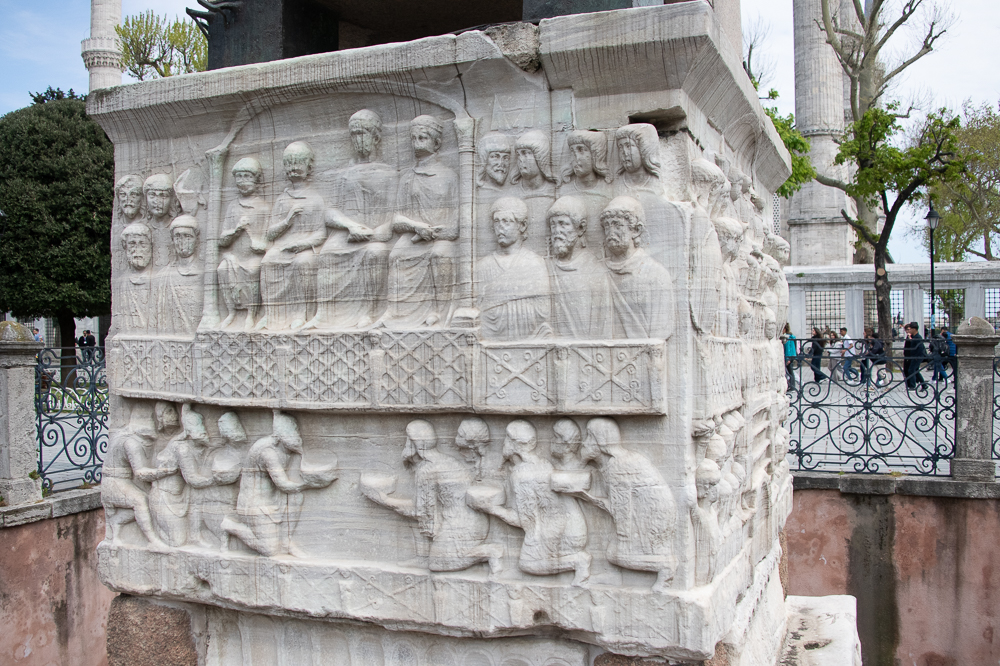
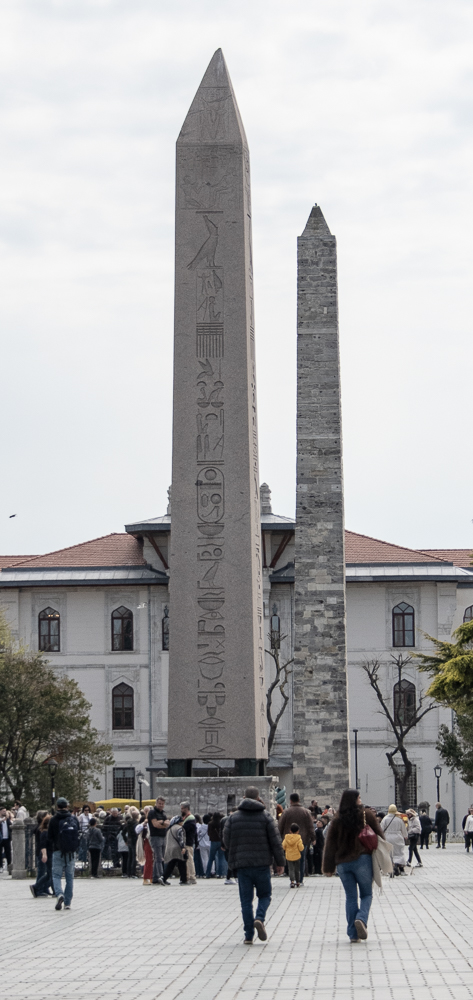 The Obelisk of Theodosius was originally an ancient Egyptian obelisk commissioned by Pharaoh Thutmose III in the 15th century BCE. It features four sides covered with hieroglyphs praising the pharaoh’s victories. It originally stood in Heliopolis, Egypt, and was brought to Constantinople in AD 390 by Emperor Theodosius I, who erected it in the Hippodrome. Carved from pink granite, it has a base decorated with reliefs from the Theodosian period. Because the obelisk remained underground for more than a thousand years, the hieroglyphic figures have remained clear.
The Walled Obelisk (shown in the first photo to the right of the Obelisk of Theodosius) was built by Byzantine Emperor Constantine VII in the 10th century. The column was built by stacking cut stones on top of each other and thus was named “Walled Obelisk”.
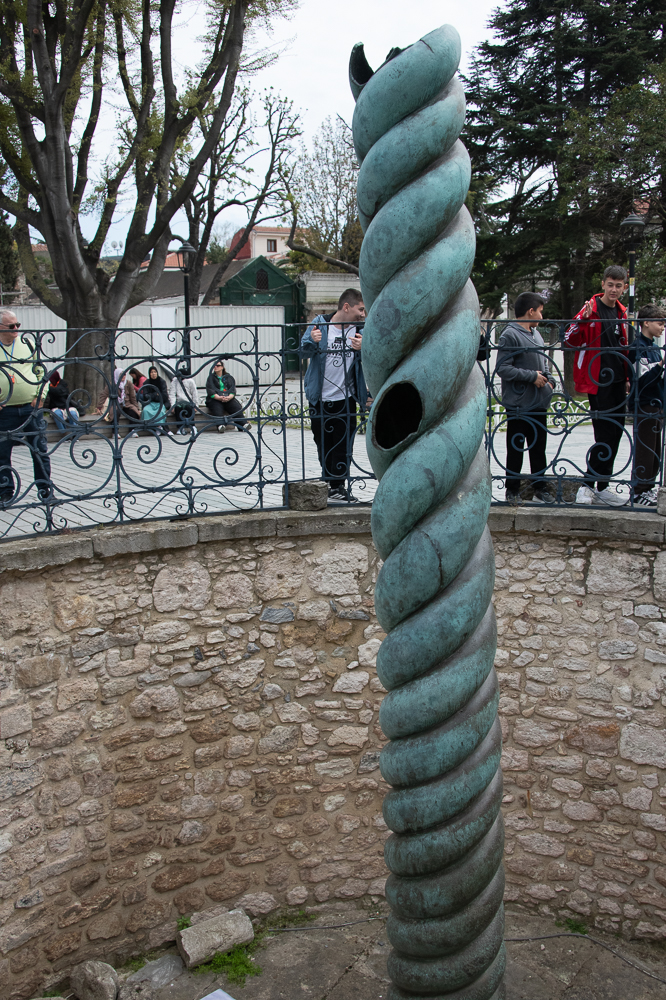
The Serpent Column is one of the oldest monuments in Turkey. Originally dating to the 5th century BCE, this bronze column was erected in front of the Temple of Apollo at Delphi to commemorate the united victory of the Greek city-states over the Persians at the Battle of Plataea. The design, formed by three intertwined serpent heads, was inspired by the myth of Apollo defeating a dragon. When Emperor Constantine I declared Istanbul the capital of the empire, he ordered the monument brought to the city around AD 324 and placed it at the center of the Hippodrome. Once believed to have stood about 26 feet tall, only the lower 16-foot section survives today. A golden bowl that once crowned the column disappeared in antiquity.
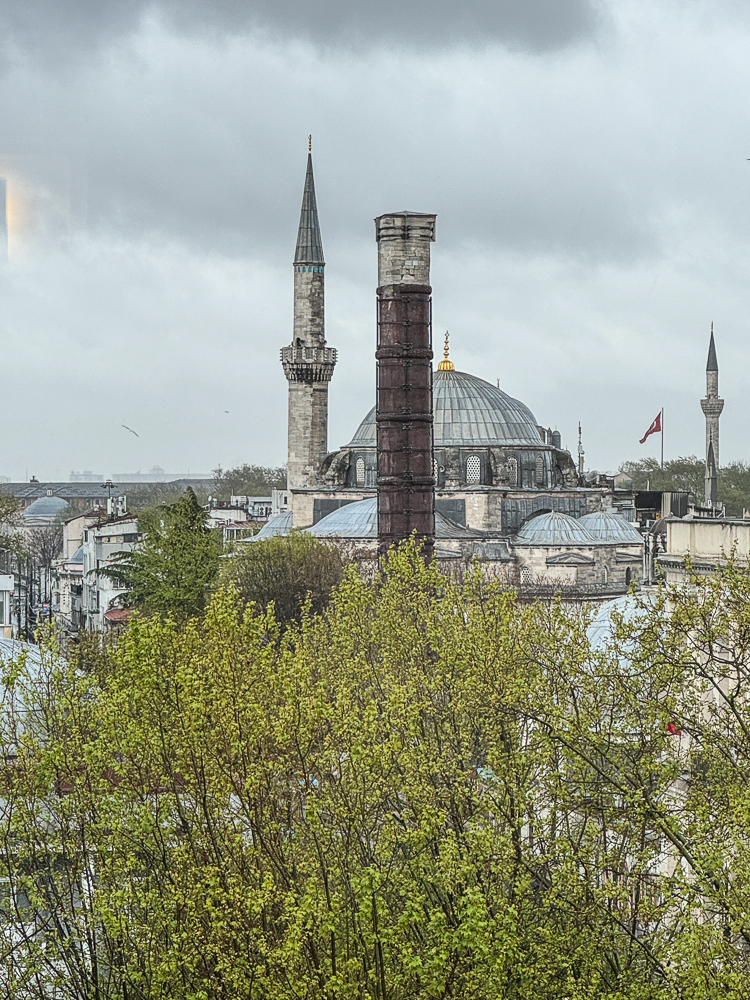
The Çemberlitaş Column was erected in the early 4th century in honor of Emperor Constantine I. It is said to have been brought from the Temple of Apollo in Rome and set in the city’s central square, the Forum of Constantine, as a triumphal monument symbolizing the founding of Constantine’s New Rome. At its top once stood a bronze statue of the sun god Helios, later reinterpreted as an image of Constantine himself. Over the centuries, the column endured earthquakes and fires. The statue eventually fell during the late Byzantine period and was replaced by a cross, which was removed after the conquest of Istanbul. A major fire in 1515 caused serious damage, darkening the surface and creating cracks. Toward the end of the 17th century, Sultan Mustafa II reinforced the structure by adding a stone base and encircling the shaft with iron bands. From that point on, it became known among locals as “Çemberlitaş,” meaning “the ringed stone.”
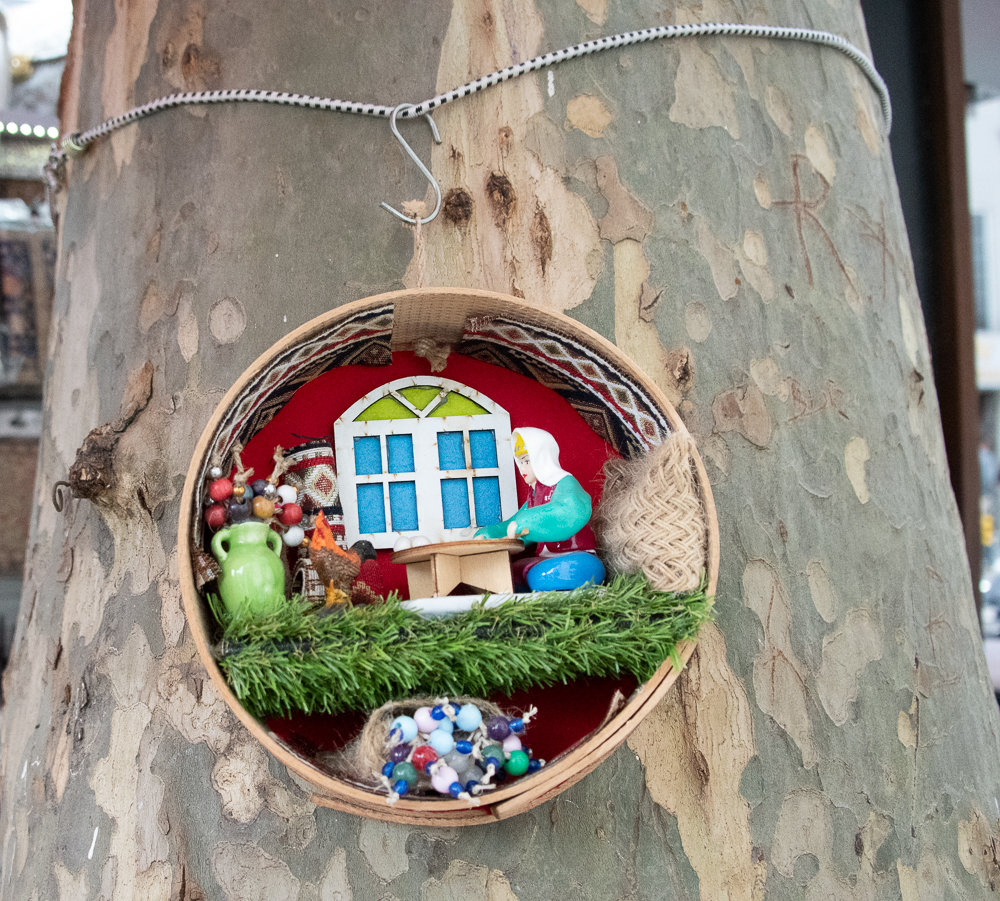
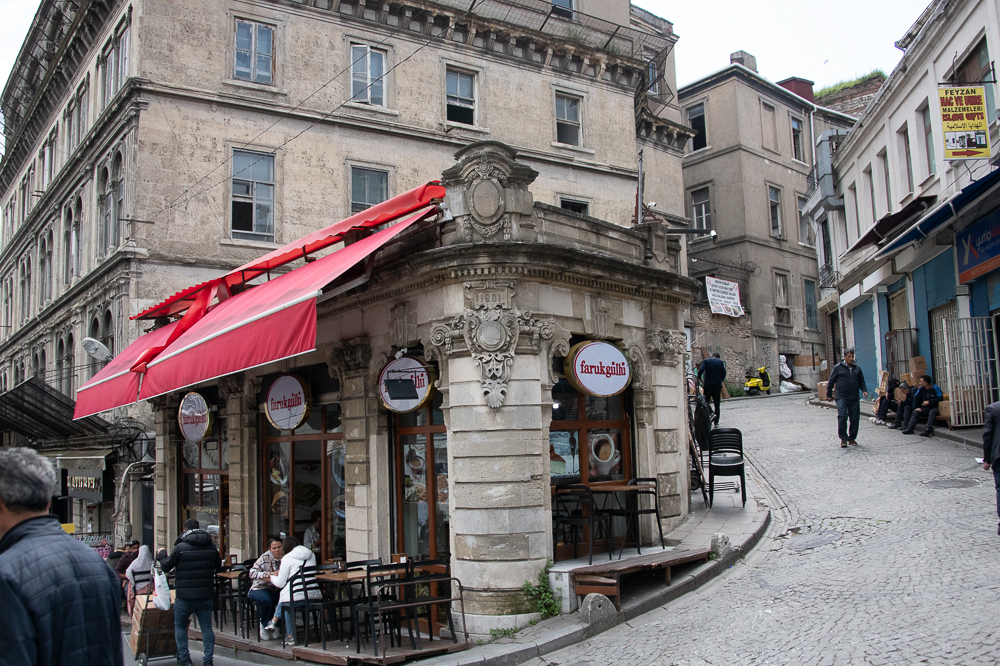
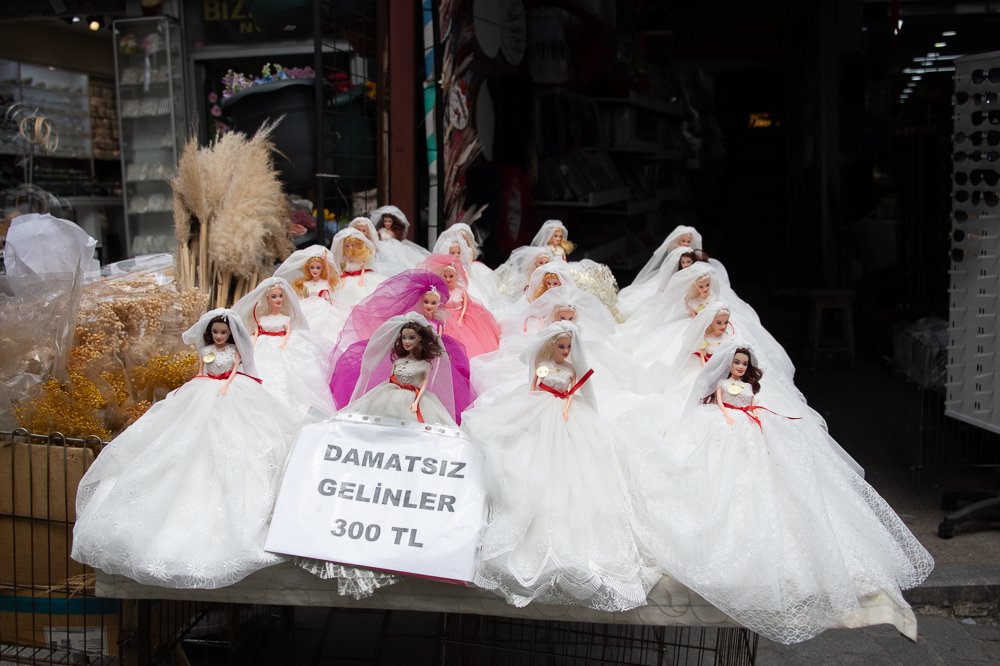
A few sights on the walk today
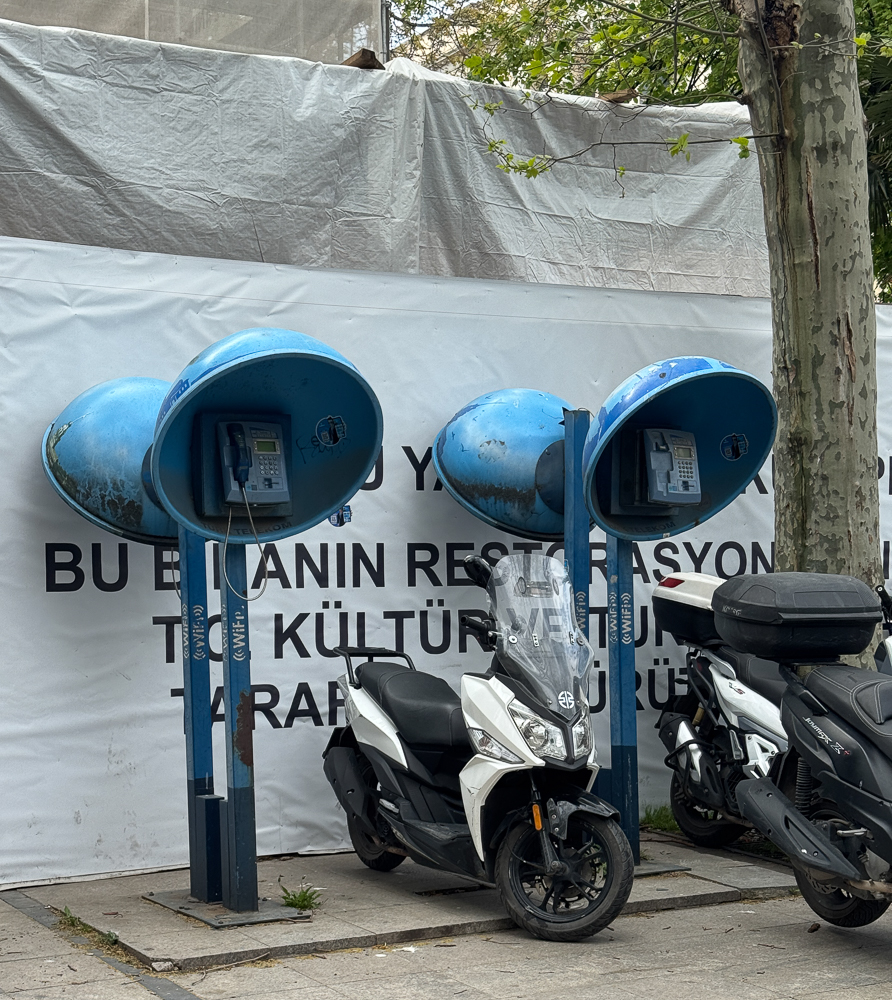
*
*
*
*
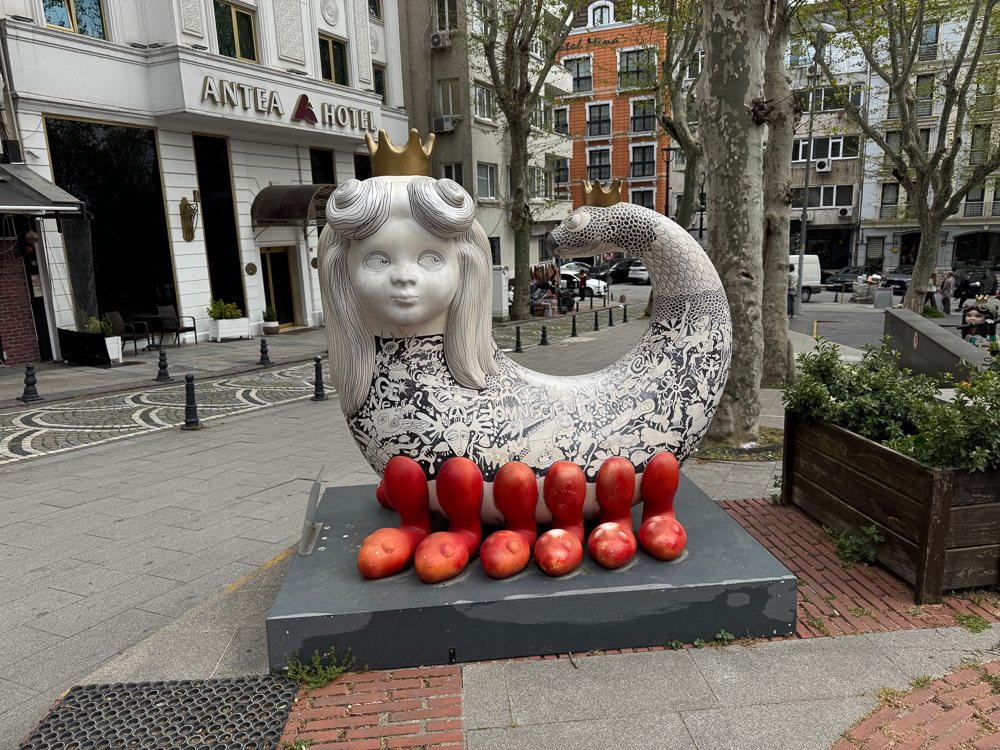
In and around the Theodosius Cistern are sculptures of this creature by various artists in various styles. The creature, Shahmaran, is a mythical being, half-snake and half-woman, portrayed as a dual-headed creature with a crown on each head, a human female head on one end and a snake’s head on the other, possibly representing a phallic figure. The human part is also decorated with a large necklace.
In Turkey, Shahmaran is believed to live in the Mediterranean town of Tarsus, and a similar legend is told in the eastern portion of the country, namely Mardin, a town with a large Kurdish and Arab population.
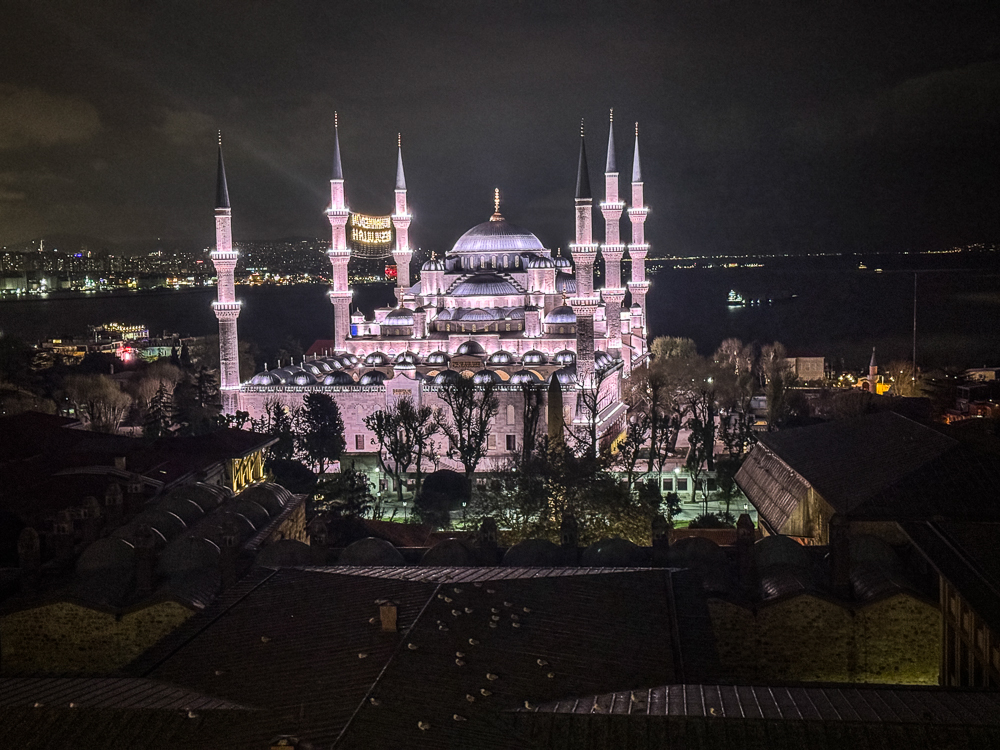
There were several things I did not see on this trip that were originally part of my plan. First, the Basilica Cistern. Due to some classic government machinations, the Basilica Cistern now costs only 1 Turkish Lira if you are a native. That is equal to .02 cents. So the lines were absolutely prohibitive. The second was Hagia Sophia. When I was here 25 years ago, Hagia Sophia was not a working mosque. It is now, so the floors have been covered with carpets. It is also under restoration, so you are only allowed on the second floor. If you have ever been there, the tile floors and the mosaic walls are why you go, something you can not appreciate from the second-floor balcony. The third is the Blue Mosque. If you are a regular reader of this blog, you will know that I have entered more than my fair share in my lifetime. I had seen the Blue Mosque, and while lovely, it was not worth standing in the long lines that are now part of Istanbul’s increased tourism.
Cemeteries
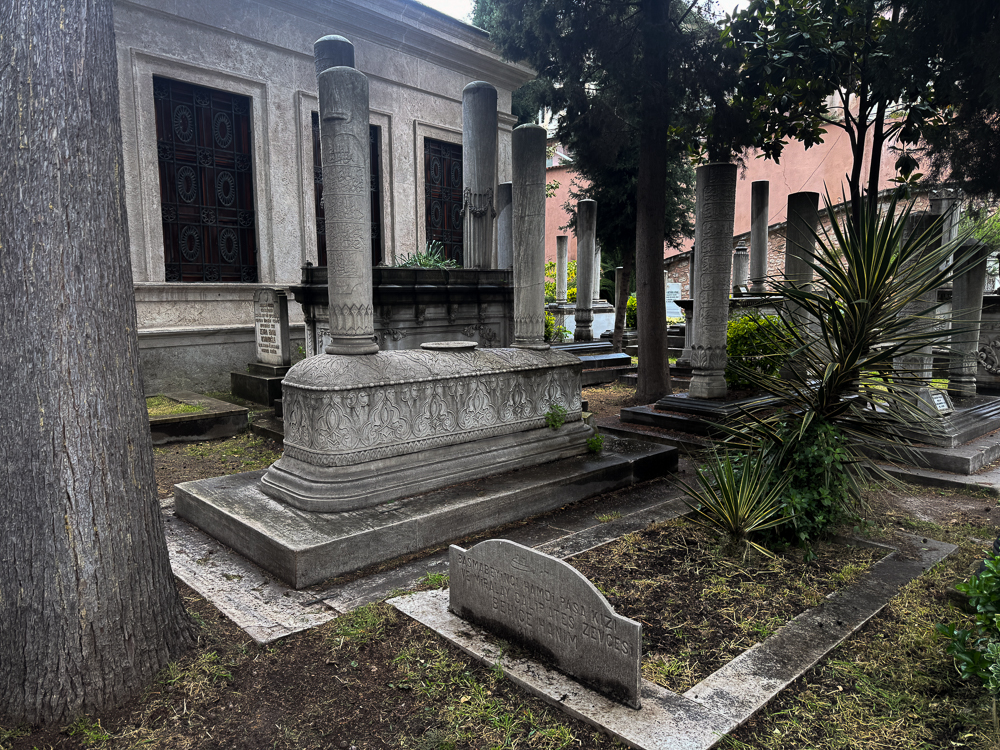
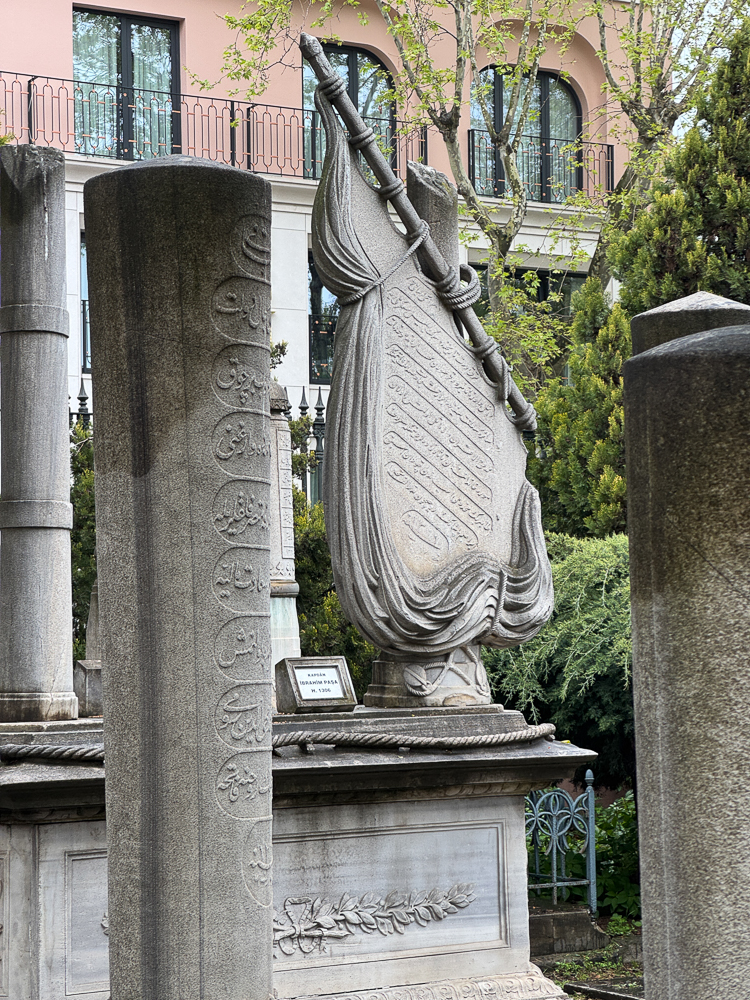
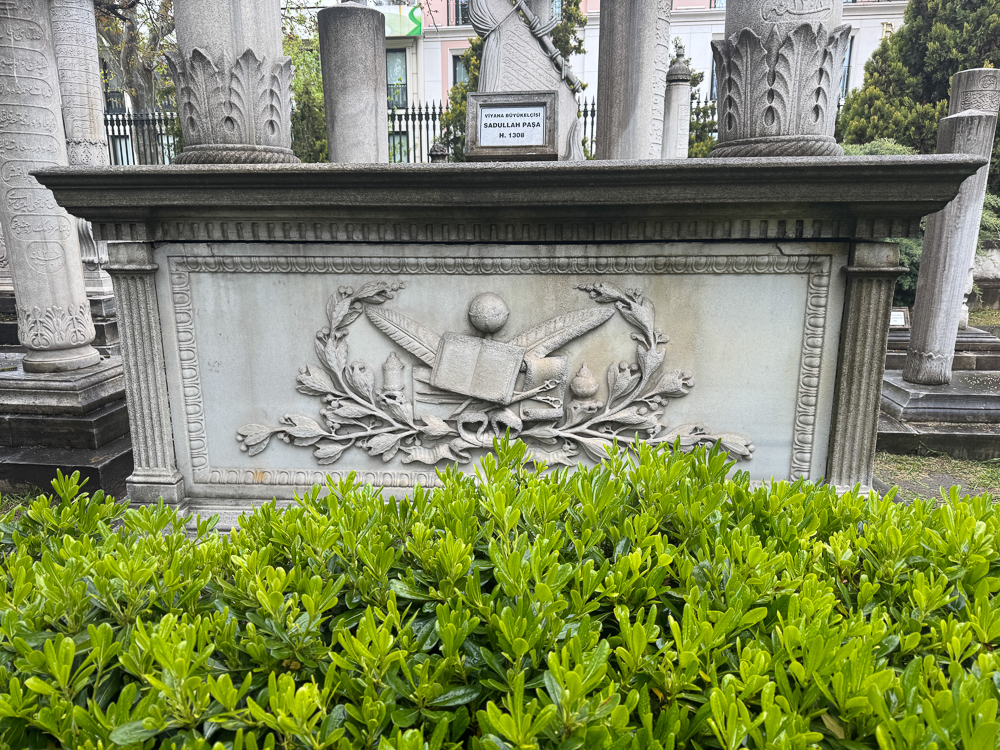
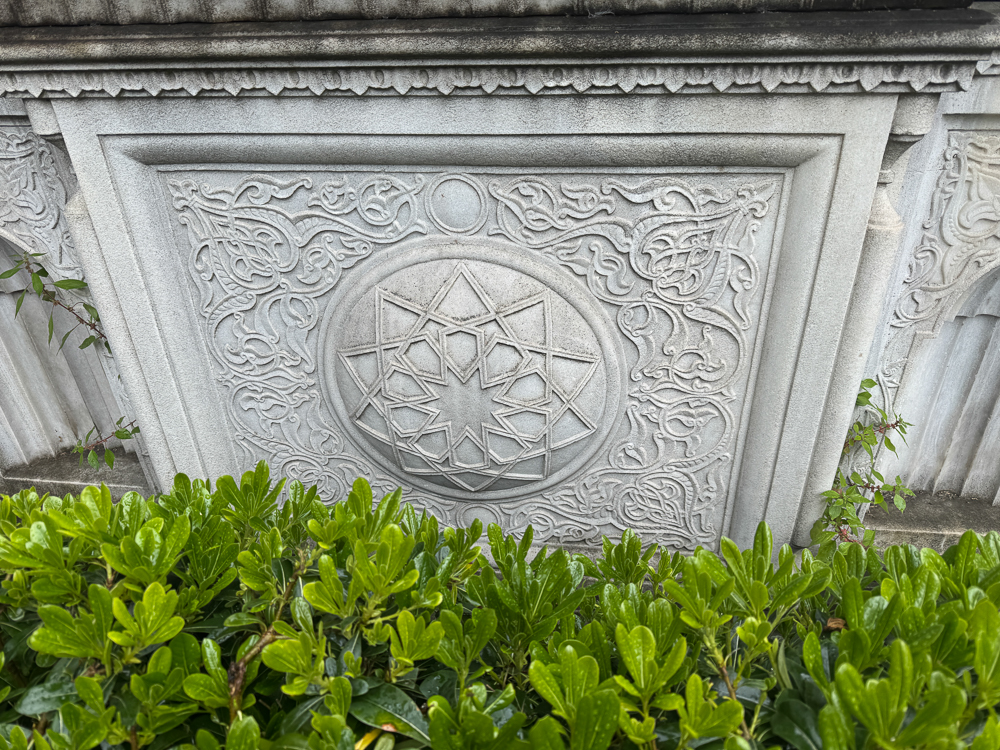
I am definitely a taphophile, so I had to get one cemetery in before I left. This is a small one dedicated to Sultan II Mahmud (1785-1839), Sultan Abdulaziz (1830-1876), and Sultan II Abdulhamid (1842-1919).
I wrote about Ottoman-era cemeteries when I visited Euyp in Istanbul.
*
*
As I began looking back on my trips to Istanbul, I realized how much the Lira-to-Dollar exchange rate has changed. The Turks are suffering horrible inflation and this is a good indicator as to why.
2016: 1 TRY = $0.3428
2023: 1 TRY = $0.0535
2026: 1 TRY = $0.0233
Turkey’s Inflation Rate for the same period.
| 2025 | 30.89 | 46.63 | 28.44 |
| 2024 | 44.38 | 41.35 | 25.58 |
| 2023 | 64.77 | 32.61 | 20.94 |
| 2022 | 64.27 | 25.39 | 16.68 |
| 2021 | 36.08 | 14.87 | 11.45 |
| 2020 | 14.60 | 12.50 | 10.16 |
| 2019 | 11.84 | 11.56 | 9.79 |
| 2018 | 20.30 | 10.31 | 8.91 |
| 2017 | 11.92 | 8.58 | 8.35 |
| 2016 | 8.53 | 8.14 | 8.11 |