July 11, 2025
I wrote of the Crystal Palace when I was here in the summer of 2024. At the time, I was exploring the Albertopolis. This trip, I went exploring the grounds where the Crystal Palace had been relocated after the 1851 exhibition.
The temperatures were in the high 80s, and much of the walk was out in the hot, beating sun. The property is 200 acres large and I walked from one end to the other. So my photos are few.
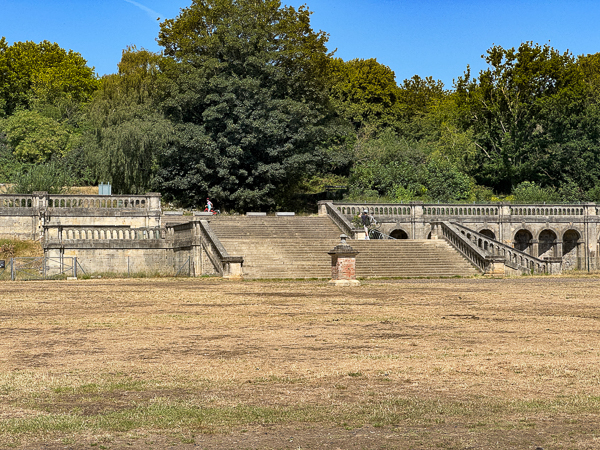
After the 1851 Great Exhibition in Hyde Park, Joseph Paxton appealed to keep The Crystal Palace in Hyde Park, but the government didn’t agree. Paxton formed the Crystal Palace Company to purchase the Palace for £70,000. Crystal Palace Park was laid out in the 1850s as a pleasure ground. It was centered on the relocated Crystal Palace, the largest glass building of the time.
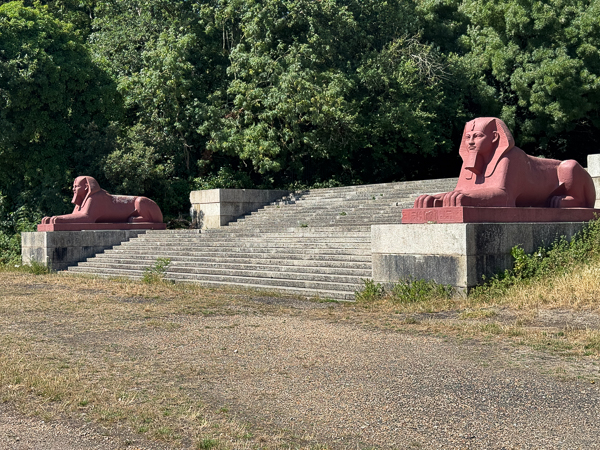
Sadly, the Palace was destroyed by fire in 1936.
The above photos were taken on the top level of the Park, which extends for acres down the hill. Just below the site that once held the Crystal Palace is the National Sports Center, built in 1964.
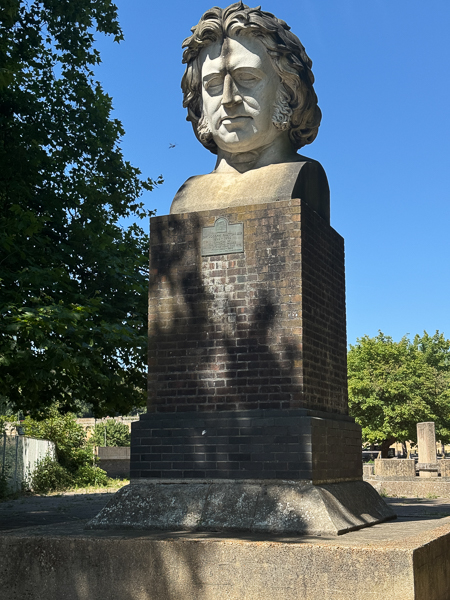
As you descend, you first come across this statue of Sir Joseph Paxton, first unveiled in 1873. William F. Woodington sculpted it, and it was initially located looking towards the Palace building over the central pool on the Grand Central Walk.
Descending even further, one reaches what might more accurately be considered a park today, with a series of interconnected man-made lakes and lush, treed grounds.
The Crystal Palace Dinosaurs
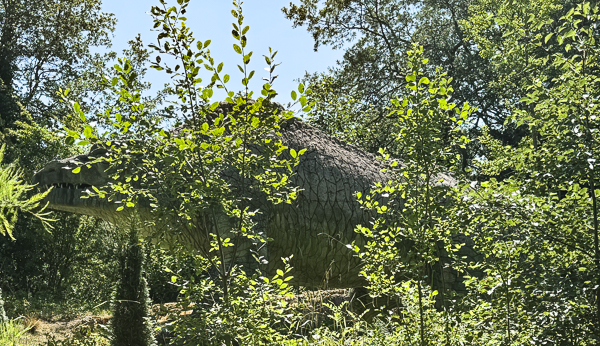
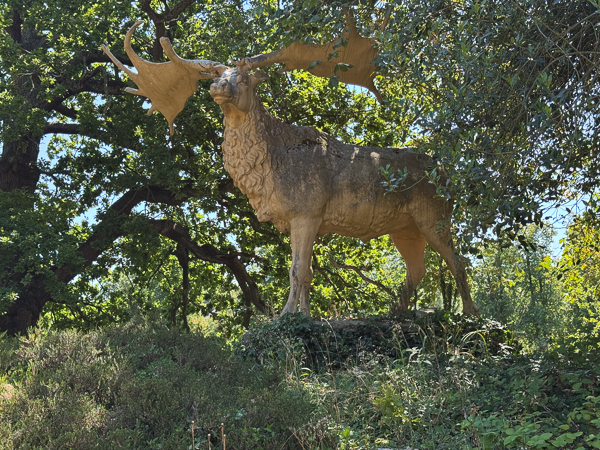
The Crystal Palace Dinosaurs are a series of sculptures of extinct animals. Commissioned in 1852 to accompany the Crystal Palace after its relocation, they were unveiled in 1854 as the world’s first dinosaur sculptures. The models, which were inaccurate by modern standards, were designed and sculpted by Benjamin Waterhouse Hawkins under the scientific direction of Sir Richard Owen, representing the latest scientific knowledge of the time.
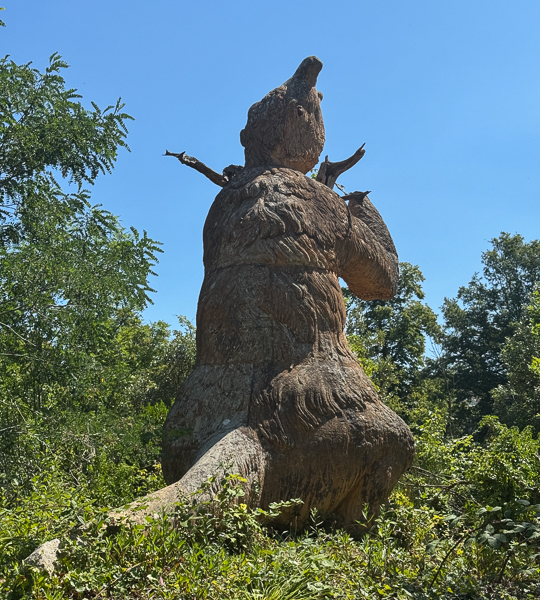
The models and the park fell into disrepair, and they eventually were lost in the overgrown foliage. Additionally, over the years, science has caught up with the statues as further developments in the field have shown the sculptures to be inaccurate.
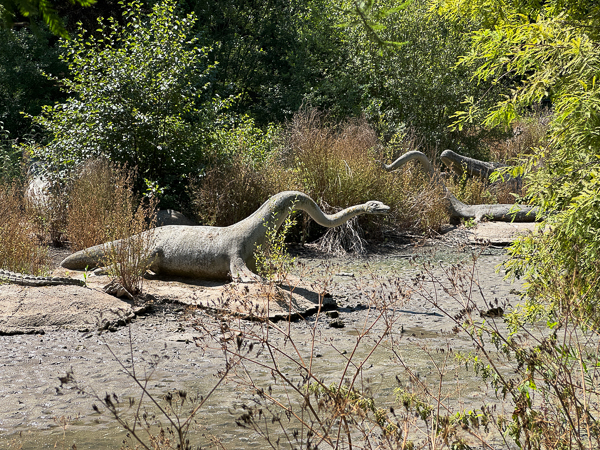
In 2002, the dinosaurs underwent a complete restoration. In 2007, they received a Grade I listing, placing them in the exalted company of notable buildings such as Nelson’s Column, the Houses of Parliament, and Tower Bridge.
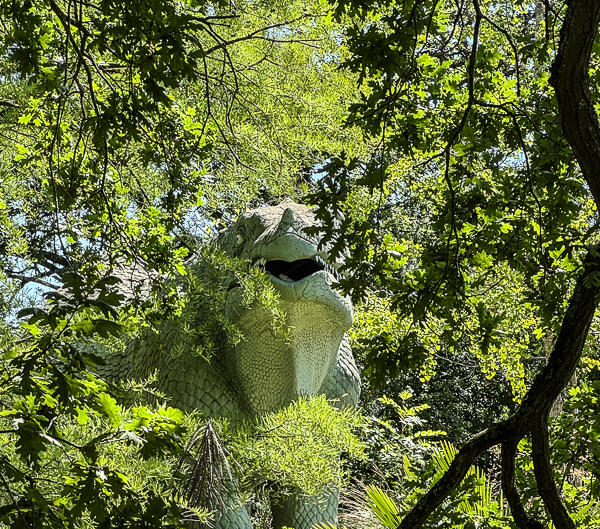
They are still difficult to see through the lush foliage.
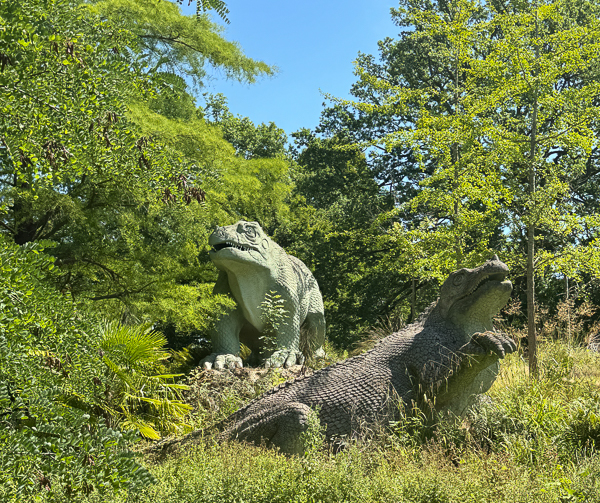
*
*
Guy the Gorilla
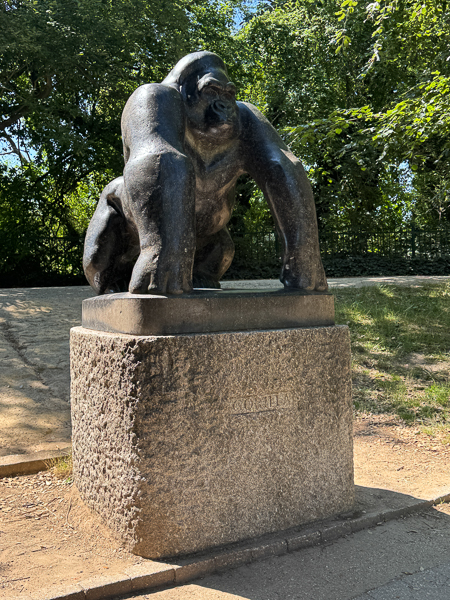
This Gorilla Sculpture by David Wynne stands beside the Lower Lake. Completed in 1961 and installed in 1962, the black marble sculpture depicts Guy the Gorilla, a western lowland gorilla brought from West Africa to London Zoo in 1947.
Guy the Gorilla was born in 1946 in what was then French Cameroon. Captured in 1947, he arrived at London Zoo on November 5th, 1947 (Guy Fawkes Day) and was christened “Guy”. He became one of the zoo’s major attractions, famed for his gentle disposition. He died in 1978 of a heart attack while under general anaesthetic during an operation to extract a tooth. His taxidermied remains are displayed at the entrance to the “Treasures” gallery in the central Hintze Hall at the Natural History Museum.