May 12, 2026
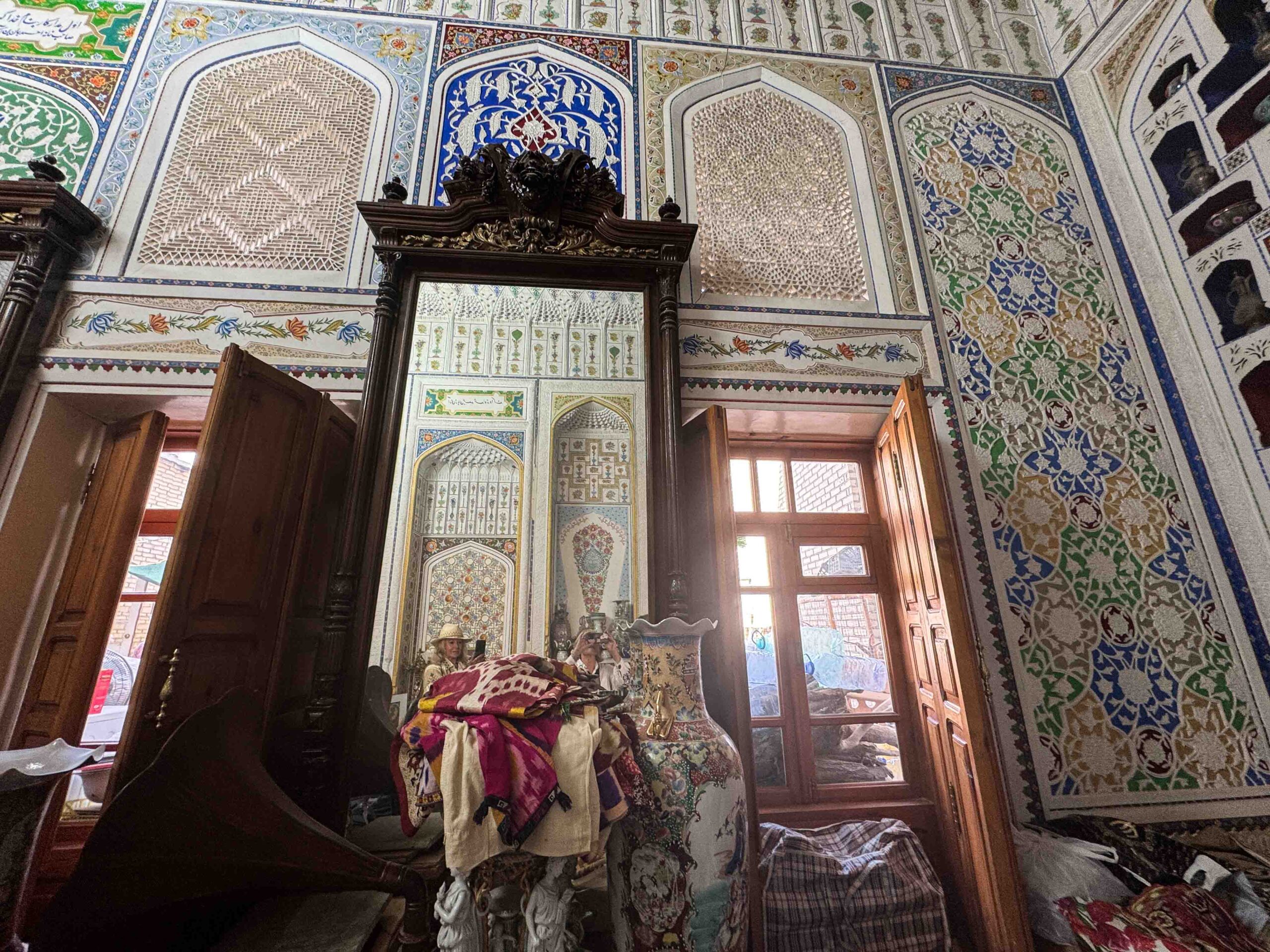
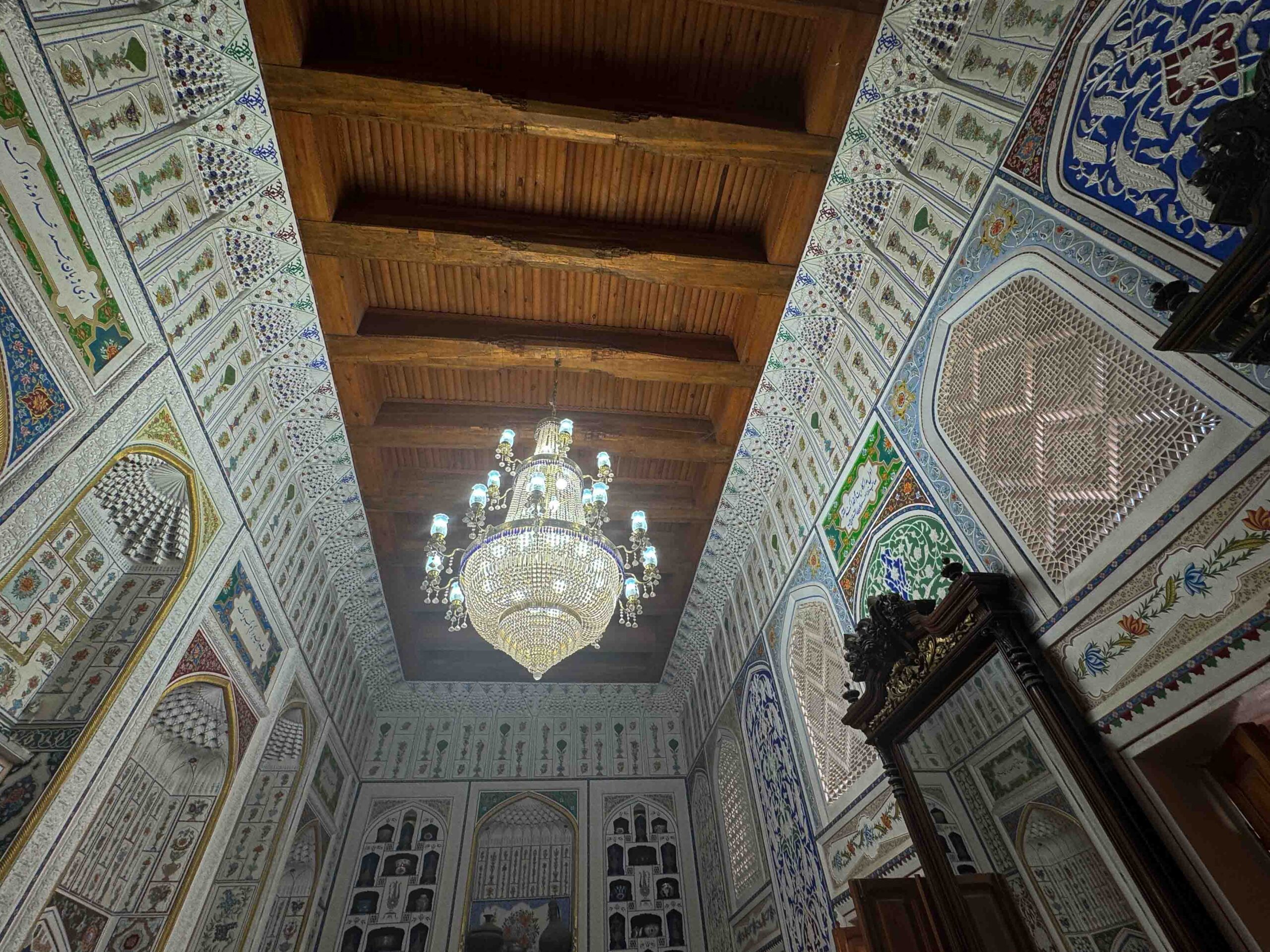
We visited two homes of families who make Suzanis. The first does everything in the traditional manner. The second, while still embroidering by hand, utilizes premade fabrics and chemical dyes.
Uzbekistan is known for its embroidery called Kashtachilik or, more commonly, Suzani. Technically, a suzani is a large, hand-embroidered textile panel; the word comes from the Persian suzan, meaning “needle”. Originating from nomadic tribes in Tajikistan, Uzbekistan, Kazakhstan, and other Central Asian countries, the craftsmanship is exquisite.
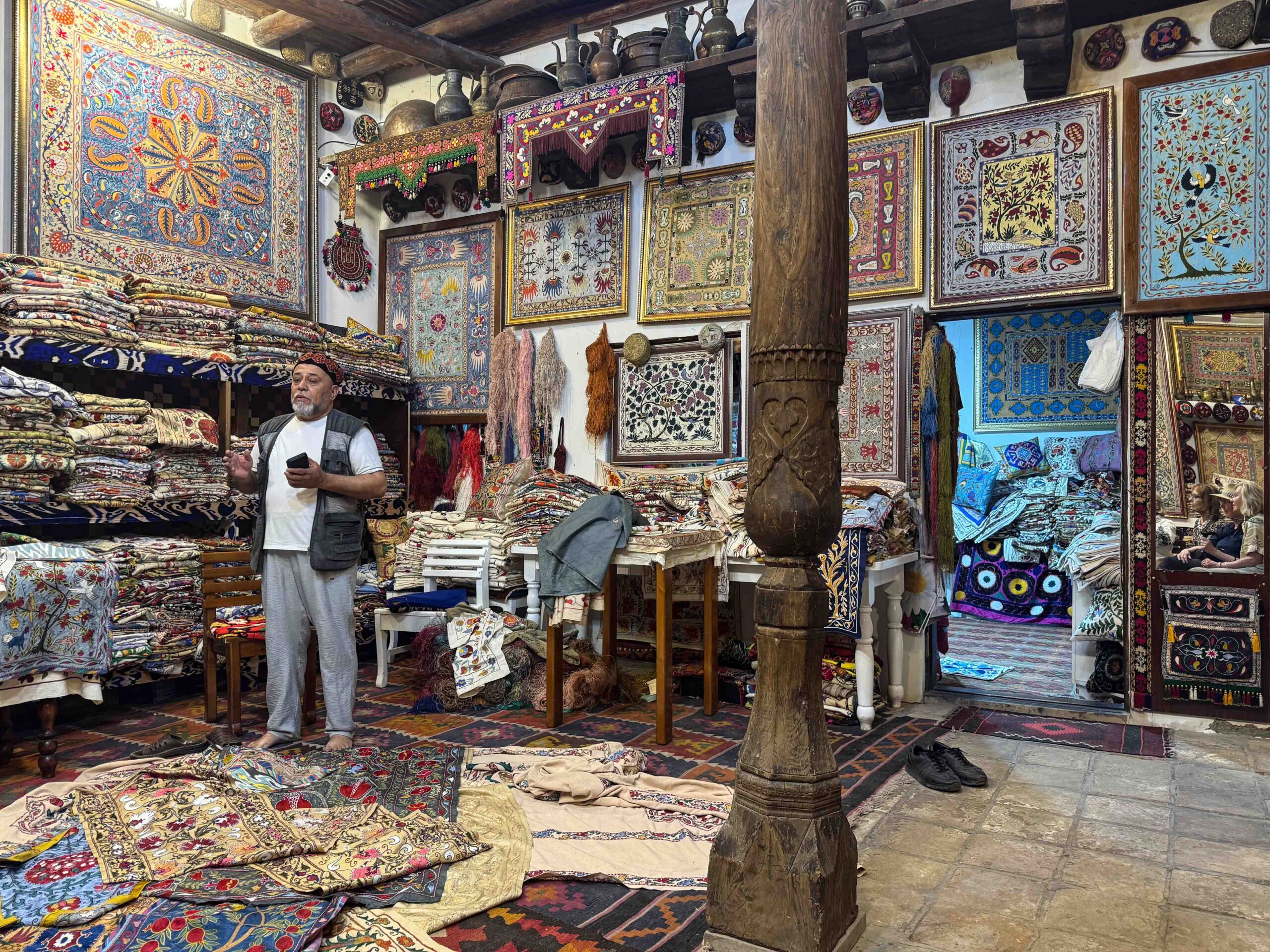
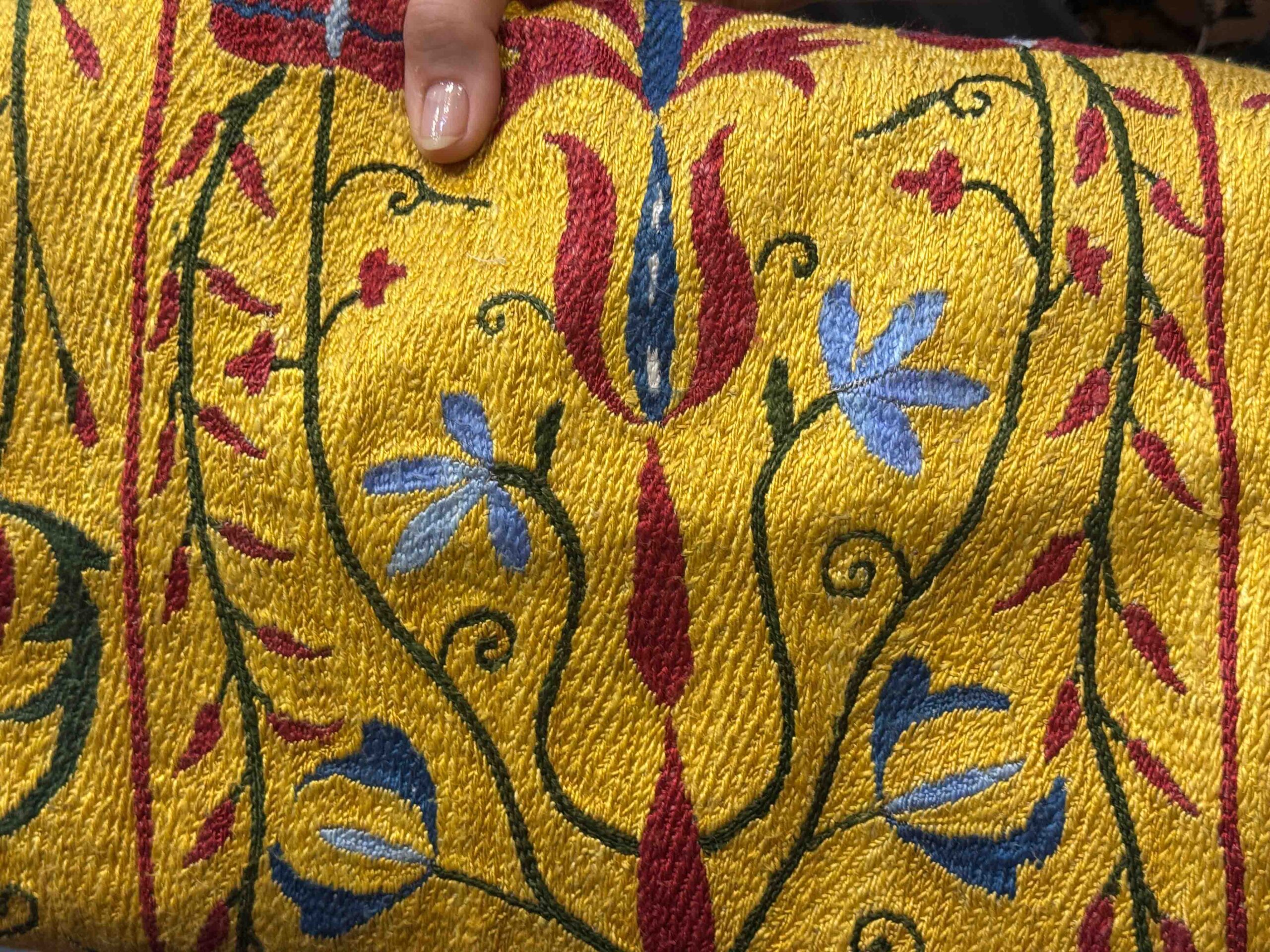
The Suzanis can have a base of either cotton or silk, with silk thread. Silk is quite obviously the most prized.
In the home of our first visit, the family also weaves the fabric.
The rigors of a nomadic lifestyle, daily use in a yurt, and exposure to the elements during migration were not conducive to the preservation of textiles. This means it is unusual to find ‘old’ suzanis, and the oldest surviving examples are from the late 18th and early 19th centuries.
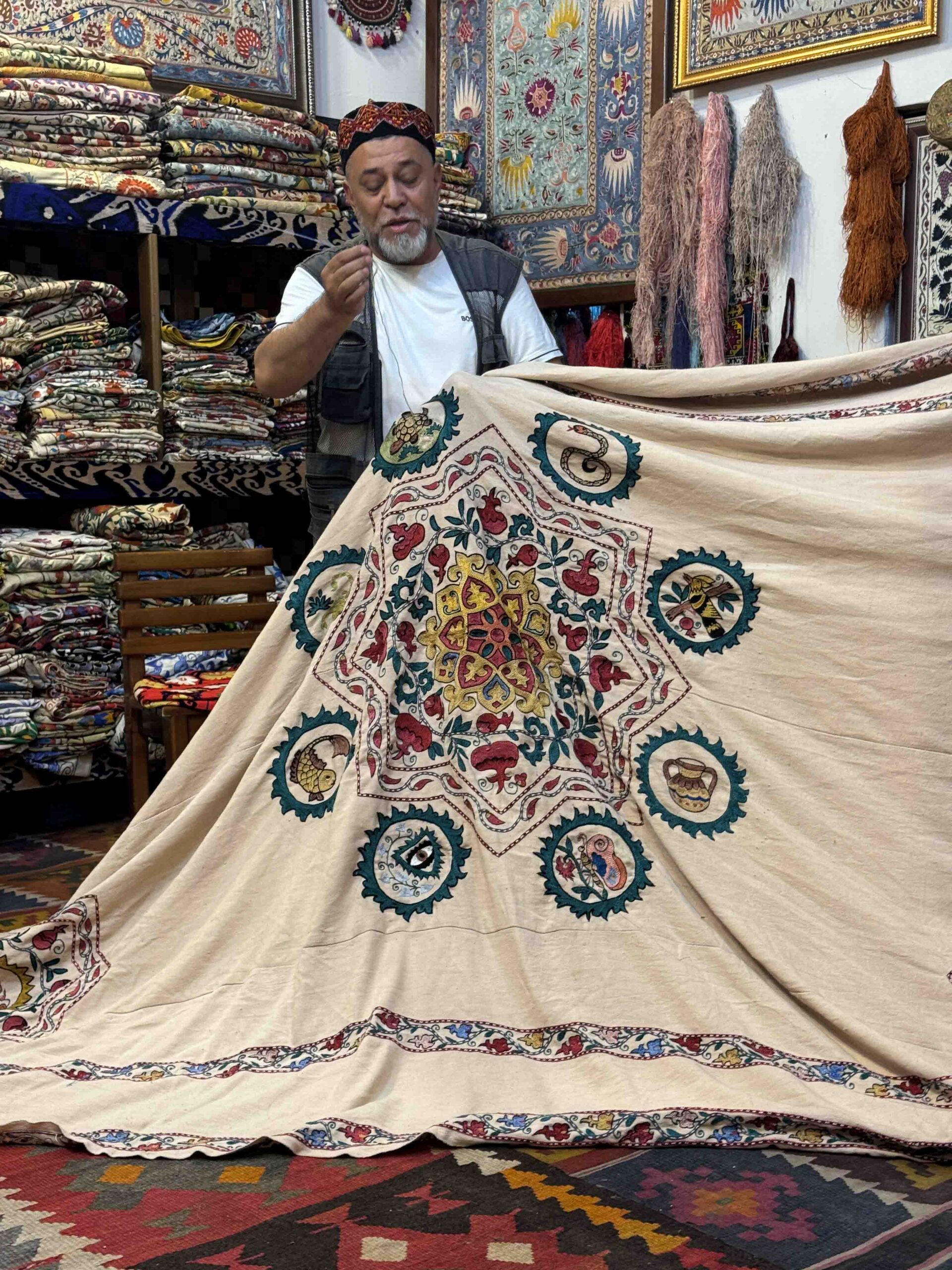
However, it’s likely they were in use long before that. In the early 15th century, Ruy Gonzáles de Clavijo, the Castilian ambassador to the court of Timur, wrote detailed descriptions of embroidered textiles that were probably forerunners of the suzani.
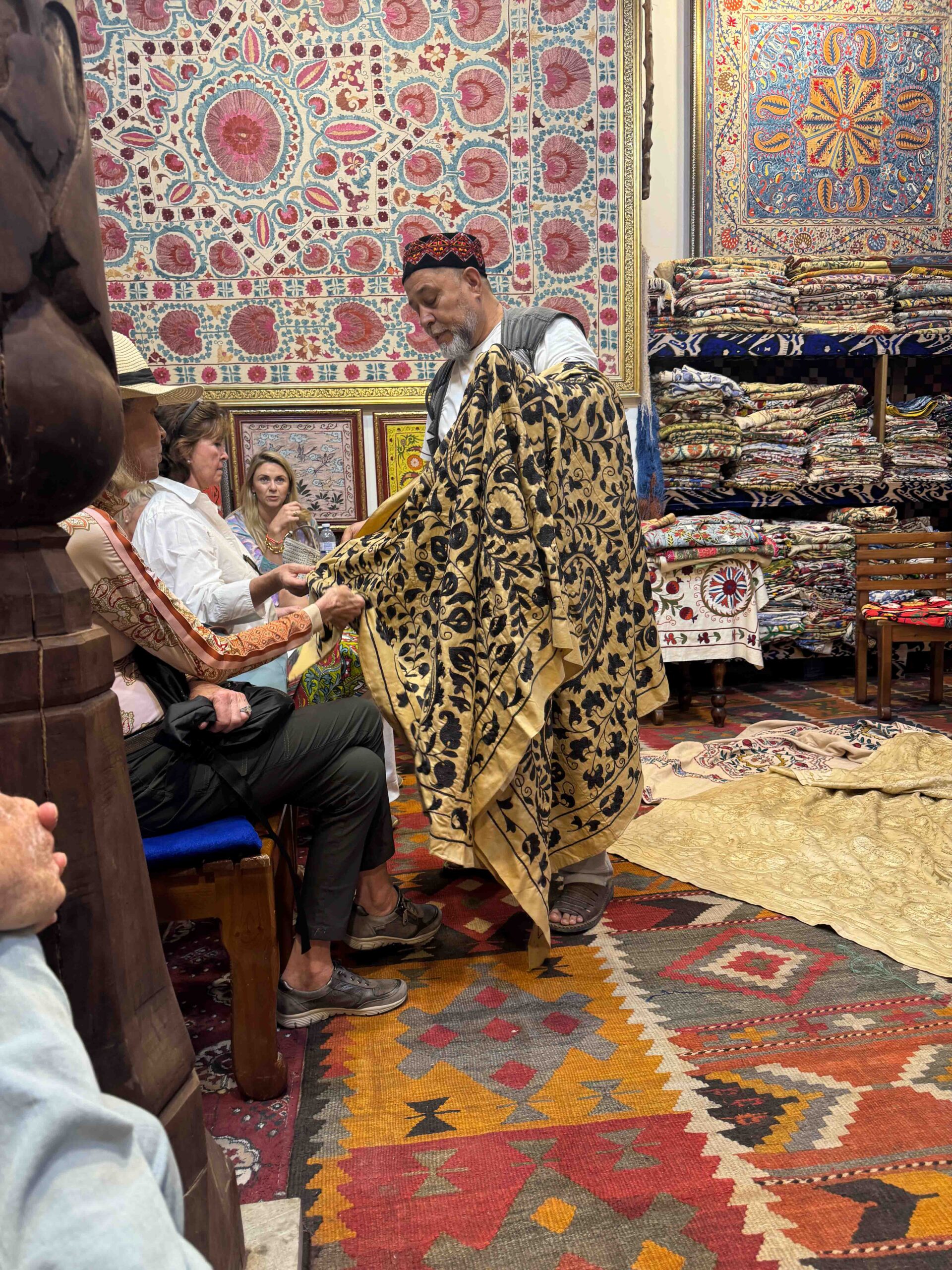
The main schools of artistic embroidery in Uzbekistan were formed at the end of the 18th and 19th centuries in six cities: Nurata, Samarkand, Shakhrisabz, Tashkent, Fergana, and Bukhara. The art form reached its peak of development at the beginning of the 20th century, but to this day, the craft remains part of the culture.
Suzanis were traditionally made by brides and their mothers as part of a dowry, and presented to the groom on his wedding day. They represented the binding together of two families and were adorned with symbols of luck, health, long life, and fertility.
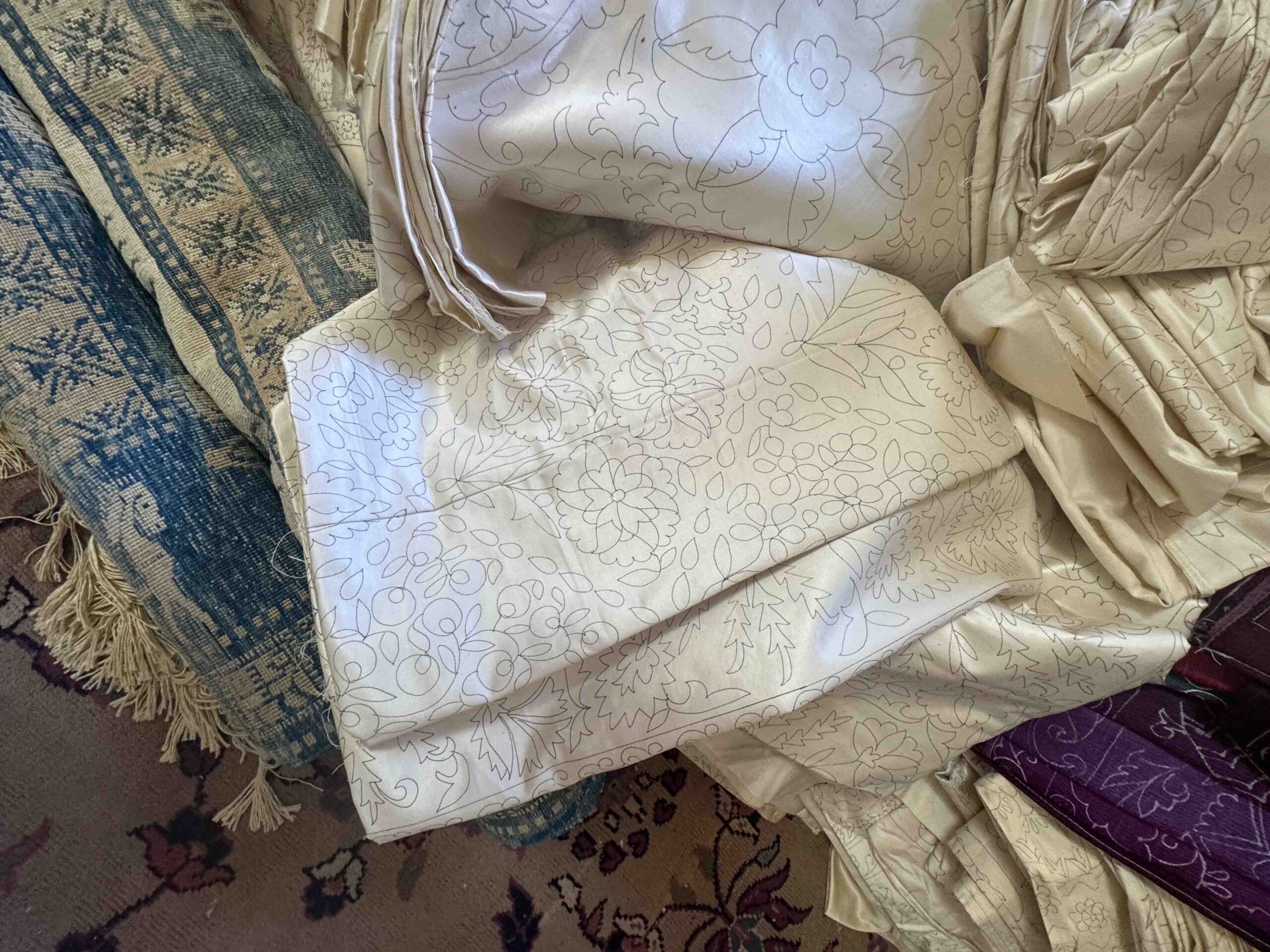
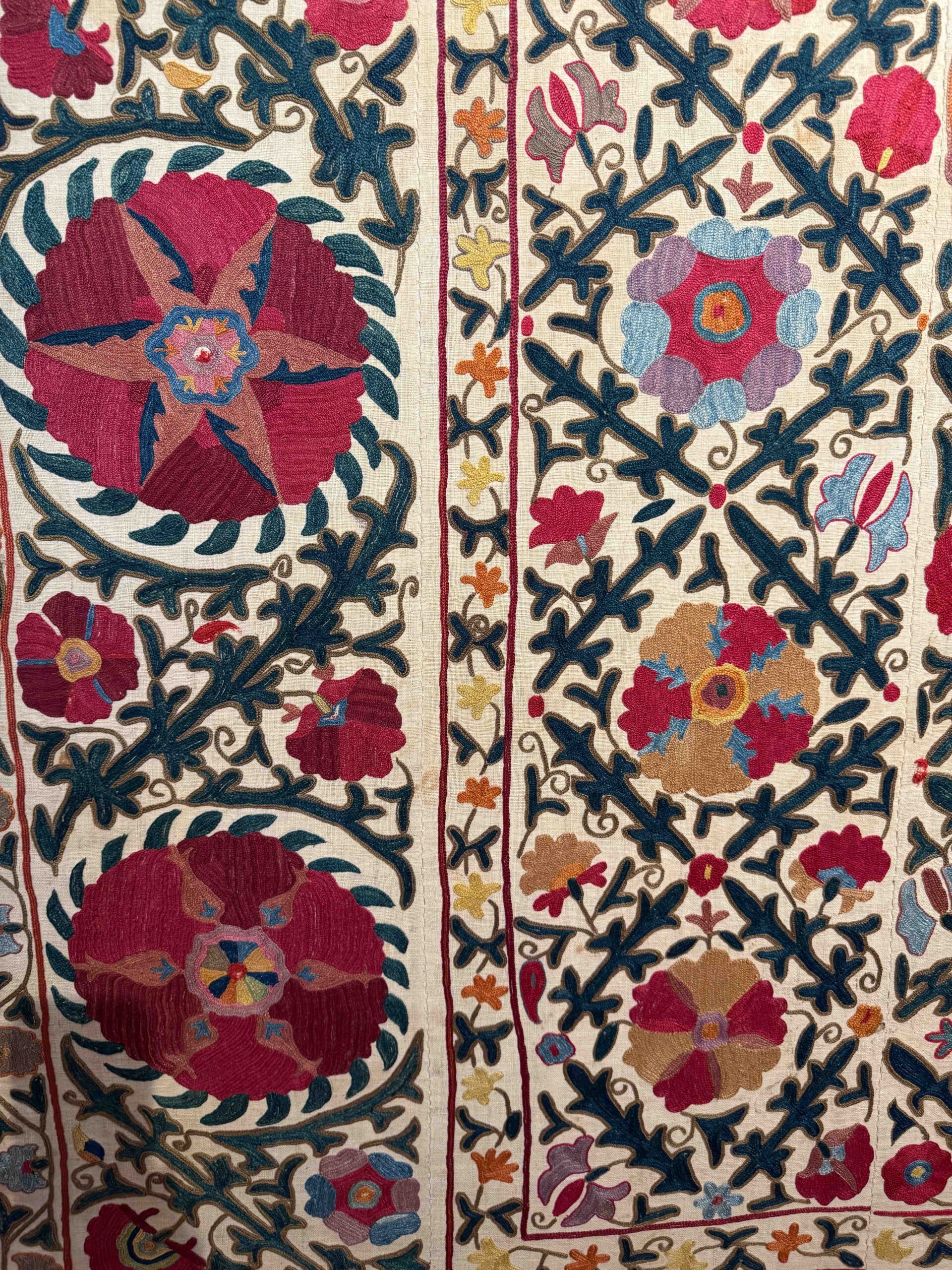
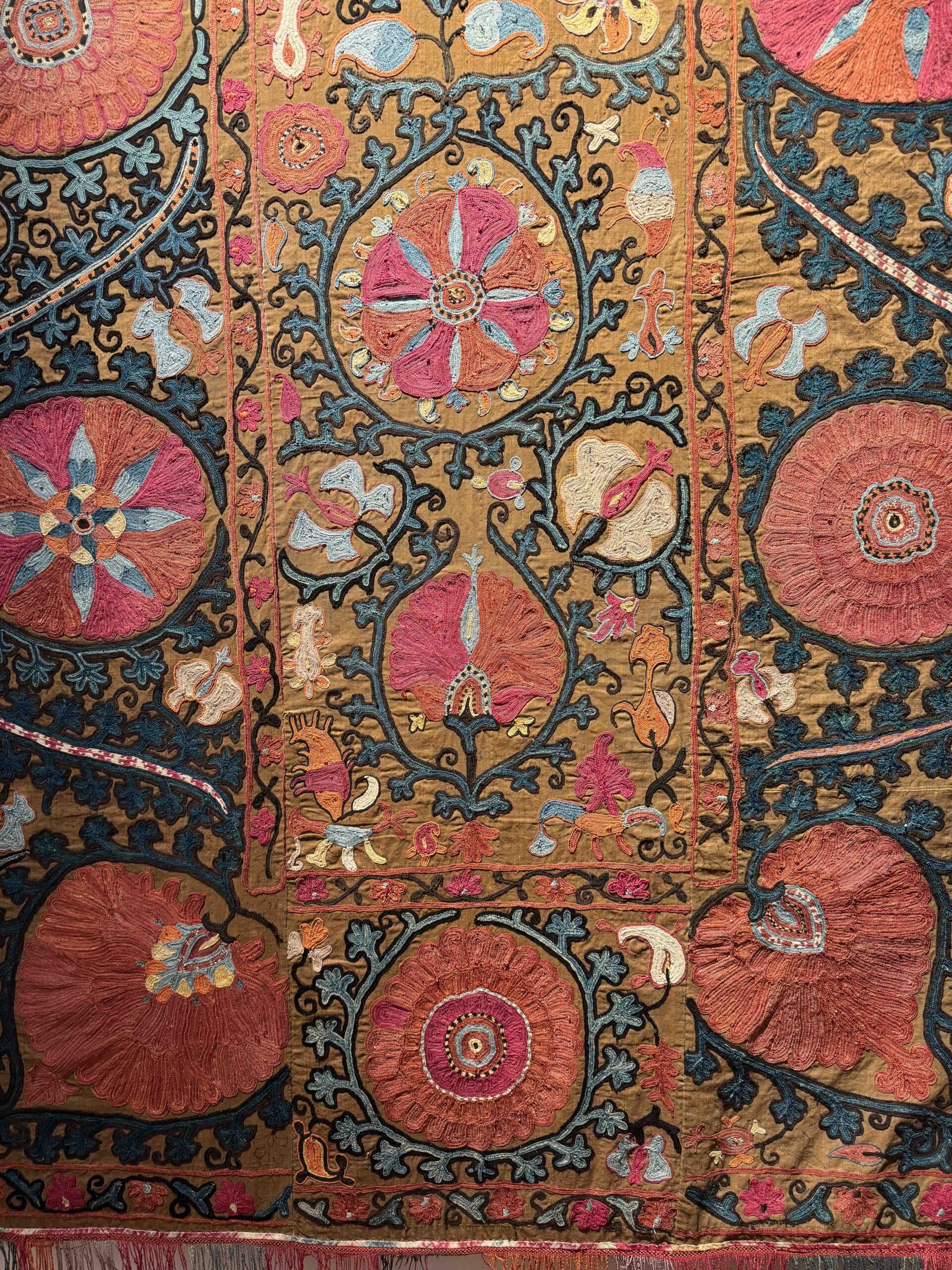
Just four stitches: tambour, basma, chain, and kanda-khayol are used to create a variety of patterns, which traditionally include the sun and moon, flowers and creepers of the Asian steppe, leaves and vines, fruits (especially pomegranates), and occasionally fish and birds. These motifs were believed to imbue the suzanis with spiritual powers, offering protection or strength to their owners.
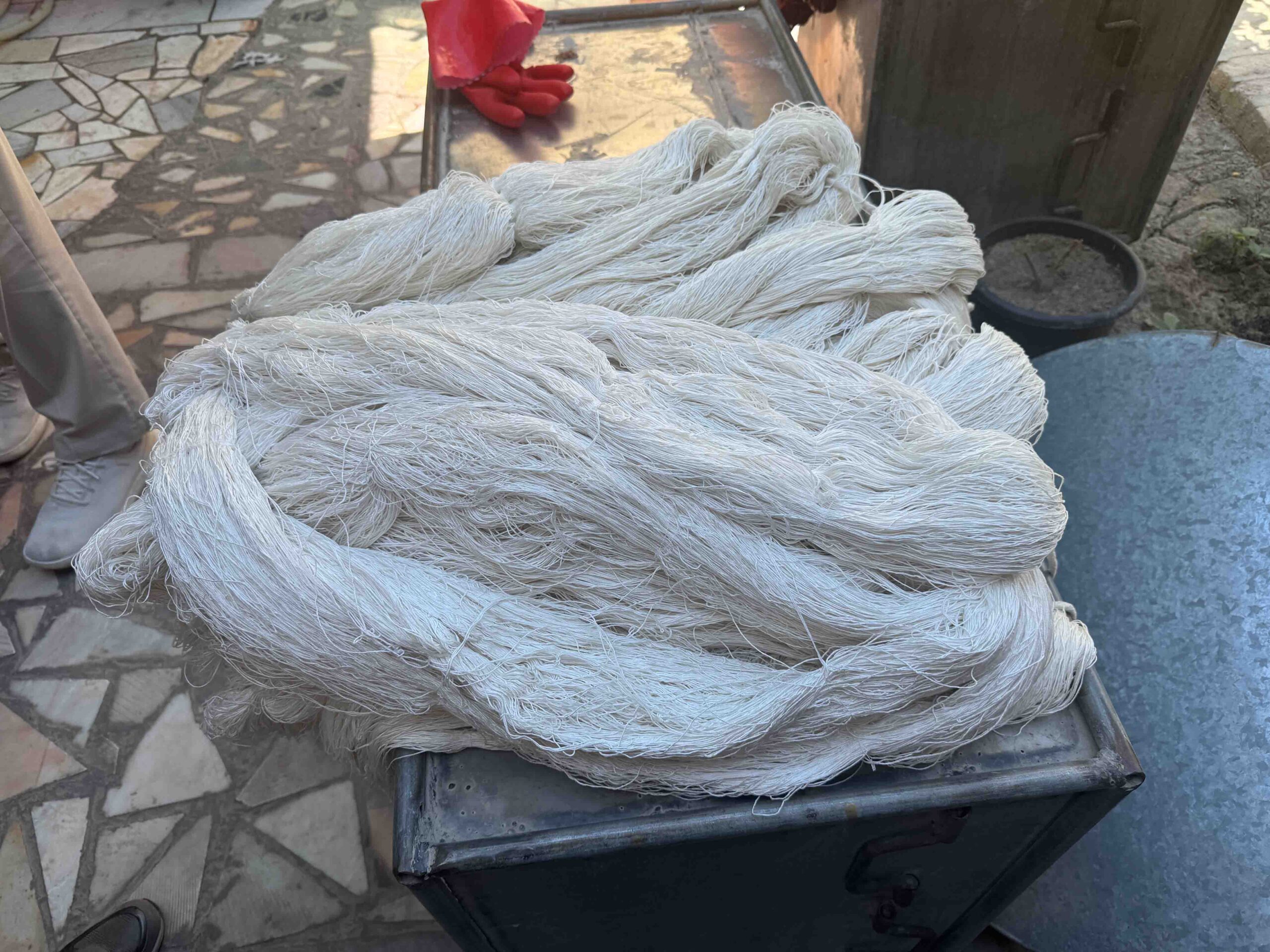
Suzanis are colored with vegetal dyes, although some more recent pieces may use synthetic dyes, which do not produce the same hue intensity.
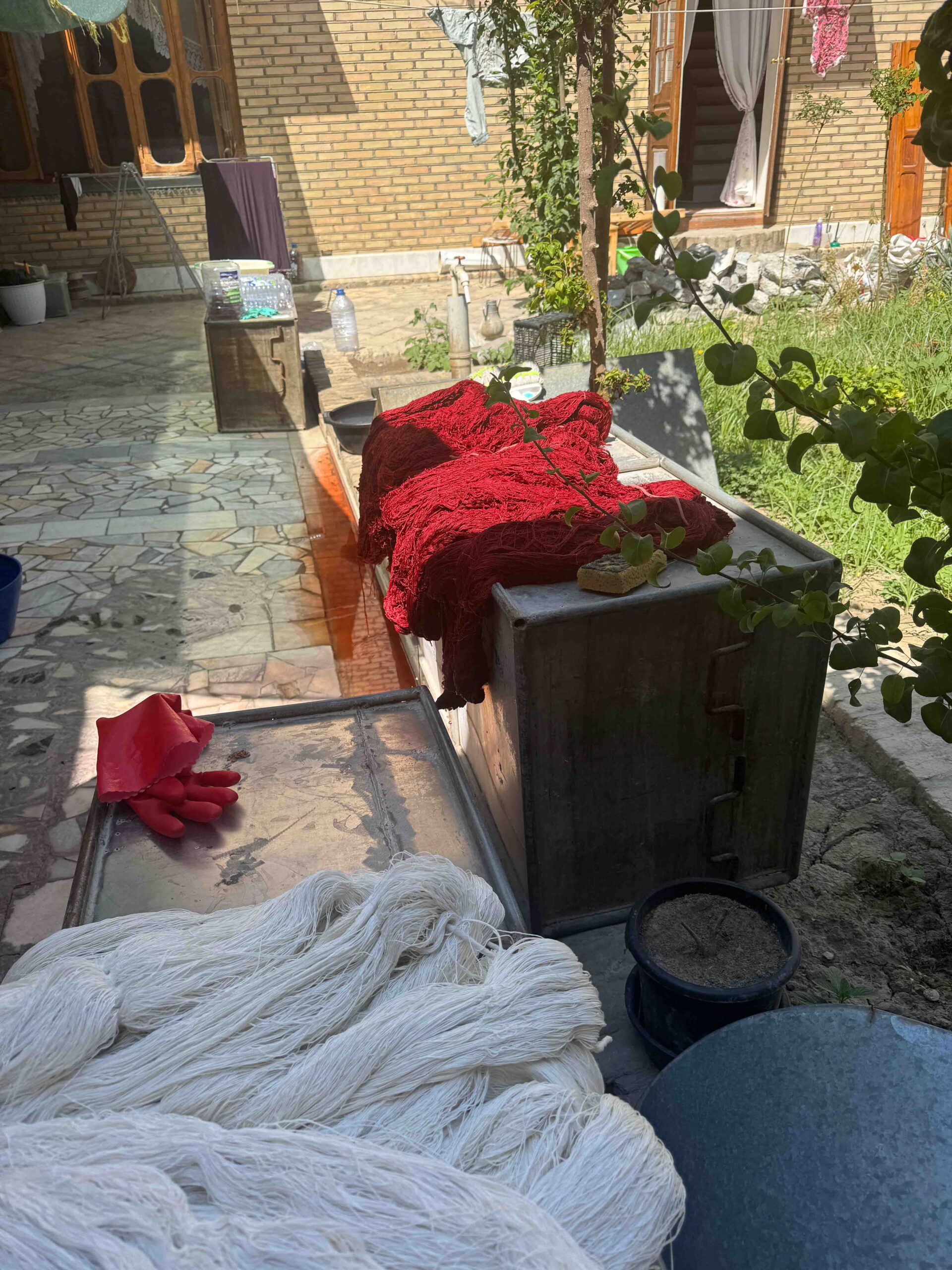
The natural dyes use imported indigo for blue, cochineal and imported madder for reds, saffron for yellow, a mix of indigo and a yellow tree fungus for green, and iron oxide and pistachio nuts for black. The dyeing process takes place in an outdoor vat.
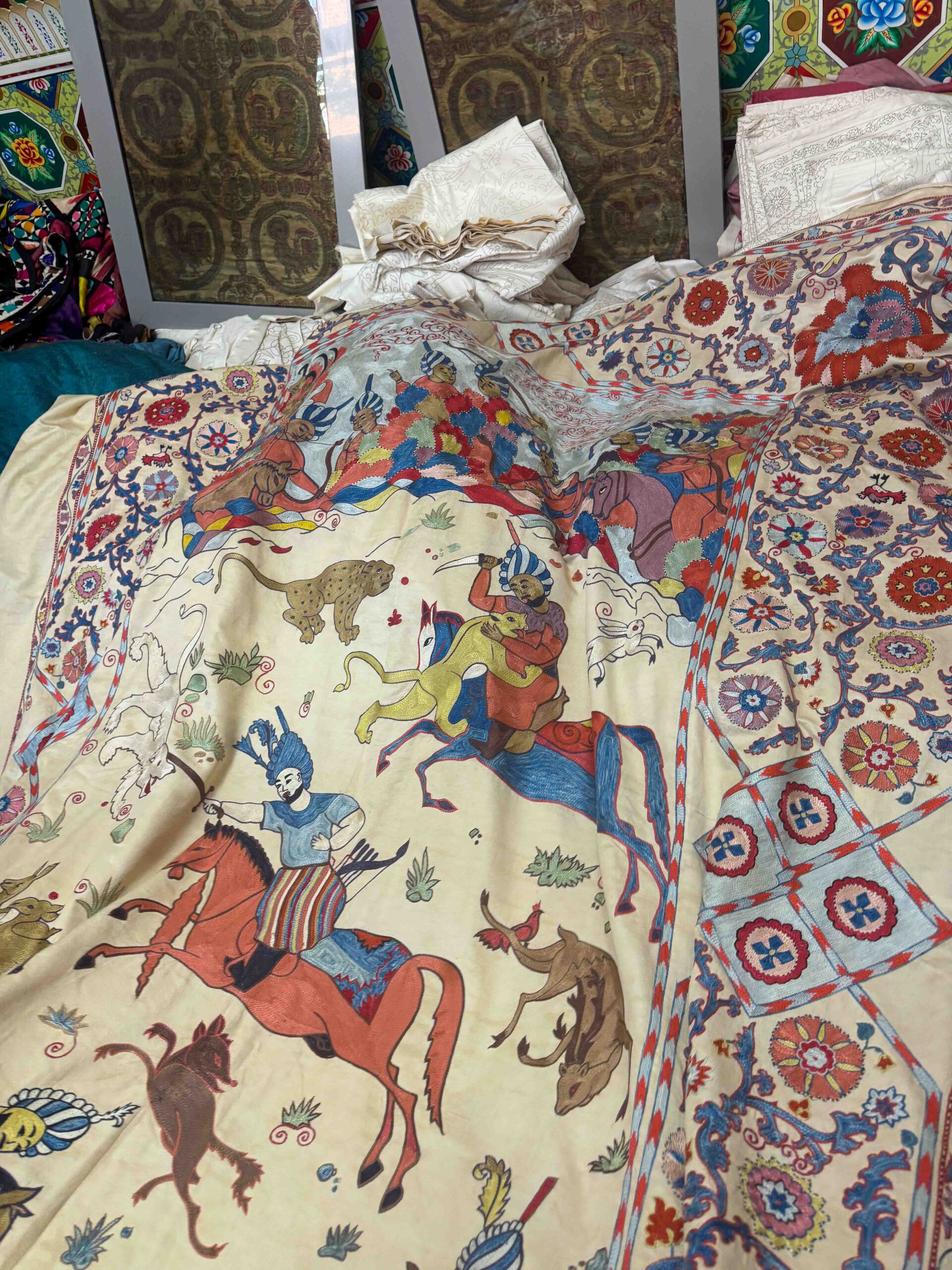
The following two pieces were in museums.
*
*
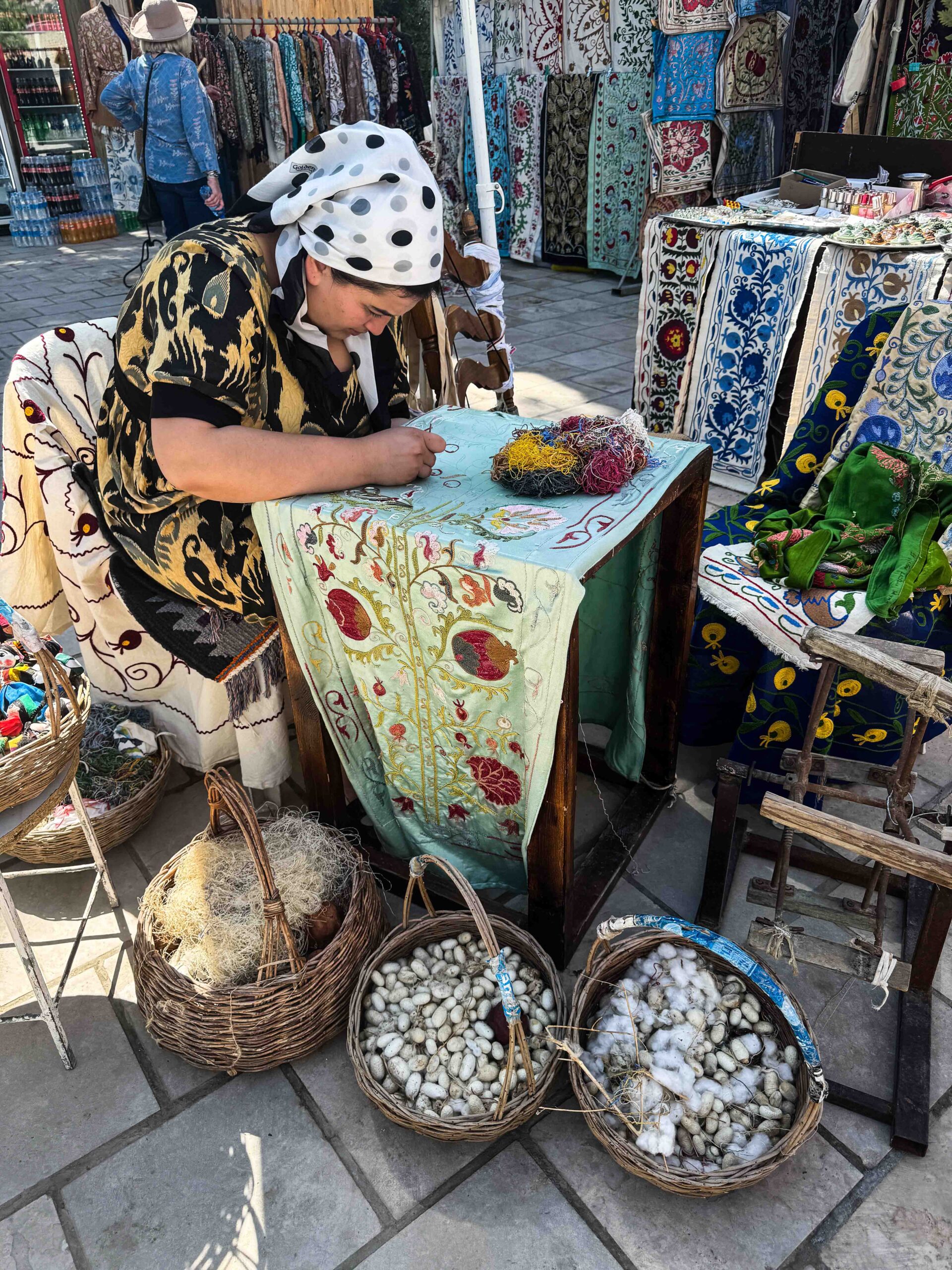
It can be overwhelming as Suzanis of all qualities are in every shop on every corner and every market. It was nice to visit the home of a family that has spent generations in this stunning craft, to know you were buying quality with confidence.